| linguae |
|
QUESTIONS ARISING FROM 108th. MEETING – 21/2/2020
(the record of earlier meetings can be downloaded from the main Circulus page as can the version of Ciceronis Filius with illustrations added. The illustrated text of Genesis is available on the Genesis page, of Kepler's Somnium on the Somnium page and of Nutting's Ad Alpes on the Ad Alpes page).
Food ordered at the Basmati included pānis Persicus cum aliō (garlic nan), cicera arōmatica (chana masala, chickpeas with spices), carō concīsa cum pīsīs (keema muttor, mincemeat with peas), batātae cum brassicā Pompēiānā (alu gobi, potato with cauliflower), gallīnācea butyrāta (buttered chicken), caseus fervēns (sizzling paneer), spināchia cum caseō (palak paneer, spinach with cheese), carō rubra (rogan josh, Kashmiri-style lamb curry), iogurtum arōmatica (raita), orȳza (rice) and okrum arōmaticum (bhindi masala, `lady’s fingers’, okra with spices). This was washed down with the standard vīnum rubrum, thea arōmatica (masala tea) and oxygalactīna (lassi, a yoghurt-based drink).

Caseus fervēns
We read chapter 22 of Ad Alpes up to the end of the section on the treatment of Christians (line 100 in the published text – see the extract below). This covered the journey from Anxur (also known as Tarracina), where the Appian Way met the coast, through the Pontine Marshes and on towards the Alban Hills. The route included the town of Forum Appii, where Christians from Rome are supposed to have come to meet St. Paul as he was brought in chains up to the capital. The book calls the place Appiī Forum and we agreed this was less correct; a genitive can come before or after the noun is connected to but the latter position is more normal and other authors preferred it
We read chapter 22 of Ad Alpes up to the end of the section on the treatment of Christians (line 100 in the published text – see the extract below). This covered the journey from Anxur (also known as Tarracina), where the Appian Way met the coast, through the Pontine Marshes and on towards the Alban Hills. The route included the town of Forum Appii, where Christians from Rome are supposed to have come to meet St. Paul as he was brought in chains up to the capital. The book calls the place Appiī Forum and we agreed this was less correct; a genitive can come before or after the noun is connected to but the latter position is more normal and other authors preferred it
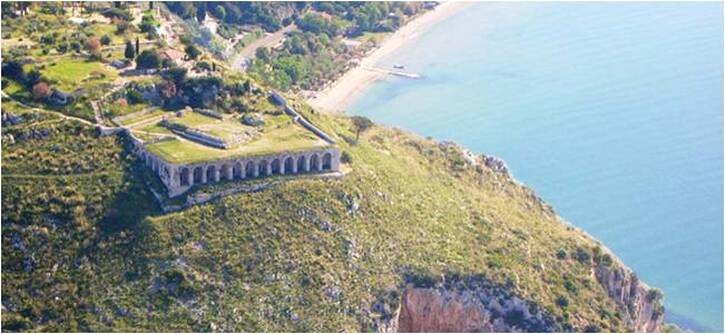
Temple of Jupiter at Anxur
We discussed the phrase orbis terrārum, literally `circle or disc of lands’, a common way of referring to the whole world. It could be shortened simply to orbis, hence the formula urbī et orbī (`to the city and to the world’) with reference to papal blessings. Although educated Greeks and Romans were aware centuries before Caesar that the earth was a a sphere, ordinary people continued to imagine it as a flat disc and the reluctance of the Roman legions to embark for the invasion of Britain in 43 A.D. might have been partly out of fear of falling off the edge! The incident is related in the account written around 200 A.D. by a Greek historian who was also a Roman senator:
Aulus Plautius,… had difficulty in inducing his army to advance beyond Gaul. For the soldiers were indignant at the thought of carrying on a campaign outside the limits of the known world, and would not yield him obedience until Narcissus, who had been sent out by Claudius, mounted the tribunal of Plautius and attempted to address them. Then they became much angrier at this and would not allow Narcissus to say a word, but suddenly shouted with one accord the well-known cry, "Io Saturnalia" (for at the festival of Saturn the slaves don their masters' dress and celebrate the festival) and at once right willingly followed Plautius.
(Cassius Dio 60,19.1-3)
The army seems to have been indignant at being addressed by Narcissus since he was a freedman (ex-slave) but then to have seen the humour of the situation and decided to follow orders.
The Claudian invasion had been preceded by Julius Caesar’s expeditions in 55 and 54 B.C. Caesar landed in Kent, either at deal or further north in Pegwell Bay on the Isle of Thanet. Thanet was at the time cut off from the rest of Britain by a narrow sea channel but the discovery there of an extensive Roman camp, which could have been intended to protect the invasion fleet, led University of Leicester archaeologists to argue for it:
https://www.theguardian.com/uk-news/2017/nov/29/caesars-invasion-of-britain-began-from-pegwell-bay-in-kent-say-archaeologists Deal was previously accepted as the landing site because it would have been the first suitable beach after Caesar sailed past Dover, where British forces were stationed on cliffs close to the shore. Both ancient sourcces and modern discussions of the problem are collected at http://www.dealpier.uk/caesar.html
Aulus Plautius may also have landed in Kent but another possibility would have been further west, perhaps near Southampton, since Dio describes the roman fleet as sailing westwards from Boulogne and an exiled British chieftain, who Dio says had called for Roman intervention, came from this region, The issue is discussed at
https://en.wikipedia.org/wiki/Site_of_the_Claudian_invasion_of_Britain
Mention of Romans soldiers’ fears in 43 A.D. reminded Sam of Alexander’s army’s refusal in India to continue advancing eastwards, in India, despite their victory over King Porus in the Punjab.
We discussed a number of other linguistic points arising from the chapter:
The genitive singular of 2nd. declension nouns in –ius: This should logically end in –iī (e.g.Iūlius > Iūliī) and was written that way under the empire but in the republican period had been spelt –ī (e.g. Iūlī). Even with the shorter spelling, the genitive was always accented as if the termination was of two syllables (so CaeCIlī, not CAEcilī ). In a similar way, the stress on the vocative singular of such nouns, which was at all times spelled identically to the shorter genitive form, was also on the penultimate (Ō CaeCIlī, hūc venī! Caecilius, come here!)
accūrātus: this is a compound of ad and cūra, so the original meaning is `[done] with care’
The neuter singular pronoun idem (`same [thing]’) is distinguished from masculine singular īdem by the length of the initial vowel. The latter is a contraction of is-dem, with compensatory lengthening after the `s’ was dropped. The neuter is similarly contracted from id-dem and should, therefore, in theory also have a lengthened vowel but this remained short, possibly in order to preserve the gender distinction.
The noun supplicium originally meant `kneeling down’, either in supplication or to receive punishment. It
later came to mean `torture’ or `punishment’ (especially capital punishment).
rēctus (ruled, correct), like English right derives from PIE *reg- (`move in a straight line, rule’). There is probably no connection with rītus (- -ūs m), `rite, ritual’, which is thought by some to come from PIE *re (`reason, count’). The Indian girls’ name Rīta (from a Sanskrit word meaning `right’ or `virtuous’) might also go back to *re but doesn’t seem connected with *reg. The English `Rita’ is an abbreviation of margarīta – pearl,
It is explained in the chapter that in Trajan’s time the government tried to suppress Christianity because the believers appeared to be similar to the hetaeriae (secret associations) which were banned because of the potential for subversion. John wondered why this ban did not extend to the various mystery cults such as that of the goddess Isis, whose followers met secretly and were sworn not to divulge details of their rituals to outsiders. The word hetaeria derives from the Greek hetairos (companion) and in Athens the feminine form, hetaira, was often equivalent to `courtesan’, a woman who, whilst not necessarily providing sexual services, associated with men in ways deemed inappropriate for respectable Athenian ladies. Pat explained how he had been commissioned to write a history of the Tai Po Catholic parish, which was never put on sale, copies instead being presented to those interested by the parish. Eugene has come across it on-line:
https://taipo.catholic.org.hk/zh/wp-content/uploads/sites/2/2019/01/堂區資料-大埔傳敎150周年特刋.pdf The Catholic archives were well-kept but difficult to use as so many different languages were included. The Italian of Timoleone Raimondi (1827-94), first bishop of Hong Kong, was easy to read but his fellow countrymen often wrote in a formal, literary style which was much more difficult. Another problem was that during WWII the records for 1870-1900 had been eaten by termites! Luckily for the historian, copies of many documents are preserved in Rome or elsewhere,
We discussed the phrase orbis terrārum, literally `circle or disc of lands’, a common way of referring to the whole world. It could be shortened simply to orbis, hence the formula urbī et orbī (`to the city and to the world’) with reference to papal blessings. Although educated Greeks and Romans were aware centuries before Caesar that the earth was a a sphere, ordinary people continued to imagine it as a flat disc and the reluctance of the Roman legions to embark for the invasion of Britain in 43 A.D. might have been partly out of fear of falling off the edge! The incident is related in the account written around 200 A.D. by a Greek historian who was also a Roman senator:
Aulus Plautius,… had difficulty in inducing his army to advance beyond Gaul. For the soldiers were indignant at the thought of carrying on a campaign outside the limits of the known world, and would not yield him obedience until Narcissus, who had been sent out by Claudius, mounted the tribunal of Plautius and attempted to address them. Then they became much angrier at this and would not allow Narcissus to say a word, but suddenly shouted with one accord the well-known cry, "Io Saturnalia" (for at the festival of Saturn the slaves don their masters' dress and celebrate the festival) and at once right willingly followed Plautius.
(Cassius Dio 60,19.1-3)
The army seems to have been indignant at being addressed by Narcissus since he was a freedman (ex-slave) but then to have seen the humour of the situation and decided to follow orders.
The Claudian invasion had been preceded by Julius Caesar’s expeditions in 55 and 54 B.C. Caesar landed in Kent, either at deal or further north in Pegwell Bay on the Isle of Thanet. Thanet was at the time cut off from the rest of Britain by a narrow sea channel but the discovery there of an extensive Roman camp, which could have been intended to protect the invasion fleet, led University of Leicester archaeologists to argue for it:
https://www.theguardian.com/uk-news/2017/nov/29/caesars-invasion-of-britain-began-from-pegwell-bay-in-kent-say-archaeologists Deal was previously accepted as the landing site because it would have been the first suitable beach after Caesar sailed past Dover, where British forces were stationed on cliffs close to the shore. Both ancient sourcces and modern discussions of the problem are collected at http://www.dealpier.uk/caesar.html
Aulus Plautius may also have landed in Kent but another possibility would have been further west, perhaps near Southampton, since Dio describes the roman fleet as sailing westwards from Boulogne and an exiled British chieftain, who Dio says had called for Roman intervention, came from this region, The issue is discussed at
https://en.wikipedia.org/wiki/Site_of_the_Claudian_invasion_of_Britain
Mention of Romans soldiers’ fears in 43 A.D. reminded Sam of Alexander’s army’s refusal in India to continue advancing eastwards, in India, despite their victory over King Porus in the Punjab.
We discussed a number of other linguistic points arising from the chapter:
The genitive singular of 2nd. declension nouns in –ius: This should logically end in –iī (e.g.Iūlius > Iūliī) and was written that way under the empire but in the republican period had been spelt –ī (e.g. Iūlī). Even with the shorter spelling, the genitive was always accented as if the termination was of two syllables (so CaeCIlī, not CAEcilī ). In a similar way, the stress on the vocative singular of such nouns, which was at all times spelled identically to the shorter genitive form, was also on the penultimate (Ō CaeCIlī, hūc venī! Caecilius, come here!)
accūrātus: this is a compound of ad and cūra, so the original meaning is `[done] with care’
The neuter singular pronoun idem (`same [thing]’) is distinguished from masculine singular īdem by the length of the initial vowel. The latter is a contraction of is-dem, with compensatory lengthening after the `s’ was dropped. The neuter is similarly contracted from id-dem and should, therefore, in theory also have a lengthened vowel but this remained short, possibly in order to preserve the gender distinction.
The noun supplicium originally meant `kneeling down’, either in supplication or to receive punishment. It
later came to mean `torture’ or `punishment’ (especially capital punishment).
rēctus (ruled, correct), like English right derives from PIE *reg- (`move in a straight line, rule’). There is probably no connection with rītus (- -ūs m), `rite, ritual’, which is thought by some to come from PIE *re (`reason, count’). The Indian girls’ name Rīta (from a Sanskrit word meaning `right’ or `virtuous’) might also go back to *re but doesn’t seem connected with *reg. The English `Rita’ is an abbreviation of margarīta – pearl,
It is explained in the chapter that in Trajan’s time the government tried to suppress Christianity because the believers appeared to be similar to the hetaeriae (secret associations) which were banned because of the potential for subversion. John wondered why this ban did not extend to the various mystery cults such as that of the goddess Isis, whose followers met secretly and were sworn not to divulge details of their rituals to outsiders. The word hetaeria derives from the Greek hetairos (companion) and in Athens the feminine form, hetaira, was often equivalent to `courtesan’, a woman who, whilst not necessarily providing sexual services, associated with men in ways deemed inappropriate for respectable Athenian ladies. Pat explained how he had been commissioned to write a history of the Tai Po Catholic parish, which was never put on sale, copies instead being presented to those interested by the parish. Eugene has come across it on-line:
https://taipo.catholic.org.hk/zh/wp-content/uploads/sites/2/2019/01/堂區資料-大埔傳敎150周年特刋.pdf The Catholic archives were well-kept but difficult to use as so many different languages were included. The Italian of Timoleone Raimondi (1827-94), first bishop of Hong Kong, was easy to read but his fellow countrymen often wrote in a formal, literary style which was much more difficult. Another problem was that during WWII the records for 1870-1900 had been eaten by termites! Luckily for the historian, copies of many documents are preserved in Rome or elsewhere,
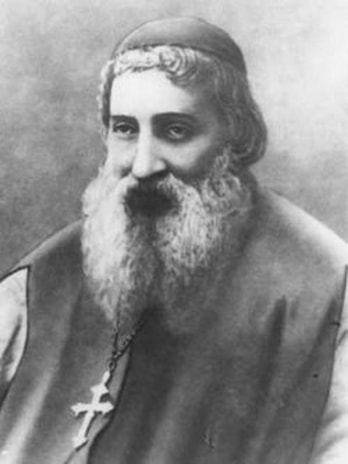
Bishop Raimondi
Pat was not aware that the Catholic diocese’s archivist, Louis Keloon Ha (夏其龍), who is also the SAR’s leading Latinist, wrote his Ph.D. thesis on the early development of the Catholic Church in Hong Kong. This has been published both in Chinese and also in English as The Foundation of the Catholic Mission in Hong Kong 1841-1894 (Hong Kong: Joint Publishing, 2018 – see https://www.cp1897.com.hk/product_info.php?BookId=9789620436024 ). John, who had helped with the copy-editing of the English version, said that it included details of Raimondi’s conflict with French Catholic missionaries and also of his low opinion of the capabilities of the Chinese. Pat mentioned a young priest from the Tai Po mission who drowned in a storm when trying to cross Tolo Harbour, an incident for which Raimondi’s Italian account is the only surviving source..
Pat spoke about the New Territory’s Man clan claiming descent from the younger brother of the famous patriot Man Tin Cheung (Wen Tian Xiang,文天祥, 1236-1283). Before a battle against the Mongols which he knew he was going to lose, this Song dtnasty official gave silver to a younger brother, and told him to go to a remote area. The brother – or cousin according to https://en.wikipedia.org/wiki/Wen_Tianxiang - settled with his family members on Mosquito Island on the West side of the Pearl River Delta, where they had to drain a marsh and thus became experts in land reclamation. They later moved to marshy areas along the Shenzhen river,
Pat was not aware that the Catholic diocese’s archivist, Louis Keloon Ha (夏其龍), who is also the SAR’s leading Latinist, wrote his Ph.D. thesis on the early development of the Catholic Church in Hong Kong. This has been published both in Chinese and also in English as The Foundation of the Catholic Mission in Hong Kong 1841-1894 (Hong Kong: Joint Publishing, 2018 – see https://www.cp1897.com.hk/product_info.php?BookId=9789620436024 ). John, who had helped with the copy-editing of the English version, said that it included details of Raimondi’s conflict with French Catholic missionaries and also of his low opinion of the capabilities of the Chinese. Pat mentioned a young priest from the Tai Po mission who drowned in a storm when trying to cross Tolo Harbour, an incident for which Raimondi’s Italian account is the only surviving source..
Pat spoke about the New Territory’s Man clan claiming descent from the younger brother of the famous patriot Man Tin Cheung (Wen Tian Xiang,文天祥, 1236-1283). Before a battle against the Mongols which he knew he was going to lose, this Song dtnasty official gave silver to a younger brother, and told him to go to a remote area. The brother – or cousin according to https://en.wikipedia.org/wiki/Wen_Tianxiang - settled with his family members on Mosquito Island on the West side of the Pearl River Delta, where they had to drain a marsh and thus became experts in land reclamation. They later moved to marshy areas along the Shenzhen river,
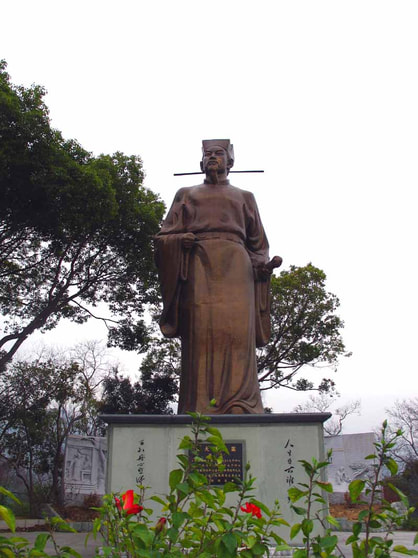
Statue of Man Tin Cheung at San Tin, N.T.
Sam mentioned a parallel to the Roman hypocaust in the Korean invention of the ondol system of underfloor heating, which was also integrated with the cooking arrangements,. Sam believed that there was evidence of this existing as early as 5000 B.C. and this is confirmed by the account at https://en.wikipedia.org/wiki/Ondol but another web site
(http://www.antiquealive.com/Blogs/Ondol_Korean_Home_Heating_System.html) describes it as starting only in the 2nd century A.D. and reaching full development in the 13th.
AD ALPĒS - CHAPTER XXII
Posterō diē ante hōram quārtam[1] Ānxur[2] facile perventum est; quō in oppidō viātōrēs
On-next day before hour fourth to—Anxur easily reached it-was which in town travellers
paulisper cōnstitērunt, ut cibum caperent; nam līberī etiam tum ēsuriēbant.
a-short-while halted so-that food they-could-take for children even then were-hungry
Cum omnia iterum parāta essent ad iter faciendum, Sextus nusquam reperīrī poterat,
When all-things again ready were for journey being-made Sextus nowhere to-be-found was-able
dōnec eum aspexit Stasimus in āreā, ubi cupidē audiēbat servōs duōs, quī inter sē loquēbantur.
until him spotted Stasimus in yard where eagerly he-was-listening-to slaves two who between selves were-talking
Puerō revocātō, ex oppidō statim profectī sunt. Ac cum iam lēniter raedīs
Boy having-been-recalled out-of town at-once they-set-off and when now gently by-wagons
veherentur, Sextō Cornēlius: “Quid,” inquit, “inter sē loquēbantur illī servī duo, quōs in āreā
they-were-being-carried to-Sextus Cornelius what said between selves were-talking those slaves two who in yard
audiēbās. At Sextus: “Unus erat homō senectūte iam cōnfectus, alter autem admodum
you-were-listening-to But Sextu one was man with-old-age already worn-down the-other however quite
iuvenis. Senior dīxit sē modo Appī Forō advēnisse.”
young older-one said himself just-now from Appi Forum to-have-arrived
“Illud est oppidum,” inquit Cornēlius, “ubi hanc noctem āctūrī sumus. Sed quid posteā
That is town said Cornelius where this night going-to-spend we-are but what afterwards
dictum est?”
said was
“Prīmō,” inquit Sextus, “pauca alia inter sē locūtī sunt; tum ille senior dē t emporibus
First said Sextus a-few other-things between selves they-said the n that older-one about times
dīcere coepit, cum ipse puer esset.”
to-speak began when himself boy he-was
“Quid puer fēcit?” inquit Cornēlia.
What as-boy he-did asked Cornelia
At Sextus: “Dīxit sē ipsum adfuisse, cum quīdam vir sānctūs, Paulus nōmine, Rōmam
And Sextus He-said himself-personally to-have-been-present when a-certain man holy Paul by-name to-Rome
iter faciēns et catēnīs vīnctus, Appī Forī[3] cōnstitisset.
journey making and with-chains bound at-Appi Forum had-stopped
NOTES
[1] The `fourth hour’ corresponded roughly to 9.a.m.
[2] Anxur, originally a Volscian settlement (Tarracīna in Latin, Terracina in Italian), was the point at which the Appian Way first met the west coast. It was famous for the Temple of Jupiter Anxur on the hill overlooking it.
[3] Appi (or `Appii')Forum (`The Forum of Appius’), presumably named after Appius Claudius Pulcher, the builder of the original Appian Way, was a regional commercial centre about 55 kilometres from Rome. According to Acts 28:15, when St. Paul, exercising his right as a Roman citizen to appeal to the emperor, made his final journey to the capital (c.60 A.D.) Christians from the city came as far south as Trēs Tabernae (Tre Taverne, Three Taverns’) and Apii Forum to escort him (see the map on p.26 ). Ad Alpes is set in 138 A.D. so the man must have been in his eighties to remember the incident,
“Cum hoc tantum dictum esset, ā Stasimō arcessītus sum; quārē nec quis esset ille
When this only said had-been by Stasimus summoned I-was therefore neither who was that
Paulus, nec cūr eum catēnīs vīnxissent, cognōscere potuī.”
Paul nor why him with-chains they-had-bound to-learn I-was-able
“Suspicor,” inquit, Pūblius, “hōs servōs Chrīstiānōs esse; ac vērī simile[1] est istum
I-suspect said Publius those slaves Christians to-be and probable it-is that
Paulum fuisse adfīnem eiusdem superstitiōnis, quī imāginem imperātōris adōrāre nōluisset.”
Paul to-have-been adherent of-sam e superstition who image of-emperor to-worship had-refused
“Quālēs hominēs sunt Chrīstiānī, pater?” inquit Cornēlia. “Hoc nōmen saepe audīvī,
What-sort-of people are Christians father asked Cornelia This name often I-have-heard
neque umquam quid significāret intellēxī.''
and-not ever what it-meant I-have-understood
“Dē nātūrā huius superstitiōnis,” inquit pater, “nihil satis compertum est; etsī
About nature of-this superstition said father nothing sufficient discovered has-been even-though
orbis terrārum[2] nūllus nunc est locus, ubi istī Chrīstiānī nōn reperiantur.[3]
of-circle of-lands no now is place where those Christian s not are-found
“Sed Plīnius ille, quī dē monte Vesuviō ad Tacitum litterās mīsit, multīs annīs post
But Pliny the-famous who about Mt. Vesuvius to Tacitus letter sent many years after
avunculī mortem prōvinciae Bīthȳniae praepositus, cum incolās plūrimōs Chrīstiānōs esse
uncle’s death of-province Bithynia placed-in-charge when inhabitants very-many Christians to-be
cognōvisset, dē eīs ad imperātōrem Traiānum accūrātius scrīpsit.[4]
he-had-discovered about them to emperor Trajan in-quite-a-lot-of-detail wrote
“At haec, crēdō, Pūblius noster nūper lēgit. Quārē ille vōbīs expōnet quō modō Plīnius
But these-things I-believe Publius our recently has-read So he to-you will-explain in-what way Pliny
cum Christiānīs ēgerit.”
with Chritians dealt
NOTES
[1] vērī simile literally ` similar of the truth’; similis can take the genitive as well as the dative
[2] orbis terrārum (sometimes abbreviated to orbis) was the standard expression for `the world’
[3] Subjunctive in a relative clause of characteristic (i.e. `no place in the world is the kind not to have Christians’).
[4] Pliny was governor of Bithynia et Pontus on the south coast of the Black Sea (see fn. 12 on page 4 above) from 110 till his presumed death around 113 A.D. Pliny’s letter to Trajan and the emperor’s reply (10.96 and 97) are included in the Pliny selection in Wheelock’s Latin Reader.
Pūblius, tālī cohortātiōne inductus: “Plīnius,” inquit, “hōc modō rem trānsēgit: Eōs, quī
Publius by-such encouragement swayed Pliny said in-this way matter conducted those who
ad eum dēferēbantur, interrogābat essentne Chrīstiānī. Sī ita cōnfitébantur, iterum ac tertiō
to him were-presented used-to-ask whether-they-were Christians if thus they-confessed again and third-time interrogābat, supplicium quoque minātus.
he-used-to-interrogate execution also having-threatened
“Sī etiam tum obstinātā mente īdem dīcere persevērābant, ad supplicium dūcī iubēbat
If even then with-obstinate mind same-thing to-say they-continued to execution to-be-led he-ordered
(nam, ut ipse dīcit, tālis pertinācia saltem pūnienda erat). Sed eōs, quī cīvēs Rōmānī erant, ad
for as he-himself says such obstinacy at-least needing-punishment was but those who citizens Roman were to
urbem remīsit; cuius generis fortasse erat ille Paulus, dē quō modo loquēbāmur.
rhe-city[of-Rome] he-sent-back of-which type perhaps was that Paul of-whom just-now we-were-talking
“Aliōs, quī negāvērunt sē esse Chrīstiānōs, dīmittēbat, postquam imāginem adōrāverant
Others who denied themselves to-be Christians he-sent-away after image they-had-worshipped
imperātōris, et Chrīstō male dīxerant (quōrum neutrum facere cōgī posse dīcuntur eī, quī
of-the-emperor and of-Christ badly they-had-spoken of-which neither to-do to-be-forced to-be-able are-said those-who
rē vērā Chrīstiānī sunt); ac parī clēmentiā etiam eōs tractāvit, quī dīxērunt sē ōlim Chrīstiānōs
really Christians are and with-equal clemency also those he-treated who said themselves once Christians
fuisse, sed paucīs ante annīs dēstitisse.''
to-have-been but few before years to-have-stopped
“Quam ob rem ad Traiānum haec omnia scrīpsit Plīnius?” inquit, Sextus.
What for reason to Trajan these-things all wrote Pliny asked Sextus
At Pūblius: “Ipse dīxit sē numquam Rōmae causīs Christiānōrum interfuisse, nec
And Publiu s himself he-said himself never in-Rome at-trials of-Christians to-have-been-present and-not
scīre quō modō eī tractandī essent. Itaque litterās Rōmam mīsit, ut cognōsceret omniane ā sē
to-know in-what way they to-be-treated were and-so letter to-Rom e he-sent so-that he-could-learn whether-all by self
rīte[1] agerentur.”
correctly was-being-done
“Saepe audīvī,” inquit Drūsilla, “Chrīstiānōs maleficōs esse hominēs, quī in sē
Often I-have-heard said Drusilla Christians evil to-be people who into themselves
scelera maxima admīsissent.''[2]
crimes very-great had-admitted
NOTES
[1] Adverb from the adjective rītus, -a, -um but (like male from malus) has a short final vowel instead of the regular ē,
[2] i.e they had involved themselves in evil deeds.
“Hoc quidem,” inquit Cornēlius, “vix adfirmāre audeō. Īdem enim Plīnius scrībit sē ex
This indeed said Cornelius hardly to-state I-dare the-same for Pliny writes self from
duābus ancillīs et iam tormentīs quaesīvisse, in hīs rūmōribus quid vērī esset.
two slave-girls evan by-torture to-have-enquired in these rumours what of-truth there-was
“Omnium testimōniō comprobātum est Chrīstiānōs certō diē ante lūcem solēre
Of-all by-testimony shown it-was Christians on-certain day before dawn to-be-accustomed
convenīre carmenque Christō quasi deō inter sē dīcere; praetereā sacrāmentō eōs sē nōn in
to-meet and-song to-Christ as-if to-a-god anong selves to-say besides by-oath themselves not for
scelus aliquod obligāre, sed nē fūrta facerent, nē fidem fallerent, nē dēpositum
crime any to-bind but that-not thefts they-should-commit not promise break not something-deposited
abiūrārent, et eius modī alia.”
swear-they-didn’t have and of-this kind other-things
“Sī haec vēra sunt,” inquit Drūsilla, “nōn intellegō quō modō illī tantam in infāmiam
If these-things true are said Drusilla not I-understand in-what way they such-great into ill-repute
pervēnerint.''
they-came
“At,” inquit Cornēlius, “Chrīstum plūrīs faciunt, quam aut Caesarem[1] aut imperium
But said Cornelius Christ more they-value than either Caesar or empire
Rōmānum. Praetereā hetaeriās amant, quās imperātōrēs propter perīculum coniūrātiōnis
Roman besides secret-associations they-love which emperors because-of danger of-conspiracy
prohibērē coāctī sunt.”
to-prohibit forced have-been
“Quid rescrīpsit Traiānus,” inquit Sextus, “cum Plīnī litterae ad eum adlātae essent?”
What wrote-back Trajan asked Sextus when Pliny’s letter to him brought had-been
“Respondit ille,” inquit pater, “nōn esse exquīrendōs Chrīstiānōs; eōs porrō, quī
Replied he said father not to-be searched-out Christians those furthermore who
dēferrentur, dīmittendōs esse, sī negāssent[2] sē esse Chrīstiānōs et id fēcissent manifēstum
were-presented needing-sending-away to-be if they-had-denied selves to-be Christians and that they-had -made plain
deōsque nostrōs adōrāssent.''
and-gods our had-worshipped
NOTES
[1] `Caesar’ (like `Augustus’) had by now become a title for any emperor rather then a personal name
[2] negāssent is a contraction of the pluperfect subjunctive negāvissent, and similarly in the next line adōrāssent of adōrāvissent.
“Nīsī fallor,” inquit Pūblius, “multīs ante annīs Nerō imperātor cum Christiānīs multò
Unless I-am-mistaken said Publius many before years Nero emperor with Christians much
acerbius ēgerat.”
nore-harshly had-dealt
“Rēctē dīcis,” inquit pater. “Cum enim magna pars urbis incendiō dēlēta esset[1]
Rightly you-say said father when for great part of-city by-fire destroyed had-been
multīque suspicārentur incendium iussū imperātōris ipsīus factum esse, ille, ut ā sē hanc
and-many suspected fire by-order of-emperor himself started to-have-been he so-that from self this
suspīciōnem āverteret, damnum illud ā Chrīstiānīs esse inlātum cōnfirmāre nōn dubitāvit.
suspicion he-could-deflect disaster that by Christians to-have-been brought-about to-declare not he-hesitated
“Quārē illī miserī, pellibus ferārum indūtī, canibus saevīs dīlaniandī sunt obiectī, aut,
Therefore those wretches in-skins of-wild-animals dressed by-dogs savage to-be-torn-apart were exposed or
crucibus adfīxī ac oleō perfūsī, cum diēs dēfēcisset, concremātī sunt, ut lūmen nocturnum
to-crosses fixed and in-oil dowsed when day-light had-faded set-on-fire were so-that ligh t at-night
imperātōrī praebērent.”
to-the-emperor they-could-provide
“Horrēscō audiēns,” inquit Drūsilla. “Etsī Chrīstiānōs parvī faciō, tamen mihi quidem
I-shudder hearing said Drusilla although Chritians little I-value still to-me indeed
nefās esse vidētur eōs tantā saevitiā tractāre. Ac cum tālia audiō, interdum paulum abest
wicked to-be it-seems them with-such-great savagery to-treat and when such-things I-hear sometimes little it-is-away
quīn velim nōs aliō aevō vīxisse. Nam antīquitus prīncipēs civitátis virī erant, quī iūre apud
that-not I-could- wish us in-another era to-have-lived for in-olden-days leaders of-state men were who rightly among
bonōs omnēs summō in honōre habērentur.”
good-people all greatest in honour were-held
NOTES
[1] The fire started on the night of 18-19 July 64 and burned for about a week. In addition to his unpopularity with the Roman aristocracy, suspicion of Nero may have resulted from his using a large part of the cleared land to construct a new palace, the Domus Aurea (`Golden House’). Pliny the Elder and the historians Suetonius and Dio Cassius state his responsibility as a fact, while Tacitus reports but does not endorse the charge. See https://en.wikipedia.org/wiki/Nero#Great_Fire_of_Rome
Sam mentioned a parallel to the Roman hypocaust in the Korean invention of the ondol system of underfloor heating, which was also integrated with the cooking arrangements,. Sam believed that there was evidence of this existing as early as 5000 B.C. and this is confirmed by the account at https://en.wikipedia.org/wiki/Ondol but another web site
(http://www.antiquealive.com/Blogs/Ondol_Korean_Home_Heating_System.html) describes it as starting only in the 2nd century A.D. and reaching full development in the 13th.
AD ALPĒS - CHAPTER XXII
Posterō diē ante hōram quārtam[1] Ānxur[2] facile perventum est; quō in oppidō viātōrēs
On-next day before hour fourth to—Anxur easily reached it-was which in town travellers
paulisper cōnstitērunt, ut cibum caperent; nam līberī etiam tum ēsuriēbant.
a-short-while halted so-that food they-could-take for children even then were-hungry
Cum omnia iterum parāta essent ad iter faciendum, Sextus nusquam reperīrī poterat,
When all-things again ready were for journey being-made Sextus nowhere to-be-found was-able
dōnec eum aspexit Stasimus in āreā, ubi cupidē audiēbat servōs duōs, quī inter sē loquēbantur.
until him spotted Stasimus in yard where eagerly he-was-listening-to slaves two who between selves were-talking
Puerō revocātō, ex oppidō statim profectī sunt. Ac cum iam lēniter raedīs
Boy having-been-recalled out-of town at-once they-set-off and when now gently by-wagons
veherentur, Sextō Cornēlius: “Quid,” inquit, “inter sē loquēbantur illī servī duo, quōs in āreā
they-were-being-carried to-Sextus Cornelius what said between selves were-talking those slaves two who in yard
audiēbās. At Sextus: “Unus erat homō senectūte iam cōnfectus, alter autem admodum
you-were-listening-to But Sextu one was man with-old-age already worn-down the-other however quite
iuvenis. Senior dīxit sē modo Appī Forō advēnisse.”
young older-one said himself just-now from Appi Forum to-have-arrived
“Illud est oppidum,” inquit Cornēlius, “ubi hanc noctem āctūrī sumus. Sed quid posteā
That is town said Cornelius where this night going-to-spend we-are but what afterwards
dictum est?”
said was
“Prīmō,” inquit Sextus, “pauca alia inter sē locūtī sunt; tum ille senior dē t emporibus
First said Sextus a-few other-things between selves they-said the n that older-one about times
dīcere coepit, cum ipse puer esset.”
to-speak began when himself boy he-was
“Quid puer fēcit?” inquit Cornēlia.
What as-boy he-did asked Cornelia
At Sextus: “Dīxit sē ipsum adfuisse, cum quīdam vir sānctūs, Paulus nōmine, Rōmam
And Sextus He-said himself-personally to-have-been-present when a-certain man holy Paul by-name to-Rome
iter faciēns et catēnīs vīnctus, Appī Forī[3] cōnstitisset.
journey making and with-chains bound at-Appi Forum had-stopped
NOTES
[1] The `fourth hour’ corresponded roughly to 9.a.m.
[2] Anxur, originally a Volscian settlement (Tarracīna in Latin, Terracina in Italian), was the point at which the Appian Way first met the west coast. It was famous for the Temple of Jupiter Anxur on the hill overlooking it.
[3] Appi (or `Appii')Forum (`The Forum of Appius’), presumably named after Appius Claudius Pulcher, the builder of the original Appian Way, was a regional commercial centre about 55 kilometres from Rome. According to Acts 28:15, when St. Paul, exercising his right as a Roman citizen to appeal to the emperor, made his final journey to the capital (c.60 A.D.) Christians from the city came as far south as Trēs Tabernae (Tre Taverne, Three Taverns’) and Apii Forum to escort him (see the map on p.26 ). Ad Alpes is set in 138 A.D. so the man must have been in his eighties to remember the incident,
“Cum hoc tantum dictum esset, ā Stasimō arcessītus sum; quārē nec quis esset ille
When this only said had-been by Stasimus summoned I-was therefore neither who was that
Paulus, nec cūr eum catēnīs vīnxissent, cognōscere potuī.”
Paul nor why him with-chains they-had-bound to-learn I-was-able
“Suspicor,” inquit, Pūblius, “hōs servōs Chrīstiānōs esse; ac vērī simile[1] est istum
I-suspect said Publius those slaves Christians to-be and probable it-is that
Paulum fuisse adfīnem eiusdem superstitiōnis, quī imāginem imperātōris adōrāre nōluisset.”
Paul to-have-been adherent of-sam e superstition who image of-emperor to-worship had-refused
“Quālēs hominēs sunt Chrīstiānī, pater?” inquit Cornēlia. “Hoc nōmen saepe audīvī,
What-sort-of people are Christians father asked Cornelia This name often I-have-heard
neque umquam quid significāret intellēxī.''
and-not ever what it-meant I-have-understood
“Dē nātūrā huius superstitiōnis,” inquit pater, “nihil satis compertum est; etsī
About nature of-this superstition said father nothing sufficient discovered has-been even-though
orbis terrārum[2] nūllus nunc est locus, ubi istī Chrīstiānī nōn reperiantur.[3]
of-circle of-lands no now is place where those Christian s not are-found
“Sed Plīnius ille, quī dē monte Vesuviō ad Tacitum litterās mīsit, multīs annīs post
But Pliny the-famous who about Mt. Vesuvius to Tacitus letter sent many years after
avunculī mortem prōvinciae Bīthȳniae praepositus, cum incolās plūrimōs Chrīstiānōs esse
uncle’s death of-province Bithynia placed-in-charge when inhabitants very-many Christians to-be
cognōvisset, dē eīs ad imperātōrem Traiānum accūrātius scrīpsit.[4]
he-had-discovered about them to emperor Trajan in-quite-a-lot-of-detail wrote
“At haec, crēdō, Pūblius noster nūper lēgit. Quārē ille vōbīs expōnet quō modō Plīnius
But these-things I-believe Publius our recently has-read So he to-you will-explain in-what way Pliny
cum Christiānīs ēgerit.”
with Chritians dealt
NOTES
[1] vērī simile literally ` similar of the truth’; similis can take the genitive as well as the dative
[2] orbis terrārum (sometimes abbreviated to orbis) was the standard expression for `the world’
[3] Subjunctive in a relative clause of characteristic (i.e. `no place in the world is the kind not to have Christians’).
[4] Pliny was governor of Bithynia et Pontus on the south coast of the Black Sea (see fn. 12 on page 4 above) from 110 till his presumed death around 113 A.D. Pliny’s letter to Trajan and the emperor’s reply (10.96 and 97) are included in the Pliny selection in Wheelock’s Latin Reader.
Pūblius, tālī cohortātiōne inductus: “Plīnius,” inquit, “hōc modō rem trānsēgit: Eōs, quī
Publius by-such encouragement swayed Pliny said in-this way matter conducted those who
ad eum dēferēbantur, interrogābat essentne Chrīstiānī. Sī ita cōnfitébantur, iterum ac tertiō
to him were-presented used-to-ask whether-they-were Christians if thus they-confessed again and third-time interrogābat, supplicium quoque minātus.
he-used-to-interrogate execution also having-threatened
“Sī etiam tum obstinātā mente īdem dīcere persevērābant, ad supplicium dūcī iubēbat
If even then with-obstinate mind same-thing to-say they-continued to execution to-be-led he-ordered
(nam, ut ipse dīcit, tālis pertinācia saltem pūnienda erat). Sed eōs, quī cīvēs Rōmānī erant, ad
for as he-himself says such obstinacy at-least needing-punishment was but those who citizens Roman were to
urbem remīsit; cuius generis fortasse erat ille Paulus, dē quō modo loquēbāmur.
rhe-city[of-Rome] he-sent-back of-which type perhaps was that Paul of-whom just-now we-were-talking
“Aliōs, quī negāvērunt sē esse Chrīstiānōs, dīmittēbat, postquam imāginem adōrāverant
Others who denied themselves to-be Christians he-sent-away after image they-had-worshipped
imperātōris, et Chrīstō male dīxerant (quōrum neutrum facere cōgī posse dīcuntur eī, quī
of-the-emperor and of-Christ badly they-had-spoken of-which neither to-do to-be-forced to-be-able are-said those-who
rē vērā Chrīstiānī sunt); ac parī clēmentiā etiam eōs tractāvit, quī dīxērunt sē ōlim Chrīstiānōs
really Christians are and with-equal clemency also those he-treated who said themselves once Christians
fuisse, sed paucīs ante annīs dēstitisse.''
to-have-been but few before years to-have-stopped
“Quam ob rem ad Traiānum haec omnia scrīpsit Plīnius?” inquit, Sextus.
What for reason to Trajan these-things all wrote Pliny asked Sextus
At Pūblius: “Ipse dīxit sē numquam Rōmae causīs Christiānōrum interfuisse, nec
And Publiu s himself he-said himself never in-Rome at-trials of-Christians to-have-been-present and-not
scīre quō modō eī tractandī essent. Itaque litterās Rōmam mīsit, ut cognōsceret omniane ā sē
to-know in-what way they to-be-treated were and-so letter to-Rom e he-sent so-that he-could-learn whether-all by self
rīte[1] agerentur.”
correctly was-being-done
“Saepe audīvī,” inquit Drūsilla, “Chrīstiānōs maleficōs esse hominēs, quī in sē
Often I-have-heard said Drusilla Christians evil to-be people who into themselves
scelera maxima admīsissent.''[2]
crimes very-great had-admitted
NOTES
[1] Adverb from the adjective rītus, -a, -um but (like male from malus) has a short final vowel instead of the regular ē,
[2] i.e they had involved themselves in evil deeds.
“Hoc quidem,” inquit Cornēlius, “vix adfirmāre audeō. Īdem enim Plīnius scrībit sē ex
This indeed said Cornelius hardly to-state I-dare the-same for Pliny writes self from
duābus ancillīs et iam tormentīs quaesīvisse, in hīs rūmōribus quid vērī esset.
two slave-girls evan by-torture to-have-enquired in these rumours what of-truth there-was
“Omnium testimōniō comprobātum est Chrīstiānōs certō diē ante lūcem solēre
Of-all by-testimony shown it-was Christians on-certain day before dawn to-be-accustomed
convenīre carmenque Christō quasi deō inter sē dīcere; praetereā sacrāmentō eōs sē nōn in
to-meet and-song to-Christ as-if to-a-god anong selves to-say besides by-oath themselves not for
scelus aliquod obligāre, sed nē fūrta facerent, nē fidem fallerent, nē dēpositum
crime any to-bind but that-not thefts they-should-commit not promise break not something-deposited
abiūrārent, et eius modī alia.”
swear-they-didn’t have and of-this kind other-things
“Sī haec vēra sunt,” inquit Drūsilla, “nōn intellegō quō modō illī tantam in infāmiam
If these-things true are said Drusilla not I-understand in-what way they such-great into ill-repute
pervēnerint.''
they-came
“At,” inquit Cornēlius, “Chrīstum plūrīs faciunt, quam aut Caesarem[1] aut imperium
But said Cornelius Christ more they-value than either Caesar or empire
Rōmānum. Praetereā hetaeriās amant, quās imperātōrēs propter perīculum coniūrātiōnis
Roman besides secret-associations they-love which emperors because-of danger of-conspiracy
prohibērē coāctī sunt.”
to-prohibit forced have-been
“Quid rescrīpsit Traiānus,” inquit Sextus, “cum Plīnī litterae ad eum adlātae essent?”
What wrote-back Trajan asked Sextus when Pliny’s letter to him brought had-been
“Respondit ille,” inquit pater, “nōn esse exquīrendōs Chrīstiānōs; eōs porrō, quī
Replied he said father not to-be searched-out Christians those furthermore who
dēferrentur, dīmittendōs esse, sī negāssent[2] sē esse Chrīstiānōs et id fēcissent manifēstum
were-presented needing-sending-away to-be if they-had-denied selves to-be Christians and that they-had -made plain
deōsque nostrōs adōrāssent.''
and-gods our had-worshipped
NOTES
[1] `Caesar’ (like `Augustus’) had by now become a title for any emperor rather then a personal name
[2] negāssent is a contraction of the pluperfect subjunctive negāvissent, and similarly in the next line adōrāssent of adōrāvissent.
“Nīsī fallor,” inquit Pūblius, “multīs ante annīs Nerō imperātor cum Christiānīs multò
Unless I-am-mistaken said Publius many before years Nero emperor with Christians much
acerbius ēgerat.”
nore-harshly had-dealt
“Rēctē dīcis,” inquit pater. “Cum enim magna pars urbis incendiō dēlēta esset[1]
Rightly you-say said father when for great part of-city by-fire destroyed had-been
multīque suspicārentur incendium iussū imperātōris ipsīus factum esse, ille, ut ā sē hanc
and-many suspected fire by-order of-emperor himself started to-have-been he so-that from self this
suspīciōnem āverteret, damnum illud ā Chrīstiānīs esse inlātum cōnfirmāre nōn dubitāvit.
suspicion he-could-deflect disaster that by Christians to-have-been brought-about to-declare not he-hesitated
“Quārē illī miserī, pellibus ferārum indūtī, canibus saevīs dīlaniandī sunt obiectī, aut,
Therefore those wretches in-skins of-wild-animals dressed by-dogs savage to-be-torn-apart were exposed or
crucibus adfīxī ac oleō perfūsī, cum diēs dēfēcisset, concremātī sunt, ut lūmen nocturnum
to-crosses fixed and in-oil dowsed when day-light had-faded set-on-fire were so-that ligh t at-night
imperātōrī praebērent.”
to-the-emperor they-could-provide
“Horrēscō audiēns,” inquit Drūsilla. “Etsī Chrīstiānōs parvī faciō, tamen mihi quidem
I-shudder hearing said Drusilla although Chritians little I-value still to-me indeed
nefās esse vidētur eōs tantā saevitiā tractāre. Ac cum tālia audiō, interdum paulum abest
wicked to-be it-seems them with-such-great savagery to-treat and when such-things I-hear sometimes little it-is-away
quīn velim nōs aliō aevō vīxisse. Nam antīquitus prīncipēs civitátis virī erant, quī iūre apud
that-not I-could- wish us in-another era to-have-lived for in-olden-days leaders of-state men were who rightly among
bonōs omnēs summō in honōre habērentur.”
good-people all greatest in honour were-held
NOTES
[1] The fire started on the night of 18-19 July 64 and burned for about a week. In addition to his unpopularity with the Roman aristocracy, suspicion of Nero may have resulted from his using a large part of the cleared land to construct a new palace, the Domus Aurea (`Golden House’). Pliny the Elder and the historians Suetonius and Dio Cassius state his responsibility as a fact, while Tacitus reports but does not endorse the charge. See https://en.wikipedia.org/wiki/Nero#Great_Fire_of_Rome
