| linguae |
|
QUESTIONS ARISING FROM 119th. MEETING – 29/1/21
(the record of earlier meetings can be downloaded from the main Circulus page as can the version of Ciceronis Filius with illustrations added. The illustrated text of Genesis is available on the Genesis page, of Kepler's Somnium on the Somnium page and of Nutting's Ad Alpes on the Ad Alpes page)
The meeting on Zoom was attended by: Valerie, Zhang Wei, Monica, Jennnie, Tanya, Stuart and Sam. John apologized for confusion in his recent message over where we had got to in Ad Alpēs. In December, we had only reached line 108 in chapter XXXII and in today’s meeting we finished the chapter and then read to l.71.in chap XXXIII.
Tan and Sam were eating Basmati food, ferried to them by Keon whose work place is conveniently close to the restaurant. John, who normally gets a takeaway from the Basmati on Sundays, is now using a shot of the restaurant as one of his virtual backgrounds for Zoom. The full menu, with descriptions on English and Chinese of dishes whose names might not be familiar, is available on John’s site at https://linguae.weebly.com/basmati-menu.html
Tan and Sam were eating Basmati food, ferried to them by Keon whose work place is conveniently close to the restaurant. John, who normally gets a takeaway from the Basmati on Sundays, is now using a shot of the restaurant as one of his virtual backgrounds for Zoom. The full menu, with descriptions on English and Chinese of dishes whose names might not be familiar, is available on John’s site at https://linguae.weebly.com/basmati-menu.html
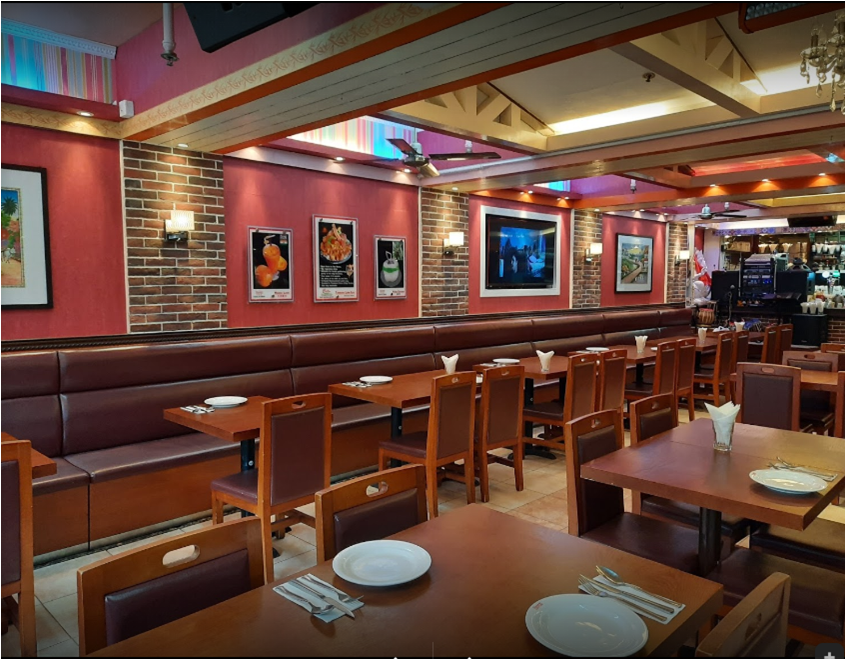
The Basmati with everything you could want except customers
The Ad Alpes text included the story of Orpheus’s descent to the Underworld to ask that his wife Eurydice, who had died just after their marriage, be allowed to return to the world above. The story is told by Ovid in the Metamorphoses (X:1-85) and there is a simplified, prose paraphrase of this in Latin via Ovid (chapter 21). An accompanying PowerPoint is available for download from https://linguae.weebly.com/latin--greek.html in the `Teaching aids for Latin via Ovid’ section.
Orpheus’ request won the sympathy of Pluto, the King of the Dead and his wife Persephone, and mention of them prompted discussion of the story of the abduction of Persephone (Prōserpina) herself by Pluto. Her mother, Demeter (Cerēs), demanded her return to the upper world and the eventual agreement was that she would spend half the year beneath the earth and half above, her return to the surface allowing vegetation to sprout once more. Sam said there was a dispute over whether her time above was spring and summer or summer and autumn but the former is more likely, both because spring is the time when plants begin to grow and because in some regions `Persephone’ was actually a name for spring itself (see Plutarch’s essay on Isis and Oriris in his Moralia - http://penelope.uchicago.edu/Thayer/E/Roman/Texts/Plutarch/Moralia/Isis_and_Osiris*/E.html)
Like the story of Orpheus and Eurydice, the Persephone legend is included in the Metamorphoses (Bk V, 341-571) with a prose version in Latin via Ovid (Interim Reading IV, pp. 297-300) and a PowerPoint at https://linguae.weebly.com/latin--greek.html
Orpheus for a time won over everyone and everything with his playing on the lyre (lyra), a hand-held instrument that resembled a miniature harp and was a smaller version of the cithara, the word from which `guitar’ derives. Lyric poetry is so called because it was originally recited with notes on the lyre as accompaniment. For more details, see https://en.wikipedia.org/wiki/Lyre
The Ad Alpes text included the story of Orpheus’s descent to the Underworld to ask that his wife Eurydice, who had died just after their marriage, be allowed to return to the world above. The story is told by Ovid in the Metamorphoses (X:1-85) and there is a simplified, prose paraphrase of this in Latin via Ovid (chapter 21). An accompanying PowerPoint is available for download from https://linguae.weebly.com/latin--greek.html in the `Teaching aids for Latin via Ovid’ section.
Orpheus’ request won the sympathy of Pluto, the King of the Dead and his wife Persephone, and mention of them prompted discussion of the story of the abduction of Persephone (Prōserpina) herself by Pluto. Her mother, Demeter (Cerēs), demanded her return to the upper world and the eventual agreement was that she would spend half the year beneath the earth and half above, her return to the surface allowing vegetation to sprout once more. Sam said there was a dispute over whether her time above was spring and summer or summer and autumn but the former is more likely, both because spring is the time when plants begin to grow and because in some regions `Persephone’ was actually a name for spring itself (see Plutarch’s essay on Isis and Oriris in his Moralia - http://penelope.uchicago.edu/Thayer/E/Roman/Texts/Plutarch/Moralia/Isis_and_Osiris*/E.html)
Like the story of Orpheus and Eurydice, the Persephone legend is included in the Metamorphoses (Bk V, 341-571) with a prose version in Latin via Ovid (Interim Reading IV, pp. 297-300) and a PowerPoint at https://linguae.weebly.com/latin--greek.html
Orpheus for a time won over everyone and everything with his playing on the lyre (lyra), a hand-held instrument that resembled a miniature harp and was a smaller version of the cithara, the word from which `guitar’ derives. Lyric poetry is so called because it was originally recited with notes on the lyre as accompaniment. For more details, see https://en.wikipedia.org/wiki/Lyre
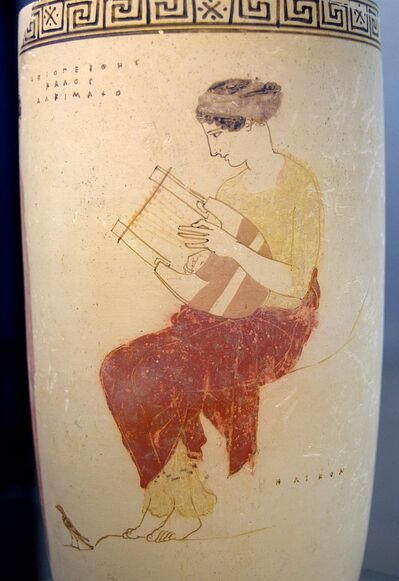
A muse playing the lyre on Mt. Helicon (ΗΛΙΚΟΝ) (5th cent. B.C.)
https://en.wikipedia.org/wiki/Lyre#/media/File:Mousai_Helikon_Staatliche_Antikensammlungen_Schoen80_n1.jpg
Chapter XXIII of Ad Alpes goes on to give the story of Aeneas’s descent to the Underworld under the guidance of the Sibyl, as told by Virgil in Bk 6 of the Aeneid, part of which is a set text for this year’s IGCSE Latin exam. Virgil’s story was modeled partly on Homer’s account of a similar trip undertaken by Odysseus and, on the basis of these detailed narratives, we can construct a map of the Underworld as the ancients conceived it. Within Pluto’s realm there was a place of punishment for those who had been particularly evil and also the `Elysian Fields’, where the virtuous enjoyed their reward.
The souls of the dead were ferried across the River Styx by Charon, whose name has to be pronounced with a hard `ch’ (as in chemistry). The Greeks and Romans placed a coin in the mouth of a dead body, believing that this would be needed by the dead to pay Charon their fare. Charon, like Hermes/Mercury and the Hindu god Yama, are described by the Greek term psychopomp – conveyor or guide of dead souls.
The name Plūtō, though it became very common in Latin, is in fact, like Hades (ᾍδης) is from Greek (Πλούτων). The original Roman name for the ruler of the dead was Dīs Pater, the first word having originally referred to any deity but then exclusively to Pluto. This semantic shift may have occurred because Latin dīs was also used as an equvalent of dīves (rich) and Greek Πλούτων (Plūtōn) is connected with ploútos (wealth). The Greeks seem to have connected the wealth and the ruler of the Underworld because precious metals are found buried in the earth.
We discussed the origin of the word suffer which John thought was probably Germanic but which is actually from Latin subferre (to bear from underneath). This is a warning that although basic words in English are more often than not Germanic, this is not always the case. There is a story about a 19th century professor who had a great hatred of the Romance (Latin and French) element in English and strove to speak as if the 11th century Norman Conquest, which opened the floodgate to these new words, had never occurred. He therefore never spoke of the `impenetrability of matter’ but only `the unthroughfaresomeness of stuff.’ He was then told that though `stuff’ may have derived from Old High Germanic stopfon (plug, stop up), this itself came from Latin stuppa (< Greek στυππη) meaning coarse linen. Utterly devastated, he promptly yielded up his spirit to the old Teutonic gods. His death may, however, have been premature as some other scholars think that stopfon was from a native Germanic root.
We finally considered whether `suffrage’ (the right to vote) was etymologically connected to `suffer’.The connection is actually only in the first syllable (suf < sub) as the main part of the Latin suffrāgium is from frāgor (shout (in support)) or frangere (break (a piece of tile to vote with)).
https://en.wikipedia.org/wiki/Lyre#/media/File:Mousai_Helikon_Staatliche_Antikensammlungen_Schoen80_n1.jpg
Chapter XXIII of Ad Alpes goes on to give the story of Aeneas’s descent to the Underworld under the guidance of the Sibyl, as told by Virgil in Bk 6 of the Aeneid, part of which is a set text for this year’s IGCSE Latin exam. Virgil’s story was modeled partly on Homer’s account of a similar trip undertaken by Odysseus and, on the basis of these detailed narratives, we can construct a map of the Underworld as the ancients conceived it. Within Pluto’s realm there was a place of punishment for those who had been particularly evil and also the `Elysian Fields’, where the virtuous enjoyed their reward.
The souls of the dead were ferried across the River Styx by Charon, whose name has to be pronounced with a hard `ch’ (as in chemistry). The Greeks and Romans placed a coin in the mouth of a dead body, believing that this would be needed by the dead to pay Charon their fare. Charon, like Hermes/Mercury and the Hindu god Yama, are described by the Greek term psychopomp – conveyor or guide of dead souls.
The name Plūtō, though it became very common in Latin, is in fact, like Hades (ᾍδης) is from Greek (Πλούτων). The original Roman name for the ruler of the dead was Dīs Pater, the first word having originally referred to any deity but then exclusively to Pluto. This semantic shift may have occurred because Latin dīs was also used as an equvalent of dīves (rich) and Greek Πλούτων (Plūtōn) is connected with ploútos (wealth). The Greeks seem to have connected the wealth and the ruler of the Underworld because precious metals are found buried in the earth.
We discussed the origin of the word suffer which John thought was probably Germanic but which is actually from Latin subferre (to bear from underneath). This is a warning that although basic words in English are more often than not Germanic, this is not always the case. There is a story about a 19th century professor who had a great hatred of the Romance (Latin and French) element in English and strove to speak as if the 11th century Norman Conquest, which opened the floodgate to these new words, had never occurred. He therefore never spoke of the `impenetrability of matter’ but only `the unthroughfaresomeness of stuff.’ He was then told that though `stuff’ may have derived from Old High Germanic stopfon (plug, stop up), this itself came from Latin stuppa (< Greek στυππη) meaning coarse linen. Utterly devastated, he promptly yielded up his spirit to the old Teutonic gods. His death may, however, have been premature as some other scholars think that stopfon was from a native Germanic root.
We finally considered whether `suffrage’ (the right to vote) was etymologically connected to `suffer’.The connection is actually only in the first syllable (suf < sub) as the main part of the Latin suffrāgium is from frāgor (shout (in support)) or frangere (break (a piece of tile to vote with)).
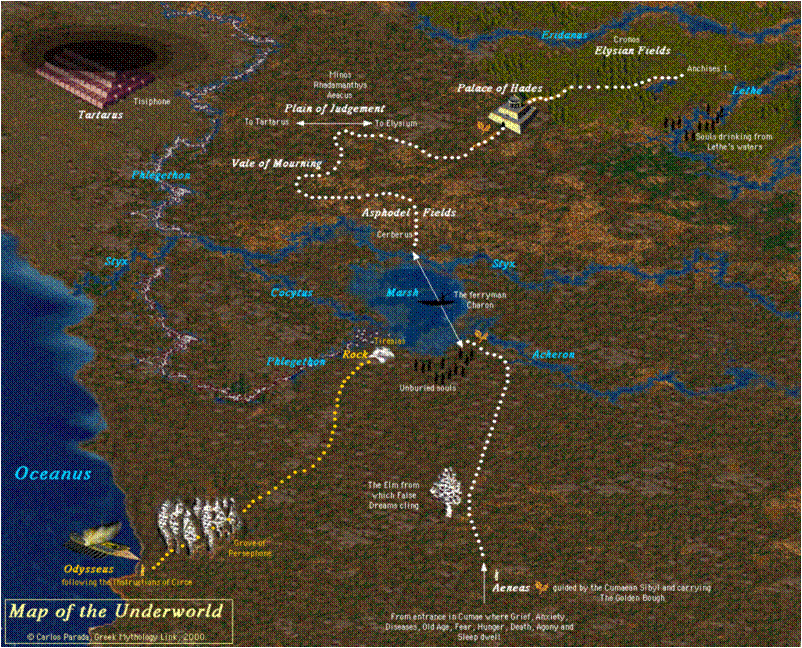
The Underworld
http://www.maicar.com/GML/Underworldmap.html
http://www.maicar.com/GML/Underworldmap.html
AD ALPES
CAPUT XXXII (contd.)
Laetī in lītōre līberī cursitābant, conchās undique ēligentēs; 110 tum, sīnū replētō,
Happy on shore children kept-running shells from-everywhere picking-up then with-lap filled
Cornēlia in saxō paulō suprā aquam prōminente cōnsēdit.
Cornelia on rock a-little above water sticking out sat-down
Dum ibi conchīs suīs intenta morātur, Sextus ā tergō clam accessit, et subitō magnā
Whilst there on-shells her intent she-was-tarrying Sextus from back secretly approached and suddenly in-loud
vōce: "Cavē latrōnēs!" inquit. Quō audītō, Cornēlia perterrita exsiluit, et, pede fallente,[1] 115
voice beware-of bandits said with-this heard Cornelia terrified got-up and tripping
in undās praecipitāta est. Tum Sextus clāmōrēs lāmentābilēs sustulit; servī autem, cum
into waves fell headlong then Sextus cries piteous raised slaves however when
celeriter in aquam sē prōiēcissent, puellam pavidam ad harēnam trāxērunt.
quickly into water selves had-hurled girl frightened onto sand dragged
Deinde omnēs vultū dēmissō ad raedās sē recēpērunt, cum Sextus longē ā tergō
Then all with-face downcast to wagons selves took-back while Sectus far-off from back
sequerētur, Cornēliā autem metū et frīgore 120 tremere nōn dēsineret.
was-following Cornelia moreover with-fear and cold tembling not stopped
Quōs cum aspexisset, Drūsilla terrōre ēlāta: "Quid nunc malī accidit?" inquit. "Cūr hās
Them when she-had-sighted Drusilla with-fear carried-away what now of-evil has-happened said why these
vestēs madidās videō?"
clothes wet I-see
Nēmō vōce Sextum prōdere voluit; sed Pūblius, quī frātrem trīstem procul sequī
Nobody with-voice Sextus to-betray wanted but Publius who brother sad in-distance to-be-following
animadverterat: "Suspicor," inquit, 125 "quid factum sit. Sextus noster, ut opīnor, dēnuō
had-noticed I-suspect said what happened Sextus our as I-think again
sorōrem lūdificāvit."
sister played-joke-on
Tum Cornēlius vultū torvō: "Satis in praesēns iam dictum est . Sed cum Arīminum
Then Cornelius with-face stern enough for the-present already said has-been but whe n to-Ariminum
pervēnerimus, tum haec rēs dīiūdicābitur. Interim in sōle vestēs madidae siccentur." 130
we-will-have-reached then this incident will-be-gone-into meanwhile in sun clothes wet let-be-dried
Quod cum factum esset, iterum profectī, sub vesperum ad caupōnem dēvertērunt.
This when done had-been again setting-off towards evening to inn they- went-aside
CAPUT XXXIII
Manē, cum raedae adductae essent, omnēs alacrēs cōnscendērunt. Sextus autem diū
In-the-morning when wagons brought had-been all energetically got-onboard Sextus however long-time
maestus sēcum sedēbat; nam ā patre vehementer castīgātus erat, eumque suae imprūdentiae
sad alone was-sitting for by father severely scolded had-been and-him of for-own thoughtlessness
maximē paenitēbat;[2] nisi enim prīdiē Onēsimus et Stasimus praestō fuissent, Cornēlia
very-greatly regret-was-affecting if-not for previous-day Onesimus and Stasimus on-hand had-been Cornelia
fortasse in flūctibus periisset. 5
perhaps in waves would-have-perished
Postrēmō hilariōre vultū sē circumspicere coepit; cum autem locō idōneō[3] viātōrēs
Finally with-more-cheerful face self look-around he-began when however at-place suitable travellers
cōnstitissent, ut cibus dēprōmerētur, in umbrā adhūc quiētus sedēbat, neque ōrāvit ut sibi
had-halted so-that food could-be-unloaded in shad e still quiet he-sat and-not asked that to-him
licēret per agrōs vagārī. Ē contrāriō ā mātre petiit ut sibi[4] aliquid nārrāret.
it-be-permitted through fields to-wander on contrar y from mother he-sought that to-him something she-should-tell
Drūsilla, prīmō recūsāre cōnāta: "Hīs diēbus," inquit, 10 "pauca legō. Sed fortasse nōn
Drusilla at-first to-refuse tried these days she-said few-things I-read but perhaps not
audīvīstī dē itinere Orpheī, quī ad īnferōs dēscendit, ut inde uxōrem Eurydicēn redūceret.
you-have-heard about journey of-Orpheus who to underworld descended so-that thence wife Eurydice he-could-bring-back
"Haec nārrā, sīs, māter," inquit Cornēlia. "Ego quoque audīre volō."
These-things tell please mother said Cornelia I too to-hear want
"Memoriae trāditum est," inquit Drūsilla, "Eurydicēn, dum 15 in herbā vagātur
To-memory handed-down it-has-been said Drusilla Eurydice while in grass she-wanders
secūra, dentem serpentis in pedem recēpisse; quō vulnere celeriter exanimāta est.[5]
free-of-care tooth of-serpent in foot to-have received from-which injury quickely killed she-was
"Quam cum Orpheus diū dēplōrāsset, cōnstituit ipse dēscendere ad umbrās, sī forte[6]
Her when Orpheus for-long=time had-mourned he-decided himself to-descend to shades in case
cantū suō dīs īnferīs persuādēre posset, ut Eurydicēn ad superōs redūcī paterentur. 20
by-singing his gods below to-persuade he-was-able that Eurydice to world-above to-be-brought-back they-allow
"Quārē sine morā profectus, per 'templa alta Orcī pallida lētō, nūbila tenebrīs loca'[7]
So without delay having-set-off through temples lofty of-Orcus pale with-death gloomy with-darkness places
NOTES
[1] Literally `with foot deceiving [her]’
[2] Like several other impersonal verbs, paenitet takes the accusative of the person feeling the emotion and genitive of its cause or object.
[3] In prose a prepositional phrase (in locō idoneō) is more usual than this plain ablative.
[4] This is an indirect reflexive, referring back to the subject of the main clause (Sextus) not to the subject of the dependent clause (Drusilla).
[5] The story of Orpheus is told in Book X, ll 1-85 of Ovid’s Metamorphoses and summarised in prose in chapter XXI of Latin via Ovid. A PowerPoint illustrating the chapter can be downloaded from the `Teaching aids for Latin via Ovid’ section of https://linguae.weebly.com/latin--greek.html
[6] Literally `if by chance’
[7] The words are from Cicero, Tusculanae disputationes,1.48, and he is often assumed to be quoting from Andromacha, a play by Ennius (c.239-169 B.c.). However, Cicero does not name his source and Varro (Lingua Latina, 7.6), who does make this attribution, quotes rather different words. See Brill’s Companion to Roman Tragedy,pp. 18-19, https://books.google.com.hk/books?id=x8VWCgAAQBAJ
iter fēcit, ipsamque Prōserpinam impavidus et rēgem īnferōrum adiit.
journey he-made and-herself Proserpina fearlessly and king of-underworld approached
"Apud quōs lyrā personat, nervōsque ad verba movēns ōrat ut uxor sibi reddātur.
Among them on-lyre he-plays and-strings to-accompany words moving he-begs that wife to-him be-returned
Interim, dulcēdine cantūs captae, umbrae 25 undique flēbant. Quīn etiam Tantalus nōn diūtius
Meanwhile by-sweetness of-singing captivated shades in-all-directions were-weeping indeed even Tantalus not longer
aquam captāre cōnātus est, et Ixīōn vultū rīsit invītō.[1]
water to-get-hold-of tried and Ixion with-face smiled unwilling
"Hīs precibus resistere nec Prōserpina neque ipse Plūtō poterat, et Eurydicē vocāta est.
These pleas to-resist neither Proserpina nor himself Pluto was-able and Eurydice called was
Accessit uxor adhūc dē vulnere tarda; quam Orpheus laetus recēpit. Sed dīmissus est cum 30
Came-up wife still from wound slow her Orpheus happy received but dismissed he-was with
mandātō ut abīret statim, nēve prius respiceret quam ē rēgnō īnferōrum esset ēgressus; aliter
instruction that he-leave at-once nor earlier look-back than from kingdom of-underworld he-had emerged otherwise
irritum dōnum futūrum.
void gift going-to-be
"Silentiō Orpheus et Eurydicē ascendērunt clīvum arduum, obscūrum, calīgīne ātrā
In-silence Orpheus and Eurydice ascended slope steep dark with-darkness black
dēnsum; nec procul āfuērunt ā margine ōrae superae, cum ille, veritus nē uxor dēficeret,
thick nor far they-wer e-away from edge of-shore upper when he fearing lest wife was-loosing-strength
amāns oculōs 35 retorsit.
lovingly eyes turned-back
"Quō factō, illa statim relāpsa est; neque Orpheō, etsī Charontem ēnīxē ōrāvit, flūmen
With-which done she at-once fell back and-not to-Orpheus although Charon forcefully he-begged river
iterum trānsīre licuit, nec posteā uxōrem umquam aspexit."
again to-cross was-allowed nor afterwards wife ever he-saw
"Tū quoque, māter," inquit Cornēlia, "audītū trīstia nārrās. 40Vix lacrimās teneō, cum
You also mother said Cornelia to-hear things-sad tall scarcely tears I-hold [back] when
dē Orpheō miserō cōgitō."
about Orpheus wretched I-think
"At," inquit Sextus, "quis est ille Charōn, aut quō modō is Orphea prohibēre potuit
But asked Sextus who is that Charon or in-what way he Orpheus to-provent he-was-able
NOTE
[1] Tantalus, the great-grandfather of Agamenon and Menalaus, stood in a pool whose waters receded whenever he bent down to drink, while the fruit hanging above him moved upwards whenever he tried to reach it. This was punishment for his having served his own son, Pelops, as a meal for the gods to test their omniscience (see https://en.wikipedia.org/wiki/Tantalus). Ixion revolved eternally on a wheel of fire after he attempted to seduce Hera (see https://www.ancient.eu/Ixion/)..
quōminus redīret, ut iterum uxōrem peteret?"
from return so-that again wife he-might-seek
Tum Pūblius: "Charōn erat portitor," inquit, "quī umbrās 45 cymbā trāns flūmen
Then Publius Charon was ferryman said who shades in-skiff across river
Acherontem[1] vehēbat. Dē hīs rēbus multa dīcit poēta Vergilius, quī refert quō modō hērōs
Acheron used-to-carry about these things many-things says poet Virgil who related in-what way hero
quoque Aenēās ad īnferōs dēscenderit, ut ibi patrem Anchīsēn convenīret."
also Aeneas to underworld descended so-that there father Anchises he-could-meet
"Dē hōc amplius, sī vīs," inquit Sextus. "Libenter tē audiō." 50
About this more if you-will said Sextus Gladly you I-listen-to
"Aenēās, cum classem ad Italiam appulisset," inquit Pūblius, "Sibyllam statim adiit,
Aeneas when fleet to Italy he-had-brought said Publius Sibyl at-once went-to
quae ad īnferōs dux viae esset. Illa autem eī respondit:
who to underworld leader of-way might-be she then to-him replies
" ' Facilis dēscēnsus Avernō;
easy descent to-Avernus
55 Noctēs atque diēs patet ātrī iānua Dītis.
Nights and days lies-open of-dark door Dis
Sed revocāre gradum superāsque ēvādere ad aurās,
But to-retrace step and-above to-go-ou t to air
Hoc opus, hic labor est. '[2]
This work this labour is
"Praetereā monuit paucōs admodum fuisse, quī umquam ad ōrās rediissent superās,
Besides she-warned few exceedingly there-to-have-been who ever to shores had-returned above
cum semel eō dēscendissent; sīn autem 60 ille perīculum tantum subīre parātus esset, in opācā
when once there they-had-descended but-if however he danger so-great to-undergo ready was in shadowy
NOTES
[1] Acheron was the name both of a real river in western Greece and of one of the five, interconnected rivers of Hades (or Orcus), the others being the Styx, Lethe (`River of Forgetting’), Phlegethon (`River of Burning’) and Cocytus (`River of Lamentation’). Further details at https://www.thoughtco.com/five-rivers-of-the-greek-underworld-118889
[2] Virgil, Aeneid, 6:126-8. Dis is another name for Pluto/Hades. Both Virgil and Ovid place the Sibyl near Cumae and Lake Avernus (Lago Averno) at the north end of the Bay of Naples but Servius, the 4th century Virgilian commentator, links the story of the golden bough with the cult of Diana Nemorensis and the fugitive slave priest by Lake Nemi in the Alban hills over 100 miles to the north (see chapter 23 above). No other ancient source mentions the bough in connection with the Nemi shrine so Virgil might have been drawing upon an entirely separate, purely Cumaean legend or on his own imagination for this motif. For a full discussion of the Nemi cult and the text of all the original sources see C. Bennett Pascal’, ‘Rex Nemorensis’, Numen 23:1, 23-39, https://www.jstor.org/stable/3269555. Aeneas’s meeting with the Sibyl is described in Book XIV of the Metamorphoises, and summarised in chapter XXI of Latin via Ovid, with PowerPoint at https://linguae.weebly.com/latin--greek.html
silvā inveniendum esse rāmum aureum, quī, ut mūnus acceptissimum, ad Prōserpinam
wood to-be-found to-be bough golden which as gift most-welcome to Proserpina
dēferrētur.
might-be-carried
"Aenēās, fortūna adiūtus, rāmum invēnit, et Sibyllā duce per spēluncam ātram
Aeneas by-fortune aided bough found and with-Sibyl [as]leader through cave dark
prōgressus iter īnferōrum brevī carpēbat. 65 Prīmō occurrunt speciēs horrendae, quās hērōs,
having-advanced journey of-underworld soon -was-on first there-meet-him apparitions terrible which hero
timōre commōtus, gladiō strictō transfīgere parābat. Sibylla autem docuit illās esse umbrās
by-fear moved with-sword drawn to-run-through was-preparing Sibyl however explained them to-be shades
tantum, quae nec laedere nec laedī possent.
only which neither to-harm nor to-be-harmed were-able
"Sīc ad rīpam Acherontis pervēnērunt. Quōs cum appropinquantēs vīdisset Charōn,
Thus to bank of-Acheron they-reached them when approaching had-seen Charon
statim abīre iussit; nam sibi nefās esse 70 corpora vīvā trādūcere cymbā. Postquam autem
at-once to-go-away ordered as for-him wrong to-be bodies living to-take-across in-boat after however
rāmum aspexit aureum, sine morā Aenēān comitemque in cymbam recēpit.
bough he-sighted golden without delay Aeneas and-companion into boat he-received
CAPUT XXXII (contd.)
Laetī in lītōre līberī cursitābant, conchās undique ēligentēs; 110 tum, sīnū replētō,
Happy on shore children kept-running shells from-everywhere picking-up then with-lap filled
Cornēlia in saxō paulō suprā aquam prōminente cōnsēdit.
Cornelia on rock a-little above water sticking out sat-down
Dum ibi conchīs suīs intenta morātur, Sextus ā tergō clam accessit, et subitō magnā
Whilst there on-shells her intent she-was-tarrying Sextus from back secretly approached and suddenly in-loud
vōce: "Cavē latrōnēs!" inquit. Quō audītō, Cornēlia perterrita exsiluit, et, pede fallente,[1] 115
voice beware-of bandits said with-this heard Cornelia terrified got-up and tripping
in undās praecipitāta est. Tum Sextus clāmōrēs lāmentābilēs sustulit; servī autem, cum
into waves fell headlong then Sextus cries piteous raised slaves however when
celeriter in aquam sē prōiēcissent, puellam pavidam ad harēnam trāxērunt.
quickly into water selves had-hurled girl frightened onto sand dragged
Deinde omnēs vultū dēmissō ad raedās sē recēpērunt, cum Sextus longē ā tergō
Then all with-face downcast to wagons selves took-back while Sectus far-off from back
sequerētur, Cornēliā autem metū et frīgore 120 tremere nōn dēsineret.
was-following Cornelia moreover with-fear and cold tembling not stopped
Quōs cum aspexisset, Drūsilla terrōre ēlāta: "Quid nunc malī accidit?" inquit. "Cūr hās
Them when she-had-sighted Drusilla with-fear carried-away what now of-evil has-happened said why these
vestēs madidās videō?"
clothes wet I-see
Nēmō vōce Sextum prōdere voluit; sed Pūblius, quī frātrem trīstem procul sequī
Nobody with-voice Sextus to-betray wanted but Publius who brother sad in-distance to-be-following
animadverterat: "Suspicor," inquit, 125 "quid factum sit. Sextus noster, ut opīnor, dēnuō
had-noticed I-suspect said what happened Sextus our as I-think again
sorōrem lūdificāvit."
sister played-joke-on
Tum Cornēlius vultū torvō: "Satis in praesēns iam dictum est . Sed cum Arīminum
Then Cornelius with-face stern enough for the-present already said has-been but whe n to-Ariminum
pervēnerimus, tum haec rēs dīiūdicābitur. Interim in sōle vestēs madidae siccentur." 130
we-will-have-reached then this incident will-be-gone-into meanwhile in sun clothes wet let-be-dried
Quod cum factum esset, iterum profectī, sub vesperum ad caupōnem dēvertērunt.
This when done had-been again setting-off towards evening to inn they- went-aside
CAPUT XXXIII
Manē, cum raedae adductae essent, omnēs alacrēs cōnscendērunt. Sextus autem diū
In-the-morning when wagons brought had-been all energetically got-onboard Sextus however long-time
maestus sēcum sedēbat; nam ā patre vehementer castīgātus erat, eumque suae imprūdentiae
sad alone was-sitting for by father severely scolded had-been and-him of for-own thoughtlessness
maximē paenitēbat;[2] nisi enim prīdiē Onēsimus et Stasimus praestō fuissent, Cornēlia
very-greatly regret-was-affecting if-not for previous-day Onesimus and Stasimus on-hand had-been Cornelia
fortasse in flūctibus periisset. 5
perhaps in waves would-have-perished
Postrēmō hilariōre vultū sē circumspicere coepit; cum autem locō idōneō[3] viātōrēs
Finally with-more-cheerful face self look-around he-began when however at-place suitable travellers
cōnstitissent, ut cibus dēprōmerētur, in umbrā adhūc quiētus sedēbat, neque ōrāvit ut sibi
had-halted so-that food could-be-unloaded in shad e still quiet he-sat and-not asked that to-him
licēret per agrōs vagārī. Ē contrāriō ā mātre petiit ut sibi[4] aliquid nārrāret.
it-be-permitted through fields to-wander on contrar y from mother he-sought that to-him something she-should-tell
Drūsilla, prīmō recūsāre cōnāta: "Hīs diēbus," inquit, 10 "pauca legō. Sed fortasse nōn
Drusilla at-first to-refuse tried these days she-said few-things I-read but perhaps not
audīvīstī dē itinere Orpheī, quī ad īnferōs dēscendit, ut inde uxōrem Eurydicēn redūceret.
you-have-heard about journey of-Orpheus who to underworld descended so-that thence wife Eurydice he-could-bring-back
"Haec nārrā, sīs, māter," inquit Cornēlia. "Ego quoque audīre volō."
These-things tell please mother said Cornelia I too to-hear want
"Memoriae trāditum est," inquit Drūsilla, "Eurydicēn, dum 15 in herbā vagātur
To-memory handed-down it-has-been said Drusilla Eurydice while in grass she-wanders
secūra, dentem serpentis in pedem recēpisse; quō vulnere celeriter exanimāta est.[5]
free-of-care tooth of-serpent in foot to-have received from-which injury quickely killed she-was
"Quam cum Orpheus diū dēplōrāsset, cōnstituit ipse dēscendere ad umbrās, sī forte[6]
Her when Orpheus for-long=time had-mourned he-decided himself to-descend to shades in case
cantū suō dīs īnferīs persuādēre posset, ut Eurydicēn ad superōs redūcī paterentur. 20
by-singing his gods below to-persuade he-was-able that Eurydice to world-above to-be-brought-back they-allow
"Quārē sine morā profectus, per 'templa alta Orcī pallida lētō, nūbila tenebrīs loca'[7]
So without delay having-set-off through temples lofty of-Orcus pale with-death gloomy with-darkness places
NOTES
[1] Literally `with foot deceiving [her]’
[2] Like several other impersonal verbs, paenitet takes the accusative of the person feeling the emotion and genitive of its cause or object.
[3] In prose a prepositional phrase (in locō idoneō) is more usual than this plain ablative.
[4] This is an indirect reflexive, referring back to the subject of the main clause (Sextus) not to the subject of the dependent clause (Drusilla).
[5] The story of Orpheus is told in Book X, ll 1-85 of Ovid’s Metamorphoses and summarised in prose in chapter XXI of Latin via Ovid. A PowerPoint illustrating the chapter can be downloaded from the `Teaching aids for Latin via Ovid’ section of https://linguae.weebly.com/latin--greek.html
[6] Literally `if by chance’
[7] The words are from Cicero, Tusculanae disputationes,1.48, and he is often assumed to be quoting from Andromacha, a play by Ennius (c.239-169 B.c.). However, Cicero does not name his source and Varro (Lingua Latina, 7.6), who does make this attribution, quotes rather different words. See Brill’s Companion to Roman Tragedy,pp. 18-19, https://books.google.com.hk/books?id=x8VWCgAAQBAJ
iter fēcit, ipsamque Prōserpinam impavidus et rēgem īnferōrum adiit.
journey he-made and-herself Proserpina fearlessly and king of-underworld approached
"Apud quōs lyrā personat, nervōsque ad verba movēns ōrat ut uxor sibi reddātur.
Among them on-lyre he-plays and-strings to-accompany words moving he-begs that wife to-him be-returned
Interim, dulcēdine cantūs captae, umbrae 25 undique flēbant. Quīn etiam Tantalus nōn diūtius
Meanwhile by-sweetness of-singing captivated shades in-all-directions were-weeping indeed even Tantalus not longer
aquam captāre cōnātus est, et Ixīōn vultū rīsit invītō.[1]
water to-get-hold-of tried and Ixion with-face smiled unwilling
"Hīs precibus resistere nec Prōserpina neque ipse Plūtō poterat, et Eurydicē vocāta est.
These pleas to-resist neither Proserpina nor himself Pluto was-able and Eurydice called was
Accessit uxor adhūc dē vulnere tarda; quam Orpheus laetus recēpit. Sed dīmissus est cum 30
Came-up wife still from wound slow her Orpheus happy received but dismissed he-was with
mandātō ut abīret statim, nēve prius respiceret quam ē rēgnō īnferōrum esset ēgressus; aliter
instruction that he-leave at-once nor earlier look-back than from kingdom of-underworld he-had emerged otherwise
irritum dōnum futūrum.
void gift going-to-be
"Silentiō Orpheus et Eurydicē ascendērunt clīvum arduum, obscūrum, calīgīne ātrā
In-silence Orpheus and Eurydice ascended slope steep dark with-darkness black
dēnsum; nec procul āfuērunt ā margine ōrae superae, cum ille, veritus nē uxor dēficeret,
thick nor far they-wer e-away from edge of-shore upper when he fearing lest wife was-loosing-strength
amāns oculōs 35 retorsit.
lovingly eyes turned-back
"Quō factō, illa statim relāpsa est; neque Orpheō, etsī Charontem ēnīxē ōrāvit, flūmen
With-which done she at-once fell back and-not to-Orpheus although Charon forcefully he-begged river
iterum trānsīre licuit, nec posteā uxōrem umquam aspexit."
again to-cross was-allowed nor afterwards wife ever he-saw
"Tū quoque, māter," inquit Cornēlia, "audītū trīstia nārrās. 40Vix lacrimās teneō, cum
You also mother said Cornelia to-hear things-sad tall scarcely tears I-hold [back] when
dē Orpheō miserō cōgitō."
about Orpheus wretched I-think
"At," inquit Sextus, "quis est ille Charōn, aut quō modō is Orphea prohibēre potuit
But asked Sextus who is that Charon or in-what way he Orpheus to-provent he-was-able
NOTE
[1] Tantalus, the great-grandfather of Agamenon and Menalaus, stood in a pool whose waters receded whenever he bent down to drink, while the fruit hanging above him moved upwards whenever he tried to reach it. This was punishment for his having served his own son, Pelops, as a meal for the gods to test their omniscience (see https://en.wikipedia.org/wiki/Tantalus). Ixion revolved eternally on a wheel of fire after he attempted to seduce Hera (see https://www.ancient.eu/Ixion/)..
quōminus redīret, ut iterum uxōrem peteret?"
from return so-that again wife he-might-seek
Tum Pūblius: "Charōn erat portitor," inquit, "quī umbrās 45 cymbā trāns flūmen
Then Publius Charon was ferryman said who shades in-skiff across river
Acherontem[1] vehēbat. Dē hīs rēbus multa dīcit poēta Vergilius, quī refert quō modō hērōs
Acheron used-to-carry about these things many-things says poet Virgil who related in-what way hero
quoque Aenēās ad īnferōs dēscenderit, ut ibi patrem Anchīsēn convenīret."
also Aeneas to underworld descended so-that there father Anchises he-could-meet
"Dē hōc amplius, sī vīs," inquit Sextus. "Libenter tē audiō." 50
About this more if you-will said Sextus Gladly you I-listen-to
"Aenēās, cum classem ad Italiam appulisset," inquit Pūblius, "Sibyllam statim adiit,
Aeneas when fleet to Italy he-had-brought said Publius Sibyl at-once went-to
quae ad īnferōs dux viae esset. Illa autem eī respondit:
who to underworld leader of-way might-be she then to-him replies
" ' Facilis dēscēnsus Avernō;
easy descent to-Avernus
55 Noctēs atque diēs patet ātrī iānua Dītis.
Nights and days lies-open of-dark door Dis
Sed revocāre gradum superāsque ēvādere ad aurās,
But to-retrace step and-above to-go-ou t to air
Hoc opus, hic labor est. '[2]
This work this labour is
"Praetereā monuit paucōs admodum fuisse, quī umquam ad ōrās rediissent superās,
Besides she-warned few exceedingly there-to-have-been who ever to shores had-returned above
cum semel eō dēscendissent; sīn autem 60 ille perīculum tantum subīre parātus esset, in opācā
when once there they-had-descended but-if however he danger so-great to-undergo ready was in shadowy
NOTES
[1] Acheron was the name both of a real river in western Greece and of one of the five, interconnected rivers of Hades (or Orcus), the others being the Styx, Lethe (`River of Forgetting’), Phlegethon (`River of Burning’) and Cocytus (`River of Lamentation’). Further details at https://www.thoughtco.com/five-rivers-of-the-greek-underworld-118889
[2] Virgil, Aeneid, 6:126-8. Dis is another name for Pluto/Hades. Both Virgil and Ovid place the Sibyl near Cumae and Lake Avernus (Lago Averno) at the north end of the Bay of Naples but Servius, the 4th century Virgilian commentator, links the story of the golden bough with the cult of Diana Nemorensis and the fugitive slave priest by Lake Nemi in the Alban hills over 100 miles to the north (see chapter 23 above). No other ancient source mentions the bough in connection with the Nemi shrine so Virgil might have been drawing upon an entirely separate, purely Cumaean legend or on his own imagination for this motif. For a full discussion of the Nemi cult and the text of all the original sources see C. Bennett Pascal’, ‘Rex Nemorensis’, Numen 23:1, 23-39, https://www.jstor.org/stable/3269555. Aeneas’s meeting with the Sibyl is described in Book XIV of the Metamorphoises, and summarised in chapter XXI of Latin via Ovid, with PowerPoint at https://linguae.weebly.com/latin--greek.html
silvā inveniendum esse rāmum aureum, quī, ut mūnus acceptissimum, ad Prōserpinam
wood to-be-found to-be bough golden which as gift most-welcome to Proserpina
dēferrētur.
might-be-carried
"Aenēās, fortūna adiūtus, rāmum invēnit, et Sibyllā duce per spēluncam ātram
Aeneas by-fortune aided bough found and with-Sibyl [as]leader through cave dark
prōgressus iter īnferōrum brevī carpēbat. 65 Prīmō occurrunt speciēs horrendae, quās hērōs,
having-advanced journey of-underworld soon -was-on first there-meet-him apparitions terrible which hero
timōre commōtus, gladiō strictō transfīgere parābat. Sibylla autem docuit illās esse umbrās
by-fear moved with-sword drawn to-run-through was-preparing Sibyl however explained them to-be shades
tantum, quae nec laedere nec laedī possent.
only which neither to-harm nor to-be-harmed were-able
"Sīc ad rīpam Acherontis pervēnērunt. Quōs cum appropinquantēs vīdisset Charōn,
Thus to bank of-Acheron they-reached them when approaching had-seen Charon
statim abīre iussit; nam sibi nefās esse 70 corpora vīvā trādūcere cymbā. Postquam autem
at-once to-go-away ordered as for-him wrong to-be bodies living to-take-across in-boat after however
rāmum aspexit aureum, sine morā Aenēān comitemque in cymbam recēpit.
bough he-sighted golden without delay Aeneas and-companion into boat he-received

