| linguae |
|
QUESTIONS ARISING FROM 113th. MEETING – 24/7/20
(the record of earlier meetings can be downloaded from the main Circulus page as can the version of Ciceronis Filius with illustrations added. The illustrated text of Genesis is available on the Genesis page, of Kepler's Somnium on the Somnium page and of Nutting's Ad Alpes on the Ad Alpes page)
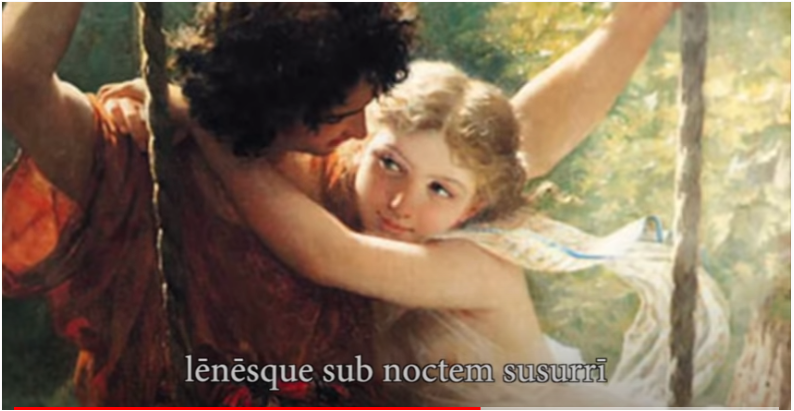
`..and soft whispers at nightfall’ – a line from Horace, Odes 1: 9
The Zoom session was attended by Tanya, Zhang Wei, Sam and John and we read from line 110 in chapter 26 of Ad Alpēs to l.110 in chapter 27, the point at which the Lydian shepherd Gyges made himself king (see text below). In the story as told by Cicero, he made himself invisible by turning the bezel on his ring inwards. `Bezel’ is not a particularly common English word but we established that the first vowel is pronounced short.
We also note that the verses from Horace included near the end of chapter 26 were in a combination of hexameters and trimeter lines, the latter being on the pattern ᵒ - ᵕ - ᵒ - ᵕ - ᵒ - ᵕ - and commonly used in dialogue in Latin plays. Roman poets took over from the Greeks a bewildering array of metrical patterns, which are set out on pages 396-421 of Anne Mahoney’s updated edition of Allen and Greenough’s New Latin Grammar, which John relies on when preparing handouts On-line editions of the grammar, including the very useful one on the Dickinson College site, either omit the section on meter or have a version from the original edition which does not reflect the most recent research. The most convenient guide for those without a hard copy of Mahoney is probably the articles on each meter on Wikipedia, with master list at https://en.wikipedia.org/wiki/List_of_classical_meters
The only patterns which John carries in his head are the hexameter (used in epic poetry) and the pentameter, whose structure, together with general rules for scansion of lines, is set out in latin_verse.doc at https://linguae.weebly.com/courses.html The combination of one hexameter and one pentameter is known as an elegiac couplet, the form used by Ovid for all his poetry other than the Metamorphoses, which, as befits the grand scope of the work, is entirely in hexameters.
The rhythms of Latn poetry are verty difficult for modern, Anglophone ears to appreciate as we are used to verse based on stress rather than syllable length. There are, however, musical performances of some poems available on the Internet and the group’s Tyrtarion’s interpretation of Horace’s Soracte ode (1:9) was mentioned in our April meeting this year. This is at https://www.youtube.com/watch?time_continue=1&v=EwaQQc0PQSY&feature=emb_logo and the text and translations of the poem are at https://linguae.weebly.com/vides-ut-alta-stet-nive.html
There was a brief discussion of the Covid-19 situation in Australia’s Victoria state, Tanya explaining that a lot of the problem was down to the state government’s relying on private security guards rather than the police to enforce quarantine. Some of the guards had been having sex with persons whose isolation they were supposed to be ensuring, and had then gone on to perform similar service at other centres,
The Zoom session was attended by Tanya, Zhang Wei, Sam and John and we read from line 110 in chapter 26 of Ad Alpēs to l.110 in chapter 27, the point at which the Lydian shepherd Gyges made himself king (see text below). In the story as told by Cicero, he made himself invisible by turning the bezel on his ring inwards. `Bezel’ is not a particularly common English word but we established that the first vowel is pronounced short.
We also note that the verses from Horace included near the end of chapter 26 were in a combination of hexameters and trimeter lines, the latter being on the pattern ᵒ - ᵕ - ᵒ - ᵕ - ᵒ - ᵕ - and commonly used in dialogue in Latin plays. Roman poets took over from the Greeks a bewildering array of metrical patterns, which are set out on pages 396-421 of Anne Mahoney’s updated edition of Allen and Greenough’s New Latin Grammar, which John relies on when preparing handouts On-line editions of the grammar, including the very useful one on the Dickinson College site, either omit the section on meter or have a version from the original edition which does not reflect the most recent research. The most convenient guide for those without a hard copy of Mahoney is probably the articles on each meter on Wikipedia, with master list at https://en.wikipedia.org/wiki/List_of_classical_meters
The only patterns which John carries in his head are the hexameter (used in epic poetry) and the pentameter, whose structure, together with general rules for scansion of lines, is set out in latin_verse.doc at https://linguae.weebly.com/courses.html The combination of one hexameter and one pentameter is known as an elegiac couplet, the form used by Ovid for all his poetry other than the Metamorphoses, which, as befits the grand scope of the work, is entirely in hexameters.
The rhythms of Latn poetry are verty difficult for modern, Anglophone ears to appreciate as we are used to verse based on stress rather than syllable length. There are, however, musical performances of some poems available on the Internet and the group’s Tyrtarion’s interpretation of Horace’s Soracte ode (1:9) was mentioned in our April meeting this year. This is at https://www.youtube.com/watch?time_continue=1&v=EwaQQc0PQSY&feature=emb_logo and the text and translations of the poem are at https://linguae.weebly.com/vides-ut-alta-stet-nive.html
There was a brief discussion of the Covid-19 situation in Australia’s Victoria state, Tanya explaining that a lot of the problem was down to the state government’s relying on private security guards rather than the police to enforce quarantine. Some of the guards had been having sex with persons whose isolation they were supposed to be ensuring, and had then gone on to perform similar service at other centres,

The Metropark Hotel, Causeway Bay, now transformed into the `Office for Safeguarding National Security’
John also noted that one of his favourite watering holes, the Metropark Hotel near Tin Hau MTR station has been taken over by our northern masters (see . https://viewfromthewing.com/metropark-hotel-has-been-converted-to-chinas-state-security-headquarters-in-hong-kong/ ) Normal `cultural activity’ has, of course been suspended in any case, but we will miss the bar there if the goons stay on when normality is finally restored.
AD ALPES CHAPTER XXVI:110 –XXVII:110
"Ibi rēbus omnibus rīte perāctīs, constantī gradū, haud 110 frūstrā spērāns deōs propitiōs
There with-things all duly carried-out at-constant pace not in-vain hoping gods propitious
futūrōs, quōrum cultum nē mortis quidem metū dēterritus relīquisset, nūllō prohibente
going-to-be whose cult not of-death even by-fear deterred he-had-abandoned with-nobody prohibiting
ad suōs rediit.
to own-people he-returned
"Interim enim Gallī quiētī aspiciēbant, sīve quod tantā audāciā erant obstupefactī, sīve
Meanwhile for Gauls quiet were-looking-on either because by-so-great boldness they-were astounded or
quod etiam religiōne movēbantur, cuius nē haec quidem gēns est omnīnō neglegēns,
because even by-religious-scruple they-were-moved of-which not this even tribe is entirely neglectful
nec 115 vērō sine causā. Nam vērē dictum est: 'Deōrum iniūriae dīs cūrae sunt.' "[1]
and-not indeed without cause for truly said it-has-been of-gods injuries for-gods of-concern are
"Sed nunc," inquit Sextus, "ut ad alia veniam, iam dūdum factum est, cum Pūblius
But now said Sextus so-that to other-things i-may-come already for-long-time happened it-has when Publius
nūllōs versūs suōs recitāvit. Nihilne nūper scrīpsistī, Pūblī?"
no verses of-his has-recited nothing-? recently you-have-written Publius
120 "Nihil," inquit ille; "sed modo legēbam carmen ēgregium poētae Horātī Flaccī dē
Nothing said he but just-now I-was-reading poem outstanding of-poet Horatius Flaccus about
Īnsulīs Fortūnātīs,[2] quās (ut ipse dīcit) Iuppiter gentī piae sēposuit."
The-Isles Fortunate which as he-himself says Juppiter for-people virtuous has-set-aside
"Hoc audiāmus," inquit Sextus.
This let-us-hear said Sextus
"Tōtum memoriā vix teneō," inquit ille; "sed hī sunt versūs 125 aliquot : "
Whole-thing in-memory scarcely I-hold said he but these are verses some
'Mella cavā mānant ex īlice, montibus altīs
Honey hollow flows from oak from-mountains high
NOTES
[1] An allusion to a statement attributed by Tacitus (Annales, I.73) to the emperor Tiberius, whose actual point was that the gods themelves would punish crimes committed against them so there was no need for human beings to punish on their behalf.
[2] The Fortunate Isles (or Isles of the Blessed) were islands supposedly somewhere in the Atlantic, where virtuous souls could go after death. They were also referred to as Elysium or the Elysian fields, though Virgil in Book VI of the Aeneid envisages these as accessed via the Underworld.
Levis crepante lympha dēsilit pede.
Light with-tinkling water leaps-down foot
Illīc iniussae veniunt ad mulctra capellae,
There unordered come to milk-pails goats
Refertque tenta grex amīcus ūbera, 130
And-brings-back distended herd friendly udders
Nec vespertīnus circumgemit ursus ovīle,
And-not at-night roars-around bear sheep-pen
Nequ(e) intumēscit alta vīperīs humus;
Nor swells deep with-snakes soil
Nūlla nocent pecorī contāgia, nūllius astrī
No do-harm to-flock diseases no of-star
Greg(em) aestuōsa torret impotentia.' "[1]
Herd burning roasts rage
135 "Optimē," inquit pater. "Vellem mē quoque tam multa meminisse posse."
Excellent said father I-would-like myself also so many-things to-remmeber to-be-able
Dum haec fīunt, per loca amoena via ferēbat; cum autem hōrā ferē nōnā[2]
W hile these-things are-happening though places charming road was-leading when and at-hour about ninth to
ad oppidum Falēriōs[3] perventum esset, viātōrēs libenter ad caupōnem dēvertērunt.
To town Falerii reached it-had-been travellers gladly to inn turned-aside
CHAPTER XXVII
Nōndum aderat cēnae tempus; quārē līberī paulisper ōtiōsī vagābantur, cum nescīrent
Not-yet was-here for-dinner time therefore children a-short-while at-leisure roamed-around since they-didn’t-know
quid potissimum facerent. Tum Sextus: "Multōs diēs Onēsimus omnīnō nihil nōbīs nārrāvit.
what for-bes t they-should-do then Sextus for-many days Onesimus at-all nothing to-us has-told
Eum adeāmus, sī forte nunc aliquid recordārī possit."
Him let-us-go-to in-case by-chance anything to-recall he-is-able
NOTES
[1] Horace, Epodes 16: 47-52 and 61-62. Hexameters alternate with iambic trimesters (ᵒ - ᵕ - ᵒ - ᵕ -ᵒ - ᵕ - )
[2] i.e. about 2 p.m.
[3] Falerii (modern Civita Castellana) was situated just off the via Flaminia about 30 miles NE of Rome. The now abandoned site of the Roman city is notable for its well-preserved walls. See https://en.wikipedia.org/wiki/Falerii
5"Fīat," inquit Cornēlia. "Semper enim ille dīcit digna, quae audiantur."
So-be-it said Cornelia always for he says things-worthy that might-be-heard
Quōs ubi appropinquantēs vīdit, Onēsimus: "Cūr vōs sīc languidōs videō, līberī?
Whom when approaching he-saw Onesimus why you so listless I-see children
Lūdendō[1] etiam nunc fatīgātī estis?"
of-playing also now tired you-are
"Ita vērō," inquit Sextus; "nec scīmus quid potissimum10 faciāmus. Nōnne tū vīs
Yes indeed said Sextus nor do-we-know what for-best we-should-do don’t you want
aliquid nōbīs nārrāre, quō[2] celerius tempus abeat?"
something to-us to-tell so-that more-quickly time may-pass Tum ille: "Hae ratiōnēs, quās vidētis, prius cōnficiendae sunt. Posteā, sī interim mihi
Then he these accounts which you-see first to-be-finished-ar afterwards if meanwhile to-me
molestī nōn fueritis, experiar[3] quid facere possim."
Troublesome not will-have-been I-will-see what do I-can 15 Quō audītō, līberī discessērunt. Ac paulō post, cum iterum conclāve intrāssent,[4] sē
With-which heard children departed and a-little afterwards when again room they-had-entered selves
exspectantem Onēsimum invēnērunt, quī: "Dē Milōne, āthlētā nōbilissimō," inquit, "fābulās
waiting Onesimus they-found who about Milo athlete most-noble he-said stories
vōbīs nārrābō, sī audīre vultis."[5]
to-you I-will-tell if to-hear you-wish
"Mīror," inquit Sextus, "isne fuerit homō tantīs vīribus 20 quantīs fuit Herculēs aut ille
I-winder said Sextus if-he was a-man withas-much trength aswith-which was Hercules or that
Samsōn, dē quō ōlim Anna nōbīs quaedam mīranda nārrāvit."
Samson about whom once Anna to-us some amazing-things told
"Milō quidem," inquit Onēsimus, "satis validus profectō erat; quī etiam dīcitur ōlim
Milo indeed said Onesimus enough strong certainly was he even is-said once
NOTES
[1] Literally `from playing’.The meaning is presumably `Are you even tired now of playing?’
[2] quō (literally `through which’, `whereby’) is used in place of ut when a purpose clause includes a comparative adjective or adverb,
[3] Literally, `I will put to the test’’
[4] Contraction of intrāvissent
[5] Milo was a citizen of Croton (modern Crotone), a Greek colony on the east coast of Calabria in SW Italy, where he may have been as associate of the philosopher Pythagras. Probably between 540 and 520 B.C., he was six times Olympic wrestling champion and he is also said in 510 to have led his city to victory in a war with the city of Sybaris. See https://en.wikipedia.org/wiki/Milo_of_Croton
Olympiae per stadium ingressus esse, cum umerīs sustinēret bovem."
at-Olympia through stadium entered to-have while on-shoulders he-was-supporting an-ox
25 "Pāpae!" inquit Sextus. "Vellem hoc ego vīdissem. Sed vix intellegere possum, quō
Waah said Sextus I-would-like this I had-seen but scarcely understand I-can in-what
modō homō onus tantum sustinēre potuerit, etsī vīribus maximīs erat."
way man burden so-great to-hold-up was-able even-if with-strength greatest he-was
"Memoriae trāditum est," inquit Onēsimus, "Milōnem prīmō vitulum cōtīdiē tulisse,
To-memory handed-down it-has-been said Onesimus Milo first calf daily to-have-carried
neque id intermīsisse facere, dōnec 30 vitulus esset bōs factus. Sīc onus semper maius
and-not that to-have-left-off doing until calf had ox become thus burden always greater
sustinēre potuit, quod ipsīus vīrēs pariter crēscēbant."
to-aupport he-was-able because of-self strength equally was-growing
"Callidus certē erat," inquit Cornēlia, "quī sē tam scienter exercēret.[1]"
Clever certainly he-was said Cornelia [as-one]-who self so knowledgeably trained
"Aliud quoque dē eō nārrāre possum," inquit Onēsimus, 35" quod fortasse vōbīs etiam
Another-thing also about him tell I-can said Onesimus because perhaps to-you even
notābilius vidēbitur."
more-remarkable will-seem
"Quid est?" inquit Sextus. "Audīre cupimus."
What is-it asked Sextus to-hear we-want
At ille: "Milō ōlim, cum iam senior per silvam sōlus iter faceret, arborem cōnspexit,
And he Milo once when now older through forest alone journey was-making tree noticed
quae cuneīs fissa erat. Quā animadversā, cum vellet experīrī num vīrēs prīstīnae adhūc 40
which by-wedges split had-been with-which noticed since he-wanted to-test whether strength former still
integrae essent, digitīs in rīmam arboris īnsertīs, rōbur dīdūcere cōnātus est.
intact was with-fingers into crack of-tree inserted trunk to-divide he-tried
"Ac mediam quidem partem dīvellit. Cum autem manūs laxāsset (ratus sē iam
And middle indeed part he-pulled-apart when however hands he-had-relaxed thinking self already
perfēcisse, quod cōnātus erat), arbor, quae duās in partēs dīducta erat, subitō in locum rediit,
to-have-finished that-which tried he-had tree which two into parts divided had-been suddenly into place returned
45 manūsque hominis artē compressit.
and-hands of-man tightly compressed
NOTES
[1] Subjunctive in a relative clause of characteristic
"Rēs iam in summum discrīmen est adducta; nam senis īnfēlīcīs vīrēs dēfēcerant, nec
Thing now into very-great cisis was brought for of-old-man unfortunatele strength had-failed and-not
ūllō modō arborem iterum dīdūcere aut manūs suās revellere potuit. Quārē, ā ferīs ibi
by-any means tree again to-divide or hands his to-pull-out was-able so by wild-animals there
repertus foedē dīlaniātus est, cum nōn diūtius sē dēfendere posset."
Found foully torn-to-pieces was since not longer himself to-defend he-was-able
50 "Ēheu!" inquit Cornēlia. "Omnēs, dē quibus audiō, exitūs miserōs invenīre videntur."
Alas said Cornelia all about whom I-hear deaths miserable to-find seem
At iam Pūblius, quī modo conclāve intrāverat: "Quid est, soror mea," inquit, "quod nunc
But now Publus who just room had-entered what is-it sister my he-said that now
tibi molestum est?"
to-you troublesome is
"Dē quōdam āthlētā clārō," inquit Cornēlia, "fābulam 55audiēbāmus; quī miser, iam
About a-certain athete famous said Cornelia story we-were-hearing who wretched already
senex factus, in silvīs ā ferīs occīsus est."
old-man having-become in woods by-wild-animals killed was
"Ego quoque dē āthlēta quōdam aliquid nārrāre possum," inquit Pūblius, "nisi iam satis
I also about arthlets a-certain something to-tell am-able said Publius unless already enough
superque dē eius generis hominibus audīvistis."
And-more about of-this kind men you-have-eard
60 "Perge porrō dīcere," inquit Sextus. "Ego saltem audīre volō."
Go-on futher to-speak said Sextus I at-least to-hear want
Tum frāter: "Polydamās, āthlēta nōbilis, dīcitur ōlim tempestāte subitā in spēluncam
Then brother Polydamas athlete noble is-said once by-storm sudden into cave
cum comitibus aliquot refugere esse coāctus. Sed brevī aquae incursū spēlunca ipsa
with companions some to-take-refuge to-hsve-been but soon of-water by-inflow cave itself
labefactārī 65 coepta est, ac comitēs, ruīnam veritī, celeriter forās sē prōiēcērunt.
to-be-shaken began and companions collapse fearing quickly out selves hurled
"Ipse autem Polydamās intus sōlus restābat, umerīs validīs sē mōlem quamvīs magnam
Self however Polydmas inside alone remained with-shoulders strong himself mass however large
sustinēre posse ratus. Quae rēs eum multum fefellit; nam onere hūmānō corpore potentiōre 70
to-support to-be-able thinking which thing him much deceived for by-weight than-human body stronger
ēlīsus est."[1]
crushed he-was
"Haec quoque trīstia sunt," inquit Cornēlia. "Sed istīus hominis mē minus miseret,
These-things also sad are said Cornelia but of-that man me less pity-moves
quod in eō tanta erat stultitia."
because in him so-great was stupidity
"Aliud est simile apud Tacitum," inquit Pūblius; "etsī ibi dē mīlite, nōn dē āthlētā
Another-thing there-is similar in Tacitus said Publius although there with soldier not with athlete
agitur."
is-dealt
75 "Hoc quoque," inquit Sextus, "libenter audiēmus."
This also said Sextus gladly we-will-hear
Tum frāter: "Ōlim, cum imperātor Tiberius cum quibusdam comitibus in spēluncā cibum
Then father once when emperor Tiberius with certain companions in cave food
caperet, subitō dēlāpsīs saxīs quīdam ex servīs ēlīsī sunt.
was-taking suddenly having-fallen-down rocks certain of slaves crushed were
"Convīvae cēterī, summā celeritāte ē spēluncā fūgērunt; 80 Seiānus autem, genū et
fellow-diners other with-greatest speed out-of cave fled Sejanus however on-knee and
manibus super Tiberium suspēnsus, saxīs incīdentibus sē opposuit, atque tālī habitū repertus
hands over Tiberius arched to-rocks falling-on-them self exposed-to and in-such position found
est ā mīlitibus, quī celeriter subsidiō vēnērunt."
was by soldiers who quickly as-help came
"Ambōne erant ēlīsī," inquit Cornēlia, "cum ā mīlitibus repertī essent?"
Both-? had-been crushed said Cornelia when by soldiers found they-had-been
85 "Nūllō modō," inquit Pūblius; "quīn etiam incolumēs ambō ē spēluncā ēductī sunt.
In-no way said Publius indeed even unharmed both from cave brought-out were
Sed posteā Seiānus contrā Tiberium coniūrātiōnem fēcit, cum spērāret sē ipsum[2] ā
but afterwards Sejanus against Toberius conspiracy made since he-hoped himself by
NOTES
[1] Polydamas was from Thessaly (the region of Greece on the north coast of the Aegean) and was the pankration champion in the Olympic games of 408 B.c. This event was a no-holds-barred combination of wrestling and boxing with, in which. at one time, even attempting to gouge out opponent’s eyes was an accepted tactic. See https://en.wikipedia.org/wiki/Polydamas_of_Skotoussa
[2] ipsum is added for emphasis to the reflexive pronoun sē
mīlitibus imperātōrem salūtātum īrī. Propter haec ā senātū capitis damnātus est."[1]
soldiers [as] emperor hailed to-be-going-to-be for these-things by senate to-death condemned was
90 "Dēnuō exitum miserum!" inquit Cornēlia. "Vellem Seiānī facinus sōlum ēgregium
At-the-end death wretched said Corne;lia I-would-rather Sejanus’s deed only outstanding
audīssēmus."
we-had-heard
"Cum dē spēluncīs modo mentiōnem fēcerimus," inquit Pūblius, "fābulamne umquam
Since of caves just-now mention we-have-made said Publius story-? ever
audīvistis dē pāstōre, quī ānulum aureum sub terrā repperit?"
have-you-heard about shepherd who ring golden under earth found
95 "Crēdō mē numquam audīvisse," inquit Cornēlia. "Nārrā, sīs, dummodo ēventūs
I-believe me never to-have-heard said Cornelia Tell please provided ending
minus trīstis sit."
less sad is
Tum frāter: "Trādunt quendam Gygem, rēgiōrum pecorum pāstōrem, in spēluncam
Then brother the-story-is a-certain Gyges of-royal flocks shepherd into cave
imbribus factam dēscendisse, ibique invēnisse aēneum equum, cuius in lateribus forēs essent.
by-rains made to-have-descended and-there to-have-found bronze horse whose in sides doors were
Quibus 100 patefactīs, corpus hominis mortuī intus inventum est ānulusque in digitō.
with-those opened body of-man dead inside found was and-ring on finger
"Quō celeriter dētractō, Gygēs, ē spēluncā ēgressus, in pāstōrum concilium sē recēpit;
With-which quickly pulled-off Gyges from cave having-exited to of-shepherds gathering self took-back
ubi rēs nova, subitō oblāta, eum admīrātiōne maximā dēfīxit. Nam, cum palam anulī ad 105
where situation new suddenly developing him with-astonishment greatest struck for when bezel of-ring towards
palmam suam converterat, ā nūllō poterat cernī, ipse autem omnēs vidēbat; cum vērō eam in
palm his he-had-turned by nobody he-could be-seen himself however everybody could-see when indeed it into
locum inverterat, rūrsus poterant omnēs eum cernere.
place had-turned-back again were-able all him to-see
NOTE
[1] Sejanus (Lucius Aelius Seianus, 20 B.C. – 31 A.D.), who was for many years’ Tiberius’s chief confidante, was commander of the Praetorian Guard, which both protected the emperor and his family and served as a security force in the capital. After his execution, his widow alleged that he had been responsible for the death in 23 A.D.of Tiberius’s son, Drusus. From 26, when Tiberius withdrew from Rome to spend most of his time on the island of Capri, Sejanus was in de facto control of the administration and he secured the banishment in 29 or 30 A.D. of Agrippina the Elder, the widow of Tiberius’s nephew Germanicus, and of two of her children. In 31, however, Tiberius became convinced that Sejanus was plotting against him and he denounced him as a traitor in a letter to the senate. Following execution, his body was thrown down the Gemonian steps (see footnote 72 above), For further details see https://en.wikipedia.org/wiki/Sejanus and M.Cary, A History of Rome. pp.521-3.
"Quārē, opportūnitāte ānulī ūsus, rēgīnam convenit, cum eā coniūrātiōnem contrā rēgem
Therefore opportunity of-ring using queen met with her conspiracy against king
fēcit, occīditque omnēs, quōs 110 cōnsiliīs suīs officere putābat; neque in hīs facinoribus
he-made and-killed all whom plans his to-be-in-way-of he-thought and-not in these crimes
quisquam eum vidēre potuit. Quō modo ānulī beneficiō rēx ipse brevī factus est."[1]
anyone him to-see was-able in-which way of-ring by-benefit king himself soon he-became
NOTES
[1] Gyges was king of the Anatolian kingdom of Lydia from c.687-652 B.C., and his dynasty lasted till the Persian conquest in 546 . All sources agree that he assassinated the previous king, Candaules, but in contrast to the story of the ring, found in Plato’s Republic, the historian Herodotus claimed that Candaules, wanting to show off his beautiful wife, insisted that Gyges, his bodyguard, should lie in hiding to see her naked. Gyges complied but the queen glimpsed him as he left and, enraged, afterwards gave him the choice of being put to death or killing her huband and taking his place. See https://en.wikipedia.org/wiki/Gyges_of_Lydia
John also noted that one of his favourite watering holes, the Metropark Hotel near Tin Hau MTR station has been taken over by our northern masters (see . https://viewfromthewing.com/metropark-hotel-has-been-converted-to-chinas-state-security-headquarters-in-hong-kong/ ) Normal `cultural activity’ has, of course been suspended in any case, but we will miss the bar there if the goons stay on when normality is finally restored.
AD ALPES CHAPTER XXVI:110 –XXVII:110
"Ibi rēbus omnibus rīte perāctīs, constantī gradū, haud 110 frūstrā spērāns deōs propitiōs
There with-things all duly carried-out at-constant pace not in-vain hoping gods propitious
futūrōs, quōrum cultum nē mortis quidem metū dēterritus relīquisset, nūllō prohibente
going-to-be whose cult not of-death even by-fear deterred he-had-abandoned with-nobody prohibiting
ad suōs rediit.
to own-people he-returned
"Interim enim Gallī quiētī aspiciēbant, sīve quod tantā audāciā erant obstupefactī, sīve
Meanwhile for Gauls quiet were-looking-on either because by-so-great boldness they-were astounded or
quod etiam religiōne movēbantur, cuius nē haec quidem gēns est omnīnō neglegēns,
because even by-religious-scruple they-were-moved of-which not this even tribe is entirely neglectful
nec 115 vērō sine causā. Nam vērē dictum est: 'Deōrum iniūriae dīs cūrae sunt.' "[1]
and-not indeed without cause for truly said it-has-been of-gods injuries for-gods of-concern are
"Sed nunc," inquit Sextus, "ut ad alia veniam, iam dūdum factum est, cum Pūblius
But now said Sextus so-that to other-things i-may-come already for-long-time happened it-has when Publius
nūllōs versūs suōs recitāvit. Nihilne nūper scrīpsistī, Pūblī?"
no verses of-his has-recited nothing-? recently you-have-written Publius
120 "Nihil," inquit ille; "sed modo legēbam carmen ēgregium poētae Horātī Flaccī dē
Nothing said he but just-now I-was-reading poem outstanding of-poet Horatius Flaccus about
Īnsulīs Fortūnātīs,[2] quās (ut ipse dīcit) Iuppiter gentī piae sēposuit."
The-Isles Fortunate which as he-himself says Juppiter for-people virtuous has-set-aside
"Hoc audiāmus," inquit Sextus.
This let-us-hear said Sextus
"Tōtum memoriā vix teneō," inquit ille; "sed hī sunt versūs 125 aliquot : "
Whole-thing in-memory scarcely I-hold said he but these are verses some
'Mella cavā mānant ex īlice, montibus altīs
Honey hollow flows from oak from-mountains high
NOTES
[1] An allusion to a statement attributed by Tacitus (Annales, I.73) to the emperor Tiberius, whose actual point was that the gods themelves would punish crimes committed against them so there was no need for human beings to punish on their behalf.
[2] The Fortunate Isles (or Isles of the Blessed) were islands supposedly somewhere in the Atlantic, where virtuous souls could go after death. They were also referred to as Elysium or the Elysian fields, though Virgil in Book VI of the Aeneid envisages these as accessed via the Underworld.
Levis crepante lympha dēsilit pede.
Light with-tinkling water leaps-down foot
Illīc iniussae veniunt ad mulctra capellae,
There unordered come to milk-pails goats
Refertque tenta grex amīcus ūbera, 130
And-brings-back distended herd friendly udders
Nec vespertīnus circumgemit ursus ovīle,
And-not at-night roars-around bear sheep-pen
Nequ(e) intumēscit alta vīperīs humus;
Nor swells deep with-snakes soil
Nūlla nocent pecorī contāgia, nūllius astrī
No do-harm to-flock diseases no of-star
Greg(em) aestuōsa torret impotentia.' "[1]
Herd burning roasts rage
135 "Optimē," inquit pater. "Vellem mē quoque tam multa meminisse posse."
Excellent said father I-would-like myself also so many-things to-remmeber to-be-able
Dum haec fīunt, per loca amoena via ferēbat; cum autem hōrā ferē nōnā[2]
W hile these-things are-happening though places charming road was-leading when and at-hour about ninth to
ad oppidum Falēriōs[3] perventum esset, viātōrēs libenter ad caupōnem dēvertērunt.
To town Falerii reached it-had-been travellers gladly to inn turned-aside
CHAPTER XXVII
Nōndum aderat cēnae tempus; quārē līberī paulisper ōtiōsī vagābantur, cum nescīrent
Not-yet was-here for-dinner time therefore children a-short-while at-leisure roamed-around since they-didn’t-know
quid potissimum facerent. Tum Sextus: "Multōs diēs Onēsimus omnīnō nihil nōbīs nārrāvit.
what for-bes t they-should-do then Sextus for-many days Onesimus at-all nothing to-us has-told
Eum adeāmus, sī forte nunc aliquid recordārī possit."
Him let-us-go-to in-case by-chance anything to-recall he-is-able
NOTES
[1] Horace, Epodes 16: 47-52 and 61-62. Hexameters alternate with iambic trimesters (ᵒ - ᵕ - ᵒ - ᵕ -ᵒ - ᵕ - )
[2] i.e. about 2 p.m.
[3] Falerii (modern Civita Castellana) was situated just off the via Flaminia about 30 miles NE of Rome. The now abandoned site of the Roman city is notable for its well-preserved walls. See https://en.wikipedia.org/wiki/Falerii
5"Fīat," inquit Cornēlia. "Semper enim ille dīcit digna, quae audiantur."
So-be-it said Cornelia always for he says things-worthy that might-be-heard
Quōs ubi appropinquantēs vīdit, Onēsimus: "Cūr vōs sīc languidōs videō, līberī?
Whom when approaching he-saw Onesimus why you so listless I-see children
Lūdendō[1] etiam nunc fatīgātī estis?"
of-playing also now tired you-are
"Ita vērō," inquit Sextus; "nec scīmus quid potissimum10 faciāmus. Nōnne tū vīs
Yes indeed said Sextus nor do-we-know what for-best we-should-do don’t you want
aliquid nōbīs nārrāre, quō[2] celerius tempus abeat?"
something to-us to-tell so-that more-quickly time may-pass Tum ille: "Hae ratiōnēs, quās vidētis, prius cōnficiendae sunt. Posteā, sī interim mihi
Then he these accounts which you-see first to-be-finished-ar afterwards if meanwhile to-me
molestī nōn fueritis, experiar[3] quid facere possim."
Troublesome not will-have-been I-will-see what do I-can 15 Quō audītō, līberī discessērunt. Ac paulō post, cum iterum conclāve intrāssent,[4] sē
With-which heard children departed and a-little afterwards when again room they-had-entered selves
exspectantem Onēsimum invēnērunt, quī: "Dē Milōne, āthlētā nōbilissimō," inquit, "fābulās
waiting Onesimus they-found who about Milo athlete most-noble he-said stories
vōbīs nārrābō, sī audīre vultis."[5]
to-you I-will-tell if to-hear you-wish
"Mīror," inquit Sextus, "isne fuerit homō tantīs vīribus 20 quantīs fuit Herculēs aut ille
I-winder said Sextus if-he was a-man withas-much trength aswith-which was Hercules or that
Samsōn, dē quō ōlim Anna nōbīs quaedam mīranda nārrāvit."
Samson about whom once Anna to-us some amazing-things told
"Milō quidem," inquit Onēsimus, "satis validus profectō erat; quī etiam dīcitur ōlim
Milo indeed said Onesimus enough strong certainly was he even is-said once
NOTES
[1] Literally `from playing’.The meaning is presumably `Are you even tired now of playing?’
[2] quō (literally `through which’, `whereby’) is used in place of ut when a purpose clause includes a comparative adjective or adverb,
[3] Literally, `I will put to the test’’
[4] Contraction of intrāvissent
[5] Milo was a citizen of Croton (modern Crotone), a Greek colony on the east coast of Calabria in SW Italy, where he may have been as associate of the philosopher Pythagras. Probably between 540 and 520 B.C., he was six times Olympic wrestling champion and he is also said in 510 to have led his city to victory in a war with the city of Sybaris. See https://en.wikipedia.org/wiki/Milo_of_Croton
Olympiae per stadium ingressus esse, cum umerīs sustinēret bovem."
at-Olympia through stadium entered to-have while on-shoulders he-was-supporting an-ox
25 "Pāpae!" inquit Sextus. "Vellem hoc ego vīdissem. Sed vix intellegere possum, quō
Waah said Sextus I-would-like this I had-seen but scarcely understand I-can in-what
modō homō onus tantum sustinēre potuerit, etsī vīribus maximīs erat."
way man burden so-great to-hold-up was-able even-if with-strength greatest he-was
"Memoriae trāditum est," inquit Onēsimus, "Milōnem prīmō vitulum cōtīdiē tulisse,
To-memory handed-down it-has-been said Onesimus Milo first calf daily to-have-carried
neque id intermīsisse facere, dōnec 30 vitulus esset bōs factus. Sīc onus semper maius
and-not that to-have-left-off doing until calf had ox become thus burden always greater
sustinēre potuit, quod ipsīus vīrēs pariter crēscēbant."
to-aupport he-was-able because of-self strength equally was-growing
"Callidus certē erat," inquit Cornēlia, "quī sē tam scienter exercēret.[1]"
Clever certainly he-was said Cornelia [as-one]-who self so knowledgeably trained
"Aliud quoque dē eō nārrāre possum," inquit Onēsimus, 35" quod fortasse vōbīs etiam
Another-thing also about him tell I-can said Onesimus because perhaps to-you even
notābilius vidēbitur."
more-remarkable will-seem
"Quid est?" inquit Sextus. "Audīre cupimus."
What is-it asked Sextus to-hear we-want
At ille: "Milō ōlim, cum iam senior per silvam sōlus iter faceret, arborem cōnspexit,
And he Milo once when now older through forest alone journey was-making tree noticed
quae cuneīs fissa erat. Quā animadversā, cum vellet experīrī num vīrēs prīstīnae adhūc 40
which by-wedges split had-been with-which noticed since he-wanted to-test whether strength former still
integrae essent, digitīs in rīmam arboris īnsertīs, rōbur dīdūcere cōnātus est.
intact was with-fingers into crack of-tree inserted trunk to-divide he-tried
"Ac mediam quidem partem dīvellit. Cum autem manūs laxāsset (ratus sē iam
And middle indeed part he-pulled-apart when however hands he-had-relaxed thinking self already
perfēcisse, quod cōnātus erat), arbor, quae duās in partēs dīducta erat, subitō in locum rediit,
to-have-finished that-which tried he-had tree which two into parts divided had-been suddenly into place returned
45 manūsque hominis artē compressit.
and-hands of-man tightly compressed
NOTES
[1] Subjunctive in a relative clause of characteristic
"Rēs iam in summum discrīmen est adducta; nam senis īnfēlīcīs vīrēs dēfēcerant, nec
Thing now into very-great cisis was brought for of-old-man unfortunatele strength had-failed and-not
ūllō modō arborem iterum dīdūcere aut manūs suās revellere potuit. Quārē, ā ferīs ibi
by-any means tree again to-divide or hands his to-pull-out was-able so by wild-animals there
repertus foedē dīlaniātus est, cum nōn diūtius sē dēfendere posset."
Found foully torn-to-pieces was since not longer himself to-defend he-was-able
50 "Ēheu!" inquit Cornēlia. "Omnēs, dē quibus audiō, exitūs miserōs invenīre videntur."
Alas said Cornelia all about whom I-hear deaths miserable to-find seem
At iam Pūblius, quī modo conclāve intrāverat: "Quid est, soror mea," inquit, "quod nunc
But now Publus who just room had-entered what is-it sister my he-said that now
tibi molestum est?"
to-you troublesome is
"Dē quōdam āthlētā clārō," inquit Cornēlia, "fābulam 55audiēbāmus; quī miser, iam
About a-certain athete famous said Cornelia story we-were-hearing who wretched already
senex factus, in silvīs ā ferīs occīsus est."
old-man having-become in woods by-wild-animals killed was
"Ego quoque dē āthlēta quōdam aliquid nārrāre possum," inquit Pūblius, "nisi iam satis
I also about arthlets a-certain something to-tell am-able said Publius unless already enough
superque dē eius generis hominibus audīvistis."
And-more about of-this kind men you-have-eard
60 "Perge porrō dīcere," inquit Sextus. "Ego saltem audīre volō."
Go-on futher to-speak said Sextus I at-least to-hear want
Tum frāter: "Polydamās, āthlēta nōbilis, dīcitur ōlim tempestāte subitā in spēluncam
Then brother Polydamas athlete noble is-said once by-storm sudden into cave
cum comitibus aliquot refugere esse coāctus. Sed brevī aquae incursū spēlunca ipsa
with companions some to-take-refuge to-hsve-been but soon of-water by-inflow cave itself
labefactārī 65 coepta est, ac comitēs, ruīnam veritī, celeriter forās sē prōiēcērunt.
to-be-shaken began and companions collapse fearing quickly out selves hurled
"Ipse autem Polydamās intus sōlus restābat, umerīs validīs sē mōlem quamvīs magnam
Self however Polydmas inside alone remained with-shoulders strong himself mass however large
sustinēre posse ratus. Quae rēs eum multum fefellit; nam onere hūmānō corpore potentiōre 70
to-support to-be-able thinking which thing him much deceived for by-weight than-human body stronger
ēlīsus est."[1]
crushed he-was
"Haec quoque trīstia sunt," inquit Cornēlia. "Sed istīus hominis mē minus miseret,
These-things also sad are said Cornelia but of-that man me less pity-moves
quod in eō tanta erat stultitia."
because in him so-great was stupidity
"Aliud est simile apud Tacitum," inquit Pūblius; "etsī ibi dē mīlite, nōn dē āthlētā
Another-thing there-is similar in Tacitus said Publius although there with soldier not with athlete
agitur."
is-dealt
75 "Hoc quoque," inquit Sextus, "libenter audiēmus."
This also said Sextus gladly we-will-hear
Tum frāter: "Ōlim, cum imperātor Tiberius cum quibusdam comitibus in spēluncā cibum
Then father once when emperor Tiberius with certain companions in cave food
caperet, subitō dēlāpsīs saxīs quīdam ex servīs ēlīsī sunt.
was-taking suddenly having-fallen-down rocks certain of slaves crushed were
"Convīvae cēterī, summā celeritāte ē spēluncā fūgērunt; 80 Seiānus autem, genū et
fellow-diners other with-greatest speed out-of cave fled Sejanus however on-knee and
manibus super Tiberium suspēnsus, saxīs incīdentibus sē opposuit, atque tālī habitū repertus
hands over Tiberius arched to-rocks falling-on-them self exposed-to and in-such position found
est ā mīlitibus, quī celeriter subsidiō vēnērunt."
was by soldiers who quickly as-help came
"Ambōne erant ēlīsī," inquit Cornēlia, "cum ā mīlitibus repertī essent?"
Both-? had-been crushed said Cornelia when by soldiers found they-had-been
85 "Nūllō modō," inquit Pūblius; "quīn etiam incolumēs ambō ē spēluncā ēductī sunt.
In-no way said Publius indeed even unharmed both from cave brought-out were
Sed posteā Seiānus contrā Tiberium coniūrātiōnem fēcit, cum spērāret sē ipsum[2] ā
but afterwards Sejanus against Toberius conspiracy made since he-hoped himself by
NOTES
[1] Polydamas was from Thessaly (the region of Greece on the north coast of the Aegean) and was the pankration champion in the Olympic games of 408 B.c. This event was a no-holds-barred combination of wrestling and boxing with, in which. at one time, even attempting to gouge out opponent’s eyes was an accepted tactic. See https://en.wikipedia.org/wiki/Polydamas_of_Skotoussa
[2] ipsum is added for emphasis to the reflexive pronoun sē
mīlitibus imperātōrem salūtātum īrī. Propter haec ā senātū capitis damnātus est."[1]
soldiers [as] emperor hailed to-be-going-to-be for these-things by senate to-death condemned was
90 "Dēnuō exitum miserum!" inquit Cornēlia. "Vellem Seiānī facinus sōlum ēgregium
At-the-end death wretched said Corne;lia I-would-rather Sejanus’s deed only outstanding
audīssēmus."
we-had-heard
"Cum dē spēluncīs modo mentiōnem fēcerimus," inquit Pūblius, "fābulamne umquam
Since of caves just-now mention we-have-made said Publius story-? ever
audīvistis dē pāstōre, quī ānulum aureum sub terrā repperit?"
have-you-heard about shepherd who ring golden under earth found
95 "Crēdō mē numquam audīvisse," inquit Cornēlia. "Nārrā, sīs, dummodo ēventūs
I-believe me never to-have-heard said Cornelia Tell please provided ending
minus trīstis sit."
less sad is
Tum frāter: "Trādunt quendam Gygem, rēgiōrum pecorum pāstōrem, in spēluncam
Then brother the-story-is a-certain Gyges of-royal flocks shepherd into cave
imbribus factam dēscendisse, ibique invēnisse aēneum equum, cuius in lateribus forēs essent.
by-rains made to-have-descended and-there to-have-found bronze horse whose in sides doors were
Quibus 100 patefactīs, corpus hominis mortuī intus inventum est ānulusque in digitō.
with-those opened body of-man dead inside found was and-ring on finger
"Quō celeriter dētractō, Gygēs, ē spēluncā ēgressus, in pāstōrum concilium sē recēpit;
With-which quickly pulled-off Gyges from cave having-exited to of-shepherds gathering self took-back
ubi rēs nova, subitō oblāta, eum admīrātiōne maximā dēfīxit. Nam, cum palam anulī ad 105
where situation new suddenly developing him with-astonishment greatest struck for when bezel of-ring towards
palmam suam converterat, ā nūllō poterat cernī, ipse autem omnēs vidēbat; cum vērō eam in
palm his he-had-turned by nobody he-could be-seen himself however everybody could-see when indeed it into
locum inverterat, rūrsus poterant omnēs eum cernere.
place had-turned-back again were-able all him to-see
NOTE
[1] Sejanus (Lucius Aelius Seianus, 20 B.C. – 31 A.D.), who was for many years’ Tiberius’s chief confidante, was commander of the Praetorian Guard, which both protected the emperor and his family and served as a security force in the capital. After his execution, his widow alleged that he had been responsible for the death in 23 A.D.of Tiberius’s son, Drusus. From 26, when Tiberius withdrew from Rome to spend most of his time on the island of Capri, Sejanus was in de facto control of the administration and he secured the banishment in 29 or 30 A.D. of Agrippina the Elder, the widow of Tiberius’s nephew Germanicus, and of two of her children. In 31, however, Tiberius became convinced that Sejanus was plotting against him and he denounced him as a traitor in a letter to the senate. Following execution, his body was thrown down the Gemonian steps (see footnote 72 above), For further details see https://en.wikipedia.org/wiki/Sejanus and M.Cary, A History of Rome. pp.521-3.
"Quārē, opportūnitāte ānulī ūsus, rēgīnam convenit, cum eā coniūrātiōnem contrā rēgem
Therefore opportunity of-ring using queen met with her conspiracy against king
fēcit, occīditque omnēs, quōs 110 cōnsiliīs suīs officere putābat; neque in hīs facinoribus
he-made and-killed all whom plans his to-be-in-way-of he-thought and-not in these crimes
quisquam eum vidēre potuit. Quō modo ānulī beneficiō rēx ipse brevī factus est."[1]
anyone him to-see was-able in-which way of-ring by-benefit king himself soon he-became
NOTES
[1] Gyges was king of the Anatolian kingdom of Lydia from c.687-652 B.C., and his dynasty lasted till the Persian conquest in 546 . All sources agree that he assassinated the previous king, Candaules, but in contrast to the story of the ring, found in Plato’s Republic, the historian Herodotus claimed that Candaules, wanting to show off his beautiful wife, insisted that Gyges, his bodyguard, should lie in hiding to see her naked. Gyges complied but the queen glimpsed him as he left and, enraged, afterwards gave him the choice of being put to death or killing her huband and taking his place. See https://en.wikipedia.org/wiki/Gyges_of_Lydia
