| linguae |
|
QUESTIONS ARISING FROM 109th. MEETING – 23/3/2020
(the record of earlier meetings can be downloaded from the main Circulus page as can the version of Ciceronis Filius with illustrations added. The illustrated text of Genesis is available on the Genesis page, of Kepler's Somnium on the Somnium page and of Nutting's Ad Alpes on the Ad Alpes page).
Because of the worsening virus situation, the meeting was held virtually on the Zoom system rather than in the Basmati restaurant, though some of us bought take-awy food from the restaurant to eat before or after the on-line discussion
Because John forgot that we had not read the final section of chapter 22 in February, we went straight on to tackle chapter 23 (see below). This included reference to the cult of Diana Nemorensis in the Alban hills, which was traditionally presided over as priest by a runaway slave who obtained the position by killing his predecessor, as described in Macaulay’s famous lines fron the second of his Lays of Ancient Rome:
`Those trees in whose dim shadow
The ghastly priest doth reign
The priest who slew the slayer,
And shall himself be slain.’
Because John forgot that we had not read the final section of chapter 22 in February, we went straight on to tackle chapter 23 (see below). This included reference to the cult of Diana Nemorensis in the Alban hills, which was traditionally presided over as priest by a runaway slave who obtained the position by killing his predecessor, as described in Macaulay’s famous lines fron the second of his Lays of Ancient Rome:
`Those trees in whose dim shadow
The ghastly priest doth reign
The priest who slew the slayer,
And shall himself be slain.’
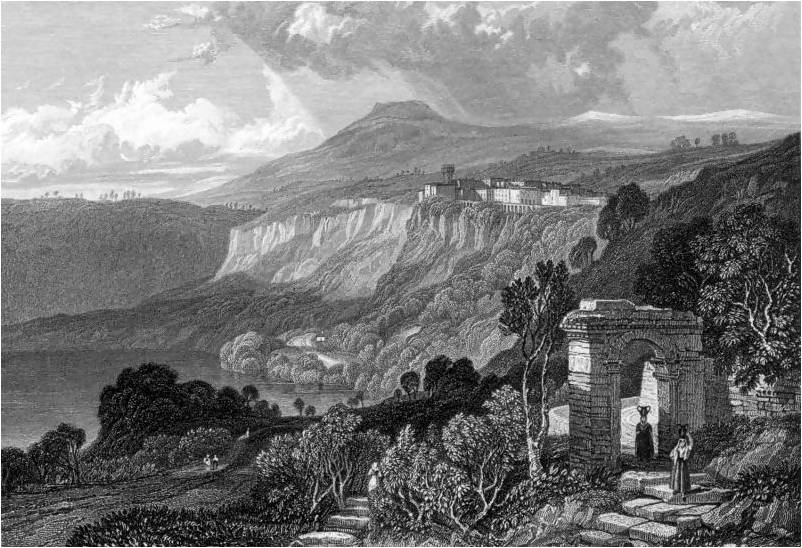
Lake Nemi, near which stood the shrine of Diana Nemorenis
The Nemi cult is linked by the Virgilian comentator Servius, with the `golden bough' , which in Book VI of Virgil's Aeneid allow's the hero to descend safely to the Underworld. Sir James Frazer accepted Servius’s statement that the challenger for the priesthood needed first to break off a bough from a tree and made this the key motif in his mammoth comparative study, The Golden Bough. However, there is considerable doubt whether a bough, golden or not, had any role at Nemi and Virgil's story (retold in chapter 33 of Ad Alpes), which is set near Lago Averno, 100 miles to the south, might be based on a purely local legend from the Naples region or just on his own imagination. For a discussion of the whole issue, see C. Bennett Pascal's 1976 article, `Rex Nemorensis', and for both the popularity of Frazer's famous work and the controversy surrounding his claims, Mary Beard's 1992 essay, `Frazer, Leach and Virgil: the Popularity (and Unpopularity) of the Golden Bough'.
We noted that Onēsimus, the name of the elder slave in Ad Alpēs, means `useful’ in Greek. It was most famously born by a Christian slave who St. Paul reconciled with his master, also a Chritian
We discussed breifly the dispute over where to put the stress on compound verb forms like advenit or reducō, Most experts now believe that these were treated as ordinary words, with the stress going on the prepositional prefix if the first syllable of a bisyllabic basic verb form was short.. Confimation of this view is provided by the practice of poets at the end of hexameter lines. We know that the the fifth and sixth feet normally began with a syllable stressed in ordinary speech and a quick check of the first two or three hundred lines of Metamorphoses Book I shows Ovid in a couple of lines placing a prefix at the start of the 5th foot:
nunc mihi quā tōtum Nēreus circumsonat orbem,
ēmittitque Notum. madidīs Notus ēvolat ālīs,
Compounds with faciō or fīō may, however, have kept the stress on the basic verb and practice may have changed in the Middle Ages.
We noted that there was no doubt at all that perfect particples like agnitum, cognitum etc. needed to be stressed on the antepenultimate and also that the word `quarantine’, in very frequent use nowadays, is derived from Latin quadragintā (forty) via Italian quarantino (period of forty days) because this was often the length of time a ship from a plague-infected area was required to remain at anchor out to sea before it was allowed to dock,
The Nemi cult is linked by the Virgilian comentator Servius, with the `golden bough' , which in Book VI of Virgil's Aeneid allow's the hero to descend safely to the Underworld. Sir James Frazer accepted Servius’s statement that the challenger for the priesthood needed first to break off a bough from a tree and made this the key motif in his mammoth comparative study, The Golden Bough. However, there is considerable doubt whether a bough, golden or not, had any role at Nemi and Virgil's story (retold in chapter 33 of Ad Alpes), which is set near Lago Averno, 100 miles to the south, might be based on a purely local legend from the Naples region or just on his own imagination. For a discussion of the whole issue, see C. Bennett Pascal's 1976 article, `Rex Nemorensis', and for both the popularity of Frazer's famous work and the controversy surrounding his claims, Mary Beard's 1992 essay, `Frazer, Leach and Virgil: the Popularity (and Unpopularity) of the Golden Bough'.
We noted that Onēsimus, the name of the elder slave in Ad Alpēs, means `useful’ in Greek. It was most famously born by a Christian slave who St. Paul reconciled with his master, also a Chritian
We discussed breifly the dispute over where to put the stress on compound verb forms like advenit or reducō, Most experts now believe that these were treated as ordinary words, with the stress going on the prepositional prefix if the first syllable of a bisyllabic basic verb form was short.. Confimation of this view is provided by the practice of poets at the end of hexameter lines. We know that the the fifth and sixth feet normally began with a syllable stressed in ordinary speech and a quick check of the first two or three hundred lines of Metamorphoses Book I shows Ovid in a couple of lines placing a prefix at the start of the 5th foot:
nunc mihi quā tōtum Nēreus circumsonat orbem,
ēmittitque Notum. madidīs Notus ēvolat ālīs,
Compounds with faciō or fīō may, however, have kept the stress on the basic verb and practice may have changed in the Middle Ages.
We noted that there was no doubt at all that perfect particples like agnitum, cognitum etc. needed to be stressed on the antepenultimate and also that the word `quarantine’, in very frequent use nowadays, is derived from Latin quadragintā (forty) via Italian quarantino (period of forty days) because this was often the length of time a ship from a plague-infected area was required to remain at anchor out to sea before it was allowed to dock,
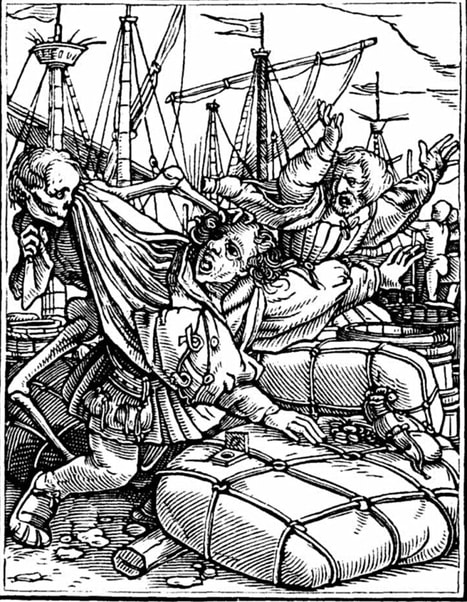
Plague and sea travellers
https://awaitingwind.com/2019/03/19/quarantine/
AD ALPES - CAPUT XXIII
Multō māne, paene priusquam cēterī surrēxērunt, Cornēlius et Pūblius forās egressī sunt, ut
Early in-morning almost before others got-up Cornelius and Publius outside went out so-that
loca circumspicerent. Haud procul montem Albānum[1] vīdērunt, ac longius collēs aliī
places they-could-see not far-off Mt Albano they-saw and in-distance hills other
appārēbant.
were-visible
Tum Pūblius: "Montem Albānum libentissimē videō," inquit, "quod ibi trāditum est ab
Then Publius Mt Albano most-gladly I-see said because there tradition is by
Ascaniō conditam esse urbem, unde (ut dīcit Vergilius) erant 'Albānī patrēs,' et postrēmō
Ascanius founded to-have-been city from-where as says Virgil were Alban fathers and finally
'altae moenia Rōmae[2].' "
lofty walls of-Rome
"Hīs in regiōnibus sunt alia quoque dignissima, quae aspiciantur," inquit pater. "Velut
These in regions are other-things also most-worthy that might-be-looked-at said father for-example
haud longē abest fānum Diānae Nemorēnsis.[3]"
not far away-is shrine of-Diana Nemorensis
"Dē hōc, quod sciam,[4] numquam audīvī," inquit Pūblius. "Istīus cultūs quid proprium
About that as-far-as know never I-have-heard said Publius of-that cult what special-feature
est?"
is
NOTES
[1] This hill, nowadays normally called Monte Cavo, is the highest point in the Alban Hills which lie just south of Rome. Its summit, approached by a 5 kilometre track from the Via Appia at Aricia, was the site of the ancient cult of Jupiter Latiaris, believed to date from the period when the nearby city of Alba Longa was the most important Latin settlement. The rites were continued when Rome destroyed Alba Longa and absorbed its inhabitants. The senior magistrates were required soon after taking office to proclaim on the hill the annual `Feriae Latinae’ (`Latin Festival). The temple site was occupied in the Middle Ages by a Christian hermitage, then by a monastery later converted into a hotel and finally into the present-day telecommunications station. See https://en.wikipedia.org/wiki/Monte_Cavo, https://en.wikipedia.org/wiki/Epithets_of_Jupiter#Iuppiter_Latiaris and, for photographs of the `Via Sacra’ (Sacred Way) up the hill, https://www.atlasobscura.com/places/via-sacra
[2] Referring to lines 5-7 of Book 1 of the Aeneid, which summarise how the city Aeneas founded in Italy (Lavinium) was the origin of the Romans’ Alban ancestors and of Rome itself. Aeneas’s son Ascanius (alias Iulus), the supposed ancestor of Julius Caesar and Augustus, left Lavinium to found Alba Longa and, many generations later his descendant Romulus founded Rome.
[3] For details of the temple cult and of its priest, see https://en.wikipedia.org/wiki/Rex_Nemorensis The method of succession, possibly no longer followed in the 2nd. century A.D., is summarized in Macaulay’s line: `Those trees in whose dim shadow /The ghastly priest doth reign/ The priest who slew the slayer,/ And shall himself be slain.’ Sir James Frazer famously argued in The Golden Bough that the story was repreenative of a world-wide myth of a king who had to die to preserve fertility.
[4] Literally `which I might know’ A gentler side of the Nemi cult is revealed in objects excavated in 1885 and now in Nottingham Castle Museum (see https://nemitonottingham.wordpress.com/
At pater: "Fānum silvā dēnsissimā est tēctum; ac, mīrābile dictū[1], sacerdōs est servus
And father shrine by-wood very-dense is covered and strange to-say priest is slave
fugitīvus, quī numquam nisi cum gladiō forās ēgreditur."
run-away who never unless with sword outside goes-out
"Quam ob rem, obsecrō?" inquit Pūblius. "Subitīne impetūs vim timet?"
What for reason please asked Publius of-sudden-? attack violence he-fears?
"Maximē vērō," inquit pater. "Nam illud sacerdōtium mīrīs modīs trāditur. Ille, quī id
Very true said father for that priesthood by-strange methods is-handed-on He who it
adeptus est, rem dīvīnam cūrat, dōnec ab aliō vī aut dolō interficitur. Tum is, quī interfēcit,
obtained has affairs religious takes-care-of until by another by-force or by-trick he-is-killed then he who killed
ipse sacerdōs fit, et armātus ēgreditur, ānxius nē quis alius sē quoque occīdat, ut sacerdōtium
himself priest becomes and armed goes-out anxious lest antone else himself also should-kill so-that priesthood
adipīscātur."
he-can-obtain
"Pāpae!" inquit Pūblius. "Mīror unde mōs tam mīrābilis dēductus sit." Tum ad tēcta
Wah said Publius I wonder where custom so strange taken-from was Them to buildings
respiciēns : "Ecce autem Onēsimus appropinquat, ac crēdō ientāculum iam parātum
looking-back Look but Onesimus is-approaching and I-believe breakfast now prepared
esse."
to-be
Quae ut dicta sunt, ad dēversōrium rediērunt; ubi omnēs, cum paulum ēdissent, in raedās
These-things when said were to inn they-returned where all when a-little they-had-eaten into wagons
ēscendērunt, brevīque Rōmam versūs rapidē vehēbantur. Ad urbem quō propius accēdēbant,
climbes and-soon Rome towards rapidly were-being-carried to city as nearer they-approached
eō plūra[2] vidēbant līberī, quae eōs studiō cognoscendī incenderent.[3]
accordingly more-things could-see children which them with-enthusiasm,for-learning fired
Ac Sextus: "Cūr," inquit, "prope viam ubīque tot sepulchra vidēmus?"
And sextus why asked near road everywhere so-many tombs we-see
[1] Ablative of the supine (dictum), which is regularly combined with adjectives in this way.
[2]quō propius…eō plūra: literally `by what amount nearer, by that-amount more’, i.e. the nearer they got the more they saw. This is a common construction with comparatives.
[3] incenderent: subjunctive in a clause of chacteristic; they saw the kind of thing to inspire curiosity.
"Antīquitus," inquit pater, "per lēgēs nōn licuit intrā moenia hominēs sepelīrī. Itaque
in-olden-days said father through laws not was-permitted within city-walls people to-be-buried and-so
prīncipēs cīvitātis prope viās, quae ad urbem ferunt, haec monumenta exstrūxērunt, ut
leaders state near roads which to city lead these monuments erected so-that
posteritātī nōta essent loca, ubi sepultī essent.
to-posterity known might-be places where buried they-were
"Posteā rārō permissum est ut in Campō Mārtiō[1] quoque sepulchra splendida
Afterwards rarely permitted it-was that on in Campus Martius also tombs splendid
exstruerentur; in quibus est illud Mausōlēum Augustī, ubi conditī sunt ipsīus cinerēs et
were-built among which was the-famous Mausoleum of-Augustus where interred were his-own ashes and
multōrum propinquōrum."
of-many relatives
"Dē hōc monumentō apud Suētōnium[2] mīrābile quiddam est," inquit Pūblius; “nam
About this monument in Suetonius extraordinary something is said Publius for
paulō ante Nerōnis mortem dīcuntur forēs suāsponte patefactae esse; unde audīta est vōx
a-little before Nero’s death are-said doors of-own-accord opened to-have from-where heard was voice
imperātōrem nōmine vocantis."
emperor by-name calling
"Nolī, obsecrō, mī fīlī," inquit Drūsilla, "tam dīra nārrāre. Cum audiō, tremor gelidus per
Don’t I-beg[you] my son said Drusilla such terrible-things tell when I-hear trembling icy
ossa īma mihi percurrit."
bones depths-of for-me runs-through
At Sextus: "Cūr," inquit, "illud sepulchrum 'Mausōlēum' appellātur? Nōnne hoc est
But Sextus why asked that temple `Mausoleum’ is-called Not[?] this is
nōmen īnsolitum?"
name unusual
"Rēctē quaeris, Sexte," inquit pater. "Vocābulum ductum est ē nōmine Mausōlī, rēgis
Rightly you-ask Sextus said farther word taken was from name of-mausolus king
Cāriae,[3] quī abhinc ferē quīngentōs annōs dēcessit. Quō mortuō, uxor sepulchrum
Of-Caria who ago almost five-hundred years died with-him dead wife tomb
[1] The Campus Martius was an open area NW of the original city where military training was conducted and public meetings sometimes held.
[2] Suetonius wrote lives of Julius Caesar and of the first eleven emperors (see the note in chapter XIV).
[3] Mausolus was the Hellenized ruler of Caria in SW Asia Minor from 377-353 B.C., when the country was nominally a province of the Persian Empire. His tomb in Halicarnassus was reckoned one of the Seven Wonders of the ancient world. See https://en.wikipedia.org/wiki/Mausolus
splendidissimum exstrūxit, quod 'Mausōlēum' vocābātur. Idem nōmen posteā aliīs quoque
most-splendid erected which `Mausoleum’ was-called same name afterwards on-other also
sepulchrīs rēgiīs inditum est."
tombs royal bestowed was
Tum Pūblius: "Haec mē admonent," inquit, "dē vōce dētestābilī imperātōris Vitellī, cum
Then Publius these-things me remind said of remark detestable of-emperor Vitellius when
sepulchrum Othōnis vidēret." [1]
tomb of-Otho he-saw
"Quid dīxit ille, obsecrō?" inquit Sextus.
What said he please asked Sextus
Ac Pūblius: "Othō, cum haud procul ā Cremōnā[2] exercitus eius cum copiīs Vitelliānīs
And Publius Otho when not far from Cremona of-army his with troops of-Vitellius
esset congressus, proeliō facile victus est, ac statim—etsī aliae legiōnēs integrae eī
had met in-battle easily beaten was and at-once although other legions entire to-him
supererant —sē interfēcit, cum nōllet persevērandō damna maiōra cīvitātī īnferre.
were-left himself killed as he-did-not-want by-perservering losses greater on-state to-inflict
"Sine morā sepultus est in agrīs haud procul ā locō ubi proelium commissum erat, ac
Without delay buried he-was in fields not far from place where battle fought had-been and
monumentum modicum est adiectum. Vitellius autem, cum ferē quadrāgintā post diēbus ē
tomb modest was added Vitellius however when almost forty afterwards days from
Germāniā Rōmam iter faciēns eō pervēnisset et sepulchrum vīdisset humile, Othōnem
Germany to-Rome jouirney making there had-reaxched and tomb had-seen humble Otho
dēspiciēns, dignum 'eō Mausōlēō'[3] eum esse dīxit."
deriding worthy of-this Mausoleum him to-be said
"Ipsene Vitellius," inquit Cornēlia, "Mausōlēō splendidō dignus erat?"
Himself[?] Vitellius asked Cornelia of-Mausoleum splendid worthy was
[1] On Vitellius and the `Year of the Four Emperors’ see note 28 above.
[2] Cremona is a city in northern Italy on the River Po about 100 kilometres SE of Milan.
[3] Literally `worthy with this Mausoleum’; dignus can take the ablative as well as the genitive.
"Longē aliter exīstimābant eius cīvēs saltem," inquit pater. "Nam omnibus sceleribus sē
By-far otherwise thought his fellow-citizens at-least said father for with-all crimes himself
contāmināverat; cumque Vespasiānus imperātor salūtātus esset, ille brevī vītae fīnem factīs
he-had-disgraced and-when Vespasian as-emperor hailed had-been he soon of-life end of-actions
suīs dignum invēnit.
his worthy found
"Ubi enim mīlitēs Vespasiānī Rōmam pervēnērunt, veritus nē in eōrum manūs incideret,
When for soldiers of-Vespasian Rome reached fearing lest into their hands he-might-fall
iste imperātor ēgregius, duōbus sōlīs comitibus—pistōre et coquō, domō eō cōnsiliō profectus
that outstanding emperor with-two only companions baker and cook from-home with-the plan set-out
est, ut in Campāniam refugeret.
did that into Campania he-could-flee
"Sed ā comitibus dēsertus, in Palātium[1] revertit; cumque zōnā aureōrum plēnā sē
But by companions deserted to the-Palatine returned and-when with-belt of-gold-pieces full self
circumdedisset, fūgit in cellam iānitōris, religātō prō foribus cane, atque intus lectum et
had-surrounded he-fled into cubicle of-janitor tied-up before door with-dog and inside bed and
culcitam obiēcit.
mattress placed-as-obstacle
"Ā mīlitibus inrumpentibus statim inventus atque ē latebrīs extractus est. Omnibus
By soldiers breaking-in at-once found and from hiding-place dragged-out was with-all
autem ignōrantibus quis esset, mendāciō fātum paulisper distulit; tum agnitus, retortīs post
however not-knowing who he-was by-deceit fate a-short-while he-postponed then recognuised tied behind
tergum manibus, veste discissā, sēminūdus per forum tractus est.
back with-hands with-clothing torn half-naked through forum dragged was
"Hominum interim multitūdō magna sequēbātur, cum ācerbissimīs contumēliīs rērum et
Of-men meanwhile crowd great wes-following with most-bitter insults of-gestures and
verbōrum caenum coniciēns, dum eius facinora maxima vōce exprobrat. Tandem prope scālās,
of-words filth hurling whilst hois crimes in-loudest voice it denounced at-last near steps
quae Gemōniae vocantur, minutissimīs ictibus occīsus est, et inde uncō tractus in Tiberim."[2]
Which Gemonian are-called with-very-slight blows killed was and then by-hook dragged into Tiber
[1] Palātium (-ī, n), from which English `palace’ derives, was originally the name of the hill south of the Forum but later was applied to the imperial residence built there and then for palaces in general
[2] Vitellius had actually tried to abdicate when his forces were defeated by those of Vespasian, at another battle near Cremona, but was prevented from doing so by his supporters. Vespasian’s men therefore had to fight their way into Rome, incurring heavy casualties. The ‘Gemonian Stairs’, which no longer exist, may have beemn constructed in Tiberius’ reign (14-37 A.D.) and led down from the Capitoline to the Forum, probably near the present-day via di San Pietro in Carcere. The condemned were regularly strangled, then thrown down the steps and their bodies left to rot for some time before being thrown into the Tiber. See https://en.wikipedia.org/wiki/Gemonian_stairs
"Fīnem quam terribilem!" inquit Drūsilla. "Tālia audīre mihi vix magis quam Cornēliae
End what-a terrible said Drusilla such-things to-hear me scarcely more than Cornelia
placet."
pleases
"Sed ūnum adhūc est, pater," inquit Sextus, "quod ego nōn intellegō. Cum prīmō
But one-thing still there-is father said Sextus which I not understand when first
imperātor effugere cōnātus est, cūr, obsecrō, pistōrem et coquum sēcum dūxit?"
emperor to-escape tried why please baker and cook with-him he-took
"Cēterīs eius factīs hoc erat pār," inquit Cornēlius. "Nam semper edendī studiōsus erat.
With-other of-him deeds this was on-a-par said Cornelius for always on-eating keen was
Quīn etiam dīcitur ter et quater in diē cēnāre solitus esse; atque interdum in viīs ex popīnīs
Indeed even it-is-said three and four-times in day to-dine accustomed to-have-been and sometimes in streets from cook-shops
fūmantia obsōnia vel prīdiāna[1] suīs manibus rapiēbat."
smoking delicacies or left-overs with-own hands he-used-to-grab
“Iam satis est, pater,” inquit Cornēlia. “Dē eō spērō nōs nihil amplius audītūrōs esse.
Now enough it-is father said Cornelia about him I-hope us nothing more going-to-hear to-be
Sed iam viātōrēs in urbem Portā Appiā[2] ingrediēbantur atque līberī intentī omnia
But now travellers into city by gate Appian were-entering and children intently everything
circumspiciēbant. Interim raedae tardius prōgredī coāctae sunt, cum hominēs multī ex urbe
were-looking-round-at meanwhile wagons more-slowly to-proceed forced were since people mant from city
exeuntēs viam frequentārent.
going-out street were-crowding
Brevī Stasimus, quī citō equō praemissus erat, sē obviam tulit, quī nūntiāvit avunculum
Soon Stasimus who on-swift sent-forward had-been himself to-them brought who announced uncle
Drūsillae domī esse, ac viātōrēs libentissimē hospitiō acceptūrum.
Of-Drusilla at-home to-be and travelers most-gladly with-hospitality would-receive
[1] obsōnium (-ī n) refers particularly to food eaten with bread, especially fish, and the adjective prīdiānus (-a, -um) means literally `yesterday’s’.
[2] The Porta Appia (now known as the Porta San Sebastiano) was the gate in the Aurelian Wall through which the Appian Way entered Rome. However, construction of this wall began onlyin 271 (see https://en.wikipedia.org/wiki/Aurelian_Walls), so in 138, when the story is set, the only gate travellers passed through was the Porta Capena in the 4th, century B.C.`Servian Wall’! Although by the 2nd century A.D. the built-up area had expanded well beyond this older wall, no need was felt for further defences until the `Crisis of the 3rd Century’ when barbarians breached the empire’s frontiers.
Quō audītō, Cornēlius Drūsillae: "Tū, uxor," inquit, "statim cum līberīs et servīs ad
With-this heard Cornelius to-Drusilla You wife said at-once with children and slaves to
avunculum[1] tē cōnferēs. Mihi et Pūbliō cum Onēsimō prius ad Palātium est eundum, ut
uncle yourself will-take for-me and Publius with Onesimus first to Palatine is necessaryto-go so-that
sine morā dē adventū meō imperātor[2] certior fīat."
without delay about arrival my emperor informed can-be
Itaque, cum iam ad portam Capēnam perventum esset, mulierēs lectīcīs lēvātae cum
And-so since now at Porta Capena arrived it-had-been women in-litters lifted-up with
līberīs ad avunculum Drūsillae ā Stasimō dēductae sunt.
children to uncle of-Drusilla by Stasimus taken were
Cornēlius interim cum Pūbliō rēctā Palātium petiit, ac statim ad imperātōrem admissus
Cornelius meanwhile with Publius directy for-Palatine made and at-once to emperor admitted
est. Ibi ōsculō acceptus breviārium ratiōnum suārum porrēxit.
was there with-kiss received summary of-accounts his he-offered
Tum, industriā laudātā, eō mandātō dīmissus est, ut semper omnia in prōmptū habēret,
Then with-exeriton praised with the instruction dismissed he-was that always everything in readiness he-should-have
ut sine morā ex urbe proficīscerētur, sī quandō opus esset. Negōtiō sīc cōnfectō, cum Pūbliō
so-that without delay from city he-could-set-off if ever need there-was with-business thus completed with Publius
ad Drūsillam ac cēterōs libenter sē recēpit.
to Drusilla and the-rest gladly self brought-back
Deinde diēs duo iūcundē exāctī sunt, cum viātōrēs cōnspicerent omnia, quae maximē
Then days two pleasantly spent where when travellers looked-at all- things that especially
mīranda in urbe erant. Tum Drūsilla cum līberīs rūs discessit, ut parentēs vīseret,
to-be-marvelled-at in city were then Drusilla with children for-countryside left so-that parents she-could-visit
quī ab urbe longē circiter trīgintā mīlia passuum[3] habitābant. Interim Cornēlius cum Pūblīō
who from city away about thirty thousands of-paces lived Meanwhile Cornelius with Publius
Rōmae morābātur, incertus quam mox imperātor operam suam exigeret.
in-Rome stayed uncertain how soon emperor work his would-demand
[1] avunculus: maternal uncle; a father’s brother was patruus.
[2] Antoninus Pius, who reigned from 138 to 161 B.C. and may be the 安敦 (`Anton’), king of Da Qin (大秦,i.e. Rome) who, according to the Hou Han Shu (後漢書), a party arriving in China in 166 A.D. claimed to represent. On Sino-Roman contacts, see https://linguae.weebly.com/sina-latina.html
[3] A Roman mile was a thousand paces (mīlle passuum), hence the derivation of the English word `mile’. The Roman unit is estimated to have been only 0.92 modern miles.
https://awaitingwind.com/2019/03/19/quarantine/
AD ALPES - CAPUT XXIII
Multō māne, paene priusquam cēterī surrēxērunt, Cornēlius et Pūblius forās egressī sunt, ut
Early in-morning almost before others got-up Cornelius and Publius outside went out so-that
loca circumspicerent. Haud procul montem Albānum[1] vīdērunt, ac longius collēs aliī
places they-could-see not far-off Mt Albano they-saw and in-distance hills other
appārēbant.
were-visible
Tum Pūblius: "Montem Albānum libentissimē videō," inquit, "quod ibi trāditum est ab
Then Publius Mt Albano most-gladly I-see said because there tradition is by
Ascaniō conditam esse urbem, unde (ut dīcit Vergilius) erant 'Albānī patrēs,' et postrēmō
Ascanius founded to-have-been city from-where as says Virgil were Alban fathers and finally
'altae moenia Rōmae[2].' "
lofty walls of-Rome
"Hīs in regiōnibus sunt alia quoque dignissima, quae aspiciantur," inquit pater. "Velut
These in regions are other-things also most-worthy that might-be-looked-at said father for-example
haud longē abest fānum Diānae Nemorēnsis.[3]"
not far away-is shrine of-Diana Nemorensis
"Dē hōc, quod sciam,[4] numquam audīvī," inquit Pūblius. "Istīus cultūs quid proprium
About that as-far-as know never I-have-heard said Publius of-that cult what special-feature
est?"
is
NOTES
[1] This hill, nowadays normally called Monte Cavo, is the highest point in the Alban Hills which lie just south of Rome. Its summit, approached by a 5 kilometre track from the Via Appia at Aricia, was the site of the ancient cult of Jupiter Latiaris, believed to date from the period when the nearby city of Alba Longa was the most important Latin settlement. The rites were continued when Rome destroyed Alba Longa and absorbed its inhabitants. The senior magistrates were required soon after taking office to proclaim on the hill the annual `Feriae Latinae’ (`Latin Festival). The temple site was occupied in the Middle Ages by a Christian hermitage, then by a monastery later converted into a hotel and finally into the present-day telecommunications station. See https://en.wikipedia.org/wiki/Monte_Cavo, https://en.wikipedia.org/wiki/Epithets_of_Jupiter#Iuppiter_Latiaris and, for photographs of the `Via Sacra’ (Sacred Way) up the hill, https://www.atlasobscura.com/places/via-sacra
[2] Referring to lines 5-7 of Book 1 of the Aeneid, which summarise how the city Aeneas founded in Italy (Lavinium) was the origin of the Romans’ Alban ancestors and of Rome itself. Aeneas’s son Ascanius (alias Iulus), the supposed ancestor of Julius Caesar and Augustus, left Lavinium to found Alba Longa and, many generations later his descendant Romulus founded Rome.
[3] For details of the temple cult and of its priest, see https://en.wikipedia.org/wiki/Rex_Nemorensis The method of succession, possibly no longer followed in the 2nd. century A.D., is summarized in Macaulay’s line: `Those trees in whose dim shadow /The ghastly priest doth reign/ The priest who slew the slayer,/ And shall himself be slain.’ Sir James Frazer famously argued in The Golden Bough that the story was repreenative of a world-wide myth of a king who had to die to preserve fertility.
[4] Literally `which I might know’ A gentler side of the Nemi cult is revealed in objects excavated in 1885 and now in Nottingham Castle Museum (see https://nemitonottingham.wordpress.com/
At pater: "Fānum silvā dēnsissimā est tēctum; ac, mīrābile dictū[1], sacerdōs est servus
And father shrine by-wood very-dense is covered and strange to-say priest is slave
fugitīvus, quī numquam nisi cum gladiō forās ēgreditur."
run-away who never unless with sword outside goes-out
"Quam ob rem, obsecrō?" inquit Pūblius. "Subitīne impetūs vim timet?"
What for reason please asked Publius of-sudden-? attack violence he-fears?
"Maximē vērō," inquit pater. "Nam illud sacerdōtium mīrīs modīs trāditur. Ille, quī id
Very true said father for that priesthood by-strange methods is-handed-on He who it
adeptus est, rem dīvīnam cūrat, dōnec ab aliō vī aut dolō interficitur. Tum is, quī interfēcit,
obtained has affairs religious takes-care-of until by another by-force or by-trick he-is-killed then he who killed
ipse sacerdōs fit, et armātus ēgreditur, ānxius nē quis alius sē quoque occīdat, ut sacerdōtium
himself priest becomes and armed goes-out anxious lest antone else himself also should-kill so-that priesthood
adipīscātur."
he-can-obtain
"Pāpae!" inquit Pūblius. "Mīror unde mōs tam mīrābilis dēductus sit." Tum ad tēcta
Wah said Publius I wonder where custom so strange taken-from was Them to buildings
respiciēns : "Ecce autem Onēsimus appropinquat, ac crēdō ientāculum iam parātum
looking-back Look but Onesimus is-approaching and I-believe breakfast now prepared
esse."
to-be
Quae ut dicta sunt, ad dēversōrium rediērunt; ubi omnēs, cum paulum ēdissent, in raedās
These-things when said were to inn they-returned where all when a-little they-had-eaten into wagons
ēscendērunt, brevīque Rōmam versūs rapidē vehēbantur. Ad urbem quō propius accēdēbant,
climbes and-soon Rome towards rapidly were-being-carried to city as nearer they-approached
eō plūra[2] vidēbant līberī, quae eōs studiō cognoscendī incenderent.[3]
accordingly more-things could-see children which them with-enthusiasm,for-learning fired
Ac Sextus: "Cūr," inquit, "prope viam ubīque tot sepulchra vidēmus?"
And sextus why asked near road everywhere so-many tombs we-see
[1] Ablative of the supine (dictum), which is regularly combined with adjectives in this way.
[2]quō propius…eō plūra: literally `by what amount nearer, by that-amount more’, i.e. the nearer they got the more they saw. This is a common construction with comparatives.
[3] incenderent: subjunctive in a clause of chacteristic; they saw the kind of thing to inspire curiosity.
"Antīquitus," inquit pater, "per lēgēs nōn licuit intrā moenia hominēs sepelīrī. Itaque
in-olden-days said father through laws not was-permitted within city-walls people to-be-buried and-so
prīncipēs cīvitātis prope viās, quae ad urbem ferunt, haec monumenta exstrūxērunt, ut
leaders state near roads which to city lead these monuments erected so-that
posteritātī nōta essent loca, ubi sepultī essent.
to-posterity known might-be places where buried they-were
"Posteā rārō permissum est ut in Campō Mārtiō[1] quoque sepulchra splendida
Afterwards rarely permitted it-was that on in Campus Martius also tombs splendid
exstruerentur; in quibus est illud Mausōlēum Augustī, ubi conditī sunt ipsīus cinerēs et
were-built among which was the-famous Mausoleum of-Augustus where interred were his-own ashes and
multōrum propinquōrum."
of-many relatives
"Dē hōc monumentō apud Suētōnium[2] mīrābile quiddam est," inquit Pūblius; “nam
About this monument in Suetonius extraordinary something is said Publius for
paulō ante Nerōnis mortem dīcuntur forēs suāsponte patefactae esse; unde audīta est vōx
a-little before Nero’s death are-said doors of-own-accord opened to-have from-where heard was voice
imperātōrem nōmine vocantis."
emperor by-name calling
"Nolī, obsecrō, mī fīlī," inquit Drūsilla, "tam dīra nārrāre. Cum audiō, tremor gelidus per
Don’t I-beg[you] my son said Drusilla such terrible-things tell when I-hear trembling icy
ossa īma mihi percurrit."
bones depths-of for-me runs-through
At Sextus: "Cūr," inquit, "illud sepulchrum 'Mausōlēum' appellātur? Nōnne hoc est
But Sextus why asked that temple `Mausoleum’ is-called Not[?] this is
nōmen īnsolitum?"
name unusual
"Rēctē quaeris, Sexte," inquit pater. "Vocābulum ductum est ē nōmine Mausōlī, rēgis
Rightly you-ask Sextus said farther word taken was from name of-mausolus king
Cāriae,[3] quī abhinc ferē quīngentōs annōs dēcessit. Quō mortuō, uxor sepulchrum
Of-Caria who ago almost five-hundred years died with-him dead wife tomb
[1] The Campus Martius was an open area NW of the original city where military training was conducted and public meetings sometimes held.
[2] Suetonius wrote lives of Julius Caesar and of the first eleven emperors (see the note in chapter XIV).
[3] Mausolus was the Hellenized ruler of Caria in SW Asia Minor from 377-353 B.C., when the country was nominally a province of the Persian Empire. His tomb in Halicarnassus was reckoned one of the Seven Wonders of the ancient world. See https://en.wikipedia.org/wiki/Mausolus
splendidissimum exstrūxit, quod 'Mausōlēum' vocābātur. Idem nōmen posteā aliīs quoque
most-splendid erected which `Mausoleum’ was-called same name afterwards on-other also
sepulchrīs rēgiīs inditum est."
tombs royal bestowed was
Tum Pūblius: "Haec mē admonent," inquit, "dē vōce dētestābilī imperātōris Vitellī, cum
Then Publius these-things me remind said of remark detestable of-emperor Vitellius when
sepulchrum Othōnis vidēret." [1]
tomb of-Otho he-saw
"Quid dīxit ille, obsecrō?" inquit Sextus.
What said he please asked Sextus
Ac Pūblius: "Othō, cum haud procul ā Cremōnā[2] exercitus eius cum copiīs Vitelliānīs
And Publius Otho when not far from Cremona of-army his with troops of-Vitellius
esset congressus, proeliō facile victus est, ac statim—etsī aliae legiōnēs integrae eī
had met in-battle easily beaten was and at-once although other legions entire to-him
supererant —sē interfēcit, cum nōllet persevērandō damna maiōra cīvitātī īnferre.
were-left himself killed as he-did-not-want by-perservering losses greater on-state to-inflict
"Sine morā sepultus est in agrīs haud procul ā locō ubi proelium commissum erat, ac
Without delay buried he-was in fields not far from place where battle fought had-been and
monumentum modicum est adiectum. Vitellius autem, cum ferē quadrāgintā post diēbus ē
tomb modest was added Vitellius however when almost forty afterwards days from
Germāniā Rōmam iter faciēns eō pervēnisset et sepulchrum vīdisset humile, Othōnem
Germany to-Rome jouirney making there had-reaxched and tomb had-seen humble Otho
dēspiciēns, dignum 'eō Mausōlēō'[3] eum esse dīxit."
deriding worthy of-this Mausoleum him to-be said
"Ipsene Vitellius," inquit Cornēlia, "Mausōlēō splendidō dignus erat?"
Himself[?] Vitellius asked Cornelia of-Mausoleum splendid worthy was
[1] On Vitellius and the `Year of the Four Emperors’ see note 28 above.
[2] Cremona is a city in northern Italy on the River Po about 100 kilometres SE of Milan.
[3] Literally `worthy with this Mausoleum’; dignus can take the ablative as well as the genitive.
"Longē aliter exīstimābant eius cīvēs saltem," inquit pater. "Nam omnibus sceleribus sē
By-far otherwise thought his fellow-citizens at-least said father for with-all crimes himself
contāmināverat; cumque Vespasiānus imperātor salūtātus esset, ille brevī vītae fīnem factīs
he-had-disgraced and-when Vespasian as-emperor hailed had-been he soon of-life end of-actions
suīs dignum invēnit.
his worthy found
"Ubi enim mīlitēs Vespasiānī Rōmam pervēnērunt, veritus nē in eōrum manūs incideret,
When for soldiers of-Vespasian Rome reached fearing lest into their hands he-might-fall
iste imperātor ēgregius, duōbus sōlīs comitibus—pistōre et coquō, domō eō cōnsiliō profectus
that outstanding emperor with-two only companions baker and cook from-home with-the plan set-out
est, ut in Campāniam refugeret.
did that into Campania he-could-flee
"Sed ā comitibus dēsertus, in Palātium[1] revertit; cumque zōnā aureōrum plēnā sē
But by companions deserted to the-Palatine returned and-when with-belt of-gold-pieces full self
circumdedisset, fūgit in cellam iānitōris, religātō prō foribus cane, atque intus lectum et
had-surrounded he-fled into cubicle of-janitor tied-up before door with-dog and inside bed and
culcitam obiēcit.
mattress placed-as-obstacle
"Ā mīlitibus inrumpentibus statim inventus atque ē latebrīs extractus est. Omnibus
By soldiers breaking-in at-once found and from hiding-place dragged-out was with-all
autem ignōrantibus quis esset, mendāciō fātum paulisper distulit; tum agnitus, retortīs post
however not-knowing who he-was by-deceit fate a-short-while he-postponed then recognuised tied behind
tergum manibus, veste discissā, sēminūdus per forum tractus est.
back with-hands with-clothing torn half-naked through forum dragged was
"Hominum interim multitūdō magna sequēbātur, cum ācerbissimīs contumēliīs rērum et
Of-men meanwhile crowd great wes-following with most-bitter insults of-gestures and
verbōrum caenum coniciēns, dum eius facinora maxima vōce exprobrat. Tandem prope scālās,
of-words filth hurling whilst hois crimes in-loudest voice it denounced at-last near steps
quae Gemōniae vocantur, minutissimīs ictibus occīsus est, et inde uncō tractus in Tiberim."[2]
Which Gemonian are-called with-very-slight blows killed was and then by-hook dragged into Tiber
[1] Palātium (-ī, n), from which English `palace’ derives, was originally the name of the hill south of the Forum but later was applied to the imperial residence built there and then for palaces in general
[2] Vitellius had actually tried to abdicate when his forces were defeated by those of Vespasian, at another battle near Cremona, but was prevented from doing so by his supporters. Vespasian’s men therefore had to fight their way into Rome, incurring heavy casualties. The ‘Gemonian Stairs’, which no longer exist, may have beemn constructed in Tiberius’ reign (14-37 A.D.) and led down from the Capitoline to the Forum, probably near the present-day via di San Pietro in Carcere. The condemned were regularly strangled, then thrown down the steps and their bodies left to rot for some time before being thrown into the Tiber. See https://en.wikipedia.org/wiki/Gemonian_stairs
"Fīnem quam terribilem!" inquit Drūsilla. "Tālia audīre mihi vix magis quam Cornēliae
End what-a terrible said Drusilla such-things to-hear me scarcely more than Cornelia
placet."
pleases
"Sed ūnum adhūc est, pater," inquit Sextus, "quod ego nōn intellegō. Cum prīmō
But one-thing still there-is father said Sextus which I not understand when first
imperātor effugere cōnātus est, cūr, obsecrō, pistōrem et coquum sēcum dūxit?"
emperor to-escape tried why please baker and cook with-him he-took
"Cēterīs eius factīs hoc erat pār," inquit Cornēlius. "Nam semper edendī studiōsus erat.
With-other of-him deeds this was on-a-par said Cornelius for always on-eating keen was
Quīn etiam dīcitur ter et quater in diē cēnāre solitus esse; atque interdum in viīs ex popīnīs
Indeed even it-is-said three and four-times in day to-dine accustomed to-have-been and sometimes in streets from cook-shops
fūmantia obsōnia vel prīdiāna[1] suīs manibus rapiēbat."
smoking delicacies or left-overs with-own hands he-used-to-grab
“Iam satis est, pater,” inquit Cornēlia. “Dē eō spērō nōs nihil amplius audītūrōs esse.
Now enough it-is father said Cornelia about him I-hope us nothing more going-to-hear to-be
Sed iam viātōrēs in urbem Portā Appiā[2] ingrediēbantur atque līberī intentī omnia
But now travellers into city by gate Appian were-entering and children intently everything
circumspiciēbant. Interim raedae tardius prōgredī coāctae sunt, cum hominēs multī ex urbe
were-looking-round-at meanwhile wagons more-slowly to-proceed forced were since people mant from city
exeuntēs viam frequentārent.
going-out street were-crowding
Brevī Stasimus, quī citō equō praemissus erat, sē obviam tulit, quī nūntiāvit avunculum
Soon Stasimus who on-swift sent-forward had-been himself to-them brought who announced uncle
Drūsillae domī esse, ac viātōrēs libentissimē hospitiō acceptūrum.
Of-Drusilla at-home to-be and travelers most-gladly with-hospitality would-receive
[1] obsōnium (-ī n) refers particularly to food eaten with bread, especially fish, and the adjective prīdiānus (-a, -um) means literally `yesterday’s’.
[2] The Porta Appia (now known as the Porta San Sebastiano) was the gate in the Aurelian Wall through which the Appian Way entered Rome. However, construction of this wall began onlyin 271 (see https://en.wikipedia.org/wiki/Aurelian_Walls), so in 138, when the story is set, the only gate travellers passed through was the Porta Capena in the 4th, century B.C.`Servian Wall’! Although by the 2nd century A.D. the built-up area had expanded well beyond this older wall, no need was felt for further defences until the `Crisis of the 3rd Century’ when barbarians breached the empire’s frontiers.
Quō audītō, Cornēlius Drūsillae: "Tū, uxor," inquit, "statim cum līberīs et servīs ad
With-this heard Cornelius to-Drusilla You wife said at-once with children and slaves to
avunculum[1] tē cōnferēs. Mihi et Pūbliō cum Onēsimō prius ad Palātium est eundum, ut
uncle yourself will-take for-me and Publius with Onesimus first to Palatine is necessaryto-go so-that
sine morā dē adventū meō imperātor[2] certior fīat."
without delay about arrival my emperor informed can-be
Itaque, cum iam ad portam Capēnam perventum esset, mulierēs lectīcīs lēvātae cum
And-so since now at Porta Capena arrived it-had-been women in-litters lifted-up with
līberīs ad avunculum Drūsillae ā Stasimō dēductae sunt.
children to uncle of-Drusilla by Stasimus taken were
Cornēlius interim cum Pūbliō rēctā Palātium petiit, ac statim ad imperātōrem admissus
Cornelius meanwhile with Publius directy for-Palatine made and at-once to emperor admitted
est. Ibi ōsculō acceptus breviārium ratiōnum suārum porrēxit.
was there with-kiss received summary of-accounts his he-offered
Tum, industriā laudātā, eō mandātō dīmissus est, ut semper omnia in prōmptū habēret,
Then with-exeriton praised with the instruction dismissed he-was that always everything in readiness he-should-have
ut sine morā ex urbe proficīscerētur, sī quandō opus esset. Negōtiō sīc cōnfectō, cum Pūbliō
so-that without delay from city he-could-set-off if ever need there-was with-business thus completed with Publius
ad Drūsillam ac cēterōs libenter sē recēpit.
to Drusilla and the-rest gladly self brought-back
Deinde diēs duo iūcundē exāctī sunt, cum viātōrēs cōnspicerent omnia, quae maximē
Then days two pleasantly spent where when travellers looked-at all- things that especially
mīranda in urbe erant. Tum Drūsilla cum līberīs rūs discessit, ut parentēs vīseret,
to-be-marvelled-at in city were then Drusilla with children for-countryside left so-that parents she-could-visit
quī ab urbe longē circiter trīgintā mīlia passuum[3] habitābant. Interim Cornēlius cum Pūblīō
who from city away about thirty thousands of-paces lived Meanwhile Cornelius with Publius
Rōmae morābātur, incertus quam mox imperātor operam suam exigeret.
in-Rome stayed uncertain how soon emperor work his would-demand
[1] avunculus: maternal uncle; a father’s brother was patruus.
[2] Antoninus Pius, who reigned from 138 to 161 B.C. and may be the 安敦 (`Anton’), king of Da Qin (大秦,i.e. Rome) who, according to the Hou Han Shu (後漢書), a party arriving in China in 166 A.D. claimed to represent. On Sino-Roman contacts, see https://linguae.weebly.com/sina-latina.html
[3] A Roman mile was a thousand paces (mīlle passuum), hence the derivation of the English word `mile’. The Roman unit is estimated to have been only 0.92 modern miles.
