| linguae |
|
QUESTIONS ARISING FROM 116th. MEETING – 21/10/20
(the record of earlier meetings can be downloaded from the main Circulus page as can the version of Ciceronis Filius with illustrations added. The illustrated text of Genesis is available on the Genesis page, of Kepler's Somnium on the Somnium page and of Nutting's Ad Alpes on the Ad Alpes page)
At a Zoom session attended by Valerie, Tanya, Sam, Stuart and John, we read chapter 30 of Ad Alpes (see below), which included material on Rome’s early battles to win mastery of Italy.
We discussed briefly the pontificēs, state priests whose name literally meant `bridge builders’. The number was increased over time, possibly reaching 25 under Augustus (see https://en.wikipedia.org/wiki/College_of_Pontiffs ) and the College of Pontiffs also included other categories of priest and the Vestal Virgins,
Also touched on were the various Latin words for `kill’. Students are normally introduced first to necō, which, as a first conjugation verb, is the simplest but is in fact less common than interficio (`do away with’) and occīdo (`cut down’). In addition, necō tends to be used where death is caused without visible violence (e.g. by starvation or poisoning).
We noted that ēgregius (literally `out of the herd’) in Latin normally meant outstandingly good. The English derivative `egregious’ normally implies `outstandingly bad’ , having originally had a similar meaning to the Latin but acquired the modern connotation in the 16th century through being frequent ironical use.
There was also discussion of early Australian history and the claim that Aboroigines had actually developed agriculture. Evidence for this is available at in the journals of early European explorers and is presented at http://www.australasianscience.com.au/article/issue-july-august-2010/evidence-indigenous-australian-agriculture.html and https://www.abc.net.au/radionational/programs/archived/bushtelegraph/rethinking-indigenous-australias-agricultural-past/5452454
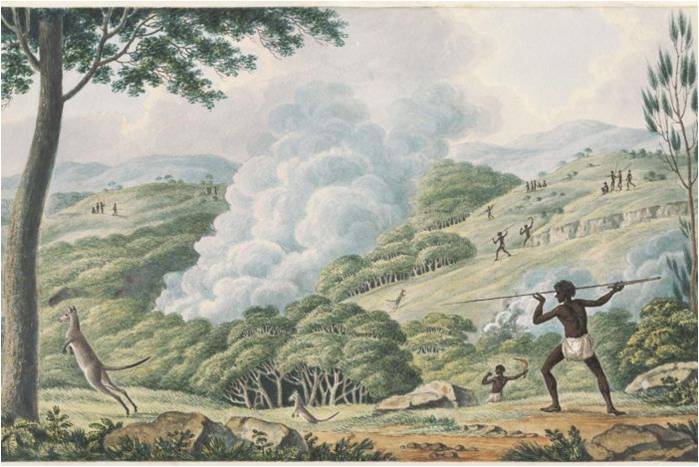
Aborigines using fire to hunt kangaroos by Joseph Lycett, approximately 1775-1828
Tanya also claimed that the earliest bread in the wotld has been discovered in Australia. A check with Wikipedia suggests that the evidence is grinding stones from both Australia and Europe, which may or may not have been used for making bread. The discovery of actual charred bread crumbs at a site in Jordan (the Middle East, not Kowloon!) suggests bread was being made from wild grains between 14,600 and 11,600 years ago, but bread from cultivated plants was not made until early in the first millennium B.S. See https://en.wikipedia.org/wiki/History_of_bread and
https://en.wikipedia.org/wiki/History_of_agriculture
The Ad Alpes chapter included Cicero’s translation of Simonides’ famous epitaph on the Spartan dead at Thermopylae in 480 B.C. The original literally means `Stranger, tell the Spartans that here we lie, obedient to their commands’. John note how the present participle suggests obedience and loyalty continuing even in the afterworld and hecontrasted this with the rendering bu one English translator `We took their orders and are dead’ which loses this nuance and seems almost like a reproach to the living.
We also noted that Cicero’s own poetry, little of which has survived, is not highly regareded. Particularly derided is a line from his poem on his own consulship – Ō fortūnātam nātam mē cōnsule Rōmam (`O fortunate Rome, reborn with me as consul!’). Cicero’s boasting about his own achievements prompted the comment from a later Roman author, Seneca Younger: `He praised his own achievements not undeservedly but unterminably’ (nōn sine causā sed sine fīne). Seneca’s evaluation is discussed in detail by F.X. Ryan in a paper available at https://www.academia.edu/14536483/Anent_Cicero_Praising_His_Consulship_sine_fine
Simonides Greek original is given in the footnotes below and this prompted mention of the problems connected with pronouncing the language today. Most scholars produce the individual sounds as we believed was done in the 5th century B.C. rather than as they have become in modern Greek, though the latter system is used in Greece itself today and also in many seminaries teaching New Testament Greek. In Britain, however, following the recommendation of a 17th centuy Oxford-based Dutch academic, it is customary to stress ancient Greek words as if they were Latin (i,e stressing a long penultimate and stressing the antepenultimate if the penultimate is short.). In other countries the stress is more rationally placed on the syllable that bears the written accent in both anceint and modern Greek, the postion of this having remained the same though the accent itself changed from a pitch to a stress one in the first millennium A.D. there is a discussion of this strange situation in Allen’s Vox Graeca, available for down,load at https://www.scribd.com/document/59158460/Allen-W-Sidney-Vox-Graeca-the-Pronunciation-of-Classical-Greek and elsewhere.
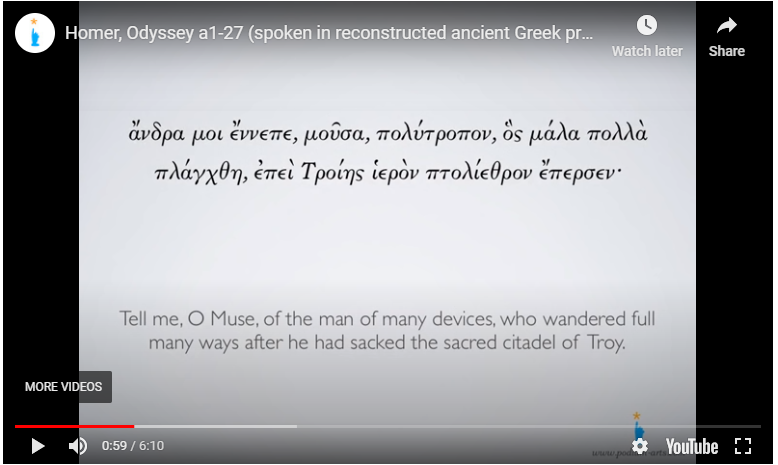
For a modern Greek reading with stresses in the right place and vowels and consonants as we believe Homer would have pronounced them, there is a recitation of the opening lines of the Odyssey embedded at https://linguae.weebly.com/res-graecae.html, which also has other audio links.
Tanya also claimed that the earliest bread in the wotld has been discovered in Australia. A check with Wikipedia suggests that the evidence is grinding stones from both Australia and Europe, which may or may not have been used for making bread. The discovery of actual charred bread crumbs at a site in Jordan (the Middle East, not Kowloon!) suggests bread was being made from wild grains between 14,600 and 11,600 years ago, but bread from cultivated plants was not made until early in the first millennium B.S. See https://en.wikipedia.org/wiki/History_of_bread and
https://en.wikipedia.org/wiki/History_of_agriculture
The Ad Alpes chapter included Cicero’s translation of Simonides’ famous epitaph on the Spartan dead at Thermopylae in 480 B.C. The original literally means `Stranger, tell the Spartans that here we lie, obedient to their commands’. John note how the present participle suggests obedience and loyalty continuing even in the afterworld and hecontrasted this with the rendering bu one English translator `We took their orders and are dead’ which loses this nuance and seems almost like a reproach to the living.
We also noted that Cicero’s own poetry, little of which has survived, is not highly regareded. Particularly derided is a line from his poem on his own consulship – Ō fortūnātam nātam mē cōnsule Rōmam (`O fortunate Rome, reborn with me as consul!’). Cicero’s boasting about his own achievements prompted the comment from a later Roman author, Seneca Younger: `He praised his own achievements not undeservedly but unterminably’ (nōn sine causā sed sine fīne). Seneca’s evaluation is discussed in detail by F.X. Ryan in a paper available at https://www.academia.edu/14536483/Anent_Cicero_Praising_His_Consulship_sine_fine
Simonides Greek original is given in the footnotes below and this prompted mention of the problems connected with pronouncing the language today. Most scholars produce the individual sounds as we believed was done in the 5th century B.C. rather than as they have become in modern Greek, though the latter system is used in Greece itself today and also in many seminaries teaching New Testament Greek. In Britain, however, following the recommendation of a 17th centuy Oxford-based Dutch academic, it is customary to stress ancient Greek words as if they were Latin (i,e stressing a long penultimate and stressing the antepenultimate if the penultimate is short.). In other countries the stress is more rationally placed on the syllable that bears the written accent in both anceint and modern Greek, the postion of this having remained the same though the accent itself changed from a pitch to a stress one in the first millennium A.D. there is a discussion of this strange situation in Allen’s Vox Graeca, available for down,load at https://www.scribd.com/document/59158460/Allen-W-Sidney-Vox-Graeca-the-Pronunciation-of-Classical-Greek and elsewhere.
For a modern Greek reading with stresses in the right place and vowels and consonants as we believe Homer would have pronounced them, there is a recitation of the opening lines of the Odyssey embedded at https://linguae.weebly.com/res-graecae.html, which also has other audio links.
Learning Greek is a more difficult taks than learning Latin because a much smaller proportion of the words are similar to English ones. Listneing to the language is therefore a more `alien’ experience than listing to Latin. For this reason, it was decided in Mel Gibson’s film `The Passion of the Christ’ to let Pontius Pilate and Jesus converse in Latin rather than Greek, because the latter, though more authentic, would not have have been distinguishable from the Aramaic (the Jewish vernacular at that time) which is also used in the film.
Finally, for some reason or other, there was a brief discussion of the Latin for `cockroach’. The word is blatta, but this covers also any other inscect which shuns the daylight.
AD ALPĒS - CAPUT XXX
Postquam aliquamdiū tacitī prōvectī[1] sunt, patrī Pūblius: "Ubi hanc noctem āctūrī
After for-some-time silent they rode to-father Publius where this night going-to-spend
sumus?" inquit.
we-are asked
"Vereor nē necesse sit aliquam in vīllam hāc nocte dēvertere," inquit Cornēlius. "Nam in
I-fear lest necessart it-may-be some into villa on-this night togo-for-shelter said Cornelius for in
hīs regiōnibus, quō tendimus, nūlla sunt oppida magna." 5
these regions to-which we-are-heading no are towns big
"Putavī nōs fortasse Sentīnī morātūrōs," inquit Pūblius.
I-thought us perhaps at-Sentinum going-to-stop said Pūblius
"Hoc oppidum ā viā nimis longē abest," inquit pater, "et celeritātī studeō."
This town from road too far is-away said father and on-speed I’m-keen
"Ecquid clārum Sentīnī umquam factum est?" inquit Sextus. 10
Anything well-known at-Sentinum ever done was asked Sextus
"Maximē vērō," inquit pater. "Sed dē proeliō ōlim ibi commissō fortasse Pūblius
very-much-so indeed said father but about battle once there fought perhaps Publius
quaedam nārrāre potest."
some-things relate can
Quibus verbīs inductus, Pūblius haud invītus: "Abhinc annōs amplius quadringentōs,"
By-which words induced Publius not unwilling ago years more-than four-hundred
inquit, "Rōmānī ad Sentīnum ācerrimē cum Samnītibus et Gallīs pugnāvērunt.[2] 15
said Romans at Sentinum very-fiercely with Samnites and Gauls fought
"Cōnsul ūnus, cum Samnītibus congressus, prīmō satis habēbat sē ab hostibus dēfendere,
Consul one with Samnites having-come-into-contact at-first enough considered himself from enemy to-defend
ratus sī proelium diūtius extractum esset, fore ut hostium sīc minuerētur impetus, Rōmānīs
thinking if battle longer drawn-out had-been would-be that of-enemy thus was-blunted attack for-romans
[1] The short `o’ in the printed book is an error.
[2] The battle of Sentinum was fought in 295 B.C. when the Romans were facing a coalition of the Samnites, Etruscans, Umbrians and Senones (Italian `Senoni’), the Gallic tribe then occupying the east coast south of Ariminum (Rimini), who had captured Rome itself in 390. After the Roman victory, made possible because the Umbrians and Etruscans were defending their own territory against diversionary attacks, the Samnites were abandoned by the other peoples and were themselves then finally brought under Roman control See https://en.wikipedia.org/wiki/Battle_of_Sentinum, https://www.livius.org/articles/place/sentinum/
autem vīrēs paene integrae servārentur.[1]
however strength almost entire was-preserved
"Alterō autem in cornū P. Decius Mūs, quī contrā Gallōs cōnstiterat, 20 quia lentius
the-other however on wing Publius Decius Mus who against Gauls had-taken-position because too-slow
vidēbātur pedestre certāmen, equitēs vehementer in pugnam concitāvit. Quōs autem, cum in
seemed infantry contest cavalry forcefully into battle spurred-on them however when on
cōnfertissimōs Gallōs impetum fēcissent, novum genus pugnae perterruit.
very-densely-packed Gauls attack had-made new kind of-fighting terrified
25 "Iam enim advēnerant hostēs recentēs, essedīs carrīsque superstantēs, quī ingentī
Now for had-arrived enemies fresh on-chariots and-carts standing-erect who with-very-loud
sonitū rotārum cōnsternābant equōs, quibus tālis tumultus īnsolitus erat. Quae rēs Romanīs
sound of-wheels were-stampeding horses for-whom such uuproar unfamiliar was Which thing for-Romans
victōriam paene explōrātam in fugam vertit.
victory almost certain into rout turned
"Decius, cum frūstrā suīs cēdentibus resistere cōnātūs esset:30 'Quid ultrā moror,' inquit,
Decoius when in-vain his-men retreating to-oppose tried had why more do-I-delay said
'mortem fātō dēbitam? Nostrae enim gentī datum est, ut depellendīs cīvitātis perīculīs piāculō
death to-fate owed to-our for clan assigned it-has-been that for-warding-off of-state dangers for-sacrifice
sīmus. Quārē ego, ut anteā pater,[2] nunc et mē ipsum et hostium legiōnēs dīs īnferīs da
verba, quibus sē legiōnēsque hostium prō exercitū populī Rōmānī dēvovēret. Quō rīte factō,
words woth-which self and-legions of-enemy for army of-people Roman he-could sacrifice with-this duly done
quā cōnfertissima cernēbātur Gallōrum aciēs, eā concitāvit equum, īnfestīsque telīs sē īnferēns
bō.'
we-be therefore I as before father now also me myself and of-enemy legions to-gods below I-will-give
"Haec locūtus, M. Līvium, pontificem, quem abīre ā sē vetuerat 35, praeīrē iussit
These-things having-said Marcus Livius priest whom to-depart from self he-had-forbidden to-dictate he-ordered
where most-tightly-packed was-seen of-Gauls battle-line there he-spurred-on horse and-with-aimed weapons self hurling
statim occīsus est."
at-once killed was
NOTES
[1] This construction with fore ut and the subjunctive was normally preferred in indirect statements to the use of the `future passive infinitive’ (hostium sīc minūtum īrī impetum, Rōmānīs ..vīrēs paene integrās servātum īrī)
[2] Publius Decius Mus’s father of the same name sacrificed himself in an identical manner at the Battle of Vesuvius in 340 B.C. when Romans and Samnites were allies in the Latin War of 340-338 against both the Latins themselves and the, Campanians, Volsci, Sidicini and Aurunci, peoples occupying the west coast of Italy from Latium to the Bay of Naples (see map on pg.19). Roman victory in 340 ensured her domination of Latium, as victory at Sentinum in 295 paved her path to supremacy in Italy.
"Heu!" inquit Cornēlia. "Quā rē fit, obsecrō, ut fortissimī 40 et optimī omnēs exitūs
O no said Cornelia for-what reason it-happens please that bravest and best all ends
tam miserōs inveniant?"
so wretched meet
"Deciō quidem," inquit pater, "illa mors prō patriā oppetīta pulcherrima vidēbātur; et
To-Decius at-any-rate said father that death for fatherland met most-beautiful seemed and
populō Rōmānō certē multum prōfuit. Nam mīlitibus perterritīs iam rediit animus, et eō
for-people Roman certainly much was-advantageous for to-soldiers terrified now returned spirit and on-that
diē victōria clāra ā nostrīs parta est."
day victor famous by our-men obtained was
45 "Quō modō animus mīlitibus redīre potuit," inquit Cornēlia, "cum dux ab hostibus
In-what way morale to-soldiers return could asked Cornelia when leader by enemy
occīsus esset?"
killed had-been
At pater: "Pontificī Līviō līctōrēs[1] Decius trādiderat, eumque iusserat imperium
But father to-priest Livius lictors Decius had-handed-ovder and-him he-had-ordered legal-authority
suum recipere; quī, cum cōnsulem occīsum vīdisset, statim clāmāre coepit Rōmānōs vīcisse,
his to-receive he when consul killed he-had-seen at-once to-shout began Romans to-have-won
quod dux mortuus ad īnferōs sēcum dēvōtam hostium aciem vocāret, 50 et iam apud Gallōs
because leader dead to underworld with-him marked-for-death enemy army was-calling and now among Gauls
omnia terrōris plēna esse.
all-things of-terror full to-be
"Eōdem ferē tempore opportūnē subvēnērunt mīlitēs recentēs, quōs cōnsul alter,
At-same about time opportunely arrived-to-help soldiers fresh whom consul the-other
Samnītibus fugātīs, collēgae auxiliō mīserat. Itaque Gallī, etsī exstructīs ante sē scūtīs confertī
with-Samnites routed to-colleague as-help had-sent and-so Gauls although with-held-out before selves shields packed
stābant, impetum Rōmānōrum sustinēre nōn potuērunt. Multī, 55 ubi cōnstiterant,
they-were-standing attack of-Romans to-withstand not were-able many where they-had-taken-stand
ibīdem cecidērunt, aliī ā tergō circumventī et trucīdātī sunt."
In-same-place fell others from rear surrounded and slaughtered were
[1] Lictors carried fascēs, an axe in a bundle of rods, as a symbol of the consul’s power to punish.
"Haec mē admonent," inquit Pūblius, "dē aliō facinore ēgregiō, quod ā scrīptōre Līvīō
These-things me remind said Publius about another deed outstanding which by writer Livy
memoriae trāditum est."
to-memory handed-down has-been
"Quid factum est, obsecrō?" inquit Sextus. "Eōdemne 60 modō posteā cīvis alius prō
Whar done was please asked Sextus in-same-? way afterwards citizen another for
victōriā Rōmānōrum tēlīs hostium sē obiēcit?"
victory of-Romans weapons of-enemy self threw-against
"Pater eiusdem Decī sē similiter prō patriā dēvōvit," inquit frāter; "sed aliud erat, dē quō
Father of-same Decius self similarly for fatherland sacrificed said brother but other-thing was about which
cōgitābam:
I-was-thinking
"Ōlim Rōmae, aut mōtū terrae aut aliquā vī aliā 65 hiātus immēnsae altitūdinis subitō
Once in-Rome either by-movement of-earth or by-some force other cleft of-immense depth suddenly
in forō factus est, quī congestiōne terrae quamvīs adsiduā nūllō modō complērī potuit.
in forum made was which by-packing-in of-earth although continuous in-no way to-be-filled was-able
"Vātēs canēbant id, quod optimum Rōmānī habērent, eī locō dēdicandum esse,
Seers were-predicting that which best Romans had to-that place needing-to-be-dedicated to-be
sī rem pūblicam perpetuam esse vellent. Quārē diū quaesītum est quid esset illud optimum. 70
if state ever-lasting to-be they-wanted therefore for-long-time asked it-was what was that best-thing
"Tum ferunt M. Curtium, iuvenem bellō ēgregium, cīvēs suōs castīgāsse,[1] quod
Then they-say Marcus Curtius youth in-war outstanding fellow-citizens his to-have-scolded because
dubitārent an ūllum Rōmānīs bonum maius esset quam arma et virtūs.
they-doubted whether any to-Romans good-thing greater was than weapons and courage
"Deinde, ubi silentium factum est, templa deōrum immortālium Capitōliumque intuēns,
Then when silence established was temples of-gods immortal and-Capitoline looking-at
et manūs nunc in caelum 75 nunc in patentem terrae hiātum porrigēns, ille sē dēvōvit;
and hands now to sky now to yawning of-earth cleft stretching-out he himself dedicated-as-sacrifice
tum equō quam poterat maximē ōrnātō īnsidēns, armātus sē in hiātum immīsit.
then on-horse as-he-could very-greatly adorned sitting armed self into cleft launnched
"Dōna et frūgēs super eum ā multitūdine virōrum et mulierum congesta sunt; et locus
[1] Contraction of castigāvisse
Gifts and fruits-of-earth on-top-of him by crowd of-men and of-women piled were and place
'lacus Curtius' 80 appellātus est, quod ille vītam suam ibi prō perpetuitāte reī pūblicae largītus
Lacus Curtius called was because he life his there for perpetuity of-state generously-given
erat."[1]
had
"Mihi quidem," inquit Cornēlius, "ille vir vidētur etiam tālī ēlogiō dignus, quāle
To-me al-least said Cornelius that man seems also of-such eulogy worthy as
Simōnidēs scrīpsit in Lacedaemoniōs, quī Thermopylīs cecidērunt: 85
Simonides wrote on Lacedemonians who at-Thermopylae fell
" 'Dīc, hospes, Spartae, nōs tē hīc vīdisse iacentīs,
Say stranger to-Sparta us you here to-have-seen lying
Dum sanctīs patriae lēgibus obsequimur.' "[2]
While sacred of-fatherland laws we-follow
"Haec omnia ēgregia et maximē laudanda sunt," inquit Cornēlia; "sed exitūs habent, quī
These all-things outstanding and greatly praiseworthy are said Cornelia but endings have which
maestitiam maximam mihi iniciant.[3] Nōnne tū vīs, pater, aliquid iūcundius 90 nārrāre?"
sadness greatest in-me instill Don’t you wish father something pleasanter to-narrate
"Ita vērō," inquit ille. "Expōnam, sī vīs, quō modō Caesar dictātor inopiam aquae
Yes indeed said he I-will-tell if you-want in-what way Caesar dictator scarcity of-water
sublevāverit, cum Alexandrēae ab hostibus obsīderētur:[4]
relieved when at-Alexandria by enemies he-was-under-sige
[1] The `Lacus Curtius’ (`Lake of Curtius’) was in historical times a small, duodecagonal basin, apparently all that was left of the marsh (and possibly once a real lake) that had existed before the Forum area was paved over in the seventh century B.C. As well as the devōtiō story, conventionally dated to 362 B.C, which he himself prefers, Livy mentions a rival ancient explanation linking the name to a Sabine leader, Mettius Curtius. This man supposedly became stuck in the marsh during the fighting after the Romans’ abduction of the Sabine maidens. The gēns Curtia were in fact of Sabine origin but both legends may be distorted memories of the area’s probable early function as a site for execution and human sacrifice. The emperor Galba was lynched by soldiers at this place in 69 A.D. The relief shown on pg. 21 is in the Capitoline Museum. See for a third legend and further details https://www.livius.org/articles/place/rome/rome-photos/rome-forum-romanum/lacus-curtius/
[2] Cicero’s translation of Simonides’ Greek original: Ὦ ξεῖν', ἄγγειλον Λακεδαιμονίοις ὅτι τῇδε
κείμεθα, τοῖς κείνων ῥήμασι πειθόμενοι. (`Tell them in Lacedaimon, passer-by, that here, obedient to their word, we lie.’) The verses are an elegiac couplet (i.e. a hexameter plus a pentameter; see note ?? to chapter 25). The epitaph commemorates the three hundred Spartans who held the narrow pass on the coast road at Thermopylae against the Persian invasion force in 480 B.C. and died fighting to the end after a Greek traitor showed the enemy a path through the hills to get behind them.
[3] Subjunctive iniciant (from inciciō, inicere, iniēcī, iniēctum) in a relative clause of characteristic.
[4] Julius Caesar sailed to Alexandria in Egypt in summer 48 B.C. in pursuit of Pompey, whose forces he had defeated at Pharsalus in western Greece, only to find that his rival had been murdered by King Ptolemy XIII who hoped thereby to win his support. Caesar had in fact planned to pardon Pompey and he subsequently intervened in support of the king’s sister, Cleopatra, who was engaged in a civil war against him. Caesar was out-numbered and was besieged in a section of the city for several months but finally, with help from Mithridates, the ally whom he summoned from Pergamum in Asia Minor, he defeated Ptolemy at the Battle of the Nile in February 47.
"Urbs illa est ferē tōta suffossa, specūsque ad flūmen Nīlum 95 pertinentēs habet, quibus
City that is almost all undermined and-channels to river Nile connecting has by-which
aqua in prīvātās domōs indūcitur; ubi paulātim liquēscit ac subsīdit. Nam cum prīmō ē Nīlō
water into private homes is-brought where gradually it-becomes-clear and settles for when first from Nile
īnfluit, adeō est līmōsa et turbida, ut multīs variīsque morbīs eōs adficiat, quī statim bibunt.
It-lows-in so it-is muddy and clouded that with-many and-various diseases those it-affects who immediately drink
100 "Aquā ex hīs specibus extractā Caesar quoque aliquamdiū ūtēbātur. Tum hostēs, ratī
Water from these channels extracted Caesar also for-some-time continued-using then enemy thinking
fore ut Rōmānī sē dēdere cōgerentur, sī aquātiōne prohibitī essent, magnum et difficile
going-to-be that Romans selves to-surrender were-forced if from-getting-water prevent ed-had-been great and difficult
opus aggressī sunt.
task embarked on
"Nam rotīs et māchinīs maximam vim aquae ex marī exhausērunt 105, quam in loca ā
For with-wheels and machines very-great quantity of-water from sea they-extracted which into places by
Caesare occupāta fundere nōn intermittēbant. Quō modō aqua, quae ē specibus ā Rōmānīs
Caesar occupied pouring not they-left-off by-which method water which from channels by Romans
trahēbātur, in diēs salsior fīēbat, adeō ut postrēmō bibī omnīnō nōn posset.
was-being-extracted day-by-day saltier was-becoming so-much that finally be-drunk at-all not it-could
"Tum nostrī ad summam dēspērātiōnem pervēnērunt; Caesar autem eōrum timōrem
Then our-forces at greatest desperation arrived Caesar however their fear
cohortātiōne et ratiōne minuit. 110 Nam docuit, puteīs fossīs, aquam dulcem reperīrī posse,
by-encouragement and reasoning reduced for he-explained with-wells dug water fresh to-be-found to-be-able
quia lītora omnia nātūrā aquae dulcis vēnās habērent; sīn autem hōc modō aquārī nōn possent,
because shores all by-nature of-water fresh channels had but-if however in-this way get-water not they-could
aditum ad mare patēre, et cotīdiē nāvibus sē aquam petītūrum.
access to sea to-be-open and daily with-ships himself water going-to-seek
"Tālī ōrātiōne confirmātīs suīs, centuriōnibus negōtium 115 dedit ut, reliquīs operibus
by-such speech having-been re-assured his-men to-centurions work he-gave that with-other tasks
intermissīs, ad fodiendōs puteōs animum cōnferrent. Quō susceptō negōtiō atque omnium
discontinued on being-dug wells mind they-should-concentrate with-which undertaken work and of-all
animīs ad labōrem incitātīs, ūnā nocte inventa est magna vīs aquae dulcis, nec posteā
minds to labour urged in-one night found was great quantity of-water fresh and-not afterwards
similī inopiā labōrātum est."[1]
from -similar scarcity trouble occurred
"Optimē!" inquit Cornēlia. "Vellem fābulae omnēs exitūs 120 tam iūcundōs habērent."
Very good said Cornelia I-would-like stories all endings so pleasant had
Dum haec fīunt, raedae celeriter prōvehēbantur; ac vesperāscente iam diē
While these-things are-happening wagons swifly were-being-drawn and coming-towards-evening already with-day
viātōrēs ad quandam vīllam hospitiō acceptī sunt.[2]
travellers in a-certain villa with-hospitality received were
[1] Impersonal passive of the intransitive verb labōrō.
[2] Inns generally had a poor reputation in the Roman period and those with a wide enough circle of friends and acquaintances normally preferred to rely on their hospitality even if accommodation was available elsewhere.
Finally, for some reason or other, there was a brief discussion of the Latin for `cockroach’. The word is blatta, but this covers also any other inscect which shuns the daylight.
AD ALPĒS - CAPUT XXX
Postquam aliquamdiū tacitī prōvectī[1] sunt, patrī Pūblius: "Ubi hanc noctem āctūrī
After for-some-time silent they rode to-father Publius where this night going-to-spend
sumus?" inquit.
we-are asked
"Vereor nē necesse sit aliquam in vīllam hāc nocte dēvertere," inquit Cornēlius. "Nam in
I-fear lest necessart it-may-be some into villa on-this night togo-for-shelter said Cornelius for in
hīs regiōnibus, quō tendimus, nūlla sunt oppida magna." 5
these regions to-which we-are-heading no are towns big
"Putavī nōs fortasse Sentīnī morātūrōs," inquit Pūblius.
I-thought us perhaps at-Sentinum going-to-stop said Pūblius
"Hoc oppidum ā viā nimis longē abest," inquit pater, "et celeritātī studeō."
This town from road too far is-away said father and on-speed I’m-keen
"Ecquid clārum Sentīnī umquam factum est?" inquit Sextus. 10
Anything well-known at-Sentinum ever done was asked Sextus
"Maximē vērō," inquit pater. "Sed dē proeliō ōlim ibi commissō fortasse Pūblius
very-much-so indeed said father but about battle once there fought perhaps Publius
quaedam nārrāre potest."
some-things relate can
Quibus verbīs inductus, Pūblius haud invītus: "Abhinc annōs amplius quadringentōs,"
By-which words induced Publius not unwilling ago years more-than four-hundred
inquit, "Rōmānī ad Sentīnum ācerrimē cum Samnītibus et Gallīs pugnāvērunt.[2] 15
said Romans at Sentinum very-fiercely with Samnites and Gauls fought
"Cōnsul ūnus, cum Samnītibus congressus, prīmō satis habēbat sē ab hostibus dēfendere,
Consul one with Samnites having-come-into-contact at-first enough considered himself from enemy to-defend
ratus sī proelium diūtius extractum esset, fore ut hostium sīc minuerētur impetus, Rōmānīs
thinking if battle longer drawn-out had-been would-be that of-enemy thus was-blunted attack for-romans
[1] The short `o’ in the printed book is an error.
[2] The battle of Sentinum was fought in 295 B.C. when the Romans were facing a coalition of the Samnites, Etruscans, Umbrians and Senones (Italian `Senoni’), the Gallic tribe then occupying the east coast south of Ariminum (Rimini), who had captured Rome itself in 390. After the Roman victory, made possible because the Umbrians and Etruscans were defending their own territory against diversionary attacks, the Samnites were abandoned by the other peoples and were themselves then finally brought under Roman control See https://en.wikipedia.org/wiki/Battle_of_Sentinum, https://www.livius.org/articles/place/sentinum/
autem vīrēs paene integrae servārentur.[1]
however strength almost entire was-preserved
"Alterō autem in cornū P. Decius Mūs, quī contrā Gallōs cōnstiterat, 20 quia lentius
the-other however on wing Publius Decius Mus who against Gauls had-taken-position because too-slow
vidēbātur pedestre certāmen, equitēs vehementer in pugnam concitāvit. Quōs autem, cum in
seemed infantry contest cavalry forcefully into battle spurred-on them however when on
cōnfertissimōs Gallōs impetum fēcissent, novum genus pugnae perterruit.
very-densely-packed Gauls attack had-made new kind of-fighting terrified
25 "Iam enim advēnerant hostēs recentēs, essedīs carrīsque superstantēs, quī ingentī
Now for had-arrived enemies fresh on-chariots and-carts standing-erect who with-very-loud
sonitū rotārum cōnsternābant equōs, quibus tālis tumultus īnsolitus erat. Quae rēs Romanīs
sound of-wheels were-stampeding horses for-whom such uuproar unfamiliar was Which thing for-Romans
victōriam paene explōrātam in fugam vertit.
victory almost certain into rout turned
"Decius, cum frūstrā suīs cēdentibus resistere cōnātūs esset:30 'Quid ultrā moror,' inquit,
Decoius when in-vain his-men retreating to-oppose tried had why more do-I-delay said
'mortem fātō dēbitam? Nostrae enim gentī datum est, ut depellendīs cīvitātis perīculīs piāculō
death to-fate owed to-our for clan assigned it-has-been that for-warding-off of-state dangers for-sacrifice
sīmus. Quārē ego, ut anteā pater,[2] nunc et mē ipsum et hostium legiōnēs dīs īnferīs da
verba, quibus sē legiōnēsque hostium prō exercitū populī Rōmānī dēvovēret. Quō rīte factō,
words woth-which self and-legions of-enemy for army of-people Roman he-could sacrifice with-this duly done
quā cōnfertissima cernēbātur Gallōrum aciēs, eā concitāvit equum, īnfestīsque telīs sē īnferēns
bō.'
we-be therefore I as before father now also me myself and of-enemy legions to-gods below I-will-give
"Haec locūtus, M. Līvium, pontificem, quem abīre ā sē vetuerat 35, praeīrē iussit
These-things having-said Marcus Livius priest whom to-depart from self he-had-forbidden to-dictate he-ordered
where most-tightly-packed was-seen of-Gauls battle-line there he-spurred-on horse and-with-aimed weapons self hurling
statim occīsus est."
at-once killed was
NOTES
[1] This construction with fore ut and the subjunctive was normally preferred in indirect statements to the use of the `future passive infinitive’ (hostium sīc minūtum īrī impetum, Rōmānīs ..vīrēs paene integrās servātum īrī)
[2] Publius Decius Mus’s father of the same name sacrificed himself in an identical manner at the Battle of Vesuvius in 340 B.C. when Romans and Samnites were allies in the Latin War of 340-338 against both the Latins themselves and the, Campanians, Volsci, Sidicini and Aurunci, peoples occupying the west coast of Italy from Latium to the Bay of Naples (see map on pg.19). Roman victory in 340 ensured her domination of Latium, as victory at Sentinum in 295 paved her path to supremacy in Italy.
"Heu!" inquit Cornēlia. "Quā rē fit, obsecrō, ut fortissimī 40 et optimī omnēs exitūs
O no said Cornelia for-what reason it-happens please that bravest and best all ends
tam miserōs inveniant?"
so wretched meet
"Deciō quidem," inquit pater, "illa mors prō patriā oppetīta pulcherrima vidēbātur; et
To-Decius at-any-rate said father that death for fatherland met most-beautiful seemed and
populō Rōmānō certē multum prōfuit. Nam mīlitibus perterritīs iam rediit animus, et eō
for-people Roman certainly much was-advantageous for to-soldiers terrified now returned spirit and on-that
diē victōria clāra ā nostrīs parta est."
day victor famous by our-men obtained was
45 "Quō modō animus mīlitibus redīre potuit," inquit Cornēlia, "cum dux ab hostibus
In-what way morale to-soldiers return could asked Cornelia when leader by enemy
occīsus esset?"
killed had-been
At pater: "Pontificī Līviō līctōrēs[1] Decius trādiderat, eumque iusserat imperium
But father to-priest Livius lictors Decius had-handed-ovder and-him he-had-ordered legal-authority
suum recipere; quī, cum cōnsulem occīsum vīdisset, statim clāmāre coepit Rōmānōs vīcisse,
his to-receive he when consul killed he-had-seen at-once to-shout began Romans to-have-won
quod dux mortuus ad īnferōs sēcum dēvōtam hostium aciem vocāret, 50 et iam apud Gallōs
because leader dead to underworld with-him marked-for-death enemy army was-calling and now among Gauls
omnia terrōris plēna esse.
all-things of-terror full to-be
"Eōdem ferē tempore opportūnē subvēnērunt mīlitēs recentēs, quōs cōnsul alter,
At-same about time opportunely arrived-to-help soldiers fresh whom consul the-other
Samnītibus fugātīs, collēgae auxiliō mīserat. Itaque Gallī, etsī exstructīs ante sē scūtīs confertī
with-Samnites routed to-colleague as-help had-sent and-so Gauls although with-held-out before selves shields packed
stābant, impetum Rōmānōrum sustinēre nōn potuērunt. Multī, 55 ubi cōnstiterant,
they-were-standing attack of-Romans to-withstand not were-able many where they-had-taken-stand
ibīdem cecidērunt, aliī ā tergō circumventī et trucīdātī sunt."
In-same-place fell others from rear surrounded and slaughtered were
[1] Lictors carried fascēs, an axe in a bundle of rods, as a symbol of the consul’s power to punish.
"Haec mē admonent," inquit Pūblius, "dē aliō facinore ēgregiō, quod ā scrīptōre Līvīō
These-things me remind said Publius about another deed outstanding which by writer Livy
memoriae trāditum est."
to-memory handed-down has-been
"Quid factum est, obsecrō?" inquit Sextus. "Eōdemne 60 modō posteā cīvis alius prō
Whar done was please asked Sextus in-same-? way afterwards citizen another for
victōriā Rōmānōrum tēlīs hostium sē obiēcit?"
victory of-Romans weapons of-enemy self threw-against
"Pater eiusdem Decī sē similiter prō patriā dēvōvit," inquit frāter; "sed aliud erat, dē quō
Father of-same Decius self similarly for fatherland sacrificed said brother but other-thing was about which
cōgitābam:
I-was-thinking
"Ōlim Rōmae, aut mōtū terrae aut aliquā vī aliā 65 hiātus immēnsae altitūdinis subitō
Once in-Rome either by-movement of-earth or by-some force other cleft of-immense depth suddenly
in forō factus est, quī congestiōne terrae quamvīs adsiduā nūllō modō complērī potuit.
in forum made was which by-packing-in of-earth although continuous in-no way to-be-filled was-able
"Vātēs canēbant id, quod optimum Rōmānī habērent, eī locō dēdicandum esse,
Seers were-predicting that which best Romans had to-that place needing-to-be-dedicated to-be
sī rem pūblicam perpetuam esse vellent. Quārē diū quaesītum est quid esset illud optimum. 70
if state ever-lasting to-be they-wanted therefore for-long-time asked it-was what was that best-thing
"Tum ferunt M. Curtium, iuvenem bellō ēgregium, cīvēs suōs castīgāsse,[1] quod
Then they-say Marcus Curtius youth in-war outstanding fellow-citizens his to-have-scolded because
dubitārent an ūllum Rōmānīs bonum maius esset quam arma et virtūs.
they-doubted whether any to-Romans good-thing greater was than weapons and courage
"Deinde, ubi silentium factum est, templa deōrum immortālium Capitōliumque intuēns,
Then when silence established was temples of-gods immortal and-Capitoline looking-at
et manūs nunc in caelum 75 nunc in patentem terrae hiātum porrigēns, ille sē dēvōvit;
and hands now to sky now to yawning of-earth cleft stretching-out he himself dedicated-as-sacrifice
tum equō quam poterat maximē ōrnātō īnsidēns, armātus sē in hiātum immīsit.
then on-horse as-he-could very-greatly adorned sitting armed self into cleft launnched
"Dōna et frūgēs super eum ā multitūdine virōrum et mulierum congesta sunt; et locus
[1] Contraction of castigāvisse
Gifts and fruits-of-earth on-top-of him by crowd of-men and of-women piled were and place
'lacus Curtius' 80 appellātus est, quod ille vītam suam ibi prō perpetuitāte reī pūblicae largītus
Lacus Curtius called was because he life his there for perpetuity of-state generously-given
erat."[1]
had
"Mihi quidem," inquit Cornēlius, "ille vir vidētur etiam tālī ēlogiō dignus, quāle
To-me al-least said Cornelius that man seems also of-such eulogy worthy as
Simōnidēs scrīpsit in Lacedaemoniōs, quī Thermopylīs cecidērunt: 85
Simonides wrote on Lacedemonians who at-Thermopylae fell
" 'Dīc, hospes, Spartae, nōs tē hīc vīdisse iacentīs,
Say stranger to-Sparta us you here to-have-seen lying
Dum sanctīs patriae lēgibus obsequimur.' "[2]
While sacred of-fatherland laws we-follow
"Haec omnia ēgregia et maximē laudanda sunt," inquit Cornēlia; "sed exitūs habent, quī
These all-things outstanding and greatly praiseworthy are said Cornelia but endings have which
maestitiam maximam mihi iniciant.[3] Nōnne tū vīs, pater, aliquid iūcundius 90 nārrāre?"
sadness greatest in-me instill Don’t you wish father something pleasanter to-narrate
"Ita vērō," inquit ille. "Expōnam, sī vīs, quō modō Caesar dictātor inopiam aquae
Yes indeed said he I-will-tell if you-want in-what way Caesar dictator scarcity of-water
sublevāverit, cum Alexandrēae ab hostibus obsīderētur:[4]
relieved when at-Alexandria by enemies he-was-under-sige
[1] The `Lacus Curtius’ (`Lake of Curtius’) was in historical times a small, duodecagonal basin, apparently all that was left of the marsh (and possibly once a real lake) that had existed before the Forum area was paved over in the seventh century B.C. As well as the devōtiō story, conventionally dated to 362 B.C, which he himself prefers, Livy mentions a rival ancient explanation linking the name to a Sabine leader, Mettius Curtius. This man supposedly became stuck in the marsh during the fighting after the Romans’ abduction of the Sabine maidens. The gēns Curtia were in fact of Sabine origin but both legends may be distorted memories of the area’s probable early function as a site for execution and human sacrifice. The emperor Galba was lynched by soldiers at this place in 69 A.D. The relief shown on pg. 21 is in the Capitoline Museum. See for a third legend and further details https://www.livius.org/articles/place/rome/rome-photos/rome-forum-romanum/lacus-curtius/
[2] Cicero’s translation of Simonides’ Greek original: Ὦ ξεῖν', ἄγγειλον Λακεδαιμονίοις ὅτι τῇδε
κείμεθα, τοῖς κείνων ῥήμασι πειθόμενοι. (`Tell them in Lacedaimon, passer-by, that here, obedient to their word, we lie.’) The verses are an elegiac couplet (i.e. a hexameter plus a pentameter; see note ?? to chapter 25). The epitaph commemorates the three hundred Spartans who held the narrow pass on the coast road at Thermopylae against the Persian invasion force in 480 B.C. and died fighting to the end after a Greek traitor showed the enemy a path through the hills to get behind them.
[3] Subjunctive iniciant (from inciciō, inicere, iniēcī, iniēctum) in a relative clause of characteristic.
[4] Julius Caesar sailed to Alexandria in Egypt in summer 48 B.C. in pursuit of Pompey, whose forces he had defeated at Pharsalus in western Greece, only to find that his rival had been murdered by King Ptolemy XIII who hoped thereby to win his support. Caesar had in fact planned to pardon Pompey and he subsequently intervened in support of the king’s sister, Cleopatra, who was engaged in a civil war against him. Caesar was out-numbered and was besieged in a section of the city for several months but finally, with help from Mithridates, the ally whom he summoned from Pergamum in Asia Minor, he defeated Ptolemy at the Battle of the Nile in February 47.
"Urbs illa est ferē tōta suffossa, specūsque ad flūmen Nīlum 95 pertinentēs habet, quibus
City that is almost all undermined and-channels to river Nile connecting has by-which
aqua in prīvātās domōs indūcitur; ubi paulātim liquēscit ac subsīdit. Nam cum prīmō ē Nīlō
water into private homes is-brought where gradually it-becomes-clear and settles for when first from Nile
īnfluit, adeō est līmōsa et turbida, ut multīs variīsque morbīs eōs adficiat, quī statim bibunt.
It-lows-in so it-is muddy and clouded that with-many and-various diseases those it-affects who immediately drink
100 "Aquā ex hīs specibus extractā Caesar quoque aliquamdiū ūtēbātur. Tum hostēs, ratī
Water from these channels extracted Caesar also for-some-time continued-using then enemy thinking
fore ut Rōmānī sē dēdere cōgerentur, sī aquātiōne prohibitī essent, magnum et difficile
going-to-be that Romans selves to-surrender were-forced if from-getting-water prevent ed-had-been great and difficult
opus aggressī sunt.
task embarked on
"Nam rotīs et māchinīs maximam vim aquae ex marī exhausērunt 105, quam in loca ā
For with-wheels and machines very-great quantity of-water from sea they-extracted which into places by
Caesare occupāta fundere nōn intermittēbant. Quō modō aqua, quae ē specibus ā Rōmānīs
Caesar occupied pouring not they-left-off by-which method water which from channels by Romans
trahēbātur, in diēs salsior fīēbat, adeō ut postrēmō bibī omnīnō nōn posset.
was-being-extracted day-by-day saltier was-becoming so-much that finally be-drunk at-all not it-could
"Tum nostrī ad summam dēspērātiōnem pervēnērunt; Caesar autem eōrum timōrem
Then our-forces at greatest desperation arrived Caesar however their fear
cohortātiōne et ratiōne minuit. 110 Nam docuit, puteīs fossīs, aquam dulcem reperīrī posse,
by-encouragement and reasoning reduced for he-explained with-wells dug water fresh to-be-found to-be-able
quia lītora omnia nātūrā aquae dulcis vēnās habērent; sīn autem hōc modō aquārī nōn possent,
because shores all by-nature of-water fresh channels had but-if however in-this way get-water not they-could
aditum ad mare patēre, et cotīdiē nāvibus sē aquam petītūrum.
access to sea to-be-open and daily with-ships himself water going-to-seek
"Tālī ōrātiōne confirmātīs suīs, centuriōnibus negōtium 115 dedit ut, reliquīs operibus
by-such speech having-been re-assured his-men to-centurions work he-gave that with-other tasks
intermissīs, ad fodiendōs puteōs animum cōnferrent. Quō susceptō negōtiō atque omnium
discontinued on being-dug wells mind they-should-concentrate with-which undertaken work and of-all
animīs ad labōrem incitātīs, ūnā nocte inventa est magna vīs aquae dulcis, nec posteā
minds to labour urged in-one night found was great quantity of-water fresh and-not afterwards
similī inopiā labōrātum est."[1]
from -similar scarcity trouble occurred
"Optimē!" inquit Cornēlia. "Vellem fābulae omnēs exitūs 120 tam iūcundōs habērent."
Very good said Cornelia I-would-like stories all endings so pleasant had
Dum haec fīunt, raedae celeriter prōvehēbantur; ac vesperāscente iam diē
While these-things are-happening wagons swifly were-being-drawn and coming-towards-evening already with-day
viātōrēs ad quandam vīllam hospitiō acceptī sunt.[2]
travellers in a-certain villa with-hospitality received were
[1] Impersonal passive of the intransitive verb labōrō.
[2] Inns generally had a poor reputation in the Roman period and those with a wide enough circle of friends and acquaintances normally preferred to rely on their hospitality even if accommodation was available elsewhere.
