| linguae |
|
QUESTIONS ARISING FROM 128th. MEETING – 22/10/21
(the record of earlier meetings can be downloaded from the main Circulus page as can the version of Ciceronis Filius with illustrations added. The illustrated text of Genesis is available on the Genesis page, of Kepler's Somnium on the Somnium page and of Nutting's Ad Alpes on the Ad Alpes page)
Food consumed included usual favourites such as melanogēna contūsa (baingan bharta, mashed eggplant), cicera arōmatica (chana massala, spiced chickpeas), spīnācia cum caseō (palak paneer, spinach with cheese), caseus fervēns (sizzling paneer), iūs lentium butyrātum (literally `lentil soup with butter’, daal makhani), okrum arōmaticum (bhindi masala, `lady’s fingers’, okra with spices), pānis Persicus (naan), orӯza (rice) and, of course, vīnum rubrum/sanguineum.
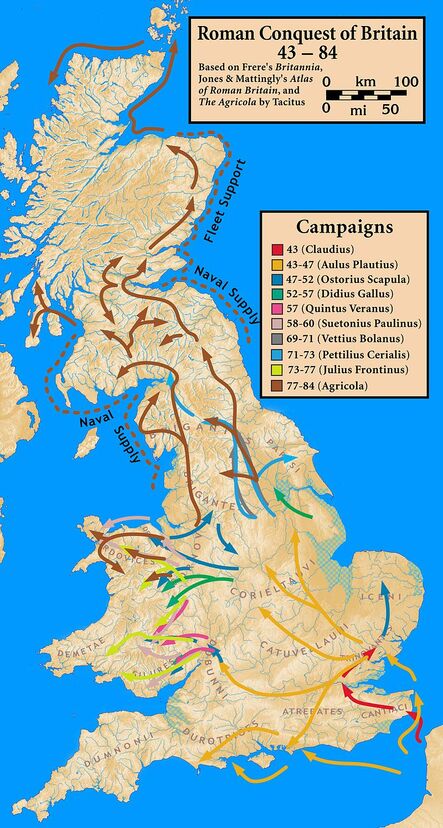
We continued reading Ad Alpes, covering lines.19 to 108 (to iūcunda audītū nārrat) in chapter 38 (see text below), which included brief accounts of the Roman invasions of Britain by Julius Caesar in 55 and 54 B.C. and under Claudius in 43 A.D as well as the penetration far into Caledonia (Scotland) by Gnaeus Julius Agricola in the 80s. Modern scholars have sometimes questioned whether the account in the biography of Agricola by his son-in-law, the historian Tacitus, exaggerated his role. There is also no doubt, that after the construction of Hadrian’s Wall began in 121 A.D. the Romans largely left what later became Scotland to its own devices.
Before the meeting Eugene had been active preparing recordings of the first 115 lines of Hesiod’s Theogony (`Genealogy of the Gods’), a poem in the Epic dialect, probably composed at the end of the 8th century B.C. This is a foundational text for Greek mythology, providing a narrative that was broadly accepted by all Greeks, regardless of what earlier local variants they might have subscribed to. Using a speech synthesizer, Eugene prepared two recordings of the lines, one rather fast and the other slower and considerably easier to follow, and uploaded them top the Vocaroo platform. He also added recordings of glosses for the vocabulary items. The Greek text and links to the recordings can be accessed at https://linguae.weebly.com/hesiod.html
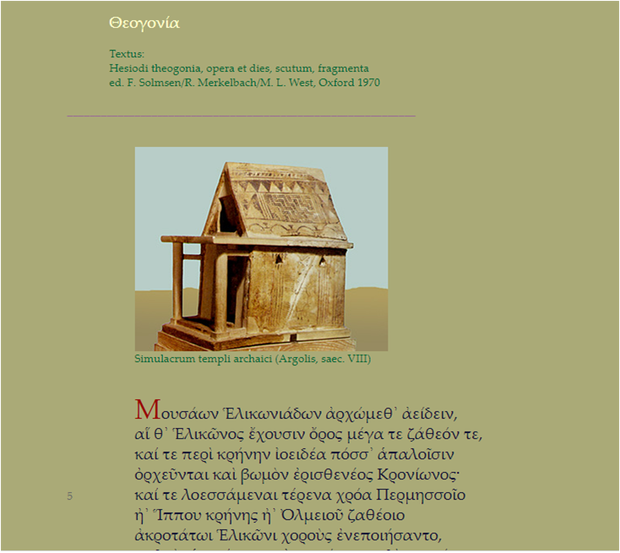
Opening lines of the Theogony
https://www.hs-augsburg.de/~harsch/graeca/Chronologia/S_ante08/Hesiodos/hes_theo.html
For those wanting to listen to other Greek recordings, there are a lot of them available for free on the Internet, and a number of links are available at https://linguae.weebly.com/res-graecae.html Ioannis Stratikis’ recitation of the opening lines of the Odyssey is particularly good, as are Luke Ranieri’s `Ancient Greek in Action’ videos.
https://www.hs-augsburg.de/~harsch/graeca/Chronologia/S_ante08/Hesiodos/hes_theo.html
For those wanting to listen to other Greek recordings, there are a lot of them available for free on the Internet, and a number of links are available at https://linguae.weebly.com/res-graecae.html Ioannis Stratikis’ recitation of the opening lines of the Odyssey is particularly good, as are Luke Ranieri’s `Ancient Greek in Action’ videos.
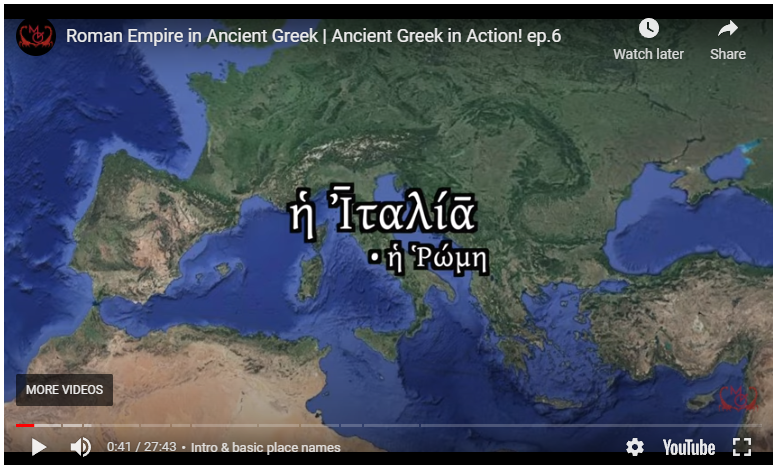
Luke Ranieri’s Greek version of Chapter 1 of Lingua Latina Per Se Illustrata
https://www.youtube.com/watch?v=lBz9KNJHMw8&t=41s
If you want Latin and Ancient Greek together, Luke (the YouTuber) can also be watched as he conducts a Webinair on the texts in both languages of Luke the Evangelist’s narrative of the Christmas story: https://www.youtube.com/watch?v=NHXKCRXRfnk
Also on the religious front, Tanya, who has experience of both styles, described the contrast between the lively, comic routines adopted in church by Filipino pastors, and the dull, over-serious one preferred by their Korean counterparts.
There was also mention of the promiscuous descent of the English, for which the classic text is Daniel Defoe’s poem of 1700, `The True-born Englishman’, aimed in the first place against those who held William III’s Dutch origin against him. There is an extract on the Poetry Foundation site
(https://www.poetryfoundation.org/poems/44081/the-true-born-englishman) beginning:
Thus from a mixture of all kinds began,
That het’rogeneous thing, an Englishman:
In eager rapes, and furious lust begot,
Betwixt a painted Britain and a Scot.
Whose gend’ring off-spring quickly learn’d to bow,
And yoke their heifers to the Roman plough:
From whence a mongrel half-bred race there came,
With neither name, nor nation, speech nor fame.
In whose hot veins new mixtures quickly ran,
Infus’d betwixt a Saxon and a Dane.
While their rank daughters, to their parents just,
Receiv’d all nations with promiscuous lust.
This nauseous brood directly did contain
The well-extracted blood of Englishmen.
The poetry site also has a link to a detailed biography of Defoe, who is best-known for Robinson Crusoe and A Journal of the Plague Year.
https://www.youtube.com/watch?v=lBz9KNJHMw8&t=41s
If you want Latin and Ancient Greek together, Luke (the YouTuber) can also be watched as he conducts a Webinair on the texts in both languages of Luke the Evangelist’s narrative of the Christmas story: https://www.youtube.com/watch?v=NHXKCRXRfnk
Also on the religious front, Tanya, who has experience of both styles, described the contrast between the lively, comic routines adopted in church by Filipino pastors, and the dull, over-serious one preferred by their Korean counterparts.
There was also mention of the promiscuous descent of the English, for which the classic text is Daniel Defoe’s poem of 1700, `The True-born Englishman’, aimed in the first place against those who held William III’s Dutch origin against him. There is an extract on the Poetry Foundation site
(https://www.poetryfoundation.org/poems/44081/the-true-born-englishman) beginning:
Thus from a mixture of all kinds began,
That het’rogeneous thing, an Englishman:
In eager rapes, and furious lust begot,
Betwixt a painted Britain and a Scot.
Whose gend’ring off-spring quickly learn’d to bow,
And yoke their heifers to the Roman plough:
From whence a mongrel half-bred race there came,
With neither name, nor nation, speech nor fame.
In whose hot veins new mixtures quickly ran,
Infus’d betwixt a Saxon and a Dane.
While their rank daughters, to their parents just,
Receiv’d all nations with promiscuous lust.
This nauseous brood directly did contain
The well-extracted blood of Englishmen.
The poetry site also has a link to a detailed biography of Defoe, who is best-known for Robinson Crusoe and A Journal of the Plague Year.
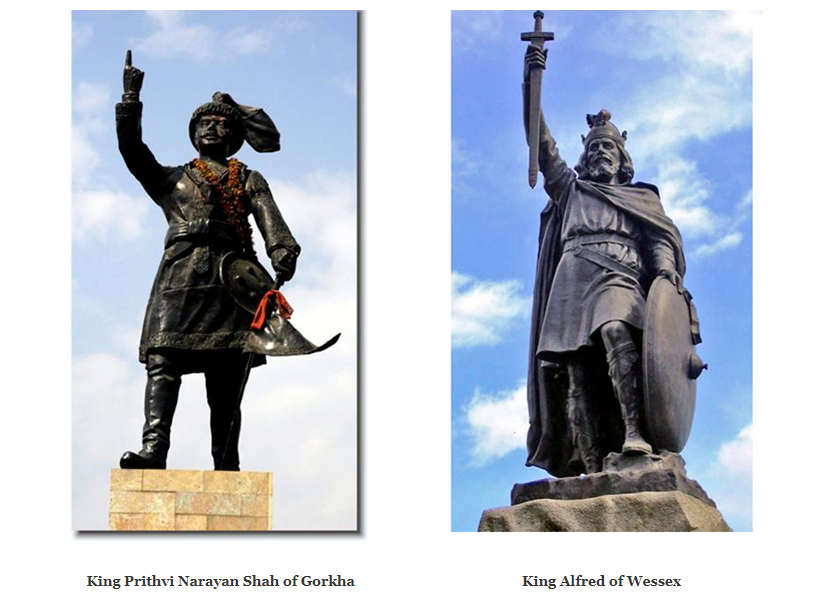
Central figures in the national narratives of Nepal and Britain
John mentioned his own ruminations on national origins and mythologies in his 2016 lecture `The Limits of Nationalism: Political identity in Nepal and the British Isles’, which can be accessed at https://linguae.weebly.com/limits-of-nationalism.html It begins with the oft-repeated saying that ‘A Nation... is a group of persons united by a common error about their ancestry and a common dislike of their neighbours.’
Pui Leng, who was born in Malaysia, and Chris Coetzee, who has a good friend from there agreed on the glories of Malaysian cuisine, presumably reflecting the combined influence of Malay, Chinese and Indian food cultures.
There was also discussion of the theory that Old Chinese (the language of Confucius and of the `Four Books’) was not a tonal language and Eugene confirmed that this was the mainstream view, at least outside China itself. In response, Zhang Wei raised the objection that rhymes in the oldest classics only worked because of the tonal contrasts. This, however, is not a conclusive argument because the theory is that tones actually developed to compensate for the loss of earlier contrasts involving final consonants, the rising tone replacing a glottal stop and the `going’ one a final `s’, which, at an intermediate stage, had become `h’. The issue is a highly technical one but explained relatively clearly in A History of the Chinese Language (Routledge, 2014) by Hongyuan Dong. Her discussion (available at https://books.google.com.hk/books?id=iwtgAwAAQBAJ&pg=PA39#v=onepage&q&f=false) confirms that most linguists believe tone only developed in Middle Chinese, as first suggested by the Ming dynasty scholar Chen Di, but she seems to think herself that the evidence, which includes the existence of a similar phenomenon in Vietnamese, is not conclusive. Joe Perry of HKU’s Linguistics Department, who John later consulted, shares her doubts and also believes that, in any language, tonogenesis could be an autonomous phenomenon, not necessarily the result of the loss of non-tonal contrasts. If anyone is brave enough to want to go into Old Chinese phonology in depth, Joe recommends Baxter and Sagart’s Old Chinese: a New Reconstruction (2014) and Nathan Hill’s Historical Phonology of Tibetan, Burmese and Chinese (2019).
Whatever the truth of this matter, there is no doubt that Cantonese is a more archaic dialect than Putonghua. In other words, if the First Emperor were brought back to life, he would have more trouble understanding a Beijing taxi driver than he would with a Hong Kong one.
Chris Coetzee mentioned the claim by the late Kofi Annan, the Ghanaian diplomat who served as 7th secretary-general of the United Nations, that the grammatical simplicity of Afrikaans, Chris’s own native language, would make it an ideal global lingua franca making it suitable as a world language
We also briefly discussed the existence in many languages of different words for paternal and maternal uncles. Latin has patruus and avunculus, corresponding to the Cantonese distinction between baak baak /suksuk (伯伯/叔叔) for father’s older and younger brother respectively, and kaufu (舅父), mother’s brother. Also common across many different cultures is the stereotype of the paternal uncle as more of a disciplinarian and the maternal uncle as more affectionate and approachable. This may help to explain the meaning of the derivative avuncular in English.
In learning a new language, John stressed the importance of engaging directly and at the appropriate level with individual native speakers. Unless the target language is very closely related to one the learner already knows well, it is not possible to learn just by listening passively to the conversations going on around you. When John arrived in Nepal 1972 he was given a basic course in Nepal but then in Birgunj on the Nepal-India border found himself in a largely Hindi-language environment. He hoped that by accompanying an Indian colleague on his social calls he would pick up Hindi by a kind of osmosis but this his did not actually happen. Even back in a fully Nepali environment in Kathmandu, he has always found the conversation between members of the family he stays with are of a very limited use in helping him improve his comprehension. This and related issues are discussed in detail in John’s `Notes on Personal Language Learning Experiences’, which started life while he was doing his M.A. in applied linguistics at HKU in 1996-98 and can be downloaded from near the bottom of https://linguae.weebly.com/
John mentioned his own ruminations on national origins and mythologies in his 2016 lecture `The Limits of Nationalism: Political identity in Nepal and the British Isles’, which can be accessed at https://linguae.weebly.com/limits-of-nationalism.html It begins with the oft-repeated saying that ‘A Nation... is a group of persons united by a common error about their ancestry and a common dislike of their neighbours.’
Pui Leng, who was born in Malaysia, and Chris Coetzee, who has a good friend from there agreed on the glories of Malaysian cuisine, presumably reflecting the combined influence of Malay, Chinese and Indian food cultures.
There was also discussion of the theory that Old Chinese (the language of Confucius and of the `Four Books’) was not a tonal language and Eugene confirmed that this was the mainstream view, at least outside China itself. In response, Zhang Wei raised the objection that rhymes in the oldest classics only worked because of the tonal contrasts. This, however, is not a conclusive argument because the theory is that tones actually developed to compensate for the loss of earlier contrasts involving final consonants, the rising tone replacing a glottal stop and the `going’ one a final `s’, which, at an intermediate stage, had become `h’. The issue is a highly technical one but explained relatively clearly in A History of the Chinese Language (Routledge, 2014) by Hongyuan Dong. Her discussion (available at https://books.google.com.hk/books?id=iwtgAwAAQBAJ&pg=PA39#v=onepage&q&f=false) confirms that most linguists believe tone only developed in Middle Chinese, as first suggested by the Ming dynasty scholar Chen Di, but she seems to think herself that the evidence, which includes the existence of a similar phenomenon in Vietnamese, is not conclusive. Joe Perry of HKU’s Linguistics Department, who John later consulted, shares her doubts and also believes that, in any language, tonogenesis could be an autonomous phenomenon, not necessarily the result of the loss of non-tonal contrasts. If anyone is brave enough to want to go into Old Chinese phonology in depth, Joe recommends Baxter and Sagart’s Old Chinese: a New Reconstruction (2014) and Nathan Hill’s Historical Phonology of Tibetan, Burmese and Chinese (2019).
Whatever the truth of this matter, there is no doubt that Cantonese is a more archaic dialect than Putonghua. In other words, if the First Emperor were brought back to life, he would have more trouble understanding a Beijing taxi driver than he would with a Hong Kong one.
Chris Coetzee mentioned the claim by the late Kofi Annan, the Ghanaian diplomat who served as 7th secretary-general of the United Nations, that the grammatical simplicity of Afrikaans, Chris’s own native language, would make it an ideal global lingua franca making it suitable as a world language
We also briefly discussed the existence in many languages of different words for paternal and maternal uncles. Latin has patruus and avunculus, corresponding to the Cantonese distinction between baak baak /suksuk (伯伯/叔叔) for father’s older and younger brother respectively, and kaufu (舅父), mother’s brother. Also common across many different cultures is the stereotype of the paternal uncle as more of a disciplinarian and the maternal uncle as more affectionate and approachable. This may help to explain the meaning of the derivative avuncular in English.
In learning a new language, John stressed the importance of engaging directly and at the appropriate level with individual native speakers. Unless the target language is very closely related to one the learner already knows well, it is not possible to learn just by listening passively to the conversations going on around you. When John arrived in Nepal 1972 he was given a basic course in Nepal but then in Birgunj on the Nepal-India border found himself in a largely Hindi-language environment. He hoped that by accompanying an Indian colleague on his social calls he would pick up Hindi by a kind of osmosis but this his did not actually happen. Even back in a fully Nepali environment in Kathmandu, he has always found the conversation between members of the family he stays with are of a very limited use in helping him improve his comprehension. This and related issues are discussed in detail in John’s `Notes on Personal Language Learning Experiences’, which started life while he was doing his M.A. in applied linguistics at HKU in 1996-98 and can be downloaded from near the bottom of https://linguae.weebly.com/
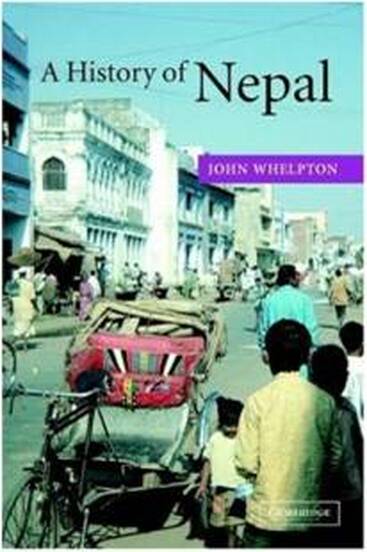
Birgunj in the 1970s
There was again discussion of the terrors of tone contrast in Cantonese, as John tried to grasp the difference between deuih (隊,group), normally tone 6 but tone 2 in compounds such as jùk kaùh deuí (足球隊, football team), and deui in faán deui(反對, oppose).
Turning to efforts to preserve and promote Cantonese, Eugene mentioned the existence noiw of Cantonese Wikipedia at https://zh-yue.wikipedia.org/wiki/%E9%A0%AD%E7%89%88 and John the work of Lennon Wong, who, like Eugene, is a civil servant, but also teaches ancient Greek and has recently published Cantonese versions of two Greek texts: the anonymous Βίος του Αισώπου (`The Life of Aesop’, sometimes referred to as `The Romance of Aesop’) and Λούκιος ἢ ὄνος (`Lucius or the Ass’), which is traditionally ascribed to the 2nd. century A.D. satirist Lucian but now thought to be by another writer, who may have been summarizing a lost, longer work by Lucian himself. The original Greek of `The Ass’ is available on-line in the Bibliotheca Augustana collection at https://www.hs-augsburg.de/~harsch/graeca/Chronologia/S_post01/Lukios/luk_lu00.html but the version of the `Life of Aesop’ Lennon used, known as Recension G and published in Ben Edwin Perry’s Aesopica (2nd. ed, 2007), is not on the Internet. A different version (Recension W) was published by Westermann in 1845 and can be read on Google Books at https://play.google.com/books/reader?id=zCYrHN7_lHEC&pg=GBS.PA6&hl=en_GB
There is an article by Francisco Adrados, `The "Life of Aesop" and the Origins of Novel in Antiquity’ (Quaderni Urbinati di Cultura Classica, New Series, Vol. 1 (1979), pp. 93-112) which can be read at https://www.jstor.org/stable/20538565 after registering on the site. Perry’s 1933 discussion of the different recensiojs can similarly be seen at https://www.jstor.org/stable/283166
Cantonese differs from other Chinese `dialects’ in its greater written use. Don Snow’s Cantonese as Written Language: the Growth of a Written Chinese Vernacular is available in local libraries and can be purchased as an e-book from, https://books.google.com.hk/books/about/Cantonese_as_Written_Language.html?id=pFnP_FXf-lAC&redir_esc=y ,
There was again discussion of the terrors of tone contrast in Cantonese, as John tried to grasp the difference between deuih (隊,group), normally tone 6 but tone 2 in compounds such as jùk kaùh deuí (足球隊, football team), and deui in faán deui(反對, oppose).
Turning to efforts to preserve and promote Cantonese, Eugene mentioned the existence noiw of Cantonese Wikipedia at https://zh-yue.wikipedia.org/wiki/%E9%A0%AD%E7%89%88 and John the work of Lennon Wong, who, like Eugene, is a civil servant, but also teaches ancient Greek and has recently published Cantonese versions of two Greek texts: the anonymous Βίος του Αισώπου (`The Life of Aesop’, sometimes referred to as `The Romance of Aesop’) and Λούκιος ἢ ὄνος (`Lucius or the Ass’), which is traditionally ascribed to the 2nd. century A.D. satirist Lucian but now thought to be by another writer, who may have been summarizing a lost, longer work by Lucian himself. The original Greek of `The Ass’ is available on-line in the Bibliotheca Augustana collection at https://www.hs-augsburg.de/~harsch/graeca/Chronologia/S_post01/Lukios/luk_lu00.html but the version of the `Life of Aesop’ Lennon used, known as Recension G and published in Ben Edwin Perry’s Aesopica (2nd. ed, 2007), is not on the Internet. A different version (Recension W) was published by Westermann in 1845 and can be read on Google Books at https://play.google.com/books/reader?id=zCYrHN7_lHEC&pg=GBS.PA6&hl=en_GB
There is an article by Francisco Adrados, `The "Life of Aesop" and the Origins of Novel in Antiquity’ (Quaderni Urbinati di Cultura Classica, New Series, Vol. 1 (1979), pp. 93-112) which can be read at https://www.jstor.org/stable/20538565 after registering on the site. Perry’s 1933 discussion of the different recensiojs can similarly be seen at https://www.jstor.org/stable/283166
Cantonese differs from other Chinese `dialects’ in its greater written use. Don Snow’s Cantonese as Written Language: the Growth of a Written Chinese Vernacular is available in local libraries and can be purchased as an e-book from, https://books.google.com.hk/books/about/Cantonese_as_Written_Language.html?id=pFnP_FXf-lAC&redir_esc=y ,
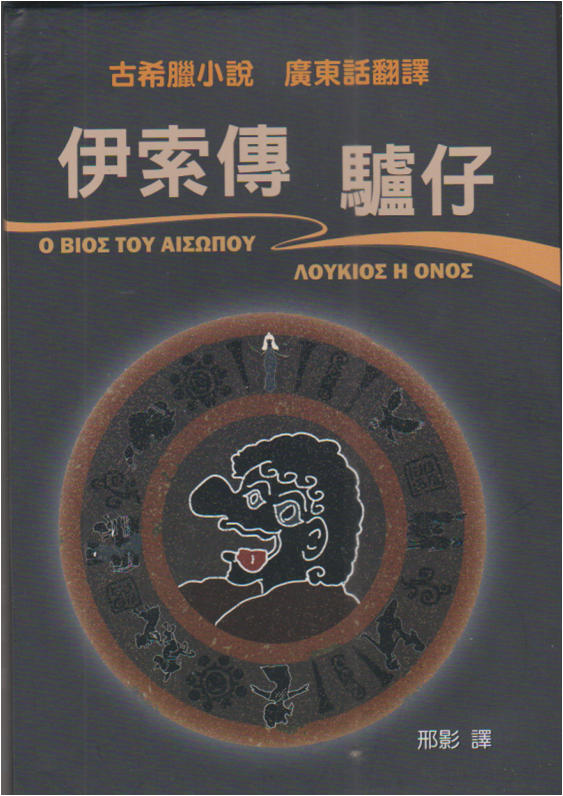
The Cantonese version of `Life of Aesop’ and `Lucius or the Ass’
http://www.bleu.com.hk/trad/book/newbook/info/9789887553458/
Lily referred to the controversy over a British High Court judge who sentenced a youngster accused of downloading 90,000 pages on bomb making to read the novels of Charles Dickens and Jane Austin and then return to court to be tested on them later by the judge himself. We had thought at first that the young man in question was a radicalised Muslim but he is, in fact, a Right-wing extremist. The judge’s decision is currently being appealed against by the prosecution and there is a critical discussion of it at https://theconversation.com/everything-thats-wrong-with-sentencing-a-white-supremacist-to-read-jane-austen-and-charles-dickens-167386
Finally, John was asked about the value of a Roman denarius in modern terms and offered the approximation of HK$200. Going by the price of gold in March 2020, this would in fact be the rough equivalent of HK$160, but comparisons are misleading because of the differences in standards of living etc. A denarius was approximately the average daily pay of a Roman labourer in the early Empire.
AD ALPES, CHAPTER XXXVIII (l.19 - 108)
"Quō cāsū ēvēnit," inquit Sextus, "ut caecus esset? In aciē 20 vulnerātus est?"
By-what mishap it-happened asked Sextus that blind he-was in battle-line wounded he-was
"Ipse fundā sē in adversum[1] ōs percussum esse dīxit," inquit frāter. "Sed haec
Himself by-sling himself in opposite face hit to-have-been said said brother but these-things
omnia abhinc multōs annōs accidērunt; et nunc cāsum suum aequissimō animō fert. In viā
all ago many years happened and now misfortune his with-very-calm mind bears in street
canis fidēlis eius vestīgia regēbat; ac mihi grātiās maximās ēgit, cum eī in 25 manum dēnāriōs
dog faithful his steps was-guiding and to-methanks very-many he-gav when for-him into hand denarii
aliquot trādidissem. Diū cum eō loquī voluī; sed rēs tam multae et variae cūrandae erant,
some I-had-placed long-time with him to-speak I-wanted but things so many and various to-be-attended-to were
ibi morārī nōn possem."
that to-delay not I-was-able
"Age, Pūblī," inquit Sextus, "ā prīncipiō exōrsus aliquid dē Britanniā nōbīs nārrā."
Come-on Publius said Sextus from start beginning something about Britain to-us tell
30 Quō audītō, Pūblius: "Ante adventum Caesaris in Galliam haec īnsula paene
With-which heard Publius before arrival of-Caesar in Gaul this island almost
incognita erat. Quīn etiam ipse dīcit tum vix ūllōs praeter mercātōrēs eam adīre solitōs esse,
unknown was indeed also he-himself says says then hardly any except merchants it to-go-to accustomed to-be
neque hīs ipsīs quidquam ultrā ōram maritimam nōtum fuisse.
and-not to-these themselves anything beyond shore maritime known to-have-been
"Quārē Caesar, cum eō trānsīre in animō habēret, C. 35 Volusēnum[2] cum nāvī longā[3]
So Caesar when to-there to-cross in mind he-had Gaius Volusenus with ship long
praemīsit, quī omnia prius explōrāret. Eō regressō, ipse trānsvectus est, ac prīmō rem fēlīciter
sent-ahead who all-things first could-scout-out with-him returned he-himself crossed over and at-first affair sucessfully
gessit.
conducted
"Sed noctū nāvēs longae, quae in lītus subductae erant, aestū maximō complētae sunt; et
But at-night ships long which onto shore brought-up had-been by-tide very-high filled were and
onerāriae, quās ad ancorās 40 dēligāverat, flūctibus sunt adflīctātae.
cargo-ships which at anchor he-had-moored by-waves were damaged
"Quā rē ēvulgāta, Britannī, fortūnae opportūnitāte ūsī, bellum alacrēs renovāvērunt.
With-which thing made-public Britons of-fortune opportunity having-used war energetically renewed
NOTES
[1] in adversum ōs: straight in the face.
[2] Gaius Volusenus was an equestrian (member of the class below the senators) who served Caesar with distinction. See https://en.wikipedia.org/wiki/Gaius_Volusenus
[3] nāvis longa: the standard term for a warship as opposed to the presumably wider merchant vessels.
Quōs tamen Caesar proeliīs fūdit prosperīs; tum, quod hiems suberat, obsidibus acceptīs,
These however Caesar in-battles routed successful then because winter was-approaching with-hostages received
ad continentem sē recēpit.
to contoinent self took-back
45"Posterō annō in īnsulam reversus, cum ultrā flūmen Tamesim prōgressus esset,
In-next year to island having-returned when beyond river Thanes advanced he-had
hostibus undique superātīs, obsidēs plūrēs imperāvit, atque extrēmā aestāte in Galliam iterum
with-enemy on-all-sides defeated hostages more insisted-on and at-end of-summer to Gaul again
trānsvectus est.
crossed over
"Sed nē proxima quidem pars īnsulae ita ab eō perdomita 50 erat. Et scrīptor Tacitus iūre
But not nearest even part of-island thus by him thoroughly-subdued had-been and writer Tacitus rightly
dīcit Caesarem, etsī prosperīs pugnīs terruerit incolās et lītore potītus sit, Britanniam posterīs
said Caesar although in-successful battles terrified inhabitants and of-shore took-possession- Britain to-posterity
magis ostendisse vidērī quam trādidisse.[1]
more to-have-showed to-seem than to-have-handed-down
"Posteā īnsulae longa oblīvīō fuit; sed annōrum ferē centum intervāllō opus renovātum
Afterwards of-island long forgetting was but of-years almost hundred with-interval task renewed
est ab imperātōre Claudiō, 55 quō auctōre legiōnēs sunt trānsvectae, vīctae gentēs, et rēgēs
was by emperor Claudius with-whom as-initiator legions were brought-across conquered tribes and kings
quīdam captī sunt.
certain captured were
"Ex illō tempore pars proxima Britanniae paulātim in fōrmam prōvinciae redācta est.
From that time part nearest of-Britain gradually into form of-province reduced was
Variā autem fortūnā rēs agēbātur, dōnec Iūlius Agricola, Tacitī socer, īnsulae 60
With-varying however fortune affair was-being-conducted until Julius Agricola Tacitus’s father-in-law of-island
praepositus est.[2]
put-in-charge-was
NOTES
[1] An almost exact quotation from Tacitus’ biography of his father-in-law, Agricola, 13. It is possible, however, that between Caesar’s time and the Claudian invasion of 43 A.D., two major kingdoms in south-east Britain, whose coinage shows imitation of Roman models, were effectively Roman client states and although both appear to have resisted the Roman invasion, some of the British collaborated with the Romans from the start. The Romanisation of British hostages kept for long periods of time in Rome may have aided this process, which is discussed in David Mattingly’s An Imperial Possession: Britain in the Roman Empire
[2] For Agricola (governor 77-85 A.D.) , see also chap. 32. Mons Graupius, where he defeated the Caledonian tribes in 83 or 84, has never been identified but Scotland’s Grampian mountains, which lie between the Central Lowlands and the Moray Firth, are so-named because of a mis-print (`Grampius’ for `Graupius’) in the 1476 edition of Tacitus’s Agricola. Most historians place the battle within this region, with Duncan Campbell’s recent detailed discussion, Mons Graupius AD 83: Rome’s battle at the edge of the world, opting for Bennachie in Aberdeenshire but Euan Lindsay, in his defunct Roman Scotland site, preferred a more southerly location at Dunning in the Central Lowlands (see slides 10 and 11 in AGRICOLA.ppt at https://linguae.weebly.com/ad-alpes.html; and, for trenchant criticism of Lindsay’s scholarship, http://antoninuspius.blogspot.com/2012/03/engrossing-read.html ) There are extensive remains of Roman camps in Scotland, particularly along the east coast, but Tacitus may have exaggerated the extent of his father-in-law’s success and concealed a record of earlier Roman penetration into Scotland,. See https://en.wikipedia.org/wiki/Battle_of_Mons_Graupius and
https://web.archive.org/web/20080329182931/http://www.theromangaskproject.org.uk/Pages/Introduction/Agricola-hecame.html
"Ille incolās et aestāte et hieme lacessīvit. Quīn etiam longē in Calēdoniam penetrāvit,
He natives both in-summer and in-winter challenged Indeed even far into Caledonia penetrated
cum prius, ubi īnsula angustissima est, praesidia tam multa collocāvisset, ut hostēs quasi in
when first where island narrowest was garrisons so many he-had-planted that enemy as-if into
aliam īnsulam summovērentur.
another island were-removed
65 "Sed nē tum quidem perdomita est terra tōta; ac multīs post annīs ab imperātōre
But not then even completely-subdued was land whole and many afterwards years by emperor
Hadriānō ferē eōdem locō līmēs trānsversus ā lītore ad lītus ductus est, quō facilius impetūs
Hadrian almost in-same places boundary running from coast to coast established was by-which more-easily attacks
barbarōrum coercērī possent.[1] Nam etiam hodiē hominēs, quī Calēdoniam incolunt, cultum
of-barbarians be-restrained could for even today men who Caledonia inhabit culture
Rōmānum abnuunt, ac semper 70 rēbus novīs student."
Roman reject and always revolution are enthusiastic-for
"Haec omnia mē cupiditāte īnsulae adeundae incendunt," inquit Sextus; "etsī haud
These all-things me with-deire of-island going-to fire-me said Sextus although not
velim, ut iste veterānus īnfēlīx, ibi oculōs perdere."
I-would-like as that veteran unfortunate there eyes to-lose
"Mē spē oblectō," inquit Drūsilla, "nōs diū pāce fruī 75 iam posse. Prō patriā mōrī
Myself with-hope I-entertain said Drusilla us for-long peace to-enjoy now to-be-able for fatherland to-die
decōrum est,[2] sī ita fāta ferunt; sed optima est vīta quiēta."
fitting it-is if thus fates lead but best is life quiet
Iam autem tumultū subitō forīs exortō, vōx audīta est ancillae, quae clārē clāmābat
Now however with-uproar sudden ouside having-arisen voice heard was of-maid who loudly was-shouting
latrōnēs in tēcta inrumpere.
robbers into building to-be-breaking
Quō audītō, Pūblius, gladiō arreptō, forās celeriter ēgressus 80 est, ut, sī opus esset,
With-which heard Publius with-sword snatched outside quickly went out so-that if need there-was
NOTES
[1] Hadrian’s Wall, whose construction began in 122 A.D., stretched from Wallsend (Segedunum) near Newcastle to Carlisle. In 142,the emperor Antoninus Pius built a second, less elaborate wall further north, between the Firth of Forth and the Clyde, but this was soon abandoned and Hadrian’s Wall normally remained the Roman frontier down to the withdrawal from Britain in the 5th century. See https://en.wikipedia.org/wiki/Hadrian%27s_Wall and https://linguae.weebly.com/segedunum.html
[2] From line 13 in Horace, Odes III.2, a poem calling on young Romans to develop martial prowess. It is also quoted in a now more famous poem by the World War I poet Wlifred Owen, who labels it `the old lie’.
ministrīs subsidiō venīret.[1] Interim Sextus sub subsellium refūgit, Drūsilla autem cum cēterīs
to-attendants as-support he-might-come meanwhile Sextus under bench took-refuge Drusilla however with the-rest
trepida ēventum exspectābat.
trembling outcome awaited
Timor tamen nōn diūtinus fuit; nam brevī Pūblius haud sine rīsū rediit, quī nūntiāvit
Fear however not long-lasting was for soon Publius not without smile returned who announced
ūnum ex equīs, vinculō ruptō, per āream vagantem ancillae terrōrem iniēcisse tantum, ut 85
one out-of horses with-chain broken through yard roaming in-maid terror to-have-instilled so-great that
crēderet latrōnēs adesse.
she-believed robbers to-be-present
Cum omnēs sē recreāssent ex timōre, et Sextus clam ē latebrīs prōdiisset: "Haec rēs mē
When all selves had-recovered from fear and both Sextus secretly from hiding had-gone-forth this thing me
admonet," inquit Pūblius, "dē iūdiciō quōdam Servī Galbae, quī priusquam ā mīlitibus
reminds said Publius about judgement a-certain of-Servius Galba who before by soldiers
imperātor salūtātus est, prōvinciae Āfricae ōlim praeerat." 90
as-emperor hailed he-was province Africa once was-in-charge-of
"Haec nārrā, sīs, frāter," inquit Sextus, quī nōlēbat quemquam sentīre sē nūper in latebrīs
These-things please brother said Sextus who did-not-want anybody to-relise him recently in hiding
fuisse.
to-have-been
"Ōlim asinus erat," inquit Pūblius, "cuius dē proprietāte contrōversia fuit. Rēs in
Once ass there-was said Publius whose about ownership dispute there-was matter into
iūdicium dēlāta est. Testibus autem levibus ob eamque rem difficilī verī coniectūrā, Galba
court brought was with-witnesses however unreliable because-of and-this thing difficult of-truth guessing Galba
imperāvit 95 ut asinus ad lacum, ubi adaquārī solēbat, dūcerētur capite opertō; tum, capite
ordered that ass to lake where to-be-watered it-was-accustomed it-be-led with-head covered then with-head
revēlātō, trāderētur ēī, ad quem suā sponte ā pōtiōne rediisset."
unveiled it-should-be-handed to-him to-whom of-own volition from drinking it-had-returned
"Ille certē erat iūdex sollers," inquit Drūsilla. Tum Sextō et Cornēliae: "Sed vōbīs līberīs
He certainly was judge clever said Drusilla then to-Sextus and Cornelia but for-you children
tempus cubitum eundī iam 100 adest. Crās enim multō māne est surgendum, ut, sī fierī
time to-bed of-going now is-here tomorrow for very early is necessary-to-get-up so-that if be-done
possit,ad patruī vīllam ante noctem perveniāmus."
it-can at uncle’s villa before night we-can-arrive
"Velim nōbīs paulō diūtius morārī liceat," inquit Cornēlia; "nam crēdō Annam quoque
I-should-like for-us a-little longer to-delay it-be-allowed said Cornelia for I-believe Anna also
aliquid nārrāre nōn nōlle."
something to-tell not to-be-unwilling
105 Quō audītō, Anna adrīsit, et māter: "Licet," inquit, "dummodo fābula brevis sit."
With-which heard Anna smiled and mother it-is-allowed said provided story short is
"Euge!" inquit Cornēlia. "Anna nostra semper iūcunda audītū nārrat."
Hooray said Cornelia Anna our always things-pleasant to-hear tells
NOTES
[1] ministrīs subsidiō: the common construction with one dative for the person(s) affected and another for the role someone or something played.
http://www.bleu.com.hk/trad/book/newbook/info/9789887553458/
Lily referred to the controversy over a British High Court judge who sentenced a youngster accused of downloading 90,000 pages on bomb making to read the novels of Charles Dickens and Jane Austin and then return to court to be tested on them later by the judge himself. We had thought at first that the young man in question was a radicalised Muslim but he is, in fact, a Right-wing extremist. The judge’s decision is currently being appealed against by the prosecution and there is a critical discussion of it at https://theconversation.com/everything-thats-wrong-with-sentencing-a-white-supremacist-to-read-jane-austen-and-charles-dickens-167386
Finally, John was asked about the value of a Roman denarius in modern terms and offered the approximation of HK$200. Going by the price of gold in March 2020, this would in fact be the rough equivalent of HK$160, but comparisons are misleading because of the differences in standards of living etc. A denarius was approximately the average daily pay of a Roman labourer in the early Empire.
AD ALPES, CHAPTER XXXVIII (l.19 - 108)
"Quō cāsū ēvēnit," inquit Sextus, "ut caecus esset? In aciē 20 vulnerātus est?"
By-what mishap it-happened asked Sextus that blind he-was in battle-line wounded he-was
"Ipse fundā sē in adversum[1] ōs percussum esse dīxit," inquit frāter. "Sed haec
Himself by-sling himself in opposite face hit to-have-been said said brother but these-things
omnia abhinc multōs annōs accidērunt; et nunc cāsum suum aequissimō animō fert. In viā
all ago many years happened and now misfortune his with-very-calm mind bears in street
canis fidēlis eius vestīgia regēbat; ac mihi grātiās maximās ēgit, cum eī in 25 manum dēnāriōs
dog faithful his steps was-guiding and to-methanks very-many he-gav when for-him into hand denarii
aliquot trādidissem. Diū cum eō loquī voluī; sed rēs tam multae et variae cūrandae erant,
some I-had-placed long-time with him to-speak I-wanted but things so many and various to-be-attended-to were
ibi morārī nōn possem."
that to-delay not I-was-able
"Age, Pūblī," inquit Sextus, "ā prīncipiō exōrsus aliquid dē Britanniā nōbīs nārrā."
Come-on Publius said Sextus from start beginning something about Britain to-us tell
30 Quō audītō, Pūblius: "Ante adventum Caesaris in Galliam haec īnsula paene
With-which heard Publius before arrival of-Caesar in Gaul this island almost
incognita erat. Quīn etiam ipse dīcit tum vix ūllōs praeter mercātōrēs eam adīre solitōs esse,
unknown was indeed also he-himself says says then hardly any except merchants it to-go-to accustomed to-be
neque hīs ipsīs quidquam ultrā ōram maritimam nōtum fuisse.
and-not to-these themselves anything beyond shore maritime known to-have-been
"Quārē Caesar, cum eō trānsīre in animō habēret, C. 35 Volusēnum[2] cum nāvī longā[3]
So Caesar when to-there to-cross in mind he-had Gaius Volusenus with ship long
praemīsit, quī omnia prius explōrāret. Eō regressō, ipse trānsvectus est, ac prīmō rem fēlīciter
sent-ahead who all-things first could-scout-out with-him returned he-himself crossed over and at-first affair sucessfully
gessit.
conducted
"Sed noctū nāvēs longae, quae in lītus subductae erant, aestū maximō complētae sunt; et
But at-night ships long which onto shore brought-up had-been by-tide very-high filled were and
onerāriae, quās ad ancorās 40 dēligāverat, flūctibus sunt adflīctātae.
cargo-ships which at anchor he-had-moored by-waves were damaged
"Quā rē ēvulgāta, Britannī, fortūnae opportūnitāte ūsī, bellum alacrēs renovāvērunt.
With-which thing made-public Britons of-fortune opportunity having-used war energetically renewed
NOTES
[1] in adversum ōs: straight in the face.
[2] Gaius Volusenus was an equestrian (member of the class below the senators) who served Caesar with distinction. See https://en.wikipedia.org/wiki/Gaius_Volusenus
[3] nāvis longa: the standard term for a warship as opposed to the presumably wider merchant vessels.
Quōs tamen Caesar proeliīs fūdit prosperīs; tum, quod hiems suberat, obsidibus acceptīs,
These however Caesar in-battles routed successful then because winter was-approaching with-hostages received
ad continentem sē recēpit.
to contoinent self took-back
45"Posterō annō in īnsulam reversus, cum ultrā flūmen Tamesim prōgressus esset,
In-next year to island having-returned when beyond river Thanes advanced he-had
hostibus undique superātīs, obsidēs plūrēs imperāvit, atque extrēmā aestāte in Galliam iterum
with-enemy on-all-sides defeated hostages more insisted-on and at-end of-summer to Gaul again
trānsvectus est.
crossed over
"Sed nē proxima quidem pars īnsulae ita ab eō perdomita 50 erat. Et scrīptor Tacitus iūre
But not nearest even part of-island thus by him thoroughly-subdued had-been and writer Tacitus rightly
dīcit Caesarem, etsī prosperīs pugnīs terruerit incolās et lītore potītus sit, Britanniam posterīs
said Caesar although in-successful battles terrified inhabitants and of-shore took-possession- Britain to-posterity
magis ostendisse vidērī quam trādidisse.[1]
more to-have-showed to-seem than to-have-handed-down
"Posteā īnsulae longa oblīvīō fuit; sed annōrum ferē centum intervāllō opus renovātum
Afterwards of-island long forgetting was but of-years almost hundred with-interval task renewed
est ab imperātōre Claudiō, 55 quō auctōre legiōnēs sunt trānsvectae, vīctae gentēs, et rēgēs
was by emperor Claudius with-whom as-initiator legions were brought-across conquered tribes and kings
quīdam captī sunt.
certain captured were
"Ex illō tempore pars proxima Britanniae paulātim in fōrmam prōvinciae redācta est.
From that time part nearest of-Britain gradually into form of-province reduced was
Variā autem fortūnā rēs agēbātur, dōnec Iūlius Agricola, Tacitī socer, īnsulae 60
With-varying however fortune affair was-being-conducted until Julius Agricola Tacitus’s father-in-law of-island
praepositus est.[2]
put-in-charge-was
NOTES
[1] An almost exact quotation from Tacitus’ biography of his father-in-law, Agricola, 13. It is possible, however, that between Caesar’s time and the Claudian invasion of 43 A.D., two major kingdoms in south-east Britain, whose coinage shows imitation of Roman models, were effectively Roman client states and although both appear to have resisted the Roman invasion, some of the British collaborated with the Romans from the start. The Romanisation of British hostages kept for long periods of time in Rome may have aided this process, which is discussed in David Mattingly’s An Imperial Possession: Britain in the Roman Empire
[2] For Agricola (governor 77-85 A.D.) , see also chap. 32. Mons Graupius, where he defeated the Caledonian tribes in 83 or 84, has never been identified but Scotland’s Grampian mountains, which lie between the Central Lowlands and the Moray Firth, are so-named because of a mis-print (`Grampius’ for `Graupius’) in the 1476 edition of Tacitus’s Agricola. Most historians place the battle within this region, with Duncan Campbell’s recent detailed discussion, Mons Graupius AD 83: Rome’s battle at the edge of the world, opting for Bennachie in Aberdeenshire but Euan Lindsay, in his defunct Roman Scotland site, preferred a more southerly location at Dunning in the Central Lowlands (see slides 10 and 11 in AGRICOLA.ppt at https://linguae.weebly.com/ad-alpes.html; and, for trenchant criticism of Lindsay’s scholarship, http://antoninuspius.blogspot.com/2012/03/engrossing-read.html ) There are extensive remains of Roman camps in Scotland, particularly along the east coast, but Tacitus may have exaggerated the extent of his father-in-law’s success and concealed a record of earlier Roman penetration into Scotland,. See https://en.wikipedia.org/wiki/Battle_of_Mons_Graupius and
https://web.archive.org/web/20080329182931/http://www.theromangaskproject.org.uk/Pages/Introduction/Agricola-hecame.html
"Ille incolās et aestāte et hieme lacessīvit. Quīn etiam longē in Calēdoniam penetrāvit,
He natives both in-summer and in-winter challenged Indeed even far into Caledonia penetrated
cum prius, ubi īnsula angustissima est, praesidia tam multa collocāvisset, ut hostēs quasi in
when first where island narrowest was garrisons so many he-had-planted that enemy as-if into
aliam īnsulam summovērentur.
another island were-removed
65 "Sed nē tum quidem perdomita est terra tōta; ac multīs post annīs ab imperātōre
But not then even completely-subdued was land whole and many afterwards years by emperor
Hadriānō ferē eōdem locō līmēs trānsversus ā lītore ad lītus ductus est, quō facilius impetūs
Hadrian almost in-same places boundary running from coast to coast established was by-which more-easily attacks
barbarōrum coercērī possent.[1] Nam etiam hodiē hominēs, quī Calēdoniam incolunt, cultum
of-barbarians be-restrained could for even today men who Caledonia inhabit culture
Rōmānum abnuunt, ac semper 70 rēbus novīs student."
Roman reject and always revolution are enthusiastic-for
"Haec omnia mē cupiditāte īnsulae adeundae incendunt," inquit Sextus; "etsī haud
These all-things me with-deire of-island going-to fire-me said Sextus although not
velim, ut iste veterānus īnfēlīx, ibi oculōs perdere."
I-would-like as that veteran unfortunate there eyes to-lose
"Mē spē oblectō," inquit Drūsilla, "nōs diū pāce fruī 75 iam posse. Prō patriā mōrī
Myself with-hope I-entertain said Drusilla us for-long peace to-enjoy now to-be-able for fatherland to-die
decōrum est,[2] sī ita fāta ferunt; sed optima est vīta quiēta."
fitting it-is if thus fates lead but best is life quiet
Iam autem tumultū subitō forīs exortō, vōx audīta est ancillae, quae clārē clāmābat
Now however with-uproar sudden ouside having-arisen voice heard was of-maid who loudly was-shouting
latrōnēs in tēcta inrumpere.
robbers into building to-be-breaking
Quō audītō, Pūblius, gladiō arreptō, forās celeriter ēgressus 80 est, ut, sī opus esset,
With-which heard Publius with-sword snatched outside quickly went out so-that if need there-was
NOTES
[1] Hadrian’s Wall, whose construction began in 122 A.D., stretched from Wallsend (Segedunum) near Newcastle to Carlisle. In 142,the emperor Antoninus Pius built a second, less elaborate wall further north, between the Firth of Forth and the Clyde, but this was soon abandoned and Hadrian’s Wall normally remained the Roman frontier down to the withdrawal from Britain in the 5th century. See https://en.wikipedia.org/wiki/Hadrian%27s_Wall and https://linguae.weebly.com/segedunum.html
[2] From line 13 in Horace, Odes III.2, a poem calling on young Romans to develop martial prowess. It is also quoted in a now more famous poem by the World War I poet Wlifred Owen, who labels it `the old lie’.
ministrīs subsidiō venīret.[1] Interim Sextus sub subsellium refūgit, Drūsilla autem cum cēterīs
to-attendants as-support he-might-come meanwhile Sextus under bench took-refuge Drusilla however with the-rest
trepida ēventum exspectābat.
trembling outcome awaited
Timor tamen nōn diūtinus fuit; nam brevī Pūblius haud sine rīsū rediit, quī nūntiāvit
Fear however not long-lasting was for soon Publius not without smile returned who announced
ūnum ex equīs, vinculō ruptō, per āream vagantem ancillae terrōrem iniēcisse tantum, ut 85
one out-of horses with-chain broken through yard roaming in-maid terror to-have-instilled so-great that
crēderet latrōnēs adesse.
she-believed robbers to-be-present
Cum omnēs sē recreāssent ex timōre, et Sextus clam ē latebrīs prōdiisset: "Haec rēs mē
When all selves had-recovered from fear and both Sextus secretly from hiding had-gone-forth this thing me
admonet," inquit Pūblius, "dē iūdiciō quōdam Servī Galbae, quī priusquam ā mīlitibus
reminds said Publius about judgement a-certain of-Servius Galba who before by soldiers
imperātor salūtātus est, prōvinciae Āfricae ōlim praeerat." 90
as-emperor hailed he-was province Africa once was-in-charge-of
"Haec nārrā, sīs, frāter," inquit Sextus, quī nōlēbat quemquam sentīre sē nūper in latebrīs
These-things please brother said Sextus who did-not-want anybody to-relise him recently in hiding
fuisse.
to-have-been
"Ōlim asinus erat," inquit Pūblius, "cuius dē proprietāte contrōversia fuit. Rēs in
Once ass there-was said Publius whose about ownership dispute there-was matter into
iūdicium dēlāta est. Testibus autem levibus ob eamque rem difficilī verī coniectūrā, Galba
court brought was with-witnesses however unreliable because-of and-this thing difficult of-truth guessing Galba
imperāvit 95 ut asinus ad lacum, ubi adaquārī solēbat, dūcerētur capite opertō; tum, capite
ordered that ass to lake where to-be-watered it-was-accustomed it-be-led with-head covered then with-head
revēlātō, trāderētur ēī, ad quem suā sponte ā pōtiōne rediisset."
unveiled it-should-be-handed to-him to-whom of-own volition from drinking it-had-returned
"Ille certē erat iūdex sollers," inquit Drūsilla. Tum Sextō et Cornēliae: "Sed vōbīs līberīs
He certainly was judge clever said Drusilla then to-Sextus and Cornelia but for-you children
tempus cubitum eundī iam 100 adest. Crās enim multō māne est surgendum, ut, sī fierī
time to-bed of-going now is-here tomorrow for very early is necessary-to-get-up so-that if be-done
possit,ad patruī vīllam ante noctem perveniāmus."
it-can at uncle’s villa before night we-can-arrive
"Velim nōbīs paulō diūtius morārī liceat," inquit Cornēlia; "nam crēdō Annam quoque
I-should-like for-us a-little longer to-delay it-be-allowed said Cornelia for I-believe Anna also
aliquid nārrāre nōn nōlle."
something to-tell not to-be-unwilling
105 Quō audītō, Anna adrīsit, et māter: "Licet," inquit, "dummodo fābula brevis sit."
With-which heard Anna smiled and mother it-is-allowed said provided story short is
"Euge!" inquit Cornēlia. "Anna nostra semper iūcunda audītū nārrat."
Hooray said Cornelia Anna our always things-pleasant to-hear tells
NOTES
[1] ministrīs subsidiō: the common construction with one dative for the person(s) affected and another for the role someone or something played.
