| linguae |
|
LIFE AFTER THE BASICS
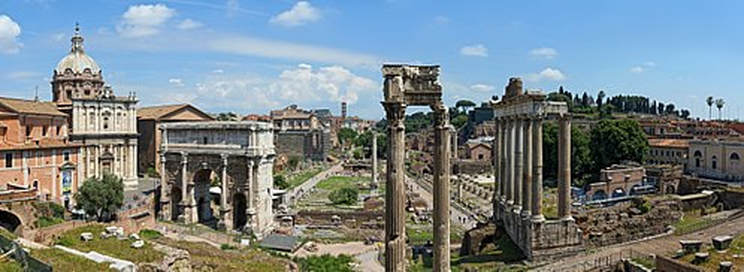
The following suggestions are for students who have completed a basic Latin course (e.g. Wheelock, Latin via Ovid, Cambridge Latin Course) and are looking for ways of using developing their skills, particularly in reading. Items most strongly recommended are highlighted in red. In addition to these resources, the Hiberna Caroli Raetici site has a very useful list of links to reading material on the Internet at both beginners and intermediate levels, while Driving with Dido: How I came to read Latin extensively gives well-known Latin teacher Justin Bailey's account of his own history with the language and suggestions on how best to approach texts.
A. Reading original Classical Latin
-
1. Intermediate Latin anthologies (meant to facilitate the transition from textbook to `real’ Latin
Oxford Latin Reader (including extracts from Cicero (focusing on biographical detail rather than
philosophy), Julius Caesar, Livy (parts of the story of Hannibal), Catullus (a lyric poet), Virgil (the
story of Dido and Aeneas), and Ovid (autobiographical material). You can see sample pages on
Amazon.com
Cambridge Latin Anthology A selection of short extracts (some adapted) from a very wide range of
authors. Some passages can already be read (with glosses translating individual words) on the
support site https://www.cla.cambridgescp.com
The `Legamus’ series: these books present a series of short extracts from a particular author (there are
volumes for Vergil, Catullus, Cicero and Ovid) with very extensive grammatical and vocabulary
help). See Amazon.com (Vergil: a Legamus Transitional Reader for sample pages)
Later sections of Latin via Ovid, a comprehensive introductory course with vocabulary and contents
taken from Ovid’s poetry
Wheelock’s Latin Reader (search inside on Amazon.com) Includes probably more of Cicero’s forensic
oratory and philosophizing than you want but also extracts rom Livy (early Rome and Hannibal), Ovid, Pliny and the Vulgate and medieval Latin
2. Concentration on one particular Classical author (all texts are available on the Internet). Options include:
i.) Prose
Caesar (straightforward – and the traditional choice for beginners for many years in UK schools) -
Memoirs of his conquest of Gaul (France) and of the civil war that ended the Roman Republic. A
suitable start would be the account of his invasions of Britain in 55 and 54 B.C (which is also
included in the Oxford Reader). For text of the selections prescribed for the American AP exam, together with interlinar tranlation and recordings, see the CAESAR page on this site.
Livy (slightly more difficult than Caesar but manageable) – a general history of Rome, most of which has been lost. Surviving books include an account of the earliest years of the city and also of the 2nd
Punic War against Carthage in the 3rd. century B.C. in which Rome came close to destruction but
emerged master of the Mediterranean world. Some sections are also included in the Oxford and Wheelock Readers
Eutropius’s Breviarium Historiae Romanae, a condensed history of Rome from its foundation down to the 4th cent. A.D. The author is not regarded as a great stylist but writes mainly in very straightforward Latin. Text with interlinear glossing, comentary, illustrations and recordings is available on my EUTROPIUS page.
ii.) Poetry (more difficult because of figurative language and more departures from normal word order)
Virgil’s Aeneid – Rome’s national epic, telling the story of a Trojan prince who flees his city when it is captured by the Greeks. Book II, which includes Aeneas’s account of his escape from Troy, is a good place to start. Peter Jones' Reading Virgil: Book I and II of the Aeneid provides extensive help with vocabulary and literary analysis.
Ovid’s Metamporphoses – a collection of mythological stories involving transformations, many of which
became motifs in later European art. Peter Jones' Reading Ovid: Stories from the Metamorphoses
provides similar help to that in his Virgil volume,
B. Reading simplified versions of classical stories (less `authentic’ but allows a faster reading speed)
Ritchie’s Fabulae Faciles (Greek myths told in simple Latin).
See https://geoffreysteadman.com/ritchies-fabulae-faciles/ for complete download. The stories (Perseus, Hercules, Jason and the Argonauts, Ulysses) with interlinear translation added can also be downloaded from the Latin & Greek page on LINGUAE (search on the page for `Ritchie'). There are also recorded readings of Jason and Ulysses on the same page.
Lhomond’s Viri Illustres (Famous Men), a history of Rome from Romulus and Remus down to Augustus in the form of biographical sketches. Available on-line at
http://www.thelatinlibrary.com/lhomond.viris.html (but with a number of misprints in the text).
Rather more difficult than Ritchie but gets you quite fast through the major events in the history
of the republic. Written by an 18th cent. French priest. Similar in some ways to Eutropius but with
more detail on some of the `Great Men’.
Ad Alpes, written in the early 20th century by Professor H.C. Nutting, narrates the voyage of a Roman
family from Ephesus in Asia Minor to Italy, during which they tell each other stories from
mythology and history, with their Jewish nanny adding ones from the Old Testament. Preview of
the first chapter and further details at https://www.latinitium.com/books/adalpes The entire text of Nutting's original edition, with interlinear glossing, detailed commentary and illustrations added, together with sound recordings, is available on my AD ALPES page
C. Reading Medieval and/or neoLatin texts
The Vulgate (St. Jerome’s Latin translation of the Bible made around 400 A.D.), available in many on- line versions. Grammatically simpler than most Classical Latin and many learners can draw on
previous knowledge of the Bible. some of the early chapters of Genesis are available with interlinear
translation and commentary at https://linguae.weebly.com/biblia-sacra.html
Asser’s Life of King Alfred, a Latin biography of the 9th century king who led English resistance
against the Viking invasions; written by a Welsh bishop in the king’s service.
Modern Latin Media: Nuntii Latini and Ephemeris. I can normally sight-read the former and also
understand around 70-80% when listening without seeing the text (something I certainly can’t do
with classical Latin). This Latin news bulletin, discontinued in 2019 but still archived on thir site, naturally incorporates a lot of new vocabulary but follows Classical grammatical rules. Ephemeris, an on-line newspaper is not quite so well-written and (when they include an audio file) pronunciation is not so reliable as with Nuntii.
Harrius Potter et Philosophi Lapis Translation by a retired Eton Classics master so the
grammar and vocabulary (neologisms excepted) are authentic
Alicia in Terra Mirabili This has just been re-issued with macrons added. See
http://www.amazon.com/Alicia-Terra-Mirabili-Latin-Carroll/dp/1904808697
Ciceronis Filius: written by Italian classicist Henrico Paoli, this presents a wealth of information about
everyday life in ancient Rome with a partly fictionalised account of the life of the younger Marcus
Tullius Cicero, the son of the famous orator. A pdf of the complete text can be downloaded from the
Cicrculus Latinus Honcongensis page on this site, as can the text of sections 1-72 with extensive
vocabulary notes and commentary added.
Nutting's First Latin Reader: written by the author of Ad Alpes, this presents stories from American
history, commencing with Colombus, in addition to adapted extracts from Caesar in the second half.
The text can be downloaded free from Google or Internet Archive.
Testi per Ragazziin Latino: In lighter vein, this is a collection of translations inot Latin of children's
stories, including Pinocchio, Max und Moritz, deveral adventure of Sherlock Holmes and (in comic strip) adventures of Donald Duck and Asterix. It can be read on-line or downloaded from
archive.com.
D. Listening and Speaking
CD to Orberg’s Lingua Latina Per Se Illustrata (starts from the beginning but good practice if you’ve
previously very rarely listened to the language). Recordings of some of the chapters, with text displayed simultaneously, have also been made by Arizona-based Latin teacher Luke Ranieri also available free of charge on YouTube, with links available on his ScorpioMartianus website.
Nuntii broadcasts The Finnish weekly Nuntii Latini news bulletins were discontinued in June 2019 but their site retains recodings from 2010 and I have myself archived them from September 2006.
Radio Bremen's Nuntii Latini continue to be uploaded each month but are a little more difficult to follow.
Spoken Essays from Vox Latina (http://www.voxlatina.uni-saarland.de/ , which are delivered quite
slowly and clearly. The speakers are German academics.
Evan Millner’s http://latinum.mypodcast.com/ He claims that this series (aimed at allowing
acquisition without formal grammatical instruction) is the largest readily available collection of
classically pronounced Latin on the Internet.
. Forum Romanum an American DVD presenting programmes on themes from Roman history in news
magazine format. Transcript of the programmes is provided. Light-hearted but educationally
worthwhile.
Conversational Latin, a series of dialogues on ancient and modern subjects written by an American
professor, John Traupman probably the best single resource for those trying to reintroduce use of
the language for real communication
The `Locutorium’ (Latin Chatroom) set up as a Skype group by Evan Millner. Used normally for texting rather than speaking but provides stress-free conversation practice. To join, go to https://join.skype.com/i8T6Wgfi2cej
Latin Listening Project: a series of videos produced by Justin Bailey and his colleagues at
http://indwellinglanguage.com/latin-media/latin-listening-project/ They are clearly spoken and can be viewed with or without subtitles.
Latin Video Series: Lance Piantaggini presents stories very simply an slowly, building them up from a
series of simple questions, with key phrases presented visually. Ideal for beginners.
Latinitium: This site, run by Daniel Pettersson and Amelie Rosengren, provides a wide range of
audiovisual resources, including discussions in Latin of particular idioms, and recodings of passages from classical literature and from Fabula Faciles. The Latin texts themselves are normally displayed on-screen.
quomododicitur.com provides weekly podcasts of conversations between Justin Bailey and two
other Latin teachers. They speak quite slowly but are difficult for beginners and no transcript is
provided. https://quomododicitur.com/
ScorpioMartianus: This site ( http://www.scorpiomartianus.com/index.php) includes, in addition to the Orberg recordings mentioned above, other audiovisiual resources, in particular a number of news bulletins.
Circulus Latinus Honcongensis: provides extensive Latin dialogues with parallel translation and recordings for some of the sections:
https://linguae.weebly.com/circulus-latinus-honcongensis.html
ON-LINE HELP
http://www.archives.nd.edu/cgi-bin/words.exe Whitaker’s Latin Parser (analyses inflected forms typed into search box, includes about 39,000 headwords).)
http://www.perseus.tufts.edu/hopper/morph?l/ The Perseus Project at Tufts University, including and older edition of Lewis and Short’s Latin Dictionary. Although the site is not always available, this is the most comprehensive Latin dictionary available on the web.
A. Reading original Classical Latin
-
1. Intermediate Latin anthologies (meant to facilitate the transition from textbook to `real’ Latin
Oxford Latin Reader (including extracts from Cicero (focusing on biographical detail rather than
philosophy), Julius Caesar, Livy (parts of the story of Hannibal), Catullus (a lyric poet), Virgil (the
story of Dido and Aeneas), and Ovid (autobiographical material). You can see sample pages on
Amazon.com
Cambridge Latin Anthology A selection of short extracts (some adapted) from a very wide range of
authors. Some passages can already be read (with glosses translating individual words) on the
support site https://www.cla.cambridgescp.com
The `Legamus’ series: these books present a series of short extracts from a particular author (there are
volumes for Vergil, Catullus, Cicero and Ovid) with very extensive grammatical and vocabulary
help). See Amazon.com (Vergil: a Legamus Transitional Reader for sample pages)
Later sections of Latin via Ovid, a comprehensive introductory course with vocabulary and contents
taken from Ovid’s poetry
Wheelock’s Latin Reader (search inside on Amazon.com) Includes probably more of Cicero’s forensic
oratory and philosophizing than you want but also extracts rom Livy (early Rome and Hannibal), Ovid, Pliny and the Vulgate and medieval Latin
2. Concentration on one particular Classical author (all texts are available on the Internet). Options include:
i.) Prose
Caesar (straightforward – and the traditional choice for beginners for many years in UK schools) -
Memoirs of his conquest of Gaul (France) and of the civil war that ended the Roman Republic. A
suitable start would be the account of his invasions of Britain in 55 and 54 B.C (which is also
included in the Oxford Reader). For text of the selections prescribed for the American AP exam, together with interlinar tranlation and recordings, see the CAESAR page on this site.
Livy (slightly more difficult than Caesar but manageable) – a general history of Rome, most of which has been lost. Surviving books include an account of the earliest years of the city and also of the 2nd
Punic War against Carthage in the 3rd. century B.C. in which Rome came close to destruction but
emerged master of the Mediterranean world. Some sections are also included in the Oxford and Wheelock Readers
Eutropius’s Breviarium Historiae Romanae, a condensed history of Rome from its foundation down to the 4th cent. A.D. The author is not regarded as a great stylist but writes mainly in very straightforward Latin. Text with interlinear glossing, comentary, illustrations and recordings is available on my EUTROPIUS page.
ii.) Poetry (more difficult because of figurative language and more departures from normal word order)
Virgil’s Aeneid – Rome’s national epic, telling the story of a Trojan prince who flees his city when it is captured by the Greeks. Book II, which includes Aeneas’s account of his escape from Troy, is a good place to start. Peter Jones' Reading Virgil: Book I and II of the Aeneid provides extensive help with vocabulary and literary analysis.
Ovid’s Metamporphoses – a collection of mythological stories involving transformations, many of which
became motifs in later European art. Peter Jones' Reading Ovid: Stories from the Metamorphoses
provides similar help to that in his Virgil volume,
B. Reading simplified versions of classical stories (less `authentic’ but allows a faster reading speed)
Ritchie’s Fabulae Faciles (Greek myths told in simple Latin).
See https://geoffreysteadman.com/ritchies-fabulae-faciles/ for complete download. The stories (Perseus, Hercules, Jason and the Argonauts, Ulysses) with interlinear translation added can also be downloaded from the Latin & Greek page on LINGUAE (search on the page for `Ritchie'). There are also recorded readings of Jason and Ulysses on the same page.
Lhomond’s Viri Illustres (Famous Men), a history of Rome from Romulus and Remus down to Augustus in the form of biographical sketches. Available on-line at
http://www.thelatinlibrary.com/lhomond.viris.html (but with a number of misprints in the text).
Rather more difficult than Ritchie but gets you quite fast through the major events in the history
of the republic. Written by an 18th cent. French priest. Similar in some ways to Eutropius but with
more detail on some of the `Great Men’.
Ad Alpes, written in the early 20th century by Professor H.C. Nutting, narrates the voyage of a Roman
family from Ephesus in Asia Minor to Italy, during which they tell each other stories from
mythology and history, with their Jewish nanny adding ones from the Old Testament. Preview of
the first chapter and further details at https://www.latinitium.com/books/adalpes The entire text of Nutting's original edition, with interlinear glossing, detailed commentary and illustrations added, together with sound recordings, is available on my AD ALPES page
C. Reading Medieval and/or neoLatin texts
The Vulgate (St. Jerome’s Latin translation of the Bible made around 400 A.D.), available in many on- line versions. Grammatically simpler than most Classical Latin and many learners can draw on
previous knowledge of the Bible. some of the early chapters of Genesis are available with interlinear
translation and commentary at https://linguae.weebly.com/biblia-sacra.html
Asser’s Life of King Alfred, a Latin biography of the 9th century king who led English resistance
against the Viking invasions; written by a Welsh bishop in the king’s service.
Modern Latin Media: Nuntii Latini and Ephemeris. I can normally sight-read the former and also
understand around 70-80% when listening without seeing the text (something I certainly can’t do
with classical Latin). This Latin news bulletin, discontinued in 2019 but still archived on thir site, naturally incorporates a lot of new vocabulary but follows Classical grammatical rules. Ephemeris, an on-line newspaper is not quite so well-written and (when they include an audio file) pronunciation is not so reliable as with Nuntii.
Harrius Potter et Philosophi Lapis Translation by a retired Eton Classics master so the
grammar and vocabulary (neologisms excepted) are authentic
Alicia in Terra Mirabili This has just been re-issued with macrons added. See
http://www.amazon.com/Alicia-Terra-Mirabili-Latin-Carroll/dp/1904808697
Ciceronis Filius: written by Italian classicist Henrico Paoli, this presents a wealth of information about
everyday life in ancient Rome with a partly fictionalised account of the life of the younger Marcus
Tullius Cicero, the son of the famous orator. A pdf of the complete text can be downloaded from the
Cicrculus Latinus Honcongensis page on this site, as can the text of sections 1-72 with extensive
vocabulary notes and commentary added.
Nutting's First Latin Reader: written by the author of Ad Alpes, this presents stories from American
history, commencing with Colombus, in addition to adapted extracts from Caesar in the second half.
The text can be downloaded free from Google or Internet Archive.
Testi per Ragazziin Latino: In lighter vein, this is a collection of translations inot Latin of children's
stories, including Pinocchio, Max und Moritz, deveral adventure of Sherlock Holmes and (in comic strip) adventures of Donald Duck and Asterix. It can be read on-line or downloaded from
archive.com.
D. Listening and Speaking
CD to Orberg’s Lingua Latina Per Se Illustrata (starts from the beginning but good practice if you’ve
previously very rarely listened to the language). Recordings of some of the chapters, with text displayed simultaneously, have also been made by Arizona-based Latin teacher Luke Ranieri also available free of charge on YouTube, with links available on his ScorpioMartianus website.
Nuntii broadcasts The Finnish weekly Nuntii Latini news bulletins were discontinued in June 2019 but their site retains recodings from 2010 and I have myself archived them from September 2006.
Radio Bremen's Nuntii Latini continue to be uploaded each month but are a little more difficult to follow.
Spoken Essays from Vox Latina (http://www.voxlatina.uni-saarland.de/ , which are delivered quite
slowly and clearly. The speakers are German academics.
Evan Millner’s http://latinum.mypodcast.com/ He claims that this series (aimed at allowing
acquisition without formal grammatical instruction) is the largest readily available collection of
classically pronounced Latin on the Internet.
. Forum Romanum an American DVD presenting programmes on themes from Roman history in news
magazine format. Transcript of the programmes is provided. Light-hearted but educationally
worthwhile.
Conversational Latin, a series of dialogues on ancient and modern subjects written by an American
professor, John Traupman probably the best single resource for those trying to reintroduce use of
the language for real communication
The `Locutorium’ (Latin Chatroom) set up as a Skype group by Evan Millner. Used normally for texting rather than speaking but provides stress-free conversation practice. To join, go to https://join.skype.com/i8T6Wgfi2cej
Latin Listening Project: a series of videos produced by Justin Bailey and his colleagues at
http://indwellinglanguage.com/latin-media/latin-listening-project/ They are clearly spoken and can be viewed with or without subtitles.
Latin Video Series: Lance Piantaggini presents stories very simply an slowly, building them up from a
series of simple questions, with key phrases presented visually. Ideal for beginners.
Latinitium: This site, run by Daniel Pettersson and Amelie Rosengren, provides a wide range of
audiovisual resources, including discussions in Latin of particular idioms, and recodings of passages from classical literature and from Fabula Faciles. The Latin texts themselves are normally displayed on-screen.
quomododicitur.com provides weekly podcasts of conversations between Justin Bailey and two
other Latin teachers. They speak quite slowly but are difficult for beginners and no transcript is
provided. https://quomododicitur.com/
ScorpioMartianus: This site ( http://www.scorpiomartianus.com/index.php) includes, in addition to the Orberg recordings mentioned above, other audiovisiual resources, in particular a number of news bulletins.
Circulus Latinus Honcongensis: provides extensive Latin dialogues with parallel translation and recordings for some of the sections:
https://linguae.weebly.com/circulus-latinus-honcongensis.html
ON-LINE HELP
http://www.archives.nd.edu/cgi-bin/words.exe Whitaker’s Latin Parser (analyses inflected forms typed into search box, includes about 39,000 headwords).)
http://www.perseus.tufts.edu/hopper/morph?l/ The Perseus Project at Tufts University, including and older edition of Lewis and Short’s Latin Dictionary. Although the site is not always available, this is the most comprehensive Latin dictionary available on the web.
