| linguae |
|
DANTE ALIGHIERI COURSE OUTLINE (ADULT: OCT-DEC 2023)
TEXTBOOK: LATIN VIA OVID
TEXTBOOK: LATIN VIA OVID
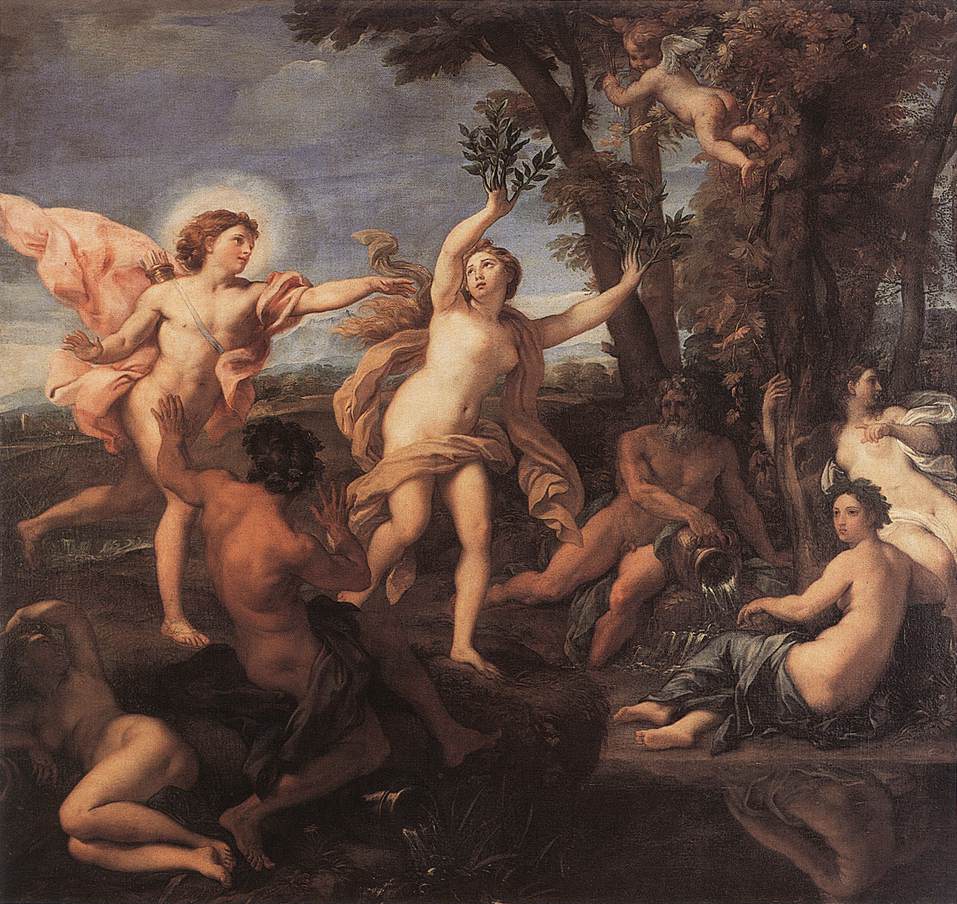
Apollo chasing Daphne (Carlo Maratta, 1681)
For on-line enrollment, please go to https://ladante.cc/language/latin/ (course code L012303)
DANTE ALIGHIERI COURSE OUTLINE (ADULT: OCT--DEC 2023)
TEXTBOOK: LATIN VIA OVID
The textbook for Latin 1 (Part 1), Latin via Ovid, can be previewed at:
http://books.google.com.hk/books?id=fORWW12AoTAC At the moment I have three new and one good-as-new copies available at $285 and one used copy in fair condition at $235. First come first served!. There is, however, no obligation to buy if you have already obtained your own copy.
My own website includes PowerPoint presentations introducing the stories in each of the chapters we will be reading (see http://linguae.weebly.com/courses.html ). I will ask people to view these, as well as reading the chapters themselves, in advance of each class and will provide a recording of the passages. FOR COPYRIGHT REASONS, THE RECORDINGS SHOULD NOT BE PASSED ON TO ANYBODY ELSE.
Latin via Ovid provides complete coverage of the vocabulary and grammar needed to begin reading Latin poetry, particularly Ovid’s Metamorphoses, a collection of stories from Greek mythology, which has served as a source of inspiration for writers and artists for two thousand years. The book is meant to be completed in the 1st year of a university course, in which students would probably be attending 3-4 hours classes weekly. In Part 1 of the Latin I course, we are aiming to cover one quarter of the book in 10 2-hourly sessions. This should be enough time to cover many of the exercises but you will, in any case, need to spend time in preparation between classes and reviewing what we have already done. Individuals’ needs differ but you should aim to spend at least a couple of hours per week on this and longer if you can spare the time (I realise this is difficult in Hong Kong!). You will be welcome to email me ([email protected]) at any time if you need help between sessions.
The schedule below is a tentative one and the pace may be altered depending on the needs of the class.
Session 1 (3/10)
An introduction to the language, its history, structure and the restored and ecclesiastical (`Italianate’) pronunciations, exemplified in videos of a Harvard Commencement Day oration and videos of lessons taught by Matthew Kiel in the USA and Luigi Miraglia in Italy. Outline of resources available on the Web, including the Glossa and Oxford dictionaries. Overview of the Latin noun and verb.
Session 2 (10/10)
Chapters 1 and 2.(Charta Geographica and Europa) Nominative, Accusative, Genitive and Ablative of 1st and 2nd. declension nouns. 3rd person present verb forms. Preposition in. Historic present. Questions with ubi –ne and quis. Latin names for classroom objects
Session 3 (17/10)
Chapter 3 (Minerva et Arachne (I )) Dative case. Full pattern for 1st declension nouns. Command words (`imperatives’). Use of dictionaries. Vocabulary learning with www.cram.com
Session 4 (24/10)
Chapter 4 (Minerva et Arachne II) Infinitives and present tense of 1st and 2nd conjugations, and of sum. Revision of dative and ablative cases. Vocative when identical to nominative. Use of –que Principal parts of verbs. .
Session 5 (31/10)
Chapters 5 (Minerva et Arachne (III)) Imperfect tense of 1st and 2nd conjugation and of sum. Dative of possession and interest. Use of Cambridge website for additional reading practice.
Session 6 (7/11)
Chapter 6 Latona et Niobe (I)). Second declension masculine and neuter nouns, 1st/2nd. declension adjectives. Number 1-12. Asking about numbers of persons and objects. Telling the time and daily routine (Powerpoint: DIES MEUS).
Session 7 (14/11)
Chapter 7 Latona et Niobe (II). Consolidation of 1st./2nd declension adjectives. Ablative of means, vocative in-e, prepositions with the accusative and ablative, verb compounds.
Session 8 (21/11)
Chapter. 8 (Pan et Syringa). Numbers 20-90, 100 and 1000, future tense of 1st and 2nd. conjugations and of sum, 2nd. declension nouns and 1st/2nd. declension adjectives in –er, word order with adjectives.
Session 9 (28/11),
Chapter 9 (Callisto-I) Perfect tense (1st and 2nd. conjugations), conditional sentences, suus and eius.
Contrast of perfect and imperfect tenses from Cambridge website.
Session 10 (5/12)
Chapter 10 (Callisto - II)) Numbers 13 to 19, irregular perfect stems of 1st and 2nd conjugations, perfect of sum, the verbs adsum and absum.. The 3rd and 4th conjugations.
For on-line enrollment, please go to https://ladante.cc/language/latin/ (course code L012303)
DANTE ALIGHIERI COURSE OUTLINE (ADULT: OCT--DEC 2023)
TEXTBOOK: LATIN VIA OVID
The textbook for Latin 1 (Part 1), Latin via Ovid, can be previewed at:
http://books.google.com.hk/books?id=fORWW12AoTAC At the moment I have three new and one good-as-new copies available at $285 and one used copy in fair condition at $235. First come first served!. There is, however, no obligation to buy if you have already obtained your own copy.
My own website includes PowerPoint presentations introducing the stories in each of the chapters we will be reading (see http://linguae.weebly.com/courses.html ). I will ask people to view these, as well as reading the chapters themselves, in advance of each class and will provide a recording of the passages. FOR COPYRIGHT REASONS, THE RECORDINGS SHOULD NOT BE PASSED ON TO ANYBODY ELSE.
Latin via Ovid provides complete coverage of the vocabulary and grammar needed to begin reading Latin poetry, particularly Ovid’s Metamorphoses, a collection of stories from Greek mythology, which has served as a source of inspiration for writers and artists for two thousand years. The book is meant to be completed in the 1st year of a university course, in which students would probably be attending 3-4 hours classes weekly. In Part 1 of the Latin I course, we are aiming to cover one quarter of the book in 10 2-hourly sessions. This should be enough time to cover many of the exercises but you will, in any case, need to spend time in preparation between classes and reviewing what we have already done. Individuals’ needs differ but you should aim to spend at least a couple of hours per week on this and longer if you can spare the time (I realise this is difficult in Hong Kong!). You will be welcome to email me ([email protected]) at any time if you need help between sessions.
The schedule below is a tentative one and the pace may be altered depending on the needs of the class.
Session 1 (3/10)
An introduction to the language, its history, structure and the restored and ecclesiastical (`Italianate’) pronunciations, exemplified in videos of a Harvard Commencement Day oration and videos of lessons taught by Matthew Kiel in the USA and Luigi Miraglia in Italy. Outline of resources available on the Web, including the Glossa and Oxford dictionaries. Overview of the Latin noun and verb.
Session 2 (10/10)
Chapters 1 and 2.(Charta Geographica and Europa) Nominative, Accusative, Genitive and Ablative of 1st and 2nd. declension nouns. 3rd person present verb forms. Preposition in. Historic present. Questions with ubi –ne and quis. Latin names for classroom objects
Session 3 (17/10)
Chapter 3 (Minerva et Arachne (I )) Dative case. Full pattern for 1st declension nouns. Command words (`imperatives’). Use of dictionaries. Vocabulary learning with www.cram.com
Session 4 (24/10)
Chapter 4 (Minerva et Arachne II) Infinitives and present tense of 1st and 2nd conjugations, and of sum. Revision of dative and ablative cases. Vocative when identical to nominative. Use of –que Principal parts of verbs. .
Session 5 (31/10)
Chapters 5 (Minerva et Arachne (III)) Imperfect tense of 1st and 2nd conjugation and of sum. Dative of possession and interest. Use of Cambridge website for additional reading practice.
Session 6 (7/11)
Chapter 6 Latona et Niobe (I)). Second declension masculine and neuter nouns, 1st/2nd. declension adjectives. Number 1-12. Asking about numbers of persons and objects. Telling the time and daily routine (Powerpoint: DIES MEUS).
Session 7 (14/11)
Chapter 7 Latona et Niobe (II). Consolidation of 1st./2nd declension adjectives. Ablative of means, vocative in-e, prepositions with the accusative and ablative, verb compounds.
Session 8 (21/11)
Chapter. 8 (Pan et Syringa). Numbers 20-90, 100 and 1000, future tense of 1st and 2nd. conjugations and of sum, 2nd. declension nouns and 1st/2nd. declension adjectives in –er, word order with adjectives.
Session 9 (28/11),
Chapter 9 (Callisto-I) Perfect tense (1st and 2nd. conjugations), conditional sentences, suus and eius.
Contrast of perfect and imperfect tenses from Cambridge website.
Session 10 (5/12)
Chapter 10 (Callisto - II)) Numbers 13 to 19, irregular perfect stems of 1st and 2nd conjugations, perfect of sum, the verbs adsum and absum.. The 3rd and 4th conjugations.
