| linguae |
|
QUESTIONS ARISING FROM 103rd. MEETING – 20/9/19
(the record of earlier meetings can be downloaded from the main Circulus page as can the version of Ciceronis Filius with illustrations added. The illustrated text of Genesis is available on the Genesis page, of Kepler's Somnium on the Somnium page and of Nutting's Ad Alpes on the Ad Alpes page)
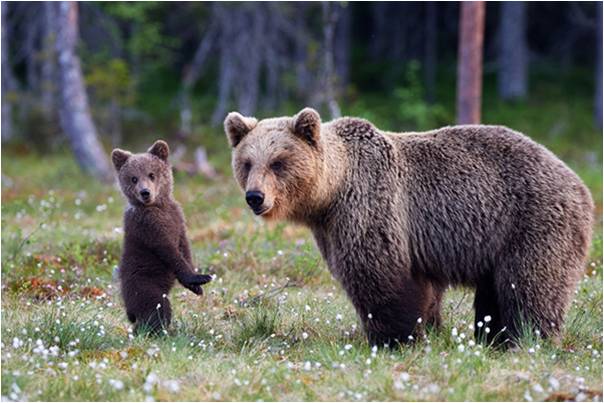
Alaskan bear cub with its mother
https://www.alaskatourjobs.com/blog/outdoor-activities/5-best-places-view-bears-alaska/
We discussed our activities duting the fēriaes aestīvae, using the Latin prompts given below. Zhang Wei had been in Alaska, which he explained is actually quite warm in the summer months, with temperatures in Anchorage up to around 30 degrees. However his attempt at a country stroll was curtailed when, just afte he locked his car door, he was told that abear cub had been sighted just ahead. As the mother bear would presumably be not too far off, Zhang Wei and family got back in the car and made a safe retreat.
Tan and her family had been in Australia, including a hiking trip in Tasmania, home to both the wel-known `Tasmanian devil’ and also the quoll, a marsupial species that none of the rest of us had ever heard of. Both species are listed as threatened but the status of the Tasmanian devil is worse and it is now found in the wild only on Tasmania, its numbers drastically reduced in recent years by devil facial tumour disease.
https://www.alaskatourjobs.com/blog/outdoor-activities/5-best-places-view-bears-alaska/
We discussed our activities duting the fēriaes aestīvae, using the Latin prompts given below. Zhang Wei had been in Alaska, which he explained is actually quite warm in the summer months, with temperatures in Anchorage up to around 30 degrees. However his attempt at a country stroll was curtailed when, just afte he locked his car door, he was told that abear cub had been sighted just ahead. As the mother bear would presumably be not too far off, Zhang Wei and family got back in the car and made a safe retreat.
Tan and her family had been in Australia, including a hiking trip in Tasmania, home to both the wel-known `Tasmanian devil’ and also the quoll, a marsupial species that none of the rest of us had ever heard of. Both species are listed as threatened but the status of the Tasmanian devil is worse and it is now found in the wild only on Tasmania, its numbers drastically reduced in recent years by devil facial tumour disease.
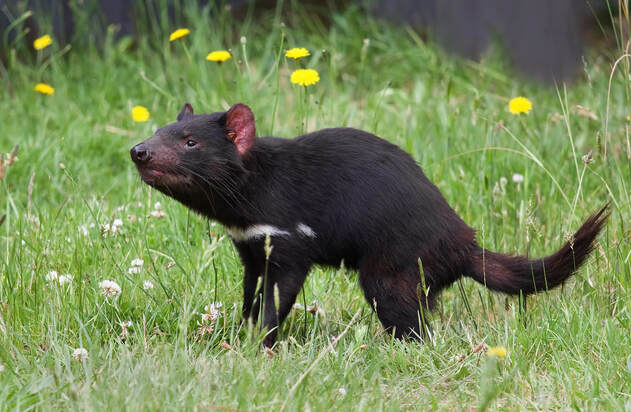
Tasmanian Devil
https://en.wikipedia.org/wiki/Tasmanian_devil
https://en.wikipedia.org/wiki/Tasmanian_devil

A quoll photographed at a rescue centre
https://en.wikipedia.org/wiki/Quoll
Following his usual trip to Nepal, John had been touring in Greece with his family, visiting Athens, Delphi. Corinth and Nauplion, and finishing with four nights on the island of Lemnos in the NE Aegean. His family were particularly impressed by the splendid setting of Delphi and the romantic castle ruins above Nauplion and Lemnos’s capital. Myrina. From 1833 to 1834, Nauplio was the first capital of the modern Greek state before King Otto decided to move the government to Athens, Lemnos boasts the remains of what is believed to be the oldest urban settlement in Europe as well as many fine beaches. The island was headquarters for the allied forces in the Gallipoli campaign of 1915 and also the site for the surrender of Turkish forces in the Aegean theatre.
https://en.wikipedia.org/wiki/Quoll
Following his usual trip to Nepal, John had been touring in Greece with his family, visiting Athens, Delphi. Corinth and Nauplion, and finishing with four nights on the island of Lemnos in the NE Aegean. His family were particularly impressed by the splendid setting of Delphi and the romantic castle ruins above Nauplion and Lemnos’s capital. Myrina. From 1833 to 1834, Nauplio was the first capital of the modern Greek state before King Otto decided to move the government to Athens, Lemnos boasts the remains of what is believed to be the oldest urban settlement in Europe as well as many fine beaches. The island was headquarters for the allied forces in the Gallipoli campaign of 1915 and also the site for the surrender of Turkish forces in the Aegean theatre.

The Palamidi fortesss at Nauplion
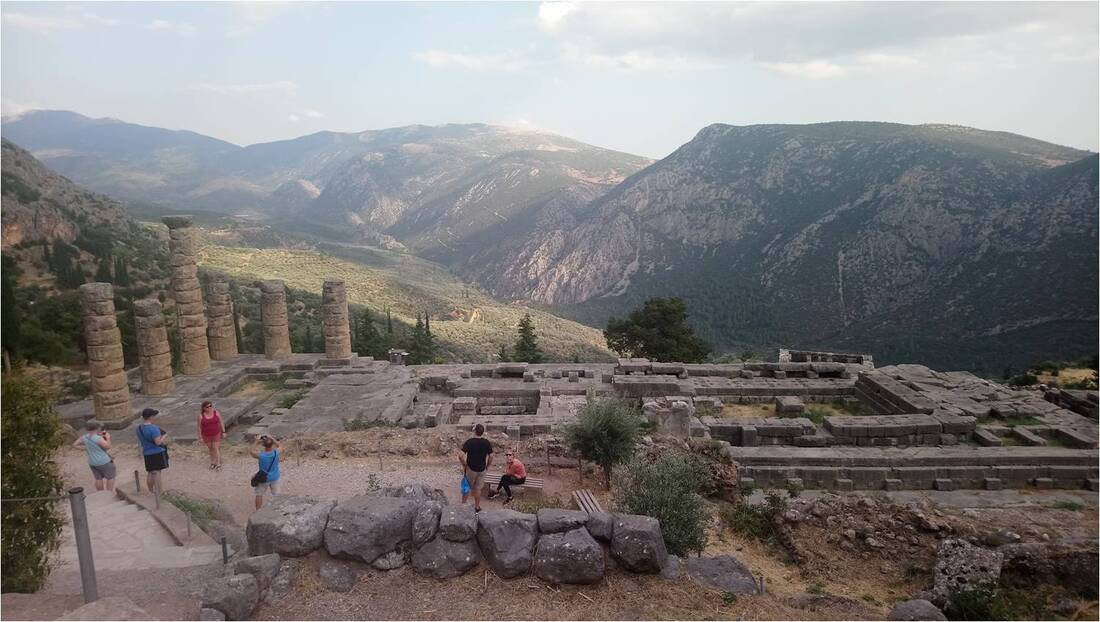
The Temple of Delphi at Apollo
We read chapter 17 of Nutting’s Ad Alpēs (see text below), which covered among othere topics the sword of Damocles and the Battle of Cannae. We noted the controversy over whether Hannibal would have been able to capture Rome itself if he had taken Maharbal’s advice to march on the city immediately after his stunning victory in 216 B.C. Nutting’s phrase for `would have been able to capture the city itself is urbem ipsam occupāre potuit, where an English speakere would have expected potuisset (pluperfect subjunctive).
The Damocles anecdote as related by Cicero involves good-looking young boys to wait on him at dinner and one of us wondered whether Cicero was having a dig at Greek homosexual tendencies. John thought this was unlikely since Romans did not think it wrong for an adult male to have a sexual relationship with a boy, stigma only attaching to an adult who was the passive partner in such a relationship. The situation was in some way parallel to that existing in some parts of Afghanistan today..
The 19th century artist who illustrated the Damocles story chose to change the attendants to females (see the illustration below), whether because of unease over any suggestion of homosexuality or because young women better fitted his idea of a life of princely luxury and indulgence.
This topic led Tanya to remember that her eight-year-old daughter, to whom she is currently reading Lord of the Rings, proclaimed it was a `gay novel’ because female chacters played so small a role in it. Tanya herself was sceptical about that but believed there was a gay relationship between Mole and Ratty in Wind and the Willows. John suggested that male camaraderie of characters in these classics (and of many of the authors themselves in real life) did not necessarily involve homosexuality. In the case of Tolkien and Lord of the Rings there is an additional complication as some believe that the model for Gandalf was actually the author’s aunt, Jane Neave – see Tolkien’s Gedling 1914, co-authored by John’s old schoolmate, Andrew Morton (https://www.amazon.co.uk/Tolkiens-Gedling-1914-Andrew-Morton/dp/185858423X).
We briefly discussed the Latin verbs for `play’ a musical instrument: canere/cantāre (literally `to sing’) for plucking strings or blowing into a pipe or trumpet and pulsāre (`to strike’) for percussion instruments.. There is sometimes a dispute over whether a modern piano should be placed in the percussion or string category but most people would definitely use clāvic(h)ordiō canere/cantāre. In Spanish the verb tocar. derived from Vulgar Latin* toccāre (to strike) means both `to touch’ and `to play (an instrument)’, whilst tañer, from tangere and thus originally meaningt `touch’, now means only `to play’. It is uncertain at what time toccāre came into colloquial Latin but as the word is itelf thought to have been of Germanic origin it was most likely in late antiquity or early medieval times. There remains the possibility that ordinary Romans in the classical period might have used instrumentum tangere for `to play an instrument.’ John bemoaned his own inability to `sing’ in either the vocal or instrumental sense and recalled how his one attempt at a karaoke performance (during a school open day) had resulted in the room rapidly emptying.
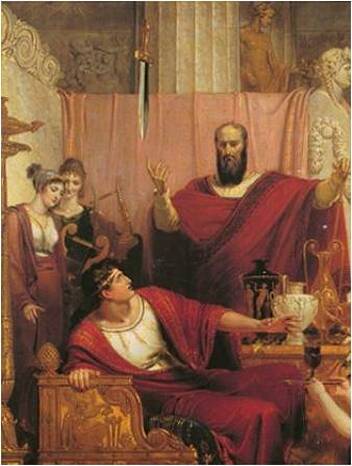
The Sword of Damocles (Richard Westall, 1812)
https://en.wikipedia.org/wiki/Damocles
There was also mention of Chinese sayings and ways of remembering them. The equivalent of Latin lupus in fābulā (`wolf in the story’) and `Speak of the devil!’ is 一講曹操, 曹操就到 (yat gong Chou Chou, Cho Chou jau dou! - `As soon as you say `Chou Chou’, Chou Chou arrives’), referring to the Macchiavellian ruler in the Three Kingdoms period. John always remembers this one because just after he’d been taught it on a Cantonese course at CUHK, he was climbing the hill to the Mall area and came up behind one of his instructors whilst she was complaining about how many times he had written the Romanisation of the character 印 (yan) with a tone 1 (high-falling) mark instead of the correct tone 3 (mid-level). John announced his presence by quoting the proverb, thus ensuring that both this and the right pronunciation of印 are securely lodged in his memory. He also recalled the phrase 千古罪人 (chin yan jeui yan, `sinner for a thousand ages’, `eternal villain’, furcifer aeternus), which Lu Ping of the Hong Kong and Macau Affairs Office applied to Chris Patten over his electoral reform proposals. John subsequently used it from time to time on the blackboard when listing students who had not handed in their assignments.
Finally, Tanya explained the banding system for Hong Kong schools, students being divided into three bands on the basis of their results in their last year in primary school. Parents of Band 1 students get first choice of secondary schools. Band 3 students, who end up together in the lease prestigious schools, include not only those who have always struggled academically but also very bright students who cracked up under the pressure of the system..
https://en.wikipedia.org/wiki/Damocles
There was also mention of Chinese sayings and ways of remembering them. The equivalent of Latin lupus in fābulā (`wolf in the story’) and `Speak of the devil!’ is 一講曹操, 曹操就到 (yat gong Chou Chou, Cho Chou jau dou! - `As soon as you say `Chou Chou’, Chou Chou arrives’), referring to the Macchiavellian ruler in the Three Kingdoms period. John always remembers this one because just after he’d been taught it on a Cantonese course at CUHK, he was climbing the hill to the Mall area and came up behind one of his instructors whilst she was complaining about how many times he had written the Romanisation of the character 印 (yan) with a tone 1 (high-falling) mark instead of the correct tone 3 (mid-level). John announced his presence by quoting the proverb, thus ensuring that both this and the right pronunciation of印 are securely lodged in his memory. He also recalled the phrase 千古罪人 (chin yan jeui yan, `sinner for a thousand ages’, `eternal villain’, furcifer aeternus), which Lu Ping of the Hong Kong and Macau Affairs Office applied to Chris Patten over his electoral reform proposals. John subsequently used it from time to time on the blackboard when listing students who had not handed in their assignments.
Finally, Tanya explained the banding system for Hong Kong schools, students being divided into three bands on the basis of their results in their last year in primary school. Parents of Band 1 students get first choice of secondary schools. Band 3 students, who end up together in the lease prestigious schools, include not only those who have always struggled academically but also very bright students who cracked up under the pressure of the system..
QUAESTIŌNĒS ADS FĒRIĀS PERTINENTĒS
Quid in fēriīs aestīvīs fēcistī? Ex Honcongō discessistī?
What did you do in the summer holidays? Did you leave Hong Kong?
Ad Britanniam/Austrāliam/Graeciam/Eurōpam īvī
I went to Britain/Australia.Greece/Europe
In lītōre requiēscēbam et in marī natābam
I rested on the beach and swam in the sea
In montibus/Rūrī ambulāvī
I walked in the mountains / countryside
Templa, mūsaea, castella et templa antīqua vīsitāvī
I visited museums, castles and old temples
Honcongī mānsī et tumultūs vītāre temptāvī
I stayed in Hong Kong and tried to avoid the riots
Ut semper, labōrābam!
As usual, I kept on working
AD ALPĒS - CHAPTER XVII
Posterō diē viātōrēs, ubi[1] gustāvērunt, iter lēniter faciébant, cum pater Sextō: “Quā dē rē[2]
On-next day travellers when they-ate journey slowly were-making when father to-Sextus what about thing
Onēsimus vōbīscum locūtus est,” inquit, “cum nocte proximā ad eum abistis?”
Onesimus with-you spoke? said when night last to him you-went-off
“Dē duōbus mūribus dīxit,” inquit Sextus. “Mūs rūsticus, quī ab alterō ad urbem
About two mice he-spoke said Sextus mouse country who by the-other to city
invītātus erat, ut ibi molliter vīveret, amīcum in domum hominis locuplētis secūtus est. Cum
invited had-been so-that there luxuriously he-could-live friend into home of-man rich he-followed when
autem mūrēs cēnae sümptuōsae reliquiīs ibi sē oblectārent, subitō cum canibus intrāvit
however mice of-dinner splendid with-remains there themselves were-delighting suddenly with dogs entered
NOTES
[1] ubi is literally `when’ but āfter’ would be a more idiomatic translation here.
[2] Very comon word order for the combination of preposition with noun and interrogative adjective, as in quam ob causam?(for what reason?) etc.
aedium dominus. Tum metū paene exanimātus mūs rūsticus per fenestram ēvāsit, ac
of-house master then from-fear almost made-to-faint mouse country through window escaped and
libentissimē rūs ad vīctum tenuem iterum sē recēpit.”
very-gladly to-country to diet meagre again himself took-back
“Eī, ut vidētur, accidit idem, quod Dāmoclī factum est,” inquit Pūblius.
To-him as it-seems happened same-thing which to-Damocles done was said Publius
At Sextus: “Quis, obsecrō, fuit iste Dāmoclès? Hoc nōmen anteā numquam audīvī.”
But Sextus who I-beg was that Damocles this name before never I-have-heard
“Tyrannī Dionȳsī[1] adsentātor erat,” inquit Pūblius; “atque ōlim, cum illīus cōpiās, opès,
Of-tyrant Dionysius flatterer he-was said Publius and once when his resources wealth
maiestāem rērumquē abundantiam in sermōne commemorāsset,[2] ac negāret umquam
dignity and-of-possessions abundance in conversation had-mentioned and was-denying ever
beātiōre quemquam fuisse, tum eī Dionȳsius: “Vīsne igitur,' inquit, “quoniam tē haec vītā
happy anyone to-have-been then to-him Dionysius do-you-wish therefore he-said since you this life
dēlectat, meam fortūnam ipse experīrī?'
delights my fortune yourself to-experience
“Ubi Dāmoclēs sē cupere dīxit, tyrannus hominem in lectō splendidō collocārī iussit,
When Damocles himself to-want said the-tyrant the-man on couch splended to-be-placed ordered
mēnsamque argentō aurōque caelātō ōrnāvit. Deinde puerīs[3] eximiā fōrmā imperāvit, ut
and-table with-silver and-gold engraved adorned then boys of-oustanding beauty he-ordered that
adessent, et Dāmoclī studiōsē ministrārent. Aderant unguenta, corōnae, incendēbantur
they-be-present and `to-Damocles enthusiastically minister t here-were-present perfumes garlands was-being-burnt
odōrēs,[4] mēnsaeque epulīs lūculentīs exstruēbantur.
Incenses and-tables with-feasts exellent were-loaded
“Dāmoclēs iam scīlicet sibi fortūnātus vīsus est. Sed subitō tyrannus iussit gladium
Damocles now of-course to-himself fortunate seemed but suddenly tyrant ordered sword
fulgentem saetâ equīnä aptum ē lacūnārī ita dēmittī, ut capitī Dāmoclis impendēret. Quārē ille
gleaming by-hair of-horse suspended from ceiling so to-be-lowered that over-head of-Damocles it-hung therefore he
miser nōn diūtius puerōs aspiciēbat pulchrōs, nec manum in mēnsam porrigébat. Postrēmō
wretched not (any)longer boys was-looking-at handsome nor hand onto table was-stretching-out finally
vērō tyrannum ēnīxē ōrāvit, ut sibi abīre licēret, quod iam “beātus' esse nōllet.”
indeed tyrant earnestly he-begged that to-him to-leave itbe-allowed because now happy to-be he-did-not-want
NOTES:
[1] Dionysius II, who ruled Syracuse in Scily from 367 to 357 B.C. and from 346 to 344. The story of Damocles is knpwn only from a passage in Cicero (Tusculānae Disptātiōnēs, 5.61), whose ultimate source was probably the Sicilian historian Timaeus (c. 345 – c. 250 B.C.). See https://en.wikipedia.org/wiki/Damocles
[2] Contracted form of the pluperfect subjunctive commemorāvisset.
[3] The painter Richard Westall (p.32) changed the sex of the attendants.
[4] Literally `scents were being burned’
“Hahahae!” inquit Sextus. “Homō salsus profectō erat ille tyrannus. Dē eō plūra audīre
Ha-ha-ha said Sextus Man witty certainly was that tyrant about him more to-hear
cupiō.”
I-want
“Alia dē eō commemorāta,” inquit Cornēlius, “nūllō modō aequē iūcunda sunt. Cum
Other-things about him related said Cornelius in-no way equally pleasant are since
enim metueret nē quis clam sē adorīrētur, vītam suam cūrä maximâ custódiébat; quam ob
for he-feared lest anyone secretly him might-attack life his-own with-care greatest he-used-to-guard which because-of
rem causā incognitā capitis[1] damnāvit omnēs, quōs vīvere sibi perīculōsum esse putāret.”
thing with-trial not-held to-death he-condemned all whom to-live to-himself dangerous to-be he-thought
“Quam crūdēliter factum!” inquit Cornēlia. “Ille mihi vidétur dignus quī compārētur[2]
How- cruelly done said Cornelia he to-me seems worthy to-be-compared
cum istō Nerōne, dē quō nūper audīvimus.''
With that Nero about whom recently we-heard
“Eī cum Nerōne alia fuit similitūdō,” inquit, pater. “Nam nōn modo erat crūdēlissimus,
To-him with Nero other was similarity said father for not only was-he very-cruel
sed etiam sē poētam eximium esse exīstimābat; quārē tragoediās suās in Achaiam[3] mittēbat,
but also himself poet excellent to-be he-reckoned consequently tragedies his to Achaia used-to-send
cum certāmina ibi habēbantur. Et eī, quamquam versūs eius pessimī erant, ōlim corōna dēlāta
when contests there were-being-held to-him although verses his very-bad were once crown awarded
est.''
was
“Prō certōne compertum est,” inquit Sextus, “eius scrīpta tam absurda fuisse?
For certain-? found was said Sextus his writings so absurd to-have-been
” Ac Cornēlius: “Sine dubiō pessima fuērunt. Saepe enim domī quoque carmina sua
And Cornelius without doubt very-bad they-were often for at-home also poems his
recitābat; cumque adsentātōrēs omnēs in plausūs maximōs sē effundēbant, poēta Philoxenus,[4]
he-used-to-recite and-when sycophants all into applause loudest themselves were-pouring poet Philoxenus
quī illīs temporibus apud eum morābātur, semper sedēbat tacitus, aut etiam in cachinnōs
who in-those times with him was-staying always used-to-sit silent or even into laughter
ērumpêbat. Quem igitur tyrannus īrātus postrēmō in lautumiās[5] abdūcī iussit.
burst-out him therefore tyrant angered finally into stone-quarries to-be-taken-away ordered
NOTES:
[1] capitis: literally ōf head’, stanging here for `capital punishment’
[2] Quī comparētur: literally, `who might be compared’
[3] Achaia(or Achaea) was originally the name for the northern part of the Pelolponnese (i.e Greece south of the Isthmus of Corinth) and Achaioi was used by Homer as an ethnonym for Greeks in general. After Greece was brought fully under Roman control in 146 B.C. Achaea was the name of the province comprising most of modern Greece, the sense in which the word is used in this book.
[4] Perhaps Philoxenus of Leucas (an island off the NW coast of Greece), 425-350 B.C.
[5] Prisoners in Syracuse werere regularly kept in the quarries to carry out forced labour.
“Sed nihilōminus vērus iūdex erat poēta. Nam ē lautumiīs dēmum reductus, cum versüs
But nevertheless true judge was the-poet for from quarries at-last brought-back when verses
novōs tyrannī audīre cōgerētur, suā sponte surrēxit et recēdēbat. Hōc animadversō, Dionȳsius:
new of-tyrant to-hear was-being-forced of-own accord he-got-up and started-to-leave with-this noticed Dionysius
“Quō abīs, Philoxene?' At ille: “Ad lautumiās redeō,' inquit.”
Where-to are-you-off Philoxenus but he to quarries I’m returning said
“Ille vērō poēta,” inquit, Pūblius, “homō erat, nōn modo salsus, sed etiam audāx.”
That indeed poet said Publius man was not only witty but also bold
At Cornēlius: “Aequē praeclārum est respōnsum philosophī Diogenis.[1] Cui holera
But Cornelius equally famous is the-reply of-the-philosopher Diogenes to-hm vegetables
lavantī cum dīxisset Aristippus: `Sī Dionȳsiō adsentārī vellēs, ista nōn ederēs,'
washing when had-said Aristipus if Dionysius to-flatter you-were-willing those not you-would-be-eating
ille: `Immō,' inquit, “sī tū ista edere vellēs, Dionȳsiō tē adsentārī nōn opus esset.'”
He in-fact said if you those to-eat were-willing Dionysius you to-flatter not need there-would-be
“Verba philosophō digna!” inquit Pūblius. “Sed quae sunt istae lautumiae, dē quibus tū
Words for-a—philosopher worthy said Publius but what are those quarries about which you
modō mentiōnem fēcistī?”
just-now mention made
Tum Cornēlius: “Cavernae sunt ingentês, ex rūpibus cavātae, quibus prō carcere
Then Cornelius caves they-are huge out-of cliffs carved which as prison
tyrannus ūtēbātur.” (Etiam hodiē ūna ex illīs lautumiīs 'Dionȳsī auris' appellātur, quod
the-tyrant used even today one of those quarries `Dionysius’ Ear’ is-called because
memoriae trāditum est eam ita fōrmātam esse, ut resonandō vōcēs omnēs ūnum in locum
to-memory handed-down it-has-been it so formed to-have-been that by-echoing voices all one into place
adferret; ibique cōnsistentem Dionȳsium solitum esse clam eā audīre, quae miserī
it-brought and-there halting Dionysius accustomed to-have-been secretly those-things to-hear which wretched-ones
intus inclūsī dē ipsō incautī loquerentur.)
within shut-up about himself carelessly were-saying
“Mihi mīrandum vidētur,” inquit, Pūblius, “eius cīvês tot annōs crūdēlitātem tantam
To-me amazing it-seems said Publius his citizens so-many years cruelty such-great
ferre potuisse. Sed dē eō iam satis dictum est; mihi Hannibalis calliditās magis placet.
to-bear to-have-been-able but about him already enough said has-been me Hannibal’s cleverness more pleases
Nōnne hīs in regiōnibus dux ille ōlim cum Rōmānīs manum cōnseruit[2]?''
Surely these in regions general that once with Romans battle joined
NOTES:
[1] Diogenes the Cynic (412 or 404 to 323 B.C)., the philosopher famous for living in a barrel and for telling Alexander the great to stand out of the way of his sunshine (see https://en.wikipedia.org/wiki/Diogenes ).
[2] manum cōnseruit: literally, `joined hand’.
“Ita vērō,” inquit pater. “Nam haud procul hinc facta est[1] pugna illa Cannēnsīs, inter
Yes-indeed said father for not far from-here fought was battle that of-Cannae between
paucās clādēs populī Rōmānī memorābilis. Hōc proeliō nostrī circiter quīnquāgintā mīlia
the-few disasters of-people Roman memorable in-this battle our-man around fifty thousand
periērunt, ac paulum āfuit[2] quīn illa diēs fīnem bellō adferret.”
Perished and little it-was-away that-not that-day end to-war brought
“Plūra nārrā, sīs,” inquit Sextus. “Dē proeliīs semper perlibenter audiō, maximē cum
More tell please said Sextus about battles always very-happi,ly I-hear escecially when
Hannibal hostēs dūcit.”
Hannibal the-enemy is-leading
“Alternīs diébus,'' inquit pater, “imperābant cōnsulēs, quōrum alter statim
On-alternate days said father were-in-command the-consuls of-whom one at-once
dēcertāre volēbat, alterī vērō bellum prōdūcī m elius vidēbātur. Ōlim, cum apud cōnsulem
to-have-decisive-fight wanted to-other indeed war to-be-prolonged better it-seemed once when with consul
Varrōnem imperium esset, ad manum cum Poenīs cōnserendam exercitus ēductus est.
Varro command was to battle with Carthaginians being-joined army led-out was
“Quārē Paulus, cónsul alter, quamquam dīversā suāserat, tamen in castrīs morārī tantō in
Therefore Paulus consul other although differently he-had-urged still in camp to-stay so-great in
discrīmine rērum nōlēbat, ac perinvītus secūtus est; quī, prīmō statim proeliō fundā graviter
crisis of-situation was-unwilling and very-reluctantly followed he in-first at-once clash by-sling-shot gravely
vulnerātus, suō cornū tamen hostibus diū fortissimē resistēbat.
wounded on-own wing however enemy for-long-time most-bravely continued resisting
“Postrēmō autem Rōmānōs, quōs ārdor pugnandī incautōs longius prōvēxerat, equités
Finally but Romans whom eagerness for-fighting heedless quite-far had-carried-forward cavalry
hostium subitō ā tergō adortī sunt. Hinc erat initium fugae, ac Cn. Lentulus, tribūnus
of-enemy suddenly from-rear attacked from-this-point was beginning of-flight and Gnaeus Lentulus tribune mīlitum,[3] cum Paulum sanguine respersum in saxó sedentem vīdisset, eī equum suum
of-soldiers when Paulus with-blood spattered on rock sitting he-had-seen to-him horse his-own
trādere volēbat. At ille: 'Abī,' inquit, “et senātuī nūntiā ut urbem mūniat. Ego satis vīxī;
to-hand-over wanted but he go-off said and to-senate announce that city it-should-fortify I (long)enough have-lived
hīc morī certum est.'
here to-die certain is
NOTES:
[1] facta est: literally `was made’.
[2] paulum āfuit quīn plus the subjunctive conveys the idea that an outcome was only just avoided. Rome came close to losing the war altogether after this defeat in 216 B.C.
[3] The military tribunes formed a comander’s staff and must be distinguished from the tribūnī plēbis who were magistrates elected to represent the common people.The abbreviation for the praenomen `Gnaeus’ has a `C’ because it was devised before the introduction of the letter `G’ ..
“Hannibal fortasse, sī properāre voluisset, urbem ipsam occupāre potuit; atque, ut id
Hannnibal perhaps if to-hurry he-had-been-willing city itself to-occupy was-able and that it
cōnārētur, Maharbal vehementer suāsit. Sed Hannibal, hāc tantā victōriā ēlātus, dēliberandī
he-should-try Maharbal strongly urged but Hannibal by-this so-great victory elated for-considering
tempus poposcit. Quārē Maharbal[1]: “Vincēre scīs, Hannibal,' inquit; “victōriā ūtī nescīs.'''
time asked-for so Maharbal to-win you-know-how Hannibal said victory to-to-us you-don’t-know-how
At iam Drūsilla: “Ego et Cornēlia,”[2] inquit, “carmina proelīīs praepōnimus. Nōnne
But now Drusilla I and Cornelia said poems to-battles prefer aren’t
versūs ūllōs recordārī potes, Pūblī?”
verses any to-remember you-able Publius
“Cum modō dē Dāmocle loquerēmur,” inquit ille, “mihi in mentem vēnit verbōrum[3]
Since just-now about Damocles we-were-talking said he to-me into mind has-come words
Horātī Flaccī:
of-Horatius Flaccus
“`Dēstrictus ēnsis cui super impīā
Unsheathed sword for-whom above wicked
Cervīce pendet, nōn Siculae dapēs
Neck hangs not Sicilian feasts
Dulcem ēlabōrābunt sapōrem,
Sweet will-produce flavour
Nōn āvium citharaeque cantūs
Not of-birds and-of-cithara singing
Somnum redūcent.'''[4]
Sleep will-bring-back
Dum hōc modō inter sê loquuntur,[5] diēs abiit; ac paulō ante sōlis occāsum libenter
While in-this way among themselves they-were-talking day-departed and a-little before of-sun setting gladly
oppidum Beneventum[1] haud procul aspexērunt.
town Beneventum not far-off they-sighted
NOTES:
[1] Beneventum (modern Benevento) is a city on the Appian Way about 30 miles north-east of Naples
[1] Maharbal was in charge of Hannibal’s cavalry and also his second-in-command. Hannibal may, however, have been right to hesistate because he had no siege engines.
[2] Placing ego first in this kind of phrase was normal in Latin. To avioid having to explain this every time, the rule is deliberately broken in Circulus Latinus emails and ego placed last in accordance with English usage. When the 16th century statesman Cardinal Wolsey used the phrasee ego et rēx meus (`I and my king’) he was grammatically correct but probably annoyed Henry VIII, who never liked to be upstaged!
[3] The use of the genitive pural verbōrum is a little strange here. Either the reader is supposed to supply mentally the nominative memoria, or the writer considers in mentem vēnit as equivalent to the verb meminī (I remember), which frequently does take the genitive. Horace’s full name was Quīntus Horātius Flaccus.
[4] Horace, Odes III, 1: lines 17-21. This is written in Alcaic stanzas, each of four lines, with the pattern – – u – – : – u u – u – / – – u – – : – u u – u – / – – u – – – u – – /– u u – u u – u – – .The quotation includes two words from the start of the next stanza. There is an attempt, perhaps not very successful, to reproduce the original rhythm in the translation at https://www.poetryintranslation.com/PITBR/Latin/HoraceOdesBkIII.php
[5] dum is normally followed by a present tense, even when the main clause is in a past tense.
Quid in fēriīs aestīvīs fēcistī? Ex Honcongō discessistī?
What did you do in the summer holidays? Did you leave Hong Kong?
Ad Britanniam/Austrāliam/Graeciam/Eurōpam īvī
I went to Britain/Australia.Greece/Europe
In lītōre requiēscēbam et in marī natābam
I rested on the beach and swam in the sea
In montibus/Rūrī ambulāvī
I walked in the mountains / countryside
Templa, mūsaea, castella et templa antīqua vīsitāvī
I visited museums, castles and old temples
Honcongī mānsī et tumultūs vītāre temptāvī
I stayed in Hong Kong and tried to avoid the riots
Ut semper, labōrābam!
As usual, I kept on working
AD ALPĒS - CHAPTER XVII
Posterō diē viātōrēs, ubi[1] gustāvērunt, iter lēniter faciébant, cum pater Sextō: “Quā dē rē[2]
On-next day travellers when they-ate journey slowly were-making when father to-Sextus what about thing
Onēsimus vōbīscum locūtus est,” inquit, “cum nocte proximā ad eum abistis?”
Onesimus with-you spoke? said when night last to him you-went-off
“Dē duōbus mūribus dīxit,” inquit Sextus. “Mūs rūsticus, quī ab alterō ad urbem
About two mice he-spoke said Sextus mouse country who by the-other to city
invītātus erat, ut ibi molliter vīveret, amīcum in domum hominis locuplētis secūtus est. Cum
invited had-been so-that there luxuriously he-could-live friend into home of-man rich he-followed when
autem mūrēs cēnae sümptuōsae reliquiīs ibi sē oblectārent, subitō cum canibus intrāvit
however mice of-dinner splendid with-remains there themselves were-delighting suddenly with dogs entered
NOTES
[1] ubi is literally `when’ but āfter’ would be a more idiomatic translation here.
[2] Very comon word order for the combination of preposition with noun and interrogative adjective, as in quam ob causam?(for what reason?) etc.
aedium dominus. Tum metū paene exanimātus mūs rūsticus per fenestram ēvāsit, ac
of-house master then from-fear almost made-to-faint mouse country through window escaped and
libentissimē rūs ad vīctum tenuem iterum sē recēpit.”
very-gladly to-country to diet meagre again himself took-back
“Eī, ut vidētur, accidit idem, quod Dāmoclī factum est,” inquit Pūblius.
To-him as it-seems happened same-thing which to-Damocles done was said Publius
At Sextus: “Quis, obsecrō, fuit iste Dāmoclès? Hoc nōmen anteā numquam audīvī.”
But Sextus who I-beg was that Damocles this name before never I-have-heard
“Tyrannī Dionȳsī[1] adsentātor erat,” inquit Pūblius; “atque ōlim, cum illīus cōpiās, opès,
Of-tyrant Dionysius flatterer he-was said Publius and once when his resources wealth
maiestāem rērumquē abundantiam in sermōne commemorāsset,[2] ac negāret umquam
dignity and-of-possessions abundance in conversation had-mentioned and was-denying ever
beātiōre quemquam fuisse, tum eī Dionȳsius: “Vīsne igitur,' inquit, “quoniam tē haec vītā
happy anyone to-have-been then to-him Dionysius do-you-wish therefore he-said since you this life
dēlectat, meam fortūnam ipse experīrī?'
delights my fortune yourself to-experience
“Ubi Dāmoclēs sē cupere dīxit, tyrannus hominem in lectō splendidō collocārī iussit,
When Damocles himself to-want said the-tyrant the-man on couch splended to-be-placed ordered
mēnsamque argentō aurōque caelātō ōrnāvit. Deinde puerīs[3] eximiā fōrmā imperāvit, ut
and-table with-silver and-gold engraved adorned then boys of-oustanding beauty he-ordered that
adessent, et Dāmoclī studiōsē ministrārent. Aderant unguenta, corōnae, incendēbantur
they-be-present and `to-Damocles enthusiastically minister t here-were-present perfumes garlands was-being-burnt
odōrēs,[4] mēnsaeque epulīs lūculentīs exstruēbantur.
Incenses and-tables with-feasts exellent were-loaded
“Dāmoclēs iam scīlicet sibi fortūnātus vīsus est. Sed subitō tyrannus iussit gladium
Damocles now of-course to-himself fortunate seemed but suddenly tyrant ordered sword
fulgentem saetâ equīnä aptum ē lacūnārī ita dēmittī, ut capitī Dāmoclis impendēret. Quārē ille
gleaming by-hair of-horse suspended from ceiling so to-be-lowered that over-head of-Damocles it-hung therefore he
miser nōn diūtius puerōs aspiciēbat pulchrōs, nec manum in mēnsam porrigébat. Postrēmō
wretched not (any)longer boys was-looking-at handsome nor hand onto table was-stretching-out finally
vērō tyrannum ēnīxē ōrāvit, ut sibi abīre licēret, quod iam “beātus' esse nōllet.”
indeed tyrant earnestly he-begged that to-him to-leave itbe-allowed because now happy to-be he-did-not-want
NOTES:
[1] Dionysius II, who ruled Syracuse in Scily from 367 to 357 B.C. and from 346 to 344. The story of Damocles is knpwn only from a passage in Cicero (Tusculānae Disptātiōnēs, 5.61), whose ultimate source was probably the Sicilian historian Timaeus (c. 345 – c. 250 B.C.). See https://en.wikipedia.org/wiki/Damocles
[2] Contracted form of the pluperfect subjunctive commemorāvisset.
[3] The painter Richard Westall (p.32) changed the sex of the attendants.
[4] Literally `scents were being burned’
“Hahahae!” inquit Sextus. “Homō salsus profectō erat ille tyrannus. Dē eō plūra audīre
Ha-ha-ha said Sextus Man witty certainly was that tyrant about him more to-hear
cupiō.”
I-want
“Alia dē eō commemorāta,” inquit Cornēlius, “nūllō modō aequē iūcunda sunt. Cum
Other-things about him related said Cornelius in-no way equally pleasant are since
enim metueret nē quis clam sē adorīrētur, vītam suam cūrä maximâ custódiébat; quam ob
for he-feared lest anyone secretly him might-attack life his-own with-care greatest he-used-to-guard which because-of
rem causā incognitā capitis[1] damnāvit omnēs, quōs vīvere sibi perīculōsum esse putāret.”
thing with-trial not-held to-death he-condemned all whom to-live to-himself dangerous to-be he-thought
“Quam crūdēliter factum!” inquit Cornēlia. “Ille mihi vidétur dignus quī compārētur[2]
How- cruelly done said Cornelia he to-me seems worthy to-be-compared
cum istō Nerōne, dē quō nūper audīvimus.''
With that Nero about whom recently we-heard
“Eī cum Nerōne alia fuit similitūdō,” inquit, pater. “Nam nōn modo erat crūdēlissimus,
To-him with Nero other was similarity said father for not only was-he very-cruel
sed etiam sē poētam eximium esse exīstimābat; quārē tragoediās suās in Achaiam[3] mittēbat,
but also himself poet excellent to-be he-reckoned consequently tragedies his to Achaia used-to-send
cum certāmina ibi habēbantur. Et eī, quamquam versūs eius pessimī erant, ōlim corōna dēlāta
when contests there were-being-held to-him although verses his very-bad were once crown awarded
est.''
was
“Prō certōne compertum est,” inquit Sextus, “eius scrīpta tam absurda fuisse?
For certain-? found was said Sextus his writings so absurd to-have-been
” Ac Cornēlius: “Sine dubiō pessima fuērunt. Saepe enim domī quoque carmina sua
And Cornelius without doubt very-bad they-were often for at-home also poems his
recitābat; cumque adsentātōrēs omnēs in plausūs maximōs sē effundēbant, poēta Philoxenus,[4]
he-used-to-recite and-when sycophants all into applause loudest themselves were-pouring poet Philoxenus
quī illīs temporibus apud eum morābātur, semper sedēbat tacitus, aut etiam in cachinnōs
who in-those times with him was-staying always used-to-sit silent or even into laughter
ērumpêbat. Quem igitur tyrannus īrātus postrēmō in lautumiās[5] abdūcī iussit.
burst-out him therefore tyrant angered finally into stone-quarries to-be-taken-away ordered
NOTES:
[1] capitis: literally ōf head’, stanging here for `capital punishment’
[2] Quī comparētur: literally, `who might be compared’
[3] Achaia(or Achaea) was originally the name for the northern part of the Pelolponnese (i.e Greece south of the Isthmus of Corinth) and Achaioi was used by Homer as an ethnonym for Greeks in general. After Greece was brought fully under Roman control in 146 B.C. Achaea was the name of the province comprising most of modern Greece, the sense in which the word is used in this book.
[4] Perhaps Philoxenus of Leucas (an island off the NW coast of Greece), 425-350 B.C.
[5] Prisoners in Syracuse werere regularly kept in the quarries to carry out forced labour.
“Sed nihilōminus vērus iūdex erat poēta. Nam ē lautumiīs dēmum reductus, cum versüs
But nevertheless true judge was the-poet for from quarries at-last brought-back when verses
novōs tyrannī audīre cōgerētur, suā sponte surrēxit et recēdēbat. Hōc animadversō, Dionȳsius:
new of-tyrant to-hear was-being-forced of-own accord he-got-up and started-to-leave with-this noticed Dionysius
“Quō abīs, Philoxene?' At ille: “Ad lautumiās redeō,' inquit.”
Where-to are-you-off Philoxenus but he to quarries I’m returning said
“Ille vērō poēta,” inquit, Pūblius, “homō erat, nōn modo salsus, sed etiam audāx.”
That indeed poet said Publius man was not only witty but also bold
At Cornēlius: “Aequē praeclārum est respōnsum philosophī Diogenis.[1] Cui holera
But Cornelius equally famous is the-reply of-the-philosopher Diogenes to-hm vegetables
lavantī cum dīxisset Aristippus: `Sī Dionȳsiō adsentārī vellēs, ista nōn ederēs,'
washing when had-said Aristipus if Dionysius to-flatter you-were-willing those not you-would-be-eating
ille: `Immō,' inquit, “sī tū ista edere vellēs, Dionȳsiō tē adsentārī nōn opus esset.'”
He in-fact said if you those to-eat were-willing Dionysius you to-flatter not need there-would-be
“Verba philosophō digna!” inquit Pūblius. “Sed quae sunt istae lautumiae, dē quibus tū
Words for-a—philosopher worthy said Publius but what are those quarries about which you
modō mentiōnem fēcistī?”
just-now mention made
Tum Cornēlius: “Cavernae sunt ingentês, ex rūpibus cavātae, quibus prō carcere
Then Cornelius caves they-are huge out-of cliffs carved which as prison
tyrannus ūtēbātur.” (Etiam hodiē ūna ex illīs lautumiīs 'Dionȳsī auris' appellātur, quod
the-tyrant used even today one of those quarries `Dionysius’ Ear’ is-called because
memoriae trāditum est eam ita fōrmātam esse, ut resonandō vōcēs omnēs ūnum in locum
to-memory handed-down it-has-been it so formed to-have-been that by-echoing voices all one into place
adferret; ibique cōnsistentem Dionȳsium solitum esse clam eā audīre, quae miserī
it-brought and-there halting Dionysius accustomed to-have-been secretly those-things to-hear which wretched-ones
intus inclūsī dē ipsō incautī loquerentur.)
within shut-up about himself carelessly were-saying
“Mihi mīrandum vidētur,” inquit, Pūblius, “eius cīvês tot annōs crūdēlitātem tantam
To-me amazing it-seems said Publius his citizens so-many years cruelty such-great
ferre potuisse. Sed dē eō iam satis dictum est; mihi Hannibalis calliditās magis placet.
to-bear to-have-been-able but about him already enough said has-been me Hannibal’s cleverness more pleases
Nōnne hīs in regiōnibus dux ille ōlim cum Rōmānīs manum cōnseruit[2]?''
Surely these in regions general that once with Romans battle joined
NOTES:
[1] Diogenes the Cynic (412 or 404 to 323 B.C)., the philosopher famous for living in a barrel and for telling Alexander the great to stand out of the way of his sunshine (see https://en.wikipedia.org/wiki/Diogenes ).
[2] manum cōnseruit: literally, `joined hand’.
“Ita vērō,” inquit pater. “Nam haud procul hinc facta est[1] pugna illa Cannēnsīs, inter
Yes-indeed said father for not far from-here fought was battle that of-Cannae between
paucās clādēs populī Rōmānī memorābilis. Hōc proeliō nostrī circiter quīnquāgintā mīlia
the-few disasters of-people Roman memorable in-this battle our-man around fifty thousand
periērunt, ac paulum āfuit[2] quīn illa diēs fīnem bellō adferret.”
Perished and little it-was-away that-not that-day end to-war brought
“Plūra nārrā, sīs,” inquit Sextus. “Dē proeliīs semper perlibenter audiō, maximē cum
More tell please said Sextus about battles always very-happi,ly I-hear escecially when
Hannibal hostēs dūcit.”
Hannibal the-enemy is-leading
“Alternīs diébus,'' inquit pater, “imperābant cōnsulēs, quōrum alter statim
On-alternate days said father were-in-command the-consuls of-whom one at-once
dēcertāre volēbat, alterī vērō bellum prōdūcī m elius vidēbātur. Ōlim, cum apud cōnsulem
to-have-decisive-fight wanted to-other indeed war to-be-prolonged better it-seemed once when with consul
Varrōnem imperium esset, ad manum cum Poenīs cōnserendam exercitus ēductus est.
Varro command was to battle with Carthaginians being-joined army led-out was
“Quārē Paulus, cónsul alter, quamquam dīversā suāserat, tamen in castrīs morārī tantō in
Therefore Paulus consul other although differently he-had-urged still in camp to-stay so-great in
discrīmine rērum nōlēbat, ac perinvītus secūtus est; quī, prīmō statim proeliō fundā graviter
crisis of-situation was-unwilling and very-reluctantly followed he in-first at-once clash by-sling-shot gravely
vulnerātus, suō cornū tamen hostibus diū fortissimē resistēbat.
wounded on-own wing however enemy for-long-time most-bravely continued resisting
“Postrēmō autem Rōmānōs, quōs ārdor pugnandī incautōs longius prōvēxerat, equités
Finally but Romans whom eagerness for-fighting heedless quite-far had-carried-forward cavalry
hostium subitō ā tergō adortī sunt. Hinc erat initium fugae, ac Cn. Lentulus, tribūnus
of-enemy suddenly from-rear attacked from-this-point was beginning of-flight and Gnaeus Lentulus tribune mīlitum,[3] cum Paulum sanguine respersum in saxó sedentem vīdisset, eī equum suum
of-soldiers when Paulus with-blood spattered on rock sitting he-had-seen to-him horse his-own
trādere volēbat. At ille: 'Abī,' inquit, “et senātuī nūntiā ut urbem mūniat. Ego satis vīxī;
to-hand-over wanted but he go-off said and to-senate announce that city it-should-fortify I (long)enough have-lived
hīc morī certum est.'
here to-die certain is
NOTES:
[1] facta est: literally `was made’.
[2] paulum āfuit quīn plus the subjunctive conveys the idea that an outcome was only just avoided. Rome came close to losing the war altogether after this defeat in 216 B.C.
[3] The military tribunes formed a comander’s staff and must be distinguished from the tribūnī plēbis who were magistrates elected to represent the common people.The abbreviation for the praenomen `Gnaeus’ has a `C’ because it was devised before the introduction of the letter `G’ ..
“Hannibal fortasse, sī properāre voluisset, urbem ipsam occupāre potuit; atque, ut id
Hannnibal perhaps if to-hurry he-had-been-willing city itself to-occupy was-able and that it
cōnārētur, Maharbal vehementer suāsit. Sed Hannibal, hāc tantā victōriā ēlātus, dēliberandī
he-should-try Maharbal strongly urged but Hannibal by-this so-great victory elated for-considering
tempus poposcit. Quārē Maharbal[1]: “Vincēre scīs, Hannibal,' inquit; “victōriā ūtī nescīs.'''
time asked-for so Maharbal to-win you-know-how Hannibal said victory to-to-us you-don’t-know-how
At iam Drūsilla: “Ego et Cornēlia,”[2] inquit, “carmina proelīīs praepōnimus. Nōnne
But now Drusilla I and Cornelia said poems to-battles prefer aren’t
versūs ūllōs recordārī potes, Pūblī?”
verses any to-remember you-able Publius
“Cum modō dē Dāmocle loquerēmur,” inquit ille, “mihi in mentem vēnit verbōrum[3]
Since just-now about Damocles we-were-talking said he to-me into mind has-come words
Horātī Flaccī:
of-Horatius Flaccus
“`Dēstrictus ēnsis cui super impīā
Unsheathed sword for-whom above wicked
Cervīce pendet, nōn Siculae dapēs
Neck hangs not Sicilian feasts
Dulcem ēlabōrābunt sapōrem,
Sweet will-produce flavour
Nōn āvium citharaeque cantūs
Not of-birds and-of-cithara singing
Somnum redūcent.'''[4]
Sleep will-bring-back
Dum hōc modō inter sê loquuntur,[5] diēs abiit; ac paulō ante sōlis occāsum libenter
While in-this way among themselves they-were-talking day-departed and a-little before of-sun setting gladly
oppidum Beneventum[1] haud procul aspexērunt.
town Beneventum not far-off they-sighted
NOTES:
[1] Beneventum (modern Benevento) is a city on the Appian Way about 30 miles north-east of Naples
[1] Maharbal was in charge of Hannibal’s cavalry and also his second-in-command. Hannibal may, however, have been right to hesistate because he had no siege engines.
[2] Placing ego first in this kind of phrase was normal in Latin. To avioid having to explain this every time, the rule is deliberately broken in Circulus Latinus emails and ego placed last in accordance with English usage. When the 16th century statesman Cardinal Wolsey used the phrasee ego et rēx meus (`I and my king’) he was grammatically correct but probably annoyed Henry VIII, who never liked to be upstaged!
[3] The use of the genitive pural verbōrum is a little strange here. Either the reader is supposed to supply mentally the nominative memoria, or the writer considers in mentem vēnit as equivalent to the verb meminī (I remember), which frequently does take the genitive. Horace’s full name was Quīntus Horātius Flaccus.
[4] Horace, Odes III, 1: lines 17-21. This is written in Alcaic stanzas, each of four lines, with the pattern – – u – – : – u u – u – / – – u – – : – u u – u – / – – u – – – u – – /– u u – u u – u – – .The quotation includes two words from the start of the next stanza. There is an attempt, perhaps not very successful, to reproduce the original rhythm in the translation at https://www.poetryintranslation.com/PITBR/Latin/HoraceOdesBkIII.php
[5] dum is normally followed by a present tense, even when the main clause is in a past tense.
