| linguae |
|
NOMEN A SOLEMNIBUS
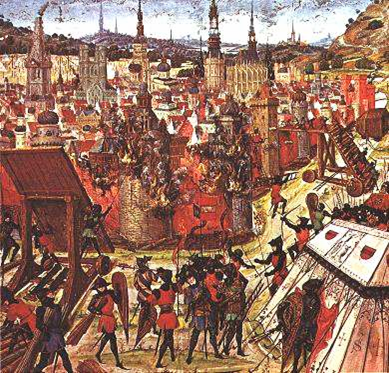
_ This song from the Carmina Burana celebrates the capture of Jerusalem from the Muslim Arabs by the Crusaders on 15 July 1099, which is illustrated in this picture from a medieval manuscript. This day was subsequently kept each year as a festival. The whole song is included as track 4 of the CD `Carmina Burana’ (volume 1) by the New London Consort and Philip Picket (L’Oiseau-Lyre, 417 373-2), which can be heard on-line at http://www.youtube.com/watch?v=-CWm0765jGA. In the lyrics given here medieval spellings (e.g. hec for haec) have been replaced by classical ones as these are more familiar to those learning the latter, even though the medieval orthography is a better representation of the later pronunciation. Macrons have similarly been added even though the old distinction between long and short vowels was lost at the beginning of the Middle Ages.
The most famous eyewitness description of the slaughter of the inhabitants of the city which followed the fall of Jerusalem can be read in the original Latin and in translation at the bottom of the page. Other accounts are available here in translation.
Nōmen ā solemnibus trahit Solemniacum; Solemniacum takes its names from ceremonies
solemnīzent igitur omnēs praeter monachum, so let all join the ceremonies except the monk
quī sibī virīlia resecāvit, Serracum; Serracus, who cut off his own male parts;
illum hinc excipimus quasi daemoniacum; let us exclude him from here as a devilish person;
ipse sōlus lūgeat reus apud Aeacum! let the guilty man lament alone before Aeacus!
Exultēmus et cantēmus canticum victōriae Let us rejoice and sing a song of victory
et clāmēmus quās dēbēmus laudēs rēgī glōriae, and shout the praises we owe to the king of glory,
quī salvāvit urbem Dāvīd ā pāgānīs hodiē! who saved the city of David from the pagans today!
Fēstum agitur, The festival is held,
diēs recolitur, the day is celebrated
in quā Dāgon frangitur, on which Dagon is shattered
et Amālec vincitur and Amalec is vanquished
nātus Āgar pellitur, the son of Hagar is driven off
Ierūsalem ēripitur Jerusalem is snatched away
et Christiānīs redditur; and restored to the Christians;
diem colāmus igitur! therefore let us celebrate the day!
Haec urbs nōbilissima prīma rēgem habuit, This most noble city had a king first
in hāc urbe maximā Dominō complacuit, in this greatest city the Lord took pleasure
in hāc propter hominem crucifīgi voluit in this he was willing to be crucified for mankind.
hīc super apostolōs Spīritus intonuit. here the Spirit thundered above the apostles.
Urbs īnsignis, ad quam ignis venit annīs singulīs, Renowned city to which fire comes each year,
quō mōnstrātur, quod amātur omnibus in saeculīs by which is shown that it is loved in all ages,
honōranda, frequentanda rēgibus et populīs! to be honoured, frequented by kings and peoples
Fēstum agitur etc. The festival is held etc.
Urbs sacrāta caelitus, adamāta superīs, City sanctified in heaven, loved by those above.
Lēgis tabernāculum, templum archae foederis, tabernacle of the Law, temple of the ark of the covenant
hospitāle pauperum et asȳlum miserīs! refuge of the poor and asylum for the wretched!
nōn timēbis aliquod, dum in eā mānseris. you will not fear anything whilst you remain in her.
Tantā lūcis clāritāte superātur sōl et lūna, By so bright a light is the sun outshone and the moon,
Tantā vīcit sanctitāte omnēs urbēs haec urbs ūna. by such sanctity this one city surpasses all cities.
Nōn ēlēgit frūstrā locum Gebusaeus Areūna Araunah the Jebusite did not choose the site in vain.
Fēstum agitur etc. The festival is held etc.
NOTES:
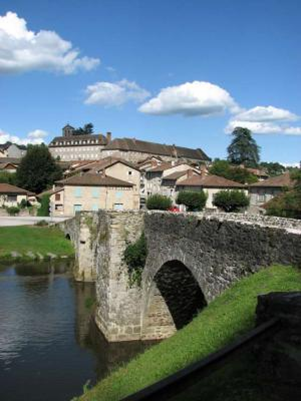
Solemniacum: probably not a variant of `Solyma’ (one of the names for Jerusalem itself) but rather the Benedictine abbey founded in 632 by St. Eloi at Solignac near Limoges in France(see the account in French at http://www.petit-patrimoine.com/fiche-petit-patrimoine.php?id_pp=87192_10 ). The picture shows the village with its 12th century bridge in the foreground. The name Solemniacum means `the domain of Solemnius' and refers presumably to a Gallo-Roman who owned the land and built a villa around which a village then grew up (this was a common development and explains why the word `village' itself derives ultimately from the Latin vīlla). The French website dates Solemnius's foundation to 28 B.C.
The most famous eyewitness description of the slaughter of the inhabitants of the city which followed the fall of Jerusalem can be read in the original Latin and in translation at the bottom of the page. Other accounts are available here in translation.
Nōmen ā solemnibus trahit Solemniacum; Solemniacum takes its names from ceremonies
solemnīzent igitur omnēs praeter monachum, so let all join the ceremonies except the monk
quī sibī virīlia resecāvit, Serracum; Serracus, who cut off his own male parts;
illum hinc excipimus quasi daemoniacum; let us exclude him from here as a devilish person;
ipse sōlus lūgeat reus apud Aeacum! let the guilty man lament alone before Aeacus!
Exultēmus et cantēmus canticum victōriae Let us rejoice and sing a song of victory
et clāmēmus quās dēbēmus laudēs rēgī glōriae, and shout the praises we owe to the king of glory,
quī salvāvit urbem Dāvīd ā pāgānīs hodiē! who saved the city of David from the pagans today!
Fēstum agitur, The festival is held,
diēs recolitur, the day is celebrated
in quā Dāgon frangitur, on which Dagon is shattered
et Amālec vincitur and Amalec is vanquished
nātus Āgar pellitur, the son of Hagar is driven off
Ierūsalem ēripitur Jerusalem is snatched away
et Christiānīs redditur; and restored to the Christians;
diem colāmus igitur! therefore let us celebrate the day!
Haec urbs nōbilissima prīma rēgem habuit, This most noble city had a king first
in hāc urbe maximā Dominō complacuit, in this greatest city the Lord took pleasure
in hāc propter hominem crucifīgi voluit in this he was willing to be crucified for mankind.
hīc super apostolōs Spīritus intonuit. here the Spirit thundered above the apostles.
Urbs īnsignis, ad quam ignis venit annīs singulīs, Renowned city to which fire comes each year,
quō mōnstrātur, quod amātur omnibus in saeculīs by which is shown that it is loved in all ages,
honōranda, frequentanda rēgibus et populīs! to be honoured, frequented by kings and peoples
Fēstum agitur etc. The festival is held etc.
Urbs sacrāta caelitus, adamāta superīs, City sanctified in heaven, loved by those above.
Lēgis tabernāculum, templum archae foederis, tabernacle of the Law, temple of the ark of the covenant
hospitāle pauperum et asȳlum miserīs! refuge of the poor and asylum for the wretched!
nōn timēbis aliquod, dum in eā mānseris. you will not fear anything whilst you remain in her.
Tantā lūcis clāritāte superātur sōl et lūna, By so bright a light is the sun outshone and the moon,
Tantā vīcit sanctitāte omnēs urbēs haec urbs ūna. by such sanctity this one city surpasses all cities.
Nōn ēlēgit frūstrā locum Gebusaeus Areūna Araunah the Jebusite did not choose the site in vain.
Fēstum agitur etc. The festival is held etc.
NOTES:
Solemniacum: probably not a variant of `Solyma’ (one of the names for Jerusalem itself) but rather the Benedictine abbey founded in 632 by St. Eloi at Solignac near Limoges in France(see the account in French at http://www.petit-patrimoine.com/fiche-petit-patrimoine.php?id_pp=87192_10 ). The picture shows the village with its 12th century bridge in the foreground. The name Solemniacum means `the domain of Solemnius' and refers presumably to a Gallo-Roman who owned the land and built a villa around which a village then grew up (this was a common development and explains why the word `village' itself derives ultimately from the Latin vīlla). The French website dates Solemnius's foundation to 28 B.C.
_ Dāgon; Dagon was the national god of the Philistines (非利士人), enemies of the Jewish people in the Bible; here the word refers to Muslims.
nātus Āgar: `son of (H)agar’; she was the concubine (妾) of Abraham (阿伯拉罕) and believed to be the ancestor of the Arabs.
Amālec: name of a Bedouin tribe which repeatedly fought the Jews in the Bible. According to the Book of Samuel, Saul, who defeated them at the beginning of his reign, lost God's favour because he failed to carry out fully the divine command to kill all of them together with their animals. This episode in the Old Testament was interpreted as providing justification for the slaughter of religious enemies in subsequent centuries.
Spiritus: i.e the Holy Spirit or Holy Ghost, who is supposed to have come down as tongues of fire over the heads of the apostles at Pentecost fifty days after Jesus ascended into Heaven
ignis venit annīs singulīs: a reference to the supposedly miraculous blue fire which usually appears to descend in the Church of the Holy Sepulchre on Holy Saturday (the day before Eastern Sunday) according to the Orthodox calendar. See the account in the Wikipedia article.
Areūna: more usually spelled `Araunah’, this refers to the man from whom David bought a threshing floor to set up an altar on the site where he founded the city of Jerusalem and where Solomon later built the temple. Gebusaeus is normally transliterated ` Jebusite’ in English and presumably refers to an ethnic group which lived in the Jerusalem area before the Jews conquered it.
nātus Āgar: `son of (H)agar’; she was the concubine (妾) of Abraham (阿伯拉罕) and believed to be the ancestor of the Arabs.
Amālec: name of a Bedouin tribe which repeatedly fought the Jews in the Bible. According to the Book of Samuel, Saul, who defeated them at the beginning of his reign, lost God's favour because he failed to carry out fully the divine command to kill all of them together with their animals. This episode in the Old Testament was interpreted as providing justification for the slaughter of religious enemies in subsequent centuries.
Spiritus: i.e the Holy Spirit or Holy Ghost, who is supposed to have come down as tongues of fire over the heads of the apostles at Pentecost fifty days after Jesus ascended into Heaven
ignis venit annīs singulīs: a reference to the supposedly miraculous blue fire which usually appears to descend in the Church of the Holy Sepulchre on Holy Saturday (the day before Eastern Sunday) according to the Orthodox calendar. See the account in the Wikipedia article.
Areūna: more usually spelled `Araunah’, this refers to the man from whom David bought a threshing floor to set up an altar on the site where he founded the city of Jerusalem and where Solomon later built the temple. Gebusaeus is normally transliterated ` Jebusite’ in English and presumably refers to an ethnic group which lived in the Jerusalem area before the Jews conquered it.
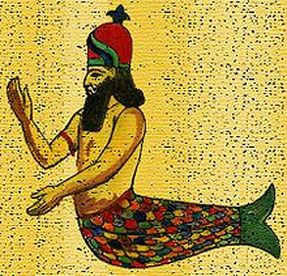
Dagon (from http://en.wikipedia.org/wiki/Dagon)
|
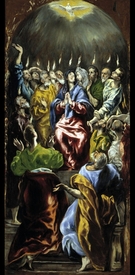
Pentecost as imagined by El Greco (1541-1614)
|
THE MASSACRE THAT FOLLOWED JERUSALEM'S FALL
"Alii namque illorum, quod levius erat, obtruncabantur capitibus, alii autem sagittati, de turribus saltare cogebantur; alii
vero diutissime torti, et ignibus adusti flammeriebantur. Videbantur per vicos et plateas civitatis aggeres capitum, et
manuum atque pedum. Per cadavera vero publice, hominum et equitum discursus erat. Sed parva et pauca ista quae
diximus. Sed ad Templum Salomonis veniamus, ubi suos ritus atque solemnitates cantare solebant. Sed quid ibi factum est?
Si verum dicimus, fidem excedimus.Sed tantum hoc dixisse sufficiat quod in templo et in porticu Salomonis, equitabatur in sanguine usque ad genua, et usque ad frenos equorum iusto miroque Dei iudicio, ut locus idem eorum sanguinem exciperet, quorum blasphemias in Deum tam longo tempore pertulerat. Repleta itaque cadaveribus et sanguine civitate, confugerunt aliquanti ad turrem David, et poposcerunt a comite Raimundo securitatis dextram, et reddiderunt ei arcem."
(Raimundus De Agiles, Historia Francorum Qui Ceperunt Ierusalem , Caput XXXVIII)
“ Some of our men (and this was more merciful) cut off the heads of their enemies; others shot them with arrows, so that they fell from the towers; others tortured them longer by casting them into the flames. Piles of heads, hands and feet were to be seen in the streets of the city. It was necessary to pick one's way over the bodies of men and horses. But these were small matters compared to what happened at the Temple of Solomon, a place where religious services are normally chanted ... in the temple and the porch of Solomon, men rode in blood up to their knees and bridle reins. Indeed it was a just and splendid judgment of God that this place should be filled with the blood of unbelievers since it had suffered so long from their blasphemies. So with the city filled with bodies and blood, some fled to the Tower of David, asked Count Raimond for a guarantee of their safety and then surrendered the citadel to him.' ”
(Translation from C. Krey, The First Crusade: The Accounts of Eyewitnesses and Participants, (Princeton: 1921), p257-62. The full extract is available on the `Medieval Sourcebook’ site)
