| linguae |
|
QUESTIONS ARISING FROM 151st. MEETING – 27/10/23
(the record of earlier meetings can be downloaded from the main Circulus page as can the version of Ciceronis Filius with illustrations added. The illustrated text of Genesis is available on the Genesis page, of Kepler's Somnium on the Somnium page, of Eutropius' Breviarium on the Eutropius page, of Suetonius' Vita Neronis on the Suetonius page and of Nutting's Ad Alpes on the Ad Alpes page)
We ordered the usual selection of food and drink at the Basmati and after dinner read the remainder of the John Rykener document and then chapters 23 and 24 and part of 25 (to mīlitēsque sē triumphī eius clāmitantibus) in Suetonius, Vīta Nerōnis (see texts below).
Pat’s latest project is a volme of his collected papers to which he is now making amendments at a reviewer’s request. Although his published work has largely been on Hong Kong, he started his academic career as a medievalist with a PhD thesis on the development of the parish in Hampshire particularly in 11th. and 12th. centuries. He completed the research whilst still in England, but only did the writing up after his arrival in Hong Kong in 1972. The Cambridge University thesis can be freely downloaded fom https://www.repository.cam.ac.uk/items/e1ec96b8-4bf9-43b2-924a-fd9eb1c98f05
Pat’s latest project is a volme of his collected papers to which he is now making amendments at a reviewer’s request. Although his published work has largely been on Hong Kong, he started his academic career as a medievalist with a PhD thesis on the development of the parish in Hampshire particularly in 11th. and 12th. centuries. He completed the research whilst still in England, but only did the writing up after his arrival in Hong Kong in 1972. The Cambridge University thesis can be freely downloaded fom https://www.repository.cam.ac.uk/items/e1ec96b8-4bf9-43b2-924a-fd9eb1c98f05
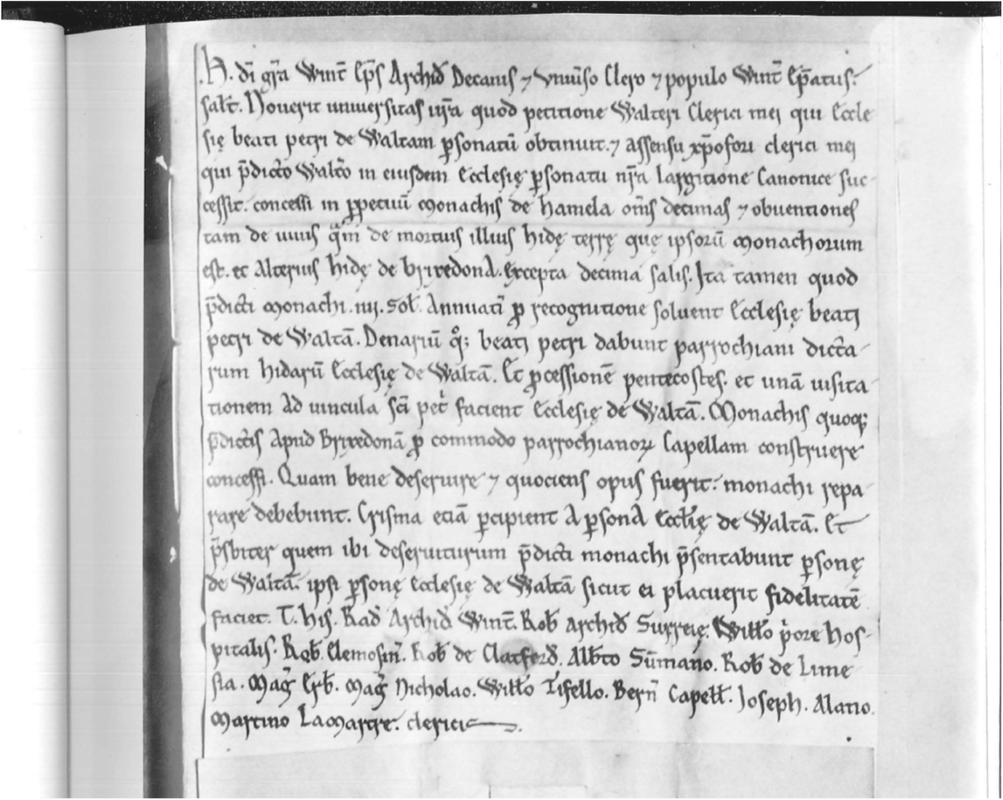
Bishop Henry de Blois of Winchester's confirmation of arrangements for the establishment of Bursledon church (last quarter of 12th century) – frontpiece of Pat’s thesis
Pat and John again discussed the question of whether Germanic speakers were already estabished in Britain before the Roman period. Pat believes there is no way of resolving the question of the language spoken in Britain by the Belgae, a tribe of the same name as one in Gaul which Caesar tells us had originally come from Germany. There are no Celtic inscriptions in Eastern England, a fact cited by proponents of the early arrival of Germanic in England, but there are no Roman-era Germanic inscriptions there either and the known names of chieftains in groups that are sometimes claimed to be Germanic are generally Celtic.
The main reason for the uncertainty is that the Romans generally had little interest in `barbarian’ languages and so Caesar gives very few linguistic details in his account of the germans. Thee is, hoever, the tantalising claim by Tacitus in his Germania that the Aesti, a tribe living on the east coast of the Baltic sea, were similar to the suines (the Swedes) in thei customs but to the Britons in language (https://en.wikipedia.org/wiki/Aesti). It is l;ikely, however, that the Aesti, from whom the name Estonia is derived, were speakers of a Baltic language rather than a Germanic language and that a Roman traveller who had visited both the Baltic region and Britain thought he noticed some coincidental similarities,.
Among the best-known inscriptions of Roman Britain are the curse tablets deposited in the sacred spring at Bath in SW England in the hope that the goddess Sulis –Sulis Minerva, as the Romans renamed her – would punish a personal enemy. Like the famous `Vilbia’ tablet in book II of the Cambridge Latin Course, these are almost all in Latin but one at least does appear to be in Celtic as does a fragment of a prayer from the same source. See the account at https://www.academia.edu/35977863/The_Celtic_inscriptions_of_Bath and https://www.academia.edu/2567392/Evidence_for_written_Celtic_from_Roman_Britain_a_linguistic_analysis_of_Tabellae_Sulis_14_and_18
As a medievalist, Pat offered a number of comments on the Rykener text. He correctly pointed out that stallum referred to a market stall rather than a manger; John had misinterpreted the word by wrongly taking complendum as referring to the stall being filled with hay rather than to the completion of the sex act! He also suggested that in the clearly ungrammatical phrase prō separātī examinātiōne correction should be to the adverb separātim rather than the feminine ablative singular adjective separātā, that item was best translated `furthermore’ rather than `likewise’ and that
fatēbātur meant `affirmed’ rather than `said. He explained also that a tapster was so called from his task of opening and closing the tap on a barrel.
Pat made two other less credible suggestions. He thought that `Fressh`, the surname of the mayor of London, should probably be `French,’ but later investigation revealed the name was usually spelled `Fresshe’, with `Frossh’, `Fresche’, `Froysh’ or `Frosh’ as variants (see the article at https://en.wikipedia.org/wiki/John_Fresshe)! Pat also believed that the preposition cōram should take the genitive rather than the ablative used in the document. Classical usage in fact allowed both cases but with the ablative more common (see Lewis & Short s.v.)
The Rykener text is unusual in that, until the Buggery Act of 1533, homosexual acts would normally have been prosecuted in the church courts rather than by the civil power. Medieval legal treatises suggest that such acts carried the death penalty but the evidence suggests action was rarely taken against them and the prescription of draconian punishment was probably menat just as a statement of moral proinciple rather than intended for implementation. The situation may have been parallel to that in prexent day Singapore where the government retains the legal prohibition of gay sex but does not actually impement it.
Pat and John again discussed the question of whether Germanic speakers were already estabished in Britain before the Roman period. Pat believes there is no way of resolving the question of the language spoken in Britain by the Belgae, a tribe of the same name as one in Gaul which Caesar tells us had originally come from Germany. There are no Celtic inscriptions in Eastern England, a fact cited by proponents of the early arrival of Germanic in England, but there are no Roman-era Germanic inscriptions there either and the known names of chieftains in groups that are sometimes claimed to be Germanic are generally Celtic.
The main reason for the uncertainty is that the Romans generally had little interest in `barbarian’ languages and so Caesar gives very few linguistic details in his account of the germans. Thee is, hoever, the tantalising claim by Tacitus in his Germania that the Aesti, a tribe living on the east coast of the Baltic sea, were similar to the suines (the Swedes) in thei customs but to the Britons in language (https://en.wikipedia.org/wiki/Aesti). It is l;ikely, however, that the Aesti, from whom the name Estonia is derived, were speakers of a Baltic language rather than a Germanic language and that a Roman traveller who had visited both the Baltic region and Britain thought he noticed some coincidental similarities,.
Among the best-known inscriptions of Roman Britain are the curse tablets deposited in the sacred spring at Bath in SW England in the hope that the goddess Sulis –Sulis Minerva, as the Romans renamed her – would punish a personal enemy. Like the famous `Vilbia’ tablet in book II of the Cambridge Latin Course, these are almost all in Latin but one at least does appear to be in Celtic as does a fragment of a prayer from the same source. See the account at https://www.academia.edu/35977863/The_Celtic_inscriptions_of_Bath and https://www.academia.edu/2567392/Evidence_for_written_Celtic_from_Roman_Britain_a_linguistic_analysis_of_Tabellae_Sulis_14_and_18
As a medievalist, Pat offered a number of comments on the Rykener text. He correctly pointed out that stallum referred to a market stall rather than a manger; John had misinterpreted the word by wrongly taking complendum as referring to the stall being filled with hay rather than to the completion of the sex act! He also suggested that in the clearly ungrammatical phrase prō separātī examinātiōne correction should be to the adverb separātim rather than the feminine ablative singular adjective separātā, that item was best translated `furthermore’ rather than `likewise’ and that
fatēbātur meant `affirmed’ rather than `said. He explained also that a tapster was so called from his task of opening and closing the tap on a barrel.
Pat made two other less credible suggestions. He thought that `Fressh`, the surname of the mayor of London, should probably be `French,’ but later investigation revealed the name was usually spelled `Fresshe’, with `Frossh’, `Fresche’, `Froysh’ or `Frosh’ as variants (see the article at https://en.wikipedia.org/wiki/John_Fresshe)! Pat also believed that the preposition cōram should take the genitive rather than the ablative used in the document. Classical usage in fact allowed both cases but with the ablative more common (see Lewis & Short s.v.)
The Rykener text is unusual in that, until the Buggery Act of 1533, homosexual acts would normally have been prosecuted in the church courts rather than by the civil power. Medieval legal treatises suggest that such acts carried the death penalty but the evidence suggests action was rarely taken against them and the prescription of draconian punishment was probably menat just as a statement of moral proinciple rather than intended for implementation. The situation may have been parallel to that in prexent day Singapore where the government retains the legal prohibition of gay sex but does not actually impement it.
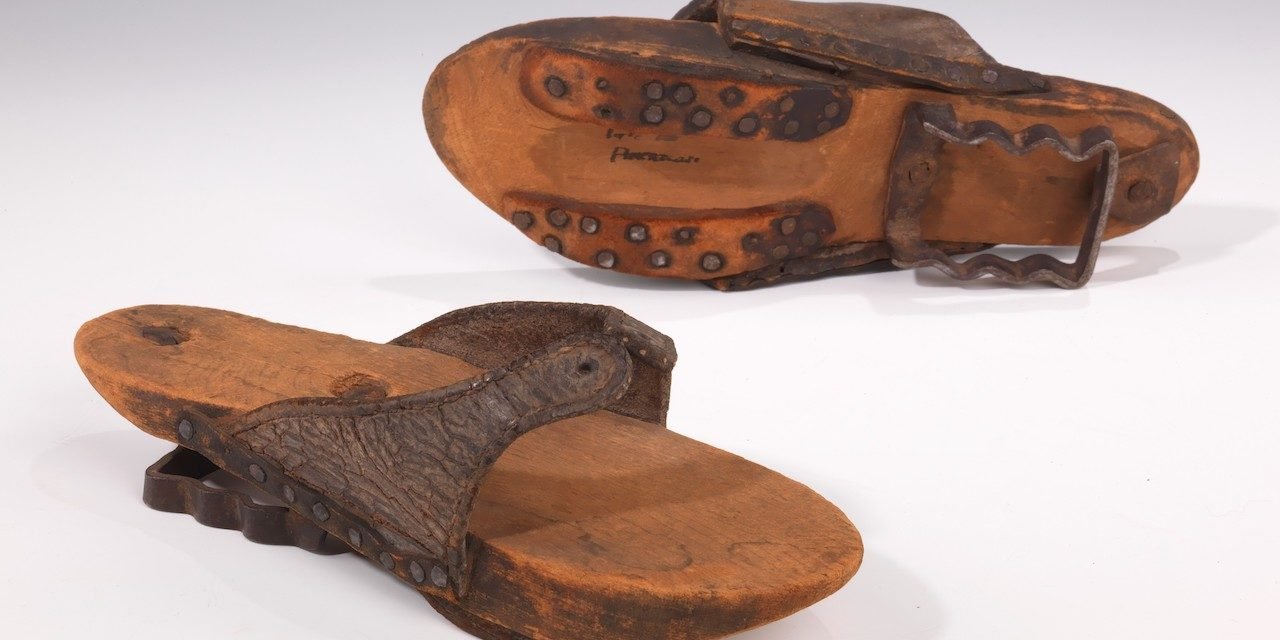
A pair of pattens
https://www.stmargaretpattens.org/the-guild-of-pattenmakers
We also discussed whether the surname of Chris Patten, Hong Kong’s last colonial governor, was connected with the word `patten’ (spelled `patyn’ in the document). This was a kind of under-shoe worn to protect normal shoes from the filth on medieval streets or to make women appear taller.
The entry at https://www.surnamedb.com/Surname/Patten mentions only a placename and `Pat[ricius] as possible origins though the clog is mentioned elsewhere on the Internet as another possibility (see https://www.igenea.com/en/surnames/p/patten ) The word patten itself derives from Old French patin (`clog, type of shoe’) and this probably comes from `from Gallo-Roman *pauta, ultimately perhaps imitative of the sound made by a paw.’ (Etymonline, s.v.).
We relied further on Pat for an account of the various orders of friars who played an important role in the Middle Ages and were often referred to colloquially by the colour of their garments. They should be distinguished from monks in the strict sense as the latter lived in cloistered communities while the fiars moved among the general population and supported themselves by begging. Their foundation was in part a reaction against the tendency of existing monasteries, often large landowners, to move away from their original principles of poverty and asceticism. The Carmelites (`White Friars’) were properly established by Simon Stock in the mid-13th century but their origin, as hermits living on or near Mt.Carmel in the Crusader States of Palestine, was probably some time in the 12th century (see https://en.wikipedia.org/wiki/Carmelites). The Franciscans or `Grey Friars’, known officially as Fratres Minores (`Friars Minor’) were founded by St. Francis of Assisis in the early 13th century and tended to set themselves up in city centres to be near to the poor they served (for their complicated internal strcture see https://en.wikipedia.org/wiki/Franciscans). Richard III, whose remains were discovered in 2012 and subsequently moved to Leicester Cathedral, was originally buried in a Fanciscan Priory demolished after Henry VIII’s dissolution of the monasteries (https://en.wikipedia.org/wiki/Exhumation_and_reburial_of_Richard_III_of_England).
https://www.stmargaretpattens.org/the-guild-of-pattenmakers
We also discussed whether the surname of Chris Patten, Hong Kong’s last colonial governor, was connected with the word `patten’ (spelled `patyn’ in the document). This was a kind of under-shoe worn to protect normal shoes from the filth on medieval streets or to make women appear taller.
The entry at https://www.surnamedb.com/Surname/Patten mentions only a placename and `Pat[ricius] as possible origins though the clog is mentioned elsewhere on the Internet as another possibility (see https://www.igenea.com/en/surnames/p/patten ) The word patten itself derives from Old French patin (`clog, type of shoe’) and this probably comes from `from Gallo-Roman *pauta, ultimately perhaps imitative of the sound made by a paw.’ (Etymonline, s.v.).
We relied further on Pat for an account of the various orders of friars who played an important role in the Middle Ages and were often referred to colloquially by the colour of their garments. They should be distinguished from monks in the strict sense as the latter lived in cloistered communities while the fiars moved among the general population and supported themselves by begging. Their foundation was in part a reaction against the tendency of existing monasteries, often large landowners, to move away from their original principles of poverty and asceticism. The Carmelites (`White Friars’) were properly established by Simon Stock in the mid-13th century but their origin, as hermits living on or near Mt.Carmel in the Crusader States of Palestine, was probably some time in the 12th century (see https://en.wikipedia.org/wiki/Carmelites). The Franciscans or `Grey Friars’, known officially as Fratres Minores (`Friars Minor’) were founded by St. Francis of Assisis in the early 13th century and tended to set themselves up in city centres to be near to the poor they served (for their complicated internal strcture see https://en.wikipedia.org/wiki/Franciscans). Richard III, whose remains were discovered in 2012 and subsequently moved to Leicester Cathedral, was originally buried in a Fanciscan Priory demolished after Henry VIII’s dissolution of the monasteries (https://en.wikipedia.org/wiki/Exhumation_and_reburial_of_Richard_III_of_England).
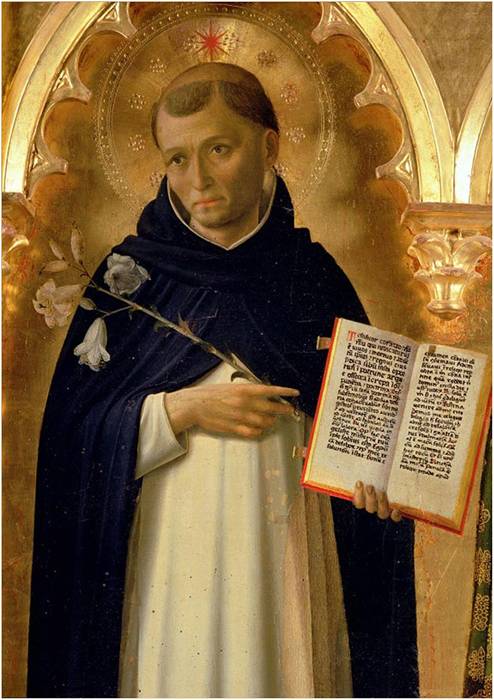
St. Dominic (1170-1221), founder of the Domincan order, depicted in the Perugia altarpiece (1437 or 1438)
https://en.wikipedia.org/wiki/Dominican_Order#/media/File:The_Perugia_Altarpiece,_Side_Panel_Depicting_St._Dominic.jpg
The Dominicans (`Black Friars’) were founded by the Spanish St. Dominic and formally approved by the pope in 1216. Their official name is Ordo Praedicatorum (`Order of Preachers), with the abbreviation `OP’ added when members are formally referred to.
Pat also mentioned two other lesser-known orders. The `Sack Friars’, officially Order of the Penitence of Jesus Christ, distinguished by their sackcloth of faded blue, were founded around 1200 but their houses outside Italy were officially suppressed by Pope Gregory X in 1274. They were nevertheless allowed to continue operating in England, some commmunuities surviving till dissolution of the monasteries. See https://en.wikipedia.org/wiki/Brothers_of_Penitence. The `Crutched Friars’, named for the staff surmounted by a cross which they regularly carried, the order featured in the novel Name of the Rose and officially known as Canons Regular of the Order of the Holy Cross (see https://en.wikipedia.org/wiki/Canons_Regular_of_the_Order_of_the_Holy_Cross and https://en.wikipedia.org/wiki/Crutched_Friars# ) were established in 1211. They are commemorated by the street still named `Crutchfriars’ in the City of London.
https://en.wikipedia.org/wiki/Dominican_Order#/media/File:The_Perugia_Altarpiece,_Side_Panel_Depicting_St._Dominic.jpg
The Dominicans (`Black Friars’) were founded by the Spanish St. Dominic and formally approved by the pope in 1216. Their official name is Ordo Praedicatorum (`Order of Preachers), with the abbreviation `OP’ added when members are formally referred to.
Pat also mentioned two other lesser-known orders. The `Sack Friars’, officially Order of the Penitence of Jesus Christ, distinguished by their sackcloth of faded blue, were founded around 1200 but their houses outside Italy were officially suppressed by Pope Gregory X in 1274. They were nevertheless allowed to continue operating in England, some commmunuities surviving till dissolution of the monasteries. See https://en.wikipedia.org/wiki/Brothers_of_Penitence. The `Crutched Friars’, named for the staff surmounted by a cross which they regularly carried, the order featured in the novel Name of the Rose and officially known as Canons Regular of the Order of the Holy Cross (see https://en.wikipedia.org/wiki/Canons_Regular_of_the_Order_of_the_Holy_Cross and https://en.wikipedia.org/wiki/Crutched_Friars# ) were established in 1211. They are commemorated by the street still named `Crutchfriars’ in the City of London.
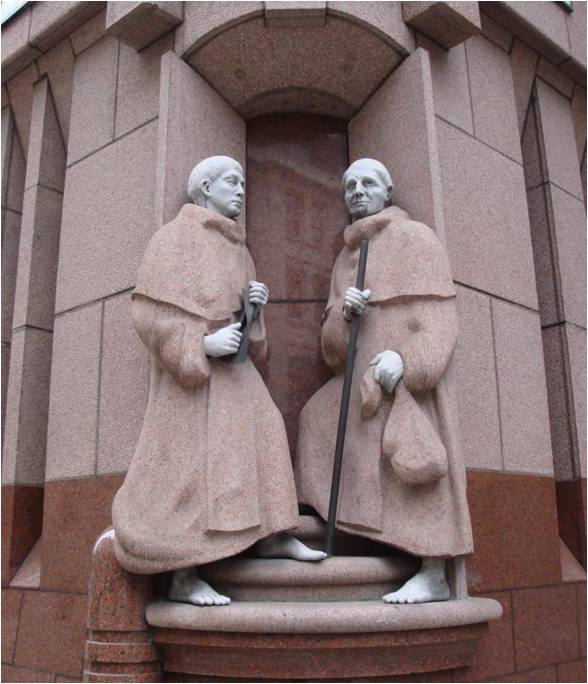
Statue adorning the Commercial Union Assurance building on Crutchfriars, London EC2 but with no crucifix on the staff!
https://en.wikipedia.org/wiki/Crutched_Friars#/media/File:Statue_Of_'Two_Crutched_Friars'.jpg
Returning to the present day, Pat noted that a priest at his own church in the UK was from Malabar, the SW coastal region of India, comprising the modern state of Kerala and part of Karnataka. Local tradition holds that Thomas the Apostle arrived here in the 1st century to evangelize the region (see the discussion at https://en.wikipedia.org/wiki/Thomas_the_Apostle.) Catholics in Malabar itself use a combination of the local Malayalam language and Aramaic, the native tongue of Jesus, in their liturgy,
Returning to the present day, Pat noted that a priest at his own church in the UK was from Malabar, the SW coastal region of India, comprising the modern state of Kerala and part of Karnataka. Local tradition holds that Thomas the Apostle arrived here in the 1st century to evangelize the region (see the discussion at https://en.wikipedia.org/wiki/Thomas_the_Apostle.) Catholics in Malabar itself use a combination of the local Malayalam language and Aramaic, the native tongue of Jesus, in their liturgy,
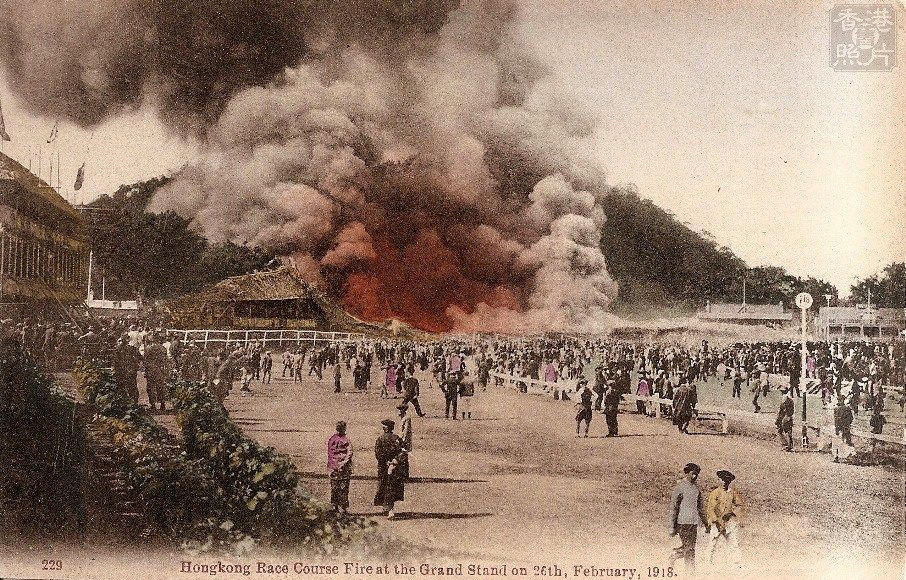
Happy Valley Race Course Fire, 26 February 1918
racecourse fire - Search Images (bing.com)
There was discussion of the name `Happy Valley’, which John noted had been ironically bestowed on the area because of the prevalence there of malaria and of cemeteries. Pat said that the name dated from the 1840s, the first decade of British occupation, The area was originally chosen as the site for the central administration of the island because, it had the largest area of flat ground. Tthis planwas abandoned because of malaria, but the problem was finally remedied by taking over some farm land and building a water channel (along the line of what is now Canal Street) to drain the area, which was was then used for sporting activities, most notably horse racing.
The disastrous Race Course Fire of 1918, which started when wooden stands were set ablaze by people cooking rice below them, killed 614 people and tnhe names of the Chinese vctims are recorded on the Race Course Fire Memorial, just to the left of Hong Kong Stadium. The tragic event is also commemorated by an annual ceremony held by the Tung Wah hospital group, who also maintain the Memorial. .
racecourse fire - Search Images (bing.com)
There was discussion of the name `Happy Valley’, which John noted had been ironically bestowed on the area because of the prevalence there of malaria and of cemeteries. Pat said that the name dated from the 1840s, the first decade of British occupation, The area was originally chosen as the site for the central administration of the island because, it had the largest area of flat ground. Tthis planwas abandoned because of malaria, but the problem was finally remedied by taking over some farm land and building a water channel (along the line of what is now Canal Street) to drain the area, which was was then used for sporting activities, most notably horse racing.
The disastrous Race Course Fire of 1918, which started when wooden stands were set ablaze by people cooking rice below them, killed 614 people and tnhe names of the Chinese vctims are recorded on the Race Course Fire Memorial, just to the left of Hong Kong Stadium. The tragic event is also commemorated by an annual ceremony held by the Tung Wah hospital group, who also maintain the Memorial. .
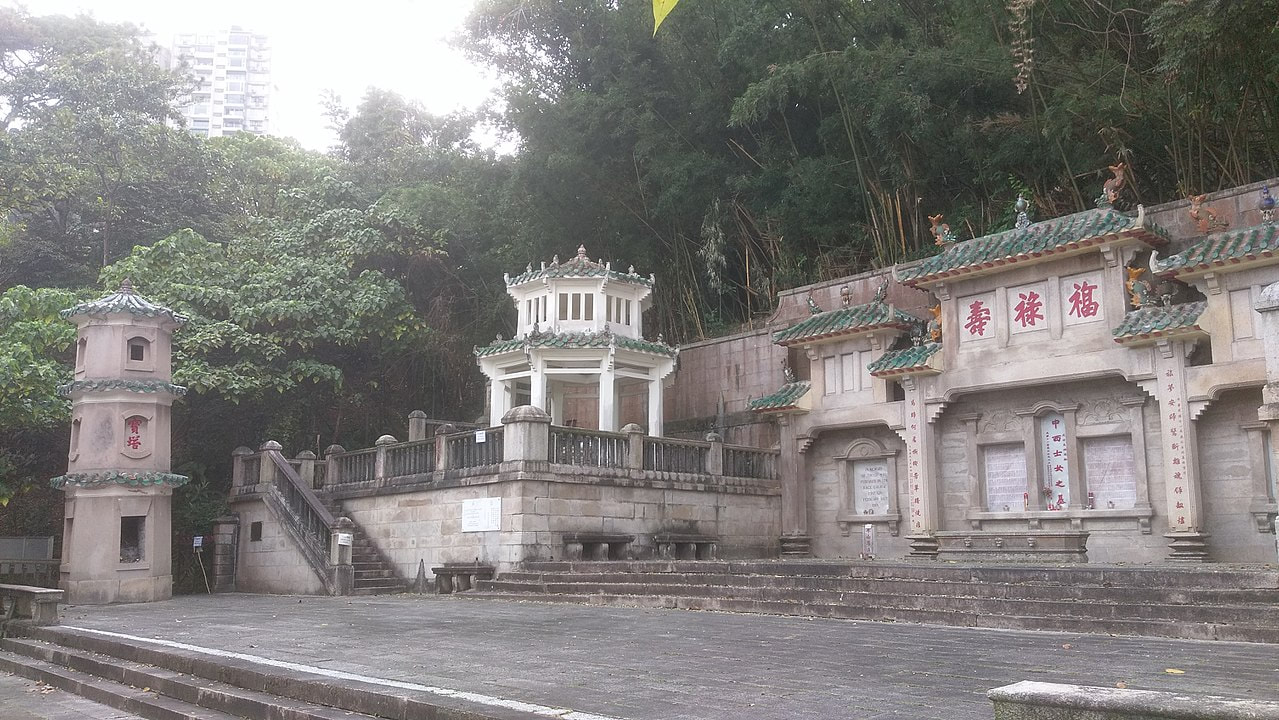
The Race Course Fire Memorial in Happy Valley
File:Hong Kong Race Course Fire Memorial.jpg - Wikimedia Commons
Pat also noted that Tung Wah, established 1870, provided both Western and Chinese medicine. Western sources later blamed them for the spread of plague later in the 19th century, arguing that their Chinese remedies were ineffective. This led the organisation to destroy many of their early records.
On the Roman side, we touched again on the topic of dressing for dinner. Modern pictures of fomal Roman meal normally show men reclinging in their togas but it is likely they more usually wore a garment called a cēnatōria, roughly resembling a modern dressing-gown. Pat also remarked that Highland Scots at one time wore a toga-like garment.
Suetonius mentions Nero and, before him, Mithridates, King of Pontus in the 1st cent. B.C., as driving 10-horse chariots, something which Kobe believed would make the horses go crazy. John suggested that it might be feasible if the horses were arranged in sets of three or four rather than with ten side-by-side. Another arrangement, seen sometimes with carriages in later periods, would have the horses arranged in pairs. One 19th century textbook on Roman history does purport to show the emperor Trajan in a chariot pulled by ten horses in a row, with five apparently ready to pull the chariot in one direction and five in another! The illustration is claimed to be based on a Roman coin but none of the coins surviving from Trajan’s reign have this design.
At the Circus Maximus, teams of four horses (quadrīgae) were used,with the central two actually pulling the chariot and the outer two (the fūnālēs ) setting the pace. The left-hand fūnālis had the vital job of controlling the turn around the spīna or central reservation.for fuller details of the races and their social context see https://mariamilani.com/ancient_rome/ancient_roman_chariot_races.htm
File:Hong Kong Race Course Fire Memorial.jpg - Wikimedia Commons
Pat also noted that Tung Wah, established 1870, provided both Western and Chinese medicine. Western sources later blamed them for the spread of plague later in the 19th century, arguing that their Chinese remedies were ineffective. This led the organisation to destroy many of their early records.
On the Roman side, we touched again on the topic of dressing for dinner. Modern pictures of fomal Roman meal normally show men reclinging in their togas but it is likely they more usually wore a garment called a cēnatōria, roughly resembling a modern dressing-gown. Pat also remarked that Highland Scots at one time wore a toga-like garment.
Suetonius mentions Nero and, before him, Mithridates, King of Pontus in the 1st cent. B.C., as driving 10-horse chariots, something which Kobe believed would make the horses go crazy. John suggested that it might be feasible if the horses were arranged in sets of three or four rather than with ten side-by-side. Another arrangement, seen sometimes with carriages in later periods, would have the horses arranged in pairs. One 19th century textbook on Roman history does purport to show the emperor Trajan in a chariot pulled by ten horses in a row, with five apparently ready to pull the chariot in one direction and five in another! The illustration is claimed to be based on a Roman coin but none of the coins surviving from Trajan’s reign have this design.
At the Circus Maximus, teams of four horses (quadrīgae) were used,with the central two actually pulling the chariot and the outer two (the fūnālēs ) setting the pace. The left-hand fūnālis had the vital job of controlling the turn around the spīna or central reservation.for fuller details of the races and their social context see https://mariamilani.com/ancient_rome/ancient_roman_chariot_races.htm
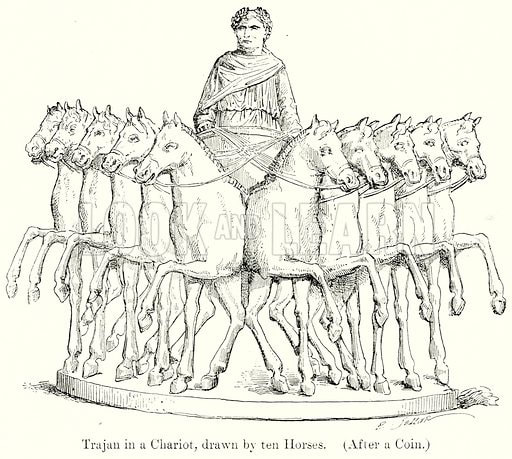
Illustration from History of Rome by Victor Duruy (Kegan Paul, Trench & Co, 1884).
Supposedly based on a Roman coin
https://www.lookandlearn.com/history-images/M074919/Trajan-in-a-Chariot-Drawn-by-Ten-Horses
When Jesse was translating nē sīc quidem sine sollicitūdine, taciturnitātem pudōremque quōrundam prō trīstitiā et malignitāte arguēns suspectōsque sibi dīcēns (`not even thus being free of worry and interpreting the reticence of certain people as unhappiness and ill will and telling himself they were suspicious characters’) in chapter 24 of Suetonius, John mistakenly took the words for a purpose clause. In fact it means simply that even when reassured about his chances in the contest, he remained full of anxiety,
Supposedly based on a Roman coin
https://www.lookandlearn.com/history-images/M074919/Trajan-in-a-Chariot-Drawn-by-Ten-Horses
When Jesse was translating nē sīc quidem sine sollicitūdine, taciturnitātem pudōremque quōrundam prō trīstitiā et malignitāte arguēns suspectōsque sibi dīcēns (`not even thus being free of worry and interpreting the reticence of certain people as unhappiness and ill will and telling himself they were suspicious characters’) in chapter 24 of Suetonius, John mistakenly took the words for a purpose clause. In fact it means simply that even when reassured about his chances in the contest, he remained full of anxiety,
Interrogation of John Rykener (part II)
Item fatēbātur prefātus Jōhannēs
likewise said afore-mentioned John
Rykener quod ipse diē vēnerīs proximō ante fēstum sānctī Michaēlis suprādictum vēnit apud
Rykener that he on-Friday last before feast of-Saint Michael aforementioned came to
Burford[1] in cōmitāte Oxōnium. Et ibīdem fuit commorāns cum quōdam Jōhanne clerc[2] atte
Burford in county [of-]Oxford and in-same-place was dwelling with a-certain John cleric at- the
Swan[3] in officiō dē tapster per sex septimānās proximās sequentēs, īnfrā quod tempus duo
Swan in capacity of barman for six weeks next following within which time two
frātrēs minōrēs,[4] quōrum ūnus nōminātur frāter Michaēl et alius frāter Jōhannēs Barry, quī
Friars Minor of-whom one is-called Brothe r Michael and the-other Brother John Barry who
sibi dedit ūnum ānulum aureum, et ūnus frāter carmelītus[5] et sex dīversī hominēs extrāneī
to-him gave one ring gold and one friar Carmelite and six various men foreign
commīsērunt cum illō vitium antedictum. Quōrum quidem frātrum et hominum supradictōrum
committed with-him vice aforesaid of-these indeed friars and men above-mentioned
quīdam dabat dictō Jōhannī Rykener .xiī. d, quīdam .xx. d, quīdam .iī. s.[6]
one gave said John Rykener 12 pence one 22 pence one 2 shillings
Item fatēbātur īdem Jōhannēs Rykener quod fuit apud Bekenesfeld[7] et ibīdem īdem
Likewise said same John Rykener that he-was at Beaconsfield ant in-same-place same-person
ut vir concubuit cum quādam Johanna fīliā Jōhannis Mathew, et etiam ibīdem cum ipsō
as man lay-down with a-certain Joanna daughter of-John Mathew and also in-same-place with him
concubuērunt ut cum fēminā duo frātrēs minōrēs aliēnigenae. Item fatēbātur dictus Jōhannēs
lay-down as with woman two friars mnor foreign likewise confessed the-said John
Rykener quod post eius ultimum adventum Londōniae quīdam dominus Jōhannēs quondam
Rykener that after his last arrival in-London a-certain Sir John once
capellānus ecclēsiae sānctae Margarētae Patyns[8] et aliī duo capellānī in venellīs retrō
chaplain of-church of-Saint Margaret Pattens and other two chaplains in lains behind
ecclēsiam sānctae Katerīnae iuxtā turrim Londoniensem commīsērunt cum illō illud vitium
church of-Saint Katherine next-to Tower of-London committed with him that vice
NOTES
[1] A picturesque market town in the Cotswolds, 20 miles west of Oxford. For more information see the 10-minute video at https://www.youtube.com/watch?v=Kob2YEgI7aM
[2] The word `clerk’ (old English clerc), derived from Latin clēricus (clergyman) but from around 1200 came increasingly to mean any educated person. The original document has `clerc’ rather than `Clerc’ so is probably used to refer to the man’s profession rather than as a surname.
[3] The name of the inn where Rykener worked as a tapster (drawer of liquids), presumably the equivalent of a modern barman. The phrase `atte Swan’ is an abbreviation of `at the sign of the Swan’
[4] Ordō Frātrum Minōrum (`Order of Lesser Brothers’) is the official name of the Franciscan monastic order established by St. Francis of Assisi.
[5] The origin of the Carmelites, formally known in Latin as `Ordo Fratrum Beatissimæ Virginis Mariæ de Monte Carmelo’, is unclear, but they were probably formed on Mt. Carmel in Palestine in the 12th century during the Crusades
[6] `s’ and `d’ (from Latin denārius and solidus) were the standard abbreviations for `shilling’ and `pence’, traditional divisions of the pound sterling before decimalization in 1970. There were 20 shillings in a pound and 12 pence in a shilling. On one estate around 1380, one penny was the average cost of feeding a groom for a day (see http://medieval.ucdavis.edu/120D/Money.html)
[7] Beaconsfield is a market town in Buckinghamshire 23 miles NW of London. In a 2008 survey it emerged as the richest town in Britain, if measured by property values but the name is perhaps best known for the connection to the 19th century prime minister, Benjamin Disraeli, who represented it in parliament and later became 1st Earl of Beaconsfield. The town is also the burial site of Edmund Burke and the poet G,K. Chesterton. See https://en.wikipedia.org/wiki/Beaconsfield
[8] St. Margaret Pattens, just to the NW of the Tower of London, was built by Christopher Wren after the Great Fire of London, to replace an earlier building. The company, now a charity, was originally an association for makers of pattens, undershoes of wood and metal strapped beneath the wearer’s leather shoes to protect them from the filth ton London streets (see the illustration below). St. Katherine Cree, just to the north, is another Guild Church, dating from the early 17th century. Purcell and Handel were both organists at the church. See https://en.wikipedia.org/wiki/St_Katharine_Cree
Item fatēbātur prefātus Jōhannēs
likewise said afore-mentioned John
Rykener quod ipse diē vēnerīs proximō ante fēstum sānctī Michaēlis suprādictum vēnit apud
Rykener that he on-Friday last before feast of-Saint Michael aforementioned came to
Burford[1] in cōmitāte Oxōnium. Et ibīdem fuit commorāns cum quōdam Jōhanne clerc[2] atte
Burford in county [of-]Oxford and in-same-place was dwelling with a-certain John cleric at- the
Swan[3] in officiō dē tapster per sex septimānās proximās sequentēs, īnfrā quod tempus duo
Swan in capacity of barman for six weeks next following within which time two
frātrēs minōrēs,[4] quōrum ūnus nōminātur frāter Michaēl et alius frāter Jōhannēs Barry, quī
Friars Minor of-whom one is-called Brothe r Michael and the-other Brother John Barry who
sibi dedit ūnum ānulum aureum, et ūnus frāter carmelītus[5] et sex dīversī hominēs extrāneī
to-him gave one ring gold and one friar Carmelite and six various men foreign
commīsērunt cum illō vitium antedictum. Quōrum quidem frātrum et hominum supradictōrum
committed with-him vice aforesaid of-these indeed friars and men above-mentioned
quīdam dabat dictō Jōhannī Rykener .xiī. d, quīdam .xx. d, quīdam .iī. s.[6]
one gave said John Rykener 12 pence one 22 pence one 2 shillings
Item fatēbātur īdem Jōhannēs Rykener quod fuit apud Bekenesfeld[7] et ibīdem īdem
Likewise said same John Rykener that he-was at Beaconsfield ant in-same-place same-person
ut vir concubuit cum quādam Johanna fīliā Jōhannis Mathew, et etiam ibīdem cum ipsō
as man lay-down with a-certain Joanna daughter of-John Mathew and also in-same-place with him
concubuērunt ut cum fēminā duo frātrēs minōrēs aliēnigenae. Item fatēbātur dictus Jōhannēs
lay-down as with woman two friars mnor foreign likewise confessed the-said John
Rykener quod post eius ultimum adventum Londōniae quīdam dominus Jōhannēs quondam
Rykener that after his last arrival in-London a-certain Sir John once
capellānus ecclēsiae sānctae Margarētae Patyns[8] et aliī duo capellānī in venellīs retrō
chaplain of-church of-Saint Margaret Pattens and other two chaplains in lains behind
ecclēsiam sānctae Katerīnae iuxtā turrim Londoniensem commīsērunt cum illō illud vitium
church of-Saint Katherine next-to Tower of-London committed with him that vice
NOTES
[1] A picturesque market town in the Cotswolds, 20 miles west of Oxford. For more information see the 10-minute video at https://www.youtube.com/watch?v=Kob2YEgI7aM
[2] The word `clerk’ (old English clerc), derived from Latin clēricus (clergyman) but from around 1200 came increasingly to mean any educated person. The original document has `clerc’ rather than `Clerc’ so is probably used to refer to the man’s profession rather than as a surname.
[3] The name of the inn where Rykener worked as a tapster (drawer of liquids), presumably the equivalent of a modern barman. The phrase `atte Swan’ is an abbreviation of `at the sign of the Swan’
[4] Ordō Frātrum Minōrum (`Order of Lesser Brothers’) is the official name of the Franciscan monastic order established by St. Francis of Assisi.
[5] The origin of the Carmelites, formally known in Latin as `Ordo Fratrum Beatissimæ Virginis Mariæ de Monte Carmelo’, is unclear, but they were probably formed on Mt. Carmel in Palestine in the 12th century during the Crusades
[6] `s’ and `d’ (from Latin denārius and solidus) were the standard abbreviations for `shilling’ and `pence’, traditional divisions of the pound sterling before decimalization in 1970. There were 20 shillings in a pound and 12 pence in a shilling. On one estate around 1380, one penny was the average cost of feeding a groom for a day (see http://medieval.ucdavis.edu/120D/Money.html)
[7] Beaconsfield is a market town in Buckinghamshire 23 miles NW of London. In a 2008 survey it emerged as the richest town in Britain, if measured by property values but the name is perhaps best known for the connection to the 19th century prime minister, Benjamin Disraeli, who represented it in parliament and later became 1st Earl of Beaconsfield. The town is also the burial site of Edmund Burke and the poet G,K. Chesterton. See https://en.wikipedia.org/wiki/Beaconsfield
[8] St. Margaret Pattens, just to the NW of the Tower of London, was built by Christopher Wren after the Great Fire of London, to replace an earlier building. The company, now a charity, was originally an association for makers of pattens, undershoes of wood and metal strapped beneath the wearer’s leather shoes to protect them from the filth ton London streets (see the illustration below). St. Katherine Cree, just to the north, is another Guild Church, dating from the early 17th century. Purcell and Handel were both organists at the church. See https://en.wikipedia.org/wiki/St_Katharine_Cree
antedictum. Item dīxit dictus Jōhannēs Rykener quod ipse sepius concubuit cum
aforementioned likewise said before-mentipned John Rykener that he quite-often lay-down with
quampluribus moniālibus ut vir,et etiam concubuit modō virīlī cum quamplūribus mulieribus,
many nuns as a-man and also lay-down inmanner of-a-man with many women
tam marītātīs quam aliīs, quārum numerum ignōrat. Item fatēbātur dictus Jōhannēs Rykener
both-maried-ones and others whose number he-does-not-know likewise he-confessed said John Rykener
quod quamplūrēs presbiterī fēcērunt illud vitium cum illō ut cum muliere, quōrum numerum
that many priests performed that vice with him as with woman whose number
ignōrat, et dīxit quod citius cēpit presbitērōs quam aliōs quia plūs vellent sibi
he does-not-know and said that more-readily he-accepted priests than others because more they-were-willing to-him
dare quam aliī.
to-give than others
Life of Nero, 23-25
XXIĪĪ. Nam et quae dīversissimōrum temporum sunt, cōgī in ūnum annum,
For both those-which of-very-different times are to-be-brought-together into one year
quibusdam etiam iterātīs, iussit et Olympiae quoque praeter cōnsuētūdinem mūsicum agōna
with-some-of-them even repeated he-ordered and at Olympia also contrary-to custom, musical contest
commīsit. Ac nē quid circā haec occupātum āvocāret dētinēretve, cum praesentiā eius urbicās
organised and lest anything with these [him]busy should-call-away or-detain when presence his of-city
rēs egēre ā lībertō Helīō admonērētur, rescrīpsit hīs verbīs: "Quamvīs nunc tuum cōnsilium sit
affairs to-require by freedman Helius he-was-being-warned he-wrote-back in-these words although now your advice is
et vōtum celeriter revertī mē, tamen suādēre et optāre potius dēbēs, ut Nerōne dignus
and wish quickly to-return me still to-urge and to desire rather you-ought that of-Nero worthy
revertar."[1] Cantante eō nē necessāriā quidem causā excēdere theātrō licitum est. Itaque et
I-should-return while-singing he not for-urgent even reason to-leave theatre allowed it-was and-so even
ēnīxae quaedam in spectāculīs dīcuntur et multī taediō audiendī laudandīque
to-have-given-birth certain-women in performances are-said and many through-weariness of-hearing and-applauding
clausīs oppidōrum[2] portīs aut fūrtim dēsiluisse dē mūrō aut morte simulātā fūnere
having-been-shut of-entrances gates either furtively to-have-jumped-down from wall or death feigned in-funeral-procession
ēlātī. Quam autem trepidē ānxiēque certāverit, quantā adversāriōrum aemulātiōne, quō
carried-out how moreover nervously and-anxiously he-competed with-how-great of-opponents rivalry with-what
metū iūdicum, vix crēdī potest. Adversāriōs, quasi plānē condiciōnis eiusdem, observāre,
fear of-judges hardly be-believed can opponents as-if quite of-rank of-same to-show-respect-to
captāre, īnfāmāre sēcrētō, nōnnumquam ex occursū maledictīs incessere ac, sī quī arte
to-try-to-charm to=slander secretly sometimes on meeting with-abuse to-attack and if any in-skill
NOTES
[1] According to Dio (63, 12 & 19), Helius had been left in charge of the city in Nero’s absence. When his written appeals were unsuccessful, he travelled to Greece to see Nero in person and persuaded him to return by claiming there was a conspiracy against him. Dio adds that many hoped Nero would drown in a storm on the way back but Pike is wrong to claim that this hope was shared by Helius himdelf.
[2] The word oppidum, normally meaning `town’, could also be used of the starting gates in races at the Circus and of the towers which were built over the entrances. It might here refer to similar features in a theatre.
aforementioned likewise said before-mentipned John Rykener that he quite-often lay-down with
quampluribus moniālibus ut vir,et etiam concubuit modō virīlī cum quamplūribus mulieribus,
many nuns as a-man and also lay-down inmanner of-a-man with many women
tam marītātīs quam aliīs, quārum numerum ignōrat. Item fatēbātur dictus Jōhannēs Rykener
both-maried-ones and others whose number he-does-not-know likewise he-confessed said John Rykener
quod quamplūrēs presbiterī fēcērunt illud vitium cum illō ut cum muliere, quōrum numerum
that many priests performed that vice with him as with woman whose number
ignōrat, et dīxit quod citius cēpit presbitērōs quam aliōs quia plūs vellent sibi
he does-not-know and said that more-readily he-accepted priests than others because more they-were-willing to-him
dare quam aliī.
to-give than others
Life of Nero, 23-25
XXIĪĪ. Nam et quae dīversissimōrum temporum sunt, cōgī in ūnum annum,
For both those-which of-very-different times are to-be-brought-together into one year
quibusdam etiam iterātīs, iussit et Olympiae quoque praeter cōnsuētūdinem mūsicum agōna
with-some-of-them even repeated he-ordered and at Olympia also contrary-to custom, musical contest
commīsit. Ac nē quid circā haec occupātum āvocāret dētinēretve, cum praesentiā eius urbicās
organised and lest anything with these [him]busy should-call-away or-detain when presence his of-city
rēs egēre ā lībertō Helīō admonērētur, rescrīpsit hīs verbīs: "Quamvīs nunc tuum cōnsilium sit
affairs to-require by freedman Helius he-was-being-warned he-wrote-back in-these words although now your advice is
et vōtum celeriter revertī mē, tamen suādēre et optāre potius dēbēs, ut Nerōne dignus
and wish quickly to-return me still to-urge and to desire rather you-ought that of-Nero worthy
revertar."[1] Cantante eō nē necessāriā quidem causā excēdere theātrō licitum est. Itaque et
I-should-return while-singing he not for-urgent even reason to-leave theatre allowed it-was and-so even
ēnīxae quaedam in spectāculīs dīcuntur et multī taediō audiendī laudandīque
to-have-given-birth certain-women in performances are-said and many through-weariness of-hearing and-applauding
clausīs oppidōrum[2] portīs aut fūrtim dēsiluisse dē mūrō aut morte simulātā fūnere
having-been-shut of-entrances gates either furtively to-have-jumped-down from wall or death feigned in-funeral-procession
ēlātī. Quam autem trepidē ānxiēque certāverit, quantā adversāriōrum aemulātiōne, quō
carried-out how moreover nervously and-anxiously he-competed with-how-great of-opponents rivalry with-what
metū iūdicum, vix crēdī potest. Adversāriōs, quasi plānē condiciōnis eiusdem, observāre,
fear of-judges hardly be-believed can opponents as-if quite of-rank of-same to-show-respect-to
captāre, īnfāmāre sēcrētō, nōnnumquam ex occursū maledictīs incessere ac, sī quī arte
to-try-to-charm to=slander secretly sometimes on meeting with-abuse to-attack and if any in-skill
NOTES
[1] According to Dio (63, 12 & 19), Helius had been left in charge of the city in Nero’s absence. When his written appeals were unsuccessful, he travelled to Greece to see Nero in person and persuaded him to return by claiming there was a conspiracy against him. Dio adds that many hoped Nero would drown in a storm on the way back but Pike is wrong to claim that this hope was shared by Helius himdelf.
[2] The word oppidum, normally meaning `town’, could also be used of the starting gates in races at the Circus and of the towers which were built over the entrances. It might here refer to similar features in a theatre.
praecellerent, conrumpere etiam solēbat. Iūdicēs autem prius quam inciperet reverentissimē
excdelled to-bribe even he-was-accustomed judges moreover before he-began most-reverentially
adloquēbātur, omnia sē facienda fēcisse, sed ēventum in manū esse Fortūnae; illōs ut
he-used to address all himself things-needing-doing to-have-done but result in hand to-be of-Fortune them as
sapientīs et doctōs virōs fortuita dēbēre exclūdere;[1] atque, ut audēret hortantibus,
wuse abd learned men fortuitous-things to-be-obliged to-exclude and that he-should-be-confident with-them-urging
aequiōre animō recēdēbat, ac nē sīc quidem sine sollicitūdine, taciturnitātem pudōremque
with-calmer mind he-used-to depart and not then even without care silence and-reticence
quōrundam prō trīstitiā et malignitāte arguēns suspectōsque sibi dīcēns.[2]
of-some for sullenness and ill-will interpreting and-them-suspect to-himself saying
XXIV. In certandō vērō ita lēgī oboediēbat, ut numquam exscreāre ausus sūdōrem quoque
In competing indeed so to-rules he-was-obedient that never to-clear-throat having-dared sweat also
frontis brāchiō dētergēret;[3] atque etiam in tragicō quōdam āctū, cum ēlāpsum baculum cito
of-forehead with-arm he-wiped-off and also in tragic certain performance whenj fallen sceptre quickly
resūmpsisset, pavidus et metuēns nē ob dēlictum certāmine summovērētur, nōn aliter
he-had-recoverd[-it] alarmed and fearful lest because-of mistake from-contest he-might-be-eliminated not otherwise
cōnfirmātus est quam adiūrante hypocritā nōn animadversum id inter exsultātiōnēs
reassured he-was than with-swearing accompanist not noticed it amidst rejoicing
succlāmātiōnēsque populī.[4] Victōrem autem sē ipse prōnūntiābat; quā dē causā et praecōniō
and-cheers of-the-people. Victor moreover himself personally he-proclaimed which for reason also with-heralds
ubīque contendit.[5] Ac nē cuius alterīus hieronīcārum[6] memoria aut vestīgium
everywhere he-competed and so-that-not of-anyone other of-victors-in-the-sacred-games memory or trace
exstāret usquam, subvertī et uncō trahī abicīque in lātrīnās omnium statuās et imāginēs
should-survive anywhere to-be- overturned and with-hook dragged and-thrown into latrines of-all statues and portraits
imperāvit. Aurīgāvit quoque plūrifāriam, Olympiīs vērō etiam decemiugem, quamvīs id
he-ordered He-drove-a-chariot also in-many-places in-the-Olympics indeed even ten-horsed-one although that
ipsum in rēge Mithradate[7] carmine quōdam suō reprehendisset; sed excussus currū ac rūrsus
very-thing in king Mithridates in-poem certain of-his-own he-had-criticised but thrown-out of-chariot and again
NOTES
[1] Meaning either that they should overlook mistakes of and/or the fact that he was the emperor!
[2] i.e. if some of the judges remained silent through shyness he took this as a sign of ill-will and said to himself that he had his suspicions of them.
[3] The rules of the contests forabade the use of a handkerchief for this purpose..
[4] The Greek loanword hypocrita (from original ὑποκριτής) could mean simply `actor’ but more usually referred to someone who mimed actions to match the speaker’s words. According to the note in the Loeb edition, the hypocrita also provided a flute accompaniment.
[5] It was normal practice for a herald to announce the winner’s success but Nero decided to be his own herald.
[6] Greek ἱερονίκης (`holy victor’)
[7] Mithridates Eupator, king of Pontus, who successfully defied Rome unti his defeat b Pompey in 63. B.C., was said to have driven a chariot pulled by ten or even sixteen horses. Inscriptions from Chios and Rhodes record his victories in chariot races, although it is possible he is mentioned as the owner rather than the driver! See L.B.Pastor,`Mithridates, God-King?. Iranian Kingship in a Greek context’,
https://www.academia.edu/7307406/Mithridates_God_King_Iranian_Kingship_in_a_Greek_Context
excdelled to-bribe even he-was-accustomed judges moreover before he-began most-reverentially
adloquēbātur, omnia sē facienda fēcisse, sed ēventum in manū esse Fortūnae; illōs ut
he-used to address all himself things-needing-doing to-have-done but result in hand to-be of-Fortune them as
sapientīs et doctōs virōs fortuita dēbēre exclūdere;[1] atque, ut audēret hortantibus,
wuse abd learned men fortuitous-things to-be-obliged to-exclude and that he-should-be-confident with-them-urging
aequiōre animō recēdēbat, ac nē sīc quidem sine sollicitūdine, taciturnitātem pudōremque
with-calmer mind he-used-to depart and not then even without care silence and-reticence
quōrundam prō trīstitiā et malignitāte arguēns suspectōsque sibi dīcēns.[2]
of-some for sullenness and ill-will interpreting and-them-suspect to-himself saying
XXIV. In certandō vērō ita lēgī oboediēbat, ut numquam exscreāre ausus sūdōrem quoque
In competing indeed so to-rules he-was-obedient that never to-clear-throat having-dared sweat also
frontis brāchiō dētergēret;[3] atque etiam in tragicō quōdam āctū, cum ēlāpsum baculum cito
of-forehead with-arm he-wiped-off and also in tragic certain performance whenj fallen sceptre quickly
resūmpsisset, pavidus et metuēns nē ob dēlictum certāmine summovērētur, nōn aliter
he-had-recoverd[-it] alarmed and fearful lest because-of mistake from-contest he-might-be-eliminated not otherwise
cōnfirmātus est quam adiūrante hypocritā nōn animadversum id inter exsultātiōnēs
reassured he-was than with-swearing accompanist not noticed it amidst rejoicing
succlāmātiōnēsque populī.[4] Victōrem autem sē ipse prōnūntiābat; quā dē causā et praecōniō
and-cheers of-the-people. Victor moreover himself personally he-proclaimed which for reason also with-heralds
ubīque contendit.[5] Ac nē cuius alterīus hieronīcārum[6] memoria aut vestīgium
everywhere he-competed and so-that-not of-anyone other of-victors-in-the-sacred-games memory or trace
exstāret usquam, subvertī et uncō trahī abicīque in lātrīnās omnium statuās et imāginēs
should-survive anywhere to-be- overturned and with-hook dragged and-thrown into latrines of-all statues and portraits
imperāvit. Aurīgāvit quoque plūrifāriam, Olympiīs vērō etiam decemiugem, quamvīs id
he-ordered He-drove-a-chariot also in-many-places in-the-Olympics indeed even ten-horsed-one although that
ipsum in rēge Mithradate[7] carmine quōdam suō reprehendisset; sed excussus currū ac rūrsus
very-thing in king Mithridates in-poem certain of-his-own he-had-criticised but thrown-out of-chariot and again
NOTES
[1] Meaning either that they should overlook mistakes of and/or the fact that he was the emperor!
[2] i.e. if some of the judges remained silent through shyness he took this as a sign of ill-will and said to himself that he had his suspicions of them.
[3] The rules of the contests forabade the use of a handkerchief for this purpose..
[4] The Greek loanword hypocrita (from original ὑποκριτής) could mean simply `actor’ but more usually referred to someone who mimed actions to match the speaker’s words. According to the note in the Loeb edition, the hypocrita also provided a flute accompaniment.
[5] It was normal practice for a herald to announce the winner’s success but Nero decided to be his own herald.
[6] Greek ἱερονίκης (`holy victor’)
[7] Mithridates Eupator, king of Pontus, who successfully defied Rome unti his defeat b Pompey in 63. B.C., was said to have driven a chariot pulled by ten or even sixteen horses. Inscriptions from Chios and Rhodes record his victories in chariot races, although it is possible he is mentioned as the owner rather than the driver! See L.B.Pastor,`Mithridates, God-King?. Iranian Kingship in a Greek context’,
https://www.academia.edu/7307406/Mithridates_God_King_Iranian_Kingship_in_a_Greek_Context
repositus, perdūrāre nōn posset, dēstitit ante dēcursum; neque eō sētius corōnātus est.
put-back to-hold-out not was-able he-gave-up before end-of-course and-not because-of-that any-less given-the-prize
Dēcēdēns deinde cum prōvinciam ūniversam lībertāte[1] dōnāvit simulque iūdicēs cīvitāte
When-departing then both province whole with-freedom he-endowed and-at-same-time judges with-citizenship
Rōmānā et pecūniā grandī. Quae beneficia ē mediō stadiō Isthmiōrum[2]diē suā ipse vōce
Roman and-money a-lot-of which benefits from middle-of stadium of-the-Isthmian-games on-day with-own himself voice
prōnūntiāvit.
he-announced
XXV. Reversus ē Graeciā Neāpolim, quod in eā prīmum artem prōtulerat, albīs equīs
Having-returned from Greece to-Naples because in it first skill he-had-displayed with-white horses
introiit disiectā parte mūrī, ut mōs hieronīcārum est; similī modō Antium,[3] inde
he-entered having-been-demolished part of-wall as custom of-sacred-victors is in-similar way Antium then
Albānum,[4] inde Rōmam; sed et Rōmam eō currū, quō Augustus ōlim triumphāverat, et in
Albanum and-then Rome but also [into] Rome in-that chatiot in-which Augustus once had-triumphed and in
veste purpureā distīnctāque stēllīs aureīs chlamyde corōnamque capite gerēns Olympiacam,
clothing purple and-adorned with-stars golden cloak and-wreath on-head wearing Olympic
dextrā manū Pȳthiam, praeeunte pompā cēterārum cum titulīs, ubi et quōs quō
in-right hand Pythian[-wreath] going-ahead procession of-other[-wreaths] with-inscriptions where and-who with-what
cantiōnum quōve fābulārum argūmentō vīcisset;[5] sequentibus currum ovantium rītū[6]
of-songs or-with-whart of-plays representation he-had-defeated following chariot of –a-triumph in-ritual
plausōribus, Augustiānōs mīlitēsque sē triumphī eius clāmitantibus.[7]
NOTES
[1] The freedom granted probably involved local self-givernment for individual cities and a reduction in taxation.
[2] The Isthmian Games, managed by the Corinthians, were normally held, like the Nemean Games, in the year before and the year after the Olympics (see https://en.wikipedia.org/wiki/Isthmian_Games) . However, Nero had re-organised the schedule so that he could participate in both contests during his 67-68 A.D.tour of Greece, as well as in the Pythian Games which were traditionally held at Delphi in the third year of each Olympiad.
[3] Antium was his own birthplace (see c. above).
[4] Albānum might refer to Mōns Albānus, which rose above the Alban Lake and on whose summit Roman generals could celebrate ovations (minor triumphs).
[5] i.e the placards accompanying the wreaths explained the titles of the songs and of the plays he had performed. According to Dio, Nero brought back 1080 such wreaths!
[6] The present participlae ovantēs can refer to those walking in a triumphal procession,
[7] The infinitive esse has to be understood after mīlitēsque; `shouting that they were the Augustani and soldiers of his triumph. The Augustani were the band of five thousand `fans’ whose organisation is described in c.20 above.
put-back to-hold-out not was-able he-gave-up before end-of-course and-not because-of-that any-less given-the-prize
Dēcēdēns deinde cum prōvinciam ūniversam lībertāte[1] dōnāvit simulque iūdicēs cīvitāte
When-departing then both province whole with-freedom he-endowed and-at-same-time judges with-citizenship
Rōmānā et pecūniā grandī. Quae beneficia ē mediō stadiō Isthmiōrum[2]diē suā ipse vōce
Roman and-money a-lot-of which benefits from middle-of stadium of-the-Isthmian-games on-day with-own himself voice
prōnūntiāvit.
he-announced
XXV. Reversus ē Graeciā Neāpolim, quod in eā prīmum artem prōtulerat, albīs equīs
Having-returned from Greece to-Naples because in it first skill he-had-displayed with-white horses
introiit disiectā parte mūrī, ut mōs hieronīcārum est; similī modō Antium,[3] inde
he-entered having-been-demolished part of-wall as custom of-sacred-victors is in-similar way Antium then
Albānum,[4] inde Rōmam; sed et Rōmam eō currū, quō Augustus ōlim triumphāverat, et in
Albanum and-then Rome but also [into] Rome in-that chatiot in-which Augustus once had-triumphed and in
veste purpureā distīnctāque stēllīs aureīs chlamyde corōnamque capite gerēns Olympiacam,
clothing purple and-adorned with-stars golden cloak and-wreath on-head wearing Olympic
dextrā manū Pȳthiam, praeeunte pompā cēterārum cum titulīs, ubi et quōs quō
in-right hand Pythian[-wreath] going-ahead procession of-other[-wreaths] with-inscriptions where and-who with-what
cantiōnum quōve fābulārum argūmentō vīcisset;[5] sequentibus currum ovantium rītū[6]
of-songs or-with-whart of-plays representation he-had-defeated following chariot of –a-triumph in-ritual
plausōribus, Augustiānōs mīlitēsque sē triumphī eius clāmitantibus.[7]
NOTES
[1] The freedom granted probably involved local self-givernment for individual cities and a reduction in taxation.
[2] The Isthmian Games, managed by the Corinthians, were normally held, like the Nemean Games, in the year before and the year after the Olympics (see https://en.wikipedia.org/wiki/Isthmian_Games) . However, Nero had re-organised the schedule so that he could participate in both contests during his 67-68 A.D.tour of Greece, as well as in the Pythian Games which were traditionally held at Delphi in the third year of each Olympiad.
[3] Antium was his own birthplace (see c. above).
[4] Albānum might refer to Mōns Albānus, which rose above the Alban Lake and on whose summit Roman generals could celebrate ovations (minor triumphs).
[5] i.e the placards accompanying the wreaths explained the titles of the songs and of the plays he had performed. According to Dio, Nero brought back 1080 such wreaths!
[6] The present participlae ovantēs can refer to those walking in a triumphal procession,
[7] The infinitive esse has to be understood after mīlitēsque; `shouting that they were the Augustani and soldiers of his triumph. The Augustani were the band of five thousand `fans’ whose organisation is described in c.20 above.



