| linguae |
|
Historiārum Indicārum Liber Sextus
Iōannis Petri Maffeiī (1588)
Full original text at https://archive.org/details/bub_gb_zOibVyJgfdoC

Giovanni Pietro Maffei (1536-1604), shown here aged about 30 in a portrait by Giovanni Battista Moroni (image from Wikipedia), was an Italian Jesuit commissioned to write a history of Portuguese voyages of discovery, which was published in Florence in 1588 as Historiarum Indicarum Libri XVI. The work has been translated into French and Italian but not English. The account of China in Book VI (pages 109 to 122 of the first edition) was influential in shaping the European image of the country and was the subject of a workshop held at Dickinson College, Pennsylvania, in summer 2018. Christopher Francese, who led the workshop, is working on an edition of the whole book, with Latin text, parallel English translation and notes, which is expected to be published in 2026. Francese provides more detail on the author and his work in his August 2017 blog entry `Globalizing Latin with Maffeius' and at slightly greater length in his 2019 article in The Classical Otlook. The macronized and annotated text of the opening page of Book VI below was prepared by John Whelpton for a meeting of the Circulus Latinus Honcongensis on 16 November 2017 and is planned to be extended later.
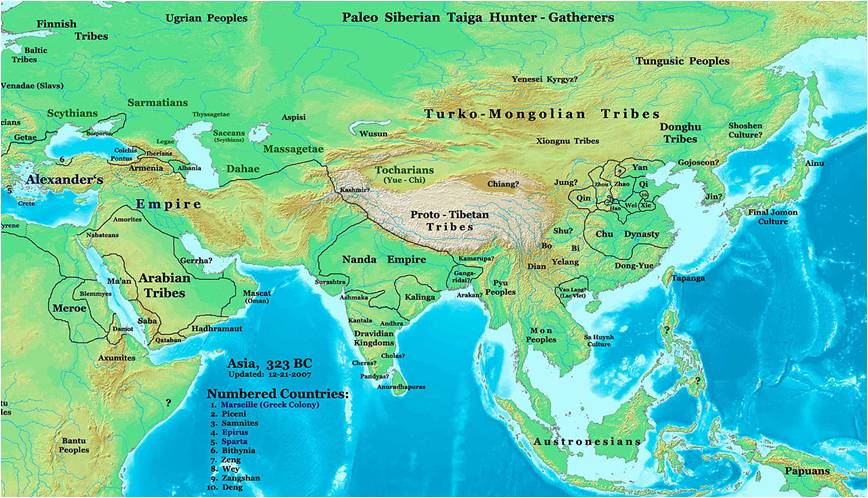
Aproximate location of the Scythians and Massagetae in the 4th century B.C.
https://en.wikipedia.org/wiki/Massagetae#/media/File:Asia_323bc.jpg
https://en.wikipedia.org/wiki/Massagetae#/media/File:Asia_323bc.jpg
Sīnārum regiō, quam hodiē Cinam[1] vulgus[2] appellat, ultima terrārum Asiae, ab Oriente, et ā Meridiē, alluitur Ōceanō quem Sēricum, vel Ēōum priscī[3] dīxērunt: ab Occidente Indiam ulteriōrem attingit: ā Septentriōne, cingitur Massagetārum,[4] Scythārumque līmitibus. Multō lātius quōndām imperāsse gentem, annālēs[5] ipsōrum, ac litterae, et veterum aedificiōrum illūstria monumenta, et complūrēs[6] in Indiā praesertim, ab iīs dēnōminātae nātiōnēs, haud obscūrē testantur.[7] Sed cum suī ipsī mōle vīribusque fatigārentur (quod ā Cathaginiēnsibus in rē similī[8] factum legimus) sponte missō velutī sanguine et castigātā luxuriā, intrā hōsce fīnēs recēpēre sēsē;[9] gravī propositō ēdictō, nē quis iniussū magistrātuum excēderet.[10] Rēgna, seu prōvinciās vastae magnitūdinis, numerant quīndecim cum suā cuiusque metropolī:[11] ad mare sex, mediterrānea reliqua.Tellūs, quod maximā ex parte[12] intrā temperātae plāgae terminōs continētur, radiōsque Sōlis, suāpte nātūrā vītālēs,[13] pūrō ac patientī excipit sīnū,[14] sīc fit ut saluberrrimō caelō et pūriōris aurae dulcēdine perfruātur;[15] ac simul inclytae fertilitātis glēbā, frūgum omnis generis fundat cōpiam biferō triferōque prōventū.[16] Accēdit ad eximiam solī faecunditātem, summa cultōrum industria.[17] Et infīnīta est multitūdō, quippe subolēscente in diēs prōlē,[18] et in aliēnās regiōnēs migrātiōnibus interdictīs. Neque in tantā mortālium turbā cessāre cuipiam licet,[19] nōn prīvātō dēdecore tantum, et proximī cuiusque probrīs ac iurgiīs;[20] vērum etiam pūblicīs mōribus lēgibusque dēsidia plectitur.[21] Itaque rūsticī hominēs nūllam agrī partem incūriā squālēre patiuntur. Saltūs et collēs pīnū vītibusque, campī et plānitiēs[22] orӯzā, hordeō, frūmentō caeterīsque segetibus nītent.[23] Quamquam ē vītibus mōre nostrō nōn exprimunt merum, ūvās quōdam condimentī genere in hiemem adservāre[24] mōs est; caeterum ex herbā quādam expressus liquor admodum salūtāris, nōmine Chia,[25]calidus haurītur, ut apud Iapōniōs: cuius maximē beneficiō, pītuītam,[26] gravēdinem, lippitūdinem nesciunt, vītamque bene longam, sine ūllō ferme languōre trādūcunt.[27]
NOTES
[1] Sīnae (the plural was much commoner than singular Sīna) probably derives via Greek Thīnai or Sīnai from Sanskrit cīna (चीन). The ultimate origin may have been the dynastic names Qin (秦) or Jing (荆), or ʐina , the indigenous name for the Yelang夜郎 polity in Yunnan, through which Chinese products often reached India. The later Latin name Cina (with the initial consonant pronounced now as `ch’ and actually spelled China in some later Latin texts) seems to have been a re-borrowing from India in the Middle Ages via Persian. Today Nuntii Latini (the Latin news broadcast from Helsinki since 1989) uses Sīnae but Hong Kong Latinists prefer Sīna, thus ensuring they cannot be accused of undermining Beijing’s one-China policy.
[2] vulgus, -ī m the general public
[3] alluō, -ere, alluī wash against, bathe; Sēricus, -a, -um `of the Sērēs (`Silk People’), a name used in Latin from the 1st century B.c. for the Chinese, but also for other people along the Silk Road or even in other regions. Ēōus, -a, -um eastern; priscī, -ōrum m the ancients
[4] ulterior, -ius further, more distant; attingō, -ere, attigī, attāctum border upon; Septentriō, Septentriōnis f the North; cingō, -ere, cinxī, cinctum surround; Massagetae, -ārum a people living east of the Caspian Sea and culturally similar to the Scythians. The name appears later to have been transferred to other steppe peoples (see https://en.wikipedia.org/wiki/Massagetae )
[5] Scythae, --ārum m pl steppe nomads probably speaking an Iranian language. līmes, limitis m boundary; lātius broadly; quondam, once; imperāsse, contraction of the perfect infinitive imperāvisse (`to have ruled’); gēns gentis f people nation (referring to China); annālēs, -ium f pl annals, histories. The accusative and infinitive clause multō…gentem (`the nation once to have ruled more widely’, i.e. that the nation once ruled more widely) is the object of testantur (attest) below.
[6] litterae, -ārum f pl letters, literature; veterum aedificiōrum illustria monumenta, `famous monuments of old buildings’, i.e famous architectural monuments; complūrēs, complūra several many
[7] praesertim, especially; dēnōminō (1), give a name to; haud, not; testor, -ārī, -ātus sum attest, testify to.
[8] cum….fatigārentur: `when they themselves (ipsī) were exhausted by their own (suī, literally `of themselves’) massiveness (mōle) and strength (vīribus); in rē similī in a similar situation.
[9] sponte of their own accord missō velutī sanguine (ablative absolute)`as if with blood having been sent’ i.e. `as if allowing themselves to be bled’ (presumably referring to the deliberate drawing off of blood which was seen then as an effective remedy for many diseases); castīgō (1) censure, find fault with; fīnēs, -ium m. pl, boundaries, territory; sēsē recēpēre (= recēpērunt), `took themselves back’, i.e. withdrew.
[10] gravī prōpositō ēdictō, ne quis..: `with a grave plan decreed that no one should go abroad without an order from the magistrates’
[11] cum suā cuiusque metropolī: `each with its own capital’.
[12] tellūs, tellūris f earth, land; maximā ex parte for the most part;
[13] temerāta plāgae, -ae f temperate zone; suāpte nātūrā vītālēs, `life-giving by their very nature’ (describing the rays of the sun)
[14] pūrō ac patientī excipit sīnū: `receives in its pure and open bosom’
[15] sīc fit ut…fruātur: `becomes such that it enjoys…’; saluber, -era, -erum, salubrious, healthy; caelum, -ī n,sky, climate
[16] inclytus, -a, -um, famous; glēba, -ae f soil (in ablative giving the cause of the land’s fetility); frūgēs, -um f pl, fruits of the earth; fundo, -ere, fūdī, fūsum pour (out)yield (used in the subjunctive as this is still part of the result clause dependent on sīc fit); bifer/trifer, -era, -erum, two/three-fold, producing twice/three times a year; proventus, -ūs m, crop, yield.
[17] accēdit ad: `there is is added to’; eximius, -a, -um outstanding, excellent; cultor, cultōris m cultivator,
[18] quippe, the reason is that; subōlescō, -ere, grow up (present participle used in ablative absolute phrase); in diēs, day by day; prōlēs, prōlis f, offspring.
[19] interdicō, -ere, -dīxī, -dictum prohibit; mortālis, -is m/f mortal, human being; cessō (1) cease, be a slacker; cuipiam, to anyone; licet, it is permitted
[20] dēdecus, dēdecoris n, disgrace (ablative of cause); tantum, only; proximus, -ī m, neighbour; quisque,quaeque, quod/quidque, each; probrum, -ī n reproach; iurgium, -ī n abuse
[21] dēsidia, -ae f, idleness; plectō, -ere, punish
[22] incūria, -ae f carelessness; squāleō, -ēre, squāluī, be in poor condition; saltus, -ūs m defile, woodland with glades; vītis, vītis f, vine; campus, -ī m, plain, field; plānitiēs, ēī f, plain
[23] orӯzā, -ae f rice; hordeum, -ī n, barley; frūmentum, -ī n corn; caeterus, -a, -um, other; seges, segetis f crop; nīteō, -ēre, nituī, shine, thrive.
[24] exprimō, -ere, -pressī, -pressum squeeze out; merum n, (undiluted) wine; ūva, -ae f grape; condimentum. –ī n spice; in hiemem, for the winter; adservō/asservō (1) keep, preserve.
[25] caeterum, but; admodum, quite; salūtāris, -e, healthy; Chia,-ae f (the Mandarin pronunciation of 茶 was borrowed via Macao and was in use in English as `chaa’ by the 1590s, but supplanted later by `tea’, which derived via Malay and Dutch from the Fukkien pronunciation t’e - see the entry at www.etymonline.com).
[26] calidus, -a, -um hot; hauriō, -īre, hausī, haustum drink (up); cuius maximē beneficiō, `largely thanks to which’; pītuīta, -ae f phlegm, catarrh.
[27] gravēdō, gravēdinis f, cold; lippitūdō, lippitūdinis f, inflammation of the eyes; languor, -ōris m feebleness; vītam trādūcō, -ere, -dūxī, -ductum, lead a life
NOTES
[1] Sīnae (the plural was much commoner than singular Sīna) probably derives via Greek Thīnai or Sīnai from Sanskrit cīna (चीन). The ultimate origin may have been the dynastic names Qin (秦) or Jing (荆), or ʐina , the indigenous name for the Yelang夜郎 polity in Yunnan, through which Chinese products often reached India. The later Latin name Cina (with the initial consonant pronounced now as `ch’ and actually spelled China in some later Latin texts) seems to have been a re-borrowing from India in the Middle Ages via Persian. Today Nuntii Latini (the Latin news broadcast from Helsinki since 1989) uses Sīnae but Hong Kong Latinists prefer Sīna, thus ensuring they cannot be accused of undermining Beijing’s one-China policy.
[2] vulgus, -ī m the general public
[3] alluō, -ere, alluī wash against, bathe; Sēricus, -a, -um `of the Sērēs (`Silk People’), a name used in Latin from the 1st century B.c. for the Chinese, but also for other people along the Silk Road or even in other regions. Ēōus, -a, -um eastern; priscī, -ōrum m the ancients
[4] ulterior, -ius further, more distant; attingō, -ere, attigī, attāctum border upon; Septentriō, Septentriōnis f the North; cingō, -ere, cinxī, cinctum surround; Massagetae, -ārum a people living east of the Caspian Sea and culturally similar to the Scythians. The name appears later to have been transferred to other steppe peoples (see https://en.wikipedia.org/wiki/Massagetae )
[5] Scythae, --ārum m pl steppe nomads probably speaking an Iranian language. līmes, limitis m boundary; lātius broadly; quondam, once; imperāsse, contraction of the perfect infinitive imperāvisse (`to have ruled’); gēns gentis f people nation (referring to China); annālēs, -ium f pl annals, histories. The accusative and infinitive clause multō…gentem (`the nation once to have ruled more widely’, i.e. that the nation once ruled more widely) is the object of testantur (attest) below.
[6] litterae, -ārum f pl letters, literature; veterum aedificiōrum illustria monumenta, `famous monuments of old buildings’, i.e famous architectural monuments; complūrēs, complūra several many
[7] praesertim, especially; dēnōminō (1), give a name to; haud, not; testor, -ārī, -ātus sum attest, testify to.
[8] cum….fatigārentur: `when they themselves (ipsī) were exhausted by their own (suī, literally `of themselves’) massiveness (mōle) and strength (vīribus); in rē similī in a similar situation.
[9] sponte of their own accord missō velutī sanguine (ablative absolute)`as if with blood having been sent’ i.e. `as if allowing themselves to be bled’ (presumably referring to the deliberate drawing off of blood which was seen then as an effective remedy for many diseases); castīgō (1) censure, find fault with; fīnēs, -ium m. pl, boundaries, territory; sēsē recēpēre (= recēpērunt), `took themselves back’, i.e. withdrew.
[10] gravī prōpositō ēdictō, ne quis..: `with a grave plan decreed that no one should go abroad without an order from the magistrates’
[11] cum suā cuiusque metropolī: `each with its own capital’.
[12] tellūs, tellūris f earth, land; maximā ex parte for the most part;
[13] temerāta plāgae, -ae f temperate zone; suāpte nātūrā vītālēs, `life-giving by their very nature’ (describing the rays of the sun)
[14] pūrō ac patientī excipit sīnū: `receives in its pure and open bosom’
[15] sīc fit ut…fruātur: `becomes such that it enjoys…’; saluber, -era, -erum, salubrious, healthy; caelum, -ī n,sky, climate
[16] inclytus, -a, -um, famous; glēba, -ae f soil (in ablative giving the cause of the land’s fetility); frūgēs, -um f pl, fruits of the earth; fundo, -ere, fūdī, fūsum pour (out)yield (used in the subjunctive as this is still part of the result clause dependent on sīc fit); bifer/trifer, -era, -erum, two/three-fold, producing twice/three times a year; proventus, -ūs m, crop, yield.
[17] accēdit ad: `there is is added to’; eximius, -a, -um outstanding, excellent; cultor, cultōris m cultivator,
[18] quippe, the reason is that; subōlescō, -ere, grow up (present participle used in ablative absolute phrase); in diēs, day by day; prōlēs, prōlis f, offspring.
[19] interdicō, -ere, -dīxī, -dictum prohibit; mortālis, -is m/f mortal, human being; cessō (1) cease, be a slacker; cuipiam, to anyone; licet, it is permitted
[20] dēdecus, dēdecoris n, disgrace (ablative of cause); tantum, only; proximus, -ī m, neighbour; quisque,quaeque, quod/quidque, each; probrum, -ī n reproach; iurgium, -ī n abuse
[21] dēsidia, -ae f, idleness; plectō, -ere, punish
[22] incūria, -ae f carelessness; squāleō, -ēre, squāluī, be in poor condition; saltus, -ūs m defile, woodland with glades; vītis, vītis f, vine; campus, -ī m, plain, field; plānitiēs, ēī f, plain
[23] orӯzā, -ae f rice; hordeum, -ī n, barley; frūmentum, -ī n corn; caeterus, -a, -um, other; seges, segetis f crop; nīteō, -ēre, nituī, shine, thrive.
[24] exprimō, -ere, -pressī, -pressum squeeze out; merum n, (undiluted) wine; ūva, -ae f grape; condimentum. –ī n spice; in hiemem, for the winter; adservō/asservō (1) keep, preserve.
[25] caeterum, but; admodum, quite; salūtāris, -e, healthy; Chia,-ae f (the Mandarin pronunciation of 茶 was borrowed via Macao and was in use in English as `chaa’ by the 1590s, but supplanted later by `tea’, which derived via Malay and Dutch from the Fukkien pronunciation t’e - see the entry at www.etymonline.com).
[26] calidus, -a, -um hot; hauriō, -īre, hausī, haustum drink (up); cuius maximē beneficiō, `largely thanks to which’; pītuīta, -ae f phlegm, catarrh.
[27] gravēdō, gravēdinis f, cold; lippitūdō, lippitūdinis f, inflammation of the eyes; languor, -ōris m feebleness; vītam trādūcō, -ere, -dūxī, -ductum, lead a life

