| linguae |
|
QUESTIONS ARISING FROM 92nd MEETING – 10/7/18
(the record of earlier meetings can be downloaded from the main Circulus page as can the version of Ciceronis Filius with illustrations added. The illustrated text of Genesis is available on the Genesis page and of Kepler's Somnium on the Somnium page.)
We met again at the Basmati because our other venue, the City Chinese University, was closed for a summer break until August. Food ordered, mostly the old favourites, included cicera aromatica (chana masala), carnēs assae mixtae (mixed grill), spīnācia cum caseō (saag paneer), pīsa cum caseō (muttor paneer), batātae cum brassicā Pompēiānā (alu gobi), melanogēna (eggplant), iūs lentium (daal), pānis Persicus (nan) and orӯza (rice) along with red wine (vīnum rubrum or vīnum sanguineum).
Before dinner we discussed briefly in Latin the reasons why each of us had taken up the language, using dialogue from the Dē linguīs section of https://linguae.weebly.com/circulus-latinus-honcongensis.html (see below),. General cultural/lingistic interest was the most frequently offered explanation but Malcolm, Donald and John had all begun the language when it was still a compulsory subject in grammar schools and independent schools in the U.K. and students also often went on to study ancient Greek. It was also normal then in Britin to study a modern language in addition, usually French. However, in James’s US high school in much more recent times he had to opt for either Latin of Spanish and had only been able to take up Greek at university.
After the meal we read more of Kepler’s Somnium, reaching Kepler’s footnote marker`^102’ in chapter XIII and noted the complexity of the astronomy involved, particuary the progression of the equinoxes caused by the slow rotation of the earth’s axis about the perpendicular to the plane of the elliptic (see text below). There was also brief discussion of Tycho Brahe, the Danish aristocrat whose observations were the foundation for Kepler’s own work and in particular for his famous laws of planetary motion. Someone suggested that Brahe might have been a little unbalanced mentally. A subsequent quick internet seach did not discover confirm this but recent research has suggested his death at the early age of 54 may have resuted from a combination of obesity, diabetes and alcoholism (see https://www.forbes.com/sites/kristinakillgrove/2018/05/24/skeleton-of-famed-astronomer-tycho-brahe-finally-reveals-cause-of-death/#5f1433641fd4 )
We discussed when Europeans began the regular use of cutlery (other than knives for cutting up food), It was suggested this was in the 16th century, but the first use of a fork at table may have been a lot earlier and Americans apparently did not follow until the 1800s (https://www.quora.com/When-did-Europeans-start-using-forks-knives-and-spoons-to-eat )
Someone mentioned that eating spaghetti with the hand had been common everywhere until the 19th century
Before dinner we discussed briefly in Latin the reasons why each of us had taken up the language, using dialogue from the Dē linguīs section of https://linguae.weebly.com/circulus-latinus-honcongensis.html (see below),. General cultural/lingistic interest was the most frequently offered explanation but Malcolm, Donald and John had all begun the language when it was still a compulsory subject in grammar schools and independent schools in the U.K. and students also often went on to study ancient Greek. It was also normal then in Britin to study a modern language in addition, usually French. However, in James’s US high school in much more recent times he had to opt for either Latin of Spanish and had only been able to take up Greek at university.
After the meal we read more of Kepler’s Somnium, reaching Kepler’s footnote marker`^102’ in chapter XIII and noted the complexity of the astronomy involved, particuary the progression of the equinoxes caused by the slow rotation of the earth’s axis about the perpendicular to the plane of the elliptic (see text below). There was also brief discussion of Tycho Brahe, the Danish aristocrat whose observations were the foundation for Kepler’s own work and in particular for his famous laws of planetary motion. Someone suggested that Brahe might have been a little unbalanced mentally. A subsequent quick internet seach did not discover confirm this but recent research has suggested his death at the early age of 54 may have resuted from a combination of obesity, diabetes and alcoholism (see https://www.forbes.com/sites/kristinakillgrove/2018/05/24/skeleton-of-famed-astronomer-tycho-brahe-finally-reveals-cause-of-death/#5f1433641fd4 )
We discussed when Europeans began the regular use of cutlery (other than knives for cutting up food), It was suggested this was in the 16th century, but the first use of a fork at table may have been a lot earlier and Americans apparently did not follow until the 1800s (https://www.quora.com/When-did-Europeans-start-using-forks-knives-and-spoons-to-eat )
Someone mentioned that eating spaghetti with the hand had been common everywhere until the 19th century
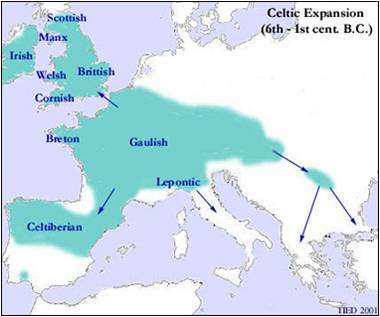
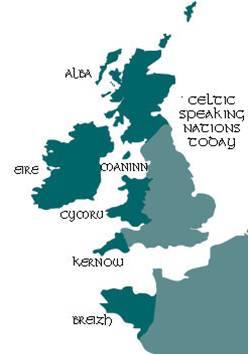
Another topic of discussion was the Celtic languages which were dominant over much of Western Europe until their large-scale displacement by Romance and Germanic. The common Celtic spoken, presumably with dialect variation, over most of Britain is referred to today as Brythoneg, from which derive Welsh, Cornish and Breton, the last of these being brought into Britanny by refugees from Britain itself, who may have been fleeing from the advance of the Anglo-Saxons. Scottish Gaelic, still spoken natively in isolated communities in the far west of Scotland and the adjacent islands, and Manx, once the dominant language on the Isle of Man, are derived, like modern Irish, from the old Irish language and the modern tngues remain to some extent mutually comprehensible.. The map below showing where Celtic languages are spoken today is a little misleading because the dominant language of most of the areas shown is English, even though Irish and Welsh are co-official languages with English and around 20% of Welsh people still acquire Welsh naturally in the home and community rather than through formal schooling. Note that the names of contries and regions are given in the relevant languages: Alba, Eire, Mannin, Kernow and Breizh for Scotland, Ireland, Isle of Man, Cornwall and Britanny respectively.
Mention was made of the Satyricon, a kind of novel traditionally ascribed to Nero’s `arbiter of excellence’, Gaius Petronius, of which a small part has survived, giving us some insight into the lives of lower-class Romans and the `Vulgar’ Latin which they spoke and from which the modern Romance languagesdeveloped The narrator, the ex-gladiator Encolpius, is in a homosexual relationship with his slave Giton, complicated when his friend Ascyltus decides to make it a triangle. All three are involved in plenty of heterosexual activity as well. See the synopsis and discussion at https://en.wikipedia.org/wiki/Satyricon and the full Latin text at http://www.thelatinlibrary.com/petronius1.html
The best-known section is the Cena Trimalchionis (`Trimalchio’s Dinner Party’), which lampoons th pretensions of the nouveau riche freedman Trimalchio and also provides the framework for various anecdotes, including the story of the centurion/werewolf presented, in simplified form in stage 7 of the Cambridge Latin Course. The original of the werewolf tale is given with a translation at https://linguae.weebly.com/circulus-latinus-honcongensis.html in the Dē Lemurālibus antīquīs hodiernīsque section, whilst the frame story of the banquet itself forms the model for the dinner given by Haterius in Book IV of the CLC.
Petronius’s work with its scandalous contents was adapted into a well-known film of the same title by the Italian director Fellini in 1969 and Malcolm also mentioned the novel by Julin Mitchell, The Unknown Country, the second half of whih is preented as if based on a manuscript of a modern version of the story, See for more details the review at- https://www.theguardian.com/books/2010/aug/29/julian-mitchell-undiscovered-country-review
The best-known section is the Cena Trimalchionis (`Trimalchio’s Dinner Party’), which lampoons th pretensions of the nouveau riche freedman Trimalchio and also provides the framework for various anecdotes, including the story of the centurion/werewolf presented, in simplified form in stage 7 of the Cambridge Latin Course. The original of the werewolf tale is given with a translation at https://linguae.weebly.com/circulus-latinus-honcongensis.html in the Dē Lemurālibus antīquīs hodiernīsque section, whilst the frame story of the banquet itself forms the model for the dinner given by Haterius in Book IV of the CLC.
Petronius’s work with its scandalous contents was adapted into a well-known film of the same title by the Italian director Fellini in 1969 and Malcolm also mentioned the novel by Julin Mitchell, The Unknown Country, the second half of whih is preented as if based on a manuscript of a modern version of the story, See for more details the review at- https://www.theguardian.com/books/2010/aug/29/julian-mitchell-undiscovered-country-review
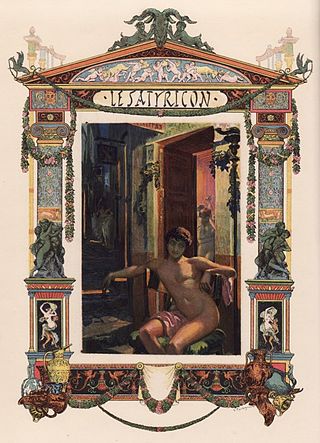
Illustration by French painterGeorges-Antoine Rochegrosse (1859-1938)
https://en.wikipedia.org/wiki/Satyrico
https://en.wikipedia.org/wiki/Satyrico
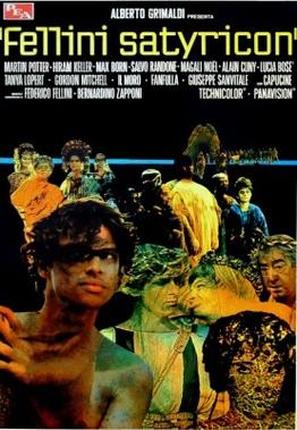
Poster for the Fellini film -https://en.wikipedia.org/wiki/Fellini_Satyricon
We talked briefly about Hungaran, a non-Indo-European language, regarded as partcularly difficult, partly because of the system of vowel harmony which necessitates substantial changes to loan words.The language is agglutinative, i.e makes use of suffixes to show the grammatical function of words, but, in contrast to inflected languages like Latin, there is generally just one suffix per function
We finally noted how English, before the Norman conquest in the 11th century, used, like German and Chinese, to prefer calques (words formed from native roots by translating each element of a foreign one) to loan words (foreign terms simply imported wiht mnor modifications to fit English phonology). The contrast is illustrated in John’s INTRODUCING LATIN PowerPoint (available at https://linguae.weebly.com/latin--greek.html) , which presents both the actual wording of the Preamble to the US Declaration of Independence with the `Anglish’ version, in which all Romance-derived terms are replaced by purely Old English (Germanic) ones. For `Anglish’ itself see http://anglish.wikia.com/wiki/Main_leaf
THE DECLARATION OF INDEPENDENCE
In Congress, June 4, 1776
The unanimous declaration of the thirteen United States of America.
When in the course of human events, it becomes necessary for one people to dissolve the political bands which have connected them with another, and to assume among the powers of the earth, the separate and equal station to which the Laws of Nature and of Nature's God entitle them, a decent respect to the opinions of mankind requires that they should declare the causes which impel them to the separation.
THE SAYING FORTH OF SELF-STANDING
In Lawmaker Body, Afterlithe 4, 1776.
The anmood saying forth of the thirteen Banded Folkdoms of Americksland,
When in the flow of mannish happenings, it becomes needful for one folk to break up the mootish bands which have bonded them with another, and to take among the mights of the earth, the freestanding and even post to which the laws of life and of life’s God give them the right, a good worth to the thoughts of mankind must needs that they should say forth the grounds which bring them to the sundering.
Dē Linguīs
Cūr linguam Latīnam didicistī? Why did you learn Quia cultūra atque historia antīquae mē Because ancient culture and history attract me
alliciunt
Quia mē linguae tenent/alliciunt. Because languages interest/attract me
Quia in scholā meā coācti sumus Because we were forced to learn Latin in school
linguam Latīnam discere .
Quibus aliīs linguīs loqueris? What other languages do you speak?
Francogallicē, Germānicē, Sīnicē (sermōne French German Chinese (Cantonese or Putonghua)
Cantonēnsī vel sermōne normālī), Iaponicē, Japanese, Korean, Polish, Italian, Spanish. Greek
Coreānicē, Italicē, Hispānicē, Graecē
Cur Latīne loquī vīs? Why do you want to speak Latin?
Quia quī loqui nōn scit, linguā rēvērā Because if you can’t speak a language you
nōn callet. haven’t really mastered it
Quia Latīnē loquī iūcundum est Because it’s fun to speak Latin
Quia novae experientiae mē dēlectant Because I like new experiences
Quot annōs linguam Latīnam discis/didicistī? How many years have you been learning/ did
Prōnuntiātū classicō an ecclēsiasticō ūteris? Do you use the classical or the church pronunciation?
Quae sunt discrīmina prīncipālia? What are the main differences?
Modō ecclēsiasticō vel mediaevālī, `c’ et `g’ In the ecclesiastical or medieval style, the consonants `c’
cōnsonantēs, cum ante `i’ vel `e’ vōcālēs and`g’, when occurring before vowels `i’ or `e’, are not occurrant, nōn dūrae sed mollēs sunt – ut but soft – the way `ch’ and `j’ are pronounced in
`ch’ et `j’ litterae Anglicē dīcuntur. Modō English. In classical style, these consonants are always
classicō hae cōnsonantēs semper ut in `cat’ pronounced as in the English words `cat’ or `game’.
vel `game’ vocābulīs Anglicīs ēnūntiantur.
Prōnūntiātus `ae’ diphthongī temporibus In Cicero’s time, pronunciation of diphthong `ae’ was
Cicerōnis erat similis vōcālī in `die’ vocābulō similar to the vowel in the English word `die’, but
Anglicō, sed aevō mediaevālī ut `ay’ in `day’. in the medieval period it was pronounced like `ay’
ēnuntiābātur, in English `day’.
Aevō classicō `v’ littera ut Anglica `w’, In the classical period the letter `v’ sounded like the
dīcēbātur sed aevō mediaevālī similis erat English `w’, but in medieval times it was like the
Anglicae `v’ . English `v’
SOMNIUM
XII Sub utrōque vērō polōrum in compēnsātiōnem noctis Sōl dīmidius tegitur,
Under both indeed of-poles in compensation of-night sun half is-concealed
dīmidius lūcet, montēs circulō circumiēns ^95. Nec enim minus Levānia suīs incolīs
half shines mountains in-circle going-round and-not for less Levania to-own inhabitants
immōta stāre vidētur, currentibus astrīs, quam Terra nostra nōbīs hominibus ^96.
motionless to-stand seems moving with-stars than earth our to-us men g
Nox et diēs jūncti aequant ūnum ex nostrātibus mēnsibus: quippe Sōle oritūrō māne
Night and day jointly equal one from our months as with- sun about-to-rise in-morning
integrum fere zōdiacī signum postrīdiē plūs apparet quam prīdiē ^97.
whole about of-zodiac sign on-next-day more appears than on-previous
Et ut nōbīs in ūnō annō 365 Sōlēs et 366 sphaerae fīxārum, seu praecīsius in 4 annīs
And as for-us in one year 365 Suns and 366 spheres of-fixed-stars or more-precisely in 4 years
1461 Sōlēs, sed 1465 sphaerae fīxārum volvuntur, sīc illīs in ūnō annō Sōl duodeciēs,
1461 suns but 1465 spheres of-fixed-stars are-turned thus for-then in one year sun twelve-times
sphaera fīxārum tredeciēs seu praecīsius in 8 annīs Sol 99 iēs , sphaerae fīxārum
sphere of-fixed-stars thirteen-times or more-precisely in 8 years sun 99-times spheres of-fixed-stars
centiēs septiēs circumit. Sed familiārior est ipsīs circulus annōrum 19. Etenim in tot
one-hundred seven-times goes-around but more-familiar is to-themselves cycle of-years 19 for in so-many
annīs Sol oritur ducentiēs triciēs quīnquiēs, fīxae vērō ducentiēs quinquagiēs
year sun rises two-hundred thirty- five-times fixed-stars indeed two-hundred fifty
quater ^98.[1] Oritur Sōl subvolvarum mediīs seu intimīs, quandō nōbīs apparet ultima
four-times rises sun of-Subvolvans for-middle or innermost when for-us appears last
quadra, prīvolvārum vērō intimīs tunc, quandō nōbīs est prīma quadra.[2] Quae autem
quarter of-Privolvans indeed innermost then when for-us is first quarter what moreover
dē meditulliīs dīcō, dē tōtīs semicirculīs intelligenda sunt per polōs et meditullia
about middle-sections I-say about whole semicircles to-be-understood are though poles and middle-section
ductīs, ad dīvisōrem rēctīs, quōs semicirculōs medivolvānī appellāre possīs ^[3]99.
dran to divisor at-right-angles which semicircles ``Medivolvans’ call you-could
NOTES
[1] The different figures Kepler gives are for solar and sidereal time respectively, the latter varying slightly from the former because of the shifting position of the earth’s axis. Discovery of the distinction and of the consequent shift in the date of the equinoxes is usually attributed to the 2nd. Century B.C. Greek astronomer Hipparchus.
[2] Kepler has somehow got this the wrong way round. Sunrise for the Subvolvans occurs when the sun begins to illuminate their side of the moon (i.e. at the first quarter) and for the Privolvans at the last quarter.
[3] Kepler explains in his own note 99 that these lines correspond to earth’s meridians (i.e. lines of longitude) but he has in mind only the two lines down the centre of the two hemispheres (viz the side of the moon facing the earth and the one opposite it.)
XIII Est autem circulus aliquis inter polōs intermedius, vicem gerēns nostrī aeqātōris
There-is moreover circle some between poles half-way role playing of-our equator
terrestris, quō etiam nōmine indigetābitur, bifāriam secāns tam dīvīsōrem, quam
terrestrial by-which also name it-will-be-called in-two cutting both the-divisor and
medivolvānum in punctīs oppositīs, cui quaecunque loca subsunt, eōrum verticem Sōl
the `medivolvan’ on points opposite on-which whatever places are-located of-them point-overhead
quam proximē quotidiē et praecīsē quidem diēbus duōbus oppositīs in annō trānsit
very most-nearly everyday and exactly indeed on-days two opposing in year transits
in punctō merīdiēī. Cēterīs, quī versus polōs utrinque habitant, in merīdiē Sōl dēclinat
at point of-midday for-others who towards poles on-each-side live at midday sun is-lower
ā vertice[1] ^100
than overhead
Habent in Levāniā et nōnnūllam vicissitūdinem aestātis et hiemis, sed eam nec
They-have on Levania also some alternation of-summer and of-winter but this neither
comparandam varietāte cum nostrā, nec ut nōs semper iīsdem in locīs, eōdem annī
to-be-compared variety with our nor as us always same in places at-same of-year
tempore. Fit enim decem annōrum spatiō, ut aestās illa migret ab ūnā parte annī
time it-happens for ten of-years in-space that suumer the shifts from one part of-year
sīdereī in partem oppositam, eōdem locō suppositō;[2] quippe circulō annōrum 19
sidereal to part opposite with-same place supposed since in-circle of-years 19
sīdereōrum seu diērum 235 versus polos vīciēs fit aestās tōtiēsque hiems, sub
sidereal or of-days 235 towards poles twenty-times occurs summer and-as-many-times winter at
aequātōre quadrāgiēs ^101; suntque apud illōs quotannīs sex diēs aestīvī, reliquī
equator forty-times and-are among them[3] every-year six days of-summer rest
hiemālēs, ut apud nōs mēnsēs[4] ^102.
of-winter as among us months
NOTES
[1] i.e. the sun is precisely overhead at the lunar equator on the moon’s mid-summer and mid-winter days. The inclination of the moon’s axis to the plane of the elliptic is only 1.5° compared with the earth’s 23.5° (https://www.space.com/55-earths-moon-formation-composition-and-orbit.html) so the apparent north-south movement of the overhead sun through the year is only 3° as against 47° on earth and the difference between seasons is minimal, as Kepler notes in the next paragraph.
[2] i.e. in any one place the apparent position of the sun against the zodiac at mid-summer will shift by 180° over ten years.
[3] Referring to the moon-dwellers
[4] Because the moon revolves only once a month.
We finally noted how English, before the Norman conquest in the 11th century, used, like German and Chinese, to prefer calques (words formed from native roots by translating each element of a foreign one) to loan words (foreign terms simply imported wiht mnor modifications to fit English phonology). The contrast is illustrated in John’s INTRODUCING LATIN PowerPoint (available at https://linguae.weebly.com/latin--greek.html) , which presents both the actual wording of the Preamble to the US Declaration of Independence with the `Anglish’ version, in which all Romance-derived terms are replaced by purely Old English (Germanic) ones. For `Anglish’ itself see http://anglish.wikia.com/wiki/Main_leaf
THE DECLARATION OF INDEPENDENCE
In Congress, June 4, 1776
The unanimous declaration of the thirteen United States of America.
When in the course of human events, it becomes necessary for one people to dissolve the political bands which have connected them with another, and to assume among the powers of the earth, the separate and equal station to which the Laws of Nature and of Nature's God entitle them, a decent respect to the opinions of mankind requires that they should declare the causes which impel them to the separation.
THE SAYING FORTH OF SELF-STANDING
In Lawmaker Body, Afterlithe 4, 1776.
The anmood saying forth of the thirteen Banded Folkdoms of Americksland,
When in the flow of mannish happenings, it becomes needful for one folk to break up the mootish bands which have bonded them with another, and to take among the mights of the earth, the freestanding and even post to which the laws of life and of life’s God give them the right, a good worth to the thoughts of mankind must needs that they should say forth the grounds which bring them to the sundering.
Dē Linguīs
Cūr linguam Latīnam didicistī? Why did you learn Quia cultūra atque historia antīquae mē Because ancient culture and history attract me
alliciunt
Quia mē linguae tenent/alliciunt. Because languages interest/attract me
Quia in scholā meā coācti sumus Because we were forced to learn Latin in school
linguam Latīnam discere .
Quibus aliīs linguīs loqueris? What other languages do you speak?
Francogallicē, Germānicē, Sīnicē (sermōne French German Chinese (Cantonese or Putonghua)
Cantonēnsī vel sermōne normālī), Iaponicē, Japanese, Korean, Polish, Italian, Spanish. Greek
Coreānicē, Italicē, Hispānicē, Graecē
Cur Latīne loquī vīs? Why do you want to speak Latin?
Quia quī loqui nōn scit, linguā rēvērā Because if you can’t speak a language you
nōn callet. haven’t really mastered it
Quia Latīnē loquī iūcundum est Because it’s fun to speak Latin
Quia novae experientiae mē dēlectant Because I like new experiences
Quot annōs linguam Latīnam discis/didicistī? How many years have you been learning/ did
Prōnuntiātū classicō an ecclēsiasticō ūteris? Do you use the classical or the church pronunciation?
Quae sunt discrīmina prīncipālia? What are the main differences?
Modō ecclēsiasticō vel mediaevālī, `c’ et `g’ In the ecclesiastical or medieval style, the consonants `c’
cōnsonantēs, cum ante `i’ vel `e’ vōcālēs and`g’, when occurring before vowels `i’ or `e’, are not occurrant, nōn dūrae sed mollēs sunt – ut but soft – the way `ch’ and `j’ are pronounced in
`ch’ et `j’ litterae Anglicē dīcuntur. Modō English. In classical style, these consonants are always
classicō hae cōnsonantēs semper ut in `cat’ pronounced as in the English words `cat’ or `game’.
vel `game’ vocābulīs Anglicīs ēnūntiantur.
Prōnūntiātus `ae’ diphthongī temporibus In Cicero’s time, pronunciation of diphthong `ae’ was
Cicerōnis erat similis vōcālī in `die’ vocābulō similar to the vowel in the English word `die’, but
Anglicō, sed aevō mediaevālī ut `ay’ in `day’. in the medieval period it was pronounced like `ay’
ēnuntiābātur, in English `day’.
Aevō classicō `v’ littera ut Anglica `w’, In the classical period the letter `v’ sounded like the
dīcēbātur sed aevō mediaevālī similis erat English `w’, but in medieval times it was like the
Anglicae `v’ . English `v’
SOMNIUM
XII Sub utrōque vērō polōrum in compēnsātiōnem noctis Sōl dīmidius tegitur,
Under both indeed of-poles in compensation of-night sun half is-concealed
dīmidius lūcet, montēs circulō circumiēns ^95. Nec enim minus Levānia suīs incolīs
half shines mountains in-circle going-round and-not for less Levania to-own inhabitants
immōta stāre vidētur, currentibus astrīs, quam Terra nostra nōbīs hominibus ^96.
motionless to-stand seems moving with-stars than earth our to-us men g
Nox et diēs jūncti aequant ūnum ex nostrātibus mēnsibus: quippe Sōle oritūrō māne
Night and day jointly equal one from our months as with- sun about-to-rise in-morning
integrum fere zōdiacī signum postrīdiē plūs apparet quam prīdiē ^97.
whole about of-zodiac sign on-next-day more appears than on-previous
Et ut nōbīs in ūnō annō 365 Sōlēs et 366 sphaerae fīxārum, seu praecīsius in 4 annīs
And as for-us in one year 365 Suns and 366 spheres of-fixed-stars or more-precisely in 4 years
1461 Sōlēs, sed 1465 sphaerae fīxārum volvuntur, sīc illīs in ūnō annō Sōl duodeciēs,
1461 suns but 1465 spheres of-fixed-stars are-turned thus for-then in one year sun twelve-times
sphaera fīxārum tredeciēs seu praecīsius in 8 annīs Sol 99 iēs , sphaerae fīxārum
sphere of-fixed-stars thirteen-times or more-precisely in 8 years sun 99-times spheres of-fixed-stars
centiēs septiēs circumit. Sed familiārior est ipsīs circulus annōrum 19. Etenim in tot
one-hundred seven-times goes-around but more-familiar is to-themselves cycle of-years 19 for in so-many
annīs Sol oritur ducentiēs triciēs quīnquiēs, fīxae vērō ducentiēs quinquagiēs
year sun rises two-hundred thirty- five-times fixed-stars indeed two-hundred fifty
quater ^98.[1] Oritur Sōl subvolvarum mediīs seu intimīs, quandō nōbīs apparet ultima
four-times rises sun of-Subvolvans for-middle or innermost when for-us appears last
quadra, prīvolvārum vērō intimīs tunc, quandō nōbīs est prīma quadra.[2] Quae autem
quarter of-Privolvans indeed innermost then when for-us is first quarter what moreover
dē meditulliīs dīcō, dē tōtīs semicirculīs intelligenda sunt per polōs et meditullia
about middle-sections I-say about whole semicircles to-be-understood are though poles and middle-section
ductīs, ad dīvisōrem rēctīs, quōs semicirculōs medivolvānī appellāre possīs ^[3]99.
dran to divisor at-right-angles which semicircles ``Medivolvans’ call you-could
NOTES
[1] The different figures Kepler gives are for solar and sidereal time respectively, the latter varying slightly from the former because of the shifting position of the earth’s axis. Discovery of the distinction and of the consequent shift in the date of the equinoxes is usually attributed to the 2nd. Century B.C. Greek astronomer Hipparchus.
[2] Kepler has somehow got this the wrong way round. Sunrise for the Subvolvans occurs when the sun begins to illuminate their side of the moon (i.e. at the first quarter) and for the Privolvans at the last quarter.
[3] Kepler explains in his own note 99 that these lines correspond to earth’s meridians (i.e. lines of longitude) but he has in mind only the two lines down the centre of the two hemispheres (viz the side of the moon facing the earth and the one opposite it.)
XIII Est autem circulus aliquis inter polōs intermedius, vicem gerēns nostrī aeqātōris
There-is moreover circle some between poles half-way role playing of-our equator
terrestris, quō etiam nōmine indigetābitur, bifāriam secāns tam dīvīsōrem, quam
terrestrial by-which also name it-will-be-called in-two cutting both the-divisor and
medivolvānum in punctīs oppositīs, cui quaecunque loca subsunt, eōrum verticem Sōl
the `medivolvan’ on points opposite on-which whatever places are-located of-them point-overhead
quam proximē quotidiē et praecīsē quidem diēbus duōbus oppositīs in annō trānsit
very most-nearly everyday and exactly indeed on-days two opposing in year transits
in punctō merīdiēī. Cēterīs, quī versus polōs utrinque habitant, in merīdiē Sōl dēclinat
at point of-midday for-others who towards poles on-each-side live at midday sun is-lower
ā vertice[1] ^100
than overhead
Habent in Levāniā et nōnnūllam vicissitūdinem aestātis et hiemis, sed eam nec
They-have on Levania also some alternation of-summer and of-winter but this neither
comparandam varietāte cum nostrā, nec ut nōs semper iīsdem in locīs, eōdem annī
to-be-compared variety with our nor as us always same in places at-same of-year
tempore. Fit enim decem annōrum spatiō, ut aestās illa migret ab ūnā parte annī
time it-happens for ten of-years in-space that suumer the shifts from one part of-year
sīdereī in partem oppositam, eōdem locō suppositō;[2] quippe circulō annōrum 19
sidereal to part opposite with-same place supposed since in-circle of-years 19
sīdereōrum seu diērum 235 versus polos vīciēs fit aestās tōtiēsque hiems, sub
sidereal or of-days 235 towards poles twenty-times occurs summer and-as-many-times winter at
aequātōre quadrāgiēs ^101; suntque apud illōs quotannīs sex diēs aestīvī, reliquī
equator forty-times and-are among them[3] every-year six days of-summer rest
hiemālēs, ut apud nōs mēnsēs[4] ^102.
of-winter as among us months
NOTES
[1] i.e. the sun is precisely overhead at the lunar equator on the moon’s mid-summer and mid-winter days. The inclination of the moon’s axis to the plane of the elliptic is only 1.5° compared with the earth’s 23.5° (https://www.space.com/55-earths-moon-formation-composition-and-orbit.html) so the apparent north-south movement of the overhead sun through the year is only 3° as against 47° on earth and the difference between seasons is minimal, as Kepler notes in the next paragraph.
[2] i.e. in any one place the apparent position of the sun against the zodiac at mid-summer will shift by 180° over ten years.
[3] Referring to the moon-dwellers
[4] Because the moon revolves only once a month.
