| linguae |
|
QUESTIONS ARISING FROM 99th MEETING – 15/3/18
(The record of earlier meetings can be downloaded from the main Circulus page as can the version of Ciceronis Filius with illustrations added. Accounts of meetings from September 2016 onwards are also stored as individual web pages (see the list on the Site Map),The illustrated text of Genesis is available on the Genesis page and of Kepler's Somnium on the Somnium page.)
Dinner at the Basmati included spīnāchia cum caseō (sag paneer, spinach with cheese), cicera arōmatica (chana masala, chickpeas with spices), melongēna contūsa (baigan bharta, mashed aubergine/eggplant), carō concīsa cum pīsīs (keema matar, mincemeat with peas), gallīnācea tandūria (chicken tandoori), orȳza arōmatica cum caseō (paneer biryani, cheese biryani), iūs lentium (daal tarka ) carium agnīnum Casmiriānum (Kashmir lamb curry), batāta cum brassicā Pompēiānā (alu gobi, potato with cauliflower) and carium piscīnum cum batātā. This was as usual preceded by tubulī vernālēs (春卷, spring rolls) and pānis tenuis (papadom) and accompanied by pānis Persicus (nan), orӯza (rice) and, vīnum rubrum/sanguineum.

Paneer Biryani
Malcolm recommended The master and Margarita, a complex story by Author Bulgakov, which used the device of a vist to Russia by the Deveil to satirise the Russian elite and was banned by Stalin. Later in the Soviet peiod it ciculated as samizdat before finally being published in full (see https://en.wikipedia.org/wiki/The_Master_and_Margarita).
He also spoke highly of Harold Bloom’s defence of dead white males (umbrivirī mortuī) in The Western Canon, which analyses 26 works of literature from the 14th to the 20th century that he considers both aesthetically outstanding and representative of the authors’ various countries (more at https://en.wikipedia.org/wiki/Harold_Bloom).
Eric asked whether Orberg’s Lingua Latina Per Se Illustrata, of which he had himself read the first part (Familia Romana) remains the leading direct method course. This is probably the case since, as Eugene pointed out, the ASSIMIL course used by the Schola Latina Europaea et Universalis (http://avitus.alcuinus.net/schola_latina/info1_en.php) includes translations of all the material even though it is geared towards reaching an active command of the spoken language. section from the third chapter is included on one of the slides in John’s INTRODUCTION TO LATIN PowerPoint, whilst Luke Ranieri (Scorpio Martianus) reads the first three chapters of Familia Romana in a series of YouTube videos, starting with https://www.youtube.com/watch?v=_Zt19wzsW-c A feature of these is vowel elision at word boundaries, which must have occurred in ordinary conversation as it did in verse recitation. Also on YouTube is a video (`Conveniamus ad Cauponam’) produced by students of Eduardo Engelsing of Western Washington University, who act out a meeting in adult life between the children featured in Familia Romana. This has Latin subtitles and an English translation is provided at https://linguae.weebly.com/latin--greek.html, where the video itself is also embedded.
Malcolm recommended The master and Margarita, a complex story by Author Bulgakov, which used the device of a vist to Russia by the Deveil to satirise the Russian elite and was banned by Stalin. Later in the Soviet peiod it ciculated as samizdat before finally being published in full (see https://en.wikipedia.org/wiki/The_Master_and_Margarita).
He also spoke highly of Harold Bloom’s defence of dead white males (umbrivirī mortuī) in The Western Canon, which analyses 26 works of literature from the 14th to the 20th century that he considers both aesthetically outstanding and representative of the authors’ various countries (more at https://en.wikipedia.org/wiki/Harold_Bloom).
Eric asked whether Orberg’s Lingua Latina Per Se Illustrata, of which he had himself read the first part (Familia Romana) remains the leading direct method course. This is probably the case since, as Eugene pointed out, the ASSIMIL course used by the Schola Latina Europaea et Universalis (http://avitus.alcuinus.net/schola_latina/info1_en.php) includes translations of all the material even though it is geared towards reaching an active command of the spoken language. section from the third chapter is included on one of the slides in John’s INTRODUCTION TO LATIN PowerPoint, whilst Luke Ranieri (Scorpio Martianus) reads the first three chapters of Familia Romana in a series of YouTube videos, starting with https://www.youtube.com/watch?v=_Zt19wzsW-c A feature of these is vowel elision at word boundaries, which must have occurred in ordinary conversation as it did in verse recitation. Also on YouTube is a video (`Conveniamus ad Cauponam’) produced by students of Eduardo Engelsing of Western Washington University, who act out a meeting in adult life between the children featured in Familia Romana. This has Latin subtitles and an English translation is provided at https://linguae.weebly.com/latin--greek.html, where the video itself is also embedded.
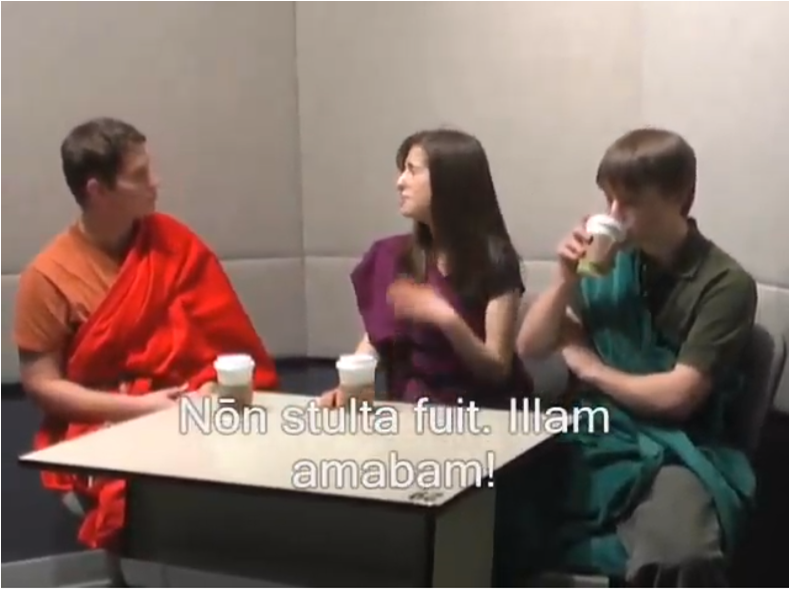
Conveniāmus ad Cauponam
We noted that, although Familia Romana was an exellent introduction to the language, if a teacher had enough time to use it properly, there was an abrupt a jump to more difficult material in the second part of the textbook, Roma Aeterna,
John had brought along part of a letter (placed below) he had originally sent in 2015 to the Grex Latine Loquentium, a Latin email forum, on the natural aqcuisition of Latin by young children. This included discussion of the well-known case of the French essayist Michel de Montaigne (1553 to 1592), whose father arranged for him to be tutored by a German who knew no French but was fluent in Latin, and all others who came into contact with him, including both servants and family members, were also under orders to keep to Latin, This resulted in his Latin being as good as his school master’s when he began his conventional education at age 8. More recent letters to the Grex have highlighted the fact that, despite his flying start, Montaigne appear never to have published anything in Latin, despite his very large output in French. One reason for this might have been the decline in the use of Latin over his lifetime. French had alreadiy in 1533 ceased to be used for official government records and in 1570 the number of books in Fench published annually in France for the first time exceeded the number published in Latin. During all the discussion of this issue, John had assumed that Montaigne’s exposure to Latin began almost at once after his birth but has just discovered that until he was three his father had placed him with a peasant family to make him familiar with the conditions in which the bulk of his fellow countrymen lived (see https://en.wikipedia.org/wiki/Michel_de_Montaigne).. His `living Latin’ experience will thus have been between the ages of 3 and 8, so Latin was nor actually his first language, though for a period it was his dominant one.
John’s letter went on to recount his own exerience attempting to teach Latin to a five year-old who was often accompanied by his 3-year-old brother. The method here included mostly playing together, with the aid of polystyrene swords (Gladium tenē!, `Hold the sword’) and toy bow-and-arrow (Sagittam ēmitte! `Shoot the arrow’) but also recognising words on strips of paper and placing the on the appropriate objects in the room. The boy got the hang of Latin numbers fairly quickly and could respond to simple instructions but did not produce much Latin of his own. Pat of the problem was probably John’s own lack of full fluency and the small numbe of contact hours – once a week for about a year,
We talked about more conventional methods of treaching Latin, including the Cambridge Latin Course, which in the UK is used in about 90% of the schools teaching the subject. Alex, a Circulus member who rarely comes to meetings but sometimes meets John for conversation practivce, had recently complained that the Latin in CLC was less similar to authentic Latin literature than that in Lingua Latina Per Se Illustrata and Malcolm remarked that the stories were rather `twee’. Note was also taken of the sensitivity in America in particular to the sentence servī erant laetī (`The slaves were happy’) in Book I of the course, where Caecilius is portrayed as a humane master of his household. John agreed there was something in all this but insisted that Cambridge was valuable for its ability to hook student attention with its story line and that, after Book 1, the series presented a less rosy picture or Roman life, wth plenty of emphass on the cruelty that often marked it.
We also noted that, unlike the situation with modern languages where.the emphasis was on basic communication, students of Latin had to move quickly to reading extracts from original literary texts. John had always been sceptical about the value of this, as in practice examination candidates ended up up just memorising a translation and commentary on the portion of Virgil etc. tha made up their `set texts’. He would himself prefer more concentration on mastering the language itself and liked the appoach in Germenty and other places, where students were instead expected to translate a lengthy unseen text with the aid of a dictionary. On the other hand, both Valerie and many other Latinists prefered an emphasis in literature, something which Mary Beard, perhaps the UK classicist with the highest public profile, regularly stressed.
We noted that, although Familia Romana was an exellent introduction to the language, if a teacher had enough time to use it properly, there was an abrupt a jump to more difficult material in the second part of the textbook, Roma Aeterna,
John had brought along part of a letter (placed below) he had originally sent in 2015 to the Grex Latine Loquentium, a Latin email forum, on the natural aqcuisition of Latin by young children. This included discussion of the well-known case of the French essayist Michel de Montaigne (1553 to 1592), whose father arranged for him to be tutored by a German who knew no French but was fluent in Latin, and all others who came into contact with him, including both servants and family members, were also under orders to keep to Latin, This resulted in his Latin being as good as his school master’s when he began his conventional education at age 8. More recent letters to the Grex have highlighted the fact that, despite his flying start, Montaigne appear never to have published anything in Latin, despite his very large output in French. One reason for this might have been the decline in the use of Latin over his lifetime. French had alreadiy in 1533 ceased to be used for official government records and in 1570 the number of books in Fench published annually in France for the first time exceeded the number published in Latin. During all the discussion of this issue, John had assumed that Montaigne’s exposure to Latin began almost at once after his birth but has just discovered that until he was three his father had placed him with a peasant family to make him familiar with the conditions in which the bulk of his fellow countrymen lived (see https://en.wikipedia.org/wiki/Michel_de_Montaigne).. His `living Latin’ experience will thus have been between the ages of 3 and 8, so Latin was nor actually his first language, though for a period it was his dominant one.
John’s letter went on to recount his own exerience attempting to teach Latin to a five year-old who was often accompanied by his 3-year-old brother. The method here included mostly playing together, with the aid of polystyrene swords (Gladium tenē!, `Hold the sword’) and toy bow-and-arrow (Sagittam ēmitte! `Shoot the arrow’) but also recognising words on strips of paper and placing the on the appropriate objects in the room. The boy got the hang of Latin numbers fairly quickly and could respond to simple instructions but did not produce much Latin of his own. Pat of the problem was probably John’s own lack of full fluency and the small numbe of contact hours – once a week for about a year,
We talked about more conventional methods of treaching Latin, including the Cambridge Latin Course, which in the UK is used in about 90% of the schools teaching the subject. Alex, a Circulus member who rarely comes to meetings but sometimes meets John for conversation practivce, had recently complained that the Latin in CLC was less similar to authentic Latin literature than that in Lingua Latina Per Se Illustrata and Malcolm remarked that the stories were rather `twee’. Note was also taken of the sensitivity in America in particular to the sentence servī erant laetī (`The slaves were happy’) in Book I of the course, where Caecilius is portrayed as a humane master of his household. John agreed there was something in all this but insisted that Cambridge was valuable for its ability to hook student attention with its story line and that, after Book 1, the series presented a less rosy picture or Roman life, wth plenty of emphass on the cruelty that often marked it.
We also noted that, unlike the situation with modern languages where.the emphasis was on basic communication, students of Latin had to move quickly to reading extracts from original literary texts. John had always been sceptical about the value of this, as in practice examination candidates ended up up just memorising a translation and commentary on the portion of Virgil etc. tha made up their `set texts’. He would himself prefer more concentration on mastering the language itself and liked the appoach in Germenty and other places, where students were instead expected to translate a lengthy unseen text with the aid of a dictionary. On the other hand, both Valerie and many other Latinists prefered an emphasis in literature, something which Mary Beard, perhaps the UK classicist with the highest public profile, regularly stressed.
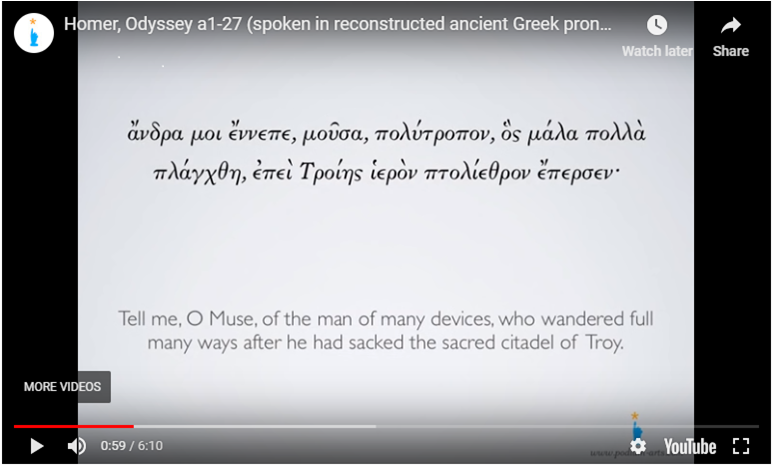
The opening lines of the Odyssey showing the written accents
https://www.youtube.com/watch?time_continue=127&v=MOvVWiDsPWQ
We also talked briefly about teaching ancient Greek as John has just taken on a student who hoped to do GCSEs in both Latin and Greek at Brighton College in the UK. John had written to the College asking whether they stressed Greek words according to the accents printed on Greek texts or by applying the rules governng stress in Latin. The latter system, which has no basis in ancient practice, was devised by a Dutch scholar working in Oxford in the 17th century and came to be generally adoped in Holland, Britain and most Commonwealth countries. Other countries much more rationally stress the syllable which bears the printed accent and which was pronouced on a higher tone in ancient Greek and is now stressed in the modern language. Though the school has yet to reply both to John’s email and a similar query from the student’s parent, Valerie was sure that they are still using the bizarre Anglo-Dutch system. John has nevertheless now decided to continue follwing the printed accents, as the school probably pays little attention to pronunciation in any case! The exact nature of the pitch accent in ancient Greek is not known for certain but the acute accent probalby represented a high pitch, a circumlfex a rise and fall, and a grave simply the absence of the high pitch which would be be heard in certain circumstances on the final syllable of a word. For more on Greek and the various textbooks now in use, see https://linguae.weebly.com/res-graecae.html
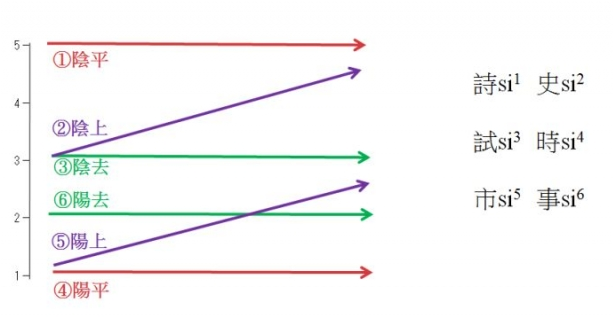
We discussed the Cantonese tone system and the confusion in the traditional analysis between tone in the strict sense and syllabic structure: tones 7, 8 and 9 are in fact pronounced on the same pitch as 1, 3 and 6 and differ only in the presence of a `non-released stop consonant’ (p, t or k) after the vowel. Linguists thus classify sìk (識) as tone 1, like sì (詩) rather than `tone 7’. Pat, who started learning Cantonese on his arrival in Hong Kong in 1972, remembered a sentence he was given exemplifying the six real tones : 三點半黎我度 (sàam dím bun làih ngóh douh, Come to my place at 3.30). Pat also explained that Sydney Lau’textbooks made a distinction within the tone 1 category between the high-level tone in衫 (clothes) and high-falling in三 (three), both of which were transcribed as sàam in materials John used at CUHK in 1996-7. The old distinction has in fact been lost in present-day Hong Kong Cantonese but, at least when Robert Bauer’s Modern Cantonese Phonology was published in 1997, it was still retained by speakers in Guangzhou, Eric later found an Apple Daily article (2/2/18) explaining the distinction between九聲 and 六調and also giving a diagram of the tone contours involved. This puzzled John because it shows tone 4 as staying on one level but, as the name `low-falling’ and also the discussion in Modern Cantonese Phonology (pp. 118-119) indicate, it should descend from level 2 to level 1.
https://www.youtube.com/watch?time_continue=127&v=MOvVWiDsPWQ
We also talked briefly about teaching ancient Greek as John has just taken on a student who hoped to do GCSEs in both Latin and Greek at Brighton College in the UK. John had written to the College asking whether they stressed Greek words according to the accents printed on Greek texts or by applying the rules governng stress in Latin. The latter system, which has no basis in ancient practice, was devised by a Dutch scholar working in Oxford in the 17th century and came to be generally adoped in Holland, Britain and most Commonwealth countries. Other countries much more rationally stress the syllable which bears the printed accent and which was pronouced on a higher tone in ancient Greek and is now stressed in the modern language. Though the school has yet to reply both to John’s email and a similar query from the student’s parent, Valerie was sure that they are still using the bizarre Anglo-Dutch system. John has nevertheless now decided to continue follwing the printed accents, as the school probably pays little attention to pronunciation in any case! The exact nature of the pitch accent in ancient Greek is not known for certain but the acute accent probalby represented a high pitch, a circumlfex a rise and fall, and a grave simply the absence of the high pitch which would be be heard in certain circumstances on the final syllable of a word. For more on Greek and the various textbooks now in use, see https://linguae.weebly.com/res-graecae.html
We discussed the Cantonese tone system and the confusion in the traditional analysis between tone in the strict sense and syllabic structure: tones 7, 8 and 9 are in fact pronounced on the same pitch as 1, 3 and 6 and differ only in the presence of a `non-released stop consonant’ (p, t or k) after the vowel. Linguists thus classify sìk (識) as tone 1, like sì (詩) rather than `tone 7’. Pat, who started learning Cantonese on his arrival in Hong Kong in 1972, remembered a sentence he was given exemplifying the six real tones : 三點半黎我度 (sàam dím bun làih ngóh douh, Come to my place at 3.30). Pat also explained that Sydney Lau’textbooks made a distinction within the tone 1 category between the high-level tone in衫 (clothes) and high-falling in三 (three), both of which were transcribed as sàam in materials John used at CUHK in 1996-7. The old distinction has in fact been lost in present-day Hong Kong Cantonese but, at least when Robert Bauer’s Modern Cantonese Phonology was published in 1997, it was still retained by speakers in Guangzhou, Eric later found an Apple Daily article (2/2/18) explaining the distinction between九聲 and 六調and also giving a diagram of the tone contours involved. This puzzled John because it shows tone 4 as staying on one level but, as the name `low-falling’ and also the discussion in Modern Cantonese Phonology (pp. 118-119) indicate, it should descend from level 2 to level 1.
We finlly read lines 671-725 of Aenedi II, thus completing the section prescribed a few years ago for IGCSE and annotated by John for three of his students who were taking the exam. In line 691, we found that John’s text (dā deinde augurium, pater, atque haec ōmina firma.) differed from Valerie’s, which had auxilium instead of augurium. This puzzledJohn, as he had forgotten his own note from 2012 explaining that he latter was the word in the text of Virgil used by Probus, a commentator of the 1st century A.D., and accepted by most modern editors. However, the surviving manuscripts of the Aeneid all have auxilium (help). The case for auxilium is made in Conington’s mammoth 19th century edition (see https://books.google.com.hk/books?id=7vhoAAAAcAAJ ).
Another puzzle was initially provided by abluerō (`I will have washed’), which stands on its own as the unfinished line 720. John had inadvertently merged it with 719 and then wondered why it didn’t scan properly! The unfinished lines in the Aeneid are themselves a major puzzle as, since Virgil died leaving his masterpiece unfinished, we do not know whether he would have completed them later or whether he wished to leave them as they were.
We discussed also the use of the historical infinitive, which John in the notes had stated was a substitute for the perfect or historic present tense. He later discovered that this construction, particularly common in historians like Livy and Tacitus but found in most classical writers, was employed in scene setting as a substitute for the imperfect tense. The translation below has been adjusted accordingly. Also comnented on was Virgil’s use of the alternative –īs accusative plural ending in i-stem (`SeXy’) nouns of the 3rd declension, This was probably obsolete in colloquial Latin by Virgil’s time, replaced by –ēs on analogy with consonant stems, but poets in particular seem to have thought its archaic flavour added solemnity to their writing
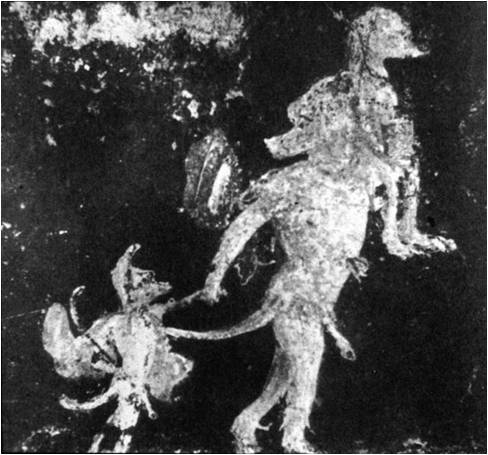
John said that the account of the destruction of Troy was his favourite section of the Aeneid but not everybody had the same favourable impression. A wall painting in Pompeiis mocks the famous scene of Aeneas fleeing Troy with his father on his shoulders and his son at his side by showing all three in the guise of apes.
We discussed also the use of the historical infinitive, which John in the notes had stated was a substitute for the perfect or historic present tense. He later discovered that this construction, particularly common in historians like Livy and Tacitus but found in most classical writers, was employed in scene setting as a substitute for the imperfect tense. The translation below has been adjusted accordingly. Also comnented on was Virgil’s use of the alternative –īs accusative plural ending in i-stem (`SeXy’) nouns of the 3rd declension, This was probably obsolete in colloquial Latin by Virgil’s time, replaced by –ēs on analogy with consonant stems, but poets in particular seem to have thought its archaic flavour added solemnity to their writing
John said that the account of the destruction of Troy was his favourite section of the Aeneid but not everybody had the same favourable impression. A wall painting in Pompeiis mocks the famous scene of Aeneas fleeing Troy with his father on his shoulders and his son at his side by showing all three in the guise of apes.
DĒ INFANTIBUS LATĪNAM DOCENDĪS
“Nōn dubium est quīn lingua Latīna, ut omnēs linguae, sine grammaticā fōrmālī discī possit.
Not doubtful is that language Latin as all languages without grammar formal be-learned can
Tempore Caesarum profectō paene omnēs infantēs in Italiā, Galliā et Hispāniā linguam
In-time of-Caesars of-course almost all infants in Italy Gaul and Spain language
Latīnam in sinū mātrum hōc modō discēbant et, postquam in ōribus populōrum lingua nostra
Latin in lap of-mothers in-this way used-to-learn and after in mouths of-peoples language our
in linguās Rōmānās hodiernās trānsfōrmāta est, etiamsī plūrimī Latīnae methodō bilinguālī
into languages Roman of-present-day changed was although most Latin by-method bilingual
iam studēbant, erant quī Latīnam per Latīnam discerent. Prīmus inter quōs numerandus est
now were-studying there-were those-who Latin through Latin learned first among whom to-be-counted is
scrīptor Francogallicus clārissimus, Michael Montaigne ((1533-1592), qui experientiam suam
writer French very-famous Michel Montaigne who experience his-own
ipse dēscrīpsit:
himself described
“… en nourrice et avant le premier dénouement de ma langue, [mon père] me donna en charge à un Allemand….du tout ignorant de notre langue, et très verse en la latine. Cettui-ci…m’avait continuellement entre les bras. Il en eut aussi avec lui deux autres moindres en savoir…[qui] ne m’entretenaient d’autre langue que latine. Quant au reste de sa maison, c”était un règle inviolable que que ne lui-même, ni ma mère, ni valet, ni chambrière ne parlaient en ma compagnie qu’autant de mots de latin que chacun avait appris pour jargonner avec moi….sans art, sans livre, sans grammaire ou précepte, sans fouet et sans larmes, j’avais appris du latin tout assez pur que mon maître d’école le savait. (Essais, livre 1, chapitre XXVI)
[ dum ā nūtrīce alor atque antequam rudimenta linguae meae discerem, pater mē Germānō
while by nurse I-was-fed and before basics of-language my I-could-learn father me to-German
cuidam trādidit, quī linguam Francogallicam omnīnō nesciēbet sed Latīnam callēbat. Ille mē
a-certain handed-over who language French completely did-not-know but in-Latin excelled He me
bracchiīs suīs semper tenēbat atque duōs comitēs, minus perītōs, sēcum habēbat quī mē
in-arms his always held and two companions less skilled with-himself had who me
cūrantēs sōlum Latīnē loquēbantur. Ut dē reliquīs ex familiā patris dīcam, rēgula inviolābilis
taking-care-of only in-Latin used-to-speak [that] about others from household of-father I-speak rule inviolable
erat nēve pater ipse, nēve māter mea, nēve cubiculārius nēve cubiculāria praeter tot vocābula
was neither father himself nor mother my nor valet nor chamber-maid except so-many words
Latīna quot quisque didicisset ut mēcum colloquerētur quid cōram mē dīceret…sine methodō,
Latin as each had-learned so-that with-me they-might-talk anything in-front-of me should-say without system
sine librō, sine rēgulīs grammaticīs, sine plāgīs et sine lacrimīs linguam tam bene didiceram
without book without rules grammatical without blows and without tears language so well I-had-learned
ut Latīnitās magistrī lūdī meam nōn superāret.. (Tractātūs, liber Ī, capitulum XXVĪ), ]
that Latin of-teacher of-school mine not surpassed essays book 1 chapter 26
Tāliīs frūctūs adeptus est Montaigne, quod puer omnibus diēbus per complūrēs annōs inter
Such results obtain did Montaigne because as-boy on-all days over several years amongst
Latīnē loquentēs vīvēbat. Ēheu, nōbīs rēs aliter sēsē habent quod spatium brevissimum
In-Latin people-speaking he-used-to-live alas for-us matters otherwise themselves have because for-period very-short
linguam docēre dēbēmus antequam puerī iterum linguīs vernāculīs circumdentur. Ipse
language to-teach we-have-to before children again by-languages vernacular are-surrounded myself
cum puerīs lūdō, rēs dīversās ostendēns gerēnsque vocābula dīcō, mandāta simplicia dō: `ad
with the- boys I-play things various showing and-doing words I-speak instructions simple I-give to
iānuam curre,’` cōnsīde’, `prope fenestram stā’, `fragmenta in canistrō dēice’, `manūs suprā
door run sit-down near window stand pieces into basket throw hands above
caput pōne.’ Gladiōs lūsōriōs necnōn ursulum lūsōrium, cui nōmen `Eduardus’ inditum est,
head place swords toy and-also little-bear toy on-whom name Eduardus bestowed had-been
ad lēctiōnem portō. Puerī laetī gladiātōrēs simulant, ipse ictū receptō `Mē vulnerāvistī!’ saepe
to lesson I-bring boys happily gladiators imitate I-myself with-blow received me you-have-wounded often
exclāmō. Etiam ursulum moveō et `Quid facit Eduardus?’ rogō, puer `Currit’ vel `Ambulat’
exclaim also little-bear I-move and what is-doing Edward I-ask boy runs or walks
respondēre potest.
to-reply is-able
Quamquam ipse plērumque tantum Latīnē loquor, linguae Anglicā Sinīcāque nōn omnīnō ā
Although I-myself generally only in-Latin speak languages English and-Chinese not completely from
conclāvī nostrō relēgantur. Discipulus et frāter plērumque linguā Pūnicā[1] ipsī loquuntur,
room our are-banished pupil and brother generally in-language Punic themselves speak
saepe ipse respondēns tribus linguīs ūtor - “Anglicē `bus’, Sīnicē `bāsī’ (巴士 - hoc
often myself replying three languages use in-English `bus’ in-Chinese `basi’ this
vocābulum in sermōne Cantonensī, neque tamen in linguā natiōnālī invenītur), Latīnē `raeda
word in speech Cantonese and-not however in language national is-found in-Latin raeda
longa’ dīcitur.’ “
longa is-said
“Cum discipulus meus et Sinīcē et Anglicē paululum legere sciat, verba Latīna in chartīs
Since student my both Chinese and English a-little to-read knows-how-to words Latin on papers
parvīs scrīpta ostendō et imperō ut recitet. Deinde necesse est puerō chartam prope rem ipsam
small written I-show and order that he-read-out then necessary it-is for-boy paper next-to thing itself
pōnere. In hōc exercitiō terminātiōnibus grammaticīs rēctē utī nōndum potest, sed dē hāc rē
to-place in this exercise terminations grammatical correctly to-use not-yet he-is-able but about this matter
nōn multum cūrō. Exemplī grātia, `fenestra’ vocābulō vīsō, discipulus semper `fenestram’
not much I-care of- example for-sake fenestra word seen student always fenestram
dīcit quod saepe mandātum `Ad fenestram curre!’ audīvit. Ipse nunquam `Errāvistī’ dīcō sed
says because often order Ad fenestram curre he-has-heard myself never you-made-a-mistake I-say but
vocābulum rēctē repetō.
the-word correctly I-repeat
“Potipuncta (Anglicē `PowerPoints’) quoque praeparāvī in quibus rēs ipsae cum nōminibus
PowerPoints in-English also I-have-prepared in which objects themselves with names
dēmōnstrantur et in īmā pāginā interretialī c.t.http://linguae.weebly.com/in-conclāvī-schōlārī.html
are-shown and at bottome-of page web
iam posuī. Crēdō magnī mōmentī esse
now I-have—placed I-believe of-great importance to-be
puerīs varietātem āctiōnum praebēre quod facile taediō afflīguntur sī actīvitās nimis
for-children variety of-actions to-provide because easily with-boredom they-are-afflicted if activity too-much
prolongātur. Difficile est rēs novās semper invenīre . Methodus utilissimus est rēs ā discipulō
is-extended difficult it-is things new always to-find method most-useful is things a pupil
ipsō dictās Latīnē reddere, sed hīc difficultātēs novae oriuntur quod nōn semper sine auxiliō
himself said into-Latin to-translate but here difficulties new arise because not always without help
lexicī iūnctūram iūstam exprōmere possum. Exemplī grātia, ubi frāter discipulī ōlim dīxit
od-dictionary phrase right utter I-can of-example for-sake when brother of-student once saif
`Fong pēī!’ (放屁) iūnctūra Latīna `Ventre crepuit’ in mentem meam nōn incīdit.
`farted’ phrase Latin with-stomach made-noise into mind my not fell
“Est etiam alia difficultās quod magister, etiamsī Latīnitātem satis callet ut plūrimās rēs ad
There-is also another difficulty because teacher even-if at-Latin enough is-good that very-many things to
lēctiōnem pertinentēs dīcere possit, nōn tam fluenter quam linguā societātis suae loquitur.
lesson relevant say can not so fluently as in-language of-society his-own speaks
Crēdō discipulōs, etiam īnfantēs hanc rem intellegere, itaque ipsōs mālle linguā vernaculā
I-believe students even infants this thing to-understand and-so themselves to-prefer in-language vernacular
colloquī pergere. Remedium est nōs semper certāre ut melius loquāmur sed, ut aiunt, ars
to-converse to-continue remedy is us always to-strive so-that better we-speak but as they-say art
longa, vīta brevis!
long life short
“In fīne cōnfitērī dēbeō per tālēs methodōs frūctūs nōn celeriter adipīscimur sed
At end confess I-must by such methods results not quickly we-obtain but
discipulus meus vocābula dicta vel scrīpta saepe intelligit etiamsī ipse mēcum plērumque
student my words spoken or written often understands even-if himself with-me generallyl
Anglicē colloquitur. Addere quoque velim puerīs plūs septem annōs natis grammaticam
In-English he-converses to-add also I-would-like for-children more-than seven years aged grammar
explicitam ūsuī esse.”
explicit of-use to-be
[1] lingua Pūnica literally means the Punic (<Phoenician) language of Carthage but the phrase is used in the Grex Latins Loquentium to refer to any language other than Latin, which is itself referred to sometimes as lingua nostra (`our language’)
“Nōn dubium est quīn lingua Latīna, ut omnēs linguae, sine grammaticā fōrmālī discī possit.
Not doubtful is that language Latin as all languages without grammar formal be-learned can
Tempore Caesarum profectō paene omnēs infantēs in Italiā, Galliā et Hispāniā linguam
In-time of-Caesars of-course almost all infants in Italy Gaul and Spain language
Latīnam in sinū mātrum hōc modō discēbant et, postquam in ōribus populōrum lingua nostra
Latin in lap of-mothers in-this way used-to-learn and after in mouths of-peoples language our
in linguās Rōmānās hodiernās trānsfōrmāta est, etiamsī plūrimī Latīnae methodō bilinguālī
into languages Roman of-present-day changed was although most Latin by-method bilingual
iam studēbant, erant quī Latīnam per Latīnam discerent. Prīmus inter quōs numerandus est
now were-studying there-were those-who Latin through Latin learned first among whom to-be-counted is
scrīptor Francogallicus clārissimus, Michael Montaigne ((1533-1592), qui experientiam suam
writer French very-famous Michel Montaigne who experience his-own
ipse dēscrīpsit:
himself described
“… en nourrice et avant le premier dénouement de ma langue, [mon père] me donna en charge à un Allemand….du tout ignorant de notre langue, et très verse en la latine. Cettui-ci…m’avait continuellement entre les bras. Il en eut aussi avec lui deux autres moindres en savoir…[qui] ne m’entretenaient d’autre langue que latine. Quant au reste de sa maison, c”était un règle inviolable que que ne lui-même, ni ma mère, ni valet, ni chambrière ne parlaient en ma compagnie qu’autant de mots de latin que chacun avait appris pour jargonner avec moi….sans art, sans livre, sans grammaire ou précepte, sans fouet et sans larmes, j’avais appris du latin tout assez pur que mon maître d’école le savait. (Essais, livre 1, chapitre XXVI)
[ dum ā nūtrīce alor atque antequam rudimenta linguae meae discerem, pater mē Germānō
while by nurse I-was-fed and before basics of-language my I-could-learn father me to-German
cuidam trādidit, quī linguam Francogallicam omnīnō nesciēbet sed Latīnam callēbat. Ille mē
a-certain handed-over who language French completely did-not-know but in-Latin excelled He me
bracchiīs suīs semper tenēbat atque duōs comitēs, minus perītōs, sēcum habēbat quī mē
in-arms his always held and two companions less skilled with-himself had who me
cūrantēs sōlum Latīnē loquēbantur. Ut dē reliquīs ex familiā patris dīcam, rēgula inviolābilis
taking-care-of only in-Latin used-to-speak [that] about others from household of-father I-speak rule inviolable
erat nēve pater ipse, nēve māter mea, nēve cubiculārius nēve cubiculāria praeter tot vocābula
was neither father himself nor mother my nor valet nor chamber-maid except so-many words
Latīna quot quisque didicisset ut mēcum colloquerētur quid cōram mē dīceret…sine methodō,
Latin as each had-learned so-that with-me they-might-talk anything in-front-of me should-say without system
sine librō, sine rēgulīs grammaticīs, sine plāgīs et sine lacrimīs linguam tam bene didiceram
without book without rules grammatical without blows and without tears language so well I-had-learned
ut Latīnitās magistrī lūdī meam nōn superāret.. (Tractātūs, liber Ī, capitulum XXVĪ), ]
that Latin of-teacher of-school mine not surpassed essays book 1 chapter 26
Tāliīs frūctūs adeptus est Montaigne, quod puer omnibus diēbus per complūrēs annōs inter
Such results obtain did Montaigne because as-boy on-all days over several years amongst
Latīnē loquentēs vīvēbat. Ēheu, nōbīs rēs aliter sēsē habent quod spatium brevissimum
In-Latin people-speaking he-used-to-live alas for-us matters otherwise themselves have because for-period very-short
linguam docēre dēbēmus antequam puerī iterum linguīs vernāculīs circumdentur. Ipse
language to-teach we-have-to before children again by-languages vernacular are-surrounded myself
cum puerīs lūdō, rēs dīversās ostendēns gerēnsque vocābula dīcō, mandāta simplicia dō: `ad
with the- boys I-play things various showing and-doing words I-speak instructions simple I-give to
iānuam curre,’` cōnsīde’, `prope fenestram stā’, `fragmenta in canistrō dēice’, `manūs suprā
door run sit-down near window stand pieces into basket throw hands above
caput pōne.’ Gladiōs lūsōriōs necnōn ursulum lūsōrium, cui nōmen `Eduardus’ inditum est,
head place swords toy and-also little-bear toy on-whom name Eduardus bestowed had-been
ad lēctiōnem portō. Puerī laetī gladiātōrēs simulant, ipse ictū receptō `Mē vulnerāvistī!’ saepe
to lesson I-bring boys happily gladiators imitate I-myself with-blow received me you-have-wounded often
exclāmō. Etiam ursulum moveō et `Quid facit Eduardus?’ rogō, puer `Currit’ vel `Ambulat’
exclaim also little-bear I-move and what is-doing Edward I-ask boy runs or walks
respondēre potest.
to-reply is-able
Quamquam ipse plērumque tantum Latīnē loquor, linguae Anglicā Sinīcāque nōn omnīnō ā
Although I-myself generally only in-Latin speak languages English and-Chinese not completely from
conclāvī nostrō relēgantur. Discipulus et frāter plērumque linguā Pūnicā[1] ipsī loquuntur,
room our are-banished pupil and brother generally in-language Punic themselves speak
saepe ipse respondēns tribus linguīs ūtor - “Anglicē `bus’, Sīnicē `bāsī’ (巴士 - hoc
often myself replying three languages use in-English `bus’ in-Chinese `basi’ this
vocābulum in sermōne Cantonensī, neque tamen in linguā natiōnālī invenītur), Latīnē `raeda
word in speech Cantonese and-not however in language national is-found in-Latin raeda
longa’ dīcitur.’ “
longa is-said
“Cum discipulus meus et Sinīcē et Anglicē paululum legere sciat, verba Latīna in chartīs
Since student my both Chinese and English a-little to-read knows-how-to words Latin on papers
parvīs scrīpta ostendō et imperō ut recitet. Deinde necesse est puerō chartam prope rem ipsam
small written I-show and order that he-read-out then necessary it-is for-boy paper next-to thing itself
pōnere. In hōc exercitiō terminātiōnibus grammaticīs rēctē utī nōndum potest, sed dē hāc rē
to-place in this exercise terminations grammatical correctly to-use not-yet he-is-able but about this matter
nōn multum cūrō. Exemplī grātia, `fenestra’ vocābulō vīsō, discipulus semper `fenestram’
not much I-care of- example for-sake fenestra word seen student always fenestram
dīcit quod saepe mandātum `Ad fenestram curre!’ audīvit. Ipse nunquam `Errāvistī’ dīcō sed
says because often order Ad fenestram curre he-has-heard myself never you-made-a-mistake I-say but
vocābulum rēctē repetō.
the-word correctly I-repeat
“Potipuncta (Anglicē `PowerPoints’) quoque praeparāvī in quibus rēs ipsae cum nōminibus
PowerPoints in-English also I-have-prepared in which objects themselves with names
dēmōnstrantur et in īmā pāginā interretialī c.t.http://linguae.weebly.com/in-conclāvī-schōlārī.html
are-shown and at bottome-of page web
iam posuī. Crēdō magnī mōmentī esse
now I-have—placed I-believe of-great importance to-be
puerīs varietātem āctiōnum praebēre quod facile taediō afflīguntur sī actīvitās nimis
for-children variety of-actions to-provide because easily with-boredom they-are-afflicted if activity too-much
prolongātur. Difficile est rēs novās semper invenīre . Methodus utilissimus est rēs ā discipulō
is-extended difficult it-is things new always to-find method most-useful is things a pupil
ipsō dictās Latīnē reddere, sed hīc difficultātēs novae oriuntur quod nōn semper sine auxiliō
himself said into-Latin to-translate but here difficulties new arise because not always without help
lexicī iūnctūram iūstam exprōmere possum. Exemplī grātia, ubi frāter discipulī ōlim dīxit
od-dictionary phrase right utter I-can of-example for-sake when brother of-student once saif
`Fong pēī!’ (放屁) iūnctūra Latīna `Ventre crepuit’ in mentem meam nōn incīdit.
`farted’ phrase Latin with-stomach made-noise into mind my not fell
“Est etiam alia difficultās quod magister, etiamsī Latīnitātem satis callet ut plūrimās rēs ad
There-is also another difficulty because teacher even-if at-Latin enough is-good that very-many things to
lēctiōnem pertinentēs dīcere possit, nōn tam fluenter quam linguā societātis suae loquitur.
lesson relevant say can not so fluently as in-language of-society his-own speaks
Crēdō discipulōs, etiam īnfantēs hanc rem intellegere, itaque ipsōs mālle linguā vernaculā
I-believe students even infants this thing to-understand and-so themselves to-prefer in-language vernacular
colloquī pergere. Remedium est nōs semper certāre ut melius loquāmur sed, ut aiunt, ars
to-converse to-continue remedy is us always to-strive so-that better we-speak but as they-say art
longa, vīta brevis!
long life short
“In fīne cōnfitērī dēbeō per tālēs methodōs frūctūs nōn celeriter adipīscimur sed
At end confess I-must by such methods results not quickly we-obtain but
discipulus meus vocābula dicta vel scrīpta saepe intelligit etiamsī ipse mēcum plērumque
student my words spoken or written often understands even-if himself with-me generallyl
Anglicē colloquitur. Addere quoque velim puerīs plūs septem annōs natis grammaticam
In-English he-converses to-add also I-would-like for-children more-than seven years aged grammar
explicitam ūsuī esse.”
explicit of-use to-be
[1] lingua Pūnica literally means the Punic (<Phoenician) language of Carthage but the phrase is used in the Grex Latins Loquentium to refer to any language other than Latin, which is itself referred to sometimes as lingua nostra (`our language’)
AENEID II, 671-725
|
Hinc ferrō accingor rūrsus clipeōque sinistram
īnsertābam aptāns mēque extrā tecta ferēbam. ecce autem complexa pedēs in līmine coniūnx haerēbat, parvumque patrī tendēbat Iūlum: 674 |
‘sī peritūrus abīs, et nōs rape in omnia tēcum;
sīn aliquam expertus sūmptīs spem pōnis in armīs, hanc prīmum tūtāre domum. cuī parvus Iūlus, cuī pater et coniunx quondam tua dicta relinquor?’ |
TRANSLATION
At this point I gird myself with iron again and started to insert my left arm into my shield strap, fitting it in position. But then at the doorstep my wife embraced my legs and clung to them, holding out little Iulus to his father. `If you are leaving to go to your death, take us also with you wherever you go. But if from your exepience you think there is hope in taking up arms, first guard this home. To what fate is little Iulus being left, to what fate father and the wife who was once called yours ?’
671: hinc from this place, from now on. ferrum, -ī n iron, weaponry. accingō, accingere, accīnxī, accīnctum provide (with). rūrsus again. clipeus, -ī m shield. sinistra, -ae f right hand/ arm
accingor: passive, but probably used in a reflexive sense: `I gird myself’
672: īnsertō, īnsertāre, īnsertāvī, īnsertātum thrust in. aptō, aptāre, aptāvī, aptātum fit, adjust. extrā outside. tectum, -ī n roof, dwelling. ferō, ferre, tulī, lātum carry, bring.
673: ecce behold, look! autem but, however, and. complector, complectī, complexus sum embrace. pēs, pedis m foot. līmen, līminis coniūnx n threshold. coniūnx, coniugis m f spouse.
ecce autem: these words are regularly used together to mark an unexpected change in the sequence of events.
674: haereō, haerēre, haesī, haesum stick, cling. parvus, -a, -um small, little. pater, patris m father. tendō, tendere, tetendī, tentum/tēnsum stretch out. Iūlus, -ī m Aeneas’s son (Ascanius). tendēbat: she was stretching out her arms to hold the child near Aeneas, not stretching Ascanius himself! Iūlum: an intial `i’ was normally pronounced as a consonant (as in Iūlius) but in this name was normally treated as a short vowel, making the word trisyllabic..
675: sī if. pereō, perīre, periī/perīvī, peritum perish. abeō, abīre, abiī/abīvī, abitum go away. nōs we/us. rapiō, rapere, rapui, raptum. snatch, carry off. tēcum with you. peritūrus: future participle (`about to die’) et: here equivalent to `also’ rather than `and’.
676: sīn but if. aliquī, aliqua, aliquod any. experior, experīrī, expertus put to the test, experience. sūmō, sūmere, sūmpsī, sūmptum take up. spēs, speī f hope. pōnō, pōnere, posuī, positum put, place. arma, armōrum n pl expertus: literally `having experiences’, so meaning `on the basis of your experience. sūmptīs.. armīs: literally `arms taken up’ but, as often, English would prefer a verbal noun: `taking up arms’
677: hic, haec, hoc this. prīmum first (advb) tūtor, tūtārī, tūtātus sum guard, protect. domus, domī/domūs f home. parvus, -a, -um small, little. tūtāre: this is the singular imperative, which in a passive or deponent verb is identical to the corresponding active infinitive. cuī: dative singular of the interrogative pronoun (in most case identical in form to the relative pronoun):`to who(m)?’ , `for what?’ Note the repetition of the pronoun in the next line, a figure of speech known as anaphora.
678: quondam once. relinquō, relinquere, relīquī, relictum leave behind. leave. tuus, -a, -um your(s). dīcō, dīcere, dīxī, dictum say, tell, call. quondam tua dicta: Creusa strengthens the appeal by suggesting that by leaving for battle Aeneas shownh he no longer thnks of her as his wife. relinquor: literally `I am left’ but applying also to Iulus and Anchises.
At this point I gird myself with iron again and started to insert my left arm into my shield strap, fitting it in position. But then at the doorstep my wife embraced my legs and clung to them, holding out little Iulus to his father. `If you are leaving to go to your death, take us also with you wherever you go. But if from your exepience you think there is hope in taking up arms, first guard this home. To what fate is little Iulus being left, to what fate father and the wife who was once called yours ?’
671: hinc from this place, from now on. ferrum, -ī n iron, weaponry. accingō, accingere, accīnxī, accīnctum provide (with). rūrsus again. clipeus, -ī m shield. sinistra, -ae f right hand/ arm
accingor: passive, but probably used in a reflexive sense: `I gird myself’
672: īnsertō, īnsertāre, īnsertāvī, īnsertātum thrust in. aptō, aptāre, aptāvī, aptātum fit, adjust. extrā outside. tectum, -ī n roof, dwelling. ferō, ferre, tulī, lātum carry, bring.
673: ecce behold, look! autem but, however, and. complector, complectī, complexus sum embrace. pēs, pedis m foot. līmen, līminis coniūnx n threshold. coniūnx, coniugis m f spouse.
ecce autem: these words are regularly used together to mark an unexpected change in the sequence of events.
674: haereō, haerēre, haesī, haesum stick, cling. parvus, -a, -um small, little. pater, patris m father. tendō, tendere, tetendī, tentum/tēnsum stretch out. Iūlus, -ī m Aeneas’s son (Ascanius). tendēbat: she was stretching out her arms to hold the child near Aeneas, not stretching Ascanius himself! Iūlum: an intial `i’ was normally pronounced as a consonant (as in Iūlius) but in this name was normally treated as a short vowel, making the word trisyllabic..
675: sī if. pereō, perīre, periī/perīvī, peritum perish. abeō, abīre, abiī/abīvī, abitum go away. nōs we/us. rapiō, rapere, rapui, raptum. snatch, carry off. tēcum with you. peritūrus: future participle (`about to die’) et: here equivalent to `also’ rather than `and’.
676: sīn but if. aliquī, aliqua, aliquod any. experior, experīrī, expertus put to the test, experience. sūmō, sūmere, sūmpsī, sūmptum take up. spēs, speī f hope. pōnō, pōnere, posuī, positum put, place. arma, armōrum n pl expertus: literally `having experiences’, so meaning `on the basis of your experience. sūmptīs.. armīs: literally `arms taken up’ but, as often, English would prefer a verbal noun: `taking up arms’
677: hic, haec, hoc this. prīmum first (advb) tūtor, tūtārī, tūtātus sum guard, protect. domus, domī/domūs f home. parvus, -a, -um small, little. tūtāre: this is the singular imperative, which in a passive or deponent verb is identical to the corresponding active infinitive. cuī: dative singular of the interrogative pronoun (in most case identical in form to the relative pronoun):`to who(m)?’ , `for what?’ Note the repetition of the pronoun in the next line, a figure of speech known as anaphora.
678: quondam once. relinquō, relinquere, relīquī, relictum leave behind. leave. tuus, -a, -um your(s). dīcō, dīcere, dīxī, dictum say, tell, call. quondam tua dicta: Creusa strengthens the appeal by suggesting that by leaving for battle Aeneas shownh he no longer thnks of her as his wife. relinquor: literally `I am left’ but applying also to Iulus and Anchises.
|
Tālia vōciferāns gemitū tectum omne replēbat, 679
cum subitum dictūque oritur mīrābile mōnstrum. namque manūs inter maestōrumque ōra parentum ecce levis summō dē vertice vīsus Iūlī fundere lūmen apex, tactūque innoxia mollīs 683 |
lambere flamma comās et circum tempora pascī.
nōs pavidī trepidāre metū crīnemque flagrantem excutere et sanctōs restinguere fontibus ignīs. at pater Anchīses oculōs ad sīdera laetus extulit et caelō palmās cum vōce tetendit: 688 |
TRANSLATION
Crying out in such a way she was filling the house with her groans when suddenly there appeared an omen wonderful to relate. For between the hands and faces of his sad parents – picture this! – a light tongue of fire was seen to shine from the top of Iulus’s head and flame to lick his soft tresses and graze around his temples. Terrified, we were trembling with fear, shaking the fire from his hair and quenching the sacred flames with water. But my father Anchises happily raised his eyes to the stars and held up his palms towards heaven with these words:
679: talis, -e such. vōciferor, vōciferārī, vōciferātus sum cry out. gemitus, -ūs m sigh, groan. tectum, -ī n roof, house.
omnis, -e all, whole. repleō, replēre, replēvī, replētum fill up.
680: subitus, -a, -um sudden. dīcō, dīcere, dīxī, dictum say, tell. orior, orīrī, ortus sum deponent verb rise, appear on the scene. mīrābilis, -e strange, wonderful. monstrum, -ī n omen, sign, unnatural thing. subitum: an adjective used with the noun (sudden omen) where English would prefer (an omen… suddenly appeared) dictū .. mīrābile: `wonderful to relate’ dictū is the ablative of the supine formed from dīcō. For uses of the supine (a verbal noun identical in the accusative to the neuter perfect participle) see INFINITIVES AND PARTICIPLES, slide 14.
681: namque for. manus, manūs f hand. inter inbetween. maestus, -a, -um sad. ōs, ōris n face. parēns, parentis c parent.
manūs … inter..ōra: the preposition inter (between) is here placed between the two nouns it governs, thus reinforcing its meaning. Prose order would be inter manūs et ōra. Iulus is being held up by his kneeling mother so he is in between her face and Aeneas’s above.
682: ecce behold, see. levis, -e light. summus, -a, -um top of. vertex, verticis m crown of head, peak. videō, vidēre, vīdī, vīsum see. Iūlus, -ī m Aeneas’s son. vīsus: short for the passive perfect vīsus est (`was seen’ ) with apex as subject.
683: fundō, -ere, fūdī, fūsum pour out, shed, produce. lūmen, lūminis n light. apex, apicis m point, tip (of a flame). tactus, tactūs m touch. innoxius, -a, -um harmless. mollis, -e soft.
fundere: this infinitive, like lambere, and pascī in the next line, is dependent on vīsus est (`was seen to..’).
684: lambō, lambere, lambī lick; wash. flamma, -ae f flame. coma, -ae f hair of the head. circum around. tempora, temporum n temples of the head, times. pāscō, pāscere, pāstus sum graze, feed oneself. . The inclusion of this incident in the story of Aeneas was probably Virgil’s own invention, but he would have known that it would remind a Roman audience of the legend about flames appearing on the head of Servius Tullius, the palace slave who later became Rome’s sixth king.
685: nōs we, us. pavidus, -a, -um fearful, terrified trepidō, -āre, trepidāvī, trepidātum be alarmed, tremble. metus, -ūs m fear. crīnis, crīnis m hair. flagrō, -āre, flagrāvī, flagrātum blaze, burn. trepidāre: like excutere and restinguere in line 687, this is a `historic infinitives’, used as an alternative to the perfect tense or historic present for quick, successive actions.
686: excutiō, excutere, excussī, excussum shake out. sanctus, -a, -um holy. restinguō, -ere, restīnxī, restīnctum extinguish. fōns, fontis m spring, fountain, water. ignis, ignis m fire. excutere…restunguere: these words may refer to two separate actions (shaking the hair vigorously and also throwing water onto it) or the use of water is actually the method of `shaking out’ (`we dash the fire from his hair by throwing water’). Presumably the family were not aware till afterwards that the flames were sacred (sanctos).
687: pater, patris m father. oculus, -ī m eye. sīdus, sīderis n star. laetus, -a, -um happy.
688: efferō, efferre, extulī, ēlātum bring out, raise. caelum, -ī n sky. palma, -ae f palm. vōx, vōcis f voice. tendō, tendere, tetendī, tentum/tēnsum stretch out, extend.
Crying out in such a way she was filling the house with her groans when suddenly there appeared an omen wonderful to relate. For between the hands and faces of his sad parents – picture this! – a light tongue of fire was seen to shine from the top of Iulus’s head and flame to lick his soft tresses and graze around his temples. Terrified, we were trembling with fear, shaking the fire from his hair and quenching the sacred flames with water. But my father Anchises happily raised his eyes to the stars and held up his palms towards heaven with these words:
679: talis, -e such. vōciferor, vōciferārī, vōciferātus sum cry out. gemitus, -ūs m sigh, groan. tectum, -ī n roof, house.
omnis, -e all, whole. repleō, replēre, replēvī, replētum fill up.
680: subitus, -a, -um sudden. dīcō, dīcere, dīxī, dictum say, tell. orior, orīrī, ortus sum deponent verb rise, appear on the scene. mīrābilis, -e strange, wonderful. monstrum, -ī n omen, sign, unnatural thing. subitum: an adjective used with the noun (sudden omen) where English would prefer (an omen… suddenly appeared) dictū .. mīrābile: `wonderful to relate’ dictū is the ablative of the supine formed from dīcō. For uses of the supine (a verbal noun identical in the accusative to the neuter perfect participle) see INFINITIVES AND PARTICIPLES, slide 14.
681: namque for. manus, manūs f hand. inter inbetween. maestus, -a, -um sad. ōs, ōris n face. parēns, parentis c parent.
manūs … inter..ōra: the preposition inter (between) is here placed between the two nouns it governs, thus reinforcing its meaning. Prose order would be inter manūs et ōra. Iulus is being held up by his kneeling mother so he is in between her face and Aeneas’s above.
682: ecce behold, see. levis, -e light. summus, -a, -um top of. vertex, verticis m crown of head, peak. videō, vidēre, vīdī, vīsum see. Iūlus, -ī m Aeneas’s son. vīsus: short for the passive perfect vīsus est (`was seen’ ) with apex as subject.
683: fundō, -ere, fūdī, fūsum pour out, shed, produce. lūmen, lūminis n light. apex, apicis m point, tip (of a flame). tactus, tactūs m touch. innoxius, -a, -um harmless. mollis, -e soft.
fundere: this infinitive, like lambere, and pascī in the next line, is dependent on vīsus est (`was seen to..’).
684: lambō, lambere, lambī lick; wash. flamma, -ae f flame. coma, -ae f hair of the head. circum around. tempora, temporum n temples of the head, times. pāscō, pāscere, pāstus sum graze, feed oneself. . The inclusion of this incident in the story of Aeneas was probably Virgil’s own invention, but he would have known that it would remind a Roman audience of the legend about flames appearing on the head of Servius Tullius, the palace slave who later became Rome’s sixth king.
685: nōs we, us. pavidus, -a, -um fearful, terrified trepidō, -āre, trepidāvī, trepidātum be alarmed, tremble. metus, -ūs m fear. crīnis, crīnis m hair. flagrō, -āre, flagrāvī, flagrātum blaze, burn. trepidāre: like excutere and restinguere in line 687, this is a `historic infinitives’, used as an alternative to the perfect tense or historic present for quick, successive actions.
686: excutiō, excutere, excussī, excussum shake out. sanctus, -a, -um holy. restinguō, -ere, restīnxī, restīnctum extinguish. fōns, fontis m spring, fountain, water. ignis, ignis m fire. excutere…restunguere: these words may refer to two separate actions (shaking the hair vigorously and also throwing water onto it) or the use of water is actually the method of `shaking out’ (`we dash the fire from his hair by throwing water’). Presumably the family were not aware till afterwards that the flames were sacred (sanctos).
687: pater, patris m father. oculus, -ī m eye. sīdus, sīderis n star. laetus, -a, -um happy.
688: efferō, efferre, extulī, ēlātum bring out, raise. caelum, -ī n sky. palma, -ae f palm. vōx, vōcis f voice. tendō, tendere, tetendī, tentum/tēnsum stretch out, extend.
|
`Iuppiter omnipotēns, precibus sī flecteris ūllīs,
aspice nōs, hoc tantum, et sī pietāte merēmur, 690 dā deinde augurium, pater, atque haec ōmina firma.’ Vix ea fātus erat senior, subitōque fragōre intonuit laevum, et dē caelō lāpsa per umbrās |
stella facem dūcēns multā cum lūce cucurrit.
illam summa super lābentem culmina tectī 695 cernimus Īdaeā clāram sē condere silvā signantemque viās; tum longō līmite sulcus dat lūcem et lātē circum loca sulphure fūmant. |
TRANSLATION
`Almighty Juppiter, if you are swayed by any prayers, look at us, just this once, and, if we deserve it by our piety, give us another sign and confirm this omen.’ Scarcely had the-old-man spoken these words, when there was a sudden crash of thunder on the left and falling from heaven through the darkness sped a shooting star of great brilliance. We see it falling right above the roof and, clearly bury itself in the forests of Mt. Ida, blazing its trail; then a long line of light like a furrow shines out and sulphurous smoke spreads far around.
689: omnipotēns, omnipotentis all-powerful. prex, precis f prayer. sī if flectō, flectere, flexī, flexum bend, prevail on. ūllus, -a, -um any.
690: aspiciō, aspicere, aspexī, aspectum look at, consider. hīc, haec, hoc this. tantum only. pietās, pietātis f piety, dutifulness. mereor, merērī, meritus sum merit, deserve. hoc tantum: literally `this only’ (i.e. `just this once’) ōmina: plural used with singular meaning.
691: dō, dare, dedī, datum give. deinde then, next . atque and. augurium, -iī n augury, omen, sign. nōmen, ōminis n omen. firmō, firmāre, firmāvī, firmātum confirm deinde: although an adverb, this word is used here almost like an adjective: `another sign’ or `a sign to follow.’. augurium: this was the word in the text of Virgil used by Probus, a commentator of the 1st century A.D., and accepted by most modern editors. However, the surviving manuscripts of the Aeneid all have the word auxilium (help), if this passage is used in the exam, it is just possible (though unlikely) that auxilium could appear there.
692: vix scarcely. is, ea, id this/that. for, fārī, fātus sum speak, say. senior, seniōris older. subitus, -a, -um sudden. fragor, fragōris m crash. subitōque: Virgil often uses –que or et (`and’) to join clauses when both ordinary Latin and English would prefer a more precise conjunction (i.e. cum or when)
693: intonō, intonāre, intonuī thunder; make a noise like thunder. laevus, -a, -um left, on the left. dē down from. caelum, -ī n sky. lābor, lābī, lāpsus sum slide or glide down, drop. umbra, -ae f shadow. intonuit: an impersonal verb (`there was thunder’).
laevum: neuter accusative of the adjective used as an adverb.
694: stella, -ae f star. fax, facis f torch, flame. dūcō, dūcere, dūxī, ductum lead. multus, -a, -um much, many. lūx, lūcis f light. currō, currere, cucurrī, cursum run, hasten. stella facem dūcēns: `a star leading a flame’, i.e a shooting star.
695: ille, illa, illud that. summus, -a, -um. top of. culmen, culminis n top, summit. tectum. –ī n roof. illam: referring to the star, which was the subject of the previous sentence and is now the object. labentem: present participle of the deponent verb labor (see on line 694)
696: cernō, cernere, crēvī, crētum see, discern. Īdaeus, -a, -um of Mt. Ida (situated SE of Troy). clārus, -a, -um clear, bright, famous. sē self condō, condere, condidī, conditum found, hide, bury. silva, -ae f forest. silvā: the ablative gives the sense `in the forest’ without the proposition in that would be usual in prose. The forests of Mt Ida provided the wood both for the Trojan horse and for the fleet which Aeneas built to sail west.
697: signō, signāre, signāvī, signātum mark, indicate. viā, -ae f road, path, way tum then. longus, -a, -um then. līmes, līmitis m track, boundary. sulcus, -ī m furrow, trail of a meteor.
698: lātē broadly, over a great distance. circum around locus, -ī m, places (but the plural is neuter: loca, -ōrum). sulphur, sulphuris m sulphur. fūmō, fūmāre, fūmāvī, fūmātum smoke.
697-98: longō…sulcus is literally `a furrow with a long track gives light’ i.e. `a long line of light like a furrow appears’. This refers to trees set alight by the meteor as it came down at an oblique angle on the mountainside.
The whole description of the meteor’s fall in 694-69 is made effective by the carefully chosen detail and by the repetiton of l, u, s and c sounds.
`Almighty Juppiter, if you are swayed by any prayers, look at us, just this once, and, if we deserve it by our piety, give us another sign and confirm this omen.’ Scarcely had the-old-man spoken these words, when there was a sudden crash of thunder on the left and falling from heaven through the darkness sped a shooting star of great brilliance. We see it falling right above the roof and, clearly bury itself in the forests of Mt. Ida, blazing its trail; then a long line of light like a furrow shines out and sulphurous smoke spreads far around.
689: omnipotēns, omnipotentis all-powerful. prex, precis f prayer. sī if flectō, flectere, flexī, flexum bend, prevail on. ūllus, -a, -um any.
690: aspiciō, aspicere, aspexī, aspectum look at, consider. hīc, haec, hoc this. tantum only. pietās, pietātis f piety, dutifulness. mereor, merērī, meritus sum merit, deserve. hoc tantum: literally `this only’ (i.e. `just this once’) ōmina: plural used with singular meaning.
691: dō, dare, dedī, datum give. deinde then, next . atque and. augurium, -iī n augury, omen, sign. nōmen, ōminis n omen. firmō, firmāre, firmāvī, firmātum confirm deinde: although an adverb, this word is used here almost like an adjective: `another sign’ or `a sign to follow.’. augurium: this was the word in the text of Virgil used by Probus, a commentator of the 1st century A.D., and accepted by most modern editors. However, the surviving manuscripts of the Aeneid all have the word auxilium (help), if this passage is used in the exam, it is just possible (though unlikely) that auxilium could appear there.
692: vix scarcely. is, ea, id this/that. for, fārī, fātus sum speak, say. senior, seniōris older. subitus, -a, -um sudden. fragor, fragōris m crash. subitōque: Virgil often uses –que or et (`and’) to join clauses when both ordinary Latin and English would prefer a more precise conjunction (i.e. cum or when)
693: intonō, intonāre, intonuī thunder; make a noise like thunder. laevus, -a, -um left, on the left. dē down from. caelum, -ī n sky. lābor, lābī, lāpsus sum slide or glide down, drop. umbra, -ae f shadow. intonuit: an impersonal verb (`there was thunder’).
laevum: neuter accusative of the adjective used as an adverb.
694: stella, -ae f star. fax, facis f torch, flame. dūcō, dūcere, dūxī, ductum lead. multus, -a, -um much, many. lūx, lūcis f light. currō, currere, cucurrī, cursum run, hasten. stella facem dūcēns: `a star leading a flame’, i.e a shooting star.
695: ille, illa, illud that. summus, -a, -um. top of. culmen, culminis n top, summit. tectum. –ī n roof. illam: referring to the star, which was the subject of the previous sentence and is now the object. labentem: present participle of the deponent verb labor (see on line 694)
696: cernō, cernere, crēvī, crētum see, discern. Īdaeus, -a, -um of Mt. Ida (situated SE of Troy). clārus, -a, -um clear, bright, famous. sē self condō, condere, condidī, conditum found, hide, bury. silva, -ae f forest. silvā: the ablative gives the sense `in the forest’ without the proposition in that would be usual in prose. The forests of Mt Ida provided the wood both for the Trojan horse and for the fleet which Aeneas built to sail west.
697: signō, signāre, signāvī, signātum mark, indicate. viā, -ae f road, path, way tum then. longus, -a, -um then. līmes, līmitis m track, boundary. sulcus, -ī m furrow, trail of a meteor.
698: lātē broadly, over a great distance. circum around locus, -ī m, places (but the plural is neuter: loca, -ōrum). sulphur, sulphuris m sulphur. fūmō, fūmāre, fūmāvī, fūmātum smoke.
697-98: longō…sulcus is literally `a furrow with a long track gives light’ i.e. `a long line of light like a furrow appears’. This refers to trees set alight by the meteor as it came down at an oblique angle on the mountainside.
The whole description of the meteor’s fall in 694-69 is made effective by the carefully chosen detail and by the repetiton of l, u, s and c sounds.
|
hīc vērō victus genitor sē tollit ad aurās
adfāturque deōs et sanctum sīdus adōrat. 700 `iam iam nūlla mora est; sequor et quā dūcitis adsum, dī patriī; servāte domum, servāte nepōtem. vestrum hoc augurium, vestrōque in nūmine Troia est. |
cēdō equidem nec, nāte, tibī comes īre recūsō.’
dīxerat ille, et iam per moenia clārior ignis 705 «ergō age, cāre pater, cervīcī impōnere nostrae; audītur, propiusque aestūs incendia volvunt. ipse subībō umerīs nec mē labor iste gravābit; |
TRANSLATION
At this point father is indeed won over, lifts himself up into the breeze and addresses the gods as he worships the holy star. `Now there is no delaying; I follw and am with you wherever you lead, gods of my fathers; save our household, save my grandson. This is your sign and Troy is in your divine power. I for my part submit and, son, I do not refuse to go with you.’ He had spoken and now the sound of fire is heard more clearly across the city and the fires roll billows of heat nearer. `So come, dear father, place yourself on my neck; I will support you on my shoulders and the effort will be no trouble to me.’
699: hīc here, at this point. vērō indeed. vincō, vincere, vīcī, victum conquer. genitor, genitōris m father. sē himself, herself, themselves. tollō, tollere, sustulī, sublātum raise, remove. aura, -ae f air, breeze.
700: adfor, adfārī, adfātus sum speak to. deus, -ī m god. sanctus, -a, -um holy. sīdus, sīderis n star. adōrō, adōrāre, adōrāvī, adōrātum. adore, worship.
701: iam now, already. nūllus, -a, -um none. mora, -ae f sequor, sequī, secūtus sum. follow. qui, quae, quod who, which. adsum, adesse, adfuī am present.
702: patrius, -a, -um of father(s). servō, servāre, servāvī, servātum keep,save. domus, domūs/domī f house, home. nepōs, nepōtis m grandson.
dī patriī: some editors take this phrase with servāte domum and put a full stop after adsum in the previous line.
703: vester, vestra, vestrum your(s) (plural). augurium, -iī n augury, omen. nūmen, nūminis n divinity, divine power.
hoc: neuter nom singular. Although the vowel is short, the syllable scans long because the `c’ (remnant of the second of two separate pronouns that fused together) was either pronounced double or followed by a slight pause.
vestrōque in nūmine Troia est: Although the physical Troy has been destroyed, its essence will survive as it is the divine will that Aeneas take Troy’s state gods to found a new city.
704: cēdō, cēdere, cessī, cessum give way. equidem I for my part. nātus, -ī m son. tibī, to’for you (s.). comes, comitis c companion. eō, īre, īvī/iī, itum go. recusō, recusāre. recusāvī, recusātum refuse.
705: dīcō, dīcere, dīxī, dictum say, tell. ille, illa, illlud that, he, she, it. moenia, moenium n pl town walls, city, clārus, -a, -um clear. ignis, ignis m fire.
706: audiō, audīre, audīvī, audītum hear. propius nearer aestus, -ūs m heat. incendium, -iī n fire. volvō, volvere, volvī, volūtum roll.
707: ergō therefore. age (imperative) come on. cārus, -a, -um dear. pater, patris m father. cervix, cervīcis f neck. impōnō, -ere, imposuī, impositum place on. noster, nostra, nostrum our.
impōnere: a passive imperative (`be placed on!’) but probably intended as a reflexive `pace yourself on’. Anchises is to put his arms around Aeneas’s neck as he sits on his shoulders.
708:ipse, ipsa, ipsum self. subeō, subīre, subīvī/subiī, subitum go under. umerus, -ī m labor, labōris m work, trouble. iste, ista, istud that (of yours). gravō, gravāre, gravāvī, gravātum burden, be trouble to.
subībō umerīs: literally `I will go under with my shoulders’, i.e. `I will carry you on my shoulders’.
|
quō rēs cumque cadent, ūnum et commūne perīclum, ūna salūs ambōbus erit. mihi parvus Iūlus 710
sit comes, et longē servet vestīgia coniunx. vōs, famulī, quae dīcam animīs advertite vestrīs. est urbe ēgressīs tumulus templumque vetustum |
dēsertae Cereris, iuxtāque antīqua cupressus
rēligiōne patrum multōs servāta per annōs; 715 hanc ex dīversō sēdem veniēmus in ūnam. tū, genitor, cape sacra manū patriōsque penātīs; |
TRANSLATION
However things turn out, there will be one, common danger and one salvation for both of us. Let little Julus be my companion, and let my wife follow our footsteps at a distance. As for you, slaves, pay careful attention to what I’m going to say. When you come out of the city there is a mound and an old, deserted temple of Ceres, and close by an ancient cyress tree preserved through many years by the scruples of our fathers. We will come from different directions to this one resting place. You, father, take in your hand the sacred objects and the state gods of our fathers;’
709: quōcumque (to) wherever. rēs, reī f thing, affair, matter. cadō, cadere, cecidī, cāsum fall, happen. ūnus, -am –um one. commūnis, -e common. periclum (periculum), -ī n danger.
quō … cumque cadent: the two parts of quōcumque are written separately (a figure of speech known as tmesis, cutting). The clause literally means `Wherever things will fall.’
710: salūs, salūtis f safety. ambo, ambae, ambo, both. mihi to/for me. sum, esse, fuī be. parvus, -a, -um small, little.
711: comes, comitis c companion. longē at a distance. servō, -āre, servāvī, servātum save, keep, observe. vestīgium, -iī n footprint, track. coniunx, coniugis c spouse.sit: present subjunctive of esse (`let Julus be..’) longē: the poet presumably wants the reader to siuppose Creusa was asked to follow at a distance because a large group might attract suspicion. However it was dramatically necessary for Creusa to be lost to free Aeneas for relationships with Dido and Lavinia later in the story.
712: vōs you (pl). famulus, -ī m slave, servant. quī, quae, quod who. dīcō, dīcere, dīxī, dictum say, tell. animus, -ī m mind, spirit,soul. advertō, advertere, advertī, adversum turn to.
713: urbs, urbis f city. ēgredior, ēgredī, ēgressus sum go out. tumulus, -ī m rounded hill, burial-mound. vetustus, -a, -um old-established, ancient. urbe ēgressīs: `for those who have come out from the city’ (ablative without the usual preposition (ex or ab) plus deponent perfect participle.
714: dēserō, dēserere, dēseruī, dēsertum desert. Cerēs, Cereris f goddess of crops. iuxtā close by. antīquus,-a, -um ancient. cupressus, -ī f cypress tree. dēsertae Cereris: Ceres is perhaps referred to as `deserted’ because her daughter Proserpina has to spend six months a year in the Underworld but more likely this is an example of `transferred epithet’ and it is the temple that is deserted.
715: rēligiō, rēligiōnis f scruple, conscientiousness, sense of obligation. pater, patris m father. multus, -a, -um much, many. per through. annus, -ī m year.
716: hic, haec, hoc this. dīversus, -a, -um different, separate. sēdes, sēdis f home, place to halt or settle. veniō, venīre, vēnī, ventum come. genitor, genitōris m father. capiō, capere, cēpī, captum take, capture. sacer, sacra, sacrum sacred. manus, manūs f hand.
ex dīversō: `from different directions’; as in his instruction to Creusa, Aeneas wants to avoid travelling in a large group.
717: genitor, genitōris m father. capiō, capere, cēpī, captum take, capture. sacer, sacra, sacrum sacred. manus, manūs f hand. patrius, -a, -um of father(s). penātēs, penātium m pl household or state gods. penātēs: referring not to Aeneas’s own family deities but to those of Troy which were shown to him in his dream by Hector but presumably actually handed over to him by the priest Panthus who is described in line 320 as bringing them to Anchises’s house.
However things turn out, there will be one, common danger and one salvation for both of us. Let little Julus be my companion, and let my wife follow our footsteps at a distance. As for you, slaves, pay careful attention to what I’m going to say. When you come out of the city there is a mound and an old, deserted temple of Ceres, and close by an ancient cyress tree preserved through many years by the scruples of our fathers. We will come from different directions to this one resting place. You, father, take in your hand the sacred objects and the state gods of our fathers;’
709: quōcumque (to) wherever. rēs, reī f thing, affair, matter. cadō, cadere, cecidī, cāsum fall, happen. ūnus, -am –um one. commūnis, -e common. periclum (periculum), -ī n danger.
quō … cumque cadent: the two parts of quōcumque are written separately (a figure of speech known as tmesis, cutting). The clause literally means `Wherever things will fall.’
710: salūs, salūtis f safety. ambo, ambae, ambo, both. mihi to/for me. sum, esse, fuī be. parvus, -a, -um small, little.
711: comes, comitis c companion. longē at a distance. servō, -āre, servāvī, servātum save, keep, observe. vestīgium, -iī n footprint, track. coniunx, coniugis c spouse.sit: present subjunctive of esse (`let Julus be..’) longē: the poet presumably wants the reader to siuppose Creusa was asked to follow at a distance because a large group might attract suspicion. However it was dramatically necessary for Creusa to be lost to free Aeneas for relationships with Dido and Lavinia later in the story.
712: vōs you (pl). famulus, -ī m slave, servant. quī, quae, quod who. dīcō, dīcere, dīxī, dictum say, tell. animus, -ī m mind, spirit,soul. advertō, advertere, advertī, adversum turn to.
713: urbs, urbis f city. ēgredior, ēgredī, ēgressus sum go out. tumulus, -ī m rounded hill, burial-mound. vetustus, -a, -um old-established, ancient. urbe ēgressīs: `for those who have come out from the city’ (ablative without the usual preposition (ex or ab) plus deponent perfect participle.
714: dēserō, dēserere, dēseruī, dēsertum desert. Cerēs, Cereris f goddess of crops. iuxtā close by. antīquus,-a, -um ancient. cupressus, -ī f cypress tree. dēsertae Cereris: Ceres is perhaps referred to as `deserted’ because her daughter Proserpina has to spend six months a year in the Underworld but more likely this is an example of `transferred epithet’ and it is the temple that is deserted.
715: rēligiō, rēligiōnis f scruple, conscientiousness, sense of obligation. pater, patris m father. multus, -a, -um much, many. per through. annus, -ī m year.
716: hic, haec, hoc this. dīversus, -a, -um different, separate. sēdes, sēdis f home, place to halt or settle. veniō, venīre, vēnī, ventum come. genitor, genitōris m father. capiō, capere, cēpī, captum take, capture. sacer, sacra, sacrum sacred. manus, manūs f hand.
ex dīversō: `from different directions’; as in his instruction to Creusa, Aeneas wants to avoid travelling in a large group.
717: genitor, genitōris m father. capiō, capere, cēpī, captum take, capture. sacer, sacra, sacrum sacred. manus, manūs f hand. patrius, -a, -um of father(s). penātēs, penātium m pl household or state gods. penātēs: referring not to Aeneas’s own family deities but to those of Troy which were shown to him in his dream by Hector but presumably actually handed over to him by the priest Panthus who is described in line 320 as bringing them to Anchises’s house.
|
mē bellō ē tantō dīgressum et caede recentī
attrectāre nefās, dōnec mē flūmine vīvō abluerō.’ 720 Haec fātus lātōs umerōs subiectaque colla |
veste super fulvīque īnsternor pelle leōnis,
succēdōque onerī; dextrae sē parvus Iūlus implicuit sequiturque patrem nōn passibus aequīs pōne subit coniunx. 725 |
TRANSLATION
it is a sin for me to touch them after coming away from so much fighting and recent slaughter until I have washed in a river’s running water.’
After saying these words, I spread the skin of a tawny lion as a covering over my broad shoulders and my neck and take up the burden ; little Julus has hooked onto my right hand and follows his father taking shorter strides: behind us my wife follows.
718: bellum, -ī n war. tantus, -a, -um so great. dīgredior. digredī, dīgressus sum depart. caedēs, caedis f slaughter.
recēns, recentis recent.
dīgressum: deponent perfect participle (`having left’).
mē … attrectāre: an accusative and infinitive clause with the equivalent to English `for me …. to handle,’ `my handling’ or `that I should handle’
719: attrectō, attrectāre, attrectāvī, attrectātum handle. nefās (indecl.) sin, crime. dōnec until. flūmen, flūminis n
river. vīvus, -a, -um live.
attrectāre: i.e to handle the sacra and penātīs mentioned in the previous line. The verb est needs to be supplied by the reader.
mē: used reflexively (`myself’) as object of abluerō in the next line. Latin always requires a personal pronoun in thie kind of sentence, unlike English where one can say `I wash’, `I hide’ etc. without providing an explicit object.
vīvō: literally living’ but employed here to describe naturally running water..
720: abluō, abluere, abluī, ablūtum wash away. An unusually brief half line. These normally consist of two and a half feet. The Latin logically requires future perfect tense here while English would use the present perfect (`until I have washed..’)
721: hic, haec, hoc this. for, fārī, fātus sum speak. lātus, -a, -um broad. umerus, -ī m shoulder. sūbiciō, sūbicere, subiēcī, subiectum place below. collum, -ī n neck
fātus: deponent perfect participle (`having said’).
lātōs umerōs subiectaque colla: accusative of respect with insternor (literally: `I am covered on my broad shoulders …’). By describing ihis neck as `placed below’ Aeneas simply means that the lion skin is covering it. The plural noun is used with singular meaning.
It strikes the modern reader as immodest for Aeneas to refer to himself as broad-shouldered but Virgil’s ancient readers may have thought it perfectly acceptable for a hero to describe himself in this way. Alternatively, the poet may have written the phrase as if he himself, not Aeneas, was the narrator.
722: vestis, vestis clothing. super above. fulvus, -a, -um reddish yellow, tawny. īnsternō, īnsternere, īnstrāvī, īnstrātum spread, cover (with). pellis, pellis f skin. leō, leōnis m lion.
veste...pelle: the clothing and the lionskin are really one object, not two separate ones. This kind of construction is known as hendiadys (from the Greek for `one through two’).
insternor: literally `I am covered’ or `I cover myself’. Aeneas is describing himself as if he were a couch for Anchises to sit on! We are probably required to imagine him crouching or even lying down so that the crippled Anchises can take up position on him.
723: succēdō, succēdere, successī, successum go below, come up (to). onus, oneris n burden. dextra, -ae f right hand. parvus, -a, -um small.
724: implicō, implicāre, implicāvī/implicuī, implicātum/implicitum enfold, entangle. sequor, sequī, secūtus sum follow. pater, patris m father. passus, passūs m step, pace.
nōn passibus aequiīs: Julus’s legs are shorter so he covers less distance than his father in one stride. Notice how the line begins with three dactyls – hurried movement like Iulus’s feet as he struggles to keep up – then slows to a spondee when father himself is mentioned.
dextrae…implicuit A particularly vivid image of the youngster entwining his fingers in his father’s hand.
725: pōne behind. subeo, subīre, subiī/subīvī, subitum go underneath, come next. coniūnx, coniugis m f spouse.
it is a sin for me to touch them after coming away from so much fighting and recent slaughter until I have washed in a river’s running water.’
After saying these words, I spread the skin of a tawny lion as a covering over my broad shoulders and my neck and take up the burden ; little Julus has hooked onto my right hand and follows his father taking shorter strides: behind us my wife follows.
718: bellum, -ī n war. tantus, -a, -um so great. dīgredior. digredī, dīgressus sum depart. caedēs, caedis f slaughter.
recēns, recentis recent.
dīgressum: deponent perfect participle (`having left’).
mē … attrectāre: an accusative and infinitive clause with the equivalent to English `for me …. to handle,’ `my handling’ or `that I should handle’
719: attrectō, attrectāre, attrectāvī, attrectātum handle. nefās (indecl.) sin, crime. dōnec until. flūmen, flūminis n
river. vīvus, -a, -um live.
attrectāre: i.e to handle the sacra and penātīs mentioned in the previous line. The verb est needs to be supplied by the reader.
mē: used reflexively (`myself’) as object of abluerō in the next line. Latin always requires a personal pronoun in thie kind of sentence, unlike English where one can say `I wash’, `I hide’ etc. without providing an explicit object.
vīvō: literally living’ but employed here to describe naturally running water..
720: abluō, abluere, abluī, ablūtum wash away. An unusually brief half line. These normally consist of two and a half feet. The Latin logically requires future perfect tense here while English would use the present perfect (`until I have washed..’)
721: hic, haec, hoc this. for, fārī, fātus sum speak. lātus, -a, -um broad. umerus, -ī m shoulder. sūbiciō, sūbicere, subiēcī, subiectum place below. collum, -ī n neck
fātus: deponent perfect participle (`having said’).
lātōs umerōs subiectaque colla: accusative of respect with insternor (literally: `I am covered on my broad shoulders …’). By describing ihis neck as `placed below’ Aeneas simply means that the lion skin is covering it. The plural noun is used with singular meaning.
It strikes the modern reader as immodest for Aeneas to refer to himself as broad-shouldered but Virgil’s ancient readers may have thought it perfectly acceptable for a hero to describe himself in this way. Alternatively, the poet may have written the phrase as if he himself, not Aeneas, was the narrator.
722: vestis, vestis clothing. super above. fulvus, -a, -um reddish yellow, tawny. īnsternō, īnsternere, īnstrāvī, īnstrātum spread, cover (with). pellis, pellis f skin. leō, leōnis m lion.
veste...pelle: the clothing and the lionskin are really one object, not two separate ones. This kind of construction is known as hendiadys (from the Greek for `one through two’).
insternor: literally `I am covered’ or `I cover myself’. Aeneas is describing himself as if he were a couch for Anchises to sit on! We are probably required to imagine him crouching or even lying down so that the crippled Anchises can take up position on him.
723: succēdō, succēdere, successī, successum go below, come up (to). onus, oneris n burden. dextra, -ae f right hand. parvus, -a, -um small.
724: implicō, implicāre, implicāvī/implicuī, implicātum/implicitum enfold, entangle. sequor, sequī, secūtus sum follow. pater, patris m father. passus, passūs m step, pace.
nōn passibus aequiīs: Julus’s legs are shorter so he covers less distance than his father in one stride. Notice how the line begins with three dactyls – hurried movement like Iulus’s feet as he struggles to keep up – then slows to a spondee when father himself is mentioned.
dextrae…implicuit A particularly vivid image of the youngster entwining his fingers in his father’s hand.
725: pōne behind. subeo, subīre, subiī/subīvī, subitum go underneath, come next. coniūnx, coniugis m f spouse.
