| linguae |
|
QUESTIONS ARISING FROM 81st MEETING – 29/9/17
( the record of earlier meetings can be downloaded from the main Circulus page)
Food consumed included pulticula melanogēnārum (baingan bharta, mashed eggplant), cicera aromatica (chana massala, spiced chickpeas), carium angīnum (lamb curry), spīnācia cum caseō, (saag panir, spinach with cheese)), iūs lentium (daal, lentil soupi), carnēs assae mixtae (mixed grill), holera mixta (mixed vegetabes), with samōsae, tubī vernālēs (spring rolls), pānis tenuis (papadom) and the usual pānis Persicus (naan) and orӯza (rice). Those of us not sticking to aqua drank vīnum rubrum/sanguineum, and one member also ordered pōtiō oxygalactīna (lassi).

http://www.seriouseats.com/recipes/2016/04/channa-masala-recipe.html
Conversation in either English or Latin was a little difficult at times because an exuberant birthday party was going on at the same time, occasioning a misquote from the Cambridge Latin Course – Quam raucae sunt vōcēs puellārum!
Pat had selected six passages from the Vulgate for us to read (see below), of which we actually got through four: the curing of Hezekiah (II Kings: 17), the reign of King Amon (II Kings 20: 19-24), Tobit’s advice to his son (Tobias 4: 1-12) and Psalm 1. We noted again that St. Jerome’s original 4th century Vulgate, which we were using in th Clementine (16th century) edition and which was for many centuries the only one authorized by the Catholic Church, is now supplemented by the Nova Vulgata formally release by the Vatican in 1979 . This is available on-line at http://www.vatican.va/archive/bible/nova_vulgata/documents/nova-vulgata_index_lt.html
Eugene reported two places in which the new Vulgate’s text of the Hezechiah passage differed from the older one, viz in 20:1 (Dispōne domuī tuae for Praecipe domuī tuae) and 20: 5 (sānō tē for sānāvī tē). Taking the words at their most literal, the first change is from simply from `Give instructions to your household’ to `Make arrangements for your household’, both amounting to `Put your affairs in order.’ The second alteration is from the perfect tense (`I have cured’) to present (`I cure/am curing’). As Hezechiah’s cure is not actually complete untl the poultice of figs is placed on his sore later in the passage, the Nova Vulgata version arguably fits the context better, as does the future tense used in the King James Version. However, the original Hebrew rōpē (רֹ֣פֶא) is perfect tense so Jerome’s sānāvit actually seems the better choice! Biblical Hebrew has a two-tense system – perfect and imperfect. The former corresponds roughly to the Latin perfect (i.e. to both present perfect and simple past in English) whilst the latter refers normally to the future or to habitual action in the present. Presumably the Biblical author used the perfect to suggest that the action was an accomplished fact as soon as God announced his intention.
Whilst going through the same passage we discussed the pronunciation of parietem, wall, Dictionaries all show the `e’ in the penultimate syllable as short so the stress must fall on the second syllable: pa–RI-e-tem. A subsequent Internet serch revealed that in one line of Plautus (Asinaria, l.564) the i is pronouncedas a consonant, thus making the first syllable `long by position’ and also the bearer of the stress: PAR-je-tēs (accusative plural).
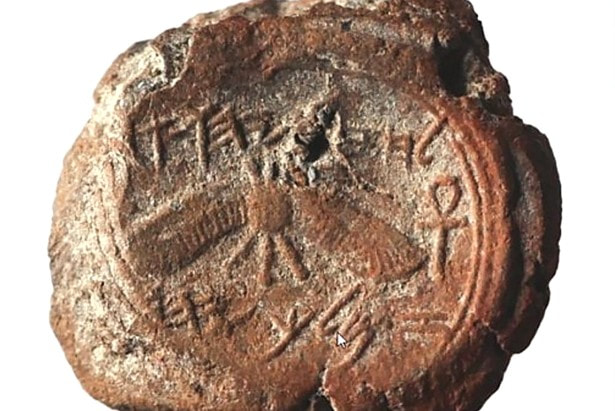
We looked at an impression made from Hezechiah’s own seal, which bears an inscription in old Hebrew characters meaning `the property of king Hezechiah’ and was discovered during excavations at the Temple Mound in 2015 (see https://www.theatlantic.com/international/archive/2015/12/jerusalem-king-hezekiah/418431/ ). Hezechiah, who probably reigned from c.729 to 687 B.C. and thus lived through the 722 destruction of the Northern Kingdom of Israel by Assyria, is credited by the author of Kings with suppressing the worship of `idols’ and centralising the cult of Yahweh in the temple at Jerusalem. The winged sun is arguably consistent with this as Yahweh may have been in origin a sun god but the inclusion of the Egyptian ankh sybol for `life’ (the cross with a loop) perhaps suggests that the Jews at this time were more open to diverse religious influences. Many scholars believe that monotheism in the true sense developed only after the Babylonian exile in the 6th century.
Conversation in either English or Latin was a little difficult at times because an exuberant birthday party was going on at the same time, occasioning a misquote from the Cambridge Latin Course – Quam raucae sunt vōcēs puellārum!
Pat had selected six passages from the Vulgate for us to read (see below), of which we actually got through four: the curing of Hezekiah (II Kings: 17), the reign of King Amon (II Kings 20: 19-24), Tobit’s advice to his son (Tobias 4: 1-12) and Psalm 1. We noted again that St. Jerome’s original 4th century Vulgate, which we were using in th Clementine (16th century) edition and which was for many centuries the only one authorized by the Catholic Church, is now supplemented by the Nova Vulgata formally release by the Vatican in 1979 . This is available on-line at http://www.vatican.va/archive/bible/nova_vulgata/documents/nova-vulgata_index_lt.html
Eugene reported two places in which the new Vulgate’s text of the Hezechiah passage differed from the older one, viz in 20:1 (Dispōne domuī tuae for Praecipe domuī tuae) and 20: 5 (sānō tē for sānāvī tē). Taking the words at their most literal, the first change is from simply from `Give instructions to your household’ to `Make arrangements for your household’, both amounting to `Put your affairs in order.’ The second alteration is from the perfect tense (`I have cured’) to present (`I cure/am curing’). As Hezechiah’s cure is not actually complete untl the poultice of figs is placed on his sore later in the passage, the Nova Vulgata version arguably fits the context better, as does the future tense used in the King James Version. However, the original Hebrew rōpē (רֹ֣פֶא) is perfect tense so Jerome’s sānāvit actually seems the better choice! Biblical Hebrew has a two-tense system – perfect and imperfect. The former corresponds roughly to the Latin perfect (i.e. to both present perfect and simple past in English) whilst the latter refers normally to the future or to habitual action in the present. Presumably the Biblical author used the perfect to suggest that the action was an accomplished fact as soon as God announced his intention.
Whilst going through the same passage we discussed the pronunciation of parietem, wall, Dictionaries all show the `e’ in the penultimate syllable as short so the stress must fall on the second syllable: pa–RI-e-tem. A subsequent Internet serch revealed that in one line of Plautus (Asinaria, l.564) the i is pronouncedas a consonant, thus making the first syllable `long by position’ and also the bearer of the stress: PAR-je-tēs (accusative plural).
We looked at an impression made from Hezechiah’s own seal, which bears an inscription in old Hebrew characters meaning `the property of king Hezechiah’ and was discovered during excavations at the Temple Mound in 2015 (see https://www.theatlantic.com/international/archive/2015/12/jerusalem-king-hezekiah/418431/ ). Hezechiah, who probably reigned from c.729 to 687 B.C. and thus lived through the 722 destruction of the Northern Kingdom of Israel by Assyria, is credited by the author of Kings with suppressing the worship of `idols’ and centralising the cult of Yahweh in the temple at Jerusalem. The winged sun is arguably consistent with this as Yahweh may have been in origin a sun god but the inclusion of the Egyptian ankh sybol for `life’ (the cross with a loop) perhaps suggests that the Jews at this time were more open to diverse religious influences. Many scholars believe that monotheism in the true sense developed only after the Babylonian exile in the 6th century.
We were unsure of the correct pronunciation of the name `Isaiah’, which John thought ought to be three syllables with `ai’ pronounced as a diphthong, with or without a `y’ glide into the final syllable but Eugene believed should be four syllables with both the first `a’ and the `i’ as separate vowels. Eugene’s later research suggests that both views are right. On page 810 (of the PDF, not the book itself) of the 1913 edition of Joseph Perin’s Onomasticon Totius Latinitatis (http://librinostri.catholica.cz/download/5_Perin-A-I-text.pdf ) it is stated that Īsaiās is trisyllabic and that both the last and the middle syllables are long, which, as the printed text does not have a macron over the first `a’, presumably means that `ai’is indeed a diphthong and the pronunciation is thus /ī 'sai ās/. In the liturgy, however, and particularly in Gregorian chant, the word was indeed pronounced as four separate syllables with the stress on the `i’, viz. /i sa 'i as/
The sung version can be heard at https://www.youtube.com/watch?v=ETYDs2Xb5cQ&t=188s and the general rule is that in the liturgy only ae, oe, au, ay et eu are diphthongs, both `ai’ and `ou’ thus being two separate vowels (see https://media.musicasacra.com/pdf/liberusualis.pdf - p. 37 (of the PDF, not the book itself)).
Perin’s work, of which the latest edition was published in 1940, was prepared as an extension of Forcellini’s mammoth Lexicon Totius Latinitatis, the foundational work of modern Latin lexicography. See http://www.brepols.net/publishers/pdf/brepolis_dld_manual_en.pdf There is an on-line searchable edition of the Lexicon (without the Onomasticon) at www.lexica.linguax.com/forc.php and the book can also be downloaded as a series of pdfs, including the first part (A-I) of the Onomasticon, from http://librinostri.catholica.cz/?vyhledat=Forcellini%20Aegidio,%20Corradini%20Franciscus,%20Perin%20Josephus
The Book of Tobias, which survives in two Greek versions, the original Hebrew or Aramaic having been lost, was probably composed in the period between 225 and 175 B.C. and is accepted as copnanical by the Catholic and Orthodox churches but not by Protestants. Pat thought that it reflected Zoroastrian influence and this comment led to discussion of Zoroastrianism itself, which has, controversially, sometimes been seen as the main source of many Judaiac doctrines including the development of monotheism itself (see the discussion in the record of the June 2017 meeting - https://linguae.weebly.com/conventus-iunius.html Pat, who is a friend of Hong Kong’s Zoroastrian priest, explained the dualistic nature of the religion with the embodiment of darkness, Angra Mainyu, existing independently of the supreme God Ahura-Mazda, the embodiment of light. Individual human beings, by their day-to-day moral decisions, contribute to the outcome of the final struggle between the two. Zoroastrianism emphasizes the obligation on humans to make use of Ahura-Mazda’s gifts, including friendship and sex, and permits the use of alcohol though not, of course, drunkenness. The religion traditionally has not accepted conversion, insisting that members can only be the offspring of two Zorroastrian parents, though some revisionists have started to question this doctrine.
We discussed the reference the words nōn resurgent impiī in judiciō (`the wicked will not rise/stand in judgement’), meaning presumably that the jusgement will go against them. Pat saw a paralle to the use of resurgō here in the practice in traditional Chinese courts. The defendant was requitred to kneeling or lyin on the floor during proceedings and could only get up if found innocent. If he was convicted he was presumably dragged off to execution or to prison.
Although we did not actually reads the passage from Acts out loud, we discussed it briefly, Pat suggesting that the style of the opening section (Dēscendit prīnceps sacerdōtum, Ananīas, cum seniōribus quibusdam, et Tertullō quōdam oratore…) was out of keeping with the rest of the book and that it might have been taken directly form the official record of proceedings in Felix’s court. John thought this unlikely as the narrative was originally written in Greek. We also discussed briefly the date of Acts, which it was suggested was composed in the 60s or 70s B.C. However, if the Wikipadia article is o be trusted, most scholars would date it rather later – 80-90 B.C. or perhaps even to the 2nd. century – see https://en.wikipedia.org/wiki/Acts_of_the_Apostles.
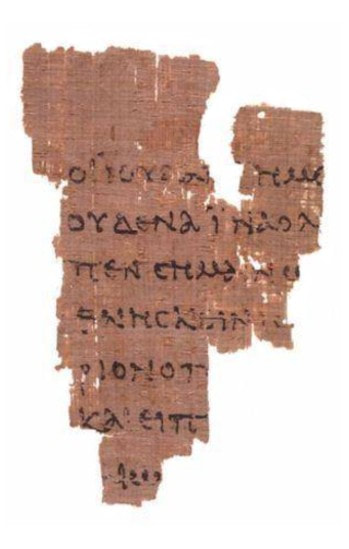
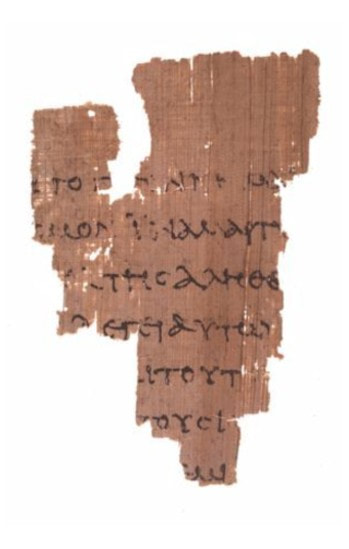
Mention was also made of the earliest manuscript of any section of the New Testament, a fragment of the Gospel of John dated somewhere between 125 and 200 A.D. and now in the John Rylands Library in Manchester: https://en.wikipedia.org/wiki/Rylands_Library_Papyrus_P52
The fragment itself, with transliterations and translation are shown below:
The sung version can be heard at https://www.youtube.com/watch?v=ETYDs2Xb5cQ&t=188s and the general rule is that in the liturgy only ae, oe, au, ay et eu are diphthongs, both `ai’ and `ou’ thus being two separate vowels (see https://media.musicasacra.com/pdf/liberusualis.pdf - p. 37 (of the PDF, not the book itself)).
Perin’s work, of which the latest edition was published in 1940, was prepared as an extension of Forcellini’s mammoth Lexicon Totius Latinitatis, the foundational work of modern Latin lexicography. See http://www.brepols.net/publishers/pdf/brepolis_dld_manual_en.pdf There is an on-line searchable edition of the Lexicon (without the Onomasticon) at www.lexica.linguax.com/forc.php and the book can also be downloaded as a series of pdfs, including the first part (A-I) of the Onomasticon, from http://librinostri.catholica.cz/?vyhledat=Forcellini%20Aegidio,%20Corradini%20Franciscus,%20Perin%20Josephus
The Book of Tobias, which survives in two Greek versions, the original Hebrew or Aramaic having been lost, was probably composed in the period between 225 and 175 B.C. and is accepted as copnanical by the Catholic and Orthodox churches but not by Protestants. Pat thought that it reflected Zoroastrian influence and this comment led to discussion of Zoroastrianism itself, which has, controversially, sometimes been seen as the main source of many Judaiac doctrines including the development of monotheism itself (see the discussion in the record of the June 2017 meeting - https://linguae.weebly.com/conventus-iunius.html Pat, who is a friend of Hong Kong’s Zoroastrian priest, explained the dualistic nature of the religion with the embodiment of darkness, Angra Mainyu, existing independently of the supreme God Ahura-Mazda, the embodiment of light. Individual human beings, by their day-to-day moral decisions, contribute to the outcome of the final struggle between the two. Zoroastrianism emphasizes the obligation on humans to make use of Ahura-Mazda’s gifts, including friendship and sex, and permits the use of alcohol though not, of course, drunkenness. The religion traditionally has not accepted conversion, insisting that members can only be the offspring of two Zorroastrian parents, though some revisionists have started to question this doctrine.
We discussed the reference the words nōn resurgent impiī in judiciō (`the wicked will not rise/stand in judgement’), meaning presumably that the jusgement will go against them. Pat saw a paralle to the use of resurgō here in the practice in traditional Chinese courts. The defendant was requitred to kneeling or lyin on the floor during proceedings and could only get up if found innocent. If he was convicted he was presumably dragged off to execution or to prison.
Although we did not actually reads the passage from Acts out loud, we discussed it briefly, Pat suggesting that the style of the opening section (Dēscendit prīnceps sacerdōtum, Ananīas, cum seniōribus quibusdam, et Tertullō quōdam oratore…) was out of keeping with the rest of the book and that it might have been taken directly form the official record of proceedings in Felix’s court. John thought this unlikely as the narrative was originally written in Greek. We also discussed briefly the date of Acts, which it was suggested was composed in the 60s or 70s B.C. However, if the Wikipadia article is o be trusted, most scholars would date it rather later – 80-90 B.C. or perhaps even to the 2nd. century – see https://en.wikipedia.org/wiki/Acts_of_the_Apostles.
Mention was also made of the earliest manuscript of any section of the New Testament, a fragment of the Gospel of John dated somewhere between 125 and 200 A.D. and now in the John Rylands Library in Manchester: https://en.wikipedia.org/wiki/Rylands_Library_Papyrus_P52
The fragment itself, with transliterations and translation are shown below:
|
|
Gospel of John 18:31-33 (recto)
ΟΙ ΙΟΥΔΑΙΟΙ ΗΜΕΙΝ ΟΥΚ ΕΞΕΣΤΙΝ ΑΠΟΚΤΕΙΝΑΙ hoi Ioudaioi hēmein ouk exestin apokteivai
ΟΥΔΕΝΑ ΙΝΑ Ο ΛΟΓΟΣ ΤΟΥ ΙΗΣΟΥ ΠΛΗΡΩΘΗ ΟΝ ΕΙ- oudena hina ho logos tou Iēsou plērōsē hon ei-
ΠΕΝ ΣΗΜΑΙΝΩΝ ΠΟΙΩ ΘΑΝΑΤΩ ΗΜΕΛΛΕΝ ΑΠΟ- pen sēmainōn poiō thanatō ēmellen apo-
ΘΝΗΣΚΕΙΝ ΙΣΗΛΘΕΝ ΟΥΝ ΠΑΛΙΝ ΕΙΣ ΤΟ ΠΡΑΙΤΩ- thnēkein isēlthen oun palin esi to praitō-
ΡΙΟΝ Ο ΠΙΛΑΤΟΣ ΚΑΙ ΕΦΩΝΗΣΕΝ ΤΟΝ ΙΗΣΟΥΝ rion ho Pilatos kai ephōnēsen ton Iēsoun
ΚΑΙ ΕΙΠΕΝ ΑΥΤΩ ΣΥ ΕΙ O ΒΑΣΙΛΕΥΣ ΤΩΝ ΙΟΥ- kai eipen autō su ei ho basileus tōn Iou-
ΔΑΙΩN daiōn
(eleven lines lost, containing 18:34-36 )
...
the Jews, "For us it is not permitted to kill
anyone," so that the word of Jesus might be fulfilled, which he sp-
oke signifying what kind of death he was going to
die. Entered therefore again into the Praeto-
rium Pilate and summoned Jesus
and said to him, "Thou art king of the
Jews?"
Gospel of John 18:37-38 (verso)
ΒΑΣΙΛΕΥΣ ΕΙΜΙ ΕΓΩ ΕΙΣ TOΥΤΟ ΓΕΓΕΝΝΗΜΑΙ basileus eimi egō eis touto gegennēmai
ΚΑΙ (ΕΙΣ ΤΟΥΤΟ) ΕΛΗΛΥΘΑ ΕΙΣ ΤΟΝ ΚΟΣΜΟΝ ΙΝΑ ΜΑΡΤΥ- kai (eis touto) elēthusa eis ton kosmon hina martu-
ΡΗΣΩ ΤΗ ΑΛΗΘΕΙΑ ΠΑΣ Ο ΩΝ ΕΚ ΤΗΣ ΑΛΗΘΕI- rēsō tē altheia pas ho ōn ek tēs alēthei-
ΑΣ ΑΚΟΥΕΙ ΜΟΥ ΤΗΣ ΦΩΝΗΣ ΛΕΓΕΙ ΑΥΤΩ as akouei mou tēs phōnēs legei autō
Ο ΠΙΛΑΤΟΣ ΤΙ ΕΣΤΙΝ ΑΛΗΘΕΙΑ ΚΑΙ ΤΟΥΤΟ ho Pilatos ti estin alētheia kai touto
ΕΙΠΩΝ ΠΑΛΙΝ ΕΞΗΛΘΕΝ ΠΡΟΣ ΤΟΥΣ ΙΟΥ- eipōn palin eisēlthen pros tous Iou
ΔΑΙΟΥΣ ΚΑΙ ΛΕΓΕΙ ΑΥΤΟΙΣ ΕΓΩ ΟΥΔΕΜΙΑΝ daious kai legei autois egō oudemian
ΕΥΡΙΣΚΩ ΕΝ ΑΥΤΩ ΑΙΤΙΑΝ euriskō en autō aitian
a King I am. For this I have been born
and (for this) I have come into the world so that I would test-
ify to the truth. Everyone who is of the truth
hears of me my voice." Said to him
Pilate, "What is truth?" and this
having said, again he went out unto the Jews
and said to them, "I find not one
fault in him."
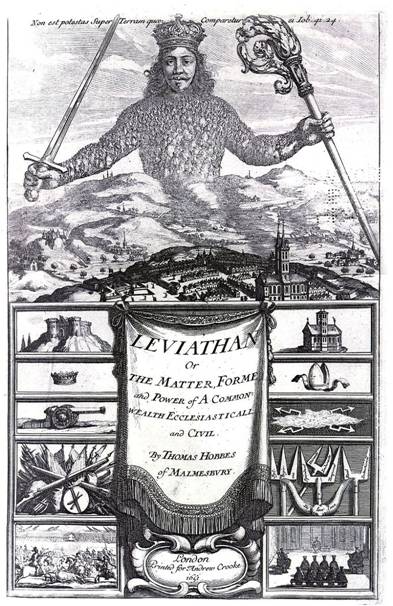
There was a brief discussion of the use of Latin as an international language, particularly in academia, in early modern times, including the fact that Newton’s Principia Mathematica was published first in that language (in 1687) and only afterwards in English. Mention was also made of the 17th century political philosopher, Thomas Hobbes, whose Leviathan, a defence of royal authority as a bulwark against anarchy, we thought must also have been published in Latin. Later investigation reveals that the first edition came out in English in 1651 but the second, which differed in some passages in content, came out in Latin in 1668. A recent edition of his work includes parallel English and Latin texts and translations of the Latin where it differs in meaning: see https://en.wikipedia.org/wiki/Leviathan_(book) and
https://global.oup.com/academic/product/thomas-hobbes-leviathan-9780198723967?lang=en&cc=au# The principal reason for Hobbes’ change of language was presumably that the book could only be published on the European mainland after he had been denounced for atheism in England. However, even if he had not had this problem, the work would presumably still have been translated into Latin so that those outside Britain could read it. Newton’s Optica and the work of another political translation, had similarly been first issued in English but then made available in the international language. Newton could certainly think in Latin, as this is the language of his notes preserved in Cambridge University Library whilst Hobbes was an accomplished translator of both Latin and Greek texts. Although Locke didnot make his own Latin translation, he corresponded in the language with foreign scholars and was also able to vet the translator’s work.
ΟΙ ΙΟΥΔΑΙΟΙ ΗΜΕΙΝ ΟΥΚ ΕΞΕΣΤΙΝ ΑΠΟΚΤΕΙΝΑΙ hoi Ioudaioi hēmein ouk exestin apokteivai
ΟΥΔΕΝΑ ΙΝΑ Ο ΛΟΓΟΣ ΤΟΥ ΙΗΣΟΥ ΠΛΗΡΩΘΗ ΟΝ ΕΙ- oudena hina ho logos tou Iēsou plērōsē hon ei-
ΠΕΝ ΣΗΜΑΙΝΩΝ ΠΟΙΩ ΘΑΝΑΤΩ ΗΜΕΛΛΕΝ ΑΠΟ- pen sēmainōn poiō thanatō ēmellen apo-
ΘΝΗΣΚΕΙΝ ΙΣΗΛΘΕΝ ΟΥΝ ΠΑΛΙΝ ΕΙΣ ΤΟ ΠΡΑΙΤΩ- thnēkein isēlthen oun palin esi to praitō-
ΡΙΟΝ Ο ΠΙΛΑΤΟΣ ΚΑΙ ΕΦΩΝΗΣΕΝ ΤΟΝ ΙΗΣΟΥΝ rion ho Pilatos kai ephōnēsen ton Iēsoun
ΚΑΙ ΕΙΠΕΝ ΑΥΤΩ ΣΥ ΕΙ O ΒΑΣΙΛΕΥΣ ΤΩΝ ΙΟΥ- kai eipen autō su ei ho basileus tōn Iou-
ΔΑΙΩN daiōn
(eleven lines lost, containing 18:34-36 )
...
the Jews, "For us it is not permitted to kill
anyone," so that the word of Jesus might be fulfilled, which he sp-
oke signifying what kind of death he was going to
die. Entered therefore again into the Praeto-
rium Pilate and summoned Jesus
and said to him, "Thou art king of the
Jews?"
Gospel of John 18:37-38 (verso)
ΒΑΣΙΛΕΥΣ ΕΙΜΙ ΕΓΩ ΕΙΣ TOΥΤΟ ΓΕΓΕΝΝΗΜΑΙ basileus eimi egō eis touto gegennēmai
ΚΑΙ (ΕΙΣ ΤΟΥΤΟ) ΕΛΗΛΥΘΑ ΕΙΣ ΤΟΝ ΚΟΣΜΟΝ ΙΝΑ ΜΑΡΤΥ- kai (eis touto) elēthusa eis ton kosmon hina martu-
ΡΗΣΩ ΤΗ ΑΛΗΘΕΙΑ ΠΑΣ Ο ΩΝ ΕΚ ΤΗΣ ΑΛΗΘΕI- rēsō tē altheia pas ho ōn ek tēs alēthei-
ΑΣ ΑΚΟΥΕΙ ΜΟΥ ΤΗΣ ΦΩΝΗΣ ΛΕΓΕΙ ΑΥΤΩ as akouei mou tēs phōnēs legei autō
Ο ΠΙΛΑΤΟΣ ΤΙ ΕΣΤΙΝ ΑΛΗΘΕΙΑ ΚΑΙ ΤΟΥΤΟ ho Pilatos ti estin alētheia kai touto
ΕΙΠΩΝ ΠΑΛΙΝ ΕΞΗΛΘΕΝ ΠΡΟΣ ΤΟΥΣ ΙΟΥ- eipōn palin eisēlthen pros tous Iou
ΔΑΙΟΥΣ ΚΑΙ ΛΕΓΕΙ ΑΥΤΟΙΣ ΕΓΩ ΟΥΔΕΜΙΑΝ daious kai legei autois egō oudemian
ΕΥΡΙΣΚΩ ΕΝ ΑΥΤΩ ΑΙΤΙΑΝ euriskō en autō aitian
a King I am. For this I have been born
and (for this) I have come into the world so that I would test-
ify to the truth. Everyone who is of the truth
hears of me my voice." Said to him
Pilate, "What is truth?" and this
having said, again he went out unto the Jews
and said to them, "I find not one
fault in him."
There was a brief discussion of the use of Latin as an international language, particularly in academia, in early modern times, including the fact that Newton’s Principia Mathematica was published first in that language (in 1687) and only afterwards in English. Mention was also made of the 17th century political philosopher, Thomas Hobbes, whose Leviathan, a defence of royal authority as a bulwark against anarchy, we thought must also have been published in Latin. Later investigation reveals that the first edition came out in English in 1651 but the second, which differed in some passages in content, came out in Latin in 1668. A recent edition of his work includes parallel English and Latin texts and translations of the Latin where it differs in meaning: see https://en.wikipedia.org/wiki/Leviathan_(book) and
https://global.oup.com/academic/product/thomas-hobbes-leviathan-9780198723967?lang=en&cc=au# The principal reason for Hobbes’ change of language was presumably that the book could only be published on the European mainland after he had been denounced for atheism in England. However, even if he had not had this problem, the work would presumably still have been translated into Latin so that those outside Britain could read it. Newton’s Optica and the work of another political translation, had similarly been first issued in English but then made available in the international language. Newton could certainly think in Latin, as this is the language of his notes preserved in Cambridge University Library whilst Hobbes was an accomplished translator of both Latin and Greek texts. Although Locke didnot make his own Latin translation, he corresponded in the language with foreign scholars and was also able to vet the translator’s work.
We briefly disssed the intrusive nature of email and the way it has virtually changed everywhere into an office. It was noted that France had recently introduced legislation barring employers from requiring their employees to deal with correspondence out of work hours.
There was also mention of the large number of Koreans now working in Hong Kong, the reason possibly being current poor employment prospects in Korea itself,
Finally, a new member, Keith Kampen, who is teaching with Anastasia at the ISF Academy, explained the nature of the classics programmes there. In addition to the well-established Latin lessons, there are now 11 students doing ancient Greek as an extra-curricular activity and students in the primary section were introduced to Greek mythology in translation.
Biblical Extracts
King Hezekiah is cured by the Prophet Isaiah (II Kings 20: 1-7)
In diēbus illīs ægrōtāvit Ezechīas usque ad mortem; et vēnit ad eum Īsaiās, fīlius Āmos,
In days those was-sick Hezekiah right-up to death and came to him Isaiah son of-Amos
prophēta, dīxitque eī: Hæc dīcit Dominus Deus: Præcipe domuī tuæ[1], moriēris enim tū, et nōn
prophet and-said to-him these-things says Lord God put-in-order house your you-will-die surely you and not
vīvēs. Quī convertit faciem suam ad parietem[2], et ōrāvit Dominum, dīcēns: Obsecrō, Domine,
will-live he turned face his to wall and begged Lord saying I-beseech Lord
mementō, quæsō, quōmodo ambulāverim cōram tē in vēritāte, et in corde perfectō, et quod
remember please how I-have-walked in-prescence-of you in truth and in heart perfect and what
placitum est cōram te fēcerim. Flēvit itaque Ezechīas flētū magnō. Et antequam ēgrederētur
pleased[you] was in-sight-of you I-have-done wept and-so Hezekiah with-weeping great and before could-exit
Īsaiās mediam partem ātriī,[3] factus est sermō Dominī ad eum, dīcēns: Revertere, et dīc
Isaiah middle part of-courtyard made was speech of-Lord to him saying return and say
Ezechīæ, ducī populī meī: Hæc dīcit Dominus, Deus David patris tuī: Audīvī ōrātiōnem tuam,
to-Hezekiah leader of-people my these-things says Lord God of-David father your I-have-heard prayer your
et vīdī lachrymās tuās; et ecce sānāvī tē: diē tertiō ascendēs templum Dominī et addam diēbus
and I-have-seen tears your and behold I-have-cured you on-day third you-will-ascend temple of-Lord and I-will-add to-days
tuīs quīndecim annōs; sed et dē manū rēgis Assyriōrum līberābō tē, et cīvitātem hanc, et
your fifteen years but also from hand of-king of-Assyrians I-will-free you and city this and
prōtegam urbem istam propter mē et propter David servum meum. Dīxitque Īsaiās: Afferte
I-will-protect city that on-account-of myself and on-account of-David servant my and-said Isaiah Bring
massam fīcōrum[4]. Quam cum attulissent, et posuissent super ulcus[5] ejus, cūrātus est.
a-mass of-figs this when they-had-brought and had-placed over sore his cured he-was
The Reign of King Amon (II Kings 20: 19-24)
Vīgintī duōrum annōrum erat Amon cum rēgnāre cœpisset; duōbus quoque annīs rēgnāvit in
of-twenty two years was Amon when to-reign he-had-begun for-two also years he-reigned in
Jerusalem. Fēcitque malum in cōnspectū Dominī, sīcut fēcerat Manasses, pater ejus. Et
Jerusalem and-he-did evil in sight of-Lord as had-done Manasses father his and
ambulāvit in omnī viā per quam ambulāverat pater ejus, servīvitque immunditiīs[6] quibus
he-walked in every path along which had-walked father his and-he-served unclean-things which
servierat pater ejus, et adōrāvit eās; et dērelīquit[7] Dominum, Deum patrum suōrum, et nōn
had-served father his and adored them and he-abandoned Lord God of-fathers his and not
ambulāvit in viā Dominī. Tetendēruntque ei īnsidias[8] servī suī, et interfēcērunt rēgem in
walked in path of-Lord and-hatched against-him plot slaves his and killed the-king in
domō suā. Percussit autem populus terræ omnēs qui conjūrāverant[9] contrā rēgem Amon, et
house his struck however people of-land all who had-conspired against king Amon and
cōnstituērunt sibi rēgem Josīam, fīlium ejus, pro eō.
set-up for-themselves king Josiah son his in-place-of him
NOTES
[1] præcipe domuī tuæ, Here = “Put your affairs in order”, or “Take care for your household”.
[2] pariēs -ietis = “An internal wall”
[3] antequam ēgrederētur…mediam partem ātriī: `before Isaiah left the middle part of the courtyard.’ However, the Hebrew (followed by the KJV) actually means `before he went out into the middle court’. The Greek Septuagint gives the sense `whilst he was in the middle court’ and a variant reading in the Hebrew would mean `before he went out into the middle of the city’ (i.e. the depression between the twin hills on which Jerusalem was built.) See http://biblehub.com/commentaries/2_kings/20-4.htm
[4] massa fīicōrum = “A poultice of figs”
[5] ulcus, ulceris = “An ulcer”
[6] immunditiæ, immunditiis = “Unclean things”; meaning here “foreign gods”
[7] dērelīquit = “Abandoned”
[8] tetendēruntque eī īnsidiās: “they stretched out (laid) an ambush for him” (metaphor from netting an animal).
[9] quī conjūrāverant = “Those who had sworn together”
Tobit gives his son, Young Tobit, good advice (Tobias 4:1-12)[1]
Tobīas vocāvit ad se Tobīam, fīlium suum, dīxitque eī: Audī, filī mī, verba ōris meī, et ea in
Tobias called to him Tobias son his and-said to-him Hea r son my words of-mouth my and them in
corde tuō quasi fundāmentum cōnstrue[2]. Cum accēperit Deus animam meam, corpus meum
heart your as-if foundation make-into when will-have-received God soul my body my
sepelī[3]; et honōrem habēbis matrī tuæ omnibus diēbus vītæ ejus; memor enim esse dēbēs
bury and honour you-will-have for-mother your for-all days of-life her mindful truly to-be you-ought
quæ et quanta perīcula passa sit propter tē in uterō suō[4]. Cum autem et ipsa complēverit
what and how-great dangers suffer she-did because-of you in womb her when moreover also herself will-have-completed
tempus vītæ suæ, sepeliās eam circā me. Omnibus autem diēbus vītæ tuæ in mente habētō
time of-life her you-are-to-bury her by me for-all moreover days of-life your in mind have
Deum, et cavē nē aliquandō peccātō cōnsentiās, et prætermittās præcepta[5] Dominī nostrī. Ex
God and be-careful not at-any-time to-sin you-consent and disregard commandments of-Lord our from
substantiā tuā fac eleēmosynam[6], et nōlī avertere faciem tuam ab ūllō paupere; ita enim fiēt,
wealth your do alms-giving and do-not turn face your from any poor-person thus surely it-will-be
ut nec ā tē avertātur faciēs Domini. Quomodō potueris, ita estō misericors. Sī multum
that neither from you may-be-turned-away face of-Lord as-far-as you-will-have-been-able thus be merciful if much
tibi fuerit, abundanter tribue; sī exiguum tibi fuerit, etiam exiguum libenter impertīrī studē[7].
to-you will-have-been abundantly contribute if little to-you will-have-been still a-little willingly to-give-share-of make-sure
Præmium enim bonum tibi thēsaurizās in diē necessitātis[8]; quoniam eleēmosyna ab omnī
Reward for good for-yourself you-store-up on day of-need since alms-giving from all
peccātō et ā morte līberat, et nōn patiētur animam īre in tenebrās[9]: fīdūcia magna[10] erit
sin and from death frees and not will-allow soul to-go into darkness security great will-be
cōram summō Deō eleēmosyna, omnibus facientibus eam.
in-presence-of highest God alms-giving for-all doing it
NOTES
[1] The Book of Tobias (or Tobit) is regarded as canonical by the Roman Catholic and Eastern Orthodox Churches but not by Protestants or Jews. No complete Hebrew or Aramaic text has survived but fragments in both language discovered in 1952 amongst the Dead Sea Scrolls indicate the original composition must have been in or before the 2nd. Century B.C. St Jerome tells us that he made his Latin translation from an Aramaic version. There are two different Greek versions preserved in different manuscripts of the Septuagint. See https://en.wikipedia.org/wiki/Book_of_Tobit and (for the Greek texts) http://www.sacred-texts.com/bib/poly/tob004.htm
[2] in corde tuō quasi fundāmentum cōnstrue = “Make of [them] as it were a foundation in your heart”
[3] sepelī = “Bury”
[4] memor enim esse dēbēs quæ et quanta pericula passa sit propter tē in uterō suō = “You ought to bear in mind those dangers, and how many, she suffered in her womb for you”
[5] prætermittās præcepta = “Break the precepts”
[6] fac eleēmosynam = “Give alms”
[7] sī exiguum tibi fuerit, etiam exiguum libenter impertīrī studē = “If you have little, do not fear to give gladly even from that little”
[8] præmium enim bonum tibi thēsaurizās in die necessitātī = “It will be for you a good thing stored away [thēsaurizās = you place in the treasury] against the day when you need it”
[9] nōn patiētur animam īre in tenebrās = “And will not allow your soul to go into the darkness”
[10] fīdūcia magna = “Great trust” “great savings”
The Psalmist sings of the Blessed Man (Psalms I)
Beatus vir quī nōn abiit in cōnsiliō[1] impiōrum,
Happy the-man who not has-gone-away in the-counsel of-the-wicked
et in viā peccātōrum nōn stetit,
and on path of-sinners not has-stood
et in cathedrā[2] pestilentiæ nōn sēdit;
and on chair of-pestilence not has-sat
sed in lēge Dominī voluntās ejus,
but in law of-Lord [is]will his
et in lēge ejus meditābitur diē ac nocte.
and on law his he-will-meditate by-day and by-night
Et erit tanquam lignum quod plantātum est secus dēcursus aquarum[3],
And he-will-be as tree which planted was beside channels of-waters
Quod frūctum suum dabit[4] in tempore suō
Which fruit its will-give in time its-own
Et fōlium ejus nōn dēfluet[5];
And leaf of-it not will-wither
Et omnia quæcumque faciet prosperābuntur.
And all-things whatever he-will-do shall-be-made successful
Nōn sīc impiī, nōn sīc;
Not thus the-wicked not thus
Sed tanquam pulvis[6] quem prōjicit ventus ā faciē terræ.
But as dust which hurls wind from face of-earth
Ideō nōn resurgent[7] impiī in judiciō,
Therefore not shall-stand the-wicked at judgement
Neque peccātōrēs in conciliō jūstōrum,
Nor sinners in the council of-the-just
Quoniam nōvit Dominus viam jūstōrum;
Since knows Lord the-path of-the-just
Et iter impiōrum perīibit.
And way of-the-wicked shall-perish
NOTES
[1] abiit in cōnsiliō = “Take council with” “take advice from”
[2] cathedra = “Chair, throne”
[3] dēcursūs aquarum = “Running water”; dēcursus originally meant `running down’ but also came to mean a channel (e.g. an aqueduct) through which water descends
[4] Notice the short medial vowel; dō, dare, dedī ,datum was originally a fully irregular verb but was later absorbed into the first conjugation whilst still normally retaining short `a’
[5] dēfluet = “will wither” (literally `will flow down’)
[6] pulvis = “Dust” The Hebrew is more accurately translated as `chaff’ (i.e. the husks etc. separated from the corn in winnowing).
[7] resurgent = here “will be found innocent” (literally `will not rise (again)’). The reference might be to judgement at any time or to God’s Last Judgement,
Isaiah Prophesises the coming of the Messiah (Isaias 11: 1-5)
Et ēgredietur virga[1] dē radīce[2] Jesse,
And shall-go-out shoot from root of-Jesse
et flōs dē radīce ejus ascendet.
And flower from root his shall-arise
Et requiēscet super eum spīritus Dominī,
And will-rest upon him spirit of-Lord
spīritus sapientiæ et intellectūs,
spirit of-wisdom and of-understanding
spīritus cōnsiliī et fortitūdīnis,
spirit of-counsel and of-courage
spīritus scientiæ et pietātis;
spirit of-knowledge and of-piety
et replēbit eum spīritus timōris Dominī.
and will-fill him spirit of-fear of-Lord
Nōn secundum vīsiōnem oculōrum jūdicābit;
Not according-to sight- of-eyes he-will-judge
neque secundum audītum aurium arguet;
Neither according-to hearing of-ears he-will-convict
sed jūdicābit in jūstitia pauperēs,
but he-will-judge in justice the-poor
et arguet in æquitāte prō mānsuētīs terræ[3];
and he-will-convict in fairness for the-meek of-the-earth
et percutiet terram virgā ōris suī,
and he-will-strike earth with-rod of-mouth his
et spīritū labiōrum suōrum[4] interficiet impium.
and with-breath of-lips his he-will-kill the-wicked-man
Et erit jūstitia cingulum lumbōrum[5] ejus,
And will-be justice the-belt of-loins his
Et fidēs cinctōrium rēnum[6] ejus.
And faith the binding of-loins his
NOTES
[1] cingulum lumbōrum: perhaps in context best translated “Belt around his waist”(lumbī means both `loins’ and `genitals’; the Hebrew (mothen) originally meant `waist’ or `small of the back’ )
[2] cinctōrium rēnum = “Ties around his loins”(rēnēs = kidneys, loins); KJV has `reins’, in the archaic English sense of `kidneys’, `lower part of the back.’
[1] virga = “shoot”, “twig”, “rod”
[2] radix – radīcis f = “root”
[3] arguet in æquitāte pro mānsuētīs terræ = “He will give fair sentences for the meek ones in the land”. The original Hebrew means `poor, lowly’, mānsuētus normally means `tame, mild, gentle’
[4] spīritō labiōrum suorum = “By the breath of his lips”
[5] cingulum lumbōrum: perhaps in context best translated “Belt around his waist”(lumbī means both `loins’ and `genitals’; the Hebrew (mothen) originally meant `waist’ or `small of the back’ )
[6] cinctōrium rēnum = “Ties around his loins”(rēnēs = kidneys, loins); KJV has `reins’, in the archaic English sense of `kidneys’, `lower part of the back.’
Paul is arraigned by Tertullus before the Governor. After flattering Felix, governor of Judaea, for his good government, Tertullus states that Paul is a pest, stirring up trouble everywhere. The Governor’s assistant, Lysias, forbade the Jews to deal with Paul themselves, and ordered them to appear before the Governor: the Governor can easily find the facts out. (Acts 24:1-9)
Dēscendit prīnceps sacerdōtum, Ananīas, cum seniōribus quibusdam, et Tertullō quōdam
Came-down chief of-priests Ananias with elders certain and Tertullus a-certain
oratore[1], qui adiērunt præsidem adversus Paulum[2]. Et cītātō Paulō,[3] cœpit accūsāre
orator who went-to the governor against Paul and summoned Paul began to-accuse
Tertullus, dīcēns: Cum in multā pāce agāmus per tē, et multa corrigantur per tuam
Tertullus saying since in much peace we –live through you and many-things are-corrected through your
prōvidentiam, semper et ubique suscipimus,[4] optime Fēlīx,[5] cum omnī grātiārum āctiōne.
foresight always and everywhere we-acknowledge [it] excellent Felix with every of-thanks action
Nē diūtius autem tē prōtraham, ōrō, breviter audiās nōs prō tuā clēmentiā. Invēnimus hunc
So-that-not longer however you I-may-detain I-beg briefly you-hear us out-of your clemency we-have-found this
hominem pestiferum, et concitantem sēditiōnēs omnibus Jūdæīs in ūniversō orbe, et auctōrem
man troublesome and inciting acts-of-sedition among-all Jews in whole world and author
sēditiōnis sectæ Nazarēnōrum ; quī etiam templum violāre cōnātus est[6]; quem et
of-sedition of-sect of-Nazarenes who also temple to-violate tried has whom also
apprehēnsum voluimus secundum lēgem nostram jūdicāre. Superveniēns autem tribūnus
having-been-caught we-wanted according-to law our to-judge coming-upon-scene however tribune
Lysias,[7] cum vī magnā ēripuit eum de manibus nostrīs, jubēns accūsātōrēs ejus ad tē venīre;
Lysia with forcé great snatched him from hands our ordering accusers his to you to-come
quō poteris ipse jūdicāns dē omnibus istīs cognōscere, dē quibus accūsāmus eum.
from whom you-will-be-able yourself judging about all those-things to-find-out of which we-accuse him
Adjēcērunt[8] autem et Jūdæī, dīcentes hæc ita sē habēre.[9]
Added [words] moreover also the-Jews saying these-things thus themselves to-have
NOTES
[1] ōrātōre: usually means `orator’, `public speaker’, but in this context probably = “Prosecutor”
[2] adiērunt præsidem adversus Paulum = “They came before the Governor against Paul”
[3] cītātō Paulō: ablative absolute (`with Paul summoned’, `Paul having been summoned’)
[4] suscipimus: the basic meaning of the verb suscipiō (= sub + capiō) is `take hold of from underneath’. In context, it can be the equivalent of, inter alia, `undertake’, `support;, `accept’ or `acknowledge’
[5] Marcus Antonius (or Claudius?) Felix was procurator of Judaea in 53-58 B.C. and in fact generally reckoned to have been a corrupt administrator. See https://en.wikipedia.org/wiki/Antonius_Felix
[6] violāre cōnātus est = “Attempted to violate”
[7] i.e a tribūnus mīlitum, a young man at the start of his public career who acted as one of the deputies to the commander (lēgātus) of a Roman legion.
[8] adjēcērunt (=adiēcērunt): `added (sc. their words)’
[9] haec ita sē habēre: `that this was the case’ (literally `that these things had themselves thus.’ This is a very common idiom. Compare Bene vōs habētis?, `Are you well’ (literally `Do you have yourselves well’).
There was also mention of the large number of Koreans now working in Hong Kong, the reason possibly being current poor employment prospects in Korea itself,
Finally, a new member, Keith Kampen, who is teaching with Anastasia at the ISF Academy, explained the nature of the classics programmes there. In addition to the well-established Latin lessons, there are now 11 students doing ancient Greek as an extra-curricular activity and students in the primary section were introduced to Greek mythology in translation.
Biblical Extracts
King Hezekiah is cured by the Prophet Isaiah (II Kings 20: 1-7)
In diēbus illīs ægrōtāvit Ezechīas usque ad mortem; et vēnit ad eum Īsaiās, fīlius Āmos,
In days those was-sick Hezekiah right-up to death and came to him Isaiah son of-Amos
prophēta, dīxitque eī: Hæc dīcit Dominus Deus: Præcipe domuī tuæ[1], moriēris enim tū, et nōn
prophet and-said to-him these-things says Lord God put-in-order house your you-will-die surely you and not
vīvēs. Quī convertit faciem suam ad parietem[2], et ōrāvit Dominum, dīcēns: Obsecrō, Domine,
will-live he turned face his to wall and begged Lord saying I-beseech Lord
mementō, quæsō, quōmodo ambulāverim cōram tē in vēritāte, et in corde perfectō, et quod
remember please how I-have-walked in-prescence-of you in truth and in heart perfect and what
placitum est cōram te fēcerim. Flēvit itaque Ezechīas flētū magnō. Et antequam ēgrederētur
pleased[you] was in-sight-of you I-have-done wept and-so Hezekiah with-weeping great and before could-exit
Īsaiās mediam partem ātriī,[3] factus est sermō Dominī ad eum, dīcēns: Revertere, et dīc
Isaiah middle part of-courtyard made was speech of-Lord to him saying return and say
Ezechīæ, ducī populī meī: Hæc dīcit Dominus, Deus David patris tuī: Audīvī ōrātiōnem tuam,
to-Hezekiah leader of-people my these-things says Lord God of-David father your I-have-heard prayer your
et vīdī lachrymās tuās; et ecce sānāvī tē: diē tertiō ascendēs templum Dominī et addam diēbus
and I-have-seen tears your and behold I-have-cured you on-day third you-will-ascend temple of-Lord and I-will-add to-days
tuīs quīndecim annōs; sed et dē manū rēgis Assyriōrum līberābō tē, et cīvitātem hanc, et
your fifteen years but also from hand of-king of-Assyrians I-will-free you and city this and
prōtegam urbem istam propter mē et propter David servum meum. Dīxitque Īsaiās: Afferte
I-will-protect city that on-account-of myself and on-account of-David servant my and-said Isaiah Bring
massam fīcōrum[4]. Quam cum attulissent, et posuissent super ulcus[5] ejus, cūrātus est.
a-mass of-figs this when they-had-brought and had-placed over sore his cured he-was
The Reign of King Amon (II Kings 20: 19-24)
Vīgintī duōrum annōrum erat Amon cum rēgnāre cœpisset; duōbus quoque annīs rēgnāvit in
of-twenty two years was Amon when to-reign he-had-begun for-two also years he-reigned in
Jerusalem. Fēcitque malum in cōnspectū Dominī, sīcut fēcerat Manasses, pater ejus. Et
Jerusalem and-he-did evil in sight of-Lord as had-done Manasses father his and
ambulāvit in omnī viā per quam ambulāverat pater ejus, servīvitque immunditiīs[6] quibus
he-walked in every path along which had-walked father his and-he-served unclean-things which
servierat pater ejus, et adōrāvit eās; et dērelīquit[7] Dominum, Deum patrum suōrum, et nōn
had-served father his and adored them and he-abandoned Lord God of-fathers his and not
ambulāvit in viā Dominī. Tetendēruntque ei īnsidias[8] servī suī, et interfēcērunt rēgem in
walked in path of-Lord and-hatched against-him plot slaves his and killed the-king in
domō suā. Percussit autem populus terræ omnēs qui conjūrāverant[9] contrā rēgem Amon, et
house his struck however people of-land all who had-conspired against king Amon and
cōnstituērunt sibi rēgem Josīam, fīlium ejus, pro eō.
set-up for-themselves king Josiah son his in-place-of him
NOTES
[1] præcipe domuī tuæ, Here = “Put your affairs in order”, or “Take care for your household”.
[2] pariēs -ietis = “An internal wall”
[3] antequam ēgrederētur…mediam partem ātriī: `before Isaiah left the middle part of the courtyard.’ However, the Hebrew (followed by the KJV) actually means `before he went out into the middle court’. The Greek Septuagint gives the sense `whilst he was in the middle court’ and a variant reading in the Hebrew would mean `before he went out into the middle of the city’ (i.e. the depression between the twin hills on which Jerusalem was built.) See http://biblehub.com/commentaries/2_kings/20-4.htm
[4] massa fīicōrum = “A poultice of figs”
[5] ulcus, ulceris = “An ulcer”
[6] immunditiæ, immunditiis = “Unclean things”; meaning here “foreign gods”
[7] dērelīquit = “Abandoned”
[8] tetendēruntque eī īnsidiās: “they stretched out (laid) an ambush for him” (metaphor from netting an animal).
[9] quī conjūrāverant = “Those who had sworn together”
Tobit gives his son, Young Tobit, good advice (Tobias 4:1-12)[1]
Tobīas vocāvit ad se Tobīam, fīlium suum, dīxitque eī: Audī, filī mī, verba ōris meī, et ea in
Tobias called to him Tobias son his and-said to-him Hea r son my words of-mouth my and them in
corde tuō quasi fundāmentum cōnstrue[2]. Cum accēperit Deus animam meam, corpus meum
heart your as-if foundation make-into when will-have-received God soul my body my
sepelī[3]; et honōrem habēbis matrī tuæ omnibus diēbus vītæ ejus; memor enim esse dēbēs
bury and honour you-will-have for-mother your for-all days of-life her mindful truly to-be you-ought
quæ et quanta perīcula passa sit propter tē in uterō suō[4]. Cum autem et ipsa complēverit
what and how-great dangers suffer she-did because-of you in womb her when moreover also herself will-have-completed
tempus vītæ suæ, sepeliās eam circā me. Omnibus autem diēbus vītæ tuæ in mente habētō
time of-life her you-are-to-bury her by me for-all moreover days of-life your in mind have
Deum, et cavē nē aliquandō peccātō cōnsentiās, et prætermittās præcepta[5] Dominī nostrī. Ex
God and be-careful not at-any-time to-sin you-consent and disregard commandments of-Lord our from
substantiā tuā fac eleēmosynam[6], et nōlī avertere faciem tuam ab ūllō paupere; ita enim fiēt,
wealth your do alms-giving and do-not turn face your from any poor-person thus surely it-will-be
ut nec ā tē avertātur faciēs Domini. Quomodō potueris, ita estō misericors. Sī multum
that neither from you may-be-turned-away face of-Lord as-far-as you-will-have-been-able thus be merciful if much
tibi fuerit, abundanter tribue; sī exiguum tibi fuerit, etiam exiguum libenter impertīrī studē[7].
to-you will-have-been abundantly contribute if little to-you will-have-been still a-little willingly to-give-share-of make-sure
Præmium enim bonum tibi thēsaurizās in diē necessitātis[8]; quoniam eleēmosyna ab omnī
Reward for good for-yourself you-store-up on day of-need since alms-giving from all
peccātō et ā morte līberat, et nōn patiētur animam īre in tenebrās[9]: fīdūcia magna[10] erit
sin and from death frees and not will-allow soul to-go into darkness security great will-be
cōram summō Deō eleēmosyna, omnibus facientibus eam.
in-presence-of highest God alms-giving for-all doing it
NOTES
[1] The Book of Tobias (or Tobit) is regarded as canonical by the Roman Catholic and Eastern Orthodox Churches but not by Protestants or Jews. No complete Hebrew or Aramaic text has survived but fragments in both language discovered in 1952 amongst the Dead Sea Scrolls indicate the original composition must have been in or before the 2nd. Century B.C. St Jerome tells us that he made his Latin translation from an Aramaic version. There are two different Greek versions preserved in different manuscripts of the Septuagint. See https://en.wikipedia.org/wiki/Book_of_Tobit and (for the Greek texts) http://www.sacred-texts.com/bib/poly/tob004.htm
[2] in corde tuō quasi fundāmentum cōnstrue = “Make of [them] as it were a foundation in your heart”
[3] sepelī = “Bury”
[4] memor enim esse dēbēs quæ et quanta pericula passa sit propter tē in uterō suō = “You ought to bear in mind those dangers, and how many, she suffered in her womb for you”
[5] prætermittās præcepta = “Break the precepts”
[6] fac eleēmosynam = “Give alms”
[7] sī exiguum tibi fuerit, etiam exiguum libenter impertīrī studē = “If you have little, do not fear to give gladly even from that little”
[8] præmium enim bonum tibi thēsaurizās in die necessitātī = “It will be for you a good thing stored away [thēsaurizās = you place in the treasury] against the day when you need it”
[9] nōn patiētur animam īre in tenebrās = “And will not allow your soul to go into the darkness”
[10] fīdūcia magna = “Great trust” “great savings”
The Psalmist sings of the Blessed Man (Psalms I)
Beatus vir quī nōn abiit in cōnsiliō[1] impiōrum,
Happy the-man who not has-gone-away in the-counsel of-the-wicked
et in viā peccātōrum nōn stetit,
and on path of-sinners not has-stood
et in cathedrā[2] pestilentiæ nōn sēdit;
and on chair of-pestilence not has-sat
sed in lēge Dominī voluntās ejus,
but in law of-Lord [is]will his
et in lēge ejus meditābitur diē ac nocte.
and on law his he-will-meditate by-day and by-night
Et erit tanquam lignum quod plantātum est secus dēcursus aquarum[3],
And he-will-be as tree which planted was beside channels of-waters
Quod frūctum suum dabit[4] in tempore suō
Which fruit its will-give in time its-own
Et fōlium ejus nōn dēfluet[5];
And leaf of-it not will-wither
Et omnia quæcumque faciet prosperābuntur.
And all-things whatever he-will-do shall-be-made successful
Nōn sīc impiī, nōn sīc;
Not thus the-wicked not thus
Sed tanquam pulvis[6] quem prōjicit ventus ā faciē terræ.
But as dust which hurls wind from face of-earth
Ideō nōn resurgent[7] impiī in judiciō,
Therefore not shall-stand the-wicked at judgement
Neque peccātōrēs in conciliō jūstōrum,
Nor sinners in the council of-the-just
Quoniam nōvit Dominus viam jūstōrum;
Since knows Lord the-path of-the-just
Et iter impiōrum perīibit.
And way of-the-wicked shall-perish
NOTES
[1] abiit in cōnsiliō = “Take council with” “take advice from”
[2] cathedra = “Chair, throne”
[3] dēcursūs aquarum = “Running water”; dēcursus originally meant `running down’ but also came to mean a channel (e.g. an aqueduct) through which water descends
[4] Notice the short medial vowel; dō, dare, dedī ,datum was originally a fully irregular verb but was later absorbed into the first conjugation whilst still normally retaining short `a’
[5] dēfluet = “will wither” (literally `will flow down’)
[6] pulvis = “Dust” The Hebrew is more accurately translated as `chaff’ (i.e. the husks etc. separated from the corn in winnowing).
[7] resurgent = here “will be found innocent” (literally `will not rise (again)’). The reference might be to judgement at any time or to God’s Last Judgement,
Isaiah Prophesises the coming of the Messiah (Isaias 11: 1-5)
Et ēgredietur virga[1] dē radīce[2] Jesse,
And shall-go-out shoot from root of-Jesse
et flōs dē radīce ejus ascendet.
And flower from root his shall-arise
Et requiēscet super eum spīritus Dominī,
And will-rest upon him spirit of-Lord
spīritus sapientiæ et intellectūs,
spirit of-wisdom and of-understanding
spīritus cōnsiliī et fortitūdīnis,
spirit of-counsel and of-courage
spīritus scientiæ et pietātis;
spirit of-knowledge and of-piety
et replēbit eum spīritus timōris Dominī.
and will-fill him spirit of-fear of-Lord
Nōn secundum vīsiōnem oculōrum jūdicābit;
Not according-to sight- of-eyes he-will-judge
neque secundum audītum aurium arguet;
Neither according-to hearing of-ears he-will-convict
sed jūdicābit in jūstitia pauperēs,
but he-will-judge in justice the-poor
et arguet in æquitāte prō mānsuētīs terræ[3];
and he-will-convict in fairness for the-meek of-the-earth
et percutiet terram virgā ōris suī,
and he-will-strike earth with-rod of-mouth his
et spīritū labiōrum suōrum[4] interficiet impium.
and with-breath of-lips his he-will-kill the-wicked-man
Et erit jūstitia cingulum lumbōrum[5] ejus,
And will-be justice the-belt of-loins his
Et fidēs cinctōrium rēnum[6] ejus.
And faith the binding of-loins his
NOTES
[1] cingulum lumbōrum: perhaps in context best translated “Belt around his waist”(lumbī means both `loins’ and `genitals’; the Hebrew (mothen) originally meant `waist’ or `small of the back’ )
[2] cinctōrium rēnum = “Ties around his loins”(rēnēs = kidneys, loins); KJV has `reins’, in the archaic English sense of `kidneys’, `lower part of the back.’
[1] virga = “shoot”, “twig”, “rod”
[2] radix – radīcis f = “root”
[3] arguet in æquitāte pro mānsuētīs terræ = “He will give fair sentences for the meek ones in the land”. The original Hebrew means `poor, lowly’, mānsuētus normally means `tame, mild, gentle’
[4] spīritō labiōrum suorum = “By the breath of his lips”
[5] cingulum lumbōrum: perhaps in context best translated “Belt around his waist”(lumbī means both `loins’ and `genitals’; the Hebrew (mothen) originally meant `waist’ or `small of the back’ )
[6] cinctōrium rēnum = “Ties around his loins”(rēnēs = kidneys, loins); KJV has `reins’, in the archaic English sense of `kidneys’, `lower part of the back.’
Paul is arraigned by Tertullus before the Governor. After flattering Felix, governor of Judaea, for his good government, Tertullus states that Paul is a pest, stirring up trouble everywhere. The Governor’s assistant, Lysias, forbade the Jews to deal with Paul themselves, and ordered them to appear before the Governor: the Governor can easily find the facts out. (Acts 24:1-9)
Dēscendit prīnceps sacerdōtum, Ananīas, cum seniōribus quibusdam, et Tertullō quōdam
Came-down chief of-priests Ananias with elders certain and Tertullus a-certain
oratore[1], qui adiērunt præsidem adversus Paulum[2]. Et cītātō Paulō,[3] cœpit accūsāre
orator who went-to the governor against Paul and summoned Paul began to-accuse
Tertullus, dīcēns: Cum in multā pāce agāmus per tē, et multa corrigantur per tuam
Tertullus saying since in much peace we –live through you and many-things are-corrected through your
prōvidentiam, semper et ubique suscipimus,[4] optime Fēlīx,[5] cum omnī grātiārum āctiōne.
foresight always and everywhere we-acknowledge [it] excellent Felix with every of-thanks action
Nē diūtius autem tē prōtraham, ōrō, breviter audiās nōs prō tuā clēmentiā. Invēnimus hunc
So-that-not longer however you I-may-detain I-beg briefly you-hear us out-of your clemency we-have-found this
hominem pestiferum, et concitantem sēditiōnēs omnibus Jūdæīs in ūniversō orbe, et auctōrem
man troublesome and inciting acts-of-sedition among-all Jews in whole world and author
sēditiōnis sectæ Nazarēnōrum ; quī etiam templum violāre cōnātus est[6]; quem et
of-sedition of-sect of-Nazarenes who also temple to-violate tried has whom also
apprehēnsum voluimus secundum lēgem nostram jūdicāre. Superveniēns autem tribūnus
having-been-caught we-wanted according-to law our to-judge coming-upon-scene however tribune
Lysias,[7] cum vī magnā ēripuit eum de manibus nostrīs, jubēns accūsātōrēs ejus ad tē venīre;
Lysia with forcé great snatched him from hands our ordering accusers his to you to-come
quō poteris ipse jūdicāns dē omnibus istīs cognōscere, dē quibus accūsāmus eum.
from whom you-will-be-able yourself judging about all those-things to-find-out of which we-accuse him
Adjēcērunt[8] autem et Jūdæī, dīcentes hæc ita sē habēre.[9]
Added [words] moreover also the-Jews saying these-things thus themselves to-have
NOTES
[1] ōrātōre: usually means `orator’, `public speaker’, but in this context probably = “Prosecutor”
[2] adiērunt præsidem adversus Paulum = “They came before the Governor against Paul”
[3] cītātō Paulō: ablative absolute (`with Paul summoned’, `Paul having been summoned’)
[4] suscipimus: the basic meaning of the verb suscipiō (= sub + capiō) is `take hold of from underneath’. In context, it can be the equivalent of, inter alia, `undertake’, `support;, `accept’ or `acknowledge’
[5] Marcus Antonius (or Claudius?) Felix was procurator of Judaea in 53-58 B.C. and in fact generally reckoned to have been a corrupt administrator. See https://en.wikipedia.org/wiki/Antonius_Felix
[6] violāre cōnātus est = “Attempted to violate”
[7] i.e a tribūnus mīlitum, a young man at the start of his public career who acted as one of the deputies to the commander (lēgātus) of a Roman legion.
[8] adjēcērunt (=adiēcērunt): `added (sc. their words)’
[9] haec ita sē habēre: `that this was the case’ (literally `that these things had themselves thus.’ This is a very common idiom. Compare Bene vōs habētis?, `Are you well’ (literally `Do you have yourselves well’).
