| linguae |
|
QUESTIONS ARISING FROM 86th. MEETING – 24/1/18
(the record of earlier meetings can be downloaded from the main Circulus page)
Food ordered included batātae et brassica Pompēiāna (alu gobi, i.e. potatoes and cauliflower; see last month’s record for why we now use batāta rather than solānum for `potato’), cicera arōmatica (chana massala), spīnāchia cum cāseō (saag paneer), piscis Madrāsiānus (chicken Madras), agnīna in cariō (lamb curry), melanogēna (eggplant), gallīnācea Harialis (chicken Hariyali), gallīnācea cum iūre lentium (chicken dal), pānis Persicus (nan) and orӯza (rice). This was washed down with quattuor lagoenās (bottles) of vīnum rubrum. Before eating, we also went briefly over terms for cutlery: cochlear,-āris n (spoon) culter, cultrī m (knife) and, furcula, -ae f (fork). The cochlear was, strictly speaking, a curved spoon for insertion into shells but in neo-Latin usage it designates spoons of any kind,
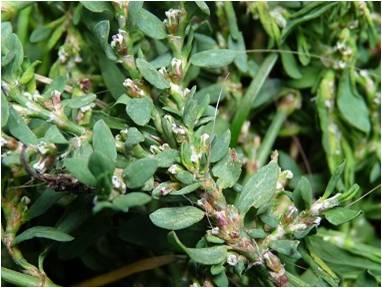
Malcolm thought that spinach was already known in Roman times but a later check with the Morgan-Owens dictionary at http://www.josephsusanka.com/adumbratio revealed it in fact reached Europe from the Arab world in the Middle Ages. In the 6th century A.D., if not earlier, Latin already had a word spīnācia, -ae f but this referred to knotgrass. In the medieval period the word spīnāc(h)ia (or spīnāc(h)ium, -ī n) – the length of the vowels is uncertain – was used for spinach in the modern sense. It is unclear whether this derived from the 6th century word, from the Andalusian Arabic asbinakh (itself from Persian aspanakh) or from a conflation of both sources.
Malcolm thought that spinach was already known in Roman times but a later check with the Morgan-Owens dictionary at http://www.josephsusanka.com/adumbratio revealed it in fact reached Europe from the Arab world in the Middle Ages. In the 6th century A.D., if not earlier, Latin already had a word spīnācia, -ae f but this referred to knotgrass. In the medieval period the word spīnāc(h)ia (or spīnāc(h)ium, -ī n) – the length of the vowels is uncertain – was used for spinach in the modern sense. It is unclear whether this derived from the 6th century word, from the Andalusian Arabic asbinakh (itself from Persian aspanakh) or from a conflation of both sources.
|

|
Knotgrass (buckwheat family) Spinach (Spinacia oleracea)
http://www.ediblewildfood.com/knotgrass.aspx http://www.fresh-square.com/en/product/spinach/
We discussed briefly the demise of the monarchy in Nepal and John confirmed that it had been formally abolished in 2008, when Gyanendra, the last king, who had already been stripped of his political powers after the 2006 protests, was compelled to leave the royal palace. Though personally convinced that Gyanendra had not been involved in the murder in 2001 of his brother Birendra and eight members of his family, John though that the majority of Nepalis still believed he was behind it. However, the Nepali waiter with whom we then checked said that most educated people in Nepal no longer believed the accusation. There is brief background information in the summary of recent Nepalese history at https://linguae.weebly.com/nepal-1964-2014.html, and a fuller account in John’s History of Nepal (see the preview at https://www.amazon.co.uk/History-Nepal-John-Whelpton/dp/0521804701/ ). For some of the reasons for Nepali scepticism over the official account of the killing, see the article by two Nepali academics at
http://digitalcommons.macalester.edu/cgi/viewcontent.cgi?article=1678&context=himalaya
There were queries about the Latin for `open up a can of whipass’ (American slang for talking in a way that exposes you to violence) and also for the simple phrase `I’m full!’ as uttered when you can’t eat any more. Probably the latter is best rendered sum satur, as satur, -ura, -urum means `full, satiated.’ For the former, perhaps in periculō incidere nē vapulēs (`come into danger that you’ll be thrashed’) is best, though lacking the colour of the original.
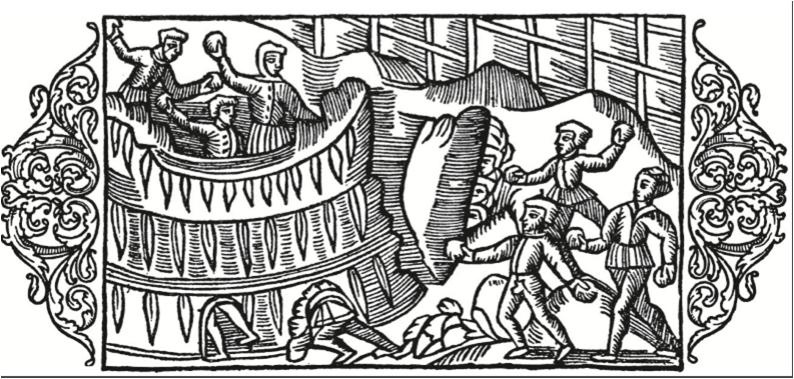
We did not have time to tackle Genesis 14 but read the account of snow castles and snow fights in 16th century Scandinavia in chapter 23 of Book 1 of Olaus Magnus’s Historia de Gentibus Septentrionalibus (see the text below). Magnus was a Swedish Catholic cleric, who was exiled during the Reformation and died in Rome in 1557, two years after the publication of his great work, which combined accurate observation with tall tales and remained the standard account of Scandinavia for many years.The extract had come to John’s attention when it was published on www.latinitium..com, a relatively new site run by two Swedish Latinists. Among the many useful resources they have uploaded is a digitalised, user-friendly version of the Smith-Hall English-Latin dictionary, the best guide available for any Anglophone wishing to write in classical Latin.
Magnus’s text includes a description of punishments suffered by those who try to escape from the mock battle, including having snow pushed down the back of their necks. The section concludes with the words Et haec omnia veluti voluptuōsa spectācula ad irrogandum rebellibus, et stupidīs mītiōrēs pœnās, and Kelvin pointed out that, given classical Latin’s general preference for the gerundive rather than the gerund, ad irrogandās rebellibus et stupidīs mitiōrēs poenās would be better style.. The English translation would in both cases be the same: `to inflict relatively light penalties on rebels and on the slow-witted.’ John wondered if the verb faciunt needed to be supplied, so the whole sentence would mean `And they do all this as an enjoyable spectacle – relatively light punishment for infliction on rebels and the slow-witted’, but on reflection this would be rather awkward. We noted also that the comma after rebellibus, like much of the punctuation in printed books of this period, seemed rather eccentric.
http://www.ediblewildfood.com/knotgrass.aspx http://www.fresh-square.com/en/product/spinach/
We discussed briefly the demise of the monarchy in Nepal and John confirmed that it had been formally abolished in 2008, when Gyanendra, the last king, who had already been stripped of his political powers after the 2006 protests, was compelled to leave the royal palace. Though personally convinced that Gyanendra had not been involved in the murder in 2001 of his brother Birendra and eight members of his family, John though that the majority of Nepalis still believed he was behind it. However, the Nepali waiter with whom we then checked said that most educated people in Nepal no longer believed the accusation. There is brief background information in the summary of recent Nepalese history at https://linguae.weebly.com/nepal-1964-2014.html, and a fuller account in John’s History of Nepal (see the preview at https://www.amazon.co.uk/History-Nepal-John-Whelpton/dp/0521804701/ ). For some of the reasons for Nepali scepticism over the official account of the killing, see the article by two Nepali academics at
http://digitalcommons.macalester.edu/cgi/viewcontent.cgi?article=1678&context=himalaya
There were queries about the Latin for `open up a can of whipass’ (American slang for talking in a way that exposes you to violence) and also for the simple phrase `I’m full!’ as uttered when you can’t eat any more. Probably the latter is best rendered sum satur, as satur, -ura, -urum means `full, satiated.’ For the former, perhaps in periculō incidere nē vapulēs (`come into danger that you’ll be thrashed’) is best, though lacking the colour of the original.
We did not have time to tackle Genesis 14 but read the account of snow castles and snow fights in 16th century Scandinavia in chapter 23 of Book 1 of Olaus Magnus’s Historia de Gentibus Septentrionalibus (see the text below). Magnus was a Swedish Catholic cleric, who was exiled during the Reformation and died in Rome in 1557, two years after the publication of his great work, which combined accurate observation with tall tales and remained the standard account of Scandinavia for many years.The extract had come to John’s attention when it was published on www.latinitium..com, a relatively new site run by two Swedish Latinists. Among the many useful resources they have uploaded is a digitalised, user-friendly version of the Smith-Hall English-Latin dictionary, the best guide available for any Anglophone wishing to write in classical Latin.
Magnus’s text includes a description of punishments suffered by those who try to escape from the mock battle, including having snow pushed down the back of their necks. The section concludes with the words Et haec omnia veluti voluptuōsa spectācula ad irrogandum rebellibus, et stupidīs mītiōrēs pœnās, and Kelvin pointed out that, given classical Latin’s general preference for the gerundive rather than the gerund, ad irrogandās rebellibus et stupidīs mitiōrēs poenās would be better style.. The English translation would in both cases be the same: `to inflict relatively light penalties on rebels and on the slow-witted.’ John wondered if the verb faciunt needed to be supplied, so the whole sentence would mean `And they do all this as an enjoyable spectacle – relatively light punishment for infliction on rebels and the slow-witted’, but on reflection this would be rather awkward. We noted also that the comma after rebellibus, like much of the punctuation in printed books of this period, seemed rather eccentric.
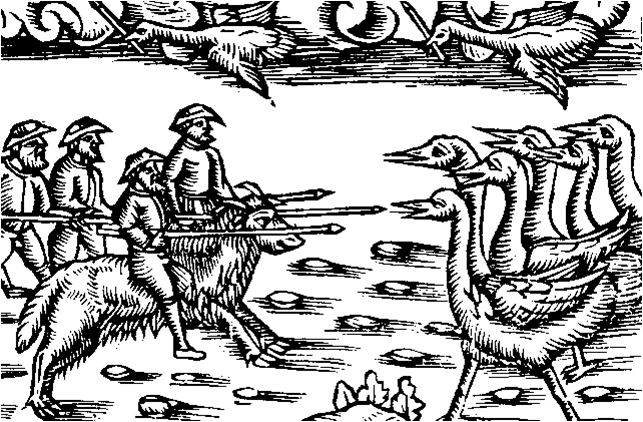
A battle between dwarves and cranes which Magnus imagined taking place in Greenland
https://commons.wikimedia.org/wiki/File:Hdgs_Cranes_fighting_Dwarfes.gif
We discussed the reference to the youngsters showing as much enthusiasm in their mock battles as if they were actually fighting prō patriā, prō lēgibus, prō focīs (ut dīcitur) et ārīs (`for native and, laws, hearths (as the saying goes) and altars’). `Hearths’ is probably just used instead of `homes’ though someone wondered if it might have a specifically religious connotation, as with the flame of Vesta which was kept burning continuously in Rome. Also of interest was the use of āra, which normally denoted a pagan rather than Christian altar, the latter being usually referred to as altar
The assault on the snow castle included burrowing like rabbits (cunīculus, -ī m) into the base of the fortifications and John pointed out that the noun was also used for tunnels or holes in general. Chris wondered whether there might be an etymological connection with cunnus (female genitals). There seems to be no common ancestor but the similarity of cunīculus and the Anglo-Saxon equivalent of cunnus had an interesting effect on the development of English vocabulary. Because the rabbit is not indigenous to northern Europe, there is no native Germanic or Celtic name for it. In the 12th century English adopted `coney’ derived through Anglo-French from cunīculus while the word` rabbit’, which is of unknown origin, came into use in the 14th century to refer just to the young of the species. In the 19th century the meaning of `rabbit’ was broadened to include the adult animal and largely supplanted the older term, seemingly out of embarrassment over the homophony of coney with cunny, which was a variant of `cunt’. The replacement of coney was not, however, total:
`The word was in the King James Bible (Proverbs xxx.26, etc.) …so it couldn't be entirely dropped, and the solution was to change the pronunciation of the original short vowel (rhyming with honey, money) to rhyme with boney. (www.etymonline.com)
Discussion of cunīculus led on to mention of Catullus 16, the most notoriously obscene work in the poet’s output. This is a humorous rebuke to his friends who had criticised the supposedly unmanly nature of his writing about his girlfriend `Lesbia’, and (in)famously begins:
Pēdīcābō ego vōs et irrumābō,
Aurēlī pathice et cinaede Fūrī,
The reference to anal and oral sex was, until recently, too much for editors and translators and the poem was frequently just omitted from published collections. In 2009, during the hearing of a sexual harassment and unfair dismissal case against London financier, Mark Lowe, one of the allegations was simply that he quoted the poem in a reply to a female intern working at his company after she had enquired about the Latin word for `love’ in the New Testament. The affair is discussed at https://www.theguardian.com/culture/charlottehigginsblog/2009/nov/24/catullus-mark-lowe.
The standard treatment of obscenity in Latin verse is James Adam’s The Latin Sexual Vocabulary, which can be partially previewed at https://books.google.com.hk/books?id=GDP9VHGbF1AC For the terms Catullus applies to his friends, there is useful information at https://en.wikipedia.org/wiki/Homosexuality_in_ancient_Rome The Romans did not have any term corresponding precisely to `gay’ or `homosexual’ because, for their society, the crucial distinction was between `active’ and `passive’ sexual roles rather than the gender of one’s partner, A pathicus was a male who submitted to having penetrative sexual acts performed upon him, whilst cinaedus was often used in the same sense but could also refer to `unmanly’ behavior in general. The stigma attached to accepting the passive role in sexual intercourse was so great that in the 2nd. century B.C. Roman soldiers thought to have willingly accepted it were clubbed to death by their comrades.
John mentioned the coyness which led some translators of Greek texts to render more explicit passages in Latin rather than English, as was the case with the Loeb edition of Longus’s Δάφνις καὶ Χλόη (Daphnis and Chloe), written in the 2nd century A.D. He recalled how as an undergraduate he took advantage of this to skim through the novel locating the racier bits. He also mentioned a brief list of the commonest Latin obscenities, which he supplied to students on request.
We discussed briefly another neo-Latin text, Johannes Kepler’s Somnium, an early work of science fiction serving also as a treatise on astronomy as it would appear to a lunar observer. Kepler, best-known for formulating the laws of planetary motion that were an important step towards Newton’s theory of gravitation, had at one point to take himself away from his studies to mount a successful defence of his mother who had been accused of witchcraft. Such accusation were common in the 17th century, seemingly because, amidst the religious conflicts triggered by the Reformation, both Catholics and Protestants sought to boost their grassroots popularity by endorsing the accusations against neighbours which had long been a part of village life.
https://commons.wikimedia.org/wiki/File:Hdgs_Cranes_fighting_Dwarfes.gif
We discussed the reference to the youngsters showing as much enthusiasm in their mock battles as if they were actually fighting prō patriā, prō lēgibus, prō focīs (ut dīcitur) et ārīs (`for native and, laws, hearths (as the saying goes) and altars’). `Hearths’ is probably just used instead of `homes’ though someone wondered if it might have a specifically religious connotation, as with the flame of Vesta which was kept burning continuously in Rome. Also of interest was the use of āra, which normally denoted a pagan rather than Christian altar, the latter being usually referred to as altar
The assault on the snow castle included burrowing like rabbits (cunīculus, -ī m) into the base of the fortifications and John pointed out that the noun was also used for tunnels or holes in general. Chris wondered whether there might be an etymological connection with cunnus (female genitals). There seems to be no common ancestor but the similarity of cunīculus and the Anglo-Saxon equivalent of cunnus had an interesting effect on the development of English vocabulary. Because the rabbit is not indigenous to northern Europe, there is no native Germanic or Celtic name for it. In the 12th century English adopted `coney’ derived through Anglo-French from cunīculus while the word` rabbit’, which is of unknown origin, came into use in the 14th century to refer just to the young of the species. In the 19th century the meaning of `rabbit’ was broadened to include the adult animal and largely supplanted the older term, seemingly out of embarrassment over the homophony of coney with cunny, which was a variant of `cunt’. The replacement of coney was not, however, total:
`The word was in the King James Bible (Proverbs xxx.26, etc.) …so it couldn't be entirely dropped, and the solution was to change the pronunciation of the original short vowel (rhyming with honey, money) to rhyme with boney. (www.etymonline.com)
Discussion of cunīculus led on to mention of Catullus 16, the most notoriously obscene work in the poet’s output. This is a humorous rebuke to his friends who had criticised the supposedly unmanly nature of his writing about his girlfriend `Lesbia’, and (in)famously begins:
Pēdīcābō ego vōs et irrumābō,
Aurēlī pathice et cinaede Fūrī,
The reference to anal and oral sex was, until recently, too much for editors and translators and the poem was frequently just omitted from published collections. In 2009, during the hearing of a sexual harassment and unfair dismissal case against London financier, Mark Lowe, one of the allegations was simply that he quoted the poem in a reply to a female intern working at his company after she had enquired about the Latin word for `love’ in the New Testament. The affair is discussed at https://www.theguardian.com/culture/charlottehigginsblog/2009/nov/24/catullus-mark-lowe.
The standard treatment of obscenity in Latin verse is James Adam’s The Latin Sexual Vocabulary, which can be partially previewed at https://books.google.com.hk/books?id=GDP9VHGbF1AC For the terms Catullus applies to his friends, there is useful information at https://en.wikipedia.org/wiki/Homosexuality_in_ancient_Rome The Romans did not have any term corresponding precisely to `gay’ or `homosexual’ because, for their society, the crucial distinction was between `active’ and `passive’ sexual roles rather than the gender of one’s partner, A pathicus was a male who submitted to having penetrative sexual acts performed upon him, whilst cinaedus was often used in the same sense but could also refer to `unmanly’ behavior in general. The stigma attached to accepting the passive role in sexual intercourse was so great that in the 2nd. century B.C. Roman soldiers thought to have willingly accepted it were clubbed to death by their comrades.
John mentioned the coyness which led some translators of Greek texts to render more explicit passages in Latin rather than English, as was the case with the Loeb edition of Longus’s Δάφνις καὶ Χλόη (Daphnis and Chloe), written in the 2nd century A.D. He recalled how as an undergraduate he took advantage of this to skim through the novel locating the racier bits. He also mentioned a brief list of the commonest Latin obscenities, which he supplied to students on request.
We discussed briefly another neo-Latin text, Johannes Kepler’s Somnium, an early work of science fiction serving also as a treatise on astronomy as it would appear to a lunar observer. Kepler, best-known for formulating the laws of planetary motion that were an important step towards Newton’s theory of gravitation, had at one point to take himself away from his studies to mount a successful defence of his mother who had been accused of witchcraft. Such accusation were common in the 17th century, seemingly because, amidst the religious conflicts triggered by the Reformation, both Catholics and Protestants sought to boost their grassroots popularity by endorsing the accusations against neighbours which had long been a part of village life.
|
|
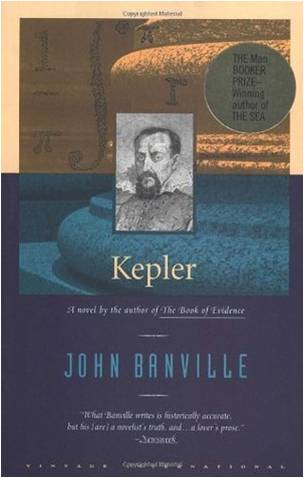
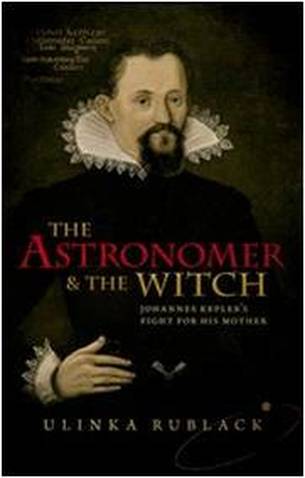
Kepler’s dual role both as a pioneer of the modern scientific revolution and as a man caught up in a world of intolerance and superstition have made him an attractive subject for modern writers. Malcolm mentioned the fictionalised account of his life (https://www.amazon.com/Kepler-novel-John-Banville/dp/0679743707) by Irish novelist John Banville, who is best known for a later novel, The Sea, which won the Man Booker Prize in 2005 and must be carefully distinguished from Iris Murdoch’s novel The Sea, the Sea! The most reliable translation of Somnium itself is by Edward Rosen, and the partial preview at https://books.google.com.hk/books?id=OdCJAS0eQ64C includes the whole of the narrative though only a part of the extensive notes which Kepler himself added to his text. There is a full but less accurate translation at https://dspace2.creighton.edu/xmlui/handle/10504/109241 and the complete Latin original is at https://archive.org/details/operaomniaedidit81kepluoft A paragraph by paragraph bilingual text is currently being built up on the `Somnium Project’ site (https://somniumproject.wordpress.com/) and John is working on a text with interlinear translation and brief notes for his Advanced Reading Group. Finally, Ulinka Rublack has recently published The Astronomer and the Witch an account of Kepler’s fight to save his mother’s life, based on an examination of the original court documents preserved in Stuttgart. There is a brief account of her findings at https://www.theguardian.com/books/2015/oct/21/the-astronomer-and-the-witch-johannes-kepler-mother-katharina-witch-trial
In a discussion of alcoholic beverages Chris mentioned that absinthe was outlawed at one time in France. It turns out that there was for many years a ban on the drink throughout much of Europe as well as the USA because it contains thujone, which is a dangerous poison when ingested in large quantities. The ban was eventually lifted when it as realised that for the thujone to do any real harm you would have had to drink so much of the liqueur that you would already be dead from alcoholic poisoning! More details are at https://mic.com/articles/50301/why-was-absinthe-banned-for-100-years-a-mystery-as-murky-as-the-liquor-itself#.zSfvpqjSJ
Chris also mentioned the tremblement de terre (earthquake, mōtus terrae) cocktail, which consists of equal parts of absinthe and cognac and is said, probably apocryphally, to have been invented by the late 19th century French painter Toulouse-Lautrec. More about this on the website of the delightfully named Institute for Alcoholic Experimentation:
http://instituteforalcoholicexperimentation.blogspot.hk/2010/10/earthquake-cocktail.htm
In a discussion of alcoholic beverages Chris mentioned that absinthe was outlawed at one time in France. It turns out that there was for many years a ban on the drink throughout much of Europe as well as the USA because it contains thujone, which is a dangerous poison when ingested in large quantities. The ban was eventually lifted when it as realised that for the thujone to do any real harm you would have had to drink so much of the liqueur that you would already be dead from alcoholic poisoning! More details are at https://mic.com/articles/50301/why-was-absinthe-banned-for-100-years-a-mystery-as-murky-as-the-liquor-itself#.zSfvpqjSJ
Chris also mentioned the tremblement de terre (earthquake, mōtus terrae) cocktail, which consists of equal parts of absinthe and cognac and is said, probably apocryphally, to have been invented by the late 19th century French painter Toulouse-Lautrec. More about this on the website of the delightfully named Institute for Alcoholic Experimentation:
http://instituteforalcoholicexperimentation.blogspot.hk/2010/10/earthquake-cocktail.htm
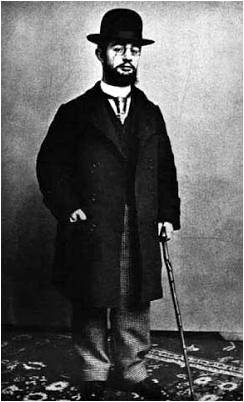
Henri de Toulouse-Lautrec
Continuing on the topic of intoxicants, John mentioned his unpleasant experience with cannabis, which was legally available in Kathmandu in the early 1970s and which he tried a couple of times. The result was to induce feelings of paranoia, with those around him appearing to rear up menacingly, almost like snakes. Thereafter he left the drug alone but later in North India was given what appeared to be a soft drink but was actually bhang – a cannabis-based beverage very popular in the region. This, too, led to delusions of being endangered, a reaction which others have also encountered; see http://www.bbc.com/travel/story/20170307-the-intoxicating-drug-of-an-indian-god Malcolm had also suffered the unnerving result of being given a drug without realising it – in his case LSD, which had an even worse result. All in all, good reason to stick with beer and red wine!
Finally, there was a brief discussion of how pejorative the words `nerd’ and `geek’ are. This arose from mention of `Alatius’, Swedish Latinist Johan Winge, who produced the digitalisation of the Smith-Hall dictionary mentioned above and also a demonstration of hexameter rhythm (https://www.youtube.com/watch?time_continue=5&v=uoD0vjQidrc), which John regularly uses in classes and which occasioned the comment `What a nerd!’ from one student. Nerd-like or not, Alatius himself points out that the demonstration is deliberately mechanical to bring out the basic architecture of the verse and his own personal website (http://alatius.com) includes three very useful resources: a macronizer which adds vowel length marks with a high degree of accuracy , a digitalised version of Lewis& Short’s Latin-English dictionary (similar too but probably with fewer errors than the better-known Glossa portal).
De castellis nivalibus iuvenum.
(from Book I of Olaus Magnus, Historia de Gentibus Septentrionalibus, Rome, 1555; full text at https://books.google.com.hk/books?id=O9lEAAAAcAAJ)
CAP. XXIII.
Mōs est Septentriōnālium populōrum, prōuidā quādam sagācitāte
Custom is northern of-peoples evident a-certain with-wisdom
adolēscentēs dīuersīs bellandī exercitiīs, et artibus castella impugnandī exercēre, et
adolescents various of-fighting with-exercises and skills castles of-storming to-train and
excitāre, quibus præsertim tīrōcinia[1] sine caede, et sanguine, ac quōvis vītæ perīculō
to-arouse in-which especially apprentices without slaughter and blood and any to-life danger
hæc aggredī putant voluptuōsum et ob id quotannīs hieme dūrantibus nivibus, locō
these to-attack they-think enjoyabl e and because-of this annually in-winter lasting with-snows in-place
aliquō ēminentī turmātim a maiōribus excitātī congrediuntur adolēscentēs, cōnformī
some prominent in-groups by seniors aroused congregate adolescents with-similar
labōre immēnsās niuium mōlēs comportantēs, ē quibus prōpugnācula ad formam
labour immense of-snow masses collecting from which ramparts in form
castrēnsium mœniōrum fēriatis saltem diēbus sollicitē fabricant, aquā stūctūram
of-castles of-walls free-from-work at-least on-days conscientiously they-construct with-water structure
huiusmodī, fenestrīs distinctam, continuō aspergentēs, ut nix cum aquā tāliter
of-this-kind by-windows adorned continually sprinkling so-that snow with water thus
congesta, accēdente frīgore validius indūrētur. Quā dīligentiā adeō fortificantur, ut nōn
heaped-up approaching with-cold more-strongly may-las t with-which diligence so-much they-are-fortified that not
sōlum leuēs ictūs,sed aereōs globōs, atque impulsum testūdinum (quātenus opus esset)
only light blows but air-borne dense-spheres and attack of-`tortoises’ [2] as-far-as need might-be
possent sustinēre. Quibus parātīs, adolescentes prædictī, in dīuersās turmās sēgregātī
they-can withstand with-which-things prepared adolescents mentioned-above into different teams separated
pars mœnia ingreditur contuenda, pars forīs remanet eadem impugnanda.[3] Nec dēsunt
part walls go-inside to-be-defended part outside remains same to-be-stormed nor are-lacking
in candidīs castrīs ātra, seu fusca vexilla, aut viridēs iūniperōrum rubī, sub quibus nōn
in brilliant-white castles black or dark flags or green of-junipers brambles under which not
pecūniæ, sed sōlius laudis appetītū, voluptuōsum ingrediuntur certāmen, quod aliīs
of-money but alone of-praise from-desire enjoyable they-enter contest which with-other
armīs utrobīque nōn committitur, nisi niveīs globīs in alterutrum e manibus prōiectīs.
weapons on-each-side not is-fought except of-snow with-balls onto each-other from hands thrown
NOTES
[1] This term might refer instead to army recruits, the original meaning of the word tīrō, tīrōnis m, from which tīrōcinium derives,
[2] Referring to the Roman `testūdō,’ a formation in which soldiers held their shields over their heads.
[3] The preposition ad should probably be supplied before eadem impugnanda to give the meaning `in order to storm the same
Continuing on the topic of intoxicants, John mentioned his unpleasant experience with cannabis, which was legally available in Kathmandu in the early 1970s and which he tried a couple of times. The result was to induce feelings of paranoia, with those around him appearing to rear up menacingly, almost like snakes. Thereafter he left the drug alone but later in North India was given what appeared to be a soft drink but was actually bhang – a cannabis-based beverage very popular in the region. This, too, led to delusions of being endangered, a reaction which others have also encountered; see http://www.bbc.com/travel/story/20170307-the-intoxicating-drug-of-an-indian-god Malcolm had also suffered the unnerving result of being given a drug without realising it – in his case LSD, which had an even worse result. All in all, good reason to stick with beer and red wine!
Finally, there was a brief discussion of how pejorative the words `nerd’ and `geek’ are. This arose from mention of `Alatius’, Swedish Latinist Johan Winge, who produced the digitalisation of the Smith-Hall dictionary mentioned above and also a demonstration of hexameter rhythm (https://www.youtube.com/watch?time_continue=5&v=uoD0vjQidrc), which John regularly uses in classes and which occasioned the comment `What a nerd!’ from one student. Nerd-like or not, Alatius himself points out that the demonstration is deliberately mechanical to bring out the basic architecture of the verse and his own personal website (http://alatius.com) includes three very useful resources: a macronizer which adds vowel length marks with a high degree of accuracy , a digitalised version of Lewis& Short’s Latin-English dictionary (similar too but probably with fewer errors than the better-known Glossa portal).
De castellis nivalibus iuvenum.
(from Book I of Olaus Magnus, Historia de Gentibus Septentrionalibus, Rome, 1555; full text at https://books.google.com.hk/books?id=O9lEAAAAcAAJ)
CAP. XXIII.
Mōs est Septentriōnālium populōrum, prōuidā quādam sagācitāte
Custom is northern of-peoples evident a-certain with-wisdom
adolēscentēs dīuersīs bellandī exercitiīs, et artibus castella impugnandī exercēre, et
adolescents various of-fighting with-exercises and skills castles of-storming to-train and
excitāre, quibus præsertim tīrōcinia[1] sine caede, et sanguine, ac quōvis vītæ perīculō
to-arouse in-which especially apprentices without slaughter and blood and any to-life danger
hæc aggredī putant voluptuōsum et ob id quotannīs hieme dūrantibus nivibus, locō
these to-attack they-think enjoyabl e and because-of this annually in-winter lasting with-snows in-place
aliquō ēminentī turmātim a maiōribus excitātī congrediuntur adolēscentēs, cōnformī
some prominent in-groups by seniors aroused congregate adolescents with-similar
labōre immēnsās niuium mōlēs comportantēs, ē quibus prōpugnācula ad formam
labour immense of-snow masses collecting from which ramparts in form
castrēnsium mœniōrum fēriatis saltem diēbus sollicitē fabricant, aquā stūctūram
of-castles of-walls free-from-work at-least on-days conscientiously they-construct with-water structure
huiusmodī, fenestrīs distinctam, continuō aspergentēs, ut nix cum aquā tāliter
of-this-kind by-windows adorned continually sprinkling so-that snow with water thus
congesta, accēdente frīgore validius indūrētur. Quā dīligentiā adeō fortificantur, ut nōn
heaped-up approaching with-cold more-strongly may-las t with-which diligence so-much they-are-fortified that not
sōlum leuēs ictūs,sed aereōs globōs, atque impulsum testūdinum (quātenus opus esset)
only light blows but air-borne dense-spheres and attack of-`tortoises’ [2] as-far-as need might-be
possent sustinēre. Quibus parātīs, adolescentes prædictī, in dīuersās turmās sēgregātī
they-can withstand with-which-things prepared adolescents mentioned-above into different teams separated
pars mœnia ingreditur contuenda, pars forīs remanet eadem impugnanda.[3] Nec dēsunt
part walls go-inside to-be-defended part outside remains same to-be-stormed nor are-lacking
in candidīs castrīs ātra, seu fusca vexilla, aut viridēs iūniperōrum rubī, sub quibus nōn
in brilliant-white castles black or dark flags or green of-junipers brambles under which not
pecūniæ, sed sōlius laudis appetītū, voluptuōsum ingrediuntur certāmen, quod aliīs
of-money but alone of-praise from-desire enjoyable they-enter contest which with-other
armīs utrobīque nōn committitur, nisi niveīs globīs in alterutrum e manibus prōiectīs.
weapons on-each-side not is-fought except of-snow with-balls onto each-other from hands thrown
NOTES
[1] This term might refer instead to army recruits, the original meaning of the word tīrō, tīrōnis m, from which tīrōcinium derives,
[2] Referring to the Roman `testūdō,’ a formation in which soldiers held their shields over their heads.
[3] The preposition ad should probably be supplied before eadem impugnanda to give the meaning `in order to storm the same
Statūta enim pœna est nūdī corporis in gelidam aquam immergendī, nē quis globīs
Prescribed for penalty is of-naked body into ice-cold water immersing lest anyone with-balls
huiusmodī nivālibus saxum, ferrum, lignum, aut glaciem prōiectūrus involuat. Sunt
of-this-kind of-snow rock iron wood or ice in-order-to throw enfold there-are
prætereā inter oppugnantēs, quī mōre cuniculōrum inferiōres niuium basēs perforant,
besides among attackers who in-manner of-rabbits lower of-snow foundations bore-into
ac ingrediuntur, ut prōpugnāculī dēfēnsōrēs coërceant a statiōnibus suīs. Nec segnior
and go-inside so-that of-rampart defenders they-may-force from posts their nor less-vigorous
intercidit mora, quā pugnīs certātur comminus, dōnec vexillō raptō pars victa
intervenes delay in-which with-fists it-is-struggled at-close-quarters until with-flag seized group vanquished
succumbat, alio tempore restaurātō proeliō contrā partem victrīcem in eīsdem castellīs
should-concede at-another time renewed with-battle against group victorious in same castles
(si poterit ) triumphātūra. Neque segnius, aut dēbilius lūdōs huiusmodī committunt,
if it-will-be-able going-to-triumph nor with-less-energy or less-strength games of-this-sort they-engage-in
aut perferunt, quam sī prō patriā, prō lēgibus, prō focīs (ut dīcitur) et ārīs, pūblico
or endure than if for native-land for laws for hearths as is-said and altars as-public
spectāculo in agōne certārent. Profugōs vērō, et meticulōsōs pugnam excēdentēs,
spectacle in contest they-were-striving deserters indeed and cowards fight leaving
nivibus dorsōtenus inter cutem vestemque immissīs, ubi dēprehēnsī fuerint,
with-snow onto-back between skin and-clothing sent-in when caught they-will-have-been
insolentibus verbīs, ac vōcibus pūnītōs absolvunt, ut aliās fortius reversūrī
with-insolent words and voices punished they-let-go so-that another-time more-bravely going-to-return
persistant, et ācrius dēfendant castra. Quōsdam aquīs congelatis in caput, et collum
they-may-persist and more-keenly defend fortress certain-individuals with-water frozen onto head and neck
tempore horrendī frīgoris guttātim dīmissīs, castīgant. Et haec omnia veluti
at-time of-fearful cold in-drops released they-chastise and these all- things as
voluptuōsa spectācula ad irrogandum rebellibus, et stupidīs mītiōrēs pœnās.[1] Quī mōs
enjoyable spectacles in-order-to –inflict on-rebels and the-half-witted milder penalties this custom
prōlixius forsitan, quam decentius, hīc recitātus est, cum nōnnūllīs merē rīdiculus
at-greater-length perhaps than more-appropriately here described has-been since to-some simply ridiculous
(quod nōn negō) nec dignus, quō repleātur charta, ostendī possit.[2]
which not I-deny and-not worthy with-which may-be-filled paper be-shown can
NOTES
[1] This sentence might just refer to the lesser penalty of drops of freezing-cold water on the head rather than to thrusting snow down the back of the neck, thought it is possible both varieties of punishment are being referred to, in which case mītiōrēs should be translated as `relatively mild’ or `quite mild’.
[2] The meaning is presumably `This custom has perhaps been described here at greater length than is proper, since to some it may seem simply ridiculous (which I do not deny) and not worth putting down on paper
Prescribed for penalty is of-naked body into ice-cold water immersing lest anyone with-balls
huiusmodī nivālibus saxum, ferrum, lignum, aut glaciem prōiectūrus involuat. Sunt
of-this-kind of-snow rock iron wood or ice in-order-to throw enfold there-are
prætereā inter oppugnantēs, quī mōre cuniculōrum inferiōres niuium basēs perforant,
besides among attackers who in-manner of-rabbits lower of-snow foundations bore-into
ac ingrediuntur, ut prōpugnāculī dēfēnsōrēs coërceant a statiōnibus suīs. Nec segnior
and go-inside so-that of-rampart defenders they-may-force from posts their nor less-vigorous
intercidit mora, quā pugnīs certātur comminus, dōnec vexillō raptō pars victa
intervenes delay in-which with-fists it-is-struggled at-close-quarters until with-flag seized group vanquished
succumbat, alio tempore restaurātō proeliō contrā partem victrīcem in eīsdem castellīs
should-concede at-another time renewed with-battle against group victorious in same castles
(si poterit ) triumphātūra. Neque segnius, aut dēbilius lūdōs huiusmodī committunt,
if it-will-be-able going-to-triumph nor with-less-energy or less-strength games of-this-sort they-engage-in
aut perferunt, quam sī prō patriā, prō lēgibus, prō focīs (ut dīcitur) et ārīs, pūblico
or endure than if for native-land for laws for hearths as is-said and altars as-public
spectāculo in agōne certārent. Profugōs vērō, et meticulōsōs pugnam excēdentēs,
spectacle in contest they-were-striving deserters indeed and cowards fight leaving
nivibus dorsōtenus inter cutem vestemque immissīs, ubi dēprehēnsī fuerint,
with-snow onto-back between skin and-clothing sent-in when caught they-will-have-been
insolentibus verbīs, ac vōcibus pūnītōs absolvunt, ut aliās fortius reversūrī
with-insolent words and voices punished they-let-go so-that another-time more-bravely going-to-return
persistant, et ācrius dēfendant castra. Quōsdam aquīs congelatis in caput, et collum
they-may-persist and more-keenly defend fortress certain-individuals with-water frozen onto head and neck
tempore horrendī frīgoris guttātim dīmissīs, castīgant. Et haec omnia veluti
at-time of-fearful cold in-drops released they-chastise and these all- things as
voluptuōsa spectācula ad irrogandum rebellibus, et stupidīs mītiōrēs pœnās.[1] Quī mōs
enjoyable spectacles in-order-to –inflict on-rebels and the-half-witted milder penalties this custom
prōlixius forsitan, quam decentius, hīc recitātus est, cum nōnnūllīs merē rīdiculus
at-greater-length perhaps than more-appropriately here described has-been since to-some simply ridiculous
(quod nōn negō) nec dignus, quō repleātur charta, ostendī possit.[2]
which not I-deny and-not worthy with-which may-be-filled paper be-shown can
NOTES
[1] This sentence might just refer to the lesser penalty of drops of freezing-cold water on the head rather than to thrusting snow down the back of the neck, thought it is possible both varieties of punishment are being referred to, in which case mītiōrēs should be translated as `relatively mild’ or `quite mild’.
[2] The meaning is presumably `This custom has perhaps been described here at greater length than is proper, since to some it may seem simply ridiculous (which I do not deny) and not worth putting down on paper

