| linguae |
|
QUESTIONS ARISING FROM 155th. MEETING – 1/3/24
(the record of earlier meetings can be downloaded from the main Circulus page as can the version of Ciceronis Filius with illustrations added. The illustrated text of Genesis is available on the Genesis page, of Kepler's Somnium on the Somnium page, of Eutropius' Breviarium on the Eutropius page, of Suetonius' Vita Neronis, Vita Galbae and Vita Othonis on the Suetonius page and of Nutting's Ad Alpes on the Ad Alpes page)
As usual at Chinese New Year, we were very well fed and watered at Tanya and Keon’s place. Food consumed indoors at the start included olīvae (olives), and pānis, crustula et caseus (bread.biscuits with cheese). For the main course we has būbula assa (roast beef), batātae contrītae (mashed potatoes) and acetāria (salad), with glaciēs dulcis (ice cream) and pōma cocta cum fragmentīs pānificiōrum (apple crumble). This was washed down with vīnum coctum (mulled wine) and other beverages.
Although we braved the cold air outside for some time, and sang Luke Ranieri’s Latin version of Auld Lang Syne, we took shelter indoors again to read Ovid’s Amōres I:7 (see text at the end.). The latter took some time and, among the guests, only Pat, Kobe and John made it through till the end.
Oblīvĭscāmur tempora et amīcŏs antīquōs?
Should-we-forget times and friends old
Oblīvĭscāmur tempora et amīcŏs antīquōs?
Propīn’, ὦ τᾶν, sodālibus et īs diēbus!
Ι-drink-a-toast dear-friends to-companions and to-those days
Sūmēmus pōcul’ amīcīs et īs diēbus.
We’ll-take a-cup for-friends and for-those days
This is slightly adapted from https://www.youtube.com/watch?v=pg2w6JLrpMM) and for John’s alterations and his discussion with Luke, see the record of the January 2023 meeting at https://linguae.weebly.com/conventus-ian-2023.html Luke’s prodigious output on YouTube, via his Scorpio Martianus and Polymathy channels, includes readings of the chapters in Orberg’s Lingua Latina per Se Illustrata and recordings of his own Latin conversations with other Latinists and also with random volunteers/victims on the streets of Rome!
Although we braved the cold air outside for some time, and sang Luke Ranieri’s Latin version of Auld Lang Syne, we took shelter indoors again to read Ovid’s Amōres I:7 (see text at the end.). The latter took some time and, among the guests, only Pat, Kobe and John made it through till the end.
Oblīvĭscāmur tempora et amīcŏs antīquōs?
Should-we-forget times and friends old
Oblīvĭscāmur tempora et amīcŏs antīquōs?
Propīn’, ὦ τᾶν, sodālibus et īs diēbus!
Ι-drink-a-toast dear-friends to-companions and to-those days
Sūmēmus pōcul’ amīcīs et īs diēbus.
We’ll-take a-cup for-friends and for-those days
This is slightly adapted from https://www.youtube.com/watch?v=pg2w6JLrpMM) and for John’s alterations and his discussion with Luke, see the record of the January 2023 meeting at https://linguae.weebly.com/conventus-ian-2023.html Luke’s prodigious output on YouTube, via his Scorpio Martianus and Polymathy channels, includes readings of the chapters in Orberg’s Lingua Latina per Se Illustrata and recordings of his own Latin conversations with other Latinists and also with random volunteers/victims on the streets of Rome!

One of the difficulties for beginners with Classical Latin poetry is the separation of adjectives from the noun they qualify, with the reader or listener having to use the case terminations to recognise that they form a single phrase. Pat suggested that when the adjective came first it might have been given a special stress as a warning to look out for the accompanying noun coming up a few words later., Pat also voiced his enthusiasm for medieval poetry (particularly the Archpoet ‘s Estuans intrinsecus). Stylistic features include repetition of a syllable in successive lines, and sometimes a stress rhythm coinciding with the quantitative metre of in classical poetry. Medieval verse also made frequent use of rhyme and John mentioned that this was a feature apparently originationg in Hebrew poetry of the 4th century A.D. Pat’s own translations of several poems form the Oxford Book of Medieval Verse and Kline’s translation of Estuans can be read on the Linguae site at https://linguae.weebly.com/carmina-mediaevalia.html.
We briefly discussed historical fiction, which John feels strongly should involve supplementing but not altering the known historical facts. Robert Harris follows this rule in his Cicero trilogy, in contrast to Thorne Wilder’s Ides Of March, which is written as if a series of letters from Julius Caesar in 44B.C. but presents as still living several individuals who were already dead. Some of Wilder’s many other anachronisms are mentioned in the Wikipedia article on the novel. Another blatant example of this cavalier approach to the facts is Imperator the 40-minute Polish film on Otho, emperor for three months in 69 A.D., with all the dialogue in Latin except a few words of Old German and also with Polish and English subtitles. This has Poppaea, the wife Nero probably stole from Otho but then killed in a rage, still alive after Nero’s own death, and portrays Otho as sent to Germania, when he was actually sent to Lusitania and accompanied Galba, the man who ousted Nero, on his march to Rome. The film is freely available on the web at https://www.youtube.com/watch?v=RRTh3qqZLkQ, and the comments below include one from John, complimenting the film students involved for their work but querying the historical inaccuracies. The film makers replied `and Lord Vader was Luke Skywalker's father’, as if the known facts of Roman history are as arbitrary those in a work of fiction.
John also suggested to the site master that Latin subtitles be added to the film as the spoken dialogue is not clear enough to follow. This was done, but these subtitles (which were not particularly accurate!) have now disappeared
John also suggested to the site master that Latin subtitles be added to the film as the spoken dialogue is not clear enough to follow. This was done, but these subtitles (which were not particularly accurate!) have now disappeared
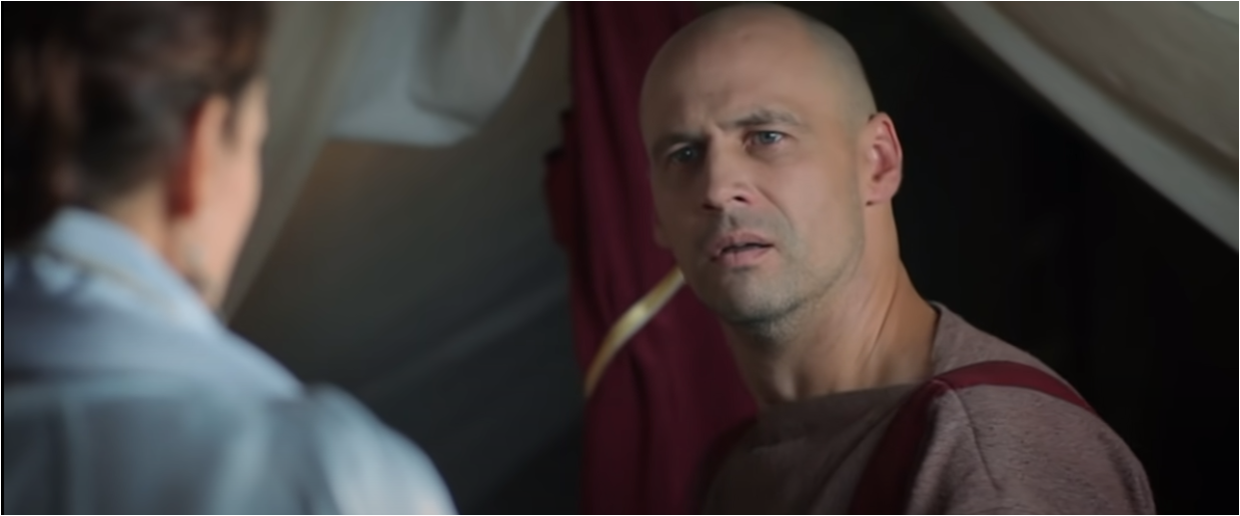
Otho with Poppaea in a still from Imperator.
John is currently translating and annotating Suetonius’ Life of Otho for a group of students and chapters 1 to 9 are available as a download from https://linguae.weebly.com/suetonius.html , with chapters 10 to 12 due to be completed in a few days. Otho was a man of great contradictions, a debauched companion of Nero at the start, the stager of a ruthless coup against Galba but also apparently a conscientious administrator even though the political task he faced reconciling the demands of the Roman crowd, the senate and the praetorians would have daunted any man. He redeemed himself in his contemporaries eyes by opting to commit suicide after his defeat at Bedriacum in April 69 rather than fight a full-scale civil war against Vitellius.
Pat commented on Otho’s rather unRoman sounding name and his ancestors appear in fact to have been Etruscan, even though their home town is now within the boundaries of the modern Italian province of Lazio. A coin issued during his short time as emperor probably show him wearing a wig, distinguishable by the tighter curls at the front of his head (see Paul Roche, `The Public Imagery of the Emperor Otho’, Historia 57(1): 108-23 https://www.jstor.org/stable/25598420)
John is currently translating and annotating Suetonius’ Life of Otho for a group of students and chapters 1 to 9 are available as a download from https://linguae.weebly.com/suetonius.html , with chapters 10 to 12 due to be completed in a few days. Otho was a man of great contradictions, a debauched companion of Nero at the start, the stager of a ruthless coup against Galba but also apparently a conscientious administrator even though the political task he faced reconciling the demands of the Roman crowd, the senate and the praetorians would have daunted any man. He redeemed himself in his contemporaries eyes by opting to commit suicide after his defeat at Bedriacum in April 69 rather than fight a full-scale civil war against Vitellius.
Pat commented on Otho’s rather unRoman sounding name and his ancestors appear in fact to have been Etruscan, even though their home town is now within the boundaries of the modern Italian province of Lazio. A coin issued during his short time as emperor probably show him wearing a wig, distinguishable by the tighter curls at the front of his head (see Paul Roche, `The Public Imagery of the Emperor Otho’, Historia 57(1): 108-23 https://www.jstor.org/stable/25598420)
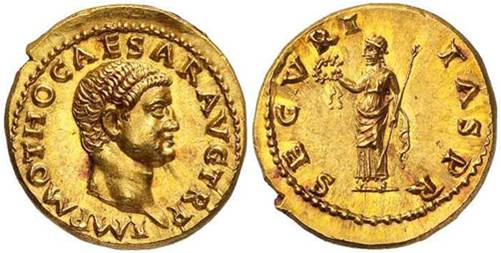
Gold aureus with Otho’s portrait, with inscriptions IMP[ERATOR] M. OTHO CAESAR AUG[USTUS] TR[IBUNICIA] POTESTATE and SECURITAS P[OPULI] R[OMANI] http://www.ancient-roman-coin.com/otho-coins-imperial
Returning to fiction, John argued that if an author wanted to alter historical facts he could do so by imagining a parallel universe. This device is brilliantly used in the 1948 short story by H Beam Piper, which is told, like Wilder’s Ides of March, in epistolary style, as a series of letters and reports from government officials and others. The starting point is the real life disappearance in 1809 during the Napoleonic wars of a British diplomat who was staying at an inn in Prussia. The story assumes that he slipped into an alternate reality in which both the American Revolution and the French Revolution failed and both Napoleon himself and Talleyrand are loyal servants of the French monarchy. The diplomat’s tales of his own universe are taken as evidence that he has gone mad and he is imprisoned but later shot when trying to escape. The final letter is from a British `Minister’ in Berlin. He notes that virtually every one referred to in the dead man’s story corresponded to a real individual except for a character named Wellington. The letter is signed `Sir Arthur Wellesley’, the man who in our reality was created Duke of Wellington for his services in the struggle against Napoleon. More details of the story are provided at https://en.wikipedia.org/wiki/He_Walked_Around_the_Horses and the full, original text is available at https://gutenberg.org/ebooks/18807
Pat added the detail that Arthur Wellesley’s original surname had been `Wesley’ but that he had changed it so as not to be associated with his distant cousin, John Wesley, the founder of Methodism.
Reverting to Ovid, Kobe asked whether Amores I.7, in which the narrator delivers a mock apology for an assault on his girlfriend, was based on actual experience or purely fictional. John believed it was impossible to answer the question, which arose also with the work of a number of other poets, including Catullus. Both men also frequently referred to themselves in their verse by name, thereby giving their output a very personal touch in contrast to the purely 3rd. person approach of Virgil. The latter’s diffidence in his poerty perhaps mirrored his shyness in real life: by the time he started work on the Aeneid he was a celebrity in Rome but took no pleasure in his status, and sought refuge in friends’ houses if he was recognised on the street. at the sametime. Virgil’s method of working for the Aeneid was to produce a synopsis in prose, then to wrok on the different sections in no paticualr order, leaving imperfections to be ironed out later. When he died in 19 B.C. he was planning to spend three years on the final revision of his epic and, when he realised he would not live to do this, he gave instructions for the work to be destroyed. We only have the Aeneid today because Augustus countermanded the poet’s own order.
We touched on the problem of the 87 lines in the Aeneid which were left incomplete. Pat believed that he might actually have intended some of them to stay that way and, indeed, it would be difficult to improve on the dramatic effect of line 623 in Book II, which, coming at the end of the Aeneas’s vision of gods themselves aiding the Greeks in the destruction of Troy, consists of just three words: nūmina magna deum (`the vast powers of gods’). However, if Virgil had deliberately broken the normal rules of epic poetry, rather than just left some lines to be completed later, one would have expected ancient critics to comment on his innovation.
Pat, who recalled meeting a man called Ovidius in Romania, where Ovid had spent his exile, also commented on the frequency with which Ovid’s lines commenced with an unimportant word, something which he thought was much less common in Virgil. inRomania meeting an Ovidius; comments on frequency with which Ovid’s lines start with an unimportant word.
After the meeting, John began adding to his website some of the materials on Ovid from his data base. Already available at https://linguae.weebly.com/ovid.html are a number of essays published for the Bimillennial of the author’s death in 2018 and also the texts of Amores 1.7 and 1.14 with interlinear translation and annotation
Finally we touched on Hong Kong snakes, which have rarely proved fatal in recent years but can stil do a fair amount of damage. Pat described leading a group on a tour of a 6-day-war battle site and discovering after all the others had gone past that they had been within inches of a bamboo pit viper. This is an ambush predator which lies in wait and strikes at anything that comes within its six-inch range!
Pat added the detail that Arthur Wellesley’s original surname had been `Wesley’ but that he had changed it so as not to be associated with his distant cousin, John Wesley, the founder of Methodism.
Reverting to Ovid, Kobe asked whether Amores I.7, in which the narrator delivers a mock apology for an assault on his girlfriend, was based on actual experience or purely fictional. John believed it was impossible to answer the question, which arose also with the work of a number of other poets, including Catullus. Both men also frequently referred to themselves in their verse by name, thereby giving their output a very personal touch in contrast to the purely 3rd. person approach of Virgil. The latter’s diffidence in his poerty perhaps mirrored his shyness in real life: by the time he started work on the Aeneid he was a celebrity in Rome but took no pleasure in his status, and sought refuge in friends’ houses if he was recognised on the street. at the sametime. Virgil’s method of working for the Aeneid was to produce a synopsis in prose, then to wrok on the different sections in no paticualr order, leaving imperfections to be ironed out later. When he died in 19 B.C. he was planning to spend three years on the final revision of his epic and, when he realised he would not live to do this, he gave instructions for the work to be destroyed. We only have the Aeneid today because Augustus countermanded the poet’s own order.
We touched on the problem of the 87 lines in the Aeneid which were left incomplete. Pat believed that he might actually have intended some of them to stay that way and, indeed, it would be difficult to improve on the dramatic effect of line 623 in Book II, which, coming at the end of the Aeneas’s vision of gods themselves aiding the Greeks in the destruction of Troy, consists of just three words: nūmina magna deum (`the vast powers of gods’). However, if Virgil had deliberately broken the normal rules of epic poetry, rather than just left some lines to be completed later, one would have expected ancient critics to comment on his innovation.
Pat, who recalled meeting a man called Ovidius in Romania, where Ovid had spent his exile, also commented on the frequency with which Ovid’s lines commenced with an unimportant word, something which he thought was much less common in Virgil. inRomania meeting an Ovidius; comments on frequency with which Ovid’s lines start with an unimportant word.
After the meeting, John began adding to his website some of the materials on Ovid from his data base. Already available at https://linguae.weebly.com/ovid.html are a number of essays published for the Bimillennial of the author’s death in 2018 and also the texts of Amores 1.7 and 1.14 with interlinear translation and annotation
Finally we touched on Hong Kong snakes, which have rarely proved fatal in recent years but can stil do a fair amount of damage. Pat described leading a group on a tour of a 6-day-war battle site and discovering after all the others had gone past that they had been within inches of a bamboo pit viper. This is an ambush predator which lies in wait and strikes at anything that comes within its six-inch range!
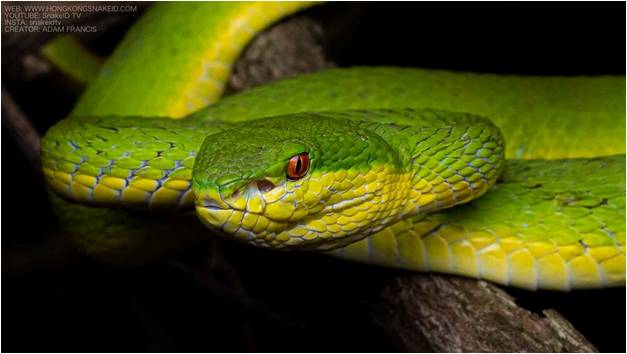
Bamboo pit viper
https://www.hongkongsnakeid.com/whitelipped-viper
https://www.hongkongsnakeid.com/whitelipped-viper
OVID APOLOGISES TO HIS MISTRESS
(Amōrēs 1:7)
Adde manūs in vincla meās (meruēre catēnās),[1]
Place hands in bonds my they-have-deserved chains
dum furor omnis abit, sī quis amīcus ades:
until madness all departs if anyone as-friend you-are-present
nam furor in dominam temerāria bracchia mōvit;
for fury against mistress rash arms moved
flet mea vēsānā laesa puella manū.
is-weeping my by-mad wounded girl hand
tunc ego vel cārōs potuī violāre parentēs 5
in-that-case I either dear would-have-been-able to-assault parents
saeva vel in sānctōs verbera ferre deōs.[2]
savage or upon holy blows to-launch gods
quid? nōn et clipeī dominus septemplicis Aiax
what? not also of-shield lord seven-layered Ajax
strāvit dēprēnsōs lāta per arva gregēs,
laid-low caught broad over fields flocks
et vindex in mātre patris, malus ultor, Orestēs
and champion upon mother of-father wrongful avenger Orestes
ausus in arcānās poscere tēla deās?[3] 10
dared against hidden to-demand weapons goddesses
ergō ego dīgestōs potuī laniāre capillōs?
So I carefully-arranged was-able to-tear hair
nec dominam mōtae dēdecuēre comae:
and-not to-mistress disturbed was-unbecoming hair
sīc fōrmōsa fuit; tālem Schoenēida dīcam
like-that beautiful she-was such daughter-of-Schoenius I-will-say
Maenaliās arcū sollicitāsse ferās;[4]
Maenalian with-bow to-have-harried wild-beasts
NOTES
[1] vinculum is a short chain, catēna a longer one.
[2] The poet is jokingly suggesting that what he has done is as grave as two obviously more serious offences,
[3] Ajax, son of Telamon, was a mythical hero who carried a shield made of seven ox hides when he fought for the Greeks against Troy. When the arms of Achilles were awarded to Odysseus rather than him, he was sent mad by Athena and attacked sheep, mistaking them for the Greek comrades he felt had humiliated him. He subsequently committed suicide. Orestes, who killed his mother Clytemnestra after she and her lover murdered his father, Agamemnon, demanded weapons to use against the pursuing Furies
[4] Atalanta, the daughter of King Schoenius of Boeotia (the region around Thebes in northern Greece), told that marriage would lead to her death, spent much of her time hunting on Mount Maenalus in Arcadia, a region in southern Greece. Famous for her speed as well as her beauty , Atalanta challenged suitors to race her, promising to marry any man who could run faster but stipulating death as the penalty if they lost. She was eventually defeated by Hippomenes with help from Venus but the two were turned into lions after he failed to show gratitude to the goddess.
tālis periūrī prōmissaque vēlaque Thēsei 15
such of-faithless both-promises and-sails of-Theseus
flēvit praecipitēs Crēssa tulisse Notōs;[1]
wept[knowing-that] fleeing Cretan-woman to-have-carried-away south-winds
sīc, nisi vittātīs quod erat, Cassandra, capillīs,
in-this-way except with-ribboned fact-that she-was Cassandra hair
prōcubuit templō, casta Minerva, tuō.[2]
fell-down-before temple chaste Minerva your
quis mihi nōn 'dēmēns,' quis nōn mihi 'barbare' dīxit?
who to-me not `madman’ who not to-me `barbarian’ has-said
ipsa nihil: pavidō est lingua retenta metū. 20
she-herself nothing trembling was tongue restrained by-fear
sed tacitī fēcēre tamen convīcia vultūs;
but silent made however reproach facial-expression
ēgit mē lacrimīs ōre silente reum.
she-rendered me by-tears on-face silently guilty
ante meōs umerīs vellem cecidisse lacertōs;[3]
before my from-shoulders I-would-wish to-have-fallen arms
ūtilius potuī parte carēre meī:
more-usefully I-could-have part dispensed-with of-me
in mea vēsānās habuī dispendia vīrēs 25
to my-own mad I-had disadvantage strength
et valuī, poenam fortis in ipse meam.[4]
and I-prevailed punishment strong into myself my
quid mihi vōbīscum, caedis scelerumque ministrae?[5]
what for-me with-you of-slaughter and-crimes agents
dēbita sacrilegae vincla subīte manūs.
deserved sacrilegious chains submit-to hands
NOTES
[1] Ariadne, the daughter of King Minos of Crete was abandoned by Theseus on the island of Naxos, after she had helped him kill her half-brother, the Minotaur, and rescue his Athenian countrymen.
[2] Cassandra, a daughter of King Priam, had ribbons (`fillets’) in her hair to signify her status as a priestess. She had been given the gift of prophecy by Apollo but, because she refused sex, he laid upon her the curse of never being believed. When Troy fell, she took refuge in Athena’s temple but was dragged away and raped by Ajax son of Oileus (`Ajax the Lesser’). He was later killed by Athena with a thunderbolt during the Greeks’ voyage home.
[3] Ovid wished his arms could have fallen from his shoulders before he attacked his partner,
[4] Literally `I myself, in my strength, managed into my punishment,’ i.e. with my own strength I managed to punish myself.
[5] This and the following line are addressed to his hands: `What use to me are you? Come into the bonds you deserve, sacrilegious hands!’
an, sī pulsāssem[1] minimum dē plēbe Quirītem,[2]
or if I-had-struck humblest from plebs Roman-citizen
plecterer: in dominam iūs mihi māius erit? 30
I-would-be-punished against mistress right to-me greater will-there-be
pessima Tȳdīdēs scelerum monimenta relīquit:
worst son-of-Tydeus of-crimes reminder left
ille deam prīmus perculit; alter ego.
He goddess first struck another I
et minus ille nocēns: mihi quam[3] profitēbar amāre
and less he guilty{was} by-me [she-]whom I-claimed to-love
laesa est; Tȳdīdēs saevus in hoste fuit.[4]
harmed was son-of-Tydeus savage towards enemy was
ī nunc, magnificōs victor mōlīre triumphōs, 35
go now magnificent victor prepare triumph
cinge comam laurō vōtaque redde Iovī,
gird hair with-laurel and-vows redeem to-Jupiter
quaeque tuōs currūs comitantum turba sequētur,[5]
and-which your chariot of-accompaniers crowd will follow
clāmet 'iō, fortī victa puella virō est!'
let-shout by-brave conquered girl man has-been
ante eat effūsō trīstis captīva capillō,
in-front let-proceed with-flowing-down sad prisoner hair
sī sinerent laesae, candida tōta,[6] genae. 40
if should-allow wounded white all cheeks
aptius impressīs fuerat[7] līvēre labellīs
more-appropriate from-impressed it-would-have-been to-be-bruised lips
et collum[8] blandī dentis habēre notam.
and neck of-gentle tooth to-have mark
NOTES
[1] A contraction of the pluperfect subjunctive pulsāvissem
[2] The plural Quirītēs was the regular term used when in speeches made to roman citizens in their civilian capacity.
[3] As often, a relative pronoun can be used alone in Latin where English would normally require two pronouns, The agent (mihi) is in the dative as often in poetry. Normal prose usage would be ā mē.
[4] In Book V of the Iliad, Tydeus’s son Diomedes, a leading Greek warrior, attacks the Trojan Aeneas but the latter is saved by the intervention of his mother, Venus.
[5] The antecedent has been placed inside the relative clause. More normal order would be turba comitantum, quae tuōs currūs sequētur. Note also the use of plurals triumphōs and currūs with singular meaning and, for metrical convenience, genitive plural comitantum for comitantium (present participle from comitor (comitārī, comitātus sum).
[6] The phrase candida tōta is in apposition to trīstis captīva in the previous line and would more normally be placed next to it.
[7] Pluperfect indicative is used here and in line 45 in place of pluperfect subjunctive.
[8] collum is the subject of the two infinitives līvēre and habēre
dēnique sī tumidī rītū torrentis agēbar
and-finally if swelling in-manner of-torrent I-was-being-driven
caecaque mē praedam fēcerat īra suam,
and-blind me victim had-made anger its
nōnne satis fuerat timidae inclāmāsse puellae 45
wouldn’t enough it-have-been at-timid to-have-shouted-abuse girl
nec nimium rigidās intonuisse minās[1]
and-not excessively stern to-have-intoned threats
aut tunicam ā summā dīdūcere turpiter[2] ōrā
or tunic from top to-have-pulled-away in-disgracing-manner rim
ad mediam (mediae zōna tulisset opem)?
to the-middle to-middle belt would-have-brought assistance
at nunc sustinuī raptīs ā fronte capillīs
but now I-have-allowed-myself having-been-seized from forehead hair
ferreus ingenuās ungue notāre genās. 50
hard-heartedly tender with-mail to-mark cheeks
astitit illa āmēns albō et sine sanguine vultū,
stands-beside she frantic with-pale and without blood face
caeduntur Pariīs quālia saxa iugīs;[3]
are-cut Parian just-like rocks from- ridges
exanimēs artūs[4] et membra trementia vīdī,
scared-stiff body and limbs trembling I-have -seen
ut cum pōpuleās ventilat aura comās,
as when of-poplar stirs breeze foliage
ut lēnī Zephyrō gracilis vibrātur harundō 55
as by-gentle west-wind slender is-swayed reed
summave cum tepidō stringitur unda Notō;
ot-top-of with warm is-grazed wave south-wind
suspēnsaeque diū lacrimae fluxēre per ōra,
and-pent-up for-long-time tears have-flowed over face
quāliter abiectā dē nive mānat aqua.
in-way-that thrown-aside from snow flows water
NOTES
[1] The negative is to be taken closely with rigidās - `and non-excessive threats.’
[2] As Ovid in this section is describing what he thinks (rather problematically) would have been reasonable behaviour for a man, turpiter (literally `disgracefully’) presumably refers to (mock?) disgrace incurred by his girl-friend rather than by himself.
[3] The island of Paros in the Aegean was famous for high-quality marble.
[4] In poetry artus is often a synonym of membrum.
tunc ego mē prīmum coepī sentīre nocentem;
then I myself first began to-feel guilty
sanguis erant lacrimae, quās dabat illa, meus 60
blood were tears which was-shedding she my
ter tamen[1] ante pedēs voluī prōcumbere supplex;
thrice however before feet I-wanted to-lie-down as-suppliant
ter formīdātās reppulit illa manūs.
thrice feared pushed-away she hands
at tū nē dubitā[2] (minuet vindicta dolōrem)
but you not hesitate will-reduce vengeance pain
prōtinus in vultūs unguibus īre meōs;
straightaway into face with[your] nails to-come my
nec nostrīs oculīs nec nostrīs parce capillīs: 65
neither our eyes nor our spare hair
quamlibet infirmās adiuvat īra manūs.
to-whatever-degree weak helps anger hands
nēve meī sceleris tam trīstia signa supersint,
nor of-my crime so sad signs let-there remain
pōne recompositās in statiōne comās.
put re-arranged in place hair
NOTES
[1] tamen should perhaps be emended here to tandem (at last)
[2] An imperative
(Amōrēs 1:7)
Adde manūs in vincla meās (meruēre catēnās),[1]
Place hands in bonds my they-have-deserved chains
dum furor omnis abit, sī quis amīcus ades:
until madness all departs if anyone as-friend you-are-present
nam furor in dominam temerāria bracchia mōvit;
for fury against mistress rash arms moved
flet mea vēsānā laesa puella manū.
is-weeping my by-mad wounded girl hand
tunc ego vel cārōs potuī violāre parentēs 5
in-that-case I either dear would-have-been-able to-assault parents
saeva vel in sānctōs verbera ferre deōs.[2]
savage or upon holy blows to-launch gods
quid? nōn et clipeī dominus septemplicis Aiax
what? not also of-shield lord seven-layered Ajax
strāvit dēprēnsōs lāta per arva gregēs,
laid-low caught broad over fields flocks
et vindex in mātre patris, malus ultor, Orestēs
and champion upon mother of-father wrongful avenger Orestes
ausus in arcānās poscere tēla deās?[3] 10
dared against hidden to-demand weapons goddesses
ergō ego dīgestōs potuī laniāre capillōs?
So I carefully-arranged was-able to-tear hair
nec dominam mōtae dēdecuēre comae:
and-not to-mistress disturbed was-unbecoming hair
sīc fōrmōsa fuit; tālem Schoenēida dīcam
like-that beautiful she-was such daughter-of-Schoenius I-will-say
Maenaliās arcū sollicitāsse ferās;[4]
Maenalian with-bow to-have-harried wild-beasts
NOTES
[1] vinculum is a short chain, catēna a longer one.
[2] The poet is jokingly suggesting that what he has done is as grave as two obviously more serious offences,
[3] Ajax, son of Telamon, was a mythical hero who carried a shield made of seven ox hides when he fought for the Greeks against Troy. When the arms of Achilles were awarded to Odysseus rather than him, he was sent mad by Athena and attacked sheep, mistaking them for the Greek comrades he felt had humiliated him. He subsequently committed suicide. Orestes, who killed his mother Clytemnestra after she and her lover murdered his father, Agamemnon, demanded weapons to use against the pursuing Furies
[4] Atalanta, the daughter of King Schoenius of Boeotia (the region around Thebes in northern Greece), told that marriage would lead to her death, spent much of her time hunting on Mount Maenalus in Arcadia, a region in southern Greece. Famous for her speed as well as her beauty , Atalanta challenged suitors to race her, promising to marry any man who could run faster but stipulating death as the penalty if they lost. She was eventually defeated by Hippomenes with help from Venus but the two were turned into lions after he failed to show gratitude to the goddess.
tālis periūrī prōmissaque vēlaque Thēsei 15
such of-faithless both-promises and-sails of-Theseus
flēvit praecipitēs Crēssa tulisse Notōs;[1]
wept[knowing-that] fleeing Cretan-woman to-have-carried-away south-winds
sīc, nisi vittātīs quod erat, Cassandra, capillīs,
in-this-way except with-ribboned fact-that she-was Cassandra hair
prōcubuit templō, casta Minerva, tuō.[2]
fell-down-before temple chaste Minerva your
quis mihi nōn 'dēmēns,' quis nōn mihi 'barbare' dīxit?
who to-me not `madman’ who not to-me `barbarian’ has-said
ipsa nihil: pavidō est lingua retenta metū. 20
she-herself nothing trembling was tongue restrained by-fear
sed tacitī fēcēre tamen convīcia vultūs;
but silent made however reproach facial-expression
ēgit mē lacrimīs ōre silente reum.
she-rendered me by-tears on-face silently guilty
ante meōs umerīs vellem cecidisse lacertōs;[3]
before my from-shoulders I-would-wish to-have-fallen arms
ūtilius potuī parte carēre meī:
more-usefully I-could-have part dispensed-with of-me
in mea vēsānās habuī dispendia vīrēs 25
to my-own mad I-had disadvantage strength
et valuī, poenam fortis in ipse meam.[4]
and I-prevailed punishment strong into myself my
quid mihi vōbīscum, caedis scelerumque ministrae?[5]
what for-me with-you of-slaughter and-crimes agents
dēbita sacrilegae vincla subīte manūs.
deserved sacrilegious chains submit-to hands
NOTES
[1] Ariadne, the daughter of King Minos of Crete was abandoned by Theseus on the island of Naxos, after she had helped him kill her half-brother, the Minotaur, and rescue his Athenian countrymen.
[2] Cassandra, a daughter of King Priam, had ribbons (`fillets’) in her hair to signify her status as a priestess. She had been given the gift of prophecy by Apollo but, because she refused sex, he laid upon her the curse of never being believed. When Troy fell, she took refuge in Athena’s temple but was dragged away and raped by Ajax son of Oileus (`Ajax the Lesser’). He was later killed by Athena with a thunderbolt during the Greeks’ voyage home.
[3] Ovid wished his arms could have fallen from his shoulders before he attacked his partner,
[4] Literally `I myself, in my strength, managed into my punishment,’ i.e. with my own strength I managed to punish myself.
[5] This and the following line are addressed to his hands: `What use to me are you? Come into the bonds you deserve, sacrilegious hands!’
an, sī pulsāssem[1] minimum dē plēbe Quirītem,[2]
or if I-had-struck humblest from plebs Roman-citizen
plecterer: in dominam iūs mihi māius erit? 30
I-would-be-punished against mistress right to-me greater will-there-be
pessima Tȳdīdēs scelerum monimenta relīquit:
worst son-of-Tydeus of-crimes reminder left
ille deam prīmus perculit; alter ego.
He goddess first struck another I
et minus ille nocēns: mihi quam[3] profitēbar amāre
and less he guilty{was} by-me [she-]whom I-claimed to-love
laesa est; Tȳdīdēs saevus in hoste fuit.[4]
harmed was son-of-Tydeus savage towards enemy was
ī nunc, magnificōs victor mōlīre triumphōs, 35
go now magnificent victor prepare triumph
cinge comam laurō vōtaque redde Iovī,
gird hair with-laurel and-vows redeem to-Jupiter
quaeque tuōs currūs comitantum turba sequētur,[5]
and-which your chariot of-accompaniers crowd will follow
clāmet 'iō, fortī victa puella virō est!'
let-shout by-brave conquered girl man has-been
ante eat effūsō trīstis captīva capillō,
in-front let-proceed with-flowing-down sad prisoner hair
sī sinerent laesae, candida tōta,[6] genae. 40
if should-allow wounded white all cheeks
aptius impressīs fuerat[7] līvēre labellīs
more-appropriate from-impressed it-would-have-been to-be-bruised lips
et collum[8] blandī dentis habēre notam.
and neck of-gentle tooth to-have mark
NOTES
[1] A contraction of the pluperfect subjunctive pulsāvissem
[2] The plural Quirītēs was the regular term used when in speeches made to roman citizens in their civilian capacity.
[3] As often, a relative pronoun can be used alone in Latin where English would normally require two pronouns, The agent (mihi) is in the dative as often in poetry. Normal prose usage would be ā mē.
[4] In Book V of the Iliad, Tydeus’s son Diomedes, a leading Greek warrior, attacks the Trojan Aeneas but the latter is saved by the intervention of his mother, Venus.
[5] The antecedent has been placed inside the relative clause. More normal order would be turba comitantum, quae tuōs currūs sequētur. Note also the use of plurals triumphōs and currūs with singular meaning and, for metrical convenience, genitive plural comitantum for comitantium (present participle from comitor (comitārī, comitātus sum).
[6] The phrase candida tōta is in apposition to trīstis captīva in the previous line and would more normally be placed next to it.
[7] Pluperfect indicative is used here and in line 45 in place of pluperfect subjunctive.
[8] collum is the subject of the two infinitives līvēre and habēre
dēnique sī tumidī rītū torrentis agēbar
and-finally if swelling in-manner of-torrent I-was-being-driven
caecaque mē praedam fēcerat īra suam,
and-blind me victim had-made anger its
nōnne satis fuerat timidae inclāmāsse puellae 45
wouldn’t enough it-have-been at-timid to-have-shouted-abuse girl
nec nimium rigidās intonuisse minās[1]
and-not excessively stern to-have-intoned threats
aut tunicam ā summā dīdūcere turpiter[2] ōrā
or tunic from top to-have-pulled-away in-disgracing-manner rim
ad mediam (mediae zōna tulisset opem)?
to the-middle to-middle belt would-have-brought assistance
at nunc sustinuī raptīs ā fronte capillīs
but now I-have-allowed-myself having-been-seized from forehead hair
ferreus ingenuās ungue notāre genās. 50
hard-heartedly tender with-mail to-mark cheeks
astitit illa āmēns albō et sine sanguine vultū,
stands-beside she frantic with-pale and without blood face
caeduntur Pariīs quālia saxa iugīs;[3]
are-cut Parian just-like rocks from- ridges
exanimēs artūs[4] et membra trementia vīdī,
scared-stiff body and limbs trembling I-have -seen
ut cum pōpuleās ventilat aura comās,
as when of-poplar stirs breeze foliage
ut lēnī Zephyrō gracilis vibrātur harundō 55
as by-gentle west-wind slender is-swayed reed
summave cum tepidō stringitur unda Notō;
ot-top-of with warm is-grazed wave south-wind
suspēnsaeque diū lacrimae fluxēre per ōra,
and-pent-up for-long-time tears have-flowed over face
quāliter abiectā dē nive mānat aqua.
in-way-that thrown-aside from snow flows water
NOTES
[1] The negative is to be taken closely with rigidās - `and non-excessive threats.’
[2] As Ovid in this section is describing what he thinks (rather problematically) would have been reasonable behaviour for a man, turpiter (literally `disgracefully’) presumably refers to (mock?) disgrace incurred by his girl-friend rather than by himself.
[3] The island of Paros in the Aegean was famous for high-quality marble.
[4] In poetry artus is often a synonym of membrum.
tunc ego mē prīmum coepī sentīre nocentem;
then I myself first began to-feel guilty
sanguis erant lacrimae, quās dabat illa, meus 60
blood were tears which was-shedding she my
ter tamen[1] ante pedēs voluī prōcumbere supplex;
thrice however before feet I-wanted to-lie-down as-suppliant
ter formīdātās reppulit illa manūs.
thrice feared pushed-away she hands
at tū nē dubitā[2] (minuet vindicta dolōrem)
but you not hesitate will-reduce vengeance pain
prōtinus in vultūs unguibus īre meōs;
straightaway into face with[your] nails to-come my
nec nostrīs oculīs nec nostrīs parce capillīs: 65
neither our eyes nor our spare hair
quamlibet infirmās adiuvat īra manūs.
to-whatever-degree weak helps anger hands
nēve meī sceleris tam trīstia signa supersint,
nor of-my crime so sad signs let-there remain
pōne recompositās in statiōne comās.
put re-arranged in place hair
NOTES
[1] tamen should perhaps be emended here to tandem (at last)
[2] An imperative
