linguae
  • HOME
    • SITE MAP
    • MUSIC LINKS
    • PUBLICATIONS
    • CULTURAL ACTIVITY
    • WORDCHAMP
    • SELF-ACCESS LANGUAGE TEXTBOOKS
    • OPERA WORKSHOPS
    • EUROPEAN LANGUAGES IN HONG KONG
  • LATIN & GREEK
    • CIRCULUS LATINUS HONCONGENSIS >
      • ILIAS LATINA
      • ORATIO HARVARDIANA 2007
      • NOMEN A SOLEMNIBUS
      • CARMINA MEDIAEVALIA
      • BACCHIDES
      • LATIN & ANCIENT GREEK SPEECH ENGINES
      • MARCUS AURELIUS
      • ANGELA LEGIONEM INSPICIT
      • REGINA ET LEGATUS
      • HYACINTHUS
      • LATINITAS PONTIFICALIS
      • SINA LATINA >
        • HISTORIARUM INDICARUM
      • MONUMENTA CALEDONICA
      • HISTORIA HONCONGENSIS
      • ARCADIUS AVELLANUS
      • LONDINIUM
      • ROMAN CALENDAR
      • SOMNIUM
      • CIRCULUS VOCABULARY
      • HESIOD
      • CONVENTUS FEBRUARIUS (I)
      • CONVENTUS FEBRUARIUS (II)
      • CONVENTUS MARTIUS
      • CONVENTUS APR 2018
      • CONVENTUS APRILIS
      • CONVENTUS MAIUS
      • CONVENTUS IUNIUS
      • CONVENTUS IULIUS
      • CONVENTUS SEPT 2017
      • CONVENTUS OCT 2017
      • CONVENTUS NOV 2017
      • CONVENTUS DEC 2017
      • CONVENTUS DEC 2017 (II)
      • CONVENTUS JAN 2018
      • CONVENTUS FEB 2018
      • CONVENTUS MAR 2018
      • CONVENTUS MAIUS 2018
      • CONVENTUS IUN 2018
      • CONVENTUS IUL 2018
      • CONVENTUS SEPT 2018
      • CONVENTUS OCT 2018
      • CONVENTUS NOV 2018
      • CONVENTUS DEC 2018
      • CONVENTUS NATIVITATIS 2018
      • CONVENTUS IAN 2019
      • CONVENTUS FEB 2019
      • CONVENTUS MAR 2019
      • CONVENTUS APR 2019
      • CONVENTUS MAIUS 2019
      • CONVENTUS IUN 2019
      • CONVENTUS IULIUS 2019
      • CONVENTUS SEP 2019
      • CONVENTUS OCT 2019
      • CONVENTUS NOV 2019
      • CONVENTUS DEC 2019
      • CONVENTUS JAN 2020
      • CONVENTUS FEB 2020
      • CONVENTUS MAR 2020
      • CONVENTUS APR 2020
      • CONVENTUS IUL 2020
      • CONVENTUS SEP 2020 (I)
      • CONVENTUS SEPT 2020 (II)
      • CONVENTUS OCT 2020
      • CONVENTUS NOV 2020
      • CONVENTUS IAN 2021
      • CONVENTUS IUN 2021
      • CONVENTUS IULIUS 2021
      • CONVENTUS AUG 2021
      • CONVENTUS SEPT 2021
      • CONVENTUS OCT 2021
      • CONVENTUS NOV 2021
      • CONVENTUS FEB 2022 (1)
      • CONVENTUS FEB 2022 (2)
      • CONVENTUS MAR 2022
      • CONVENTUS APRILIS 2022
      • CONVENTUS MAIUS 2022
      • CONVENTUS IUN 2022
      • CONVENTUS IUL 2022
      • CONVENTUS SEP 2022
      • CONVENTUS OCT 2022
      • CONVENTUS NOV 2022
      • CONVENTUS DEC 2022
      • CONVENTUS IAN 2023
      • CONVENTUS FEB 2023
      • CONVENTUS MARTIUS 2023
      • CONVENTUS APRIL 2023
      • CONVENTUS MAIUS 2023
      • CONVENTUS IUN 2023
      • CONVENTUS IUL 2023
      • CONVENTUS SEP 2023
      • CONVENTUS OCT 2023
      • CONVENTUS IAN 2024
      • CONVENTUS MARTIUS (I) 2024
      • CONVENTUS OCT 2025
    • RES GRAECAE >
      • GREEK MUSIC
    • IN CONCLAVI SCHOLARI >
      • LATIN I
      • LATIN I (CAMBRIDGE)
      • LATIN II (CAMBRIDGE)
      • LATIN II
      • LATIN III
      • LATIN IV
      • LATIN V
      • LATIN VI
      • LATIN VII
      • LATIN TEENAGERS I
      • LATIN TEENAGERS II
      • LATIN TEENAGERS III
      • LATIN TEENAGERS IV
      • LATIN TEENAGERS V
      • LATIN TEENAGERS VI
      • LATIN TEENAGERS VII
      • LATIN TEENAGERS VIII
      • LATIN TEENAGERS IX
      • LATIN TEENAGERS X
      • LATIN TEENAGERS XI
      • LATIN SPACE I
      • LATIN SPACE II
      • LATIN SPACE III
      • LATIN SPACE IV
    • CARPE DIEM
    • INITIUM ET FINIS BELLI
    • EPISTULA DE EXPEDITIONE MONTANA
    • DE LATINE DICENDI NORMIS >
      • CONVENTICULUM LEXINTONIANUM
    • ANECDOTA VARIA
    • RES HILARES
    • CARMINA SACRA
    • CORVUS CORAX
    • SEGEDUNUM
    • VIDES UT ALTA STET NIVE
    • USING NUNTII LATINI
    • FLASHCARDS
    • CARMINA NATIVITATIS
    • CONVENTUS LATINITATIS VIVAE >
      • SEMINARIUM OTTILIENSE
    • CAESAR
    • SUETONIUS
    • BIBLIA SACRA
    • EUTROPIUS
    • CICERO
    • TACITUS
    • AFTER THE BASICS
    • AD ALPES
    • LIVY
    • PLINY
    • OVID
    • AENEID IV
    • AENEID I
    • QUAE LATINITAS SIT MODERNA
  • NEPALI
    • CORRECTIONS TO 'A HISTORY OF NEPAL'
    • BABURAM ACHARYA AWARD ADDRESS
    • GLOBAL NEPALIS
    • NEPALESE DEMOCRACY
    • CHANGE FUSION
    • BRIAN HODGSON
    • KUSUNDA
    • JANG BAHADUR IN EUROPE
    • ANCESTORS OF JANG
    • SINGHA SHAMSHER
    • RAMESH SHRESTHA
    • RAMESH SHRESTHA (NEPALI)
    • NEPALIS IN HONG KONG
    • VSO REMINISCENCES
    • BIRGUNJ IMPRESSIONS
    • MADHUSUDAN THAKUR
    • REVOLUTION IN NEPAL
    • NEPAL 1964-2014
    • BEING NEPALI
    • EARTHQUAKE INTERVIEW
    • ARCHIVES IN NEPAL
    • FROM THE BEGINNING
    • LIMITS OF NATIONALISM
    • REST IS HISTORY FOR JOHN WHELPTON
    • NEPAL-INDIA-CHINA
    • LIMPIYADHURA AND LIPU LEKH
    • BHIMSEN THAPA AWARD LECTURE
    • HISTORICAL FICTION
    • READING GUIDE TO NEPALESE HISTORY
    • LANGUAGES OF THE HIMALAYAS
    • REVIEW OF LAWOTI (2007)
    • जंगबहादुर बेलायतसँग नमिलेको भए
    • ROYAL MASSACRE
  • ROMANCE LANGUAGES
    • FRENCH >
      • CHARLES DE GAULLE
      • CHOCOLATE BEARS
      • FRENCH LITERATURE IN THE ANGLOSPHERE
    • SPANISH & ITALIAN
  • English
    • VIETNAM REFLECTIONS
    • GRAMMAR POWERPOINTS
    • PHONETICS POWERPOINTS
    • MAY IT BE
    • VILLAGE IN A MILLION
    • ENGLISH RHETORIC
    • BALTIC MATTERS
    • SHORT STORIES QUESTIONS
    • WORD PLAY
    • SCOTS
    • INTERNATIONAL SCHOOLS
    • STORY OF NOTTINGHAM
    • MEET ME BY THE LIONS
    • MNEMONICS
    • ALTITUDE
    • KREMLIN'S SUICIDAL IMPERIALISM
    • CLASSROOM BATTLEFIELD
    • MATHEMATICS AND HISTORICAL LINGUISTICS
    • OLD TESTAMENT INJUNCTIONS
    • KUIRE ORIGINS
    • BALTI
    • CUBA
    • JINNAH AND MODERN PAKISTAN
    • ENGLISH IS NOT NORMAL
  • HKAS
    • ACQUISITION OF HONG KONG
    • RACISM IN HONG KONG
    • HONG KONG POLITICS 2019-
    • MEDIAN INCOMES IN HONG KONG
    • CHARACTER WARS
    • HONG KONG COUNTRYSIDE
    • BASMATI MENU
    • NON-CHINESE IN THE LOCAL SCHOOL SYSTEM
    • TYPHOON MANGKHUT

LIVY - AB URBE CONDITA

The Word files below gives the text of the extracts in Wheelock's Latin Reader from Book 1 of Ab Urbe Condita covering the foundation of Rome, the conflict between the Horatii and the Curiatii, the end of the monarchy and Hannibal and  the Second Punic War to the aftermath of the Battle of Cannae (216 B.C.). Interlinear glossing in English has been added, together with some notes and illustrations. The first file goes up to Hannibal's crossing of the Alps and the second deals with the fighting in Italy. They should be used in conjunction with the notes in the Wheelock volume itself.  The PowerPoint introduces Livy and his account of Hannibal and the Second Punic War.
livy_interlinear_.doc
File Size: 5356 kb
File Type: doc
Download File

livy_interlinear__ii_.doc
File Size: 6047 kb
File Type: doc
Download File

livy.ppt
File Size: 5732 kb
File Type: ppt
Download File

Picture
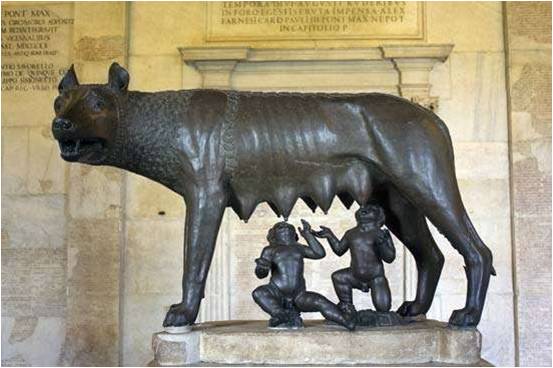
The  bronze `Capitoline Wolf’, once thought to date from the 5th cent. B.C, but now believed to have been sculpted in the 11th or 12th. cent. A.D.[1]
https://www.britannica.com/biography/Romulus-and-Remus
​
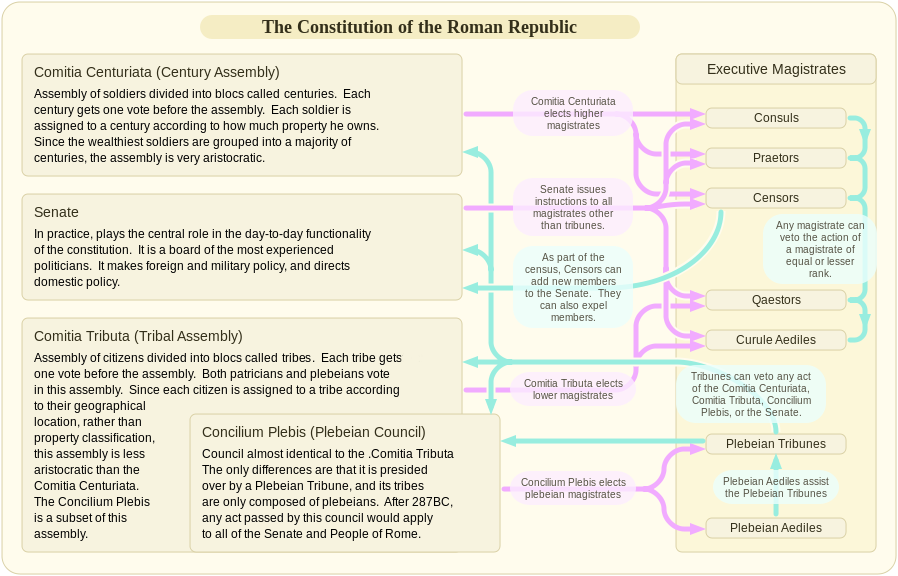
The `Comitia Centuriata'  (`Centuriate Assembly') which Livy refers to was in origin the Roman army acting as a political body and under the republic was responsible for electing the consuls, praetors and censors as well as possessing some  very limited judicial and legislative powers (at least from the 2nd. century B.C. laws were normally  enacted by the `Concilium Plebis'). The centuries of which the Comitia Centuriata  was composed separated after the issue for decsion had been anounced into fenced off areas for members to cast individual ballots and the whole century then cast a single vote in the re-convened assembly.  The centuries were divided into classes on the basis of property qualifications and the system was weighted so that the centuries containing wealthier citizens had more influence. The number of centuries was increased and the assembly made slightly more egalitarian in the 3rd century B.C. but under Augustus its powers were transferred to the sentate. For further details see https://en.wikipedia.org/wiki/Centuriate_Assembly ,  Lily Ross Taylor, Roman Voting Assemblies: From the Hannibalic War to the Dictatorship of Caesar (1966) and Andrew Lintott, The Constitution of the Roman Republic (1999).
Picture
zThe diagram above summarises the conventional view of the different assemblies and their functions but some historians reject the distinction between Comitia Tributa and Concilium Plebis and believe there was only one tribal assembly (see the discussion at https://en.wikipedia.org/wiki/Tribal_Assembly). There was also an even older assembly, the Comitia Curiata, in which the voting blocs were the thirty curiae (`wards')  which Romulus had supposedly established and which retained a few, mainly ceremonal functions in later times. The word `curia' also denoted the building in which the senate met and is still used today to refer to the Vatican-based government of the Roman Catholic Church.
The Comitia Tributa represented the separate tribes, originally geographical divisions,  which Servius Tullius, the sixth king of the city, was believed to have instituted.  The number of tribes by the end of the republicn period was 35 and, even though under the empire the Comitia Tributa's functions were merely symbolic, all Roman citizens continued to be assigned to a tribe, whose name would be mentioned in formal contexts such as tombstone inscriptions.
The Comitia Curiata met in the Comitium, an area adjacent to the forum, the Comitia Tributa sometimes here and sometimes on the Campus Martius across the Tiber and the Comitia Centuriata regularly on the Campus Martius.  Latin comitia is the plural form of the 2nd declension neuter noun comitium

​
Powered by Create your own unique website with customizable templates.