| linguae |
|
QUESTIONS ARISING FROM 79th. MEETING – 16/6/17
(the record of earlier meetings can be downloaded from the main Circulus page as can the version of Ciceronis Filius with illustrations added. The illustrated text of Genesis is available on the Genesis page)
Dishes ordered included agnus aromāticus (lamb masala), cicera aromātica (chana masala), melanogēna (eggplant) and sōlāna cum brassicā Pompēiānā (alu gobi), pānis Persicus and orӯza (rice). The restaurant as usual provided complimentary papadom, which could perhaps be Latinized as crustulum tenue (`thin biscuit’) though simply changing one vowel and using papadum moght be the neater solution. This was washed down with vīnum sanguineum or (pōtiō) oxygalactīna (lassi, a yoghurt-based drink). We ate with cochleār (spoon) and fuscinula (fork) rather than bacillī (chop-sticks).
Mike, who was attending after a long interval, explained that the requirement to study a third language in addition to English and Chinese, which John had thought applied to all HKUST students, was only for those doing business studies. Although an enthusiast for ecclesiastical Latin himself, Mike uses classical pronunciation in his own teaching, partly because it is is a simpler system to learn.
We read chapters 4 and 6 of Genesis from the Clementine text of the Vulgate,(see below) followed by simple questions and answer in Latin rather than translating. Mike pointed out places where St. Jerome’s work had been improved in the Nova Vulgata, the revision commissioned by the Catholic Church aand published in 1979 (available on-line at:
http://www.vatican.va/archive/bible/nova_vulgata/documents/nova-vulgata_index_lt.html). For example, the description of the decks constructed by Noah reads deōrsum, cœnācula et tristega in the earlier version has the much clearer tabulatum inferius, medium et superius
We also disussed how many Christian believers still accept the literal truth of Genesis. In the USA, which remains much moe religious tham most economically advanced countries, around 30% are fundamentalists, about a half believe that the Bible is in general inspired by God but not true in every detail and 20% think it is simply a collection of old fables with no special authority. The fundamentalist proportion is higher amongst the less-educated and also amongst those who attend church regularly, for whom the figure rises to 54%.. Details are at
http://www.gallup.com/poll/27682/OneThird-Americans-Believe-Bible-Literally-True.aspx
Jeanne also mentioned the strange fact that around 16 million Americans apparently believe that chocolate milk comes from brown cows:
https://www.washingtonpost.com/news/wonk/wp/2017/06/15/seven-percent-of-americans-think-chocolate-milk-comes-from-brown-cows-and-thats-not-even-the-scary-part/?utm_term=.100141156c46
It should be remembered, however, that this figure probably includes some who simply misunderstood the survey question!
For those interested in Noah’s Ark, there is, of course, the Replica Ark in the theme park at Ma Wan constructed by the Kwok brothers before Thomas’s fall from grace. Zhang wei revealed that the owners had bought two Turkish Angora kittens from his own family as representatives of the cat species. The larger animals, however, are all models.
Mike, who was attending after a long interval, explained that the requirement to study a third language in addition to English and Chinese, which John had thought applied to all HKUST students, was only for those doing business studies. Although an enthusiast for ecclesiastical Latin himself, Mike uses classical pronunciation in his own teaching, partly because it is is a simpler system to learn.
We read chapters 4 and 6 of Genesis from the Clementine text of the Vulgate,(see below) followed by simple questions and answer in Latin rather than translating. Mike pointed out places where St. Jerome’s work had been improved in the Nova Vulgata, the revision commissioned by the Catholic Church aand published in 1979 (available on-line at:
http://www.vatican.va/archive/bible/nova_vulgata/documents/nova-vulgata_index_lt.html). For example, the description of the decks constructed by Noah reads deōrsum, cœnācula et tristega in the earlier version has the much clearer tabulatum inferius, medium et superius
We also disussed how many Christian believers still accept the literal truth of Genesis. In the USA, which remains much moe religious tham most economically advanced countries, around 30% are fundamentalists, about a half believe that the Bible is in general inspired by God but not true in every detail and 20% think it is simply a collection of old fables with no special authority. The fundamentalist proportion is higher amongst the less-educated and also amongst those who attend church regularly, for whom the figure rises to 54%.. Details are at
http://www.gallup.com/poll/27682/OneThird-Americans-Believe-Bible-Literally-True.aspx
Jeanne also mentioned the strange fact that around 16 million Americans apparently believe that chocolate milk comes from brown cows:
https://www.washingtonpost.com/news/wonk/wp/2017/06/15/seven-percent-of-americans-think-chocolate-milk-comes-from-brown-cows-and-thats-not-even-the-scary-part/?utm_term=.100141156c46
It should be remembered, however, that this figure probably includes some who simply misunderstood the survey question!
For those interested in Noah’s Ark, there is, of course, the Replica Ark in the theme park at Ma Wan constructed by the Kwok brothers before Thomas’s fall from grace. Zhang wei revealed that the owners had bought two Turkish Angora kittens from his own family as representatives of the cat species. The larger animals, however, are all models.
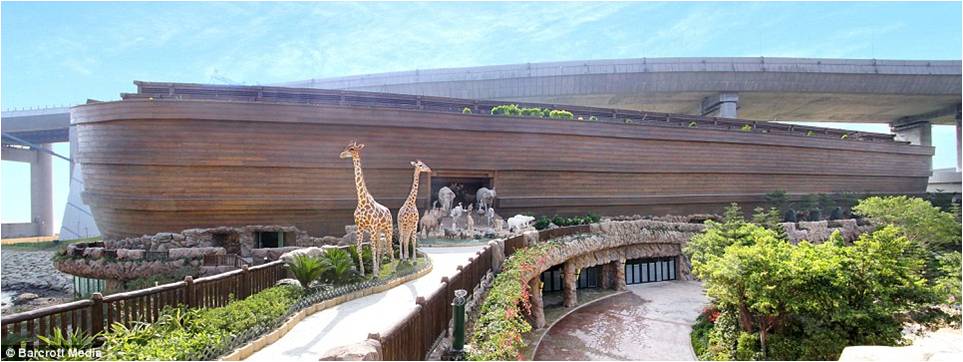
Noah's Ark - Ma Wan
Jeanne noted that the Hebrew word for arc, têbâh, is also used for the basket in which Moses was placed before being amidst the bullrushes. The basic meanng seems to be a floating container, of whatever size.
As far as we know no Circulus member actually attended the Latin Mass on Trinity Sunday which was previously advertised. In addition to the regular Latin services at Mary Help of Christians Church (inside Tang King Po School, 16 Tin Kwong Road, Ma Tau Wai), Jeanne believed that Mass was also said in Latin at Wah Yan College on Queen’s Road on Hong Kong Island. However, this is not mentioned on the Catholic Diocese website (https://www.catholic.org.hk/v2/cath_db/search.php?search=Latin+Mass) and Fr Ha has now confirmed that it is not open to members of the public.
Still on the topic of religion, John mentioned the argument that the Jews may only have become thorough monotheists after exposure to Zoraostrianism, the ancient Perisan religion, at the end of their Babylonian exile. Mike pointed out that it was Zoroastrians themselves who often claimed this and that Jews generally indignantly rejected the suggestion. There are, however, numerous parallels,many of which are listed in this Zoroastrian source: https://www.zarathushtra.com/z/article/biblicalconnection.htm Zarathustra, like Confucius and Buddha, all lived in the middle of the 1st millennium, in what Karl Jaspers termed the `Axial Age’, when the foundations of universalistic religions were being laid in different parts of Eurasia, though scholars continue to debate whether this concept is really meaningful (see https://en.wikipedia.org/wiki/Axial_Age
It was also noted that at a later date there might have been a connection between Nestorian Chiritianity, the variely that spread into China in the 1st millennium A.D. It has been suggested that the iconography of Kwan Yin, the Buddist goddess (originally god!) of compassion, night have borrowed from that of the Virgin Mary.
Parsees – the name for Zoroastrians who left Iran to settle in Western India – have played an important role in Hong Kong History and two of the most famous, Hormusjee Mody (1838-1911), who played a major role in the endowment of Hong Kong Univeristy, and Robert Kotewall (1880-1949) have roads named after them. Jeanne explained that Kotewall, a businessman and Legco and then Exco member, who was actually of mixed Parseee, Chinese and European descent, produced the Chinese version of the Latin anthem sung at the inauguration of HKU in 1912. The Latin itself was the work of Cecil Clementi, a Hong Kong civil servant who was to become governor in 1925 and was chancellor of the university from then until 1947. The anthem was used on ceremonial occasions up to World War II and was revived, with Denman Fulller’s original music re-orchestrated by Chan Hing Yan, for the university’s 100th anniversary. It can now be heard at http://lib.hku.hk/muslib/HKUanthem.html, which also provides the text in all three languages. The Latin has one misprint - `fulst’ in line 4 should be `fluet.’
Mention was also made of the strange British institution of Inns of Court (Hospitia Cūriae), which started life as law schools and are now professional associations, to one of which (Lincon’s Inn, Inner Temple, Middle Temple and Gray’s Inn) all barristers in England and Wales must belong. Jeanne, who is herself a barrister as well as a tutor on Postgraduate Certificate in Law courses, explained that the formal requirement to dine a certain number of times in an Inn before being called to the bar is often circumvented by getting another lawyer to sign the attendance register in someone else’s name.
John recounted a visit to Las Vegas some years back on which he was struck by the miserable atmosphere inside the casino/hotel where he stayed. The visit was only made as it was part of a package tour that was the easiest way to see the Grand Canyon whilst based in San Francisco for a family wedding. The experience was not enhanced by John and his wife’s luggage failing to make the plane after they left it with a handler by the roadside. Mike explained that his brother actually worked in Las Vegas as software systems manager for a hotel but, like many other staff, he preferred to live elsewhere and commute to work.
Jeanne noted that the Hebrew word for arc, têbâh, is also used for the basket in which Moses was placed before being amidst the bullrushes. The basic meanng seems to be a floating container, of whatever size.
As far as we know no Circulus member actually attended the Latin Mass on Trinity Sunday which was previously advertised. In addition to the regular Latin services at Mary Help of Christians Church (inside Tang King Po School, 16 Tin Kwong Road, Ma Tau Wai), Jeanne believed that Mass was also said in Latin at Wah Yan College on Queen’s Road on Hong Kong Island. However, this is not mentioned on the Catholic Diocese website (https://www.catholic.org.hk/v2/cath_db/search.php?search=Latin+Mass) and Fr Ha has now confirmed that it is not open to members of the public.
Still on the topic of religion, John mentioned the argument that the Jews may only have become thorough monotheists after exposure to Zoraostrianism, the ancient Perisan religion, at the end of their Babylonian exile. Mike pointed out that it was Zoroastrians themselves who often claimed this and that Jews generally indignantly rejected the suggestion. There are, however, numerous parallels,many of which are listed in this Zoroastrian source: https://www.zarathushtra.com/z/article/biblicalconnection.htm Zarathustra, like Confucius and Buddha, all lived in the middle of the 1st millennium, in what Karl Jaspers termed the `Axial Age’, when the foundations of universalistic religions were being laid in different parts of Eurasia, though scholars continue to debate whether this concept is really meaningful (see https://en.wikipedia.org/wiki/Axial_Age
It was also noted that at a later date there might have been a connection between Nestorian Chiritianity, the variely that spread into China in the 1st millennium A.D. It has been suggested that the iconography of Kwan Yin, the Buddist goddess (originally god!) of compassion, night have borrowed from that of the Virgin Mary.
Parsees – the name for Zoroastrians who left Iran to settle in Western India – have played an important role in Hong Kong History and two of the most famous, Hormusjee Mody (1838-1911), who played a major role in the endowment of Hong Kong Univeristy, and Robert Kotewall (1880-1949) have roads named after them. Jeanne explained that Kotewall, a businessman and Legco and then Exco member, who was actually of mixed Parseee, Chinese and European descent, produced the Chinese version of the Latin anthem sung at the inauguration of HKU in 1912. The Latin itself was the work of Cecil Clementi, a Hong Kong civil servant who was to become governor in 1925 and was chancellor of the university from then until 1947. The anthem was used on ceremonial occasions up to World War II and was revived, with Denman Fulller’s original music re-orchestrated by Chan Hing Yan, for the university’s 100th anniversary. It can now be heard at http://lib.hku.hk/muslib/HKUanthem.html, which also provides the text in all three languages. The Latin has one misprint - `fulst’ in line 4 should be `fluet.’
Mention was also made of the strange British institution of Inns of Court (Hospitia Cūriae), which started life as law schools and are now professional associations, to one of which (Lincon’s Inn, Inner Temple, Middle Temple and Gray’s Inn) all barristers in England and Wales must belong. Jeanne, who is herself a barrister as well as a tutor on Postgraduate Certificate in Law courses, explained that the formal requirement to dine a certain number of times in an Inn before being called to the bar is often circumvented by getting another lawyer to sign the attendance register in someone else’s name.
John recounted a visit to Las Vegas some years back on which he was struck by the miserable atmosphere inside the casino/hotel where he stayed. The visit was only made as it was part of a package tour that was the easiest way to see the Grand Canyon whilst based in San Francisco for a family wedding. The experience was not enhanced by John and his wife’s luggage failing to make the plane after they left it with a handler by the roadside. Mike explained that his brother actually worked in Las Vegas as software systems manager for a hotel but, like many other staff, he preferred to live elsewhere and commute to work.

Las Vegas
Also briefly touched upon again was the question of how to translate Native English-speaking Teacher. Magistra nātīva/Magister nātīvus linguae Anglicae would be the formal equivalent but we can perhaps coin the snappier NETUS and NETA. There was a qyery right at the end on the phrase `Don’t worry!’, which would be Nōlī sollicitārī or Nōlī inquiētārī.
Whilst downing the wine, we alsotouched on the stange notion among some Evangelical Chritians that Jesus drank nothing stronger than unfermented grape juice. Linked to this is the question of why, when (pace the Evangelicals) Jews and early Christians certainly used it) Mohammed banned alcohol – if indeed he did so because the Koran is not categorical on this issue and many Muslims take a relaxed view of the matter. John’s favourite quote is from an anonymous Kazach Muslim:
“After the Change [the fall of the USSR], Saudi mullahs came and said they would build us a mosque, but we must give up vodka and veil our women. We sent them back to Arabia.We love Allah, but I do not love mullahs”.
(see http://cominganarchy.com/2010/07/07/the-history-of-alcohol-in-islam/ )
On the literary front Jeanne mentioned the extensive use of Latin tags in the 44 Scotland Street series by Alexander McAll Smith, who is better-known for the No 1 Ladies Detective Agency saga set in Botswana. She had also brought along a copy of Dictator, the third in Robert Haris’s excellent Cicero trilogy. John also recommended Harris’s Pompeii, which Tanya and he had read before their families visited the city in 2015.
GENESIS
Chapter 4
1 Adam vērō cognōvit[1] uxōrem suam Hevam, quæ concēpit et peperit Cain, dīcēns:
Adam indeed knew wife his Heva who conceived and bore Cain saying
Possēdī hominem per Deum.
I-have-gained a-man through God
2 Rūrsumque peperit frātrem ejus Abel. Fuit autem Abel pāstor ovium, et Cain
and-again she-bore brother his Abel was moreover Abel shepherd of-sheep and Cain
agricola.[2]
cultivator
3 Factum est autem post multōs diēs ut offerret Cain de frūctibus terræ mūnera
happened it-did moreover after many days that offered Cain from fruits of-earth gifts
Dominō.
to-the-lord
4 Abel quoque obtulit dē prīmōgenitīs gregis suī, et dē adipibus[3] eōrum: et respexit
Abel also offered from first-born of-flock his and from fat of-them and looked
Dominus ad Abel, et ad mūnera ejus.
The-lord upon Abel and upon gifts of-him
5 Ad Cain vērō, et ad mūnera illīus nōn respexit: īrātusque est Cain vehementer, et
upon Cain indeed and upon gifts of-him not looked and-angry is Cain vehemently and
concidit vultus ejus.
fell face of-him
6 Dīxitque Dominus ad eum: Quārē īrātus es? et cūr concidit faciēs tua?
and-said lord to him Why angry you-are and why has-fallen face your
7 nōnne[4] si bene ēgeris, recipiēs: sīn autem male, statim in foribus[5]
[is it]not[that] if well you-will-have-done you-will-receive but-if however badly at-once at gates
peccātum aderit? sed sub ē erit appetītus ejus, et tū domināberis illīus.
sin will-be-present but under you will-be desir e his and you will-lord-it over-him
8 Dīxitque Cain ad[6] Abel frātrem suum: Ēgrediāmur forās. Cumque essent in agrō,
and-said Cain to Abel brother his let-us-go outside and-when they-were in field
consurrēxit Cain adversus frātrem suum Abel, et interfēcit eum.[7]
rose-up Cain against brother his Abel and killed him
9 Et ait Dominus ad Cain: Ubi est Abel frāter tuus? Quī respondit: Nesciō: num custōs
and said lord to Cain where is Abel brother you r he replie d I-don’t-know surely-not keeper
frātris meī sum ego?
of-brother my am I
10 Dīxitque ad eum: Quid fēcistī? vōx sanguinis frātris tuī clāmat ad mē dē terrā.
and-he-said to him what have-you-done voice of-blood of-brother your is-calling to me from earth
11 Nunc igitur maledictus eris super terram, quæ aperuit ōs suum, et suscēpit
now therefore cursed you-will-be upon earth which opened mouth its and received
sanguinem frātris tuī dē manū tuā.
blood of-brother your from hand your
12 Cum operātus fueris[8] eam, nōn dabit tibi frūctūs suōs: vagus et profugus eris super
when worked you-will-have it not will-give to-you fruits its wanderer and fugitive you-will-be upon
terram.
earth
NOTES
[1] cognōscō (-ere, -nōvī, -nitum) is a literal translation of the original Hebrew, which is, however, used in many figurative senses, including the euphemistic `be intimate with’.
[2] agricola is normally translated `farmer’ but is `literally `field-cultivator’
[3] adeps, adipis c, `fat’, `lard’, is a literal translation of the Hebrew and in both languages the figurative sense `best part’ is intended.
[4] nōnne (`not?’) introduces a question expecting the answer `yes’, num (`surely not?’) one expecting `no’ and the question suffix –ne used on its own produces an entirely open question.
[5] foris, foris f , normally used in the plural (forēs, forum), means `gate’ or `opening.’ The adverbs forīs (`outside’, `from outside’ and forās (`to outside’), were originally alternative ablative and accusative forms of the noun,
[6] This use of ad plus the accusative as an alternative to the dative with a verb of saying is post-classical. The latter construction would be less clear, as the Hebrew names lack case endings.
[7] One Muslim tradition is that the brothers sacrificed for God to decide who would marry their beautiful sister Aclima.. Abel made a rich offering but Cain only grass and seeds and so Aclima was given to Abel and Cain, who was assigned a less attractive sibling, murdered him out of jealousy (see . https://en.wikipedia.org/wiki/Cain_and_Abel)
[8] The normal form of the future perfect is operātus eris, with the auxiliary verb in the future rather than future perfect.
13 Dīxitque Cain ad Dominum: Major est inīquitās mea, quam ut veniam merear.[1]
and--said Cain to lord greater is iniquity my than that forgiveness I-should-deserve
14 Ecce ējicis mē hodiē ā faciē terræ, et ā faciē tuā abscondar et erō vagus
see you-are-ejecting me today from face of-earth and from face your I-shall-be-hidden and I-will-be wanderer
et profugus in terrā: omnis [2]igitur quī invēnerit mē, occīdet mē.
and fugitive on earth each therefore who will-have-found me will-kill me
15 Dīxitque eī Dominus: Nēquāquam ita fīet: sed omnis qui occīderit Cain,
and-said to-him lord in-no-way thus it-will-happen but each who will-have-killed Cain
septuplum pūniētur. Posuitque Dominus Cain signum, ut nōn interficeret eum omnis
seven-fold will-be-punished and-placed lord on-Cain mark so-that not should-kill him each
qui invēnisset eum.
who would-have-found him
16 Ēgressusque Cain ā faciē Dominī, habitāvit profugus in terrā ad orientālem
and-after-going-out Cain from face of-lord he-lived (as) fugitive in land towards east
plagam[3] Ēden.
tract of-Eden
17 Cognōvit autem Cain uxōrem suam,[4] quæ concēpit, et peperit Henoch: et ædificāvit
Knew moreover Cain wife his who conceived and bore Henoch and built
cīvitātem, vocāvitque nōmen ejus ex nōmine filiī suī, Henoch.
city and-called name of-it from name of-son his Henoch
18 Porrō Henoch genuit Irad, et Irad genuit Maviaël, et Maviaël genuit Mathusaël, et
afterwards Henoch fathered Irad and Irad fathered Maviaël and Maviaël fathered Mathusaël and
Mathusaël genuit Lamech.
Mathusaël fathered Lamech
19 Quī accēpit duās uxōrēs, nōmen ūnī Ada, et nōmen alterī Sella.
who received two wives name for-one Ada and name for-other Sella
20 Genuitque Ada Jabel,[5] quī fuit pater habitantium in tentōriīs, atque pāstōrum.
and-bore Ada Jabel who was father of-those-living in tents and of-shepherds
21 Et nōmen frātris ejus Jubal: ipse fuit pater canentium citharā et orgānō.[6]
and name of-father his Jubal he-himself was father of-those-playing cithara and organ
22 Sella quoque genuit Tubalcain, quī fuit malleātor et faber in cūncta opera æris
Sella also bore Tubalcain who was hammerer and craftsman for all works of-bronze
et ferrī. Soror vero Tubalcain, Noëma.
and of-iron sister indeed of-Tubalcain Noëma
23 Dīxitque Lamech uxōribus suīs Adæ et Sellæ: [Audīte vōcem meam, uxōrēs
and-said Lamech to-wives his Ada and Sella hear voice my wives
Lamech; auscultāte sermōnem meum: quoniam occīdī virum in vulnus meum, et
of-Lamech hear speech my since I-have-killed man to wound my and
adolēscentulum in livōrem meum.[7]
youth to hurt my
24 Septuplum ultiō dabitur dē Cain: dē Lamech vērō septuāgies septies.[8]]
sevenfold revenge will-be-given concerning Cain concerning Lamech indeed seventy-times seven-times
[1] A comparative adjective followed by quam ut and the subjunctive is the equivalent of English `too’ plus `adjective followed by the infinitive (`my iniquity is too great to deserve forgiveness’)
[2] The KJV has `whosoever’, one of the senses of the Hebrew word, which also means `all’, `each’
[3] plaga, -ae f (tract of land) has to be distinguished from plāga (a blow, wound).
[4] According to the Book of Jubilees (a Jewish work not considered canonical by most Christian denominations – see https://en.wikipedia.org/wiki/Book_of_Jubilees ), Cain’s wife and sister was called Awan. The son’s name is usually written `Enoch’ in English rather than `Henoch’.
[5] Although Ada and Jabel are both uninflected nouns, the word order indicates makes it clear that Ada is the subject and Jabel the object. In the same way, Sella is the subject of the first clause in v.22
[6] Latin uses canō/cantō (`sing’) with the ablative of words for string or wind instruments where English would have `play’ and a direct object. The word cithara is the origin of English `guitar’ but it resembled a small harp, which is the word used by KJV.
[7] In classical Latin līvor, līvōris m, like chăbûrâh in the original Hebrew, has the basic meaning of `bruise’, `bluishness.’ The Latin was often also used in the sense `envy’, `ill-will’ but here it appears to mean `hurt’, `wound’, which are additional senses of the Hebrew word. The KJV also uses `hurt.’ The whole sentence is obscure as in vulnus meum might mean either `in retaliation for a wound to me’ or `resulting in a wound to me.’
[8] The Latin, like the KJC, is most naturally taken to mean that Lamech’s own death will be avenged 70 times compared with 7 times for Cain, which is consistent with God’s assurance to Cain in verse 15. However the original Hebrew might mean either this or that Lamech will himself take revenge for a non-fatal injury and some modern translators take it that way.
25 Cognōvit quoque adhūc Adam uxōrem suam: et peperit fīlium, vocāvitque nōmen
knew also again Adam wife his and she-bore son and-called name
ejus Seth, dīcēns: Posuit mihi Deus sēmen aliud prō Abel, quem occīdit Cain.
of-him Seth saying has-given to-me God offspring other in-place-of Abel whom slew Cain
26 Sed et Seth nātus est filius, quem vocāvit Enos: iste cœpit invocāre nōmen Dominī.
but also to-Seth born was son whom he-called Enos that-one began to-call=upon name of-lord
Chapter 6
1 Cumque cœpissent hominēs multiplicārī super terram, et fīliās prōcreāssent,[1]
and-when had-begun men to-be-multiplied upon earth and daughters had-produced
2 videntes fīliī Deī [2] fīliās hominum quod essent pulchræ, accēpērunt sibi uxōrēs ex
seeing sons of-God daughters of-men tha t they-were beautiful took for-themselves wives from
omnibus, quās ēlēgerant.
all which they-had-chosen
3 Dīxitque Deus: Nōn permanēbit spīritus meus in homine in æternum, quia carō est:
and-said God not shall-remain spirit m y in man for ever because flesh he-is
eruntque diēs illīus centum vīgintī annōrum.[3]
and-will-be days of-him hundred twenty of-years
4 Gigantes[4] autem erant super terram in diēbus illīs: postquam enim ingressī sunt fīlii
giants moreover were upon earth in days those after for went-in did sons
Deī ad fīliās hominum, illæque genuērunt, istī sunt potentēs a sæculō[5] virī fāmōsī.
of-God to daughters of-men and-they produced-offspring they are powerful from old-time men famous
5 Vidēns autem Deus quod multa malitia hominum esset in terrā, et cūncta cogitātiō
seeing however God that much malice of-men was on earth and all thinking
cordis intenta esset ad malum omnī tempore,
of-heart intent was on evil at-all time
6 pœnituit eum quod hominum[6] fēcisset in terrā. Et tāctus dolōre cordis intrīnsecus,
regret-came-on- him that of-men he-had-made on earth and touched by-grief of-heart inside
7 Dēlēbō, inquit, hominem, quem creāvī, a faciē terræ, ab homine usque ad animantia, ā
I-will-destroy he-said man whom I-created from face of earth from man all-way to animals from
reptilī usque ad volucrēs cælī: pœnitet enim mē fēcisse eōs.
reptiles all-way to birds of-heaven regret-comes-upon for me to-have-made them
8 Noë vērō invēnit grātiam cōram Dominō.
Noah indeed found favour in-face-of the-Lord
9 Hæ sunt generātiōnēs[7] Noë: Noë vir jūstus atque perfectus fuit in generātiōnibus
These are the-generations of-Noah Noah man just and perfect was in generations
suīs; cum Deō ambulāvit.
his with God he-walked
10 Et genuit trēs fīliōs, Sem, Cham et Japheth.
and he-fathered three sons Sem Cham and Japeth
NOTES
[1] prōcreāssent is a contraction of prōcreāvissent (pluperfect subjunctive).
[2] The phrase fīliī Deī (Hebrew beney `elohim ) was understood as referring to fallen angels who mated with human beings and produced a race of giants.. An alternative explanation, argued for by St. Augustine of Hippo in the 5th century and now accepted by most biblical scholars, is that they were the descendants of Seth who interbred with those of Cain. For a detailed presentation of the evidence see http://www.herealittletherealittle.net/index.cfm?page_name=Genesis-6-Sons-of-God
[3] In classical Latin mīlia (thousands) is used with a genitive of the item being counted but other numbers are treated as indeclinable adjectives so the phrase would be centum vīgintī annī
[4] As this is a Greek noun, the final –es has a short vowel.
[5] ā saeculō, literally `from an age’ probably means here `in olden days’. The Hebrew phrase is olam olam. which can mean both `in ancient time’ and `for ever’. Elsewhere the Vulgate also uses the phrase in saeculum to mean `for ever’
[6] Unless the genitive plural hominum is a mistake for the accusative hominem (the case used in the Greek), this should be understood as `[the race] of men.’
[7] generātiōnēs (generations, births) is a literal translation of the Hebrew but the meaning here seems to be (family) history.
11 Corrupta est autem terra cōram Deō, et replēta est inīquitāte.
corrupted is however earth in-face-of God and filled is with-iniquity
12 Cumque vīdisset Deus terram esse corruptam (omnis quippe carō corrūperat viam
And-when had-seen God earth to-be corrupted all for flesh had-corrupted way
suam super terram),
its on earth
13 dīxit ad Noë: Fīnis ūniversæ carnis vēnit cōram mē: replēta est terra inīquitāte ā
He-said to Noah end of-all flesh hs-come before me filled has-been earth with-iniquity from
faciē eōrum,[1] et ego disperdam eōs cum terrā.
from of-them and I will-destroy them with earth
14 Fac tibi arcam[2] dē lignīs lævigātis;[3] mānsiunculās in arcā faciēs, et bitūmine
make for-yourself ark out-of wood smoothed rooms in ark you-will-make and with-pitch
liniēs[4] intrīnsecus et extrīnsecus.
you-will smear inside and outside
15 Et sīc faciēs eam: trecentōrum cubitōrum[5] erit longitūdō arcæ, quīnquāgintā
and thus you-will-make it of-three-hundred cubits will-be length of-ark fifty
cubitōrum lātitūdō, et trīgintā cubitōrum altitūdō illīus.
of-cubits breadth and thirty of-cubits height of-it
16 Fenestram in arcā faciēs, et in cubitō cōnsummābis summitātem ejus: ōstium
window in ark you-will-make and in cubit you-will-finish height of-it door
autem arcæ pōnēs ex latere; deōrsum, cœnācula[6] et tristega faciēs in eā.
moreover of-arch you-will-place on side bottom-level upper-level and third-level you-shall-make in it
17 Ecce ego addūcam aquās dīluviī super terram, ut interficiam omnem carnem, in quā
see I will-bring waters of-flood upon earth so-that I-may-kill all flesh in which
spīritus vītæ est subter cælum: ūniversa quæ in terrā sunt, cōnsūmentur.
spirit of-life is under heaven all-things which on earth are will-be-consumed
18 Pōnamque fœdus meum tēcum: et ingrediēris arcam tū et filiī tuī, uxor tua, et uxōrēs
and –I-shall-place covenant my with you and—you-will-go-into ark you and sons your wife your and wives
fīliōrum tuōrum tēcum.
of-sons your with-you
19 Et ex cūnctīs animantibus ūniversæ carnis bīna indūcēs in arcam, ut
and from all living-things of-all flesh two-each you-will-bring into ark that
vīvant tēcum: masculīnī sexūs et fēminīnī.
they-may-live with-you of-masculine sex and of-feminine
20 Dē volucribus juxtā genus suum, et dē jūmentīs in genere suō, et ex omnī reptilī
Out-of birds according-to kind their and from beasts-of-burden in kind their-own and from-every reptile
terræ secundum genus suum: bīna dē omnibus ingredientur tēcum, ut possint vīvere.
of-earth according-to kind their-own two-each from all will-go-in with-you that they,may-be-able to-live
21 Tollēs igitur tēcum ex omnibus escīs, quæ mandī[7] possunt, et comportābis
you-shall-take-up therefore with-you from all food-stuffs which be-chewed can and you-shall-carry
apud tē: et erunt tam tibi, quam illīs in cibum.
with-you and they-will-be both for-you and for-them for food
22 Fēcit igitur Noë omnia quæ præcēperat illī Deus.
made therefore Noah all-things which had-instructed to-him God
NOTES
[1] ā faciē eōrum: `through them’
[2] arca meant originally a chest or box but was later applied to anything with a similar shape.
[3] laevigō (lēvigō), -āre, -āvī, -ātum, make smooth (distinguish from lēvigō, lighten) is a mis-tranlsation of Hebrew gopher, which may mean the cypress tree. The KJV simply transliterates the Hebrew word.
[4] liniō, linīre, līnīvī, lītum is an alternative to the commoner linō, -āre, -āvī, -ātum.
[5] A cubit was the length between the end of the middle finger and the elbow and so was a variable measure. Dimensions of 450 × 75 × 45 feet are given at https://en.wikipedia.org/wiki/Noah%27s_Ark Flood myths are found in many different cultures and the Genesis story seemingly derived from an earlier Babylonian story. One version of the latter gives detailed instructions for a round, coracle-like structure rather than a conventional oblong. See
http://www.telegraph.co.uk/culture/books/10574119/Noahs-Ark-the-facts-behind-the-Flood.html
[6] A coenāculum (originally cēnāculum) was an upper-floor room used for dining before triclīnia became common. The plural later came to refer to an upper story generally and also to a garret or attic.
[7] Passive infinitive of mandō, mandere, mandī, mānsum (chew), which must be carefully distinguished from mandō, -āre, -āvī, -ātum (entrust(to))
Also briefly touched upon again was the question of how to translate Native English-speaking Teacher. Magistra nātīva/Magister nātīvus linguae Anglicae would be the formal equivalent but we can perhaps coin the snappier NETUS and NETA. There was a qyery right at the end on the phrase `Don’t worry!’, which would be Nōlī sollicitārī or Nōlī inquiētārī.
Whilst downing the wine, we alsotouched on the stange notion among some Evangelical Chritians that Jesus drank nothing stronger than unfermented grape juice. Linked to this is the question of why, when (pace the Evangelicals) Jews and early Christians certainly used it) Mohammed banned alcohol – if indeed he did so because the Koran is not categorical on this issue and many Muslims take a relaxed view of the matter. John’s favourite quote is from an anonymous Kazach Muslim:
“After the Change [the fall of the USSR], Saudi mullahs came and said they would build us a mosque, but we must give up vodka and veil our women. We sent them back to Arabia.We love Allah, but I do not love mullahs”.
(see http://cominganarchy.com/2010/07/07/the-history-of-alcohol-in-islam/ )
On the literary front Jeanne mentioned the extensive use of Latin tags in the 44 Scotland Street series by Alexander McAll Smith, who is better-known for the No 1 Ladies Detective Agency saga set in Botswana. She had also brought along a copy of Dictator, the third in Robert Haris’s excellent Cicero trilogy. John also recommended Harris’s Pompeii, which Tanya and he had read before their families visited the city in 2015.
GENESIS
Chapter 4
1 Adam vērō cognōvit[1] uxōrem suam Hevam, quæ concēpit et peperit Cain, dīcēns:
Adam indeed knew wife his Heva who conceived and bore Cain saying
Possēdī hominem per Deum.
I-have-gained a-man through God
2 Rūrsumque peperit frātrem ejus Abel. Fuit autem Abel pāstor ovium, et Cain
and-again she-bore brother his Abel was moreover Abel shepherd of-sheep and Cain
agricola.[2]
cultivator
3 Factum est autem post multōs diēs ut offerret Cain de frūctibus terræ mūnera
happened it-did moreover after many days that offered Cain from fruits of-earth gifts
Dominō.
to-the-lord
4 Abel quoque obtulit dē prīmōgenitīs gregis suī, et dē adipibus[3] eōrum: et respexit
Abel also offered from first-born of-flock his and from fat of-them and looked
Dominus ad Abel, et ad mūnera ejus.
The-lord upon Abel and upon gifts of-him
5 Ad Cain vērō, et ad mūnera illīus nōn respexit: īrātusque est Cain vehementer, et
upon Cain indeed and upon gifts of-him not looked and-angry is Cain vehemently and
concidit vultus ejus.
fell face of-him
6 Dīxitque Dominus ad eum: Quārē īrātus es? et cūr concidit faciēs tua?
and-said lord to him Why angry you-are and why has-fallen face your
7 nōnne[4] si bene ēgeris, recipiēs: sīn autem male, statim in foribus[5]
[is it]not[that] if well you-will-have-done you-will-receive but-if however badly at-once at gates
peccātum aderit? sed sub ē erit appetītus ejus, et tū domināberis illīus.
sin will-be-present but under you will-be desir e his and you will-lord-it over-him
8 Dīxitque Cain ad[6] Abel frātrem suum: Ēgrediāmur forās. Cumque essent in agrō,
and-said Cain to Abel brother his let-us-go outside and-when they-were in field
consurrēxit Cain adversus frātrem suum Abel, et interfēcit eum.[7]
rose-up Cain against brother his Abel and killed him
9 Et ait Dominus ad Cain: Ubi est Abel frāter tuus? Quī respondit: Nesciō: num custōs
and said lord to Cain where is Abel brother you r he replie d I-don’t-know surely-not keeper
frātris meī sum ego?
of-brother my am I
10 Dīxitque ad eum: Quid fēcistī? vōx sanguinis frātris tuī clāmat ad mē dē terrā.
and-he-said to him what have-you-done voice of-blood of-brother your is-calling to me from earth
11 Nunc igitur maledictus eris super terram, quæ aperuit ōs suum, et suscēpit
now therefore cursed you-will-be upon earth which opened mouth its and received
sanguinem frātris tuī dē manū tuā.
blood of-brother your from hand your
12 Cum operātus fueris[8] eam, nōn dabit tibi frūctūs suōs: vagus et profugus eris super
when worked you-will-have it not will-give to-you fruits its wanderer and fugitive you-will-be upon
terram.
earth
NOTES
[1] cognōscō (-ere, -nōvī, -nitum) is a literal translation of the original Hebrew, which is, however, used in many figurative senses, including the euphemistic `be intimate with’.
[2] agricola is normally translated `farmer’ but is `literally `field-cultivator’
[3] adeps, adipis c, `fat’, `lard’, is a literal translation of the Hebrew and in both languages the figurative sense `best part’ is intended.
[4] nōnne (`not?’) introduces a question expecting the answer `yes’, num (`surely not?’) one expecting `no’ and the question suffix –ne used on its own produces an entirely open question.
[5] foris, foris f , normally used in the plural (forēs, forum), means `gate’ or `opening.’ The adverbs forīs (`outside’, `from outside’ and forās (`to outside’), were originally alternative ablative and accusative forms of the noun,
[6] This use of ad plus the accusative as an alternative to the dative with a verb of saying is post-classical. The latter construction would be less clear, as the Hebrew names lack case endings.
[7] One Muslim tradition is that the brothers sacrificed for God to decide who would marry their beautiful sister Aclima.. Abel made a rich offering but Cain only grass and seeds and so Aclima was given to Abel and Cain, who was assigned a less attractive sibling, murdered him out of jealousy (see . https://en.wikipedia.org/wiki/Cain_and_Abel)
[8] The normal form of the future perfect is operātus eris, with the auxiliary verb in the future rather than future perfect.
13 Dīxitque Cain ad Dominum: Major est inīquitās mea, quam ut veniam merear.[1]
and--said Cain to lord greater is iniquity my than that forgiveness I-should-deserve
14 Ecce ējicis mē hodiē ā faciē terræ, et ā faciē tuā abscondar et erō vagus
see you-are-ejecting me today from face of-earth and from face your I-shall-be-hidden and I-will-be wanderer
et profugus in terrā: omnis [2]igitur quī invēnerit mē, occīdet mē.
and fugitive on earth each therefore who will-have-found me will-kill me
15 Dīxitque eī Dominus: Nēquāquam ita fīet: sed omnis qui occīderit Cain,
and-said to-him lord in-no-way thus it-will-happen but each who will-have-killed Cain
septuplum pūniētur. Posuitque Dominus Cain signum, ut nōn interficeret eum omnis
seven-fold will-be-punished and-placed lord on-Cain mark so-that not should-kill him each
qui invēnisset eum.
who would-have-found him
16 Ēgressusque Cain ā faciē Dominī, habitāvit profugus in terrā ad orientālem
and-after-going-out Cain from face of-lord he-lived (as) fugitive in land towards east
plagam[3] Ēden.
tract of-Eden
17 Cognōvit autem Cain uxōrem suam,[4] quæ concēpit, et peperit Henoch: et ædificāvit
Knew moreover Cain wife his who conceived and bore Henoch and built
cīvitātem, vocāvitque nōmen ejus ex nōmine filiī suī, Henoch.
city and-called name of-it from name of-son his Henoch
18 Porrō Henoch genuit Irad, et Irad genuit Maviaël, et Maviaël genuit Mathusaël, et
afterwards Henoch fathered Irad and Irad fathered Maviaël and Maviaël fathered Mathusaël and
Mathusaël genuit Lamech.
Mathusaël fathered Lamech
19 Quī accēpit duās uxōrēs, nōmen ūnī Ada, et nōmen alterī Sella.
who received two wives name for-one Ada and name for-other Sella
20 Genuitque Ada Jabel,[5] quī fuit pater habitantium in tentōriīs, atque pāstōrum.
and-bore Ada Jabel who was father of-those-living in tents and of-shepherds
21 Et nōmen frātris ejus Jubal: ipse fuit pater canentium citharā et orgānō.[6]
and name of-father his Jubal he-himself was father of-those-playing cithara and organ
22 Sella quoque genuit Tubalcain, quī fuit malleātor et faber in cūncta opera æris
Sella also bore Tubalcain who was hammerer and craftsman for all works of-bronze
et ferrī. Soror vero Tubalcain, Noëma.
and of-iron sister indeed of-Tubalcain Noëma
23 Dīxitque Lamech uxōribus suīs Adæ et Sellæ: [Audīte vōcem meam, uxōrēs
and-said Lamech to-wives his Ada and Sella hear voice my wives
Lamech; auscultāte sermōnem meum: quoniam occīdī virum in vulnus meum, et
of-Lamech hear speech my since I-have-killed man to wound my and
adolēscentulum in livōrem meum.[7]
youth to hurt my
24 Septuplum ultiō dabitur dē Cain: dē Lamech vērō septuāgies septies.[8]]
sevenfold revenge will-be-given concerning Cain concerning Lamech indeed seventy-times seven-times
[1] A comparative adjective followed by quam ut and the subjunctive is the equivalent of English `too’ plus `adjective followed by the infinitive (`my iniquity is too great to deserve forgiveness’)
[2] The KJV has `whosoever’, one of the senses of the Hebrew word, which also means `all’, `each’
[3] plaga, -ae f (tract of land) has to be distinguished from plāga (a blow, wound).
[4] According to the Book of Jubilees (a Jewish work not considered canonical by most Christian denominations – see https://en.wikipedia.org/wiki/Book_of_Jubilees ), Cain’s wife and sister was called Awan. The son’s name is usually written `Enoch’ in English rather than `Henoch’.
[5] Although Ada and Jabel are both uninflected nouns, the word order indicates makes it clear that Ada is the subject and Jabel the object. In the same way, Sella is the subject of the first clause in v.22
[6] Latin uses canō/cantō (`sing’) with the ablative of words for string or wind instruments where English would have `play’ and a direct object. The word cithara is the origin of English `guitar’ but it resembled a small harp, which is the word used by KJV.
[7] In classical Latin līvor, līvōris m, like chăbûrâh in the original Hebrew, has the basic meaning of `bruise’, `bluishness.’ The Latin was often also used in the sense `envy’, `ill-will’ but here it appears to mean `hurt’, `wound’, which are additional senses of the Hebrew word. The KJV also uses `hurt.’ The whole sentence is obscure as in vulnus meum might mean either `in retaliation for a wound to me’ or `resulting in a wound to me.’
[8] The Latin, like the KJC, is most naturally taken to mean that Lamech’s own death will be avenged 70 times compared with 7 times for Cain, which is consistent with God’s assurance to Cain in verse 15. However the original Hebrew might mean either this or that Lamech will himself take revenge for a non-fatal injury and some modern translators take it that way.
25 Cognōvit quoque adhūc Adam uxōrem suam: et peperit fīlium, vocāvitque nōmen
knew also again Adam wife his and she-bore son and-called name
ejus Seth, dīcēns: Posuit mihi Deus sēmen aliud prō Abel, quem occīdit Cain.
of-him Seth saying has-given to-me God offspring other in-place-of Abel whom slew Cain
26 Sed et Seth nātus est filius, quem vocāvit Enos: iste cœpit invocāre nōmen Dominī.
but also to-Seth born was son whom he-called Enos that-one began to-call=upon name of-lord
Chapter 6
1 Cumque cœpissent hominēs multiplicārī super terram, et fīliās prōcreāssent,[1]
and-when had-begun men to-be-multiplied upon earth and daughters had-produced
2 videntes fīliī Deī [2] fīliās hominum quod essent pulchræ, accēpērunt sibi uxōrēs ex
seeing sons of-God daughters of-men tha t they-were beautiful took for-themselves wives from
omnibus, quās ēlēgerant.
all which they-had-chosen
3 Dīxitque Deus: Nōn permanēbit spīritus meus in homine in æternum, quia carō est:
and-said God not shall-remain spirit m y in man for ever because flesh he-is
eruntque diēs illīus centum vīgintī annōrum.[3]
and-will-be days of-him hundred twenty of-years
4 Gigantes[4] autem erant super terram in diēbus illīs: postquam enim ingressī sunt fīlii
giants moreover were upon earth in days those after for went-in did sons
Deī ad fīliās hominum, illæque genuērunt, istī sunt potentēs a sæculō[5] virī fāmōsī.
of-God to daughters of-men and-they produced-offspring they are powerful from old-time men famous
5 Vidēns autem Deus quod multa malitia hominum esset in terrā, et cūncta cogitātiō
seeing however God that much malice of-men was on earth and all thinking
cordis intenta esset ad malum omnī tempore,
of-heart intent was on evil at-all time
6 pœnituit eum quod hominum[6] fēcisset in terrā. Et tāctus dolōre cordis intrīnsecus,
regret-came-on- him that of-men he-had-made on earth and touched by-grief of-heart inside
7 Dēlēbō, inquit, hominem, quem creāvī, a faciē terræ, ab homine usque ad animantia, ā
I-will-destroy he-said man whom I-created from face of earth from man all-way to animals from
reptilī usque ad volucrēs cælī: pœnitet enim mē fēcisse eōs.
reptiles all-way to birds of-heaven regret-comes-upon for me to-have-made them
8 Noë vērō invēnit grātiam cōram Dominō.
Noah indeed found favour in-face-of the-Lord
9 Hæ sunt generātiōnēs[7] Noë: Noë vir jūstus atque perfectus fuit in generātiōnibus
These are the-generations of-Noah Noah man just and perfect was in generations
suīs; cum Deō ambulāvit.
his with God he-walked
10 Et genuit trēs fīliōs, Sem, Cham et Japheth.
and he-fathered three sons Sem Cham and Japeth
NOTES
[1] prōcreāssent is a contraction of prōcreāvissent (pluperfect subjunctive).
[2] The phrase fīliī Deī (Hebrew beney `elohim ) was understood as referring to fallen angels who mated with human beings and produced a race of giants.. An alternative explanation, argued for by St. Augustine of Hippo in the 5th century and now accepted by most biblical scholars, is that they were the descendants of Seth who interbred with those of Cain. For a detailed presentation of the evidence see http://www.herealittletherealittle.net/index.cfm?page_name=Genesis-6-Sons-of-God
[3] In classical Latin mīlia (thousands) is used with a genitive of the item being counted but other numbers are treated as indeclinable adjectives so the phrase would be centum vīgintī annī
[4] As this is a Greek noun, the final –es has a short vowel.
[5] ā saeculō, literally `from an age’ probably means here `in olden days’. The Hebrew phrase is olam olam. which can mean both `in ancient time’ and `for ever’. Elsewhere the Vulgate also uses the phrase in saeculum to mean `for ever’
[6] Unless the genitive plural hominum is a mistake for the accusative hominem (the case used in the Greek), this should be understood as `[the race] of men.’
[7] generātiōnēs (generations, births) is a literal translation of the Hebrew but the meaning here seems to be (family) history.
11 Corrupta est autem terra cōram Deō, et replēta est inīquitāte.
corrupted is however earth in-face-of God and filled is with-iniquity
12 Cumque vīdisset Deus terram esse corruptam (omnis quippe carō corrūperat viam
And-when had-seen God earth to-be corrupted all for flesh had-corrupted way
suam super terram),
its on earth
13 dīxit ad Noë: Fīnis ūniversæ carnis vēnit cōram mē: replēta est terra inīquitāte ā
He-said to Noah end of-all flesh hs-come before me filled has-been earth with-iniquity from
faciē eōrum,[1] et ego disperdam eōs cum terrā.
from of-them and I will-destroy them with earth
14 Fac tibi arcam[2] dē lignīs lævigātis;[3] mānsiunculās in arcā faciēs, et bitūmine
make for-yourself ark out-of wood smoothed rooms in ark you-will-make and with-pitch
liniēs[4] intrīnsecus et extrīnsecus.
you-will smear inside and outside
15 Et sīc faciēs eam: trecentōrum cubitōrum[5] erit longitūdō arcæ, quīnquāgintā
and thus you-will-make it of-three-hundred cubits will-be length of-ark fifty
cubitōrum lātitūdō, et trīgintā cubitōrum altitūdō illīus.
of-cubits breadth and thirty of-cubits height of-it
16 Fenestram in arcā faciēs, et in cubitō cōnsummābis summitātem ejus: ōstium
window in ark you-will-make and in cubit you-will-finish height of-it door
autem arcæ pōnēs ex latere; deōrsum, cœnācula[6] et tristega faciēs in eā.
moreover of-arch you-will-place on side bottom-level upper-level and third-level you-shall-make in it
17 Ecce ego addūcam aquās dīluviī super terram, ut interficiam omnem carnem, in quā
see I will-bring waters of-flood upon earth so-that I-may-kill all flesh in which
spīritus vītæ est subter cælum: ūniversa quæ in terrā sunt, cōnsūmentur.
spirit of-life is under heaven all-things which on earth are will-be-consumed
18 Pōnamque fœdus meum tēcum: et ingrediēris arcam tū et filiī tuī, uxor tua, et uxōrēs
and –I-shall-place covenant my with you and—you-will-go-into ark you and sons your wife your and wives
fīliōrum tuōrum tēcum.
of-sons your with-you
19 Et ex cūnctīs animantibus ūniversæ carnis bīna indūcēs in arcam, ut
and from all living-things of-all flesh two-each you-will-bring into ark that
vīvant tēcum: masculīnī sexūs et fēminīnī.
they-may-live with-you of-masculine sex and of-feminine
20 Dē volucribus juxtā genus suum, et dē jūmentīs in genere suō, et ex omnī reptilī
Out-of birds according-to kind their and from beasts-of-burden in kind their-own and from-every reptile
terræ secundum genus suum: bīna dē omnibus ingredientur tēcum, ut possint vīvere.
of-earth according-to kind their-own two-each from all will-go-in with-you that they,may-be-able to-live
21 Tollēs igitur tēcum ex omnibus escīs, quæ mandī[7] possunt, et comportābis
you-shall-take-up therefore with-you from all food-stuffs which be-chewed can and you-shall-carry
apud tē: et erunt tam tibi, quam illīs in cibum.
with-you and they-will-be both for-you and for-them for food
22 Fēcit igitur Noë omnia quæ præcēperat illī Deus.
made therefore Noah all-things which had-instructed to-him God
NOTES
[1] ā faciē eōrum: `through them’
[2] arca meant originally a chest or box but was later applied to anything with a similar shape.
[3] laevigō (lēvigō), -āre, -āvī, -ātum, make smooth (distinguish from lēvigō, lighten) is a mis-tranlsation of Hebrew gopher, which may mean the cypress tree. The KJV simply transliterates the Hebrew word.
[4] liniō, linīre, līnīvī, lītum is an alternative to the commoner linō, -āre, -āvī, -ātum.
[5] A cubit was the length between the end of the middle finger and the elbow and so was a variable measure. Dimensions of 450 × 75 × 45 feet are given at https://en.wikipedia.org/wiki/Noah%27s_Ark Flood myths are found in many different cultures and the Genesis story seemingly derived from an earlier Babylonian story. One version of the latter gives detailed instructions for a round, coracle-like structure rather than a conventional oblong. See
http://www.telegraph.co.uk/culture/books/10574119/Noahs-Ark-the-facts-behind-the-Flood.html
[6] A coenāculum (originally cēnāculum) was an upper-floor room used for dining before triclīnia became common. The plural later came to refer to an upper story generally and also to a garret or attic.
[7] Passive infinitive of mandō, mandere, mandī, mānsum (chew), which must be carefully distinguished from mandō, -āre, -āvī, -ātum (entrust(to))
