| linguae |
|
QUESTIONS ARISING FROM 145th. MEETING – 21/4/23
(the record of earlier meetings can be downloaded from the main Circulus page as can the version of Ciceronis Filius with illustrations added. The illustrated text of Genesis is available on the Genesis page, of Kepler's Somnium on the Somnium page, of Eutropius' Breviarium on the Eutropius page and of Nutting's Ad Alpes on the Ad Alpes page)
Food ordered at the Basmari included cicera arōmatica (chana massala, spiced chickpeas), melanogēna contūsa (baingan bharta, mashed aubergine), iūs lentium butyrātum (daal makhani), turundae Tibetānae (momos), caseus fervēns (sizzling paneer) , carnēs assae mixtae (mixed grill), gallīnācea oxygalactīna (chicken korma), pānis Persicus (nan)and orӯza (rice), supplemented by the usual vīnum rubrum and other drinks. We were supplied before the meal with complimentary pānis tenuis (papadom) and at the end with orӯza crēmāta (kir, rice pudding)

Hillary’s crowning achievement, amidst a flurry of exam taking, had been to earn the highest score in the worlds in this year’s Cambridge A-level Classical Studies. Chris delivered a suitably Ciceronian oration in her honour, here reproduced with ont or two minor amendments:
Salvete Sodales
In modo Ciceronis, brevissime et simplicissime dicam.
Ob plurimos errores Iohanne ignosce mihi.
Optimum nuntium vobis fero.
Ista discipula, Hillaria Ingeniosa nomine, triumphavit!
Annum horribilem passi sumus.
Non satis horarum ad studium,
non satis scholae ad gaudium,
non satis auxilii ad pacem (mehercule) habuimus.
Spe deposita, tamen laboravimus.
Cum Hillaria diligentissime litteras antiquas studēret, parvam navem nostram per tempestatem ingentem et per pestium multitudinem gubernavi.
Ambo valde fessi sumus.
Sed, a stultissimis avibus[i.e. lycaei adminitatoribus lunaticis], a durissimis parentibus, ab inutilissimis officialibus non victi sumus.
Hillaria Victoria in tentamine sua in toto orbe et terrae et mariim (mehercule) primum locum tenet.
Gaudeo. IO! Gaudet. IO! Gaudeamus. IO!
Hillaria, tu bona discipula fuisti. Spero me quoque bonum magistrum fuisse. Nunc requiesco.
Ad cetera tentamina bonam fortunam habeas.
Salvete Sodales
In modo Ciceronis, brevissime et simplicissime dicam.
Ob plurimos errores Iohanne ignosce mihi.
Optimum nuntium vobis fero.
Ista discipula, Hillaria Ingeniosa nomine, triumphavit!
Annum horribilem passi sumus.
Non satis horarum ad studium,
non satis scholae ad gaudium,
non satis auxilii ad pacem (mehercule) habuimus.
Spe deposita, tamen laboravimus.
Cum Hillaria diligentissime litteras antiquas studēret, parvam navem nostram per tempestatem ingentem et per pestium multitudinem gubernavi.
Ambo valde fessi sumus.
Sed, a stultissimis avibus[i.e. lycaei adminitatoribus lunaticis], a durissimis parentibus, ab inutilissimis officialibus non victi sumus.
Hillaria Victoria in tentamine sua in toto orbe et terrae et mariim (mehercule) primum locum tenet.
Gaudeo. IO! Gaudet. IO! Gaudeamus. IO!
Hillaria, tu bona discipula fuisti. Spero me quoque bonum magistrum fuisse. Nunc requiesco.
Ad cetera tentamina bonam fortunam habeas.
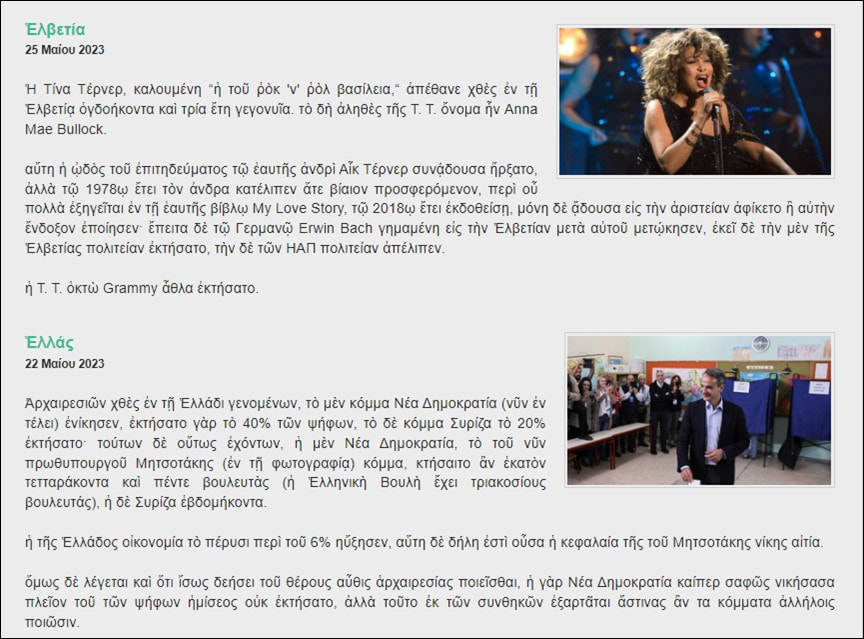
Akropolis World News reports the death of Tina Turner and the result of the Greek elections
http://www.akwn.net/
Despite all this, Hillary was rejected by Cambridge because her Latin was allegedly not good enough! Over the last fewer people from Hong Kong have got into top USA and UK universities and this year none at all made it from Hong Kong One of us wondered whether this was the result of a political decision communicated to the universities from on high, Most of the applicants for America are in STEM subjects, which have now become a very sensitive issue.
Hillary herself is now aiming for Durham, a delightful cathedral city in NE England, with St Andrews in Scotland as second choice. The latter university is both where Prince William met Kate and also where Catalan Classicist Juan Codrech runs Akropolis World News, which features news items in the Attic dialect of ancient Greek and is housed at http://www.akwn.net/ .
Hillary also spoke enthusiastically about De Rerum Natura, the poem in which Lucretius expounded the Epicurean view of man and the universe and which some believe was edited by Cicero. Epicurean physics took over the views of Democritus, whose theory of matter as constituted by indivisible units – atoma - prefigured modern atomic theory.
http://www.akwn.net/
Despite all this, Hillary was rejected by Cambridge because her Latin was allegedly not good enough! Over the last fewer people from Hong Kong have got into top USA and UK universities and this year none at all made it from Hong Kong One of us wondered whether this was the result of a political decision communicated to the universities from on high, Most of the applicants for America are in STEM subjects, which have now become a very sensitive issue.
Hillary herself is now aiming for Durham, a delightful cathedral city in NE England, with St Andrews in Scotland as second choice. The latter university is both where Prince William met Kate and also where Catalan Classicist Juan Codrech runs Akropolis World News, which features news items in the Attic dialect of ancient Greek and is housed at http://www.akwn.net/ .
Hillary also spoke enthusiastically about De Rerum Natura, the poem in which Lucretius expounded the Epicurean view of man and the universe and which some believe was edited by Cicero. Epicurean physics took over the views of Democritus, whose theory of matter as constituted by indivisible units – atoma - prefigured modern atomic theory.

Durham Cathedral from the river (August 2013)
We read chapters 1-5 from Suetonius’ Vita Neronis, with Hillary, Tanya, Alex, Eugene and Jesse opting to answer questions on the text in Latin, whilst the rest simply translated with the help of the interlinear glossing.
We briefly discussed the etymology of the English words college and collect. The first derives through Latin collegium from the verb ligāre and the second, via colligō, from the verb legere but both go back ultimately to the same PIE root (*leg-, `collect’, `gather’))
John showed Sapana, the waitress who usually serves us, the Nepali novel Karnali Blues, which
Joe and he are slowly reading together. This is a semi-autobigraphical work, interposing stories from the childhood of a child in the Karnali region in western Nepal with scenes at the hospital where he and his mother are taking care of his ailing father. Although very interesting, it is a hard read because it contains both Nepali regionalisms and some dialogue in Tharu, the language of the indigenous inhabitants of the southern plains where the story is set. An English translation has recently been published by Michael Hutt.
Two appalling puns were presented:
Did Homer write a sequel to the Iliad?
Yes, you ought to see it
What did Virgil write? I need to read it
There was discussion of the Latinity of ChatGPT and Chris reported successfully asking it to provide an angry denunciation of a banana in the style of Cicero. John subsequently repeated the experiment, coming up with the following and adding corrections of one or two grammatical howlers:
O fructus infamis et vilis! Quis unquam te laudavit, aut tibi gratias egit? Tu, qui inanes et insulsissimus es, non dignus es quod in mensa principis aut philosophi ponaris. Nonne pudet te, quod genus tuum nullam habet dignitatem, nullam gratiam, nullam virtutem? Quisquis te laudat aut amat, is sibi ipsi displicet, et omnibus aliis ostendit se nihil esse nisi stultum et insipientem. Odi te, o fructus sordide, et spero ut nunquam amplius in oculis meis appareas!
John also reported on his invitation to chatGPT to rule on the old dispute between Pat and himself on the correct Latin for gweilo. - umbrivir (John’s preference) or vir daemoniacus
Nos Honcongenses incerti sumus utrum vocabulum Sinicum 鬼佬 Latine reddendum sit `umbrivir' an `vir daemoniacus'. Quid tu sentis?
Ut vocabulum Sinicum 鬼佬 Latine reddatur, non est una vera aut falsa responsio. Dependere potest de contextu in quo vocabulum utitur.
Vocabulum 鬼佬 Sinicum significat "extraneus" aut "alienigena" in lingua Sinitica. In Hong Kong, vocabulum saepe adhibetur ad describendum homines aliorum regionum aut nationum, maxime homines Occidentales. Aliquando tamen, vocabulum 鬼佬 Sinicum potest habere connotationem derogatoriam vel peiorativam.
Ergo, si in contextu adhibetur vocabulum 鬼佬 Sinicum ad simplicem designationem hominis Occidentalis vel extranei, Latine reddendum est "umbrivir". Sed si in contextu vocabulum habet connotationem derogatoriam vel peiorativam, Latine reddendum est "vir daemoniacus".
The bot’s Latin is understandably less Ciceronian than in the banana passage but there is only one clear grammatical mistake, viz. use of the deponent verb ūtitur as if it were passive. The Latin is comprehensible and the answer provided is quite sensible.
We read chapters 1-5 from Suetonius’ Vita Neronis, with Hillary, Tanya, Alex, Eugene and Jesse opting to answer questions on the text in Latin, whilst the rest simply translated with the help of the interlinear glossing.
We briefly discussed the etymology of the English words college and collect. The first derives through Latin collegium from the verb ligāre and the second, via colligō, from the verb legere but both go back ultimately to the same PIE root (*leg-, `collect’, `gather’))
John showed Sapana, the waitress who usually serves us, the Nepali novel Karnali Blues, which
Joe and he are slowly reading together. This is a semi-autobigraphical work, interposing stories from the childhood of a child in the Karnali region in western Nepal with scenes at the hospital where he and his mother are taking care of his ailing father. Although very interesting, it is a hard read because it contains both Nepali regionalisms and some dialogue in Tharu, the language of the indigenous inhabitants of the southern plains where the story is set. An English translation has recently been published by Michael Hutt.
Two appalling puns were presented:
Did Homer write a sequel to the Iliad?
Yes, you ought to see it
What did Virgil write? I need to read it
There was discussion of the Latinity of ChatGPT and Chris reported successfully asking it to provide an angry denunciation of a banana in the style of Cicero. John subsequently repeated the experiment, coming up with the following and adding corrections of one or two grammatical howlers:
O fructus infamis et vilis! Quis unquam te laudavit, aut tibi gratias egit? Tu, qui inanes et insulsissimus es, non dignus es quod in mensa principis aut philosophi ponaris. Nonne pudet te, quod genus tuum nullam habet dignitatem, nullam gratiam, nullam virtutem? Quisquis te laudat aut amat, is sibi ipsi displicet, et omnibus aliis ostendit se nihil esse nisi stultum et insipientem. Odi te, o fructus sordide, et spero ut nunquam amplius in oculis meis appareas!
John also reported on his invitation to chatGPT to rule on the old dispute between Pat and himself on the correct Latin for gweilo. - umbrivir (John’s preference) or vir daemoniacus
Nos Honcongenses incerti sumus utrum vocabulum Sinicum 鬼佬 Latine reddendum sit `umbrivir' an `vir daemoniacus'. Quid tu sentis?
Ut vocabulum Sinicum 鬼佬 Latine reddatur, non est una vera aut falsa responsio. Dependere potest de contextu in quo vocabulum utitur.
Vocabulum 鬼佬 Sinicum significat "extraneus" aut "alienigena" in lingua Sinitica. In Hong Kong, vocabulum saepe adhibetur ad describendum homines aliorum regionum aut nationum, maxime homines Occidentales. Aliquando tamen, vocabulum 鬼佬 Sinicum potest habere connotationem derogatoriam vel peiorativam.
Ergo, si in contextu adhibetur vocabulum 鬼佬 Sinicum ad simplicem designationem hominis Occidentalis vel extranei, Latine reddendum est "umbrivir". Sed si in contextu vocabulum habet connotationem derogatoriam vel peiorativam, Latine reddendum est "vir daemoniacus".
The bot’s Latin is understandably less Ciceronian than in the banana passage but there is only one clear grammatical mistake, viz. use of the deponent verb ūtitur as if it were passive. The Latin is comprehensible and the answer provided is quite sensible.
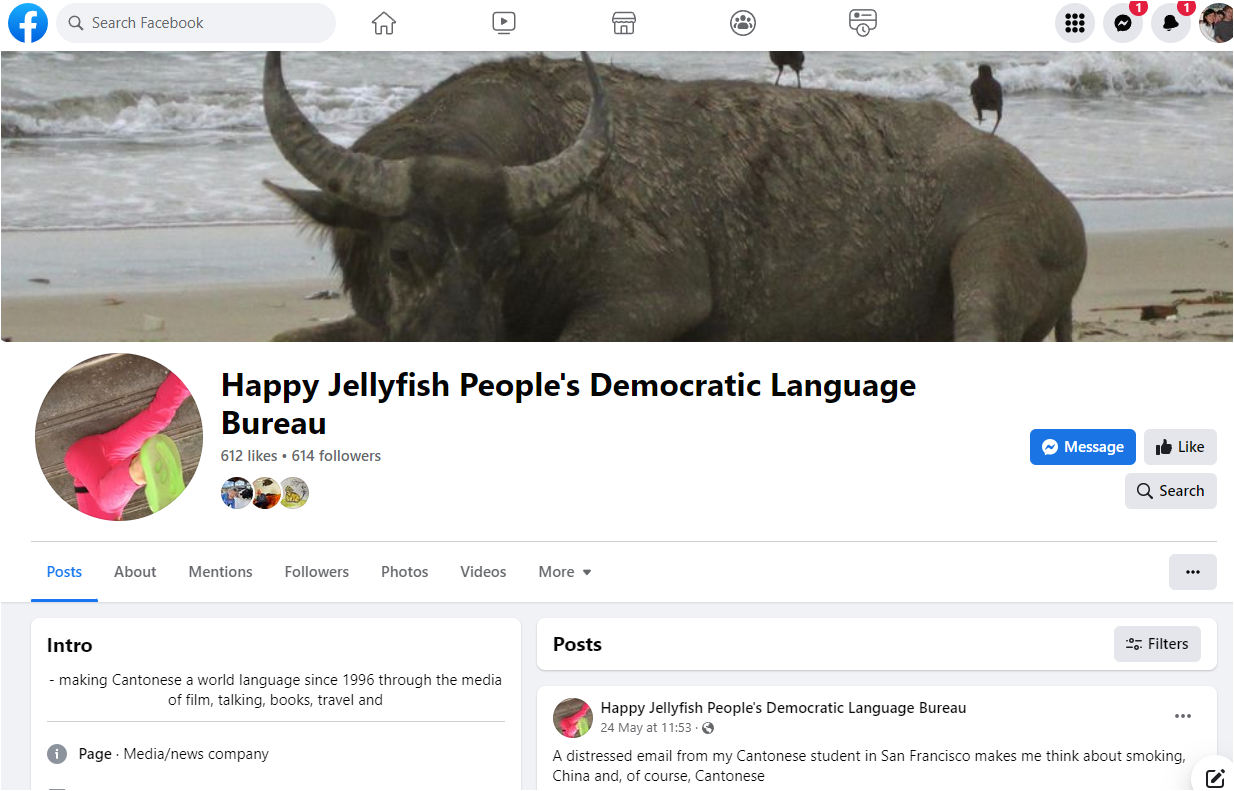
The `Happy Jellyfish’ Facebook page (27 May 2023)
We also touched on the topic of non-native-speaker teachers of Chinese. Chris C. had actually taught the language at the outset of his career whilst Tanya had been a student of Cecilie Gamst-Berg, who, whilst living in Lantau, set up her Happy Jellyfish People’s Democratic Language Bureau, with the truly inspired catch-line `Learn Cantonese the Natural Way – From a Norwegian.’ Cecilie moved to the Spanish island of Mallorca Islands some years ago but continues her operation over the Internet. She is certainly a fluent speaker of the language and an excellent teacher but apparently has rather poor pronunciation. Here we see the advantage of teaching Latin – all the native speakers are very conveniently dead and so cannot make non-native speakers feel inferior
We briefly discussed John’s not altogether happy experience with Marcus Auerelius’ Meditations, philosophical reflections by the emperor, who reigned from 161 to 180 A.D. Students often ask to read this, under the impression that a Roamn emperor would have written in Latin. In fact, of course, Marcus wrote in Greek, so we must make do with the Latin translation published by a German scholar in 1801. Both Greek and Latin texts are complex and the contents rather repetitive, so it is best to look at a few brief extracts rather than attempt to read the whole thing. John’s interlinear translation, complete to half-way through the fifth of the twelve books, is available at https://linguae.weebly.com/marcus-aurelius.html, together with an introduction to the work and its influence.
We also touched on the most famous communicative use of Latin in recent years, viz. Pope Benedict XVI’s 2013 resignation speech. Our discussion of this at the time was featured in the South China Morning Post, with the happy result that Zhang Wei was prompted to join the Circulus. For more details, see https://linguae.weebly.com/latinitas-pontificalis.html
One important thing which John forgot to mention in the meeting was that 21 April is the tradional date for the foundation of Rome, Nowadays an annual birthday celebration is held in the city centre, including a parade at the Circus Maximus.
We also touched on the topic of non-native-speaker teachers of Chinese. Chris C. had actually taught the language at the outset of his career whilst Tanya had been a student of Cecilie Gamst-Berg, who, whilst living in Lantau, set up her Happy Jellyfish People’s Democratic Language Bureau, with the truly inspired catch-line `Learn Cantonese the Natural Way – From a Norwegian.’ Cecilie moved to the Spanish island of Mallorca Islands some years ago but continues her operation over the Internet. She is certainly a fluent speaker of the language and an excellent teacher but apparently has rather poor pronunciation. Here we see the advantage of teaching Latin – all the native speakers are very conveniently dead and so cannot make non-native speakers feel inferior
We briefly discussed John’s not altogether happy experience with Marcus Auerelius’ Meditations, philosophical reflections by the emperor, who reigned from 161 to 180 A.D. Students often ask to read this, under the impression that a Roamn emperor would have written in Latin. In fact, of course, Marcus wrote in Greek, so we must make do with the Latin translation published by a German scholar in 1801. Both Greek and Latin texts are complex and the contents rather repetitive, so it is best to look at a few brief extracts rather than attempt to read the whole thing. John’s interlinear translation, complete to half-way through the fifth of the twelve books, is available at https://linguae.weebly.com/marcus-aurelius.html, together with an introduction to the work and its influence.
We also touched on the most famous communicative use of Latin in recent years, viz. Pope Benedict XVI’s 2013 resignation speech. Our discussion of this at the time was featured in the South China Morning Post, with the happy result that Zhang Wei was prompted to join the Circulus. For more details, see https://linguae.weebly.com/latinitas-pontificalis.html
One important thing which John forgot to mention in the meeting was that 21 April is the tradional date for the foundation of Rome, Nowadays an annual birthday celebration is held in the city centre, including a parade at the Circus Maximus.
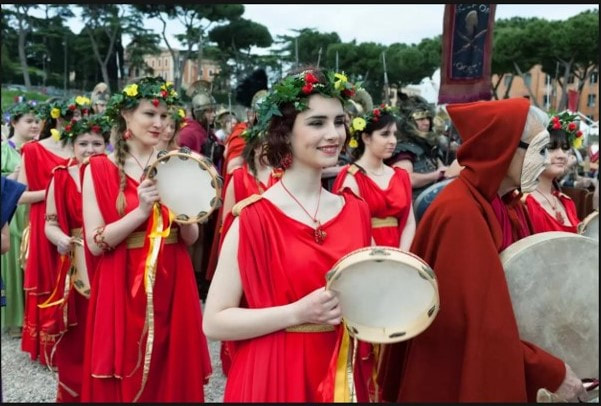
Natale di Roma celebration at the Circus Maximus, 23 April 2023
https://www.wantedinrome.com/news/natale-di-roma-rome-celebrates-birthday-21-april.html
https://www.wantedinrome.com/news/natale-di-roma-rome-celebrates-birthday-21-april.html
VĪTA NERŌNIS
I. Ex gente Domitiā duae familiae clāruērunt, Calvīnōrum et Aēnobarbōrum. Aēnobarbī
From gens Domitia two families became-famous [that]of-Calvini and of-Ahenobarbi Ahenobarbi
auctōrem orīginis itemque cognōminis habent L. Domitium,[1] cui rūre quondam revertentī
[as]founder of[-their-line and-also of-surname have Lucius Domitius to-whom from-countryside once returning
iuvenēs geminī augustiōre fōrmā ex occursū imperāsse trāduntur, nūntiāret[2]
youths twin with-quite-distinguished form on meeting to-have-given-order are-traditionally-said that-he-announce
senātuī ac populō victōriam, dē quā incertum adhūc erat; atque in fidem maiestātis adeō
to-senate and people victory about which uncertainty still there-was and for confirmation of-their-status so
permulsisse mālās, ut ē nigrō rutilum aerīque similem capillum redderent. Quod īnsigne
stroked [his] cheeks that from black ruddy and-to-bronze similar hair they-made this distinguishing-mark
mānsit et in posterīs eius, ac magna pars rutilā barbā fuērunt. Fūnctī autem cōnsulātibus
remained also in descendants of-him and majority with-ruddy beard were having-held moreover consulships
septem, triumphō cēnsūrāque duplicī et inter patriciōs adlectī persevērāvērunt omnēs in
seven wirthtriumph and-censorship two-fold and amonst patricians enrolled they- contined all in
eōdem cognōmine. Ac nē praenōmina quidem ūlla praeterquam Gnaeī et Lūcī ūsūrpārunt,
same surname and not preaenomina indeed any except of-Gnaeus and Lucius they-used
eaque ipsa notābilī varietāte, modo continuantēs ūnum quodque per trīnās persōnās, modo
and-these actual-ones with-notable variation sometimes continuing one each for three individuals sometimes
alternantēs per singulās. Nam prīmum secundumque ac tertium Ahēnobarbōrum Lūciōs,
alternating by single ones. For first and-second and third of-Ahenobarbi Luciuses
sequentīs rūrsus trēs ex ōrdine Gnaeōs accēpimus, reliquōs nōn nisi vicissim tum Lūciōs tum
following agin three in row Gnaeusse we-have-had rest only turm-by-turn then Luciuses then
Gnaeōs.[3] Plūrīs ē familiā cognōscī referre arbitror, quō facilius appāreat ita
Gnaeeuses more-people from family to-be-learned-of to-be-relevant I-think so-that more-easily msy-apppear in-such-way
dēgenerāsse ā suōrum virtūtibus Nerō, ut tamen vitia cuiusque quasi trādita et ingenita
to-have-degenerated from from own-line’s virtues Nero that however vices of-each as-if handed-down and in-born
rettulerit.
he-brought-back
NOTES
[1] Nutting (Ad Alpēs, c.XXXIII) connects this incident with the Battle of Lake Regillus in 496 against the other Latin states in which the twin demigods Castor and Pollux supposedly helped the Romans but this is only supposition. There is no evidence for the Ahenobarbi holding high office before the 2nd. century B.C. See https://bmcr.brynmawr.edu/2006/2006.05.34/ for a review partially summarising Jesper Carlsen’s The Rise and Fall of a Roman Noble Family: The Domitii Ahenobarbi 196 BC - AD 68
(https://www.amazon.com/Rise-Fall-Roman-Noble-Family/dp/8778389968)
[2] The subjunctive on its own, rather than with ut, is used here to express a reported command
[3] If this pattern did actually apply to the members of the family Suetonius was aware of, it must have been a coincidence as fathers normally gave their own praenomen to their eldest son. A Gnaeus Domitius Ahenobarbus was consul in 192, 162, 122, 96, 32 B.C. and in 32 A.D, whilst a Lucius held the office in 94, 54 and 16 B.C., making a total of nine rather than seven. The censorships were held in 115 and 92 B.C by the consuls of 122 and 96 B.C. respectively and triumphs earned by the former and also by the consul of 16. B.C. We also know of a Gnaeus, probably son of the consul of 96 B.C. who was a partisan of Marius and died in 82 or 81 B.C. and of another who was praetor in 54 B.C.and probably son of the consul of 94 B.C.
II. Ut igitur paulō altius repetam, atavus[1] eius Cn. Domitius in tribūnātū
So-that therefore a-little more-deeply I-may-search father-of-great-great-grandfather his Gnaeus Domitius in tribunate
pontificibus offēnsior, quod alium quam sē in patris suī locum cooptāssent, iūs
to-pontiffs quite-hostile because other-person than himself into father’s his place they-had-co-opted right
sacerdōtum subrogandōrum ā collēgiīs ad populum trānstulit, at in cōnsulātū Allobrogibus
of-priests being-replaced from colleges to people transferred but in consulship with-Allobroges
Arvernīsque superātīs elephantō per prōvinciam vectus est turbā mīlitum quasi inter sollemnia and-Arverni having-been-defeated on-elephant through province rode with-crowd of-soldiers as-if amids t rituals
triumphī prōsequente.[2] In hunc dīxit Licinius Crassus[3] ōrātor nōn esse mīrandum, quod
of-triumph following against him said Licinius Crassus orator not to-be wondered-at that
aēneam barbam habēret, cui ōs ferreum,[4] cor plumbeum esset. Huius fīlius praetor C.
bronzen beard he-had to-whom face of-iron heart of-lead there-was his son praetor Gaius
Caesarem abeuntem cōnsulātū, quem adversus auspicia lēgēsque gessisse existimabatur, ad
Caesar whom against auspices and-laws to-have-acted it-was-thought to inquiry
disquīsītiōnem senātūs vocāvit; mox cōnsul imperātōrem ab exercitibus Gallicīs retrahere
of-senate he-called soon as-consul general[i.e.Caesar]. from armies Gallic to-drag-back he-tried
temptāvit successorque eī per factiōnem nōminātus prīncipiō cīvīlis bellī ad Corfīnium captus
and-successor to-him by [his]faction named at-start of-civil war at Corfinium captured was
est.[5] Unde dīmissus Massiliēnsīs obsidiōne labōrantīs cum adventū suō cōnfirmāsset, repente
From-there dismissed the-Massilians under-siege suffering when by-arrival his he-had-given-heart-to suddenly
NOTES
[1] Assuming Suetonius was using atavus in its precise meaning rather than as a general word for ancestor, this is a correct for the consul of 122 B.C., who celebrated a triumph over the Gauls in 120. However Suetonius conflates him with his son, consul in 96, who as tribune of the plebs in 104 deprived the priestly colleges of their right of co-optation. The younger Gnaeus, having joined the board with popuilar support, was elected pontifex maximus by his colleagues in 103, perhaps out of fear that he would otherwise engineer their own replacement! He may earlier have been involved in the foundation of the colony of Narbo (modern Barbonne), which became the capital of the province of Gallia Narbonensis, formally established in the early 1st century B.C.
[2] The elder Gnaeus apparently celebrated this mock-triumph in Gaul before being granted an official one in Rome. The campaign against two tribes in southern Gaul stemmed from Roman intervention on behalf of the Greek colony of Massilia, a long-time Roman ally
[3] Licinius Crassus was Gnaeus’ colleague in the censorship in 93 B.c. and the two men frequently clashed.
[4] The expression ōs ferreum seems to have been an approximate equivalent of English `bare-faced cheek.’
[5] Lucius Domitius Ahenobarbus(c.98 – 48 B.C.), brother-in-law of the arch-concervative Cato, attempted as praetor in 58 B.C. to have the assignment of the Gallic provinces and of Illyria to Caesar rescinded. He stood for the consulship of 55 but was defeated by Pompey and Crassus and, although he was successful the next year, their continuing support for Caesar prevented Lucius from securing his recall. When the senate did finally vote to end Caesar’s command in 50 B.C., Lucius was appointed his successor in Gaul but this was forestalled by Caesar’s crossing the Rubicon. Appointed by Pompey to hold Corfinium in central Italy, he was left with insufficient forces and compelled by his own soldiers to surrender. Whilst his own men joined Caesar’s army he himself, was released unharmed.
dēstituit aciēque dēmum Pharsālica occubuit;[1] vir neque satis cōnstāns et ingeniō trucī in
deserted and-in-battle finaly of-Pharsalus died man neither enough steadfast and with-nature savage in
dēspērātiōne rērum mortem timōre appetītam ita expāvit, ut haustum venēnum paenitentiā
desperation over-situation death out-of-fear sought so he-was-afraid-of that drained poisoned from-regret
ēvomuerit medīcumque manūmīserit, quod sibi prūdēns ac sciēns minus noxium
he-vomited-up and-doctor set-free because for-him sensibly and deliberately less harmful
temperāsset.[2] Cōnsultante autem Cn. Pompēiō dē mediīs ac neutram partem sequentibus
he-had-made [the-poison] seeking-advice moreover Gnaeus Pompey about those-neutral and neither party folllowing
sōlus cēnsuit hostium numerō habendōs.
he-aone considered of-enemies in-number them-needing-to-be regarded
III. Relīquit fīlium omnibus gentis suae procul dubiō praeferendum.[3] Is inter
He-lleft son ot-all to-all of-clan his far rom-doubt far from-doubt preferable he among those
cōnsciōs[4] Caesariānae necis quamquam īnsōns damnātus lēge Pediā,[5] cum ad Cassium
with-knowledge of-Caesar’s murder although innocent condemned by-lex Pedia when to Cassius
Brūtumque sē propinquā sibi cognātiōne iūnctōs contulisset, post utriusque interitum classem
And-Brutus self by-close to-himself relationship joined had-taken after of-both death fleet
ōlim commissam retinuit, auxit etiam, nec nisi partibus ubīque prōflīgātīs M. Antōniō
once entrusted [to-him] he-retained enlarged also and-not except with-faction[his] everywhere defeated to Mark Antony
sponte et ingentis meritī locō trādidit.[6] Solusque omnium ex iīs, quī parī lēge damnātī of-own-accord and-of-huge service in-place surrendered and-alone of-all of those who by-same law condemned
erant, restitūtus in patriam amplissimōs honōrēs percucurrit,[7] ac subinde redintegrātā
had-been being-restored to native-land highest honours went-throguh-all and then with-renewed
NOTES
[1] After his release by Caesar he was reluctant to go immediately to Greece to join Pompey, who he believed had failed to support him properly, but went instead to Massilia, whose inhabitnats, perhaps because of long-standing ties to the Ahenobarbus family, were resisting the Caesarian forces. Caesar allowed him to escape on the one boat to get away when the town was on the verge of falling in September 49. See the account of the siege at https://en.wikipedia.org/wiki/Siege_of_Massilia He then went to Greece where he gave the advice to treat as hostile all those who had remained neutral in the conflict, He fought in the Battle of Pharsalus in August 48 and was killed trying to escape after Caesar’s victory. See https://en.wikipedia.org/wiki/Lucius_Domitius_Ahenobarbus_(consul_54_BC)
[2] This botched suicide attempt was made when his soldiers at Corfinium insisted on surrendering.
[3] Gnaeus Domitius Ahenobarbus (consul 32 B.C.), husband of Aemilia Lepida, a relative of the triumvir Marcus Aemilius Lepidus.
[4] conscius means literally sharing knowledge with others, though it usually denotes an active participant or accomplice. Since Suetonius describes Gnaeus as īnsōns, the words inter cōnsciōs must mean `along with the actual participants’. Gnaeus had, however, fought alongside his father with Pompey against Caesar, been pardoned in 46 B.C. and, following Caesar’s death, joined Brutus and Cassius in Macedonia
[5] The Lex Pedia of 43 B.C. provided for the prosecution of all involved in Caeasar’s assassination,
[6] Having won a naval victory over the Second Truiumvuirate shortly before the republicans’ defeat at Philippi, he continued operations in the Ionian Sea but in 40 and 39 B.C came to agreements with Mark Antony, receiving the promise of the consulship for 32 B.C. He served on Antony’s staff during the ill-fated invasion of Parthia in 36 and was then made governor of Bithynia in northern Asia Minor, Although initially taking Anthony’s side in the breach with Octavian in 32, he objected to Anthony’s close involvement with Cleopatra and joined Augustus shortly before the battle of Actium in 31.
[7] Literally `ran through’
dissēnsiōne cīvīlī, eīdem Antōniō lēgātus, dēlātam sibi summam imperiī ab iīs, quōs
conflict civil for-same Antony a-commander offered to-him supreme command by those whom
Cleopatrae pudēbat, neque suscipere neque recūsāre fīdenter propter subitam valītūdinem
over-Cleopatra shame-affected neither to-accept nor-to refuse with-confidence because-of suffen illness
ausus, trānsiit ad Augustum et in diēbus paucīs obiit, nōnnūllā et ipse īnfāmiā aspersūs. Nam
having-dared went-over to Augustus and in days a-few died by-some also himself loss-of-reputation affected for
Antōnius eum dēsīderiō amīcae Servīliae Naidis[1] trānsfūgisse iactāvit.
Antony him from-longing for-mistress Servilia Nais to-have-deserted put-it-about
IV Ex hōc Domitius[2] nāscitur, quem ēmptōrem familiae pecūniaeque in testāmentō Augustī
From him Domitius is-born whom as-buyer of-household and-assets in will of-Augustus
fuisse mox vulgō notātum est, nōn minus aurīgandī arte in adulēscentiā clārus quam deinde
to-have-been soon publicly noted was nor less of-chariot-driving from-skill in youth famous than later
ōrnāmentīs triumphālibus ex Germānicō bellō. Vērum arrogāns, profūsus, immītis cēnsōrem
for-ornaments triumphal from German war in-truth arrogant extravagant ruthless censor
L. Plancum via sibi dēcēdere aedīlis coēgit; praetūrae cōnsulātūsque honōre equitēs R.
Lucius Plancus on-street to-him to-give-way as-aedile he-forced of-praetorship and-consulship in-honour knights Roman
mātrōnāsque ad agendum mīmum prōdūxit in scaenam. Vēnātiōnēs et in Circō et in omnibus
and-ladies for acting a-farce he-brought onto stage beast-hunts both in circus and in all
urbis regiōnibus dedit mūnus etiam gladiātōrium, sed tantā saevitiā, ut necesse fuerit Augustō
of-city regions he-staged show also of-gladiators but with-such-great cruelty that necessary it-was for-Augustus
clam frūstrā monitum ēdictō coercēre.
secretly in-vain him-warned by-edict to-constrain
V. Ex Antōniā maiōre patrem[3] Nerōnis prōcreāvit omnī parte vītae dētestābilem, siquidem
By Antonia Major father of-Nero he- fathered in-every part of-life detestable seeing-that
comes ad Orientem C. Caesaris iuvenis,[4] occīsō lībertō suō, quod pōtāre quantum iubēbātur
as-companion to East of-Gaius Caesaris younger having-been-killed freedman his because to-drink as-much-as he-was-ordered
recūsāret, dīmissus ē cohorte amīcōrum nihilō modēstius vīxit; sed et in viae Appiae vīcō
he-refused dismissed from set of-friends in-no-way more- temperately he-lived but also in on-Way Appian village
NOTES
[1] Otherwise unknown, Servilia Nais was possibly a freedwoman,
[2] Lucius Domitius Ahenobarbus (49 BC to 25 AD) married Antonia Major, daughter of Mark Antony and Augustus’ sister Octavia. Aedile in 22 and consul in 16 BC his German campaign in c.14-15 AD involved a deeper penetration of the region than any previous Roman commander had achieved (see https://en.wikipedia.org/wiki/Lucius_Domitius_Ahenobarbus_(consul_16_BC)) Whether or not Suetonius’ description of his character is fair, he was trusted enough to be appointed Augustus’ executor, a position described as emptor because it involved a ritual purchase of the deceased’s assets which were then distributed according in accordance with the will’s provisions.
[3] Gnaeus Domitius Ahenobarbus (2 BC-41 AD, cos,32 AD).
[4] Gaius Caesar (20 BC – 4 AD) grandson and adopted son of Augustus, who was given command of the eastern provinces in 1BC and died of illness in Asia Minor. He and his brother Lucius, who had died in 2 AD., were being groomed by Augustus as his heirs but he now had to turn to his stepson Tiberius. See https://en.wikipedia.org/wiki/Gaius_Caesar
repente puerum citātīs iūmentīs haud ignārus obtrīvit et Rōmae mediō Forō cuidam equitī
suddenly boy having-been-goaded-on horses not unaware ran-over and at-Rome in-middle-of forum for-a knight
Rōmānō līberius iūrgantī oculum ēruit; perfidiae vērō tantae, ut nōn modo argentāriōs pretiīs
Roman too-freely arguing eye he-gouged-out of-dishonesty indeed so-great that not only bankers of-price
rērum coēmptārum,[1] sed et in praetūrā mercēde palmārum aurīgāriōs fraudāverit, notātus ob
of-things bought-together but also in praetorship of-amount of-prizes charioteers he-defrauded remarked-on fot
haec et sorōris iocō, querentibus dominīs factiōnum repraesentanda praemia in posterum
this also sister’s by-jest complaining masters of-teams being-paid-in-arrears prizes for future
sānxit.[2] Maiestātis quoque et adulteriōrum incestīque cum sorōre Lepidā[3] sub excessū
he-banned of-treason in-addition and of-adulterous-affairs and-of-incest with sister Lepida just-before death
Tiberī reus, mūtātiōne temporum ēvāsit dēcessitque Pyrgīs[4] morbō aquae intercutis,[5]
of-Tiberius accused bny-change of-era he-got-off and-died at Pyrgi of-disease of-water under-the-skin
sublātō[6] fīliō Nerōne ex Agrippīnā Germānicō genitā.[7]
having-been-acknowledged son Nero from Agrippina of-Germanicus daughter
NOTES
[1] i.e he refused to repay money advanced to him to cover a purchase. Loans of this sort were a major part of the business of Lucius Caecilius Iucundus, the Pompeian banker featured in the Cambridge Latin Course.
[2] He banned the practice for later races but did not return the money pocketed earlier.
[3] Either Domitia lepida Maior (often known simply as Domitia) or Domitia Lepida Minor (often simply Lepida), father of the empress Messalina. The name Lepida came from their grandmother, Aemilia Lepida (see n.12 above).
[4] Pyrgi was an old Etruscan city on the coast around 6o kilometers NW of Rome. https://en.wikipedia.org/wiki/Pyrgi
[5] i.e. dropsy (edema), the retention of fluid in tissue.
[6] Literally `having been lifted up.’ After a Roman child’s birth it was placed on the floor and the father then picked the baby up to acknowledge it as his own.
[7] Agrippina the Yonger, daughter of Germanicus, Claudius’s brother, and of Agrippina the Elder.
I. Ex gente Domitiā duae familiae clāruērunt, Calvīnōrum et Aēnobarbōrum. Aēnobarbī
From gens Domitia two families became-famous [that]of-Calvini and of-Ahenobarbi Ahenobarbi
auctōrem orīginis itemque cognōminis habent L. Domitium,[1] cui rūre quondam revertentī
[as]founder of[-their-line and-also of-surname have Lucius Domitius to-whom from-countryside once returning
iuvenēs geminī augustiōre fōrmā ex occursū imperāsse trāduntur, nūntiāret[2]
youths twin with-quite-distinguished form on meeting to-have-given-order are-traditionally-said that-he-announce
senātuī ac populō victōriam, dē quā incertum adhūc erat; atque in fidem maiestātis adeō
to-senate and people victory about which uncertainty still there-was and for confirmation of-their-status so
permulsisse mālās, ut ē nigrō rutilum aerīque similem capillum redderent. Quod īnsigne
stroked [his] cheeks that from black ruddy and-to-bronze similar hair they-made this distinguishing-mark
mānsit et in posterīs eius, ac magna pars rutilā barbā fuērunt. Fūnctī autem cōnsulātibus
remained also in descendants of-him and majority with-ruddy beard were having-held moreover consulships
septem, triumphō cēnsūrāque duplicī et inter patriciōs adlectī persevērāvērunt omnēs in
seven wirthtriumph and-censorship two-fold and amonst patricians enrolled they- contined all in
eōdem cognōmine. Ac nē praenōmina quidem ūlla praeterquam Gnaeī et Lūcī ūsūrpārunt,
same surname and not preaenomina indeed any except of-Gnaeus and Lucius they-used
eaque ipsa notābilī varietāte, modo continuantēs ūnum quodque per trīnās persōnās, modo
and-these actual-ones with-notable variation sometimes continuing one each for three individuals sometimes
alternantēs per singulās. Nam prīmum secundumque ac tertium Ahēnobarbōrum Lūciōs,
alternating by single ones. For first and-second and third of-Ahenobarbi Luciuses
sequentīs rūrsus trēs ex ōrdine Gnaeōs accēpimus, reliquōs nōn nisi vicissim tum Lūciōs tum
following agin three in row Gnaeusse we-have-had rest only turm-by-turn then Luciuses then
Gnaeōs.[3] Plūrīs ē familiā cognōscī referre arbitror, quō facilius appāreat ita
Gnaeeuses more-people from family to-be-learned-of to-be-relevant I-think so-that more-easily msy-apppear in-such-way
dēgenerāsse ā suōrum virtūtibus Nerō, ut tamen vitia cuiusque quasi trādita et ingenita
to-have-degenerated from from own-line’s virtues Nero that however vices of-each as-if handed-down and in-born
rettulerit.
he-brought-back
NOTES
[1] Nutting (Ad Alpēs, c.XXXIII) connects this incident with the Battle of Lake Regillus in 496 against the other Latin states in which the twin demigods Castor and Pollux supposedly helped the Romans but this is only supposition. There is no evidence for the Ahenobarbi holding high office before the 2nd. century B.C. See https://bmcr.brynmawr.edu/2006/2006.05.34/ for a review partially summarising Jesper Carlsen’s The Rise and Fall of a Roman Noble Family: The Domitii Ahenobarbi 196 BC - AD 68
(https://www.amazon.com/Rise-Fall-Roman-Noble-Family/dp/8778389968)
[2] The subjunctive on its own, rather than with ut, is used here to express a reported command
[3] If this pattern did actually apply to the members of the family Suetonius was aware of, it must have been a coincidence as fathers normally gave their own praenomen to their eldest son. A Gnaeus Domitius Ahenobarbus was consul in 192, 162, 122, 96, 32 B.C. and in 32 A.D, whilst a Lucius held the office in 94, 54 and 16 B.C., making a total of nine rather than seven. The censorships were held in 115 and 92 B.C by the consuls of 122 and 96 B.C. respectively and triumphs earned by the former and also by the consul of 16. B.C. We also know of a Gnaeus, probably son of the consul of 96 B.C. who was a partisan of Marius and died in 82 or 81 B.C. and of another who was praetor in 54 B.C.and probably son of the consul of 94 B.C.
II. Ut igitur paulō altius repetam, atavus[1] eius Cn. Domitius in tribūnātū
So-that therefore a-little more-deeply I-may-search father-of-great-great-grandfather his Gnaeus Domitius in tribunate
pontificibus offēnsior, quod alium quam sē in patris suī locum cooptāssent, iūs
to-pontiffs quite-hostile because other-person than himself into father’s his place they-had-co-opted right
sacerdōtum subrogandōrum ā collēgiīs ad populum trānstulit, at in cōnsulātū Allobrogibus
of-priests being-replaced from colleges to people transferred but in consulship with-Allobroges
Arvernīsque superātīs elephantō per prōvinciam vectus est turbā mīlitum quasi inter sollemnia and-Arverni having-been-defeated on-elephant through province rode with-crowd of-soldiers as-if amids t rituals
triumphī prōsequente.[2] In hunc dīxit Licinius Crassus[3] ōrātor nōn esse mīrandum, quod
of-triumph following against him said Licinius Crassus orator not to-be wondered-at that
aēneam barbam habēret, cui ōs ferreum,[4] cor plumbeum esset. Huius fīlius praetor C.
bronzen beard he-had to-whom face of-iron heart of-lead there-was his son praetor Gaius
Caesarem abeuntem cōnsulātū, quem adversus auspicia lēgēsque gessisse existimabatur, ad
Caesar whom against auspices and-laws to-have-acted it-was-thought to inquiry
disquīsītiōnem senātūs vocāvit; mox cōnsul imperātōrem ab exercitibus Gallicīs retrahere
of-senate he-called soon as-consul general[i.e.Caesar]. from armies Gallic to-drag-back he-tried
temptāvit successorque eī per factiōnem nōminātus prīncipiō cīvīlis bellī ad Corfīnium captus
and-successor to-him by [his]faction named at-start of-civil war at Corfinium captured was
est.[5] Unde dīmissus Massiliēnsīs obsidiōne labōrantīs cum adventū suō cōnfirmāsset, repente
From-there dismissed the-Massilians under-siege suffering when by-arrival his he-had-given-heart-to suddenly
NOTES
[1] Assuming Suetonius was using atavus in its precise meaning rather than as a general word for ancestor, this is a correct for the consul of 122 B.C., who celebrated a triumph over the Gauls in 120. However Suetonius conflates him with his son, consul in 96, who as tribune of the plebs in 104 deprived the priestly colleges of their right of co-optation. The younger Gnaeus, having joined the board with popuilar support, was elected pontifex maximus by his colleagues in 103, perhaps out of fear that he would otherwise engineer their own replacement! He may earlier have been involved in the foundation of the colony of Narbo (modern Barbonne), which became the capital of the province of Gallia Narbonensis, formally established in the early 1st century B.C.
[2] The elder Gnaeus apparently celebrated this mock-triumph in Gaul before being granted an official one in Rome. The campaign against two tribes in southern Gaul stemmed from Roman intervention on behalf of the Greek colony of Massilia, a long-time Roman ally
[3] Licinius Crassus was Gnaeus’ colleague in the censorship in 93 B.c. and the two men frequently clashed.
[4] The expression ōs ferreum seems to have been an approximate equivalent of English `bare-faced cheek.’
[5] Lucius Domitius Ahenobarbus(c.98 – 48 B.C.), brother-in-law of the arch-concervative Cato, attempted as praetor in 58 B.C. to have the assignment of the Gallic provinces and of Illyria to Caesar rescinded. He stood for the consulship of 55 but was defeated by Pompey and Crassus and, although he was successful the next year, their continuing support for Caesar prevented Lucius from securing his recall. When the senate did finally vote to end Caesar’s command in 50 B.C., Lucius was appointed his successor in Gaul but this was forestalled by Caesar’s crossing the Rubicon. Appointed by Pompey to hold Corfinium in central Italy, he was left with insufficient forces and compelled by his own soldiers to surrender. Whilst his own men joined Caesar’s army he himself, was released unharmed.
dēstituit aciēque dēmum Pharsālica occubuit;[1] vir neque satis cōnstāns et ingeniō trucī in
deserted and-in-battle finaly of-Pharsalus died man neither enough steadfast and with-nature savage in
dēspērātiōne rērum mortem timōre appetītam ita expāvit, ut haustum venēnum paenitentiā
desperation over-situation death out-of-fear sought so he-was-afraid-of that drained poisoned from-regret
ēvomuerit medīcumque manūmīserit, quod sibi prūdēns ac sciēns minus noxium
he-vomited-up and-doctor set-free because for-him sensibly and deliberately less harmful
temperāsset.[2] Cōnsultante autem Cn. Pompēiō dē mediīs ac neutram partem sequentibus
he-had-made [the-poison] seeking-advice moreover Gnaeus Pompey about those-neutral and neither party folllowing
sōlus cēnsuit hostium numerō habendōs.
he-aone considered of-enemies in-number them-needing-to-be regarded
III. Relīquit fīlium omnibus gentis suae procul dubiō praeferendum.[3] Is inter
He-lleft son ot-all to-all of-clan his far rom-doubt far from-doubt preferable he among those
cōnsciōs[4] Caesariānae necis quamquam īnsōns damnātus lēge Pediā,[5] cum ad Cassium
with-knowledge of-Caesar’s murder although innocent condemned by-lex Pedia when to Cassius
Brūtumque sē propinquā sibi cognātiōne iūnctōs contulisset, post utriusque interitum classem
And-Brutus self by-close to-himself relationship joined had-taken after of-both death fleet
ōlim commissam retinuit, auxit etiam, nec nisi partibus ubīque prōflīgātīs M. Antōniō
once entrusted [to-him] he-retained enlarged also and-not except with-faction[his] everywhere defeated to Mark Antony
sponte et ingentis meritī locō trādidit.[6] Solusque omnium ex iīs, quī parī lēge damnātī of-own-accord and-of-huge service in-place surrendered and-alone of-all of those who by-same law condemned
erant, restitūtus in patriam amplissimōs honōrēs percucurrit,[7] ac subinde redintegrātā
had-been being-restored to native-land highest honours went-throguh-all and then with-renewed
NOTES
[1] After his release by Caesar he was reluctant to go immediately to Greece to join Pompey, who he believed had failed to support him properly, but went instead to Massilia, whose inhabitnats, perhaps because of long-standing ties to the Ahenobarbus family, were resisting the Caesarian forces. Caesar allowed him to escape on the one boat to get away when the town was on the verge of falling in September 49. See the account of the siege at https://en.wikipedia.org/wiki/Siege_of_Massilia He then went to Greece where he gave the advice to treat as hostile all those who had remained neutral in the conflict, He fought in the Battle of Pharsalus in August 48 and was killed trying to escape after Caesar’s victory. See https://en.wikipedia.org/wiki/Lucius_Domitius_Ahenobarbus_(consul_54_BC)
[2] This botched suicide attempt was made when his soldiers at Corfinium insisted on surrendering.
[3] Gnaeus Domitius Ahenobarbus (consul 32 B.C.), husband of Aemilia Lepida, a relative of the triumvir Marcus Aemilius Lepidus.
[4] conscius means literally sharing knowledge with others, though it usually denotes an active participant or accomplice. Since Suetonius describes Gnaeus as īnsōns, the words inter cōnsciōs must mean `along with the actual participants’. Gnaeus had, however, fought alongside his father with Pompey against Caesar, been pardoned in 46 B.C. and, following Caesar’s death, joined Brutus and Cassius in Macedonia
[5] The Lex Pedia of 43 B.C. provided for the prosecution of all involved in Caeasar’s assassination,
[6] Having won a naval victory over the Second Truiumvuirate shortly before the republicans’ defeat at Philippi, he continued operations in the Ionian Sea but in 40 and 39 B.C came to agreements with Mark Antony, receiving the promise of the consulship for 32 B.C. He served on Antony’s staff during the ill-fated invasion of Parthia in 36 and was then made governor of Bithynia in northern Asia Minor, Although initially taking Anthony’s side in the breach with Octavian in 32, he objected to Anthony’s close involvement with Cleopatra and joined Augustus shortly before the battle of Actium in 31.
[7] Literally `ran through’
dissēnsiōne cīvīlī, eīdem Antōniō lēgātus, dēlātam sibi summam imperiī ab iīs, quōs
conflict civil for-same Antony a-commander offered to-him supreme command by those whom
Cleopatrae pudēbat, neque suscipere neque recūsāre fīdenter propter subitam valītūdinem
over-Cleopatra shame-affected neither to-accept nor-to refuse with-confidence because-of suffen illness
ausus, trānsiit ad Augustum et in diēbus paucīs obiit, nōnnūllā et ipse īnfāmiā aspersūs. Nam
having-dared went-over to Augustus and in days a-few died by-some also himself loss-of-reputation affected for
Antōnius eum dēsīderiō amīcae Servīliae Naidis[1] trānsfūgisse iactāvit.
Antony him from-longing for-mistress Servilia Nais to-have-deserted put-it-about
IV Ex hōc Domitius[2] nāscitur, quem ēmptōrem familiae pecūniaeque in testāmentō Augustī
From him Domitius is-born whom as-buyer of-household and-assets in will of-Augustus
fuisse mox vulgō notātum est, nōn minus aurīgandī arte in adulēscentiā clārus quam deinde
to-have-been soon publicly noted was nor less of-chariot-driving from-skill in youth famous than later
ōrnāmentīs triumphālibus ex Germānicō bellō. Vērum arrogāns, profūsus, immītis cēnsōrem
for-ornaments triumphal from German war in-truth arrogant extravagant ruthless censor
L. Plancum via sibi dēcēdere aedīlis coēgit; praetūrae cōnsulātūsque honōre equitēs R.
Lucius Plancus on-street to-him to-give-way as-aedile he-forced of-praetorship and-consulship in-honour knights Roman
mātrōnāsque ad agendum mīmum prōdūxit in scaenam. Vēnātiōnēs et in Circō et in omnibus
and-ladies for acting a-farce he-brought onto stage beast-hunts both in circus and in all
urbis regiōnibus dedit mūnus etiam gladiātōrium, sed tantā saevitiā, ut necesse fuerit Augustō
of-city regions he-staged show also of-gladiators but with-such-great cruelty that necessary it-was for-Augustus
clam frūstrā monitum ēdictō coercēre.
secretly in-vain him-warned by-edict to-constrain
V. Ex Antōniā maiōre patrem[3] Nerōnis prōcreāvit omnī parte vītae dētestābilem, siquidem
By Antonia Major father of-Nero he- fathered in-every part of-life detestable seeing-that
comes ad Orientem C. Caesaris iuvenis,[4] occīsō lībertō suō, quod pōtāre quantum iubēbātur
as-companion to East of-Gaius Caesaris younger having-been-killed freedman his because to-drink as-much-as he-was-ordered
recūsāret, dīmissus ē cohorte amīcōrum nihilō modēstius vīxit; sed et in viae Appiae vīcō
he-refused dismissed from set of-friends in-no-way more- temperately he-lived but also in on-Way Appian village
NOTES
[1] Otherwise unknown, Servilia Nais was possibly a freedwoman,
[2] Lucius Domitius Ahenobarbus (49 BC to 25 AD) married Antonia Major, daughter of Mark Antony and Augustus’ sister Octavia. Aedile in 22 and consul in 16 BC his German campaign in c.14-15 AD involved a deeper penetration of the region than any previous Roman commander had achieved (see https://en.wikipedia.org/wiki/Lucius_Domitius_Ahenobarbus_(consul_16_BC)) Whether or not Suetonius’ description of his character is fair, he was trusted enough to be appointed Augustus’ executor, a position described as emptor because it involved a ritual purchase of the deceased’s assets which were then distributed according in accordance with the will’s provisions.
[3] Gnaeus Domitius Ahenobarbus (2 BC-41 AD, cos,32 AD).
[4] Gaius Caesar (20 BC – 4 AD) grandson and adopted son of Augustus, who was given command of the eastern provinces in 1BC and died of illness in Asia Minor. He and his brother Lucius, who had died in 2 AD., were being groomed by Augustus as his heirs but he now had to turn to his stepson Tiberius. See https://en.wikipedia.org/wiki/Gaius_Caesar
repente puerum citātīs iūmentīs haud ignārus obtrīvit et Rōmae mediō Forō cuidam equitī
suddenly boy having-been-goaded-on horses not unaware ran-over and at-Rome in-middle-of forum for-a knight
Rōmānō līberius iūrgantī oculum ēruit; perfidiae vērō tantae, ut nōn modo argentāriōs pretiīs
Roman too-freely arguing eye he-gouged-out of-dishonesty indeed so-great that not only bankers of-price
rērum coēmptārum,[1] sed et in praetūrā mercēde palmārum aurīgāriōs fraudāverit, notātus ob
of-things bought-together but also in praetorship of-amount of-prizes charioteers he-defrauded remarked-on fot
haec et sorōris iocō, querentibus dominīs factiōnum repraesentanda praemia in posterum
this also sister’s by-jest complaining masters of-teams being-paid-in-arrears prizes for future
sānxit.[2] Maiestātis quoque et adulteriōrum incestīque cum sorōre Lepidā[3] sub excessū
he-banned of-treason in-addition and of-adulterous-affairs and-of-incest with sister Lepida just-before death
Tiberī reus, mūtātiōne temporum ēvāsit dēcessitque Pyrgīs[4] morbō aquae intercutis,[5]
of-Tiberius accused bny-change of-era he-got-off and-died at Pyrgi of-disease of-water under-the-skin
sublātō[6] fīliō Nerōne ex Agrippīnā Germānicō genitā.[7]
having-been-acknowledged son Nero from Agrippina of-Germanicus daughter
NOTES
[1] i.e he refused to repay money advanced to him to cover a purchase. Loans of this sort were a major part of the business of Lucius Caecilius Iucundus, the Pompeian banker featured in the Cambridge Latin Course.
[2] He banned the practice for later races but did not return the money pocketed earlier.
[3] Either Domitia lepida Maior (often known simply as Domitia) or Domitia Lepida Minor (often simply Lepida), father of the empress Messalina. The name Lepida came from their grandmother, Aemilia Lepida (see n.12 above).
[4] Pyrgi was an old Etruscan city on the coast around 6o kilometers NW of Rome. https://en.wikipedia.org/wiki/Pyrgi
[5] i.e. dropsy (edema), the retention of fluid in tissue.
[6] Literally `having been lifted up.’ After a Roman child’s birth it was placed on the floor and the father then picked the baby up to acknowledge it as his own.
[7] Agrippina the Yonger, daughter of Germanicus, Claudius’s brother, and of Agrippina the Elder.
