| linguae |
|
QUESTIONS ARISING FROM 91st MEETING – 15/6/18
(the record of earlier meetings can be downloaded from the main Circulus page as can the version of Ciceronis Filius with illustrations added. The illustrated text of Genesis is available on the Genesis page and of Kepler's Somnium on the Somnium page.)
Food consumed, with the help of vīnum rubrum, included fragmenta agnīna tandūria (tandoori lamb tikka), the standard cicera aromatica (chana masala) and batātae cum brassicā Pompēiānā (alu gobi) , spināchia cum caseō (saag paneer)and also iūs lentium butyrātum (literally `lentil soup with butter’, daal makhani). This last dish is not actually made from true lentils (lentēs) but a mixture of so-called `black lentils’ or `black gram’ (vigna (-ae, f) mungo) and red kidney beans (phaseōlī vulgārēs) but the translation can be retained in view of the normal meaning of daal. All this was accompanied as usual with pānis Persicus (naan, which is in fact the standard Farsi Word for bread) and orȳza (rice – the Latin term derives from Sanskrit and is itself the source of the English word). Starters were the normal complimentary pānis tenuis (papadom) and tubī vernāles (spring rolls) plus two orders of samōsae holeribus fartae (vegetable samosas)
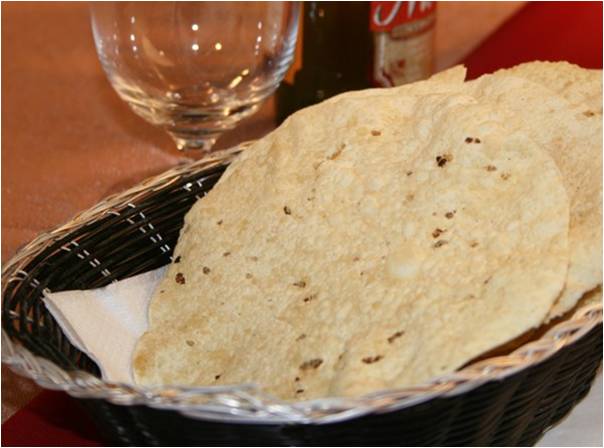
pānis tenuis
Malcolm introduced us to the relatively new site http://bookconcierge.hk/, which lists in order of cost (including shipping to Hong Kong) all the main on-line booksellers stocking a particular title. The cheapest option is normally Book Depository, but not invariably, and John also ponted out that, for bulk orders, Amazon sometimes worked out cheaper.
Malcolm had used the site before ordering a copy of Ursus Nomine Paddington (i.e. A Bear Called Paddington), a translation of by Peter Needham, who taught Classics at Eton for thirty years and has also produced Latin versions of the first two Harry Potter novels (Harrius Potter et Philosophi Lapis and Harrius Potter et Camera Secretorum), which we discussed in the July 2017 meeting. As we noted then, there is a long-standing tradition of translating children’s classics, the best known of which, Winnie Ile Pu, actually made it onto the New York Times best sellers’ list. For more details on this topic see http://mentalfloss.com/article/73311/10-popular-childrens-books-have-been-translated-latin
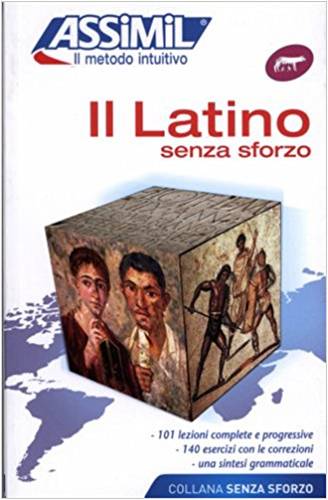
Eugene had brought along a copy of the Italian version of Lingua Latina sine Molestia (Il Latino senza Sforzo), an audio-lingual course in the Assimil series, with accompanying CDs. This textbook is unfortunately no longer available in an English edition, though I think French and German versions are stil in print. The book is used by the well-known champion of spoken Latin Aulus Gratius Avitus in his on-line Schola Latina Europaea et Universalis (see http://avitus.alcuinus.net/schola_latina/), which provides free instruction, and special guidance for English speakers struggling without a translation in their own language! Avitus, who I think is Spanish by birth, is also the founder of the Circulus Latinus Londoniensis, a more rigorous society than our own as they generally enforce their Latin-only rule, though, like us, they always meet over food and drink. Avitus has recently published a very useful survey in English of
Thwe whole spoken Latin scene, which included refers to Circuli Latini in general as `spread from Seattle to Hong Kong’ and can be downloaded from
https://www.cambridge.org/core/services/aop-cambridge-core/content/view/ED66CC496B5BD893A4C519ABF6A257F3/S2058631018000065a.pdf/spoken_latin_learning_teaching_lecturing_and_research.pdf
Malcolm introduced us to the relatively new site http://bookconcierge.hk/, which lists in order of cost (including shipping to Hong Kong) all the main on-line booksellers stocking a particular title. The cheapest option is normally Book Depository, but not invariably, and John also ponted out that, for bulk orders, Amazon sometimes worked out cheaper.
Malcolm had used the site before ordering a copy of Ursus Nomine Paddington (i.e. A Bear Called Paddington), a translation of by Peter Needham, who taught Classics at Eton for thirty years and has also produced Latin versions of the first two Harry Potter novels (Harrius Potter et Philosophi Lapis and Harrius Potter et Camera Secretorum), which we discussed in the July 2017 meeting. As we noted then, there is a long-standing tradition of translating children’s classics, the best known of which, Winnie Ile Pu, actually made it onto the New York Times best sellers’ list. For more details on this topic see http://mentalfloss.com/article/73311/10-popular-childrens-books-have-been-translated-latin
Eugene had brought along a copy of the Italian version of Lingua Latina sine Molestia (Il Latino senza Sforzo), an audio-lingual course in the Assimil series, with accompanying CDs. This textbook is unfortunately no longer available in an English edition, though I think French and German versions are stil in print. The book is used by the well-known champion of spoken Latin Aulus Gratius Avitus in his on-line Schola Latina Europaea et Universalis (see http://avitus.alcuinus.net/schola_latina/), which provides free instruction, and special guidance for English speakers struggling without a translation in their own language! Avitus, who I think is Spanish by birth, is also the founder of the Circulus Latinus Londoniensis, a more rigorous society than our own as they generally enforce their Latin-only rule, though, like us, they always meet over food and drink. Avitus has recently published a very useful survey in English of
Thwe whole spoken Latin scene, which included refers to Circuli Latini in general as `spread from Seattle to Hong Kong’ and can be downloaded from
https://www.cambridge.org/core/services/aop-cambridge-core/content/view/ED66CC496B5BD893A4C519ABF6A257F3/S2058631018000065a.pdf/spoken_latin_learning_teaching_lecturing_and_research.pdf
We each spoke briefly in Latin about the advantages and disadvantages of life in Hong Kong, using as support the dialogue form the Circulus page reproduced below (the web page itself, with stress indicated, is at https://linguae.weebly.com/circulus-latinus-honcongensis.html ) Jesse wanted to refer to the wide variety of toys and games available in the shops here, which led to a discussion of the best word for toy. There are specific words for a doll (pupa) and a children’s rattle (crepundia) but the words oblectāmentum and lūdibrium offered by some dictionaries seem to have been normally used in classical Latin as abstract nouns meaning `amusement’, `entertainment’ etc. However. ioculus, -ī m, though also employed in the abstract sense, does also seem to have been employed in the concrete sense and is probably the best choice.
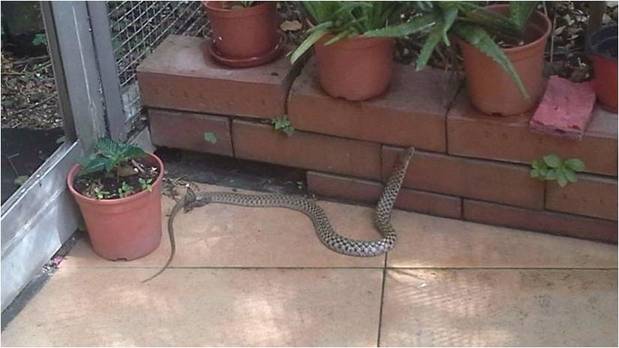
Frāter vel soror serpentis ā Taniā līberātī
Following on from mention of the countryside and hiking as important attractions, there was a discussion of encounters with snakes, of which Hong Kong still boasts a wide veriety. Tanya had recently discovered one alive but pinned down by rocks which neighbours had piled on it. She took it by the tail and effected a rescue, resulting in the dual gratification of an adrenaline flow and an an enhanced karma balance. Malcolm, who has a house in Chi Ma Wan, the Lantau peninsula where snakes are particularly common, told us how he had once jumped over a green snake on the path – something he realised later was rather foolish as it might have been a venomous bamboo snake rather that a harmless `Green’ (see photos below); the former is supposedly identifiable by a yellow stripe on the underside but in the picture above both species appeas to have some yellow on their skin, with the venomous one distinguishable just by its yellow eyes. Malcolm had also once had the unnerving experience of coming across a Chinese cobra in attack position, which had been masked by a boulder as he ascended steps on a hillside.
Following on from mention of the countryside and hiking as important attractions, there was a discussion of encounters with snakes, of which Hong Kong still boasts a wide veriety. Tanya had recently discovered one alive but pinned down by rocks which neighbours had piled on it. She took it by the tail and effected a rescue, resulting in the dual gratification of an adrenaline flow and an an enhanced karma balance. Malcolm, who has a house in Chi Ma Wan, the Lantau peninsula where snakes are particularly common, told us how he had once jumped over a green snake on the path – something he realised later was rather foolish as it might have been a venomous bamboo snake rather that a harmless `Green’ (see photos below); the former is supposedly identifiable by a yellow stripe on the underside but in the picture above both species appeas to have some yellow on their skin, with the venomous one distinguishable just by its yellow eyes. Malcolm had also once had the unnerving experience of coming across a Chinese cobra in attack position, which had been masked by a boulder as he ascended steps on a hillside.
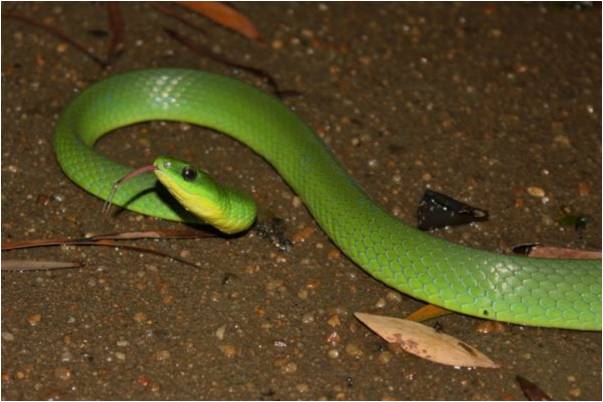
`Green’ (cyclophiops major)
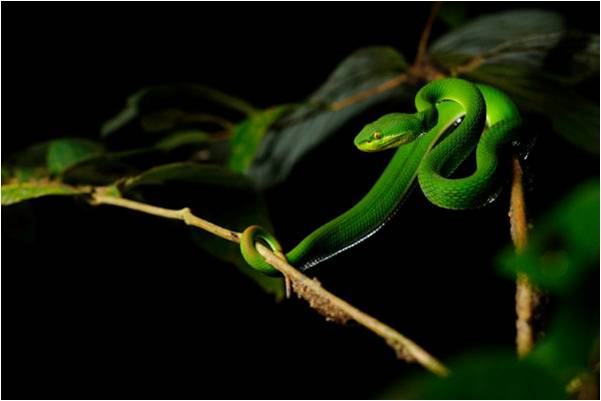
Bamboo snake (trimeresurus albolabris )
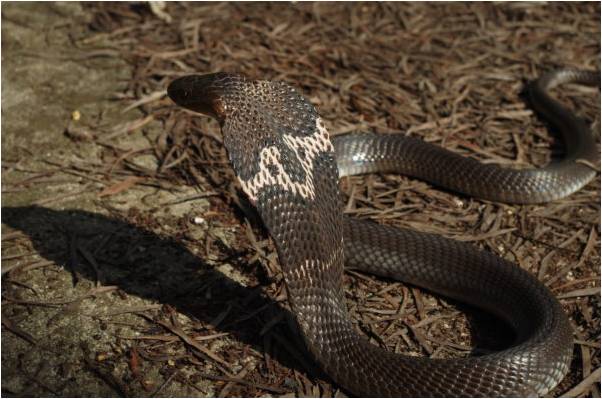
Chinese cobra (naja atra)
Whilst the bamboo snake is responsible for 90% of the snake bites in Hong Kong, the most venomous is the king cobra, which can grow as long as 6 metres. Malcolm had believed that there were none of these left in Hong Kong but the compilers of the guide at http://www.southside.hk/southsides-guide-common-snakes-hong-kong/ claim that, though possibly extinct on Hong Kong island, they can still be found throughout the New Territories. They normally steer clear of humans, which presumably explains the uncertainty over the size of their population.
Whilst the bamboo snake is responsible for 90% of the snake bites in Hong Kong, the most venomous is the king cobra, which can grow as long as 6 metres. Malcolm had believed that there were none of these left in Hong Kong but the compilers of the guide at http://www.southside.hk/southsides-guide-common-snakes-hong-kong/ claim that, though possibly extinct on Hong Kong island, they can still be found throughout the New Territories. They normally steer clear of humans, which presumably explains the uncertainty over the size of their population.
Whilst the bamboo snake is responsible for 90% of the snake bites in Hong Kong, the most venomous is the king cobra, which can grow as long as 6 metres. Malcolm had believed that there were none of these left in Hong Kong but the compilers of the guide at http://www.southside.hk/southsides-guide-common-snakes-hong-kong/ claim that, though possibly extinct on Hong Kong island, they can still be found throughout the New Territories. They normally steer clear of humans, which presumably explains the uncertainty over the size of their population.
Whilst the bamboo snake is responsible for 90% of the snake bites in Hong Kong, the most venomous is the king cobra, which can grow as long as 6 metres. Malcolm had believed that there were none of these left in Hong Kong but the compilers of the guide at http://www.southside.hk/southsides-guide-common-snakes-hong-kong/ claim that, though possibly extinct on Hong Kong island, they can still be found throughout the New Territories. They normally steer clear of humans, which presumably explains the uncertainty over the size of their population.
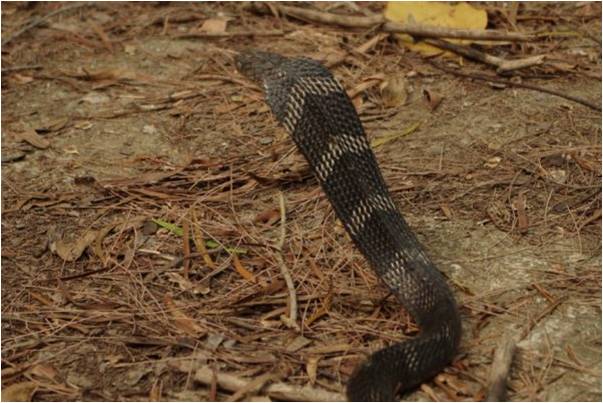
King cobra (ophiophagus hannah)
Unnerving as some of the above may be, we have the consolation that, according to `Southside’, there have been no fatal bites for the last twenty years and John reckons that, despite being a keen hiker, he has only seen snakes about ten times in thirty years. The largest was in a rubbish bin near Yuen Long – probably a Burmese python but he did not choose to go close enough to investigate!
Unnerving as some of the above may be, we have the consolation that, according to `Southside’, there have been no fatal bites for the last twenty years and John reckons that, despite being a keen hiker, he has only seen snakes about ten times in thirty years. The largest was in a rubbish bin near Yuen Long – probably a Burmese python but he did not choose to go close enough to investigate!
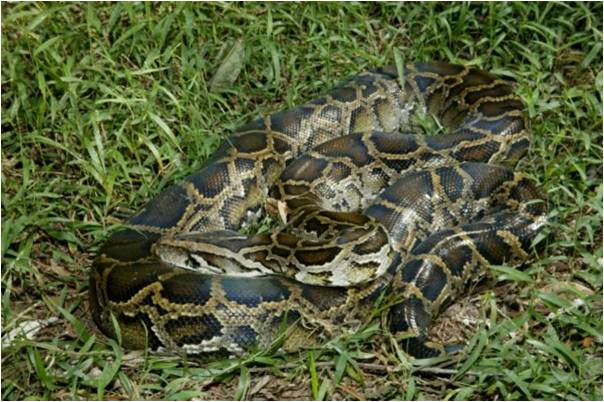
Bamboo python (python bivittatus)
We touched briefly on vocatives like Eugenī, formed by cutting off the-us at the end of 2nd. Declension nouns. John was a little uncertain but thought that the stress on such forms was always on the same syllable as the nominative (e.g.Eugénī, vocative of Eugénius) even if this resultd in accentuation of a short penultimate syllable. A later check confirmed that this was correct and that the contracted genitive of nouns in –ius was accented in a similar way. See
http://www.perseus.tufts.edu/hopper/text?doc=Perseus%3Atext%3A1999.04.0001%3Apart%3D1%3Asection%3D9
We finally read chapters VIII-XI of Somnium (see below and https://linguae.weebly.com/somnium.html, the web page including illustrations.) John noted that the accusation of witchcraft brought against Kepler’s mother might have been partly the result of his inclusion of `spirits’ in his story and of his narrator bewing the son of a woman with some of the qualities associated with witches. Since the narrator is portrayed as studying under the Danish astronomer Tycho Brahe, as Kepler himself had done, the story, drafts of which were in circulation by around 1611, might have been interpreted as partly autobiographical
The narrative includes a description in chapter IX of how thew bodies of humans `taking of’ for transport to the moon hav to be spread out so that the force exereted on them is evenly distributed. John had added a note comparing this with the recommendation that someone in a freely falling lift could minimise the impact at the bottom by lying stretched out on the floor. Malcolm trhough this was correct and that the best policy was to jump up and down to have a chance of being in the air when impact occurred. A `Lonely Planet’ video located later by Tanya, argues that this second method is of little use because the jumper’s velocity relative to the lift would be so slight compared to that of the lift itself hurtling towards the ground, It recommends instead bracing oneself again the rails on the side of the lift and slightly bending the legs (see https://m.youtube.com/watch?v=9Y-i4NS70MY). Comments posted beneath the video point out that the whole `falling lift’ scenario is highly unlikely since the counter weight would keep the lift stationary or even make it move upwards if the power failed.
SOMNIUM, capitula VIII-XI
VIII Quīnquāgintā mīllibus mīliārium Germānicōrum[1] ^53 in aetheris profundō sita
Fifty thousand of-miles German in of-upper-air depth situated
^54 est Levānia īnsula; iter ad eam hinc vel ex eā in hās Terrās rārissimē patet ^55, et
Is Levania island route to it from-here or from it into these lands very-rarely is-open and
cum patet, nostrae quidem gentī facile est ^56, hominibus vērō trānsportandīs plānē
when it-is-open to-our indeed race easy is for-humans indeed to-be-transported clearly
difficillimum et cum summō vītae periculo conjūnctum ^57. Nūllī ā nōbīs sedentāriī
very-difficult and with greatest to-life danger joined no by us desk-bound--people
adscīscuntur in hunc comitātum, nulli corpulenti, nūllī dēlicātī ^58, sed legimus eōs,
are-admitted into this fellowship no fat-people no delicate-ones but we-chose those
quī aetātem verēdōrum assiduō ūsū cōnsūmunt, aut quī nāvibus frequenter Indiās
who life of-swift-horses continual in-use spend or who in-ships frequently the-Indies
adeunt, pāne biscoctō,[2] alliō, piscibus dūrātis et cibīs abhorrentibus victitāre suētī
go-to on-bread double-cooked garlic fish dried and foods unappetizing to-live-on accustomed
^59. Inprīmīs nōbīs aptae sunt vetulae exsuccae ^60, quibus inde ā pueritiā trīta est
Especially for-us suitable are old-women dried-up to-whom right from childhood common is
ratiō, hircōs nocturnōs, aut furcas, aut trīta pallia inequitandī trājiciendīque per
practice he-goats nocturnal or forked-sticks or worn-out cloaks of-riding-on and-of-traversing through
immānia terrārum spatia. Nūllī ē Germāniā virī aptī sunt, Hispānōrum sicca corpora
immense of-the-earth expanses No from Germany men suitable are of-Spaniards dry bodies
nōn respuimus ^61.
not we-spurn
[1] The term German mile`(miliāre Germānicum) was used for several measure of distance but Kepler’s own note 53 explains he is using the `German geographical mile’, defined as 1/15 of a degree of longitude at the equator, or approximately 4.61 English miles. 50,000 of these units is equivalent to 230,545 miles, compared with the 238,855 mile actual average distance of the moon from the earth.
[2] The phrase pānis biscoctus is used by Marco Polo for wafers made by the inhabitants of the Arabian peninsula from salted fish but here presumably means `hardtack’, i.e biscuits or crackers made from flour and water, which were staple food for sailors at this time. Kepler himself lived very frugally and enjoyed gnawing on bones and hard crusts (see Rosen, Kepler’s Somnium, p.15, n.17).
IX Tōtum iter, quantum est, quattuor ad summum hōrārum spatiō absolvitur ^62.
Whole jopurnet great-as it-is four at most of-hours in-span is-completed
Neque enim nōbīs semper occupātissimīs anteā cōnstat dē tempore eundī ^63, quam
Not for with-us always very-busy before it-is-agreed about time of going than
Lūna ab orientis partibus coeperit dēficere;[1] quae ubi tōta lūxerit, nōbīs adhūc in
Moon from of-east regions will-have-begun to-be-eclipsed this when whole will-be-lit with-us still on
itinere haerentibus, irrita redditur nostra profectiō.Tam praeceps occāsio efficit, ut
journey stuck useless is-rendered our departure so short opportunity causes that
paucōs ex humānā gente, nec aliōs, nisi nostrī[2] observantissimōs comitēs habeāmus
few from human race and-not others except to-us those-most-devoted companions we-have
^64. Ergō hominem aliquem hujusmodī agminātim invādimus omnēsque subtus
Therefore human some of-this-kind in-a-column we-rush-upon and-all from-below
nītentēs, in altum eum tollimus ^65. Prīma quaeque mōlītiō dūrissima ipsī accidit ^66,
pushing on high him we-lift first each take-off most-harsh to-man-himself happens
nec enim aliter torquētur ac sī pulvere bombardicō excussus montēs et maria trānāret
not for otherwise he-is-tormented than if by-powder explosive hurled-off mountains and seas he-flew-over
^67. Proptereā narcoticīs et opiātīs statim in prīncipiō sopiendus est ^68 et membrātim
For this reason with-narcotics and opiates at-once at start to-be-put-to-sleep he- is and limb-by-limb
explicandus ^69, ne corpus a pōdice, caput ā corpore gestētur, sed ut violentia in
to-be-spread-out lest body from buttocks head from body may-be-torn-away but so-that shock among
singula membra dīvidātur.[3] Tunc excipit nova difficultās, ingēns frīgus ^70, et
individual limbs may-be-divided then takes-over new difficulty immense cold and
prohibita respīrātiō ^71, quōrum illī ingenitā nobis vi ^72, huic vērō spongiīs
blocked breathing of-which former in-born in-us by-power latter indeed by-sponges
humectīs ad nārēs admōtīs obviam īmus[4] ^73.
damp to nostrils moved up-against we-go
[1] The conjunction antequam is here split between the two clauses and ante itself changed to anteā (afterwards). The whole sentence would most naturally be translated `As we are so busy, there is no agreement to go until a lunar eclipse has begun’ but `there is agreement not to go before the start of an eclipse’ makes better sense.’ During such an eclipse, the moon remains within the earth’s shadow for about four hours.
[2] nostrī is genitive of object. Only those most devoted to the demons can accompany them.
[3] For this reason, the advice or someone trapped in a free-falling lift is to lie stretched out on the floor to minimise the effect of the impact at the bottom.
[4] i.e the demons deal with the first problem (the coldness of space) with their innate magic powers and with the latter (difficulty of breathing) by using sponges.
X Confectā prīmā parte itineris facilior redditur vectiō ^74. Tunc līberō āerī
With-finished first part of-journey easier is-rendered passage then to-open air
expōnimus corpora manūsque subtrahimus ^75. Atque illa in sēsē` conglobantur ut
we-expose (their) bodies and-hands we-take-away and those into themselves are-rolled-up as
arāneī, quae nōs sōlō fere nūtū[1] trānsportāmus ^76, adeō ut dēnique mōlēs corporea
spiders which we alone almost with-will we-transport so that finally mass bodily
sponte suā vergat in locum prōpositum ^77.Sed parum nōbīs est utilis haec ϱοπη quia
of-accord own proceeds to place proposed but too-little to-us is useful this ímpetus because
nimis tarda ^78, itaque nūtū ut dīxī accelerāmus et praecēdimus jam corpus, nē
too late and-so by-will as I-said we-speed-it-up and go-ahead-of now body lest
dūrissimō impactū in Lūnam damnī quid patiātur. Solent hominēs, cum
by-very-hard impact on moon of-harm anything it-may-suffer are-accustomed humans when
expergiscuntur, querī dē ineffābilī membrōrum omnium lassitūdine, ā quā sērō
they-wake-up to-complain about indescribable of-limbs all weariness from which later
[1] nūtus, -ūs m nod, will
admodum sē recipiunt, ut ambulent[1] ^79. Multae praetereā occurrunt difficultātēs,
quite themselves they-recover so-that they can-walk many besides occur difficulties
quās longum esset recensēre. Nōbīs nihil admodum evenit malī. Tenebrās enim
which long it-would-be to-recount to-us nothing indeed happens of-evil shadows for
Tellūris, quam longae illae sunt, confertim inhabitāmus ^80, quae ubi Levāniam
of-earth as long they-are in-group we-inhabit which when Levania
attigerint, praestō sumus, quasi ex nāvī in terram exscendentēs ^81, et ibi nōs properē
will-have-touched at-hand we-are as-if from ship onto land disembarking and there ourselves quickly
in spēluncās et loca tenebrōsa recipimus ^82, nē nōs Sōl in apertō paulō post
into caves and places dark we-withdraw lest us sun in open a-little later
obrūtūrus optātō dīversōriō ējiciat umbramque discēdentem insequī cōgat ^83.
going-to-overwhelm from-chosen living-quarters may-eject and-shadow departing to-follow may-force
Dantur ibi nōbīs indūciae exercendōrum ingeniōrum ex animī sententiā, conferimus
is-given there to-us leisure of-being-exercised talents according-to of-mind feeling we-confer
cum eijus prōvinciae daemonibus inītāque societāte, ubi prīmum locus Sōle carēre
with of-that province demons and-with- entered-into alliance when first place from-sun to-be-free
coeperit [2]^84, jūnctīs agminibus in umbram exspatiāmur, et sī illa mucrōne suō,
will-have-begun with-united columns into shadow we-rush and if it with-apex its
quod plērumque fit[3]^85, Tellūrem feriat, Terrīs et nōs sociīs exercitibus incubimus,
which generally happens planet-earth should-strike upon-earth also we with-allied forces fall
quod non aliās nōbīs licet, quam cum Sōlem hominēs vīderint dēficere. Hinc ēvenit,
Which not otherwise to-us is-allowed than when Sun human will-have-seen be-eclipsed hence it-happens
ut dēfectūs Sōlis adeō metuantur ^86.
that eclipses of-sun so-much are-feared
[1] ut ambulent is a subjunctive result clause: `quite a bit later they recover to the extent that they can walk about.’
[2] Kepler explains in his own note that this event (lunar nightfall) occurs about a week after the lunar eclipse during which they arrive. For a lunar eclipse to occur the earth must be in exact alignment between moon and sun, which can only happen at full moon. i.e. when it is mid-day on the side of the moon facing earth.
[3] plērumque (generally, frequently ) seems an odd word to use of solar eclipses but Kepler’s note refer to these being more frequent than lunar eclipses.
XI Atque haec dē itinere in Levāniam dicta sunto.[1] Sequitur, ut dē ipsīus prōvinciae
And these-things about journey to Levania said let-have-been it-follows that about itself of-province
fōrmā dīcam, exorsus mōre geōgraphōrum ab iīs, quae coelitus illī ēveniunt. Etsī
form I-will-say having-started in-manner of-geographers from those-things which in-heavens to-it happen although
sīderum fīxōrum aspectūs tōta Levānia habet nōbīscum eōsdem ^87, mōtūs tamen
of-stars fixed view whole-of Levania has with-us same movements however
planētārum et quantitātēs ab iīs, quās nōs hīc vidēmus, observat dīversissimās, adeō ut
of-planets and sizes from them which we here see observes very-different so-much-so that
plāne alia sit totīus apud ipsōs astronomiae ratiō.
cleearly other is of-whole among them astronomy system
Quemadmodum igitur gēographī nostrī orbem Terrae dīvidunt in quīnque zōnās
In-which-manner therefore geographers our globe of-earth divide into five zones
propter phaenomena coelestia, sīc Levānia ex duōbus cōnstat hemisphaeriīs ^88, ūnō
on-account-of phenomena celestial thus Levania of two consists hemispheres one
subvolvārum, alterō prīvolvārum[2] ^89, quōrum illud perpetuō fruitur suā volvā quae
of-the-Subvolvans second of-the-Privolvans of-which the-former perpetually enjoys its Volva which
est illīs vice nostrae Lūnae, hoc vērō Volvae cōnspectū in aeternum prīvātur ^90. Et
is to-them in-place of-our moon the-latter indeed of-Volva from-sight for ever is-separated and
circulus hemisphaeria dīvidēns instar nostrī colūrī[3] sōlstitiōrum per polōs mundī
circle hemispheres dividing similar to-our colour of-solstices though poles of-world passes
trānsit appellāturque dīvīsor ^91.
passes and-is-called divider
Quae igitur utrīque sunt commūnia hemisphaeriō, prīmō locō explicābō. Itaque
What-things therefore to-vboth are common hemispheres in-first place I-will-explain and-so
Levānia tōta vicissitūdinēs sentit diēī et noctis ut nōs ^92, sed carent illī hāc nostrā
Levania whole alternations perceives of-day and of-night as us but lack they this our
annuā variētāte tōtō annō ^93. Per tōtam enim Levāniam aequantur diēs fere noctibus,
anual variation in-whole year through whole for Levania are-equal days almost to-nights
nisi quod prīvolvīs rēgulāriter omnīs diēs est brevior suā nocte, subvolvīs longior ^94.
except that for-Privilvans regularly every day is shorter than-its night for-Subvolvans longer
Quid autem per circuitum annōrum 8 variētur, infrā erit dīcendum.
What however through cycle of-years 8 is-varied below will-be needing-to-be-said
[1] i.e. `Let this be enough about the journey.’
[2] The Subvolvans (`those under Volva [i.e. the earth as seen in the lunar sky]’) are the inhabitants of the side of the moon always turned towards earth and the Privolvans (`those deprived of Volva) live on the far side. Kepler explains in his notes that he chose the name `Volva’ because, unlike the moon itself in our sky, the earth as seen from the moon is turning (volvere) continually.
[3] The solstitial colure is an imaginary circle around the earth passing over the poles and through the points on the zodiac at which the sun appears to be at the winter and summer solstices. This intersects at right angles at the poles a similar circle through the apparent locations of the sun at the vernal and autumnal equinoxes
VĪTA HONCONGĒNSIS
Quae sunt beneficia vītae Honcongēnsis? What are the advantages of living in Hong Kong?
Quaestum invenīre professiōnālibus facile est It’s easy for professionals to find a job.
Pecūniae comparandae ānsae multae sunt There are lots of opportunities to make money.
Omnia oblectāmenta urbāna praebentur sed All the amusements of the city are available but we can
facile in rūs pulchrum pervenīmus. easily get into beautiful countryside
Aestāte in ōrīs iūcundis sedēre et in marī natāre In the summer we can sit on nice beaches and swim in the
possumus sea
Per tōtum annum inter montēs errāre We can hike in the hills all year round.
possumus
Hīc cultūra orientālis adest, occidentālis. It combines eastern and western culture.
quoque
Facillimē ad aliās terrās itinera facere We can travel to other countries very easily.
possumus
A fūribus vel latrōnibus rārissime vexāmur, We aren’t often bothered by thieves or robbers and we’re
in viīs sine timōre ambulāmus. not afraid when we walk in the streets.
Commeātus pūblicus optimus est. Public transport is first-rate.
Sententiās nostrās līberē exprimere possumus. We’re free to express our opinions.
Magna pars incolārum Anglicē commūnicāre Most local people can communicate in English
possunt.
Quae sunt detrimenta vītae nostrae? What are the disadvantages of our lives here?
Quī ingeniīs vel artibus nōn dōnātī sunt, Those who lack talents or skills suffer from poverty.
paupertāte īnflīguntur.
Dīvitēs dīvitiōrēs, pauperēs pauperiōrēs fīunt The rich get richer and the poor get poorer.
Āēr, aqua, terra inquinātae sunt. Air, water and land are polluted
In minimīs diaetīs habitāmus. We live in very small flats.
In urbe ubīque sunt turbae strepitusque. In the city there are crowds and noise everywhere.
Plērīque Honcongēnses in officīnīs multās Most Hongkongers have to stay long hours in their
hōrās remanēre dēbent. workplaces.
Discipulī vesperī multās per hōrās pēnsa Students need to spend many hours doing homework in
dēbent facere the evening.
In scholīs lycaeīsque verba ēdiscere maiōris In schools rote learning is often more important than real
mōmentī saepe est quam rem intellegere understanding.
Conductōrēs operis saepe crūdēlēs sunt Employers are often harsh.
Populus iūs nōn habet ēligendī omnēs The people do not have the right to choose all their rulers.
rēctōrēs suōs
Difficile est sermōnem Cantonēnsem discere. It’s difficult to learn Cantonese.
Honcongī quae regiō tē maxime dēlectat? What area of Hong kong do you like best?
Tsim Sha Tsui et Centrālem amō quod I love Tsim Sha Tsui and Central because I like big hotels
magna dēversōria tabernaeque et activitātēs and shops and cultural activities . I like the New Territories
cultūrālēs mihi placent. Terrās Novās et and the Outlying Islands because we have peace and quiet
Īnsulās Remōtiōrēs amō quod pācem et there
silentium ibi habēmus
