| linguae |
|
QUESTIONS ARISING FROM 154th. MEETING – 26/1/24
(the record of earlier meetings can be downloaded from the main Circulus page as can the version of Ciceronis Filius with illustrations added. The illustrated text of Genesis is available on the Genesis page, of Kepler's Somnium on the Somnium page, of Eutropius' Breviarium on the Eutropius page, of Suetonius' Vita Neronis on the Suetonius page and of Nutting's Ad Alpes on the Ad Alpes page)
Dishes ordered at the Basmati included cicera arōmatica (chana masala), spināchia cum caseō (palak paneer, spinach with cheese), caseus fervēns (sizzling paneer (cheese)), iūs lentium butyrātum (dal makhani), melongēna contūsa (baigan bharta, mashed aubergine/eggplant), gallīnācea butyrāta (buttered chicken), holera Manchuriana (veg Manchurian), pānis Persicus (nan), pānis Persicus cum ālio (garlic nan) orӯza (plain rice), vīnum rubrum/sanguineum and thea arōmatica (masala tea).
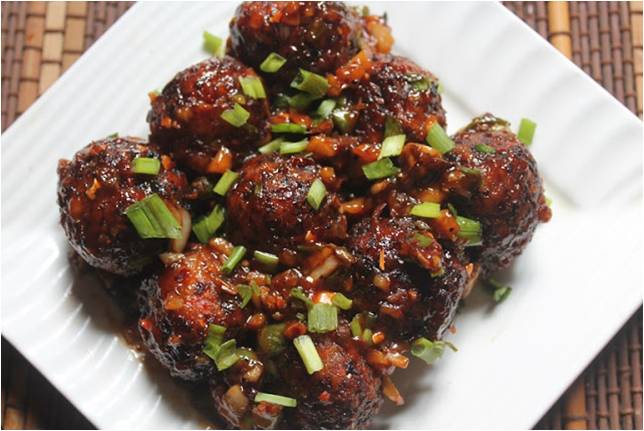
Holera Manchuriana (Veg Manchurian)
https://www.yummytummyaarthi.com/veg-manchurian-dry-recipe/
There is currently a lawsuit going on in India between two rival restaurant chains over who invented buttered chicken and dal makhani - see https://www.bbc.com/news/world-asia-india-68053470 . As discussed in our July 2018 meeting, (pg 388 in the NOCTES HONCONGENSES file), dal makhani is not made from true lentils (lentēs) but a mixture of so-called `black lentils’ or `black gram’ (vigna (-ae, f) mungo) and red kidney beans (phaseōlī vulgārēs) so the name should perhaps be vigna cum phaseōlīs but we stick to our customarye iūs lentium translation. Purists could also object to spināchia cum caseō as an equivalent of saag paneer, because saag (साग) in Hindi can refer to other green, leafy vegetables as well as to spinach (पालक, palak), but we again let our tradition prevail. Finally, veg Manchurian, which we had not ordered before is one of the Manchurian range of dishes popular in South Asia. Their invention is credited to Nelson Wang, a Calcutta-born chef of Chinese descent who first produced chicken Manchurian in Bombay (Mumbai), sautéing the meat in soy sauce but also adding chilli and other ingredients regularly found in Bengali cuisine. The vegetarian variety most commonly consists of chopped-up vegetables formed into balls. For more details, see https://en.wikipedia.org/wiki/Manchurian_(dish)
We continued reading Suetonius’ Life of Nero, reaching the words stūprātam ā sē fātērētur at end of section 2 in c.35 (see text below). Both Pat and Keith commented on the difficulty of Suetonius’ language and John readily agreed as he frequently had to consult the Loeb translation and a commentary when originally preparing the interlinear translation and notes, and, as happened the previous month, can sometimes get stuck if he hasn’t re-read the text in advance of our sessions. In the English translation this month, Pat objected to the use of the plural parricides when it referring to acts of murder rarther than to the murderers. A subsequent check with the British National Corpus (a database of 10 million words of written and spoken English compiled in the 1990s) found only two instances of the plural both referring to perpetrators, not the act.
There was a brief discussion of styles of written Chinese, Some of us thought that the term `traditional Chinese’ could be used for a variety intermediate between classical and modernTerm literary Chinese but Emily believed the term `traditional’ was only used when describing the ther older, full forms of characters as opposed to the simplified ones used on the mainland.
https://www.yummytummyaarthi.com/veg-manchurian-dry-recipe/
There is currently a lawsuit going on in India between two rival restaurant chains over who invented buttered chicken and dal makhani - see https://www.bbc.com/news/world-asia-india-68053470 . As discussed in our July 2018 meeting, (pg 388 in the NOCTES HONCONGENSES file), dal makhani is not made from true lentils (lentēs) but a mixture of so-called `black lentils’ or `black gram’ (vigna (-ae, f) mungo) and red kidney beans (phaseōlī vulgārēs) so the name should perhaps be vigna cum phaseōlīs but we stick to our customarye iūs lentium translation. Purists could also object to spināchia cum caseō as an equivalent of saag paneer, because saag (साग) in Hindi can refer to other green, leafy vegetables as well as to spinach (पालक, palak), but we again let our tradition prevail. Finally, veg Manchurian, which we had not ordered before is one of the Manchurian range of dishes popular in South Asia. Their invention is credited to Nelson Wang, a Calcutta-born chef of Chinese descent who first produced chicken Manchurian in Bombay (Mumbai), sautéing the meat in soy sauce but also adding chilli and other ingredients regularly found in Bengali cuisine. The vegetarian variety most commonly consists of chopped-up vegetables formed into balls. For more details, see https://en.wikipedia.org/wiki/Manchurian_(dish)
We continued reading Suetonius’ Life of Nero, reaching the words stūprātam ā sē fātērētur at end of section 2 in c.35 (see text below). Both Pat and Keith commented on the difficulty of Suetonius’ language and John readily agreed as he frequently had to consult the Loeb translation and a commentary when originally preparing the interlinear translation and notes, and, as happened the previous month, can sometimes get stuck if he hasn’t re-read the text in advance of our sessions. In the English translation this month, Pat objected to the use of the plural parricides when it referring to acts of murder rarther than to the murderers. A subsequent check with the British National Corpus (a database of 10 million words of written and spoken English compiled in the 1990s) found only two instances of the plural both referring to perpetrators, not the act.
There was a brief discussion of styles of written Chinese, Some of us thought that the term `traditional Chinese’ could be used for a variety intermediate between classical and modernTerm literary Chinese but Emily believed the term `traditional’ was only used when describing the ther older, full forms of characters as opposed to the simplified ones used on the mainland.
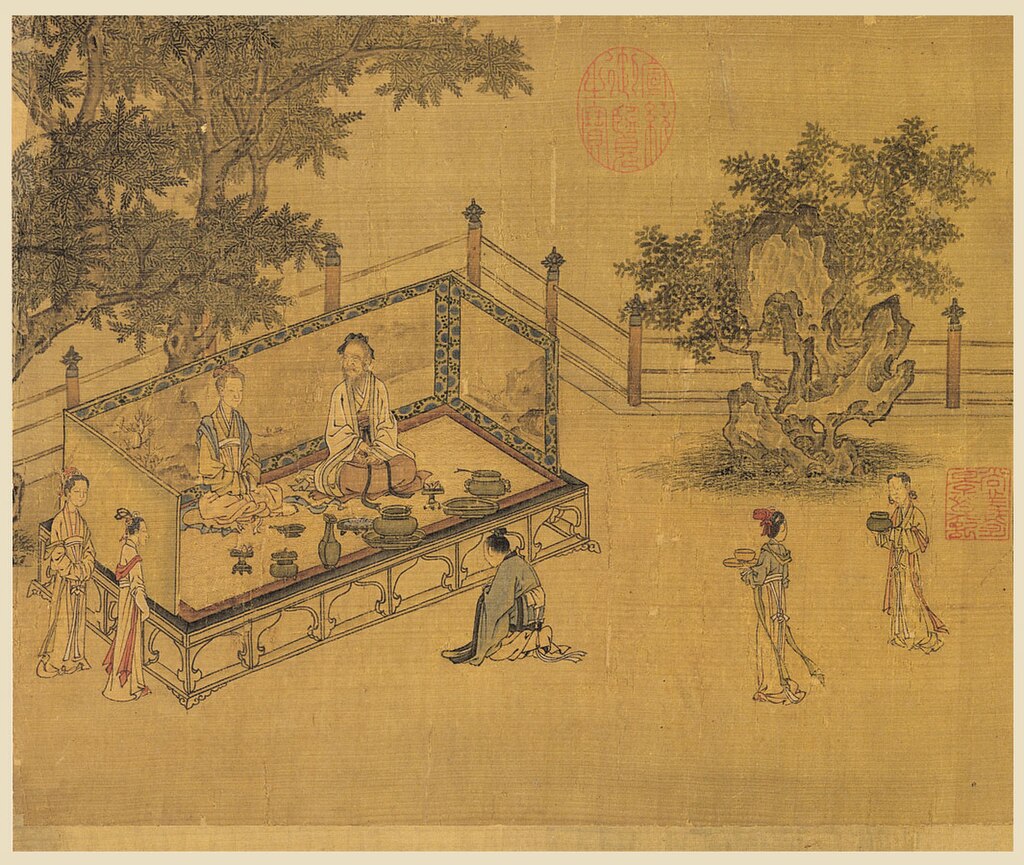
Sung Dynasty portrait of a son honouring his parents
https://en.wikipedia.org/wiki/Filial_piety
Sam was currently doing his DSE mocks in Chinese and thought that doing the National Latin Exam helped in preparation for this because with both Latin and classical Chinese you have to rely on context to resove ambiguities. The essay he had just done was on filial piety, a quality which Confucius valued particularly highly. He remarked also that in old China, Confucianism tended to be popular with (independent) scholars, whilst Legalism – which stressed the role of the state rather than moral precepts handed down from antiquity - was more popular with bureaucrats, Tanya also remarked on the the importance of family in East Asian culture and added that her in-laws had already shown her the family plot in Korea where she would eventually be buried!
Monica mentioned that she was considering enrolling for a Latin course offered by Italian techer Irene Rgini on her Satura Lanx (Latin for a dish fileld with various kinds of food) web platform at https://bio.link/saturalanx. This URL will give access to podcasts on Latin literature in simple Latin, and by registering at https://pages.saturalanx.eu/catullus-carme/ you can access further materials including a free trial lesson and a link to sign up for her paid courses, which are based on Orberg’s Lingua Latina per Se Illustrata and include the chance to practise on-line with other students every Thursday. The foundation course, `Gustatio Linguae Latinae’, costs 497€ but her YouTube channel at https://www.youtube.com/channel/UCJCYCaXUERhY93xEWC8Cojw has a large numbder of freely accessible videos, including an account in Latin of her own experiences with the language, with the option to select either Latin or English subtitles.
John said that he was very sympathetic in theory to Familia Romana’s approach but that learning Latin purely through comprehensible input needed much more time than most students of Latin possessed He himself used a combination of a grammar translation approach with some communicative use of the spoken languge
https://en.wikipedia.org/wiki/Filial_piety
Sam was currently doing his DSE mocks in Chinese and thought that doing the National Latin Exam helped in preparation for this because with both Latin and classical Chinese you have to rely on context to resove ambiguities. The essay he had just done was on filial piety, a quality which Confucius valued particularly highly. He remarked also that in old China, Confucianism tended to be popular with (independent) scholars, whilst Legalism – which stressed the role of the state rather than moral precepts handed down from antiquity - was more popular with bureaucrats, Tanya also remarked on the the importance of family in East Asian culture and added that her in-laws had already shown her the family plot in Korea where she would eventually be buried!
Monica mentioned that she was considering enrolling for a Latin course offered by Italian techer Irene Rgini on her Satura Lanx (Latin for a dish fileld with various kinds of food) web platform at https://bio.link/saturalanx. This URL will give access to podcasts on Latin literature in simple Latin, and by registering at https://pages.saturalanx.eu/catullus-carme/ you can access further materials including a free trial lesson and a link to sign up for her paid courses, which are based on Orberg’s Lingua Latina per Se Illustrata and include the chance to practise on-line with other students every Thursday. The foundation course, `Gustatio Linguae Latinae’, costs 497€ but her YouTube channel at https://www.youtube.com/channel/UCJCYCaXUERhY93xEWC8Cojw has a large numbder of freely accessible videos, including an account in Latin of her own experiences with the language, with the option to select either Latin or English subtitles.
John said that he was very sympathetic in theory to Familia Romana’s approach but that learning Latin purely through comprehensible input needed much more time than most students of Latin possessed He himself used a combination of a grammar translation approach with some communicative use of the spoken languge

Irene Regini explaining how she herself learned to speak Latin
https://www.youtube.com/channel/UCJCYCaXUERhY93xEWC8Cojw
With the examples of Donald Trump and Geert Wildert in mind, Sam wondered whether there was some kind of special link between populism and strange hair-styles. Tan mentioned the rumours that trump is heavily drug dependent and at some White House functions during his tenure drugs were handed out like candy, There was also secualtion about the large amount of steroids he consumed, and
https://www.vanityfair.com/news/2020/10/donald-trump-steroids-nuclear-war speculation that these might have affected his judgement. John thought he detected a resemblance between the faces of
https://www.youtube.com/channel/UCJCYCaXUERhY93xEWC8Cojw
With the examples of Donald Trump and Geert Wildert in mind, Sam wondered whether there was some kind of special link between populism and strange hair-styles. Tan mentioned the rumours that trump is heavily drug dependent and at some White House functions during his tenure drugs were handed out like candy, There was also secualtion about the large amount of steroids he consumed, and
https://www.vanityfair.com/news/2020/10/donald-trump-steroids-nuclear-war speculation that these might have affected his judgement. John thought he detected a resemblance between the faces of

|

|
Nick Farage Tony Chui
British populist Nick Farage and Hong Kong actorTony Chui, who plays the part of Andy in the long-running soap opera Oi Hui Ga (愛回家, Come Home Love. However, the similarity does not look so marked if you have their pictures side by side, as above.
We touched briefly on the Brexit issue, where Pat and John have to agree to differ. Trying to be as even-handed as possible, John said that you could fault both sides for the kind of arguments deployed in the run up to the 2016 referendum. The Brexiteers made exaggerated claims of the benefits that leaving the EU could bring whilst the Remainers arguably onflated the dangers that would result. John has been a fervent supporter of the European Union since his teens, not because of any economic cost-benefit analysis but because, like the founding fathers of what was originally called the European Common Market, he saw the project as a political one, designed to exorcise the deemains of nationalism which caused such havoc in Europe during the 20th century. In full partisan mode, John includes a photo from a Remainer demonstration in his teaching materials for the present subjunctive:
British populist Nick Farage and Hong Kong actorTony Chui, who plays the part of Andy in the long-running soap opera Oi Hui Ga (愛回家, Come Home Love. However, the similarity does not look so marked if you have their pictures side by side, as above.
We touched briefly on the Brexit issue, where Pat and John have to agree to differ. Trying to be as even-handed as possible, John said that you could fault both sides for the kind of arguments deployed in the run up to the 2016 referendum. The Brexiteers made exaggerated claims of the benefits that leaving the EU could bring whilst the Remainers arguably onflated the dangers that would result. John has been a fervent supporter of the European Union since his teens, not because of any economic cost-benefit analysis but because, like the founding fathers of what was originally called the European Common Market, he saw the project as a political one, designed to exorcise the deemains of nationalism which caused such havoc in Europe during the 20th century. In full partisan mode, John includes a photo from a Remainer demonstration in his teaching materials for the present subjunctive:

Pat asked if anyone used the Quora intermet forum (https://www.quora.com/), where people pose questions for anyone to answer. John spends a lot of time on the site, which he describes as rather addictive, and has himself contributed to debate there, some of his comments on Hong Kong politics being also published at https://linguae.weebly.com/hong-kong-crisis-2019-23.html There is a lot of nonsense posted to Quora but a number of regular contributors are well worth reading. The following four stand out at the moment:
Dima Vorobiev: formerly employed by the Soviet Union’s propaganda machine he has a good understanding of how the Soviet Union and present-day Russia work but became ideologically agnostic in the 1980s and no longer propagandises for anybody.
Thierry Etienne Joseph Rotty: A Belgian and in some ways a mirror image of Vorobiev, as he was a senior controller with NATO but can be highly critical of Western policies and particularly of the USA as wel laas understanding of russia’s current position. He is a very keen historian and very knowledgable though sometimes presents his hunches as established fact.
Judith Kaufman: An Israeli who has been generally supportive of the war in Gaza but is passionately anti-Netanyahu, in favour of an independent Palestine state and disgusted by the behaviour of the most extreme west Bank settlers towards the local Arabs. She points out that only a small minority of settlers engage in this sort of behvious but she fults the rest for not calling them out.
M.Sayn: Probably the most interesting of the four, an Australian who was brought up as a Catholic but whose mother was Jewish. His Catholic father found out eventually that his own ancestry meant that he too was technically Jewish. The father had been an agnostic in personal belief and remained that way but was willing to help out if the local synagogue needed an extera male to make up the quota of ten for a valid religious gathering. Sayn himself became attracted to Orthodox Judaism in his teens and spent a few years in Israel. He lost his religious belief, largely bcause of the psychopathic nature of God as depicted in the Torah/Old Testament, and now lives in Turkey, married to a nominal Muslim. Their two daughters have been brought up as Muslims, one of them now quite devout and trying unsuccessfully to convert her father and the other having no time for any kind of religion. Sayn still identifies as Jewish but his mixed background enables him to deal much more objectively with the current Middle Eastern situation than most Quora correspondents.,
We noted how strange many of the observances of fully Orthodox Jews seem to outsiders. The prohibition on garments of a mixture of wool and linen, for example, has led to the setting up of special laboratories for the faithful to have items tested in case stuffing might contain the prohibited mixture.
Dima Vorobiev: formerly employed by the Soviet Union’s propaganda machine he has a good understanding of how the Soviet Union and present-day Russia work but became ideologically agnostic in the 1980s and no longer propagandises for anybody.
Thierry Etienne Joseph Rotty: A Belgian and in some ways a mirror image of Vorobiev, as he was a senior controller with NATO but can be highly critical of Western policies and particularly of the USA as wel laas understanding of russia’s current position. He is a very keen historian and very knowledgable though sometimes presents his hunches as established fact.
Judith Kaufman: An Israeli who has been generally supportive of the war in Gaza but is passionately anti-Netanyahu, in favour of an independent Palestine state and disgusted by the behaviour of the most extreme west Bank settlers towards the local Arabs. She points out that only a small minority of settlers engage in this sort of behvious but she fults the rest for not calling them out.
M.Sayn: Probably the most interesting of the four, an Australian who was brought up as a Catholic but whose mother was Jewish. His Catholic father found out eventually that his own ancestry meant that he too was technically Jewish. The father had been an agnostic in personal belief and remained that way but was willing to help out if the local synagogue needed an extera male to make up the quota of ten for a valid religious gathering. Sayn himself became attracted to Orthodox Judaism in his teens and spent a few years in Israel. He lost his religious belief, largely bcause of the psychopathic nature of God as depicted in the Torah/Old Testament, and now lives in Turkey, married to a nominal Muslim. Their two daughters have been brought up as Muslims, one of them now quite devout and trying unsuccessfully to convert her father and the other having no time for any kind of religion. Sayn still identifies as Jewish but his mixed background enables him to deal much more objectively with the current Middle Eastern situation than most Quora correspondents.,
We noted how strange many of the observances of fully Orthodox Jews seem to outsiders. The prohibition on garments of a mixture of wool and linen, for example, has led to the setting up of special laboratories for the faithful to have items tested in case stuffing might contain the prohibited mixture.

John mentioned how Cathoics, whilst never going as far as some of the Jewish community, used to have various practices which made them very visible, He was himself instructed as a child to make the sign of the crops when passing in front of a church, something which he felt obliged to do even though he feared ridicule from non-Catholics watching. Roy Hattersley, the fomer Labour minister, has written a history of Catholics in Britain, and mentions that the abolition of the obligation to abstain from eating meat on Fridays removed the last difference in external behaviour between Catholics and their neighbours. Hattersley’s own father was a former priest who fell in love with his mother while he was supposed to be instructing in the faith so she could convert before marrying her Catholic fiancé. Two weeks after the wedding, she left her new husband to live with Hattersley senior, who, of course, left the Catholic Church. After Roy Hattersley’s birth, two priests made a last attempt to persuade the father to return to the fold. One of the two was William Ellis, who had been his fellow student at the seminary in Rome and who, some years later, as Bishop of Nottingham, administered the sacrament of Confirmation to John.
LIFE OF NERO
XXXII (part)
Et cum interdīxisset ūsum
and when he-had-forbidden use
amethystinī[1] ac Tyriī colōris summīsissetque quī nūndinārum diē pauculās unciās vēnderet,
of-amethystine and Tyrian dye and-had-secretly sent somebody who on-market on-day a-few ounces could sell
praeclūsit cūnctōs negōtiātōrēs.[2] Quīn etiam inter canendum animadversam mātrōnam in
he closed-down all the-dealers indeed also while singing noticed lady in
spectāculīs vetitā purpurā cultam dēmōnstrāsse prōcūrātōribus suīs dīcitur dētractamque īlicō
[one-of-his]shows in-forbidden purple dressed to-have-pointed-out to-agents his he-is-said and-dragged-out on-the-spot
nōn veste modo sed et bonīs exuit. Nūllī dēlēgāvit officium ut nōn adiceret[3]: "Scīs quid mihi
not of-clothing only but of-property stripped to-nobody he-assigned post so-that not he-added you-know what for-me
opus sit, " et: "Hoc agamus, nē quis quicquam habeat."[4] Ultimō templīs complūribus dōna
needed is and this let-us-do lest anyone anything has finally from-temples several gifts
dētrāxit simulācraque ex aurō vel argentō fabricātā cōnflāvit, in iīs Penātium deōrum[5],
he-dragged-away and-statues from gold or silver made he-melted-down anong--them of-the-Penates divine
quae mox Galba[6] restituit.
which soon Galba restored
XXXIĪĪ. Parricīdia et caedēs ā Claudiō exōrsus est, cuius necis etsī nōn auctor, at cōnscius
Parricides and murder from Claudius started whose of-killing not author but in-the-know
fuit, neque dissimulanter, ut quī bōlētōs, in quō cibī genere venēnum is accēperat,
he-was and-not denier-of-it as one-who mushrooms in which of-food kind poison he[Claudius] had-received
quasi deōrum cibum posthāc prōverbiō Graecō conlaudāre sit solitus.[7] Certē omnibus rērum
as-if of-gods food afterward with-proverb Greek to-praise was accustomed certainly with-all of-things
verbōrumque contumēliīs mortuum īnsectātus est, modo stultitiae, modo saevitiae arguēns;
and-of-words insults dead-man he-pursued now of-foolishness now-of-savagery accusing
nam et mōrārī eum dēsīsse inter hominēs prōductā prīmā syllabā iocābātur[8] multaque
for both to-act-the-fool him to-have-ceased among men with lengthened first syllable he-used-to-joke and-many
NOTES
[1] i.e. anything the violet-purple colour of amethyst.
[2] Nero used the discovery of the `disobedience’ he had himself ordered as proof that the dye merchants in general were flouting the law.
[3] i.e. he appointed nobody without adding this instruction.
[4] `let it be our aim that nobody possesses anything’.
[5] These may have been the ancestral gods of Rome, images suposedly brought to Italy by Aeneas from Troy and, until the fire of 64 A.D., housed in a temple on the site of the Domus Aurea
[6] The emperor who reigned briefly in 68-69 after his revolt against Nero and the latter’s suicide.
[7] Referring to the mushrooms that Claudius’ consumed as his last meal and which Nero’s mother Agrippina was widely believed to have poisoned. It is possible that Nero’s words becamse proverbial rather than that he used an existing proberb. This is implied by Cassius Dio’s wording (60.35). ὁ Νέρων δὲ οὐκ ἀπάξιον μνήμης ἔπος κατέλιπε: τοὺς γὰρ μύκητας θεῶν βρῶμα ἔλεγεν εἶναι, ὅτι καὶ ἐκεῖνος διὰ τοῦ μύκητος θεὸς ἐγεγόνει (`Nero made a remark not unworthy of remembering, for he said that mushrooms were the food of the gods as that-man [Claudius] became a god because of the mushroom).
[8] The first conjugation verbs moror and mōror mean respectively `to tarry’ and `to act foolishly’.
dēcrēta et cōnstitūta, ut īnsipientīs atque dēlīrī, prō irritīs habuit; dēnique bustum eius
decrees and ordinances as of-fool and of-madman as worthless he-considered and-finally tomb[1] hid
cōnsaepīrī nisi humilī levīque māceriā neglēxit. Britannicum[2] nōn minus aemulātiōne vōcis,
to-be-enclosed except by-lowly and insubstantial wall he-neglected Britannicus not less from-jealouisy of-voice
quae illī iūcundior suppetēbat, quam metū nē quandōque apud hominum grātiam paternā
which to-him pleasanter was-available than from-fear lest at-some-point in people’s favour of-father
memoriā praevalēret, venēnō adgressus est. Quod acceptum ā quādam Lucusta, venēnāriōrum
through-memory he-might=prevail with-poison he-attacked this received from a-cerain Locusta of-poisoners
indice,[3] cum opīniōne tardius cēderet ventre modo Britannicī mōtō[4], accersītam mulierem
an-archetype when than-expectation slower it-was-workng with-stomach just of-Britannicus convulsed sent-for woman
suā manū verberāvit arguēns prō venēnō remedium dedisse, excūsantīque minus datum ad
with-own hand he-flogged charging instead-of poison nedicine to-have-given and-to-her-pleading less given for
occultandam[5] facinoris invidiam: "Sānē" inquit, "lēgem Iūliam[6]timeō," coēgitque sē cōram
avoiding of-crime odium doubtless he-said Lex Julia I-fear and-compelled self in-presence-of
in cubiculō quam posset vēlōcissimum ac praesentāneum coquere. Deinde in haedō
in room as she-could very-swift and instantaneous to-mix [potion] then on kid
expertus. postquam is quīnque hōrās prōtrāxit, iterum ac saepius recoctum porcellō obiēcit;
after-experimenting after it for-five hours lingered-on again and repeatedly re-mixed[poison] before-piglet he-threw
quō statim exanimātō īnferrī in trīclīnium darīque cēnantī sēcum Britannicō imperāvit.
with-which at-once having-died to-be-carried into dining-room and-to-be-given to-dining with-him Britannicus he-ordered
Et cum ille ad prīmum gustum concidisset, comitiālī morbō ex cōnsuētūdine correptum[7]
And when he at first taste had-copplsed of-epilepsy by-disease as habitual seized
apud convīvās ēmentītus posterō diē raptim inter maximōs imbrēs trālātīciō extulit fūnere.
Amidst guests having-lied on-next day rapifly amidst very-heavy rain with-ordinary he-buried funeral
Lucustae prō nāvāta opera impūnitātem praediaque ampla, sed et discipulōs dedit.
To-Locusta for well- performed work impunity and-estates large but also pupils he-gave
NOTES
[1] Actually the spot where Claudius had been cremated.
[2] The son of Claudius and Messalina, named in honous of his father’s conquest of Britain. For details see https://en.wikipedia.org/wiki/Britannicus
[3] i.e. whose name became a by-word for `poisoner’. As index can also mean`discover’, some editors prefer to read venēnōrum variōrum index (`an inventor of various poisons’).
[4] Britannicus simply vomited up the poison.
[5] occultō is literally `hide, conceal’. Her argument was that she was protecting the emperor by not making it obvious that the death was the result of poisoning.
[6] The Lex Julia is otherwise unknown but was presumably a law on the punishment of poisoners.
[7] Nero claimed that Britannicus had died of an epileptic seizure and that he had suffered regularly from this illness. The adjective comitiālis actually means `connected with the voting assemblies’ (comitia) and acquired its medical meaning because voting was suspened if anyone did suffer a seizure. According to Dio’s account, his body was covered in chalk to conceal the effects of the poison but this was washed away by the rain. Tacitus states that Agripinna’s attempt to maintain control of Nero by threatening to switch her support to Britannicus was a motive for the murder.
XXXIV. Mātrem facta dictaque sua exquīrentem acerbius et corrigentem hāctenus prīmō
Mother deeds and-words his enquiring-about more-harshly and correcting to-this-extent first
gravābātur, ut invidiā identidem onerāret quasi cessūrus imperiō Rhodumque
he-was-taking-it-badly that with-hatred repeatedly he- burdened [her] as-if going-to-withdraw from ruling and-to-Rhodes
abitūrus,[1] mox et honōre omnī et potestāte prīvāvit abductāque mīlitum et Germānōrum
going-to-go-away soon both of-honour all and power he-deprived[-her] and-taken-away of-soldiers and of-Germans
statiōne contuberniō quoque ac Palātiō expulit; neque in dīvexandā quicquam pēnsī
guard from-liiving-together also and from-palace he-expelled nor in he-being-harassed anything of-importance
habuit,[2] summissīs quī et Rōmae morantem litibus et in sēcessū quiēscentem per convīcia
he-thought having-been-sent those-who both in-Rome [her-]staying with-law-suits nd in [country-]retreat resting with insults
et iocōs terrā marīque praetervehentēs inquiētārent. Vērum minīs eius ac violentiā territus
and jokes on-land and-sea voyaging could-disturb[-her] indeed by-threats her and violence frightened
perdere statuit; et cum ter venēnō temptāsset sentīretque antidotīs praemūnītam, lacūnāria,
to-kill he-decided and when thrice with-poison he-had-tried and-realised by-antidotes [her-]fore-armed ceiling-panels
quae noctū super dormientem laxātā māchinā dēciderent, parāvit.[3]Hōc cōnsiliō per cōnsciōs
which at-night onto [her-]sleeping having-been-losened mechanism could-fall he-prepared with-this plan through accomplices
parum cēlātō solūtilem nāvem, cuius vel naufragiō vel camarae ruīnā perīret, commentus est
too-litle concealed collapsible ship whose either by-wreck or of-cabin by-collapse she-could-die he-devised
atque ita reconciliātiōne simulātā iūcundissimīs litterīs Bāiās ēvocāvit ad sollemnia
and so with-reconcilation prestended wih-most-charming letter to-Baiae he-invited fot ceremonies
Quinquatruum[4]simul celebranda; datōque negōtiō triērarchīs,[5] quī liburnicam quā advecta
of-Quinquatrus at-same-time being-celebrated and-given business to-trierarchs who cutter on-which carried
erat velut fortuitō concursū cōnfringerent, prōtrāxit convīvium repetentīque Baulōs[6]
in she-had-been as-if by-accidental collision could-break-in-pieces he-prolonged feasting and-to-[her-]returning to-Bauli in
locum corruptī nāvigī machinōsum illud optulit, hilarē prōsecūtus atque in dīgressū papillās
place of-a-wrecked boat contrivance that offered joyfully having-folloed and on parting [her-]nipples
NOTES
[1] He tried to make her unpopular with others) by continually threatening to abdicate and withdraw to the island of Rhodes.
[2] He thought is a routine matter to give her trouble whenever he could.
[3] These previous attempts are not mentioned by Tacitus, who says that Nero considered using poison but thought it too risky.
[4] The Quinquatrus was a festival in honour of Minerva celebrated for five days in March.
[5] Trierarchs were the commanders of triremes, ships with three-banks of oars which formed the major part of battle fleets at this time.
[6] According to Tacitus (Annals 14: 4), Agrippina had had been escorted by Nero from Antium in Latium to Bauli, on the coast between Misenum and Baiae but, becoming suspicious, she had insisted on travelling from Bauli to Baiae by sedan chair rather than by sea. Her suspicions were apparently allayed by the time the banquet was over and she accepted her son’s offer of a collapsible boat after her own vessel had been purposely wrecked. Her death occurred on 23 March 59. Dio (60.12) says that the idea of killing Agrippina was first suggested to Nero by Seneca, whilst Tacitus is uncertain whether Seneca and Burrus (the praetorian prefect) were involved in the plot or simply informed by Nero after the event, See https://www.johndclare.net/AncientHistory/Agrippina_Sources10.html for a comparison of Tacitus and Suetonius’ accounts of the murder. Suetonius omits many details, including how a maid who swam ashore and thought to ensure her own safety by claiming to be Agrippina was killed for that very reason.
quoque exōsculātus. Reliquum temporis cum magnā trepidātiōne vigilāvit opperiēns
also having-kissed remainder of-time with great trepidation he-stayed-awake waiting-for
coeptōrum exitum. Sed ut dīversa omnia[1]nandōque ēvāsisse eam comperit, inops cōnsiliī L.
of-undertaking outcome but when different all-things and-by-swimming to-have-escaped her he-discovered lackng plan Lucius
Agermum lībertum eius salvam et incolumem cum gaudiō nūntiantem, abiectō clam iuxtā
Agermus freedman her safe and unharmed with joy announcing thrown-down cecetly next[tohim]
pūgiōne ut percussōrem sibi subōrnātum arripī cōnstringīque iussit, mātrem occīdī, quasi
dagger as assassin for-himself suborned to-be-seized and-tied-up he-ordered mother to-be-killed as-if
dēprehēnsum crīmen voluntāriā morte vītāsset. Adduntur hīs atrōciōra nec incertīs
discovered crime by-voluntary death she-had-avoided there-are-added to—this more-terrible-things and-not by-uncertain
auctōribus:[2] ad vīsendum interfectae cadāver accurrisse, contrectāsse membra, alia
authors for being-seen of-slain-woman corpse to-have-run-up and-to-have-handled [her-] limbs some-things
vituperāsse, alia laudāsse, sitīque interim obortā bibisse. Neque tamen cōnscientiam
to-have-criticised others to-have-praised and-thirst imeanwhile havimg-arisen to-have-drunk and-not however awareness
sceleris, quamquam et mīlitum et senātūs populīque grātulātiōnibus cōnfirmārētur, aut statim
of-crime although both of-soldiers and-senate and-of-people by-congratulations he-was-reassured either immeidaiately
aut umquam posteā ferre potuit, saepe cōnfessus exagitārī sē māternā speciē verberibusque
or ever afterwards bear he-could often having-admitted to-be-troubled himself by of-mather apparition and-by-blows
Fūriārum ac taedīs ārdentibus. Quīn et factō per Magōs[3] sacrō ēvocāre Mānēs et exōrāre
of-furies and by-torches burning indeed also having-been-made through Magi ritual to-summon [her-]spirit and to-beseesch
temptāvit. Peregrīnātiōne quidem Graeciae et Eleusinīs sacrīs, quōrum initiātiōne impiī et
tried in-tour indeed of-Greece and at-Eleusinian mysteries of-which at-start the- impious and
scelerātī vōce praecōnis summoventur, interesse nōn ausus est.Iūnxit parricīdiō mātris amitae
the-wicked by-voice of-herald are-ordered-away to-be-present not he-dared he-added to-murder of-mother of-aunt
necem.[4] Quam cum ex dūritiē alvī cubantem vīsitāret, et illa tractāns lānūginem eius, ut
killing her when from hardness of-stomach bed-ridden he-was-visiting and she handling down[on-face] his as
assolet, iam grandis nātū[5] per blanditiās forte dīxisset: "Simul hanc excēperō, morī volō,"[6]
she-was-accustomed now quite old as pleasantery by-chance had-said as-soon-as this I’ve received die I-want-to
NOTES
[1] Everything turned out differently from what he had expected.
[2] The meaning is probably that the accusation that follows were endorsed by known authors, not just reported as rumours. Alternatively, incertīs means `untrustworthy.’ Tacitus said that the allegation was believed by some and denied by others but Dio, as summarised by Xiliphin (61:14) reports it as a fact, claiming that, after inspecting her wounds, Nero said `I did not know I had such a beautiful mother.’
[3] The Magi were men learned in religious lore among the Persians and supposedly possed magic powers, the Latin magicus (and English magic) being derived from their name. The Old Persian form was magush,perhaps itself deriving from PIE *magh- (`to be able, to have power’).
[4] This was Domitia, the sister of Domitia Lepida Minor, whom Nero had earlier helped Agrippina to prosecute. See c, VI & VII above and https://en.wikipedia.org/wiki/Domitia_(aunt_of_Messalina). Latin distinguishes a paternal aunt (amita) from a maternal one (martera).
[5] Literally, `great by birth.’ What she wanted to receive before she died was the first growth of Nero’s beard. With or without Nero’s assistance, she died from severe constipation in June 59,
[6] The old woman wanted to receive Nero’s first beard-growth as an offering before she died (cf Nero’s dedication of this mentioned in chapter) and the remark allegedly prompted Nero to seize her property even before she was dead.
conversus ad proximōs cōnfestim sē positūrum velut irrīdēns ait, praecēpitque medicīs ut
turning to those-next-tohim immediately himself going-to-take-it-off as-if joking he-said and-instructed doctors that
largius pūrgārent aegram; necdum dēfūnctae bona invāsit suppressō
on-larger-scale they--purge the-sick-woman no-yet of-dead-woman property he-laid-hands-on having-been-suppressed
testāmentō, nē quid abscēderet.
will lest anything should-escape
XXXV. Uxōrēs praeter Octāviam duās posteā dūxit, Poppaeam Sabīnam quaestōriō patre
Wives apart-from Octavia two afterwards he-married Poppaea Sabina from-former-quaestor father
nātam et equitī Rōmānō anteā nūptam, deinde Statiliam Messālīnam Taurī bis cōnsulis ac
born and to-knight Roman previously married then Statilia Messalina of-Taurus twice consul and
triumphālis abneptem.[1] uā ut poterētur, virum eius Atticum Vestīnum[2]cōnsulem in honōre
triumpher great-great-grand-daughter her so-that he-could-gain husband her Atticus Vestinus consul in office
ipsō trucīdāvit. Octāviae cōnsuētūdinem cito aspernātus corripientibus amīcīs sufficere illī
actual he-slaughtered with-Octavia relationship quickly having-spurned hastening-it is-end with-friends to-satisfy her
dēbēre respondit uxōria ōrnāmenta. 2 Eandem mox saepe frūstrā strangulāre meditātus
ought he-replied of-a-wife ornaments same- woman soon often without-success strangling having-attempted
dīmīsit ut sterilem, sed improbante dīvortium populō nec parcente convīciīs etiam relēgāvit,
he-divorced as barren but disapproving divorce with-people and-not sparing reproaches also he-banished
dēnique occīdit sub crīmine adulteriōrum adeō impudentī falsōque, ut in quaestiōne[3]
and-finally killed on charge of-adultery so shameless and-false that in investigation
pernegantibus cūnctīs[4]Anicētum[5] paedagōgum suum indicem subiēcerit, quī fingeret et
denying all Anicetus tutor own as-informe r he-introduced who could-spin-a-story and
dolō stuprātam ā sē fatērētur.
deceitfully seduced by himself could-say
NOTES
[1] As the daughter of the Emperor Claudius and Valeria Messalina, Octavia (c.40 – 62 A.D.was Nero’s step-sister as well as his first wife, their unhappy marriage having been arranged by Agrippina (see https://en.wikipedia.org/wiki/Claudia_Octavia). Poppaea (30 – 65 A.D.) was married first to Rufus Crispinus, then to Nero’s companion Otho (briefly emperor in 69 A.D.), whom Nero ordered to divorce her; further details at https://en.wikipedia.org/wiki/Poppaea_Sabina. Statilia Messalina (c.35 – after 68 AD was the great-great-grand-daughter of Titus Statilius Taurus, consul in 37 and 26 B.C., who was awarded a triumph in 34 B.C. for securing North Africa for the Triumvirate against the remants of Republicn forces (see https://en.wikipedia.org/wiki/Titus_Statilius_Taurus and https://en.wikipedia.org/wiki/Statilia_Messalina )
[2] Nero procured Marus Iulius Vestinus Atticus’s suicide while he was consul in 65.
[3] The term quaestiō refers particularly to investigations involving torture
[4] Ablative absolute (`when all were denying’)
[5] Tacitus (Annals 14:3) says Anicetus, a naval commander, had also devised the collapsible boat plan,
LIFE OF NERO
XXXII (part)
Et cum interdīxisset ūsum
and when he-had-forbidden use
amethystinī[1] ac Tyriī colōris summīsissetque quī nūndinārum diē pauculās unciās vēnderet,
of-amethystine and Tyrian dye and-had-secretly sent somebody who on-market on-day a-few ounces could sell
praeclūsit cūnctōs negōtiātōrēs.[2] Quīn etiam inter canendum animadversam mātrōnam in
he closed-down all the-dealers indeed also while singing noticed lady in
spectāculīs vetitā purpurā cultam dēmōnstrāsse prōcūrātōribus suīs dīcitur dētractamque īlicō
[one-of-his]shows in-forbidden purple dressed to-have-pointed-out to-agents his he-is-said and-dragged-out on-the-spot
nōn veste modo sed et bonīs exuit. Nūllī dēlēgāvit officium ut nōn adiceret[3]: "Scīs quid mihi
not of-clothing only but of-property stripped to-nobody he-assigned post so-that not he-added you-know what for-me
opus sit, " et: "Hoc agamus, nē quis quicquam habeat."[4] Ultimō templīs complūribus dōna
needed is and this let-us-do lest anyone anything has finally from-temples several gifts
dētrāxit simulācraque ex aurō vel argentō fabricātā cōnflāvit, in iīs Penātium deōrum[5],
he-dragged-away and-statues from gold or silver made he-melted-down anong--them of-the-Penates divine
quae mox Galba[6] restituit.
which soon Galba restored
XXXIĪĪ. Parricīdia et caedēs ā Claudiō exōrsus est, cuius necis etsī nōn auctor, at cōnscius
Parricides and murder from Claudius started whose of-killing not author but in-the-know
fuit, neque dissimulanter, ut quī bōlētōs, in quō cibī genere venēnum is accēperat,
he-was and-not denier-of-it as one-who mushrooms in which of-food kind poison he[Claudius] had-received
quasi deōrum cibum posthāc prōverbiō Graecō conlaudāre sit solitus.[7] Certē omnibus rērum
as-if of-gods food afterward with-proverb Greek to-praise was accustomed certainly with-all of-things
verbōrumque contumēliīs mortuum īnsectātus est, modo stultitiae, modo saevitiae arguēns;
and-of-words insults dead-man he-pursued now of-foolishness now-of-savagery accusing
nam et mōrārī eum dēsīsse inter hominēs prōductā prīmā syllabā iocābātur[8] multaque
for both to-act-the-fool him to-have-ceased among men with lengthened first syllable he-used-to-joke and-many
NOTES
[1] i.e. anything the violet-purple colour of amethyst.
[2] Nero used the discovery of the `disobedience’ he had himself ordered as proof that the dye merchants in general were flouting the law.
[3] i.e. he appointed nobody without adding this instruction.
[4] `let it be our aim that nobody possesses anything’.
[5] These may have been the ancestral gods of Rome, images suposedly brought to Italy by Aeneas from Troy and, until the fire of 64 A.D., housed in a temple on the site of the Domus Aurea
[6] The emperor who reigned briefly in 68-69 after his revolt against Nero and the latter’s suicide.
[7] Referring to the mushrooms that Claudius’ consumed as his last meal and which Nero’s mother Agrippina was widely believed to have poisoned. It is possible that Nero’s words becamse proverbial rather than that he used an existing proberb. This is implied by Cassius Dio’s wording (60.35). ὁ Νέρων δὲ οὐκ ἀπάξιον μνήμης ἔπος κατέλιπε: τοὺς γὰρ μύκητας θεῶν βρῶμα ἔλεγεν εἶναι, ὅτι καὶ ἐκεῖνος διὰ τοῦ μύκητος θεὸς ἐγεγόνει (`Nero made a remark not unworthy of remembering, for he said that mushrooms were the food of the gods as that-man [Claudius] became a god because of the mushroom).
[8] The first conjugation verbs moror and mōror mean respectively `to tarry’ and `to act foolishly’.
dēcrēta et cōnstitūta, ut īnsipientīs atque dēlīrī, prō irritīs habuit; dēnique bustum eius
decrees and ordinances as of-fool and of-madman as worthless he-considered and-finally tomb[1] hid
cōnsaepīrī nisi humilī levīque māceriā neglēxit. Britannicum[2] nōn minus aemulātiōne vōcis,
to-be-enclosed except by-lowly and insubstantial wall he-neglected Britannicus not less from-jealouisy of-voice
quae illī iūcundior suppetēbat, quam metū nē quandōque apud hominum grātiam paternā
which to-him pleasanter was-available than from-fear lest at-some-point in people’s favour of-father
memoriā praevalēret, venēnō adgressus est. Quod acceptum ā quādam Lucusta, venēnāriōrum
through-memory he-might=prevail with-poison he-attacked this received from a-cerain Locusta of-poisoners
indice,[3] cum opīniōne tardius cēderet ventre modo Britannicī mōtō[4], accersītam mulierem
an-archetype when than-expectation slower it-was-workng with-stomach just of-Britannicus convulsed sent-for woman
suā manū verberāvit arguēns prō venēnō remedium dedisse, excūsantīque minus datum ad
with-own hand he-flogged charging instead-of poison nedicine to-have-given and-to-her-pleading less given for
occultandam[5] facinoris invidiam: "Sānē" inquit, "lēgem Iūliam[6]timeō," coēgitque sē cōram
avoiding of-crime odium doubtless he-said Lex Julia I-fear and-compelled self in-presence-of
in cubiculō quam posset vēlōcissimum ac praesentāneum coquere. Deinde in haedō
in room as she-could very-swift and instantaneous to-mix [potion] then on kid
expertus. postquam is quīnque hōrās prōtrāxit, iterum ac saepius recoctum porcellō obiēcit;
after-experimenting after it for-five hours lingered-on again and repeatedly re-mixed[poison] before-piglet he-threw
quō statim exanimātō īnferrī in trīclīnium darīque cēnantī sēcum Britannicō imperāvit.
with-which at-once having-died to-be-carried into dining-room and-to-be-given to-dining with-him Britannicus he-ordered
Et cum ille ad prīmum gustum concidisset, comitiālī morbō ex cōnsuētūdine correptum[7]
And when he at first taste had-copplsed of-epilepsy by-disease as habitual seized
apud convīvās ēmentītus posterō diē raptim inter maximōs imbrēs trālātīciō extulit fūnere.
Amidst guests having-lied on-next day rapifly amidst very-heavy rain with-ordinary he-buried funeral
Lucustae prō nāvāta opera impūnitātem praediaque ampla, sed et discipulōs dedit.
To-Locusta for well- performed work impunity and-estates large but also pupils he-gave
NOTES
[1] Actually the spot where Claudius had been cremated.
[2] The son of Claudius and Messalina, named in honous of his father’s conquest of Britain. For details see https://en.wikipedia.org/wiki/Britannicus
[3] i.e. whose name became a by-word for `poisoner’. As index can also mean`discover’, some editors prefer to read venēnōrum variōrum index (`an inventor of various poisons’).
[4] Britannicus simply vomited up the poison.
[5] occultō is literally `hide, conceal’. Her argument was that she was protecting the emperor by not making it obvious that the death was the result of poisoning.
[6] The Lex Julia is otherwise unknown but was presumably a law on the punishment of poisoners.
[7] Nero claimed that Britannicus had died of an epileptic seizure and that he had suffered regularly from this illness. The adjective comitiālis actually means `connected with the voting assemblies’ (comitia) and acquired its medical meaning because voting was suspened if anyone did suffer a seizure. According to Dio’s account, his body was covered in chalk to conceal the effects of the poison but this was washed away by the rain. Tacitus states that Agripinna’s attempt to maintain control of Nero by threatening to switch her support to Britannicus was a motive for the murder.
XXXIV. Mātrem facta dictaque sua exquīrentem acerbius et corrigentem hāctenus prīmō
Mother deeds and-words his enquiring-about more-harshly and correcting to-this-extent first
gravābātur, ut invidiā identidem onerāret quasi cessūrus imperiō Rhodumque
he-was-taking-it-badly that with-hatred repeatedly he- burdened [her] as-if going-to-withdraw from ruling and-to-Rhodes
abitūrus,[1] mox et honōre omnī et potestāte prīvāvit abductāque mīlitum et Germānōrum
going-to-go-away soon both of-honour all and power he-deprived[-her] and-taken-away of-soldiers and of-Germans
statiōne contuberniō quoque ac Palātiō expulit; neque in dīvexandā quicquam pēnsī
guard from-liiving-together also and from-palace he-expelled nor in he-being-harassed anything of-importance
habuit,[2] summissīs quī et Rōmae morantem litibus et in sēcessū quiēscentem per convīcia
he-thought having-been-sent those-who both in-Rome [her-]staying with-law-suits nd in [country-]retreat resting with insults
et iocōs terrā marīque praetervehentēs inquiētārent. Vērum minīs eius ac violentiā territus
and jokes on-land and-sea voyaging could-disturb[-her] indeed by-threats her and violence frightened
perdere statuit; et cum ter venēnō temptāsset sentīretque antidotīs praemūnītam, lacūnāria,
to-kill he-decided and when thrice with-poison he-had-tried and-realised by-antidotes [her-]fore-armed ceiling-panels
quae noctū super dormientem laxātā māchinā dēciderent, parāvit.[3]Hōc cōnsiliō per cōnsciōs
which at-night onto [her-]sleeping having-been-losened mechanism could-fall he-prepared with-this plan through accomplices
parum cēlātō solūtilem nāvem, cuius vel naufragiō vel camarae ruīnā perīret, commentus est
too-litle concealed collapsible ship whose either by-wreck or of-cabin by-collapse she-could-die he-devised
atque ita reconciliātiōne simulātā iūcundissimīs litterīs Bāiās ēvocāvit ad sollemnia
and so with-reconcilation prestended wih-most-charming letter to-Baiae he-invited fot ceremonies
Quinquatruum[4]simul celebranda; datōque negōtiō triērarchīs,[5] quī liburnicam quā advecta
of-Quinquatrus at-same-time being-celebrated and-given business to-trierarchs who cutter on-which carried
erat velut fortuitō concursū cōnfringerent, prōtrāxit convīvium repetentīque Baulōs[6]
in she-had-been as-if by-accidental collision could-break-in-pieces he-prolonged feasting and-to-[her-]returning to-Bauli in
locum corruptī nāvigī machinōsum illud optulit, hilarē prōsecūtus atque in dīgressū papillās
place of-a-wrecked boat contrivance that offered joyfully having-folloed and on parting [her-]nipples
NOTES
[1] He tried to make her unpopular with others) by continually threatening to abdicate and withdraw to the island of Rhodes.
[2] He thought is a routine matter to give her trouble whenever he could.
[3] These previous attempts are not mentioned by Tacitus, who says that Nero considered using poison but thought it too risky.
[4] The Quinquatrus was a festival in honour of Minerva celebrated for five days in March.
[5] Trierarchs were the commanders of triremes, ships with three-banks of oars which formed the major part of battle fleets at this time.
[6] According to Tacitus (Annals 14: 4), Agrippina had had been escorted by Nero from Antium in Latium to Bauli, on the coast between Misenum and Baiae but, becoming suspicious, she had insisted on travelling from Bauli to Baiae by sedan chair rather than by sea. Her suspicions were apparently allayed by the time the banquet was over and she accepted her son’s offer of a collapsible boat after her own vessel had been purposely wrecked. Her death occurred on 23 March 59. Dio (60.12) says that the idea of killing Agrippina was first suggested to Nero by Seneca, whilst Tacitus is uncertain whether Seneca and Burrus (the praetorian prefect) were involved in the plot or simply informed by Nero after the event, See https://www.johndclare.net/AncientHistory/Agrippina_Sources10.html for a comparison of Tacitus and Suetonius’ accounts of the murder. Suetonius omits many details, including how a maid who swam ashore and thought to ensure her own safety by claiming to be Agrippina was killed for that very reason.
quoque exōsculātus. Reliquum temporis cum magnā trepidātiōne vigilāvit opperiēns
also having-kissed remainder of-time with great trepidation he-stayed-awake waiting-for
coeptōrum exitum. Sed ut dīversa omnia[1]nandōque ēvāsisse eam comperit, inops cōnsiliī L.
of-undertaking outcome but when different all-things and-by-swimming to-have-escaped her he-discovered lackng plan Lucius
Agermum lībertum eius salvam et incolumem cum gaudiō nūntiantem, abiectō clam iuxtā
Agermus freedman her safe and unharmed with joy announcing thrown-down cecetly next[tohim]
pūgiōne ut percussōrem sibi subōrnātum arripī cōnstringīque iussit, mātrem occīdī, quasi
dagger as assassin for-himself suborned to-be-seized and-tied-up he-ordered mother to-be-killed as-if
dēprehēnsum crīmen voluntāriā morte vītāsset. Adduntur hīs atrōciōra nec incertīs
discovered crime by-voluntary death she-had-avoided there-are-added to—this more-terrible-things and-not by-uncertain
auctōribus:[2] ad vīsendum interfectae cadāver accurrisse, contrectāsse membra, alia
authors for being-seen of-slain-woman corpse to-have-run-up and-to-have-handled [her-] limbs some-things
vituperāsse, alia laudāsse, sitīque interim obortā bibisse. Neque tamen cōnscientiam
to-have-criticised others to-have-praised and-thirst imeanwhile havimg-arisen to-have-drunk and-not however awareness
sceleris, quamquam et mīlitum et senātūs populīque grātulātiōnibus cōnfirmārētur, aut statim
of-crime although both of-soldiers and-senate and-of-people by-congratulations he-was-reassured either immeidaiately
aut umquam posteā ferre potuit, saepe cōnfessus exagitārī sē māternā speciē verberibusque
or ever afterwards bear he-could often having-admitted to-be-troubled himself by of-mather apparition and-by-blows
Fūriārum ac taedīs ārdentibus. Quīn et factō per Magōs[3] sacrō ēvocāre Mānēs et exōrāre
of-furies and by-torches burning indeed also having-been-made through Magi ritual to-summon [her-]spirit and to-beseesch
temptāvit. Peregrīnātiōne quidem Graeciae et Eleusinīs sacrīs, quōrum initiātiōne impiī et
tried in-tour indeed of-Greece and at-Eleusinian mysteries of-which at-start the- impious and
scelerātī vōce praecōnis summoventur, interesse nōn ausus est.Iūnxit parricīdiō mātris amitae
the-wicked by-voice of-herald are-ordered-away to-be-present not he-dared he-added to-murder of-mother of-aunt
necem.[4] Quam cum ex dūritiē alvī cubantem vīsitāret, et illa tractāns lānūginem eius, ut
killing her when from hardness of-stomach bed-ridden he-was-visiting and she handling down[on-face] his as
assolet, iam grandis nātū[5] per blanditiās forte dīxisset: "Simul hanc excēperō, morī volō,"[6]
she-was-accustomed now quite old as pleasantery by-chance had-said as-soon-as this I’ve received die I-want-to
NOTES
[1] Everything turned out differently from what he had expected.
[2] The meaning is probably that the accusation that follows were endorsed by known authors, not just reported as rumours. Alternatively, incertīs means `untrustworthy.’ Tacitus said that the allegation was believed by some and denied by others but Dio, as summarised by Xiliphin (61:14) reports it as a fact, claiming that, after inspecting her wounds, Nero said `I did not know I had such a beautiful mother.’
[3] The Magi were men learned in religious lore among the Persians and supposedly possed magic powers, the Latin magicus (and English magic) being derived from their name. The Old Persian form was magush,perhaps itself deriving from PIE *magh- (`to be able, to have power’).
[4] This was Domitia, the sister of Domitia Lepida Minor, whom Nero had earlier helped Agrippina to prosecute. See c, VI & VII above and https://en.wikipedia.org/wiki/Domitia_(aunt_of_Messalina). Latin distinguishes a paternal aunt (amita) from a maternal one (martera).
[5] Literally, `great by birth.’ What she wanted to receive before she died was the first growth of Nero’s beard. With or without Nero’s assistance, she died from severe constipation in June 59,
[6] The old woman wanted to receive Nero’s first beard-growth as an offering before she died (cf Nero’s dedication of this mentioned in chapter) and the remark allegedly prompted Nero to seize her property even before she was dead.
conversus ad proximōs cōnfestim sē positūrum velut irrīdēns ait, praecēpitque medicīs ut
turning to those-next-tohim immediately himself going-to-take-it-off as-if joking he-said and-instructed doctors that
largius pūrgārent aegram; necdum dēfūnctae bona invāsit suppressō
on-larger-scale they--purge the-sick-woman no-yet of-dead-woman property he-laid-hands-on having-been-suppressed
testāmentō, nē quid abscēderet.
will lest anything should-escape
XXXV. Uxōrēs praeter Octāviam duās posteā dūxit, Poppaeam Sabīnam quaestōriō patre
Wives apart-from Octavia two afterwards he-married Poppaea Sabina from-former-quaestor father
nātam et equitī Rōmānō anteā nūptam, deinde Statiliam Messālīnam Taurī bis cōnsulis ac
born and to-knight Roman previously married then Statilia Messalina of-Taurus twice consul and
triumphālis abneptem.[1] uā ut poterētur, virum eius Atticum Vestīnum[2]cōnsulem in honōre
triumpher great-great-grand-daughter her so-that he-could-gain husband her Atticus Vestinus consul in office
ipsō trucīdāvit. Octāviae cōnsuētūdinem cito aspernātus corripientibus amīcīs sufficere illī
actual he-slaughtered with-Octavia relationship quickly having-spurned hastening-it is-end with-friends to-satisfy her
dēbēre respondit uxōria ōrnāmenta. 2 Eandem mox saepe frūstrā strangulāre meditātus
ought he-replied of-a-wife ornaments same- woman soon often without-success strangling having-attempted
dīmīsit ut sterilem, sed improbante dīvortium populō nec parcente convīciīs etiam relēgāvit,
he-divorced as barren but disapproving divorce with-people and-not sparing reproaches also he-banished
dēnique occīdit sub crīmine adulteriōrum adeō impudentī falsōque, ut in quaestiōne[3]
and-finally killed on charge of-adultery so shameless and-false that in investigation
pernegantibus cūnctīs[4]Anicētum[5] paedagōgum suum indicem subiēcerit, quī fingeret et
denying all Anicetus tutor own as-informe r he-introduced who could-spin-a-story and
dolō stuprātam ā sē fatērētur.
deceitfully seduced by himself could-say
NOTES
[1] As the daughter of the Emperor Claudius and Valeria Messalina, Octavia (c.40 – 62 A.D.was Nero’s step-sister as well as his first wife, their unhappy marriage having been arranged by Agrippina (see https://en.wikipedia.org/wiki/Claudia_Octavia). Poppaea (30 – 65 A.D.) was married first to Rufus Crispinus, then to Nero’s companion Otho (briefly emperor in 69 A.D.), whom Nero ordered to divorce her; further details at https://en.wikipedia.org/wiki/Poppaea_Sabina. Statilia Messalina (c.35 – after 68 AD was the great-great-grand-daughter of Titus Statilius Taurus, consul in 37 and 26 B.C., who was awarded a triumph in 34 B.C. for securing North Africa for the Triumvirate against the remants of Republicn forces (see https://en.wikipedia.org/wiki/Titus_Statilius_Taurus and https://en.wikipedia.org/wiki/Statilia_Messalina )
[2] Nero procured Marus Iulius Vestinus Atticus’s suicide while he was consul in 65.
[3] The term quaestiō refers particularly to investigations involving torture
[4] Ablative absolute (`when all were denying’)
[5] Tacitus (Annals 14:3) says Anicetus, a naval commander, had also devised the collapsible boat plan,
