| linguae |
|
QUESTIONS ARISING FROM 136th. MEETING – 29/7/22
(the record of earlier meetings can be downloaded from the main Circulus page as can the version of Ciceronis Filius with illustrations added. The illustrated text of Genesis is available on the Genesis page, of Kepler's Somnium on the Somnium page and of Nutting's Ad Alpes on the Ad Alpes page)
We had the usual enjoyable session at the Basmati but two regular attendees had to stay away because a colleague had come down with covid and another because his spouse was worried he might catch it at the restaurant and pass it to her ahead of an important business trip.
Pat, happily now back with us after lengthy and sometimes depressing covid exile in the UK, explained that he would have waited until the dreaded quarantine system was completely abolished but had come back now as he wanted to see a collection of his essays on New Territories history put through the press.
Chris C. mentioned the Afrikaans place name Tweebuffelsmeteenskootmorsdoodgeskietfontein, which refers to a farnm in south Africa’s North West Province and translates as "the spring where two buffaloes were shot stone-dead with one shot" and is boringly abbreviated to Tweebuffels (see https://en.m.wikipedia.org/wiki/Tweebuffelsmeteenskootmorsdoodgeskietfontein) Chris is fond of the humorous adaptation of this: Tweebuffelsmeteenkondoommorsdoodgenaaifontein (`the spring where two buffaloes were f*cked to death with one condom”
.
Mention was also made of the longest railway station name in the UK, if not the world, that is written as a single word: Llanfairpwllgwyngyllgogerychwyrndrobwllllantysiliogogogoch. The Welsh is roughly equivalent in translation to "St Mary's Church in the Hollow of the White Hazel near a Rapid Whirlpool and the Church of St. Tysilio near the Red Cave", and was actually coined in the 1860s as a gimmick to attract tourists (see https://en.wikipedia.org/wiki/Llanfairpwll_railway_station). It includes the actual name of the village it serves, Llanfairpwllgwyngyll, with other topographical details. You can hear it pronounced effortlessly and accurately by a Channel 4 weather forecaster at https://www.youtube.com/watch?v=fHxO0UdpoxM
Pat, happily now back with us after lengthy and sometimes depressing covid exile in the UK, explained that he would have waited until the dreaded quarantine system was completely abolished but had come back now as he wanted to see a collection of his essays on New Territories history put through the press.
Chris C. mentioned the Afrikaans place name Tweebuffelsmeteenskootmorsdoodgeskietfontein, which refers to a farnm in south Africa’s North West Province and translates as "the spring where two buffaloes were shot stone-dead with one shot" and is boringly abbreviated to Tweebuffels (see https://en.m.wikipedia.org/wiki/Tweebuffelsmeteenskootmorsdoodgeskietfontein) Chris is fond of the humorous adaptation of this: Tweebuffelsmeteenkondoommorsdoodgenaaifontein (`the spring where two buffaloes were f*cked to death with one condom”
.
Mention was also made of the longest railway station name in the UK, if not the world, that is written as a single word: Llanfairpwllgwyngyllgogerychwyrndrobwllllantysiliogogogoch. The Welsh is roughly equivalent in translation to "St Mary's Church in the Hollow of the White Hazel near a Rapid Whirlpool and the Church of St. Tysilio near the Red Cave", and was actually coined in the 1860s as a gimmick to attract tourists (see https://en.wikipedia.org/wiki/Llanfairpwll_railway_station). It includes the actual name of the village it serves, Llanfairpwllgwyngyll, with other topographical details. You can hear it pronounced effortlessly and accurately by a Channel 4 weather forecaster at https://www.youtube.com/watch?v=fHxO0UdpoxM
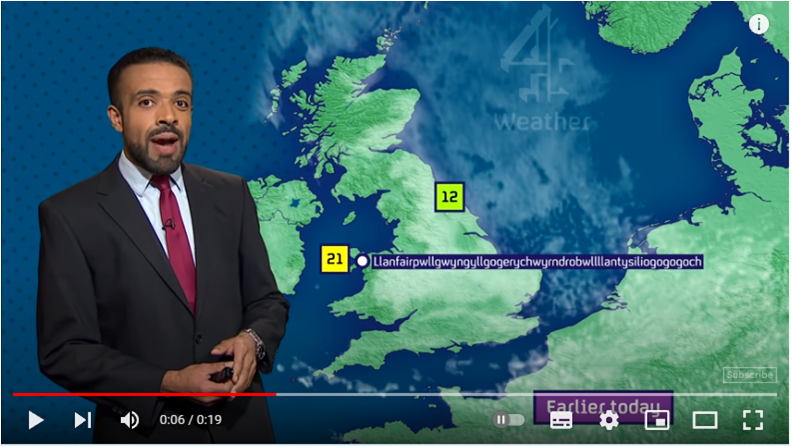
The Welsh language, which is probably spoken by about 900,000 people or just under a third of Wales’ total population, is a continuation of Brittonic, the old Celtic language (or group of languages) once spoken across much of Britain. Celtic is thought by some linguists to have a particularly close relationship with the Italic branch of Indo-European and one example of a cognate is Welsh mor (sea) corresponding to Latin mare. To get a fuller idea of the flavour of the language, listen to the stirring rendition of the Welsh national anthem, `Hen Wlad Fy Nhadau’ (Land of My Fathers) at https://www.youtube.com/watch?v=3kUnCwV3AYE
Pat spoke about his visit to the island of Malta, which is situated between Sicily and North Africa and whose national language is derived from medieval Sicilian Arabic, with the addition of a large Romance element and a smaller amount of English. Maltese speakers can understand around 30% of what is said to them in Tunisian Arabic on everyday topics, whilst Tunisian Arabic speakers understand around 40% of straightforward Maltese utterances. There is an extensive account of the language, the only Semitic one written exclusively in Latin script, at https://en.wikipedia.org/wiki/Maltese_language.
Pat mentioned in particular the island’s Valetta Theatre, which is among the oldest ones in Europe still in constant use. Its construction was ordered in 1731. For more details, see the account at
https://www.tripadvisor.com/Attraction_Review-g190328-d538051-Reviews-Teatru_Manoel-Valletta_Island_of_Malta.html
Pat spoke about his visit to the island of Malta, which is situated between Sicily and North Africa and whose national language is derived from medieval Sicilian Arabic, with the addition of a large Romance element and a smaller amount of English. Maltese speakers can understand around 30% of what is said to them in Tunisian Arabic on everyday topics, whilst Tunisian Arabic speakers understand around 40% of straightforward Maltese utterances. There is an extensive account of the language, the only Semitic one written exclusively in Latin script, at https://en.wikipedia.org/wiki/Maltese_language.
Pat mentioned in particular the island’s Valetta Theatre, which is among the oldest ones in Europe still in constant use. Its construction was ordered in 1731. For more details, see the account at
https://www.tripadvisor.com/Attraction_Review-g190328-d538051-Reviews-Teatru_Manoel-Valletta_Island_of_Malta.html
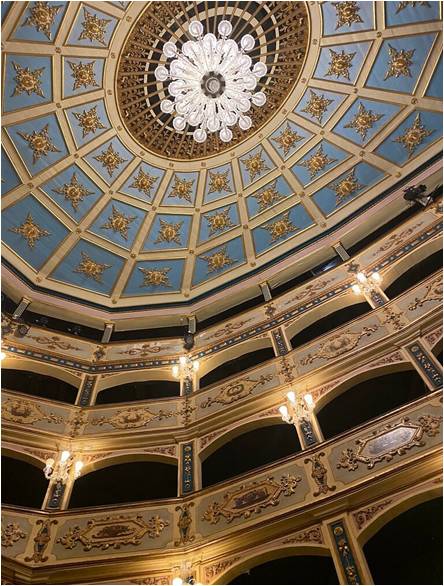
The roof of the Valetta Theatre
The island is best-known in European history for withstanding both a siege by the Ottoman forces in 1565 and and a determined aerial bombardment by the Axis powers during World War II. The background to the siege as well as an account of the successful defence lead by the Knights Hospitallers is the subject of a twenty-minute documentary at www.youtube.com/watch?v=gcyzP8pxjJ8. The bravery of the whole population in WWII was recognised by the award to the island of the George Cross, Britain’s highest award for acts of valour by civilians.
Pat further explained that following Napoleon’s conquest of Malta in 1798, the inhabitants revolted and opted to become a British Dominion. The Declaration of Rights issued by the Maltese on this occasion stipulated their wish to come "under the protection and sovereignty of the King of the free people, His Majesty the King of the United Kingdom of Great Britain and Ireland", but also that "his Majesty has no right to cede these Islands to any power...if he chooses to withdraw his protection, and abandon his sovereignty, the right of electing another sovereign, or of the governing of these Islands, belongs to us, the inhabitants and aborigines alone, and without control." See for further details https://en.wikipedia.org/wiki/Malta
We touched briefly on the health of Queen Elizabeth II, now 96, and Pat said that, as a result of cataracts she was legally blind. The Queen, of course, died in September, removing for Britons an element of stability as few could remember living under any other head of state. Her funeral was estimated to have been watched on television by almost half of the world’s population
There was mention of a rumour that Russian leader Leonis Brezhnev, who died in 1982, had actually been assassinated. Pat discounted this, particularly as Brezhnev had been known to have been in poor health for some time, and a later web search found no mention of the rumour.
The island is best-known in European history for withstanding both a siege by the Ottoman forces in 1565 and and a determined aerial bombardment by the Axis powers during World War II. The background to the siege as well as an account of the successful defence lead by the Knights Hospitallers is the subject of a twenty-minute documentary at www.youtube.com/watch?v=gcyzP8pxjJ8. The bravery of the whole population in WWII was recognised by the award to the island of the George Cross, Britain’s highest award for acts of valour by civilians.
Pat further explained that following Napoleon’s conquest of Malta in 1798, the inhabitants revolted and opted to become a British Dominion. The Declaration of Rights issued by the Maltese on this occasion stipulated their wish to come "under the protection and sovereignty of the King of the free people, His Majesty the King of the United Kingdom of Great Britain and Ireland", but also that "his Majesty has no right to cede these Islands to any power...if he chooses to withdraw his protection, and abandon his sovereignty, the right of electing another sovereign, or of the governing of these Islands, belongs to us, the inhabitants and aborigines alone, and without control." See for further details https://en.wikipedia.org/wiki/Malta
We touched briefly on the health of Queen Elizabeth II, now 96, and Pat said that, as a result of cataracts she was legally blind. The Queen, of course, died in September, removing for Britons an element of stability as few could remember living under any other head of state. Her funeral was estimated to have been watched on television by almost half of the world’s population
There was mention of a rumour that Russian leader Leonis Brezhnev, who died in 1982, had actually been assassinated. Pat discounted this, particularly as Brezhnev had been known to have been in poor health for some time, and a later web search found no mention of the rumour.
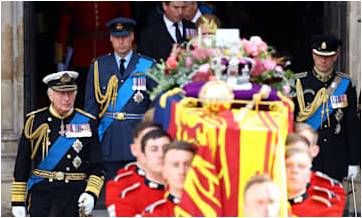
King Charles and other members of the royal family following the Queen’s coffin
https://www.hellomagazine.com/royalty/20220919151308/the-queen-state-funeral-westminster-abbey-royal-family-live- updates/
We read chapters 15-23 from Book II of Eutropius’ Breviarium, which included a brief account of Rome’s suppression in 268-9 B.C. of a revolt by the Picentes and the subsequent foundation of Ariminum (modern Rimini). The ethnic identity of the people of Picenum is uncertain but those in the southern section were quite likely an Italic group whilst further north the inhabitants were probably of mixed ethnic composition with a Gallic element finally becoming predominant. See https://en.wikipedia.org/wiki/Picentes
https://www.hellomagazine.com/royalty/20220919151308/the-queen-state-funeral-westminster-abbey-royal-family-live- updates/
We read chapters 15-23 from Book II of Eutropius’ Breviarium, which included a brief account of Rome’s suppression in 268-9 B.C. of a revolt by the Picentes and the subsequent foundation of Ariminum (modern Rimini). The ethnic identity of the people of Picenum is uncertain but those in the southern section were quite likely an Italic group whilst further north the inhabitants were probably of mixed ethnic composition with a Gallic element finally becoming predominant. See https://en.wikipedia.org/wiki/Picentes
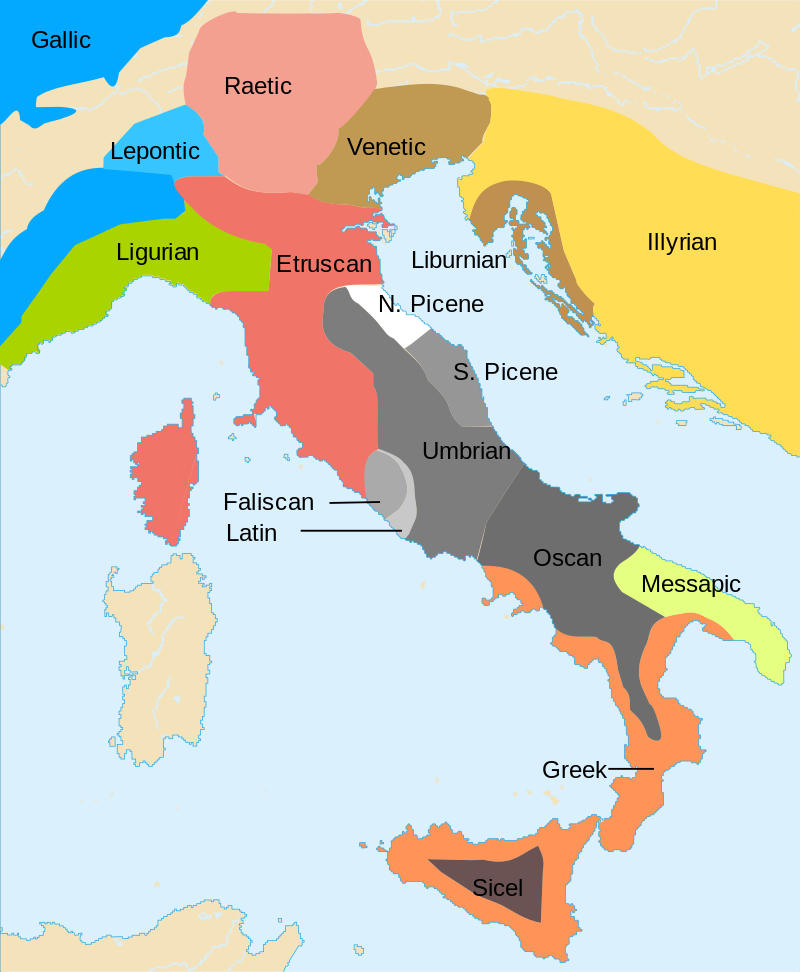
Location of the Picentes
By Iron_Age_Italy.png: User:Dbachmannderivative work: Ewan ar born - Iron_Age_Italy.png, CC BY-SA 3.0, https://commons.wikimedia.org/w/index.php?curid=8238924
It was also established that the Lucius Cornelius Scipio who was consul in 259 B.C., during the 1st Punic Wat, was the father of the Publius Cornelius Scipio who died in Spain during the 2nd Punic War and the grandfather of Scipio Africanus, the man who finally defeated Hannnibal. See
https://en.wikipedia.org/wiki/Lucius_Cornelius_Scipio_(consul_259_BC)
Chris C. gave some information on his family's mixed religious background. He is of partial Jewish descent, with his ancestors including rabbis and victims of pogroms in Eastern Europe, but his mother is a Roman Catholic and there are also Methodist connections. Apparently, when his father asked his Afrikaaner Calvinist `dominee’ (minister or pastor) if it was permissible to marry a Catholic, the dominee had no objection on religious grounds but disapproved of her being English.
Pat recalled a Greek couplet, inspired by the fact that in many species of cricket it is only the males who have the ability to `sing’:
“Happy are cicadas' lives, for they all have silent wives.”
The original, by the poet Xenarchus, perhaps active around the beginning of the 4th century B.C., reads:
εἶτ 'εἰσιν οἱ τέττιγες οὐκ ευδαίμονες
ὧν ταῖς γυναιξὶν ουδ’ ὁτιοῦν φωνῆς ἕνι;
[eit’ eisin hoi tettiges ouk eudaimones, hōn tais gynaixin oud’ hotioun heni, literally `Then are the cicadas not happy, not one of whose wives has any voice at all?’]
Despite severe competition, this might win the prize for the most sexist comment in ancient Greek literature. Ironically, the Latin word cicāda is actually feminine, though there is also the masculine gryllus, which covers a wider range of insects. The entries from Lewis & Short’s lexicon:
gryllus (also grillus), i, m., = γρύλλος.
I. A cricket or grasshopper, Plin. 29, 6, 39, § 138.
cĭcāda, ae, f., the cicada, tree-cricket: Cicada orni, Linn.; Plin. 11, 26, 32, § 92 sq.; Lucr. 4, 56; 5, 801; Verg. E. 2, 13; 5, 77; id. G. 3, 328; id. Cul. 151 al.
Worn as an ornament in the hair of the Athenians, Verg. Cir. 128 Sillig; cf. Lidd. and Scott, under τέττιξ.
As a symbol of summer, Ov. A. A. 1, 271; Juv. 9, 69.
By Iron_Age_Italy.png: User:Dbachmannderivative work: Ewan ar born - Iron_Age_Italy.png, CC BY-SA 3.0, https://commons.wikimedia.org/w/index.php?curid=8238924
It was also established that the Lucius Cornelius Scipio who was consul in 259 B.C., during the 1st Punic Wat, was the father of the Publius Cornelius Scipio who died in Spain during the 2nd Punic War and the grandfather of Scipio Africanus, the man who finally defeated Hannnibal. See
https://en.wikipedia.org/wiki/Lucius_Cornelius_Scipio_(consul_259_BC)
Chris C. gave some information on his family's mixed religious background. He is of partial Jewish descent, with his ancestors including rabbis and victims of pogroms in Eastern Europe, but his mother is a Roman Catholic and there are also Methodist connections. Apparently, when his father asked his Afrikaaner Calvinist `dominee’ (minister or pastor) if it was permissible to marry a Catholic, the dominee had no objection on religious grounds but disapproved of her being English.
Pat recalled a Greek couplet, inspired by the fact that in many species of cricket it is only the males who have the ability to `sing’:
“Happy are cicadas' lives, for they all have silent wives.”
The original, by the poet Xenarchus, perhaps active around the beginning of the 4th century B.C., reads:
εἶτ 'εἰσιν οἱ τέττιγες οὐκ ευδαίμονες
ὧν ταῖς γυναιξὶν ουδ’ ὁτιοῦν φωνῆς ἕνι;
[eit’ eisin hoi tettiges ouk eudaimones, hōn tais gynaixin oud’ hotioun heni, literally `Then are the cicadas not happy, not one of whose wives has any voice at all?’]
Despite severe competition, this might win the prize for the most sexist comment in ancient Greek literature. Ironically, the Latin word cicāda is actually feminine, though there is also the masculine gryllus, which covers a wider range of insects. The entries from Lewis & Short’s lexicon:
gryllus (also grillus), i, m., = γρύλλος.
I. A cricket or grasshopper, Plin. 29, 6, 39, § 138.
cĭcāda, ae, f., the cicada, tree-cricket: Cicada orni, Linn.; Plin. 11, 26, 32, § 92 sq.; Lucr. 4, 56; 5, 801; Verg. E. 2, 13; 5, 77; id. G. 3, 328; id. Cul. 151 al.
Worn as an ornament in the hair of the Athenians, Verg. Cir. 128 Sillig; cf. Lidd. and Scott, under τέττιξ.
As a symbol of summer, Ov. A. A. 1, 271; Juv. 9, 69.

Monica has launched her own YouTube channel in which she plays various paino pieces suitable for learners, sometimes adding playing tips in Mandarin and English: https://youtube.com/channel/UCt7WFEc9lDLxi6kXe0WAkmw
There was a question about the Latin names for China. This issue is addressed in the first slide of the SINA LATINA PoerPoint available at https://linguae.weebly.com/sina-latina.html
Finally, we welcomed to the Circulus, Emily, one of Chris C’s former students, who is now working in computer game development and supplying Latin dialogue and background information for a new game in the `Assassin’s Creed‘ series. This is set in the 2nd. Punic War (218-201 B.C.)and Emily had unsuccessfully pushed for inclusion of depiction of the killing of the mathematician and engineer Archimedes by a Roman soldier after the fall of Syracuse in 212 B.C.
There was a question about the Latin names for China. This issue is addressed in the first slide of the SINA LATINA PoerPoint available at https://linguae.weebly.com/sina-latina.html
- Sēres, -um: In use from at least 1st cent. B.C, Greek loan word probably deriving ultimately from 絲 (Latin for silk is sēricum, -ī n), so means `the silk people’; the adjectival form Sērica (sc. terra) could be used to refer specifically to the land. However, classical writers seem to have used Sēres also to refer to other peoples along the `Silk Road or even in other regions.
- Sīnae, -ārum: Referred to both people and place, via Greek Sīnai or Thīnai from Sanskrit Cīna or a common source that may have been the dynastic names Qin (秦) or Jing (荆), or ʐina , the indigenous name for the Yelang夜郎 polity in Yunnan, through which Chinese products often reached India. Ptolemy (c.150 A.D.) distinguishes Sīnai in southern China from the more northerly Sērica but by the Middle Ages Sīnae was standard usage for China as a whole, with the singular Sīna used less often. Early modern texts sometimes used China (e.g. in the title of Kircher’s 1667 Latin publication China Illustrata) but this is not found in recent Latin writing.
Finally, we welcomed to the Circulus, Emily, one of Chris C’s former students, who is now working in computer game development and supplying Latin dialogue and background information for a new game in the `Assassin’s Creed‘ series. This is set in the 2nd. Punic War (218-201 B.C.)and Emily had unsuccessfully pushed for inclusion of depiction of the killing of the mathematician and engineer Archimedes by a Roman soldier after the fall of Syracuse in 212 B.C.
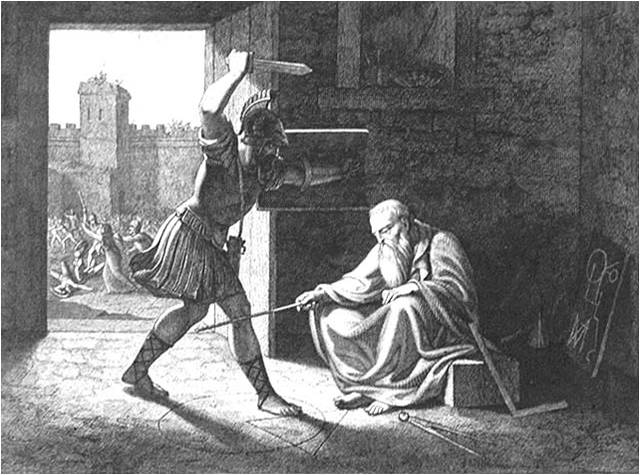
Death of Archimedes
https://www.math.nyu.edu/~crorres/Archimedes/Death/DeathIllus.html
EUTROPIUS, BREVIARIUM II
[15] C. Fabiō Liciniō C. Claudiō Canīnā cōnsulibus annō urbis conditae quadringentēsimō
With Gaius Fabius Licinius Gaius Claudius Canina consuls in-year of-city founded four hundredth
sexāgēsimō prīmō lēgātī Alexandrīnī ā Ptolomaēō missī Rōmam vēnēre et ā Rōmānīs
sixtieth first envoys Alexandrine by Ptolemy sent to-Rome came amd from Romans
amīcitiam, quam petierant, obtinuērunt.[1]
friendship which they-had-sought obtained
[16] Q. Ogulniō C. Fabiō Pictōre cōnsulibus Pīcentēs bellum commōvēre et ab
With Quintus Ogulnius [and] Gaius Fabius Pictor consuls the Picentes war launched and by
īnsequentibus cōnsulibus P. Semprōniō Ap. Claudiō vīctī sunt; et dē hīs triumphātum est.
next consuls Publius Sempronius [and] Appius Claudius defeated were and over then triumph-celebrated was
Conditae ā Rōmānīs cīvitātēs Arīminum in Galliā et Beneventum in Samniō.[2]
Founded by Romans cities Ariminum in Gaul and Beneventum in Samnium
[17] M. Atīliō Rēgulō L. Iūliō Libōne cōnsulibus Sallentīnīs in Āpūliā bellum indictum est,
With Marcus Atilius Regulus [and] Lucius Julius Libo consuls on-Sallentinis in Apulia war declared was
captīque sunt cum cīvitāte simul Brundisīnī, et dē hīs triumphātum est.[3]
and-captured they-were with city at-same-time the Brundisians and over them triumph-celebrated was
[18] Annō quadringentēsimō septuāgēsimō septimō,[4] cum iam clārum urbis Rōmae nōmen
In-year four-hundredth seventieth seventh when already famous of-city Rome name
esset, arma tamen extrā Ītaliam mōta nōn fuerant.[5] Ut igitur cognōscerētur, quae cōpiae
was arms however outside Italy moved not had-been so-that therefore it-might-be-learned what forces
Rōmānōrum essent, cēnsus est habitus.[6] Tum inventa sunt cīvium capita ducenta nōnāgintā
Of-Romans were census was taken then found were of-citizens heads two-hundred ninety
duo mīlia trecenta trīgintā quattuor, quamquam ā conditā urbe numquam bella cessāssent.[7]
two thousand three- hundred thirty four although from founded city never wars had-ceased
Et contrā Āfrōs bellum susceptum est prīmum Ap. Claudiō Q. Fulviō cōnsulibus. In Siciliā
And against Africans war undertaken was first with Appius Claudius and Quintus Fulvius consuls, In Sicily
contrā eōs pugnātum est et Ap. Claudius dē Āfrīs et rēge Siciliae Hierōne triumphāvit.[8]
against them fought was and Appius Claudius over Africans and king of-Sicily Hiero celebrated-triumph.
NOTES
[1] Licinius and Canina were consuls in 273 but 461 A.U.C. corresponds to 293 (not 233 as stated by Bird). Ptolemy II’s action represented recognition by a leading Hellenisitc state of Rome’s position as a major Mediterranean power.
[2] The Picentes, who lived on the Adriatic coast south of Arīminum, had been allied to Rome since 299 but revolted in 269 and were subdued in 268. The Latin colonies of Ariminum (Rimini ) and Beneventum (previously known as Malventum) were established in 268.
[3] The Sal(l)entini were a people living in the `heel’ of Italy, now known as the Salento peninsula. It is not clear whether they were ethnically distinct from the Mesappians, who were probably the founders of Brundisium (Brindisi). The war in the peninsula, the southernmost part of Apulia, took place in 267.
[4] 477 A.U.C. is 277 B.C but Appius Cclaudius Caudex and Marcus (Qnot quintus!) Fulvius Flaccus were consuls in 264.
[5] i.e. no wars had been undertaken outside Italy.
[6] The census was a regular exercise and non necessariy connected with the prospect of overseas expansion.
[7] Contraction of pluperfect subjunctive cessāvissent, The contracted tense is the origin of the imperfect subjunctive in the modern Romance languages.
[8] The Romans intervened in support of the Mamertini, a band of Campanian mercenaries who had occupied Messana in NE Sicily, allied with the Carthaginians to resist an attack by King Hiero of Syracuse, than called on Rome for help against Carthage. Sicily at this time was divided between independent Greek city states in the east and the Carthaginian-controlled west. Eutropians refers to the Carrthaginians `Africans’ but the Romans more usually called them Poenī, a name derived from that of Phoenicia (roughly corresponding to modern Lebanon) from where Carthage’s founders had come.
[19] Īnsequentī annō Valeriō Mārcō et Otāciliō Crassō cōnsulibus in Siciliā ā Rōmānīs rēs
In-following year with-Valerius Marcus and Otacilius Crassus consuls in Sicily by Romans things
magnae gestae sunt. Tauromenītānī, Catinēnsēs[1] et praetereā quīnquāgintā cīvitātēs in fidem
great accomplished were Tauromenitani Catinenses and additionally fifty cities into allegiance
acceptae. Tertiō annō in Siciliā contrā Hierōnem, rēgem Siculōrum, bellum parātum est. Is
received in-third year in Sicily against Hiero king of the-Siculi[2] war prepared was he
cum omnī nōbilitāte Syrācūsānōrum pācem ā Rōmānīs impetrāvit deditque argentī
with all nobility of-Syracusans peace from Romans successfully-requested and-gave of-silver
ducenta talenta. Āfrī in Siciliā vīctī sunt et dē hīs secundō Rōmae triumphātum est.[3]
two-hundred talents Africans in Sicily defeated were and from these second-time at-Rime triumph-celebrated was.
[20] Quīntō annō Pūnicī bellī[4], quod contrā Āfrōs gerēbātur, prīmum Rōmānī C. Duilliō
In-fifth year of-Punic war which against Africans was-being-waged first-time Roman with Gaius Duillius
et Cn.Cornēliō Asinā cōnsulibus in marī dīmicāvērunt parātīs nāvibus rōstrātīs, quās
and Gnaeus Cornelius Asina consuls at sea fought with-prepared ship beaked which
Liburnās[5] vocant. Cōnsul Cornēlius fraude dēceptus est. Duillius commissō proeliō
Liburnas they-call consul Cornelius by-trick deceived was Duillius having-been-started battle
Carthāginiēnsium ducem vīcit, trīgintā et ūnam nāvēs cēpit, quattuordecim mersit, septem
Of-Carthaginians leader defeated thirty and one ships captured fourteen sank seven
mīlia hostium cēpit, tria mīlia occīdit. Neque ūlla victōria Rōmānīs grātior fuit, quod invictī
thousands of-enemy captured three thousand killed nor any victory to-Romans more-pleasing was because udefeated
terrā iam etiam marī plūrimum possent. C. Aquiliō Flōrō L. Scīpiōne cōnsulibus Scīpiō
on-land now also at-sea very-much they-could-do with-Gaius Aquilius Florus Lucius Scipio consuls Scipio
Corsicam et Sardiniam vastāvit[6], multa milia inde captīvōrum addūxit, triumphum ēgit.
Corsica and Sardinia laid-waste many thousands fron-there of-captives brought triumph held
[21] L. Mānliō Vulsōne M. Atīliō Rēgulō cōnsulibus bellum in Āfricam trānslātum est. Contrā
With Lucius Manlius Vulso Marcus Atilius Regulus consuls war into Adrica taken-across was against
Hamilcarem, Carthāginiēnsium ducem, in marī pugnātum victusque est.[7] Nam perditīs
Hamilcar of-Carthaginians general at sea it-was-fought and-defeated he-was for having-been-lost
sexāgintā quattuor nāvibus retrō sē recēpit. Rōmānī vīgintī duās āmīsērunt. Sed cum in
sixty four ships back himself he-took Romans twenty two lost but when into
Āfricam trānsīssent, prīmam Clypeam,[8] Āfricae cīvitātem, in dēditiōnem accēpērunt.
Africa they-had-crossed first Clypea of-Africa city into surrender received
Cōnsulēs usque ad Carthāginem prōcessērunt multīsque castellīs vastātīs Mānlius victor
Consuls as-far as Carthage advanced and-with-many fortresses laid-waste Manlius victor
NOTES
[1] Referring to the cities of Tauromenium (modern Taormina) and Catania on the east coast of Sicily.
[2] The term Siculī originally referred to an Italic people who were settled in Sicily before the arrival of Greek colonists in the 8th century B.C. but it later came to means Sicilians generally.
[3] Manius Valerius Maximus, consul in 263, celebrated his triumph in 262, after reaching a compromise agreement with Hiero (see Bird, 81). Syracuse was the most important of the Greek cities in Sicily but, contrary to Eutropius’ belief, was not accepted as overlord by the others
[4] i.e. in 260 B.C. Duillius’s victory was won off Mylae on the north coast of Sicily
[5] The Romans did not adopt the Liburna (or Liburnica) from the Liburnians, an Illyrian people on the coast of Croatia, until later (see https://en.wikipedia.org/wiki/Liburna). They bult their first navy using a Carthaginian design and fitted their ships with a ram (rostrum, `beak’) at the prow and a boarding bidge (corvus, `raven’); see https://en.wikipedia.org/wiki/Corvus_(boarding_device). For photo and account of a recovered rostrum see https://www.sea.museum/2017/05/29/a-roman-rostrum .
[6] In 259 Scipio captured Corsica but was actually defeated in Sardinia.
[7] Hamilcar – the name was common among Carthaginians and he probably had no connection woith Hannibal’s father, Hamilcar Barca - was defeated in a naval battle off Cape Ecnomus on the south coast of Sicily in 256 B.C. Eutropius’s source for the war, Livy, survives only in summaries (Epitomes) of each book but the 2nd. century B.C. Greek historian Polybius provides a detailed account. Varying figures are given for Carthaginian losses but the total number of ships engaged may have been 680, with up to 290,000 men on board, possibly the largest number of combatants in any naval battle in history (see https://en.wikipedia.org/wiki/Battle_of_Adys),
[8] Now known as Kelkibia and famous for its beaches and for an annual film festival, Clypea was called Aspis by the Carthaginians and Greeks and is Aspide in French (see map).
Rōmam rediit et vīgintī septem mīlia captīvōrum redūxit, Atīlius Rēgulus in Āfricā remānsit.
to-Rome returned and twenty seven thoudands of-captives brought-back Atilius Regulus in Africa remained
Is contrā Āfrōs aciem īnstrūxit. Contrā trēs Carthāginiēnsium ducēs dīmicāns victor fuit,
He against Africans battleline drew-up against three of-Carthginians generals fighting victor was
decem et octo mīlia hostium cecīdit, quīnque mīlia cum decem et octo elephantīs cēpit,
ten and eight thousand of-enmy slew five thousands with ten and eight elephants he-captured
septuāgintā quattuor cīvitātēs in fidem accēpit. Tum vīctī Carthāginiēnsēs pācem ā Rōmānīs
seventy four cities into allegiance received then defeated Carthaginiana peace from Romans
petīvērunt. Quam cum Rēgulus nōllet nisi dūrissimīs condiciōnibus dare, Āfrī auxilium ā
sought which when Regulus was-unwilling except on-harshest terms to-grant Africans help from
Lacedaemoniīs petīvērunt. Et duce Xanthippō, quī ā Lacedaemoniīs missus fuerat,
Spartans sought and through-general Xanthippus who by Spartans sent had-been
Rōmānōrum dux Rēgulus victus est ultimā perniciē. Nam duo milia tantum ex omnī Rōmānō
of-Romans leader Regulus defeated was with-extreme losses for two thousands only from whole Roman
exercitū refūgērunt, quīngentī cum imperātōre Rēgulō captī sunt, trīgintā mīlia occīsa,
army escaped five-hundred with commander Regulus captured were thirty thousands killed
Rēgulus ipse in catēnās coniectus.[1]
Regulus himself into chains cast
[22] M. Aemiliō Paulō Ser. Fulviō Nōbiliōre cōnsulibus ambō Rōmānī cōnsulēs ad Āfricam
With Marcus Aemilius Pauus Servius Fulvius Nobilior consuls both Roman consuls to Africa
profectī sunt cum trecentārum nāvium classe. Prīmum Āfrōs nāvālī certāmine superant.
set out with of-three-hundred ships fleet first Africans in-naval battle they-defeat
Aemilius cōnsul centum et quattuor nāvēs hostium dēmersit, trīgintā cum pugnātōribus cēpit,
Aemilius consul hundred and four ships of-enemy sank thirty with [their] marines captured
quīndecim mīlia hostium aut occīdit aut cēpit, mīlitem suum ingentī praedā dītāvit. Et subācta
fifteen thousands of-enemy either killed or captured army own with-huge loot enriched and conquered
Āfrica tunc fuisset, nisi quod tanta famēs erat, ut diūtius exercitus expectāre nōn posset.
Africa then would-have-been if-not for-fact so-great famine there-was that longer army to-wait not was-able
Cōnsulēs cum victrīcī classe redeuntēs circā Siciliam naufragium passī sunt. Et tanta
Consuls with victorious fleet returning near Sicily shipwreck suffered and so-great
tempestās fuit, ut ex quadringentīs sexāgintā quattuor nāvibus tantum octōgintā servārī
storm there-was that out-of four hundred sixty four ships only eighty be-saved
potuerint; neque ūllō tempore tanta maritima tempestās audīta est. Rōmānī tamen statim
could nor at-any[other] time so-great sea storm heard-of was Romans however at-once
ducentās nāvēs reparāvērunt, neque in aliquō animus hīs īnfrāctus fuit.[2]
two-hundred ships again-fitted-out and-not in anyone morale by-this destroyed was.
[23]Cn. Servīlius Caepiō C. Semprōnius Blaesus[3]cōnsulēs cum ducentīs sexāgintā nāvibus ad
Gnaeus Servilius Caepio Gaius Sempronius Blaesus consuls with two-hundred sixty ships to
Āfricam profectī sunt. Aliquot cīvitātēs cēpērunt. Praedam ingentem redūcentēs naufragium
Africa set out Some cities they-captured loot huge bringing-back shipwreck
passī sunt. Itaque cum continuae calamitātēs Rōmānīs displicērent, dēcrēvit senātus, ut ā
they suffered and-so since continuous disasters Romans were-upsetting decreed senate that from
maritimīs proeliīs recēderētur et tantum sexāgintā nāvēs ad praesidium Ītaliae salvae
maritime battles there-should-be-withdrawal and only sixty ships for protection of-Italy kept
essent.
should-be
NOTES
[1] Regulus’ major victory was at Adys, a hill-top fortress 40 miles from Carthage and he then took Tunis, only 10 miles from the capital. His defeat at the hands of an army trained and reorganised by Xanthippus was in 255.
[2] The disaster happened near Cape Pachynus (moden Passero), the SE corner of Sicily. The total of 464 ships included both the original Roman fleet and the captured vessels and those on board included the 2000 Roman soldiers who had escaped from the battlefield at Bagradas.
[3] Consuls for 253. Their raids along the North African coast had no real strategic significance (Bird).
https://www.math.nyu.edu/~crorres/Archimedes/Death/DeathIllus.html
EUTROPIUS, BREVIARIUM II
[15] C. Fabiō Liciniō C. Claudiō Canīnā cōnsulibus annō urbis conditae quadringentēsimō
With Gaius Fabius Licinius Gaius Claudius Canina consuls in-year of-city founded four hundredth
sexāgēsimō prīmō lēgātī Alexandrīnī ā Ptolomaēō missī Rōmam vēnēre et ā Rōmānīs
sixtieth first envoys Alexandrine by Ptolemy sent to-Rome came amd from Romans
amīcitiam, quam petierant, obtinuērunt.[1]
friendship which they-had-sought obtained
[16] Q. Ogulniō C. Fabiō Pictōre cōnsulibus Pīcentēs bellum commōvēre et ab
With Quintus Ogulnius [and] Gaius Fabius Pictor consuls the Picentes war launched and by
īnsequentibus cōnsulibus P. Semprōniō Ap. Claudiō vīctī sunt; et dē hīs triumphātum est.
next consuls Publius Sempronius [and] Appius Claudius defeated were and over then triumph-celebrated was
Conditae ā Rōmānīs cīvitātēs Arīminum in Galliā et Beneventum in Samniō.[2]
Founded by Romans cities Ariminum in Gaul and Beneventum in Samnium
[17] M. Atīliō Rēgulō L. Iūliō Libōne cōnsulibus Sallentīnīs in Āpūliā bellum indictum est,
With Marcus Atilius Regulus [and] Lucius Julius Libo consuls on-Sallentinis in Apulia war declared was
captīque sunt cum cīvitāte simul Brundisīnī, et dē hīs triumphātum est.[3]
and-captured they-were with city at-same-time the Brundisians and over them triumph-celebrated was
[18] Annō quadringentēsimō septuāgēsimō septimō,[4] cum iam clārum urbis Rōmae nōmen
In-year four-hundredth seventieth seventh when already famous of-city Rome name
esset, arma tamen extrā Ītaliam mōta nōn fuerant.[5] Ut igitur cognōscerētur, quae cōpiae
was arms however outside Italy moved not had-been so-that therefore it-might-be-learned what forces
Rōmānōrum essent, cēnsus est habitus.[6] Tum inventa sunt cīvium capita ducenta nōnāgintā
Of-Romans were census was taken then found were of-citizens heads two-hundred ninety
duo mīlia trecenta trīgintā quattuor, quamquam ā conditā urbe numquam bella cessāssent.[7]
two thousand three- hundred thirty four although from founded city never wars had-ceased
Et contrā Āfrōs bellum susceptum est prīmum Ap. Claudiō Q. Fulviō cōnsulibus. In Siciliā
And against Africans war undertaken was first with Appius Claudius and Quintus Fulvius consuls, In Sicily
contrā eōs pugnātum est et Ap. Claudius dē Āfrīs et rēge Siciliae Hierōne triumphāvit.[8]
against them fought was and Appius Claudius over Africans and king of-Sicily Hiero celebrated-triumph.
NOTES
[1] Licinius and Canina were consuls in 273 but 461 A.U.C. corresponds to 293 (not 233 as stated by Bird). Ptolemy II’s action represented recognition by a leading Hellenisitc state of Rome’s position as a major Mediterranean power.
[2] The Picentes, who lived on the Adriatic coast south of Arīminum, had been allied to Rome since 299 but revolted in 269 and were subdued in 268. The Latin colonies of Ariminum (Rimini ) and Beneventum (previously known as Malventum) were established in 268.
[3] The Sal(l)entini were a people living in the `heel’ of Italy, now known as the Salento peninsula. It is not clear whether they were ethnically distinct from the Mesappians, who were probably the founders of Brundisium (Brindisi). The war in the peninsula, the southernmost part of Apulia, took place in 267.
[4] 477 A.U.C. is 277 B.C but Appius Cclaudius Caudex and Marcus (Qnot quintus!) Fulvius Flaccus were consuls in 264.
[5] i.e. no wars had been undertaken outside Italy.
[6] The census was a regular exercise and non necessariy connected with the prospect of overseas expansion.
[7] Contraction of pluperfect subjunctive cessāvissent, The contracted tense is the origin of the imperfect subjunctive in the modern Romance languages.
[8] The Romans intervened in support of the Mamertini, a band of Campanian mercenaries who had occupied Messana in NE Sicily, allied with the Carthaginians to resist an attack by King Hiero of Syracuse, than called on Rome for help against Carthage. Sicily at this time was divided between independent Greek city states in the east and the Carthaginian-controlled west. Eutropians refers to the Carrthaginians `Africans’ but the Romans more usually called them Poenī, a name derived from that of Phoenicia (roughly corresponding to modern Lebanon) from where Carthage’s founders had come.
[19] Īnsequentī annō Valeriō Mārcō et Otāciliō Crassō cōnsulibus in Siciliā ā Rōmānīs rēs
In-following year with-Valerius Marcus and Otacilius Crassus consuls in Sicily by Romans things
magnae gestae sunt. Tauromenītānī, Catinēnsēs[1] et praetereā quīnquāgintā cīvitātēs in fidem
great accomplished were Tauromenitani Catinenses and additionally fifty cities into allegiance
acceptae. Tertiō annō in Siciliā contrā Hierōnem, rēgem Siculōrum, bellum parātum est. Is
received in-third year in Sicily against Hiero king of the-Siculi[2] war prepared was he
cum omnī nōbilitāte Syrācūsānōrum pācem ā Rōmānīs impetrāvit deditque argentī
with all nobility of-Syracusans peace from Romans successfully-requested and-gave of-silver
ducenta talenta. Āfrī in Siciliā vīctī sunt et dē hīs secundō Rōmae triumphātum est.[3]
two-hundred talents Africans in Sicily defeated were and from these second-time at-Rime triumph-celebrated was.
[20] Quīntō annō Pūnicī bellī[4], quod contrā Āfrōs gerēbātur, prīmum Rōmānī C. Duilliō
In-fifth year of-Punic war which against Africans was-being-waged first-time Roman with Gaius Duillius
et Cn.Cornēliō Asinā cōnsulibus in marī dīmicāvērunt parātīs nāvibus rōstrātīs, quās
and Gnaeus Cornelius Asina consuls at sea fought with-prepared ship beaked which
Liburnās[5] vocant. Cōnsul Cornēlius fraude dēceptus est. Duillius commissō proeliō
Liburnas they-call consul Cornelius by-trick deceived was Duillius having-been-started battle
Carthāginiēnsium ducem vīcit, trīgintā et ūnam nāvēs cēpit, quattuordecim mersit, septem
Of-Carthaginians leader defeated thirty and one ships captured fourteen sank seven
mīlia hostium cēpit, tria mīlia occīdit. Neque ūlla victōria Rōmānīs grātior fuit, quod invictī
thousands of-enemy captured three thousand killed nor any victory to-Romans more-pleasing was because udefeated
terrā iam etiam marī plūrimum possent. C. Aquiliō Flōrō L. Scīpiōne cōnsulibus Scīpiō
on-land now also at-sea very-much they-could-do with-Gaius Aquilius Florus Lucius Scipio consuls Scipio
Corsicam et Sardiniam vastāvit[6], multa milia inde captīvōrum addūxit, triumphum ēgit.
Corsica and Sardinia laid-waste many thousands fron-there of-captives brought triumph held
[21] L. Mānliō Vulsōne M. Atīliō Rēgulō cōnsulibus bellum in Āfricam trānslātum est. Contrā
With Lucius Manlius Vulso Marcus Atilius Regulus consuls war into Adrica taken-across was against
Hamilcarem, Carthāginiēnsium ducem, in marī pugnātum victusque est.[7] Nam perditīs
Hamilcar of-Carthaginians general at sea it-was-fought and-defeated he-was for having-been-lost
sexāgintā quattuor nāvibus retrō sē recēpit. Rōmānī vīgintī duās āmīsērunt. Sed cum in
sixty four ships back himself he-took Romans twenty two lost but when into
Āfricam trānsīssent, prīmam Clypeam,[8] Āfricae cīvitātem, in dēditiōnem accēpērunt.
Africa they-had-crossed first Clypea of-Africa city into surrender received
Cōnsulēs usque ad Carthāginem prōcessērunt multīsque castellīs vastātīs Mānlius victor
Consuls as-far as Carthage advanced and-with-many fortresses laid-waste Manlius victor
NOTES
[1] Referring to the cities of Tauromenium (modern Taormina) and Catania on the east coast of Sicily.
[2] The term Siculī originally referred to an Italic people who were settled in Sicily before the arrival of Greek colonists in the 8th century B.C. but it later came to means Sicilians generally.
[3] Manius Valerius Maximus, consul in 263, celebrated his triumph in 262, after reaching a compromise agreement with Hiero (see Bird, 81). Syracuse was the most important of the Greek cities in Sicily but, contrary to Eutropius’ belief, was not accepted as overlord by the others
[4] i.e. in 260 B.C. Duillius’s victory was won off Mylae on the north coast of Sicily
[5] The Romans did not adopt the Liburna (or Liburnica) from the Liburnians, an Illyrian people on the coast of Croatia, until later (see https://en.wikipedia.org/wiki/Liburna). They bult their first navy using a Carthaginian design and fitted their ships with a ram (rostrum, `beak’) at the prow and a boarding bidge (corvus, `raven’); see https://en.wikipedia.org/wiki/Corvus_(boarding_device). For photo and account of a recovered rostrum see https://www.sea.museum/2017/05/29/a-roman-rostrum .
[6] In 259 Scipio captured Corsica but was actually defeated in Sardinia.
[7] Hamilcar – the name was common among Carthaginians and he probably had no connection woith Hannibal’s father, Hamilcar Barca - was defeated in a naval battle off Cape Ecnomus on the south coast of Sicily in 256 B.C. Eutropius’s source for the war, Livy, survives only in summaries (Epitomes) of each book but the 2nd. century B.C. Greek historian Polybius provides a detailed account. Varying figures are given for Carthaginian losses but the total number of ships engaged may have been 680, with up to 290,000 men on board, possibly the largest number of combatants in any naval battle in history (see https://en.wikipedia.org/wiki/Battle_of_Adys),
[8] Now known as Kelkibia and famous for its beaches and for an annual film festival, Clypea was called Aspis by the Carthaginians and Greeks and is Aspide in French (see map).
Rōmam rediit et vīgintī septem mīlia captīvōrum redūxit, Atīlius Rēgulus in Āfricā remānsit.
to-Rome returned and twenty seven thoudands of-captives brought-back Atilius Regulus in Africa remained
Is contrā Āfrōs aciem īnstrūxit. Contrā trēs Carthāginiēnsium ducēs dīmicāns victor fuit,
He against Africans battleline drew-up against three of-Carthginians generals fighting victor was
decem et octo mīlia hostium cecīdit, quīnque mīlia cum decem et octo elephantīs cēpit,
ten and eight thousand of-enmy slew five thousands with ten and eight elephants he-captured
septuāgintā quattuor cīvitātēs in fidem accēpit. Tum vīctī Carthāginiēnsēs pācem ā Rōmānīs
seventy four cities into allegiance received then defeated Carthaginiana peace from Romans
petīvērunt. Quam cum Rēgulus nōllet nisi dūrissimīs condiciōnibus dare, Āfrī auxilium ā
sought which when Regulus was-unwilling except on-harshest terms to-grant Africans help from
Lacedaemoniīs petīvērunt. Et duce Xanthippō, quī ā Lacedaemoniīs missus fuerat,
Spartans sought and through-general Xanthippus who by Spartans sent had-been
Rōmānōrum dux Rēgulus victus est ultimā perniciē. Nam duo milia tantum ex omnī Rōmānō
of-Romans leader Regulus defeated was with-extreme losses for two thousands only from whole Roman
exercitū refūgērunt, quīngentī cum imperātōre Rēgulō captī sunt, trīgintā mīlia occīsa,
army escaped five-hundred with commander Regulus captured were thirty thousands killed
Rēgulus ipse in catēnās coniectus.[1]
Regulus himself into chains cast
[22] M. Aemiliō Paulō Ser. Fulviō Nōbiliōre cōnsulibus ambō Rōmānī cōnsulēs ad Āfricam
With Marcus Aemilius Pauus Servius Fulvius Nobilior consuls both Roman consuls to Africa
profectī sunt cum trecentārum nāvium classe. Prīmum Āfrōs nāvālī certāmine superant.
set out with of-three-hundred ships fleet first Africans in-naval battle they-defeat
Aemilius cōnsul centum et quattuor nāvēs hostium dēmersit, trīgintā cum pugnātōribus cēpit,
Aemilius consul hundred and four ships of-enemy sank thirty with [their] marines captured
quīndecim mīlia hostium aut occīdit aut cēpit, mīlitem suum ingentī praedā dītāvit. Et subācta
fifteen thousands of-enemy either killed or captured army own with-huge loot enriched and conquered
Āfrica tunc fuisset, nisi quod tanta famēs erat, ut diūtius exercitus expectāre nōn posset.
Africa then would-have-been if-not for-fact so-great famine there-was that longer army to-wait not was-able
Cōnsulēs cum victrīcī classe redeuntēs circā Siciliam naufragium passī sunt. Et tanta
Consuls with victorious fleet returning near Sicily shipwreck suffered and so-great
tempestās fuit, ut ex quadringentīs sexāgintā quattuor nāvibus tantum octōgintā servārī
storm there-was that out-of four hundred sixty four ships only eighty be-saved
potuerint; neque ūllō tempore tanta maritima tempestās audīta est. Rōmānī tamen statim
could nor at-any[other] time so-great sea storm heard-of was Romans however at-once
ducentās nāvēs reparāvērunt, neque in aliquō animus hīs īnfrāctus fuit.[2]
two-hundred ships again-fitted-out and-not in anyone morale by-this destroyed was.
[23]Cn. Servīlius Caepiō C. Semprōnius Blaesus[3]cōnsulēs cum ducentīs sexāgintā nāvibus ad
Gnaeus Servilius Caepio Gaius Sempronius Blaesus consuls with two-hundred sixty ships to
Āfricam profectī sunt. Aliquot cīvitātēs cēpērunt. Praedam ingentem redūcentēs naufragium
Africa set out Some cities they-captured loot huge bringing-back shipwreck
passī sunt. Itaque cum continuae calamitātēs Rōmānīs displicērent, dēcrēvit senātus, ut ā
they suffered and-so since continuous disasters Romans were-upsetting decreed senate that from
maritimīs proeliīs recēderētur et tantum sexāgintā nāvēs ad praesidium Ītaliae salvae
maritime battles there-should-be-withdrawal and only sixty ships for protection of-Italy kept
essent.
should-be
NOTES
[1] Regulus’ major victory was at Adys, a hill-top fortress 40 miles from Carthage and he then took Tunis, only 10 miles from the capital. His defeat at the hands of an army trained and reorganised by Xanthippus was in 255.
[2] The disaster happened near Cape Pachynus (moden Passero), the SE corner of Sicily. The total of 464 ships included both the original Roman fleet and the captured vessels and those on board included the 2000 Roman soldiers who had escaped from the battlefield at Bagradas.
[3] Consuls for 253. Their raids along the North African coast had no real strategic significance (Bird).
