| linguae |
|
QUESTIONS ARISING FROM 97th MEETING – 25/1/12
(The record of earlier meetings can be downloaded from the main Circulus page as can the version of Ciceronis Filius with illustrations added. Accounts of meetings from September 2016 onwards are also stored as individual web pages (see the list on the Site Map),The illustrated text of Genesis is available on the Genesis page and of Kepler's Somnium on the Somnium page.)
Food ordered included melanogēna cum carne concīsā (eggplant with mincemeat), phaselī viridēs cum carne concīsā (green beans with mince meat), daufum frīctum fervefactumque (braised (literally `fried and boiled’) tofu), piscis cum iūsculō maīziānō (fish in corn sauce), gallīnācea (chicken), frūctus maris cum orӯza in fōliīs lōtī (seafood with rice in lotus leaves). We drank a couple of bottles of vīnum rubrum Californiēnse, which we had to bring along ourselves as the restaurant still lacks a licence to sell alcohol. They do, however, provide glasses (pōcula), the request for which prompted discussion of whether `five glasses’ is best expressed in Cantonese as ng bui (五杯) or ng jek bui (五隻杯).
The thorny topic of classifier usage reminded John that he had for some years been unsure whether go (個, for humans) or jek (隻, for a ghosts as well as animals) should be used with gweilo (鬼佬). Native speakers when asked drectly about this tended to insist that they didn’’t use the word at all, or at least never used it when counting individuals. The issue was only resolved when he overhead someone saying something like leung go gwaailou (兩個鬼佬) spontaneously in conversation.
Pat had brought along his copy of Harrius Potter et Camera Secretorum, which he was currently reading. Though some of the neo-Latin vocabulary is difficult and it’s better to have the original English version handy, translations like this are an excellent source of extensive reading practice, even though some of Peter Needham’s turns of phrase are not very classical. This issue is discussed by celebrty American Latinist Justin Slocum Bailey at
https://eidolon.pub/how-harrius-potter-helped-me-read-more-latin-8cc5ee4d4748. Justin, who Circulus member Alex Hochner met in the Forum Romanum some time back, read Camera Secretorum whilst travelling through the Grand Canyon on an inflatable raft, unlike Pat and John, who boringly read this kind of thing sitting in a chair at home. Justin is also produces the videos at http://indwellinglanguage.com/latin-media/latin-listening-project/ and is one of the speakers in the Latin podcasts at https://quomododicitur.com/
The thorny topic of classifier usage reminded John that he had for some years been unsure whether go (個, for humans) or jek (隻, for a ghosts as well as animals) should be used with gweilo (鬼佬). Native speakers when asked drectly about this tended to insist that they didn’’t use the word at all, or at least never used it when counting individuals. The issue was only resolved when he overhead someone saying something like leung go gwaailou (兩個鬼佬) spontaneously in conversation.
Pat had brought along his copy of Harrius Potter et Camera Secretorum, which he was currently reading. Though some of the neo-Latin vocabulary is difficult and it’s better to have the original English version handy, translations like this are an excellent source of extensive reading practice, even though some of Peter Needham’s turns of phrase are not very classical. This issue is discussed by celebrty American Latinist Justin Slocum Bailey at
https://eidolon.pub/how-harrius-potter-helped-me-read-more-latin-8cc5ee4d4748. Justin, who Circulus member Alex Hochner met in the Forum Romanum some time back, read Camera Secretorum whilst travelling through the Grand Canyon on an inflatable raft, unlike Pat and John, who boringly read this kind of thing sitting in a chair at home. Justin is also produces the videos at http://indwellinglanguage.com/latin-media/latin-listening-project/ and is one of the speakers in the Latin podcasts at https://quomododicitur.com/

Iustinus and Harrius Potter in the Grand Canyon
Eric had brought along two translations of the Aeneid: Robert Fagles’s recreation of the work in verse, previewable at https://books.google.com.hk/books?id=PviUL44vcxsC and David West’s prose translation in the Penguin Classics series, which is better if you just want help reading the Latin (see https://books.google.com.hk/books?id=EeeeiUmD4hgC ).
We discussed in Latin the countries we most enjoyed visting, using the Quem terram libentissimē vīsitātis? hand-out included below. There is an established Latin form, or an obviously suitable Latinization, but there are confliting versions for the United State of America. The Morgan-Owens neo-Latin lexicon and Traupman’s Conversational Latin have Cīvitātēs Foederātae Americae, whilst Nuntii Latini uses Cīvītātēs Americae Ūnītī.
In addition to his native Britannia, Pat particularly likes Georgia and Armenia, on of the reasons being their wealth of ancient churches and monasteries. Eugene and Jesse chose Italy, for its cultural treasure, though noting that communication was more difficult in the south where some people could not, or did not want to speak in standard Italian. Sam had been impressed by the friendliness of people in Suētia (Sweden) but it turned out some of the people he had met there were actually Australian. There was mention later of Viking burrows in Swedenwhich are often sealed off to await the development of new technology to investigate then properly.
Don was enthusiastic about the beer in central Europe, especially in Prāga ( Prague), capital of Bohēmia/Tsechia, which was also famed for its architecture. John had never visited central Europe but when looking later at photos of Czech
Eric had brought along two translations of the Aeneid: Robert Fagles’s recreation of the work in verse, previewable at https://books.google.com.hk/books?id=PviUL44vcxsC and David West’s prose translation in the Penguin Classics series, which is better if you just want help reading the Latin (see https://books.google.com.hk/books?id=EeeeiUmD4hgC ).
We discussed in Latin the countries we most enjoyed visting, using the Quem terram libentissimē vīsitātis? hand-out included below. There is an established Latin form, or an obviously suitable Latinization, but there are confliting versions for the United State of America. The Morgan-Owens neo-Latin lexicon and Traupman’s Conversational Latin have Cīvitātēs Foederātae Americae, whilst Nuntii Latini uses Cīvītātēs Americae Ūnītī.
In addition to his native Britannia, Pat particularly likes Georgia and Armenia, on of the reasons being their wealth of ancient churches and monasteries. Eugene and Jesse chose Italy, for its cultural treasure, though noting that communication was more difficult in the south where some people could not, or did not want to speak in standard Italian. Sam had been impressed by the friendliness of people in Suētia (Sweden) but it turned out some of the people he had met there were actually Australian. There was mention later of Viking burrows in Swedenwhich are often sealed off to await the development of new technology to investigate then properly.
Don was enthusiastic about the beer in central Europe, especially in Prāga ( Prague), capital of Bohēmia/Tsechia, which was also famed for its architecture. John had never visited central Europe but when looking later at photos of Czech
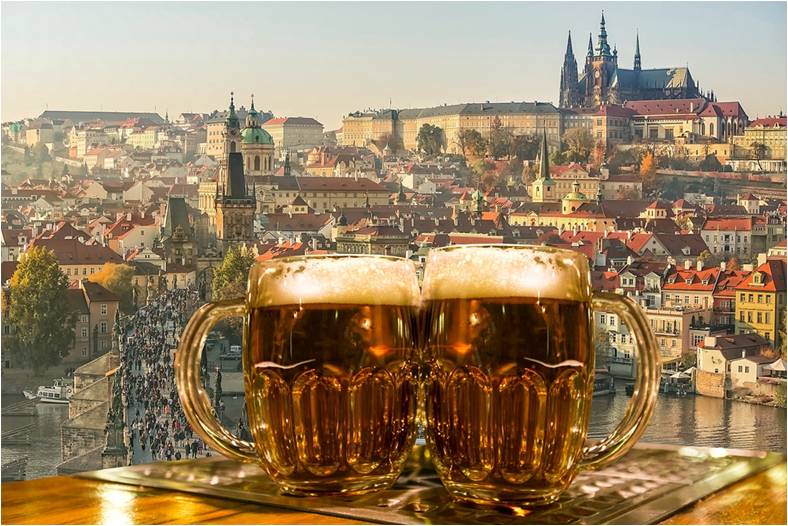
https://www.thecrazytourist.com/top-25-things-to-do-in-prague/
tourist attractions, came across the `Little Child of Prague’, a staue of the infant Jesus in the hisotric Mala Strana area of the city. ` He recognised this immediately as a minature version stood in the window of the entrance hall of his parents’ home in Nottingham when he was growing up.
tourist attractions, came across the `Little Child of Prague’, a staue of the infant Jesus in the hisotric Mala Strana area of the city. ` He recognised this immediately as a minature version stood in the window of the entrance hall of his parents’ home in Nottingham when he was growing up.
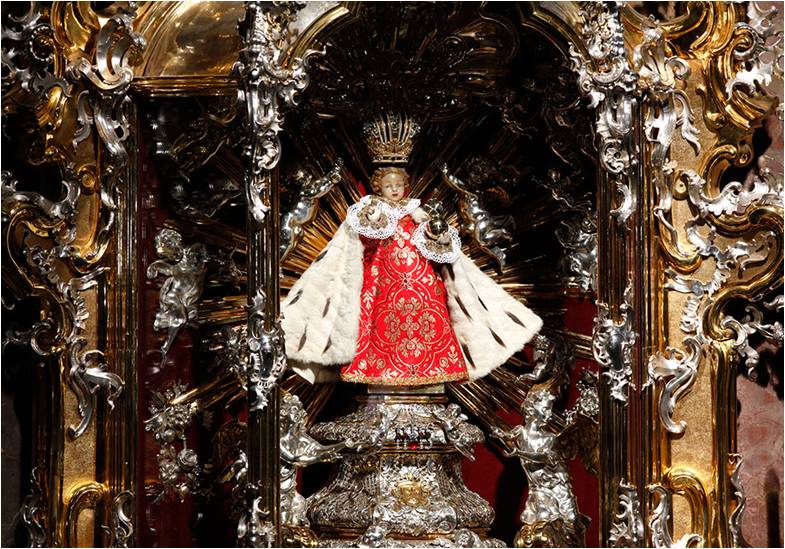
https://www.thecrazytourist.com/top-25-things-to-do-in-prague/
John himself nominated Nepal as his favourite destination, as it is both the home of some of his closest friends and also the focus of his research work, apart from the spendours of its scenery and cultural heritage.
Mention was also made of the the amphitheatre at Nîmes (Nemausus) in southern France, which was exceptionally well preserved because a village grew up indie it and the walls could not, therefore, be cannibalised for building material as happened with many ancient buildings which fell out of use. There is a bilingual account of a trip to the town and to the nearby Pont du Gard at https://linguae.weebly.com/circulus-latinus-honcongensis.html (search for `2012’)
There was also a brief discussion of the very large Latin/Romance element in English, without which it would have remained thoroughly Germanic. Pat pointed out, however, that the closest link was not with standard German (Hoch Deutsch) but with Dutch and even more so the endangered Frisian language. Frisian appears to have remained mutually comprehensible with English until the 12th century, making it particularly easy for King Stephen of England (reigned 1135-1147) to employ his Frisian mercenaries.
John himself nominated Nepal as his favourite destination, as it is both the home of some of his closest friends and also the focus of his research work, apart from the spendours of its scenery and cultural heritage.
Mention was also made of the the amphitheatre at Nîmes (Nemausus) in southern France, which was exceptionally well preserved because a village grew up indie it and the walls could not, therefore, be cannibalised for building material as happened with many ancient buildings which fell out of use. There is a bilingual account of a trip to the town and to the nearby Pont du Gard at https://linguae.weebly.com/circulus-latinus-honcongensis.html (search for `2012’)
There was also a brief discussion of the very large Latin/Romance element in English, without which it would have remained thoroughly Germanic. Pat pointed out, however, that the closest link was not with standard German (Hoch Deutsch) but with Dutch and even more so the endangered Frisian language. Frisian appears to have remained mutually comprehensible with English until the 12th century, making it particularly easy for King Stephen of England (reigned 1135-1147) to employ his Frisian mercenaries.
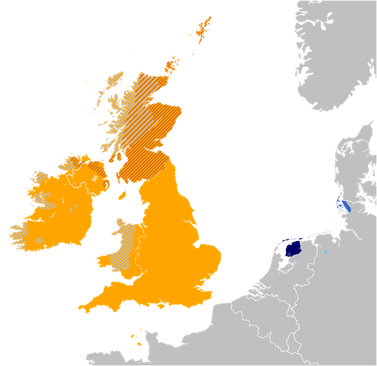
Present-day distribution of Frisian dialects (shown in blue)
https://en.wikipedia.org/wiki/Anglo-Frisian_languages
https://en.wikipedia.org/wiki/Anglo-Frisian_languages
We talked also about the arrival of the chilli pepper (capsicum) in Asia. Pat said that this New World plant took about 100 years from Colombus’ time to reach eastern Eurasia, which meant it entered Korea but not Japan, which by this time had cut itself off from the rest of the world. However, some people hold that Portuguese traders introduced the plant to Japan as early as 1542 (https://en.wikipedia.org/wiki/Chili_pepper) and the isolationist phase of Japanese history began only in 1641. Even after that date, isolation was not complete as limited contacts with China and Korea were continued.
Even before the arrival of chilli, plants providing a somewhat similar sensation were available. Pat pointed ot that wild black pepper was indigenous in Hong Kong and still found in the hills, though we are at the northern extremity of its natural range and the character 胡 (= imported) in the name for pepper (胡椒 (Cantonese wu jiu, Putonghua hu jiao)) shows it was regarded as non-indigenous over China as q whole.
Pat also told us that black pepper was used as a village remedy against malaria. It was put on a band that was tied round a child’s wrist, the pepper then painfully eating ont the flesh, making an open wound. He also knew that villagers formerly made tea from bat droppings, a practice reminiscent of the present-day fashion for kopi luwak, coffee made from berries that had been passed through the digestive tract of civet cats. Pat’s son had bought some of the latter but Pat himself doubted it was worth the price. His son had also experimented with another preparation requiring a strong stomach – gecko wine. This variety of lizard (Cantonese yim se / 鹽蛇 or sei geuk se / 四腳蛇) is actually harmless but a lot of local people are rather afraid of it.
This topic led on to pest control in government buildings. As chief district officer of Sham Shui Po, Pat had once been presiding over a meeting, when he noticed a mouse running around. He insisted on its elimination and someome did this by simply treading on the rodent. Pat then insisted that the squashed mouse be removed before proceedings were resumed. At another office, rats got into the AC system and fleas they were carrying dropped onto persons working there. The government actually worried less about the physical condition of its premises the further away they were from Central and, pests apart, dangers included hazardous staircases that would have been illegal in private sector buildings.
The government did, though, take rat infestation seriously because of the risk of plague. The disease is endemic in southern Vietnam and consequenly when `boat people’ were regularly arriving in Hong Kong the vessels were quarantined at Green Island for thorough checking. In Hong Kong itself lamp posts used to have fixed at their base a box for collection of dead rats with usually a dozen animal checked each night for the disease. The last major local outbreak was in 1926 and the most serious one, which occurred in 1894, was discussed at length in our April 2014 meeting.
In addition to Vietnam, plague is also endemic in Mongolia and in the Los Angeles/San Francsico region, a fact that the Americans try to keep quiet about. There is apparently a persistent reservoir of the disease in the local rat population, which, which was itself infected by contact with prairie dogs.
Pat mentioned his latest publication –Forgotten Heroes: San On County and its Magistrates in the Late Ming and Early Qing, which deals with local administration of the region including Hong Kong, principally in the period 1574 – 1713.A new book of collected essays will appear shortly but the publisher wants a sexier title than the straightforward `Village Studies’ he himself has suggested.
Pat’s next foreign trip will be to the Gyeongju in SE Korea, founded in 57 B.C. as the capital of the Silla kingdom, which had expanded to cover two-thirds of the peninsula by 668 and retained its status till the conquest of Silla by King Taejo of Gotyeo in 932, after which it declined in importance but sometimes served as a major regional centre and is today a UNESCO World Heritage site (see https://en.wikipedia.org/wiki/Gyeongju)
Even before the arrival of chilli, plants providing a somewhat similar sensation were available. Pat pointed ot that wild black pepper was indigenous in Hong Kong and still found in the hills, though we are at the northern extremity of its natural range and the character 胡 (= imported) in the name for pepper (胡椒 (Cantonese wu jiu, Putonghua hu jiao)) shows it was regarded as non-indigenous over China as q whole.
Pat also told us that black pepper was used as a village remedy against malaria. It was put on a band that was tied round a child’s wrist, the pepper then painfully eating ont the flesh, making an open wound. He also knew that villagers formerly made tea from bat droppings, a practice reminiscent of the present-day fashion for kopi luwak, coffee made from berries that had been passed through the digestive tract of civet cats. Pat’s son had bought some of the latter but Pat himself doubted it was worth the price. His son had also experimented with another preparation requiring a strong stomach – gecko wine. This variety of lizard (Cantonese yim se / 鹽蛇 or sei geuk se / 四腳蛇) is actually harmless but a lot of local people are rather afraid of it.
This topic led on to pest control in government buildings. As chief district officer of Sham Shui Po, Pat had once been presiding over a meeting, when he noticed a mouse running around. He insisted on its elimination and someome did this by simply treading on the rodent. Pat then insisted that the squashed mouse be removed before proceedings were resumed. At another office, rats got into the AC system and fleas they were carrying dropped onto persons working there. The government actually worried less about the physical condition of its premises the further away they were from Central and, pests apart, dangers included hazardous staircases that would have been illegal in private sector buildings.
The government did, though, take rat infestation seriously because of the risk of plague. The disease is endemic in southern Vietnam and consequenly when `boat people’ were regularly arriving in Hong Kong the vessels were quarantined at Green Island for thorough checking. In Hong Kong itself lamp posts used to have fixed at their base a box for collection of dead rats with usually a dozen animal checked each night for the disease. The last major local outbreak was in 1926 and the most serious one, which occurred in 1894, was discussed at length in our April 2014 meeting.
In addition to Vietnam, plague is also endemic in Mongolia and in the Los Angeles/San Francsico region, a fact that the Americans try to keep quiet about. There is apparently a persistent reservoir of the disease in the local rat population, which, which was itself infected by contact with prairie dogs.
Pat mentioned his latest publication –Forgotten Heroes: San On County and its Magistrates in the Late Ming and Early Qing, which deals with local administration of the region including Hong Kong, principally in the period 1574 – 1713.A new book of collected essays will appear shortly but the publisher wants a sexier title than the straightforward `Village Studies’ he himself has suggested.
Pat’s next foreign trip will be to the Gyeongju in SE Korea, founded in 57 B.C. as the capital of the Silla kingdom, which had expanded to cover two-thirds of the peninsula by 668 and retained its status till the conquest of Silla by King Taejo of Gotyeo in 932, after which it declined in importance but sometimes served as a major regional centre and is today a UNESCO World Heritage site (see https://en.wikipedia.org/wiki/Gyeongju)
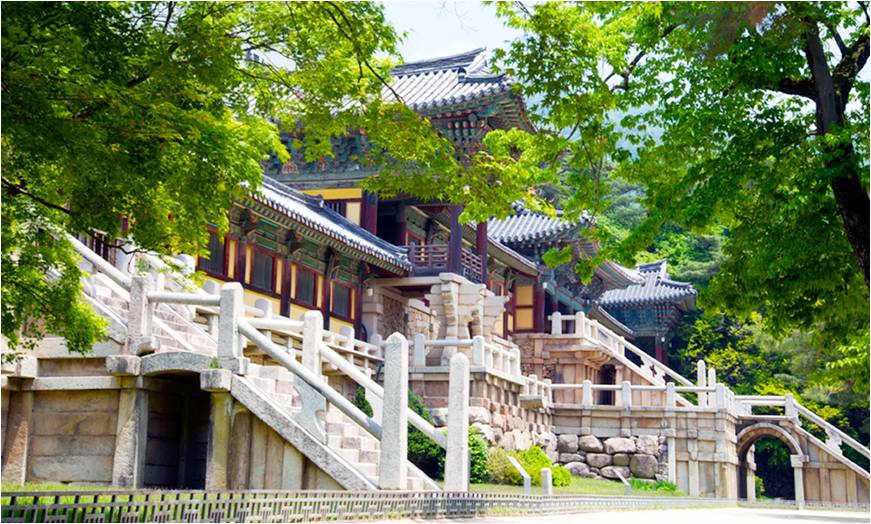
Bulguksa Temple at Gyeongju
https://littleholidays.net/blog/gyeongju-south-korea/
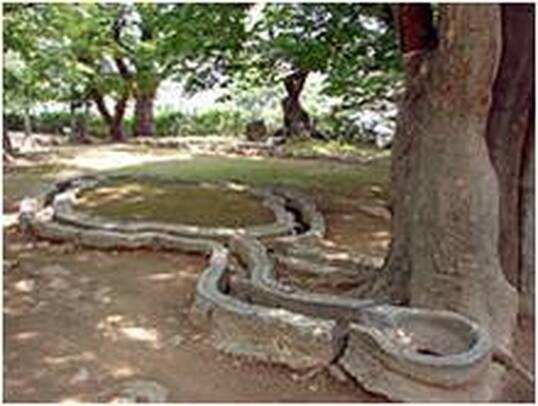
Among the many attractions there is Poseokjeong, the royal garden, with the artificial watercourse constructed for a game in which one person floated a cup of wine downstream to another who had to drain it unless he could complete a line of poetry by the time it arrived (see http://articles.latimes.com/2002/feb/24/travel/tr-korea24/2). There is also an 8th century tower for astronomical observations.
https://littleholidays.net/blog/gyeongju-south-korea/
Among the many attractions there is Poseokjeong, the royal garden, with the artificial watercourse constructed for a game in which one person floated a cup of wine downstream to another who had to drain it unless he could complete a line of poetry by the time it arrived (see http://articles.latimes.com/2002/feb/24/travel/tr-korea24/2). There is also an 8th century tower for astronomical observations.
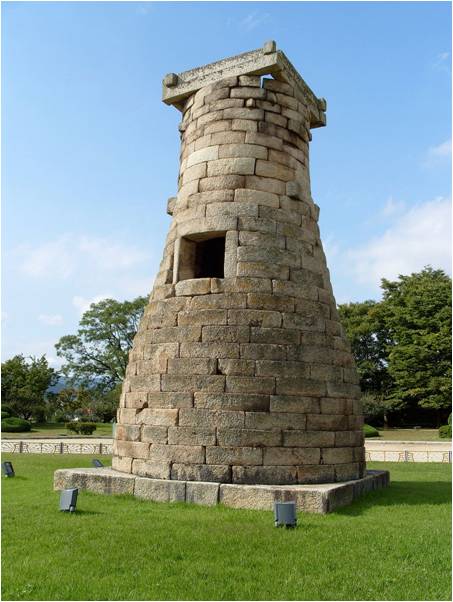
The Astronomy Tower
https://en.wikipedia.org/wiki/Cheomseongdae
We briefly considered the extensive cultural links between Korea and Japan, with the former having originated both sake and the consumption of raw fish as sushi. Tan reminded us of how she had been shown Keon’s family graveyard and given the exciting (?) news that there was a plot reserved for her.
We finally read lines 632-670 of Aeneid II (see below) and noted the verb affor (affārī, affātus sum), which one of us suggested might be connected with the legal term affidavit (sworn statement). The latter is in fact the 3rd. person singular perfect of the medieval Latin varb affidō (affidāre, affidāvī, affidātum), `trust’, `make an oath’.
QUEM TERRAM LIBENTISSIMĒ VĪSITĀTIS
https://en.wikipedia.org/wiki/Cheomseongdae
We briefly considered the extensive cultural links between Korea and Japan, with the former having originated both sake and the consumption of raw fish as sushi. Tan reminded us of how she had been shown Keon’s family graveyard and given the exciting (?) news that there was a plot reserved for her.
We finally read lines 632-670 of Aeneid II (see below) and noted the verb affor (affārī, affātus sum), which one of us suggested might be connected with the legal term affidavit (sworn statement). The latter is in fact the 3rd. person singular perfect of the medieval Latin varb affidō (affidāre, affidāvī, affidātum), `trust’, `make an oath’.
QUEM TERRAM LIBENTISSIMĒ VĪSITĀTIS
|
Quem terram libentissimē vīsitās?
Austrāliam/Novam Zelandiam/Canadam/ Civitātēs Foederātās Americae/Sīnam continentālem/Britanniam/Angliam/ Cambriam/Caledoniam/Corēam/Geōrgiam Thailandiam/Nepālum/Indiam/Iapōniam/ Francogalliam/Germāniam/Tsechiam/ Āfricam Austrālem/Aegyptum/Italiam/ Graeciam/Hispāniam/Latviam/Finniam/ Vietnāmiam/Polōniam/Russiam/Suētiam Norvegiam/Taivāniam/Lusitāniam/Armenia Cūr illa terra tibi maximē placet? Incolae sunt cōmēs et peregrīnōs benignē excipiunt Montēs et silvae sunt pulcherrimae. Sunt multī sitūs historicī quī mē semper dēlectant. Cibus et vīnum sunt optima. Mūsea et pinothēcae sunt eximiae, multī rēs culturālēs colunt. Multōs amīcōs ibi habeō quōs multōs annōs nōvī. Tabernae theātraque me maximē dēlectant. Aedificia Lutētiae/Londinī/Prāgae/ Novī Eborācī/Angelopolī sunt magnifica Omnēs ibi vītā fruī sciunt, Quō temporē annī optimē vīsitandum est? Autumnō/Hieme/Vēre/Aestāte Cūr ita dīcis? Quod caelum serēnum est et montēs clāriter vidērī possunt Quod in terrā multa nix iacet et scridāre possumus. Quod in ōrīs maritimīs apricārī et in marī natāre possumus. |
Which country do you most like to visit?
Australia/New Zealand/Canada/ The United States of America/mainland China/Britain/England Wales/Scotland/Korea/Georgia Thailand/Nepal/India/Japan France/Germany/Czechia South Africa/Egypt/Italy Greece/Spain/Latvia/Finland Vietnam/Poland/Russia/Sweden Norway/Taiwan/Portugal/Armenia Why do you particularly like that country? The people are friendly and give foreigners a warm welcome. The hills and woods are very beautiful There are many historic sites which I always enjoy. The food and wine are first-rate The museums and art galleries are excellent, many people have cultural interests I have many friends there who I’ve known well for many years The bars and theatres delight me enormously The buildings in Paris/London//Prague New York/Los Angeles are magnificent Everybody there enjoys life. What time of year is best for visiting? Autumn/Winter/Spring/Summer? Why do you say so? Because the sky is clear and the mountains are clearly visible. Because there’s lots of snow on the ground and we can ski. Because we can sunbathe on the beaches and swim in the sea. |
AENEID II, 632-70
dēscendō ac dūcente deō flammam inter et hostīs optābam prīmum montīs prīmumque petēbam,
expedior: dant tēla locum flammaeque recēdunt. abnegat excīsā vītam prōdūcere Trōiā 637
Atque ubi iam patriae perventum ad līmina sēdis exsiliumque patī. «vōs ō, quibus integer aevī
antīquāsque domōs, genitor, quem tollere in altōs
TRANSLATION
and, with its foliage trembling and its crown violently shaken, it sways until, gradually overcome by the blows, it has given a last groan and, torn away from the ridge, left destruction in its wake. I descend and, with divinity leading me, am given free passage between fire and the enemy. The weapons give way and the flames fall back, But when I have reached the threshold of my father’s house, our ancient home, my father whom I wanted to carry up first to the high mountains and whom I first sought out, refuses to prolong his life after the destruction of Troy and suffer exile. `You,’ he says, `whose life[blood is still] fresh
632: dēscendō, -ere, dēscendī, dēscēnsum descend. ac and. dūcō, dūcere, dūxī, ductum lead. deus, -ī m god, divinity. hostis, hostis m enemy dēscendō: Aeneas had been on the palace roof. ducente deō: ablative absolute (literally `with the god leading’). His guide is Venus, sot (unless the text has been wrongly copied) deus has the general sense of `divinity’.
flammam inter et hostīs: in prose the preposition inter would normally be in front of flammam. Meaning is reinforced as inter (`between’) is between the nouns it governs. The syllable et is short becaue the `h’ of hostīs is not counted as a full consonant for vowel lengthening
633: expediō, expedīre, expedīvī/expediī, expedītum extricate, make free, make ready. dō, dare, dedī, datum give. tēlum, -ī n weapon, missile. locus, -ī m place. dant tēla locum: (subject after the verb) literally `weapons give place’ but `give way’ is more natural English. recēdō, recēdere, recessī, recessum retire, withdraw.
634: atque and (but the sense in this line seems nearer to `but’). iam now, already. patrius, -a, -um belonging to father or ancestors. perveniō, pervenīre, pervēnī, perventum arrive at, reach. līmen, līminis n threshold, entrance. sēdes, sēdis f seat, home, residence
perventum: impersonal passive perfect tense with est understood: `there was an arrival’ (i.e. `I arrived’)
635: antīquus, -a, -um old, ancient. domus, domūs/domī f home. genitor, genitoris m father. tollō, tollere, sustulī, sublātum take up/away. altus, -a, -um high.
636: optō, optāre, optāvī, optātum wish for, desire. prīmum first (adverb). mōs, montis m mountain. petō, petere, petīvī/petiī, petītum seek, ask for.
optābam prīmum ... prīmumque petēbam: repetition of the adverb prīmum for emphasis, with a strngthened effect by the chiasmic (verb-adverb:adverb-verb) word order.
637: abnegō, -āre, abnegāvī, abnegātum deny, refuse. excīdō, -ere, excīdī, excīsum cut out or off,, destroy. vīta, -ae f life. prōdūcō, prōdūcere, prōdūxī, prōductum lead or bring forward, prolong. excīsā…Troiā: ablative absolute (`with Troy destroyed’)
The spondees of excīsā vītam prōdūcere reflect Anchises refusal to move, whilst excīsā recalls the tree simile above.
638: exsilium, -ī n exile. patior, patī, passus sum suffer, allow. integer, -gra, -grum whole, fresh. aevum, -ī n life, age.vōs you (pl)
ō: in prose this would go before vōs. The verb est has to be understood linking integer and sanguis in the next line.
sanguis,» ait, «solidaeque suō stant rōbore vīrēs sīc ō sīc positum adfātī discēdite corpus.
vōs agitāte fugam. 640 ipse manū mortem inveniam; miserēbitur hostis
Mē sī caelicolae voluissent dūcere vītam, exuviāsque petet. facilis iactūra sepulcrī. 646
hās mihi servāssent sēdēs. satis ūna superque iam prīdem invīsus dīvīs et inūtilis annōs
vīdimus excidia et captae superāvimus urbī. dēmoror, ex quō mē dīvum pater atque hominum rēx
TRANSLATION
he says, `and whose strength remains firm in its own vigour, think of flight!’ As for me, if the gods had wanted me to go on living, they would have preserved this home for me. It is enough – and more than enough - that we have seen destruction and survived the city’s capture once. Say goodbye to my body while I’m in just this position and leave. I’ll find death myself by my own hand: the enemy will take pity on me and come looking for spoils. It’s easy to go without a tomb. For a long time now I’ve been hampering the passage of the years, hated by the gods and useless, ever since the father of the gods and king of men
639: sanguis, sanguinis m blood. ait he/she says solidus, -a, -um solid, firm. stō, stāre, stetī, statum stand. rōbur, rōboris n strength, power. vīrēs, vīrium f pl strength. solidae … vīrēs: literally `and whose strength still stands firm by its own might’ i.e. who stll have their full strength and do not need help to move as Anchises himself does.
640: agitō, agitāre, agitāvī, agitātum drive, consider, pursue. fuga, -ae f flight.
641: sī if. caelicola, -ae m f inhabitant of heaven, god. volō, velle, voluī wish, want. dūcō, dūcere, dūxī, ductum. lead, pass . vīta, -ae f life. The verb dūcō can apply to spinning, and suggests the Fates spinning the thread of Aeneas’s life.
mē: accusative, object of voluissent.
voluissent: `had wanted’ (pluperfect subjunctive, used in a contrary-to-fact past conditional).
642: servō, servāre, servāvī, servātum save, look after. sēdēs, sēdis f seat, house. satis enough. hic, haec, hoc this
super above, over. ūnus, -a, -um one. mihi: dative (`for me’).
servāssent: short form of servavissent (pluperfect subjunctive, `would have saved’). Note the alliteration of `s’ in this line which is suggestive of sighing or weeping.
ūna: neuter plural (despite meaning `one’)as it is agreeing with excidia in lne 644, a plural noun used with singular meaning. The reader has also to supply another ūna going with captae … urbī in the same line. In lines 643-4 Anchises is referring to the earlier sack of Troy by Hercules, who had been denied his promised reward from King Laomedon, Priam’s father, for saving Laomedon’s daughter from a sea-monster.
643: videō, -ēre, vīdī, vīsum see. excidium, -ī n destruction. capiō, capere, cēpī, captum seize,capture. superō, -āre, superāvī, sua rātum surpass, (with dative)survive. urbs, urbis f city. captae … urbī: here, as often, a passive perfect participle and noun should not be translated with an English particle but with two nouns linked by `of’: `capture of the city’
644: sīc thus. pōnō, -ere, posuī, positum put, place. affor, affārī, affātus sum speak to, address. discēdō, discēdere, discessī, discessum depart. corpus, corporis n body. sīc ō sīc positum … corpus: Anchises speaks of himself as if he was already a corpse laid out for burial.
645: ipse, -a, -um self (emphatic). mors, mortis f death. manus, manūs f hand. inveniō,-īre, invēnī, inventum find.
misereor, miserērī, miseritus sum have pity. hostis, hostis c enemy. miserēbitur: used ironically. Anchises aims to rush at the enemy who will kill him so that they can take possession of his armour.
646: exuviae, -ārum f spoils, booty. petō, petere, petīvī/petiī, petītum make for, seek. facilis, -e easy. iactūra, -ae f loss. sepulchrum. –ī n tomb. facilis iactūra sepulcrī : the verb est has to be understood here. Given the great importance the Greeks placed on proper funeral ceremonies, this is an extreme statement to make and shows Anchises’s utter despair at this moment.
647:iam now, already. prīdem for some time invīsus, -a, -um hateful. dīvus, -ī m god. inūtilis, useless. annus, -ī m year.
648: dēmoror, dēmorārī, dēmorātus sum delay. pater, patris m father. homō, hominis. man (human being). rēx, rēgis m king.
dīvum pater atque hominum rēx: i.e. Jupiter, who had aimed a thunderbolt at Anchises when he defied instructions not to boast of having made love to Venus. He was crippled, but not killed, as Venus managed to deflect the thunderbolt slightly from its path.
fulminis adflāvit ventīs et contigit ignī.» 649 rursus in arma feror mortemque miserrimus optō.
Tālia perstābat memorāns fīxusque manēbat. nam quod cōnsilium aut quae iam fortūna dabātur?
nōs contrā effūsī lacrimīs coniūnxque Creūsa «mēne efferre pedem, genitor, tē posse relictō
Ascaniusque omnīsque domus, nē vertere sēcum spērāstī tantumque nefās patriō excidit ōre?
cuncta pater fātōque urgentī incumbere vellet. reddite mē Danaīs; sinite instaurāta revīsam 669
abnegat inceptōque et sēdibus haeret in īsdem. 654 proelia. numquam omnēs hodiē moriēmur inultī.’
TRANSLATION
blew the winds of his thunderbolt upon me and touched me with his fire.’ He kept on mentioning such things and remained unyielding. We in oppoition poured out ourselves in tears uging him not to want to pull down everything with himself and add his own weight to the impending doom. He refuses and sticks to his initial plan and to the same settled stance. Again I am swept into taking up arms and in my great misery wish for death. For what other plan or fortune was now on offer? `Did you expect that I could take off, father, leaving you behind and has such a wicked suggestion fallen from a father’s mouth? Return me to the Danaans ; let me go back and see renewed combat. None of us will ever die unavenged today.
659: nihil nothing. ex out of. tantus, -a, -um so great.superī, -ōrum m pl.those above, the gods. placeō, placēre, placuī, placitum please urbs, urbis f city. relinquō, -ere, relīquī, relictum leave.
placet: impersonal use (`it is pleasing to’) with dative superīs, `it pleases the gods/the gods have decided that…’
relinquī: the passive infinitive (`to be left’). The accusative and infinitive construction, Latin’s normal way of reporting the contents of a statement, is the equivalent of a `that’-clause in English
660: sedeō, sedēre, sēdī, sessum sit, be deided. animus, -ī m mid, spirit. pereō, perīre, perīvī/periī, peritum perish, be destroyed. addō, addere, addidī, additum add. hoc: neuter singular nominative (referring to Anchises’ plan). Although the vowel was probably short, this counts as a long syllable in scansion because the word was originally hocce and was still pronounced with a doube consonant before a following vowel. animō: ablative (`in your mind’)
661: iuvō, -āre, iūvi, iūtum help, please. pateō, patēre, patuī be be open, be visible. iste, ista, istud that (of yours). iānua, -ae f door. lētum, -ī n death tēque tuōsque: `both you and yours’ . The adjective tuōs is used as a noun meaning `your family).
662: iam now, already. adsum, adesse, adfuī be present. multus, -a, -um much. dē from. sanguis, sanguinis m blood.
Pyrrhus, -ī m: son of Achilles and also known as Neoptolemus. He had been in the Horse (see l.2??) and had killed Prriam’s son Polites before killing the king himself.
663: nātus, -ī m son. ōs, ōris n face, mouth. pater, patris m father. obtruncō, -āre, obtruncāvī, obtruncātum cut to pieces, kill. ara, -ae f altar. patris, patrem: the first syllable of the first of these words is scanned long (i.e. `the syllabic division is pat – rem) while the first syllable of the second is short (pa – term). The juxtaposition of these forms emphasizes the balanced nature of the line with two parallel clauses. The words quī obtruncat govern nātum as well as patrem.
664: almus, -a, -um gentle. per through. tēlum. –ī n weapon, missile. ignis, ignis m fire. hoc: neuter singular nominative referring to the ut clauses in lines 665 and 666.The syllable is long for the reason explained in the note on l.661.
665: ēripiō, ēripere, ēripuī, ēreptum snatch away. ut so that. medius, -a, -um middile, middle of. hostis, hostis c enemy. penetrālis, -e innermost. penetrālibus: the neter plural of the adjective is used here as a neuter noun (`the inner parts’). This word is also often used to refer to the innermost and most sacred part of a shrine and its use here emphasizes how one’s home itself is a sacred area.
666: Ascanius, -ī m Aeneas’s son (also known as Iūlus) iuxtā alike, equally. Creūsa, -ae f wife of Aeneas.
667:alter, altera, alterum one of two, the other. mactō, mactāre, mactāvī, mactātum slaughter. sanguis, sanguinis m blood. cernō, -ere, crēvī, crētum see. alterum in alterius … sanguine: `one in the blood of the other’, i.e. `in each other’s blood’
668: vir, viī man. ferō, ferre, tulī, lātum. carry, bring.. vocō, -āre, vocāvī, vocātum. call. lūx, lūcis f light. ultimus, -a, -um final. vincō, vincere, vīcī, victum conquer. lūx: used metaphorically here for `day’ or referring specifically to the coming dawn..
victōs: masculine nominative plural perfect participle, used like a noun (`the vanquished).
669: reddō, reddere , reddidī, redditum give back, render. Danaī, -ōrum m pl Danaäns, greeks (see note on line258). sinō, sinere, sīvī/siī, situm allow. īnstaurō, -āre, īnstaurāvī, īnstaurātum renew, repeat. revīsō, revīsere revisit, go back and see.
revīsam: this word is identical to the past participle of revideō (see again) but is actually the present subjunctive of revīsō and dependent on sinite.: `allow that I may revisit..’
670: proelium, -ī n battle. numquam never. omnis, -e all. hodiē today. morior, morī, mortuus sum die. inultus, -a, -um unavenged.
expedior: dant tēla locum flammaeque recēdunt. abnegat excīsā vītam prōdūcere Trōiā 637
Atque ubi iam patriae perventum ad līmina sēdis exsiliumque patī. «vōs ō, quibus integer aevī
antīquāsque domōs, genitor, quem tollere in altōs
TRANSLATION
and, with its foliage trembling and its crown violently shaken, it sways until, gradually overcome by the blows, it has given a last groan and, torn away from the ridge, left destruction in its wake. I descend and, with divinity leading me, am given free passage between fire and the enemy. The weapons give way and the flames fall back, But when I have reached the threshold of my father’s house, our ancient home, my father whom I wanted to carry up first to the high mountains and whom I first sought out, refuses to prolong his life after the destruction of Troy and suffer exile. `You,’ he says, `whose life[blood is still] fresh
632: dēscendō, -ere, dēscendī, dēscēnsum descend. ac and. dūcō, dūcere, dūxī, ductum lead. deus, -ī m god, divinity. hostis, hostis m enemy dēscendō: Aeneas had been on the palace roof. ducente deō: ablative absolute (literally `with the god leading’). His guide is Venus, sot (unless the text has been wrongly copied) deus has the general sense of `divinity’.
flammam inter et hostīs: in prose the preposition inter would normally be in front of flammam. Meaning is reinforced as inter (`between’) is between the nouns it governs. The syllable et is short becaue the `h’ of hostīs is not counted as a full consonant for vowel lengthening
633: expediō, expedīre, expedīvī/expediī, expedītum extricate, make free, make ready. dō, dare, dedī, datum give. tēlum, -ī n weapon, missile. locus, -ī m place. dant tēla locum: (subject after the verb) literally `weapons give place’ but `give way’ is more natural English. recēdō, recēdere, recessī, recessum retire, withdraw.
634: atque and (but the sense in this line seems nearer to `but’). iam now, already. patrius, -a, -um belonging to father or ancestors. perveniō, pervenīre, pervēnī, perventum arrive at, reach. līmen, līminis n threshold, entrance. sēdes, sēdis f seat, home, residence
perventum: impersonal passive perfect tense with est understood: `there was an arrival’ (i.e. `I arrived’)
635: antīquus, -a, -um old, ancient. domus, domūs/domī f home. genitor, genitoris m father. tollō, tollere, sustulī, sublātum take up/away. altus, -a, -um high.
636: optō, optāre, optāvī, optātum wish for, desire. prīmum first (adverb). mōs, montis m mountain. petō, petere, petīvī/petiī, petītum seek, ask for.
optābam prīmum ... prīmumque petēbam: repetition of the adverb prīmum for emphasis, with a strngthened effect by the chiasmic (verb-adverb:adverb-verb) word order.
637: abnegō, -āre, abnegāvī, abnegātum deny, refuse. excīdō, -ere, excīdī, excīsum cut out or off,, destroy. vīta, -ae f life. prōdūcō, prōdūcere, prōdūxī, prōductum lead or bring forward, prolong. excīsā…Troiā: ablative absolute (`with Troy destroyed’)
The spondees of excīsā vītam prōdūcere reflect Anchises refusal to move, whilst excīsā recalls the tree simile above.
638: exsilium, -ī n exile. patior, patī, passus sum suffer, allow. integer, -gra, -grum whole, fresh. aevum, -ī n life, age.vōs you (pl)
ō: in prose this would go before vōs. The verb est has to be understood linking integer and sanguis in the next line.
sanguis,» ait, «solidaeque suō stant rōbore vīrēs sīc ō sīc positum adfātī discēdite corpus.
vōs agitāte fugam. 640 ipse manū mortem inveniam; miserēbitur hostis
Mē sī caelicolae voluissent dūcere vītam, exuviāsque petet. facilis iactūra sepulcrī. 646
hās mihi servāssent sēdēs. satis ūna superque iam prīdem invīsus dīvīs et inūtilis annōs
vīdimus excidia et captae superāvimus urbī. dēmoror, ex quō mē dīvum pater atque hominum rēx
TRANSLATION
he says, `and whose strength remains firm in its own vigour, think of flight!’ As for me, if the gods had wanted me to go on living, they would have preserved this home for me. It is enough – and more than enough - that we have seen destruction and survived the city’s capture once. Say goodbye to my body while I’m in just this position and leave. I’ll find death myself by my own hand: the enemy will take pity on me and come looking for spoils. It’s easy to go without a tomb. For a long time now I’ve been hampering the passage of the years, hated by the gods and useless, ever since the father of the gods and king of men
639: sanguis, sanguinis m blood. ait he/she says solidus, -a, -um solid, firm. stō, stāre, stetī, statum stand. rōbur, rōboris n strength, power. vīrēs, vīrium f pl strength. solidae … vīrēs: literally `and whose strength still stands firm by its own might’ i.e. who stll have their full strength and do not need help to move as Anchises himself does.
640: agitō, agitāre, agitāvī, agitātum drive, consider, pursue. fuga, -ae f flight.
641: sī if. caelicola, -ae m f inhabitant of heaven, god. volō, velle, voluī wish, want. dūcō, dūcere, dūxī, ductum. lead, pass . vīta, -ae f life. The verb dūcō can apply to spinning, and suggests the Fates spinning the thread of Aeneas’s life.
mē: accusative, object of voluissent.
voluissent: `had wanted’ (pluperfect subjunctive, used in a contrary-to-fact past conditional).
642: servō, servāre, servāvī, servātum save, look after. sēdēs, sēdis f seat, house. satis enough. hic, haec, hoc this
super above, over. ūnus, -a, -um one. mihi: dative (`for me’).
servāssent: short form of servavissent (pluperfect subjunctive, `would have saved’). Note the alliteration of `s’ in this line which is suggestive of sighing or weeping.
ūna: neuter plural (despite meaning `one’)as it is agreeing with excidia in lne 644, a plural noun used with singular meaning. The reader has also to supply another ūna going with captae … urbī in the same line. In lines 643-4 Anchises is referring to the earlier sack of Troy by Hercules, who had been denied his promised reward from King Laomedon, Priam’s father, for saving Laomedon’s daughter from a sea-monster.
643: videō, -ēre, vīdī, vīsum see. excidium, -ī n destruction. capiō, capere, cēpī, captum seize,capture. superō, -āre, superāvī, sua rātum surpass, (with dative)survive. urbs, urbis f city. captae … urbī: here, as often, a passive perfect participle and noun should not be translated with an English particle but with two nouns linked by `of’: `capture of the city’
644: sīc thus. pōnō, -ere, posuī, positum put, place. affor, affārī, affātus sum speak to, address. discēdō, discēdere, discessī, discessum depart. corpus, corporis n body. sīc ō sīc positum … corpus: Anchises speaks of himself as if he was already a corpse laid out for burial.
645: ipse, -a, -um self (emphatic). mors, mortis f death. manus, manūs f hand. inveniō,-īre, invēnī, inventum find.
misereor, miserērī, miseritus sum have pity. hostis, hostis c enemy. miserēbitur: used ironically. Anchises aims to rush at the enemy who will kill him so that they can take possession of his armour.
646: exuviae, -ārum f spoils, booty. petō, petere, petīvī/petiī, petītum make for, seek. facilis, -e easy. iactūra, -ae f loss. sepulchrum. –ī n tomb. facilis iactūra sepulcrī : the verb est has to be understood here. Given the great importance the Greeks placed on proper funeral ceremonies, this is an extreme statement to make and shows Anchises’s utter despair at this moment.
647:iam now, already. prīdem for some time invīsus, -a, -um hateful. dīvus, -ī m god. inūtilis, useless. annus, -ī m year.
648: dēmoror, dēmorārī, dēmorātus sum delay. pater, patris m father. homō, hominis. man (human being). rēx, rēgis m king.
dīvum pater atque hominum rēx: i.e. Jupiter, who had aimed a thunderbolt at Anchises when he defied instructions not to boast of having made love to Venus. He was crippled, but not killed, as Venus managed to deflect the thunderbolt slightly from its path.
fulminis adflāvit ventīs et contigit ignī.» 649 rursus in arma feror mortemque miserrimus optō.
Tālia perstābat memorāns fīxusque manēbat. nam quod cōnsilium aut quae iam fortūna dabātur?
nōs contrā effūsī lacrimīs coniūnxque Creūsa «mēne efferre pedem, genitor, tē posse relictō
Ascaniusque omnīsque domus, nē vertere sēcum spērāstī tantumque nefās patriō excidit ōre?
cuncta pater fātōque urgentī incumbere vellet. reddite mē Danaīs; sinite instaurāta revīsam 669
abnegat inceptōque et sēdibus haeret in īsdem. 654 proelia. numquam omnēs hodiē moriēmur inultī.’
TRANSLATION
blew the winds of his thunderbolt upon me and touched me with his fire.’ He kept on mentioning such things and remained unyielding. We in oppoition poured out ourselves in tears uging him not to want to pull down everything with himself and add his own weight to the impending doom. He refuses and sticks to his initial plan and to the same settled stance. Again I am swept into taking up arms and in my great misery wish for death. For what other plan or fortune was now on offer? `Did you expect that I could take off, father, leaving you behind and has such a wicked suggestion fallen from a father’s mouth? Return me to the Danaans ; let me go back and see renewed combat. None of us will ever die unavenged today.
659: nihil nothing. ex out of. tantus, -a, -um so great.superī, -ōrum m pl.those above, the gods. placeō, placēre, placuī, placitum please urbs, urbis f city. relinquō, -ere, relīquī, relictum leave.
placet: impersonal use (`it is pleasing to’) with dative superīs, `it pleases the gods/the gods have decided that…’
relinquī: the passive infinitive (`to be left’). The accusative and infinitive construction, Latin’s normal way of reporting the contents of a statement, is the equivalent of a `that’-clause in English
660: sedeō, sedēre, sēdī, sessum sit, be deided. animus, -ī m mid, spirit. pereō, perīre, perīvī/periī, peritum perish, be destroyed. addō, addere, addidī, additum add. hoc: neuter singular nominative (referring to Anchises’ plan). Although the vowel was probably short, this counts as a long syllable in scansion because the word was originally hocce and was still pronounced with a doube consonant before a following vowel. animō: ablative (`in your mind’)
661: iuvō, -āre, iūvi, iūtum help, please. pateō, patēre, patuī be be open, be visible. iste, ista, istud that (of yours). iānua, -ae f door. lētum, -ī n death tēque tuōsque: `both you and yours’ . The adjective tuōs is used as a noun meaning `your family).
662: iam now, already. adsum, adesse, adfuī be present. multus, -a, -um much. dē from. sanguis, sanguinis m blood.
Pyrrhus, -ī m: son of Achilles and also known as Neoptolemus. He had been in the Horse (see l.2??) and had killed Prriam’s son Polites before killing the king himself.
663: nātus, -ī m son. ōs, ōris n face, mouth. pater, patris m father. obtruncō, -āre, obtruncāvī, obtruncātum cut to pieces, kill. ara, -ae f altar. patris, patrem: the first syllable of the first of these words is scanned long (i.e. `the syllabic division is pat – rem) while the first syllable of the second is short (pa – term). The juxtaposition of these forms emphasizes the balanced nature of the line with two parallel clauses. The words quī obtruncat govern nātum as well as patrem.
664: almus, -a, -um gentle. per through. tēlum. –ī n weapon, missile. ignis, ignis m fire. hoc: neuter singular nominative referring to the ut clauses in lines 665 and 666.The syllable is long for the reason explained in the note on l.661.
665: ēripiō, ēripere, ēripuī, ēreptum snatch away. ut so that. medius, -a, -um middile, middle of. hostis, hostis c enemy. penetrālis, -e innermost. penetrālibus: the neter plural of the adjective is used here as a neuter noun (`the inner parts’). This word is also often used to refer to the innermost and most sacred part of a shrine and its use here emphasizes how one’s home itself is a sacred area.
666: Ascanius, -ī m Aeneas’s son (also known as Iūlus) iuxtā alike, equally. Creūsa, -ae f wife of Aeneas.
667:alter, altera, alterum one of two, the other. mactō, mactāre, mactāvī, mactātum slaughter. sanguis, sanguinis m blood. cernō, -ere, crēvī, crētum see. alterum in alterius … sanguine: `one in the blood of the other’, i.e. `in each other’s blood’
668: vir, viī man. ferō, ferre, tulī, lātum. carry, bring.. vocō, -āre, vocāvī, vocātum. call. lūx, lūcis f light. ultimus, -a, -um final. vincō, vincere, vīcī, victum conquer. lūx: used metaphorically here for `day’ or referring specifically to the coming dawn..
victōs: masculine nominative plural perfect participle, used like a noun (`the vanquished).
669: reddō, reddere , reddidī, redditum give back, render. Danaī, -ōrum m pl Danaäns, greeks (see note on line258). sinō, sinere, sīvī/siī, situm allow. īnstaurō, -āre, īnstaurāvī, īnstaurātum renew, repeat. revīsō, revīsere revisit, go back and see.
revīsam: this word is identical to the past participle of revideō (see again) but is actually the present subjunctive of revīsō and dependent on sinite.: `allow that I may revisit..’
670: proelium, -ī n battle. numquam never. omnis, -e all. hodiē today. morior, morī, mortuus sum die. inultus, -a, -um unavenged.
