| linguae |
|
QUESTIONS ARISING FROM 127th. MEETING – 17/9/21
(the record of earlier meetings can be downloaded from the main Circulus page as can the version of Ciceronis Filius with illustrations added. The illustrated text of Genesis is available on the Genesis page, of Kepler's Somnium on the Somnium page and of Nutting's Ad Alpes on the Ad Alpes page)
Food consumed at the Basmati included panipuria (pani puri), cicera arōmatica (chana masala, spiced chick peas), caseus fervēns (sizzling paneer), okrum arōmaticum (bhindi masala, `lady’s fingers’, okra with spices), spīnāchia cum caseō (palak paneer), orȳza arōmatica cum agnīnā (lamb biryani). plus the usual orȳza, pānis Persicus (naan), washed down with vīnum rubrum and oxygalactīnam (lassi, an Indian yoghurt drink). Before the main meal, we had the usual complimentary pānis tenuis (papadom), which some of us combined with the Roman-style garum (fermented fish sauce) which Pui Leng had kindly brought along.

Panipuri
Panipuri, which was chosen as a starter by Pui Leng, is a traditional Indian street food, consisting of a puri (a hollow, deep-fried ball of flatbread) partially filled with a mixture of vegetable and spices into which flavoured water (pani) is poured just before it is popped into the mouth. For more details see https://en.wikipedia.org/wiki/Panipuri
Biryani, for which the Circulus uses the term orȳza arōmatica (`fragrant rice’) is traditionally a highly-spiced dish made of parboiled rice cooked with other ingredients in separated layers, though everything may end up randomly mixed on the plate. It is sometimes confused with orӯza pilavēnsis
(pulao or pilao rice), which is usually less strongly spiced, with the rice and any other ingredients all mixed together from the start. For the differences between biryani, pulao and fried rice see https://www.indiatoday.in/food-drink/food/story/biryani-pulao-fried-rice-difference-indian-turkish-chinese-cuisine-lifefd-975370-2017-05-05
The Latin for pulao was discussed back in November 2013, when it was suggested that, since turmeric is often used in its preparation, orӯza cucurmāta might be a suitable term, using an adjective cucurmātus from cucurma, -ae f., the word for turmeric in 16th .and 18th century sources. As turmeric is also known as `Indian saffron’, another possibility might be orӯza crōcīna (`saffron rice’).
Panipuri, which was chosen as a starter by Pui Leng, is a traditional Indian street food, consisting of a puri (a hollow, deep-fried ball of flatbread) partially filled with a mixture of vegetable and spices into which flavoured water (pani) is poured just before it is popped into the mouth. For more details see https://en.wikipedia.org/wiki/Panipuri
Biryani, for which the Circulus uses the term orȳza arōmatica (`fragrant rice’) is traditionally a highly-spiced dish made of parboiled rice cooked with other ingredients in separated layers, though everything may end up randomly mixed on the plate. It is sometimes confused with orӯza pilavēnsis
(pulao or pilao rice), which is usually less strongly spiced, with the rice and any other ingredients all mixed together from the start. For the differences between biryani, pulao and fried rice see https://www.indiatoday.in/food-drink/food/story/biryani-pulao-fried-rice-difference-indian-turkish-chinese-cuisine-lifefd-975370-2017-05-05
The Latin for pulao was discussed back in November 2013, when it was suggested that, since turmeric is often used in its preparation, orӯza cucurmāta might be a suitable term, using an adjective cucurmātus from cucurma, -ae f., the word for turmeric in 16th .and 18th century sources. As turmeric is also known as `Indian saffron’, another possibility might be orӯza crōcīna (`saffron rice’).
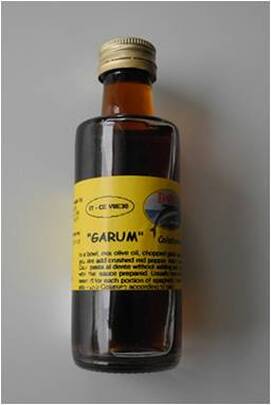
A modern reincarnation of garum
Garum, which was wildly popular with the Roman elite and which Salvius in Book III of the Cambridge Latin Course laces with poison to eliminate Belimicus, was discussed in November 2016 and in November 2018, with fullest details at https://linguae.weebly.com/conventus-nov-2018.html We noted then that the delicacy may have been responsible for spreading tapeworm across the Roman Empire. The modern recreations, however, pose no health hazard and the sauce resembles one popular Vietnamese concoction and also soy sauce in containing a lot of monosodium glutamate with a resultant umami flavour (see https://en.wikipedia.org/wiki/Umami and https://en.wikipedia.org/wiki/Garum ).
Garum, which was wildly popular with the Roman elite and which Salvius in Book III of the Cambridge Latin Course laces with poison to eliminate Belimicus, was discussed in November 2016 and in November 2018, with fullest details at https://linguae.weebly.com/conventus-nov-2018.html We noted then that the delicacy may have been responsible for spreading tapeworm across the Roman Empire. The modern recreations, however, pose no health hazard and the sauce resembles one popular Vietnamese concoction and also soy sauce in containing a lot of monosodium glutamate with a resultant umami flavour (see https://en.wikipedia.org/wiki/Umami and https://en.wikipedia.org/wiki/Garum ).
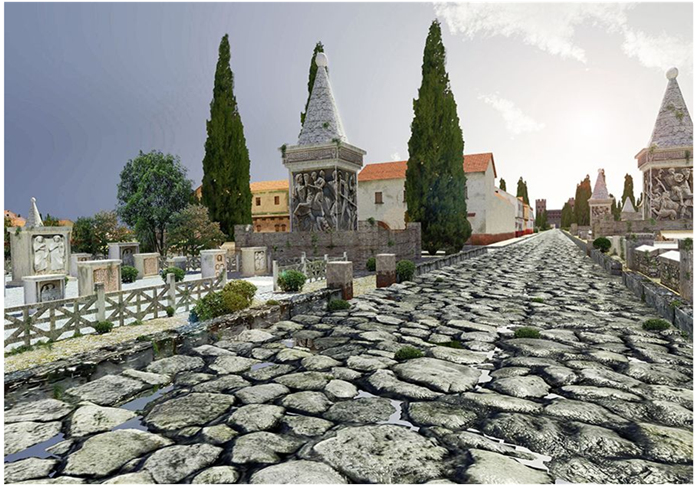
Reconstructed view of the cemetery outside the east gate of Roman Placentia
http://m.piacenzaromana.it/percorso_01.html
Despite confusion caused by John’s wrongly writing `XXVII’ in an email, we managed to complete
chapter XXXVII of Ad Alpēs and then lines 1-18 of chapter XXXVIII. Cornelius and his family had parted at Placentia, modern Piacenza, from where Cornelius himself set off across the Alps to Gaul whilst the others went to stay with a relative near Comum (modern Como). John explained that he had himself visited Piacenza in the 1970s as a civil servant in the British Ministry of Defence. The town, as well as being a major communications hub, houses arms production facilities and was the venue for some of the meetings of a collaborative artillery development project involving Germany as well as Italy and the UK. John stressed that his own role in the Ministry was purely civilian though, on one visit to the British Army of the Rhine, he did have a go on a firing range, missing the target with all his shots.
http://m.piacenzaromana.it/percorso_01.html
Despite confusion caused by John’s wrongly writing `XXVII’ in an email, we managed to complete
chapter XXXVII of Ad Alpēs and then lines 1-18 of chapter XXXVIII. Cornelius and his family had parted at Placentia, modern Piacenza, from where Cornelius himself set off across the Alps to Gaul whilst the others went to stay with a relative near Comum (modern Como). John explained that he had himself visited Piacenza in the 1970s as a civil servant in the British Ministry of Defence. The town, as well as being a major communications hub, houses arms production facilities and was the venue for some of the meetings of a collaborative artillery development project involving Germany as well as Italy and the UK. John stressed that his own role in the Ministry was purely civilian though, on one visit to the British Army of the Rhine, he did have a go on a firing range, missing the target with all his shots.
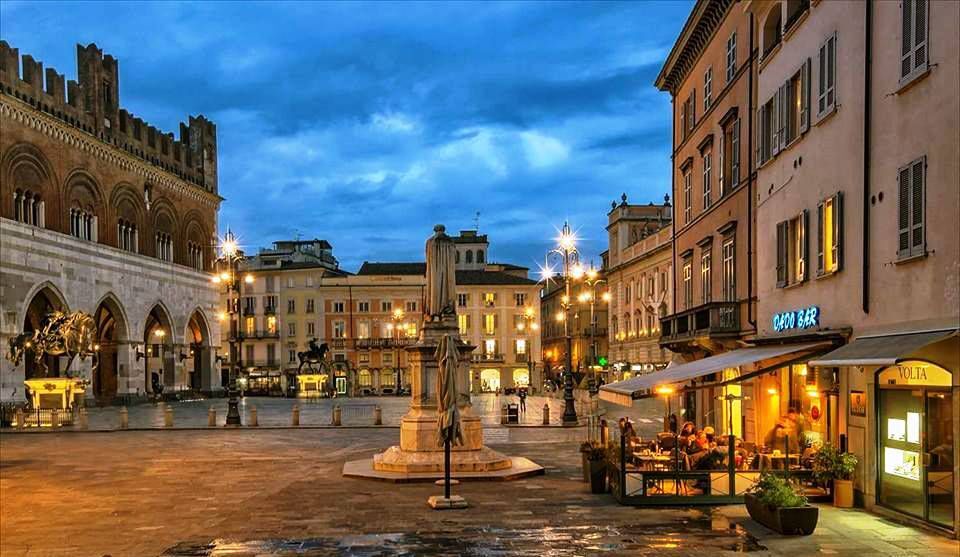
The town square in modern-day Piacenza
The nearest John got to active military duty was actually whilst on holiday in Israel in 1975. When waiting at Tel Aviv airport for his flight back home, he was approached by the head of the security team and asked to try to take an unloaded pistol concealed in the bottom of a duffle bag through the security check to test the efficiency of the staff member on-duty. Probably selected as the most wimpish- looking member of the assembled passengers, John failed to evade detection and the searcher slipped away to ring an alarm bell, The `payment’ for his assistance was coffee with the security head, who gave an assessment of the prospects for peace between Israel and Egypt which proved to be broadly correct. John was too nervous to remember whether he had followed instructions to put the bag down carefully on the table to avoid a give-away thump from the gun beneath the bag’s false bottom. He did, though, for many years follow instructions not to talk about the experience and has only started to do so recently, as the use of scanners has removed the need for purely manual checks of the kind then in use.
In Nutting’s text (chapter XXXVIII, l.8), we noted the words meminī patrem mentionem facere (`I remember father mentions..’), when Sextus is clearly referring to a statement Cornelius made on one particular past occasion, so that one would expect mentiōnem fēcisse. John undertook to check with colleagues that this was indeed an error.
Cornelius’s statement that Sextus reported concerned the river Ticinus, where Hannibal had won a cavalry engagement in 218. His mother explained the distinction between Ticīnus (-ī, m) the river and Ticīnum (-ī, n) the town on its banks. In modern Italian, whose nouns derive from the Latin accusative case rather than the nominative, the distinction is lost and both words have become Ticino.
There was discussion of reading literary classics and John mentioned The Story of the Stone or the Dream of the Red Chamber, the five volume translation by David Hawkes and his student and son-in-law John Minford of the classic 18th. century Chinese novel紅樓夢 (Hung Lau Mong), for which see https://www.amazon.com/Story-Stone-Dream-Chamber-Vol/dp/0140442936 . Hawkes’ notes on the choices he made as a translator have been published in facsimile as The Story of the Stone: a Translator’s Notebooks (https://cup.cuhk.edu.hk/index.php?route=product/product&product_id=110) and this provided the main source material for a Ph.D dissertation on Hawkes’ work by one of John’s Latin students, Christina Chau, available at https://core.ac.uk/download/pdf/289179081.pdf .
The nearest John got to active military duty was actually whilst on holiday in Israel in 1975. When waiting at Tel Aviv airport for his flight back home, he was approached by the head of the security team and asked to try to take an unloaded pistol concealed in the bottom of a duffle bag through the security check to test the efficiency of the staff member on-duty. Probably selected as the most wimpish- looking member of the assembled passengers, John failed to evade detection and the searcher slipped away to ring an alarm bell, The `payment’ for his assistance was coffee with the security head, who gave an assessment of the prospects for peace between Israel and Egypt which proved to be broadly correct. John was too nervous to remember whether he had followed instructions to put the bag down carefully on the table to avoid a give-away thump from the gun beneath the bag’s false bottom. He did, though, for many years follow instructions not to talk about the experience and has only started to do so recently, as the use of scanners has removed the need for purely manual checks of the kind then in use.
In Nutting’s text (chapter XXXVIII, l.8), we noted the words meminī patrem mentionem facere (`I remember father mentions..’), when Sextus is clearly referring to a statement Cornelius made on one particular past occasion, so that one would expect mentiōnem fēcisse. John undertook to check with colleagues that this was indeed an error.
Cornelius’s statement that Sextus reported concerned the river Ticinus, where Hannibal had won a cavalry engagement in 218. His mother explained the distinction between Ticīnus (-ī, m) the river and Ticīnum (-ī, n) the town on its banks. In modern Italian, whose nouns derive from the Latin accusative case rather than the nominative, the distinction is lost and both words have become Ticino.
There was discussion of reading literary classics and John mentioned The Story of the Stone or the Dream of the Red Chamber, the five volume translation by David Hawkes and his student and son-in-law John Minford of the classic 18th. century Chinese novel紅樓夢 (Hung Lau Mong), for which see https://www.amazon.com/Story-Stone-Dream-Chamber-Vol/dp/0140442936 . Hawkes’ notes on the choices he made as a translator have been published in facsimile as The Story of the Stone: a Translator’s Notebooks (https://cup.cuhk.edu.hk/index.php?route=product/product&product_id=110) and this provided the main source material for a Ph.D dissertation on Hawkes’ work by one of John’s Latin students, Christina Chau, available at https://core.ac.uk/download/pdf/289179081.pdf .
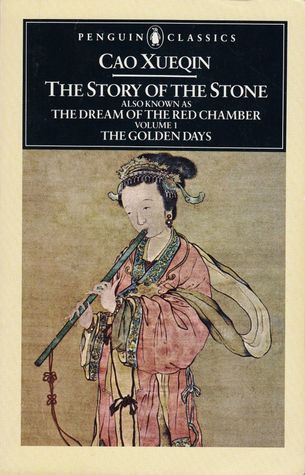
Volune I of Hawkes’ translation of 紅樓夢
https://www.goodreads.com/book/show/139874.The_Golden_Days
Mao Tse-tsung wrote poetry in the classic Chinese style which Arthur Waley, the most famous English-language translator of Chinese literature declared "not as bad as Hitler's paintings, but not as good as Churchill's" (https://en.wikipedia.org/wiki/Poetry_of_Mao_Zedong). It should be added that some critics have offered more generous evaluations. Zhang Wei mentioned the literary scholar Qian Zhongshu (see https://en.wikipedia.org/wiki/Qian_Zhongshu), who studied at different times at Oxford and in Paris and was a leading member of the team which provided the official translation of Mao’s work.
Mention was also made of two writers with Hong Kong connections. P.G. Wodehouse , author of the Wooster and Jeeves series, lived here for five years before being sent off to boarding school in the UK.
Martin Booth, who has been mentioned more than once at Circulus meetings, came to Hong Kong as a seven-year-old and his Gweilo: a Memoir of a Hong Kong Childhood is a magical recreation of life in the colony in the early 1950s as seen through his young eyes. It is also probably the most effective cure for gweilo who tiresomely object to being called by that name. There are several glowing reviews at https://www.amazon.com/Gweilo-Memories-Hong-Kong-Childhood/dp/0385607768
We again looked at an extract from Paul the Deacon’s Historia Longabordorum, the account on chapter 37 of how the author’s great grandfather, Lopichis, was miraculously guided by a wolf in his journey back to Italy from captivity in the kingdom of the Avars:
Lopichis, quī noster posteā proavus extitit, īnspīrante sibi, ut crēdimus, misericordiae auctōre, captīvitātis iugum abicere statuit et ad Ītaliam, quō gentem Langobardōrum residēre meminerat, tendere atque ad lībertātis iūra studuit reppedāre. Quī cum adgressus fugam adripuisset, faretram tantum et arcum et aliquantulum cibī propter viāticum gerēns, nescīretque omnīnō quō pergeret, eī lupus adveniēns comes itineris et ductor effectus est. Quī cum ante eum pergeret et frequenter post sē respiceret et cum stante subsisteret atque cum pergente praeīret, intellēxit, sibi eum dīvīnitus datum esse, ut eī iter, quod nesciēbat, ostenderet. Cum per aliquot diēs per montium sōlitūdinēs hōc modō pergerent, pānis eīdem viātōrī, quem exiguum habuerat, omnīnō dēfēcit. Quī cum ieiūnāns iter carperet et iam famē tābefactus dēfēcisset, tetendit arcum suum et eundem lupum, ut eum in cibum sūmere possit, sagittā interficere voluit. Sed lupus īdem ictum ferientis praecavēns, sīc ab eius vīsiōne ēlāpsus est. Ipse autem, recēdente eōdem lupō, nesciēns quō pergeret, īnsuper famis pēnūria nimium dēbilis effectus, cum iam dē vītā dēspērāret, sēsē in terram prōiciēns, obdormīvit; vīditque quendam virum in somnīs tālia sibi verba dīcentem: "Surge! Quid dormīs? Arripe viam in hanc partem contrā quam pedēs tenēs; illāc etenim est Ītalia, ad quam tendis". Quī statim surgēns, in illam partem quam in somnīs audierat pergere coepit; nec mora, ad habitāculum hominum pervēnit.
The passage was both selected and presented by Luisa, who was herself brought up in NE Italy near the city of Friuli (ancient Fōrum Iūliī) where Lopichis and his siblings lived before they were abducted. She pointed out that it was very rare at this period (the late 8th century) for an author to interrupt his main narrative with an autobiographical digression.
https://www.goodreads.com/book/show/139874.The_Golden_Days
Mao Tse-tsung wrote poetry in the classic Chinese style which Arthur Waley, the most famous English-language translator of Chinese literature declared "not as bad as Hitler's paintings, but not as good as Churchill's" (https://en.wikipedia.org/wiki/Poetry_of_Mao_Zedong). It should be added that some critics have offered more generous evaluations. Zhang Wei mentioned the literary scholar Qian Zhongshu (see https://en.wikipedia.org/wiki/Qian_Zhongshu), who studied at different times at Oxford and in Paris and was a leading member of the team which provided the official translation of Mao’s work.
Mention was also made of two writers with Hong Kong connections. P.G. Wodehouse , author of the Wooster and Jeeves series, lived here for five years before being sent off to boarding school in the UK.
Martin Booth, who has been mentioned more than once at Circulus meetings, came to Hong Kong as a seven-year-old and his Gweilo: a Memoir of a Hong Kong Childhood is a magical recreation of life in the colony in the early 1950s as seen through his young eyes. It is also probably the most effective cure for gweilo who tiresomely object to being called by that name. There are several glowing reviews at https://www.amazon.com/Gweilo-Memories-Hong-Kong-Childhood/dp/0385607768
We again looked at an extract from Paul the Deacon’s Historia Longabordorum, the account on chapter 37 of how the author’s great grandfather, Lopichis, was miraculously guided by a wolf in his journey back to Italy from captivity in the kingdom of the Avars:
Lopichis, quī noster posteā proavus extitit, īnspīrante sibi, ut crēdimus, misericordiae auctōre, captīvitātis iugum abicere statuit et ad Ītaliam, quō gentem Langobardōrum residēre meminerat, tendere atque ad lībertātis iūra studuit reppedāre. Quī cum adgressus fugam adripuisset, faretram tantum et arcum et aliquantulum cibī propter viāticum gerēns, nescīretque omnīnō quō pergeret, eī lupus adveniēns comes itineris et ductor effectus est. Quī cum ante eum pergeret et frequenter post sē respiceret et cum stante subsisteret atque cum pergente praeīret, intellēxit, sibi eum dīvīnitus datum esse, ut eī iter, quod nesciēbat, ostenderet. Cum per aliquot diēs per montium sōlitūdinēs hōc modō pergerent, pānis eīdem viātōrī, quem exiguum habuerat, omnīnō dēfēcit. Quī cum ieiūnāns iter carperet et iam famē tābefactus dēfēcisset, tetendit arcum suum et eundem lupum, ut eum in cibum sūmere possit, sagittā interficere voluit. Sed lupus īdem ictum ferientis praecavēns, sīc ab eius vīsiōne ēlāpsus est. Ipse autem, recēdente eōdem lupō, nesciēns quō pergeret, īnsuper famis pēnūria nimium dēbilis effectus, cum iam dē vītā dēspērāret, sēsē in terram prōiciēns, obdormīvit; vīditque quendam virum in somnīs tālia sibi verba dīcentem: "Surge! Quid dormīs? Arripe viam in hanc partem contrā quam pedēs tenēs; illāc etenim est Ītalia, ad quam tendis". Quī statim surgēns, in illam partem quam in somnīs audierat pergere coepit; nec mora, ad habitāculum hominum pervēnit.
The passage was both selected and presented by Luisa, who was herself brought up in NE Italy near the city of Friuli (ancient Fōrum Iūliī) where Lopichis and his siblings lived before they were abducted. She pointed out that it was very rare at this period (the late 8th century) for an author to interrupt his main narrative with an autobiographical digression.
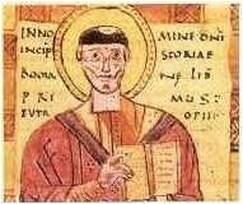
Paul the Deacon
http://de.wikipedia.org/wiki/Datei:Paulus_diaconus.jpg
As mentioned in the previous month’s discussion, the Lombards, a Germanic people who had migrated south from Scandinavia, had entered Italy in 568 under pressure from the Avars, a steppe peoples with whom theLombards had previously been allied in order to establish control over the Carpathian/Pannonian basin , an area centred in what is now Hungary but including some neighbouring regions. They eventually established control over most of Italy, the Byzantine Empire retaining control only of sections of the far south and an area around Rome itself. Although they were organised as a unified Lombardian kingdom, actual power rested to a large extent with local dukedoms. Stuart suggested that an outbreak of plague in the mid-sixth century had facilitated the Lombard conquest and in fact both this and the Byzantine Emperor Justinian’s war against the Ostrogoths had resulted in large-scale depopulation (see https://en.wikipedia.org/wiki/Kingdom_of_the_Lombards ).
Luisa asked whether the Avars were to be identified with the Huns, a question which is difficult to answer with confidence. Medieval writers did tend to confuse the various groups that emerged from the Central Asian steppes so `Hunni’ is sometimes used for people we would today term the Pannonian Avars, a people who may or may not be related to the Caucasian Avars. Matters are further complicated because the various people who entered Europe at this time were sometimes alliances of different elements rather than sharing common descent. Some scholars believe that the Avars were actually a confederation of different groups including some Huns. There is, though, recent genetic research suggesting that Avar elite were closely related to some of the present-day inhabitants of eastern Siberia and the Huns to the Xiognu, nomads who were notorious for the trouble they gave the Chinese (Neparáczki, E., Maróti, Z., Kalmár, T. et al. Y-chromosome haplogroups from Hun, Avar and conquering Hungarian period nomadic people of the Carpathian Basin. Sci Rep 9, 16569 (2019). https://www.nature.com/articles/s41598-019-53105-5). For further details, not very clearly presented, see https://en.wikipedia.org/wiki/Pannonian_Avars
http://de.wikipedia.org/wiki/Datei:Paulus_diaconus.jpg
As mentioned in the previous month’s discussion, the Lombards, a Germanic people who had migrated south from Scandinavia, had entered Italy in 568 under pressure from the Avars, a steppe peoples with whom theLombards had previously been allied in order to establish control over the Carpathian/Pannonian basin , an area centred in what is now Hungary but including some neighbouring regions. They eventually established control over most of Italy, the Byzantine Empire retaining control only of sections of the far south and an area around Rome itself. Although they were organised as a unified Lombardian kingdom, actual power rested to a large extent with local dukedoms. Stuart suggested that an outbreak of plague in the mid-sixth century had facilitated the Lombard conquest and in fact both this and the Byzantine Emperor Justinian’s war against the Ostrogoths had resulted in large-scale depopulation (see https://en.wikipedia.org/wiki/Kingdom_of_the_Lombards ).
Luisa asked whether the Avars were to be identified with the Huns, a question which is difficult to answer with confidence. Medieval writers did tend to confuse the various groups that emerged from the Central Asian steppes so `Hunni’ is sometimes used for people we would today term the Pannonian Avars, a people who may or may not be related to the Caucasian Avars. Matters are further complicated because the various people who entered Europe at this time were sometimes alliances of different elements rather than sharing common descent. Some scholars believe that the Avars were actually a confederation of different groups including some Huns. There is, though, recent genetic research suggesting that Avar elite were closely related to some of the present-day inhabitants of eastern Siberia and the Huns to the Xiognu, nomads who were notorious for the trouble they gave the Chinese (Neparáczki, E., Maróti, Z., Kalmár, T. et al. Y-chromosome haplogroups from Hun, Avar and conquering Hungarian period nomadic people of the Carpathian Basin. Sci Rep 9, 16569 (2019). https://www.nature.com/articles/s41598-019-53105-5). For further details, not very clearly presented, see https://en.wikipedia.org/wiki/Pannonian_Avars
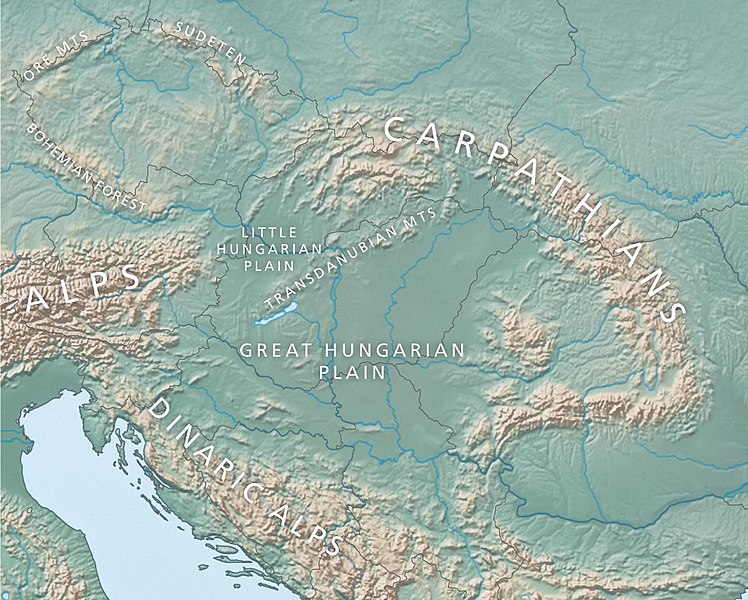
The Carpathian or Pannonian Basin
https://commons.wikimedia.org/wiki/File:Carpathian_Basin-Pannonian_Basin.jpg
https://commons.wikimedia.org/wiki/File:Carpathian_Basin-Pannonian_Basin.jpg
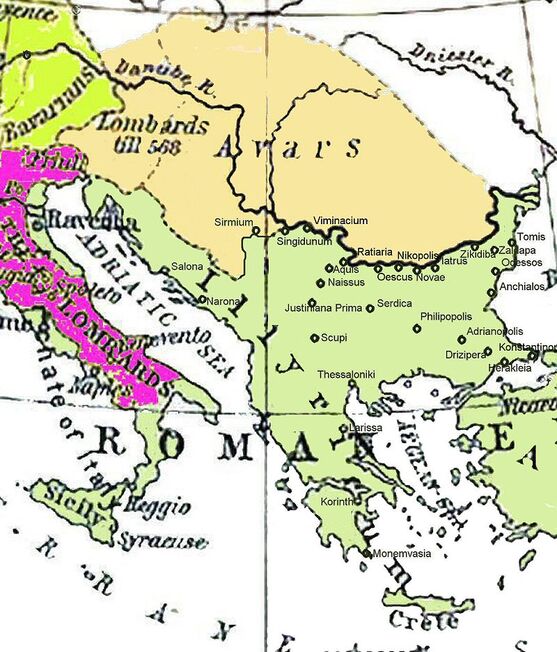
The Balkans and Italy at the end of the 6th century
https://en.wikipedia.org/wiki/Pannonian_Avars#/media/File:Historical_map_of_the_Balkans_around_582-612_AD.jpg
The accuracy of Paul’s account of his family history can be doubted because, as pointed out by Thomas Hodgkins, it is implausible that there were only four generation between Paul’s great-great grandfather, who supposedly entered Italy with the invading Avars in 568, and Paul himself, who was born between 720 and 730 (comments from Hodgkin’s Italy and Her Invaders (Clarendon Press, 1895) are included as footnotes to Wiliam Dudley Foulkes’ 1907 translation of the Historia, available for free download at http://www.thule-italia.org/Nordica/Paul%20the%20Deacon%20-%20History%20of%20the%20Lombards%20%281907%29%20%5BEN%5D.pdf )
Although Paul naturally places the wolf anecdote in a Christian context, it has been suggested by Carlo Dona hat it contains a `pagan echo’, the wolf perhaps being originally a messenger from Wotan. Dona’s work Per le vie dell'altro mondo. L'animale guida e il mito del viaggio 92004) is cited in Raph Häussler (2016) Wolf & Mythology, https://ralphhaussler.weebly.com/wolf-mythology-norse.html For a general discussion of Paul’s literary style, see Christopher Heath, `Narrative Structures in the Works of Paul the Deacon’ (Manchestert PhD thesis), available for download at https://www.research.manchester.ac.uk/portal/files/54529593/FULL_TEXT.PDF
One other topic, raised by Lily, was the attitude of Nepalis towards foreigners speaking Nepali. John said that the owner of the Basmati and the waitress who most often serves us seem very reluctant to interact with him in Nepali, though he does himself quite often mix it in with his English. In contrast, the staff when he first started using the restaurant some years back seemed quite happy to speak Nepali with him. Part of the problem might be that John’s Nepali, though reasonably fluent for basic conversation, was poorly pronounced so people who themselves have good Engl;ish may be reluctant to switch. He compared the answer he had heard from an expat lawyer many years who had been asked what local Hong Kongers thought of foreigners speaking Cantonese: `They like it if you speak well but not if you speak it badly’
AD ALPES c.XXXVII line 70-end.
70 "Dum ille humī moribundus iacet, Thisbē, nē amantem falleret, ē spēluncā rediit,
While he on-ground dying lay Thisbe so-that-not lover she-would-disappoint out-of cave returned
etsī magnō ex metū nōndum sē recreāverat. Quae cum Pȳramum moribundum et vagīnam
although great from fear not-yet self she-had-composed she when Pyramus dying and sheath
gladīō vacuam[1] vīdisset, capillō discissō clārē clāmāvit, corpusque amantis amplexa, ad
sword without she- had-seen with-hair torn loudly cried-out and-body of-lovder having-embraced to
vītam eum revocāre cōnāta est. Sed 75 frūstrā.
life him to-recall tried but in-vain
"Tum: 'Tua manus,' inquit, 'amorque tē perdidit, īnfēlīx. Et mihi est manus fortis et amor.
Then your hand she-said and-love you destroyed unhappy-man also to-me is hand brave and love
Cōnsequar tē mortuum, nec vērō morte ipsā ā mē dīvellī poteris.'
I-wil-follw you dead and-not indeed by-death itself from me to-be-torn-away you-will-be-able
"Quō dictō, ea quoque in gladium incubuit. Sīc illī, quōs 80 parentēs dīiungere
With-wgich said she also onto sword fell thus they whom parents to-divide
voluerant, in morte coniūnctī sunt, atque ambōrum cinis ūnā in urnā requiēscit."[2]
had-wanted in death joined were and of-both ashes one in urn rest
Līberī animīs intentīs mātrem haec nārrantem audierant, Cornēliā vērō vultū haud hilarī,
Children with-minds attentive mother these-things narrating had-heard Cornelia indeed with-face not cheerful
sed Sextus: "Mīror, māter," inquit, "tē tālia nārrāre audēre, cum Pūblius adest. Semper enim
but Sextus I-am-surprised mother said you such-things to-tell to-dare when Publius is-present always for
ille dē puellīs cōgitat, ac metuō nē quandō Pȳramum 85 aemulārī cōnētur."
He about girls is-thinking and I-fear lst at-some-time Pyramus to-imitate may-try
"Etiam tacēs?"[3] inquit Pūblius ērubēscēns. "Puerum tē procāciōrem numquam vīdī! Sī
Will you shut up said Publius blushing boy than-you more-impudent never I-have-seen if
sapiēs,[4] malum cavēbis."
you-are-wise something-unpleasant you-will-be-careful[to-avoid]
NOTES
[1] Literally `empty from sword’
[2] Drusilla’s story is based closely on Ovid, Metamorphoses IV: 55-166, which is also summarised in chapters 15 and 16 of Latin via Ovid, with accompanying PowerPoint available at https://linguae.weebly.com/latin--greek.html An earlier version of the myth, in which there is no mulberry tree and Pyramus and Thisbe are transformed into a river and a neighbouring spring in Cilicia in southern Asia Minor, is alluded to in Greek sources and probably illustrated by a mosaic at Nea Paphos in Cyprus. For a full discussion see Peter E. Knox, `Pyramus and Thisbe in Cyprus,’ Harvard Studies in Classical Philology, Vol. 92 (1989), pp. 315-328 (https://www.jstor.org/stable/311365) See also the `Origins’ section in https://en.wikipedia.org/wiki/Pyramus_and_Thisbe
[3] etiam can be used to mark an indignant question, equivalent to a sharp command.
[4] Literally `If you will be wise’.
"Nōlī īrāscī, mī fīlī," inquit Drūsilla; "id enim nihil prōficit. Nam aliquis bene dīxit:
Don’t get-angry my son said Drusilla it for nothing profits for someone well said
'Sprēta exolēscunt; sī īrāscāre, agnita videntur.' "
Things-disregarded fade-away if you-are-angry acknowledged they-seem
"Haec verba nōn intellegō, māter," inquit Cornēlia. "Nōnne plānius sententia dīcī
These words not I-understand mother said Cornelia not-? more-plainly opinion be-stated
potest?"
can
"Multō vērō," inquit Drūsilla. "Vidē sī hoc facilius intellegī potest: 'Sī maledicta
Yes indeed said Drusilla see if this more-easily be-understood can if insults
neglegās, omnēs ea oblīvīscuntur; sīn 95 autem īāscāre, tum omnēs crēdunt vēra esse ea,
you-ignore all them forget but-if however you-get-angry then all believe true to-be those-things
quae dicta sunt.' "
which said were
"Iam intellegō," inquit Cornēlia; "et hīs verbīs bene praecipī ego quoque exīstimō."
Now I-understand said Cornelia and b-these words well instruction-to-be-given I also think
Viātōrēs, cum complūra mīlia passuum[1] iter fēcissent, paulō 100 ante merīdiem
Travellers when several thousand paces journey they- had-made a-little before midday
cōnstitērunt hōramque ferē in umbrā arborum morātī sunt, ut equī reficerentur.
They-halted and-hour about in shade of-trees stayed so-that horses could-be-refreshed
Interim Sextus, quī lātius vagātus erat, ad Pūblium accessit, et: "Cum tū," inquit, "nunc
Meanwhile Sextus who further wandered had to Publius came-up and since you said now
tē prō patre familiās gerās, cēnseō omnia ad tē referenda esse. In agrō haud procul est
yourself in-place-of head of-family conduct I-consider all-things to you needing-refering to-be in field not far-off is
105 arbor, cuius in rāmīs cōpiam maximam pōmōrum optimōrum animadvertī. Rogō ut
tree whose in branches quantity very-great of-apples excellent I-noticed I-request that
mihi liceat in hanc arborem ēscendere, ut pōma pauca inde legam."
to-me it-be-permitted into this tree to-climb so-that allpes a-few from-there I-may-pick
Pūblius, frātris obsequentiā tam īnsolitā gaudēns: "Licet," inquit. "Agricola profectō
Publius brother’s in-deference to unusual rejoicing it’s-permitted said farmer of-course
nōbīs pauca pōma nōn invidēbit." 110
us a-few apple not will-begrudge
Tum Sextus: "Maximās tibi grātiās agō, frāter," inquit, "quī potestātem mihi tam cōmiter
Then Sextus very-great to-you thanks I-give brother he-said who permission to-me so considerately
fēceris.[2] Nunc aequō animō confitērī possum mē iam paulō ante ēscendisse in arborem, et,
gave now with-calm mind confess I-can me already a-little earlier to-have-climbed into tree and
NOTES
[1] A thousand paces (mīlle passūs) was one Roman mile (hence the English word `mile’ itself).
[2] Pluperfect subjunctive in a relative clause of characteristic, Sextus is thanking Publius for being the kind of brother to show consideration,
pede fallente, rāmōs aliquot frēgisse. Gaudeō id nōn iniussū 115 tuō factum esse."
with-foot slipping branches some to-have-broken I-am-glad it not without-authorization your done to-have-been
Quō audītō: "Quid est, puer nēquam?" inquit Pūblius īrā incēnsus. "Itane mē
With-which hears what is[this] boy worthless said Publius with-anger burning in-this-way-? me
impūne ludificārī posse putās? Moriar, nisi efficiam ut tē paeniteat[1] umquam in istum
with-impunity to-be,made-fun-of to-be-able you-think I’ll-die if-not I-make-sure that you regret ever into that
agrum pervēnisse!" 120
field to-have-got
"Cūr, obsecrō, frāter?" inquit Sextus, quasi iniūriā increpitus; "nōnne tū ipse mihi
Why please brother said Sextus as-if wrongly rebuked not-? you yourself to-me
permīsistī, ut in arborem ēscenderem?"
gave-permission that into tree I-could-climb
Priusquam Pūblius respondēre posset, advēnit agricola, quī prō damnō inlātō
Before Publius reply could there-arrived farmer who for damage caused
satisfactiōnem postulābat. Quem cum Pūblius aureō contentum dīmīsisset, omnēs iterum in
compensation started-to-demand whom when Publius with-gold content had sent-away all again into
raedās ēscendērunt, 125 et lēniter Mediolānum versus vectī sunt.
Wagons climbed and gently Mediolanum towards carried were
Interim Sextus, āstūtiā suā ēlātus, interdum ex intervāllō rīdēbat. Sed Pūblius,
Meanwhile Sextus with-smartness own elated sometimes at intervals kept-smiling but Publius
auctōritātem suam ita lūdibriō habitam dolēns, duās per hōrās cum cēterīs vix colloquī voluit.
authority own thus as-joke treated grieving two throughout hours with others scarcely to-talk wanted
Haud multō ante vesperum in oppidum perventum est; ubi 130 viātōrēs ad quendam
Not muich before evening into town arrived was where travellers at a-certain
caupōnem, cuius fāma ad eōs Placentiam usque pervēnerat, libenter dēvertērunt.
inn whose reputation to tham in-Placentia all-the-way had-reached gladly went-to-stay
CAPUT XXXVIII
Post cēnae tempus līberī aliquamdiū lūsērunt; tum, lūminibus accensīs, cum mātre
After of-dinner time children for-some-time played then with-lights lit with mother
sedēbant, dum Anna Lūcium cōnsopīre cōnātur. Et postrēmō Cornēlia: "Mīror,"[2] inquit, "quō
they-were-sitting whilst Anna Lucius to-put-to-sleep tried and finally Cornelia I-wonder said where
pater hodiē pervēnerit."
father today has-reached
NOTES
[1] Impersonal verb paenitet with the accusative of person feeling regret or repentance
[2] Nutting frequently used mīror in the sense `ask oneself about’ but in classical Latin it probably only mean `be surprised at’ or `admire’. English `wonder’, of course, has both meanings.
5"Nesciō," inquit Drūsilla; "sed profectō Tīcīnum usque prōgressus est; ac fortasse
I-don’t-know said Drusilla but of-course Ticinum as-far-as gone-forward he-has and perhaps
etiam longius iter fēcit, et nunc aliquā in vīllā noctem agere parat."
even longer journey he-has-made and now some in villa night to-spend is-preparing
"Meminī," inquit Sextus, "patrem mentiōnem facere dē flūmine Tīcīnō, ubi Scīpiō ab
I-remember said Sextus father mention to-make about river Ticinus where Scipio by
Hannibale equestrī proeliō victus 10 est. Eōdemne igitur nōmine et urbs et flūmen vocantur,
Hannibal in-cavalry battle beaten was by-same? therefore name both city and river are-called
māter?"
mother
"Nōmina similia sunt," inquit illa; "sed flūmen est Tīcīnus, et oppidum Tīcīnum. Urbs in
Names similar are said she but river is Ticinus and town Ticinum city on
rīpā flūminis posita est."[1]
bank of-river placed was
Sed iam Pūblius, quī aliquamdiū āfuerat, ad cēterōs rediit, et: "Ad iter crās
But now Publius who for-some-time had-been-away to others returned and for journey tomorrow
cōnficiendum," inquit, "omnia nunc dēmum 15 parāta sunt."
being-finished said all-things now at-last ready are
"Cūr tam diū aberās?" inquit Cornēlia.
Why so long you-were-away asked Cornelia
At ille: "Dum forīs negōtiīs variīs operam dō, caecum mīlitem vīdī, quī dīxit sē
And he while outside into-business various effort I-was-putting blind soldier I-saw who said himself
ōlim in Britanniā stīpendia fēcisse."
once in Britain service to-have-done
NOTE
[1] See chapter 36.
https://en.wikipedia.org/wiki/Pannonian_Avars#/media/File:Historical_map_of_the_Balkans_around_582-612_AD.jpg
The accuracy of Paul’s account of his family history can be doubted because, as pointed out by Thomas Hodgkins, it is implausible that there were only four generation between Paul’s great-great grandfather, who supposedly entered Italy with the invading Avars in 568, and Paul himself, who was born between 720 and 730 (comments from Hodgkin’s Italy and Her Invaders (Clarendon Press, 1895) are included as footnotes to Wiliam Dudley Foulkes’ 1907 translation of the Historia, available for free download at http://www.thule-italia.org/Nordica/Paul%20the%20Deacon%20-%20History%20of%20the%20Lombards%20%281907%29%20%5BEN%5D.pdf )
Although Paul naturally places the wolf anecdote in a Christian context, it has been suggested by Carlo Dona hat it contains a `pagan echo’, the wolf perhaps being originally a messenger from Wotan. Dona’s work Per le vie dell'altro mondo. L'animale guida e il mito del viaggio 92004) is cited in Raph Häussler (2016) Wolf & Mythology, https://ralphhaussler.weebly.com/wolf-mythology-norse.html For a general discussion of Paul’s literary style, see Christopher Heath, `Narrative Structures in the Works of Paul the Deacon’ (Manchestert PhD thesis), available for download at https://www.research.manchester.ac.uk/portal/files/54529593/FULL_TEXT.PDF
One other topic, raised by Lily, was the attitude of Nepalis towards foreigners speaking Nepali. John said that the owner of the Basmati and the waitress who most often serves us seem very reluctant to interact with him in Nepali, though he does himself quite often mix it in with his English. In contrast, the staff when he first started using the restaurant some years back seemed quite happy to speak Nepali with him. Part of the problem might be that John’s Nepali, though reasonably fluent for basic conversation, was poorly pronounced so people who themselves have good Engl;ish may be reluctant to switch. He compared the answer he had heard from an expat lawyer many years who had been asked what local Hong Kongers thought of foreigners speaking Cantonese: `They like it if you speak well but not if you speak it badly’
AD ALPES c.XXXVII line 70-end.
70 "Dum ille humī moribundus iacet, Thisbē, nē amantem falleret, ē spēluncā rediit,
While he on-ground dying lay Thisbe so-that-not lover she-would-disappoint out-of cave returned
etsī magnō ex metū nōndum sē recreāverat. Quae cum Pȳramum moribundum et vagīnam
although great from fear not-yet self she-had-composed she when Pyramus dying and sheath
gladīō vacuam[1] vīdisset, capillō discissō clārē clāmāvit, corpusque amantis amplexa, ad
sword without she- had-seen with-hair torn loudly cried-out and-body of-lovder having-embraced to
vītam eum revocāre cōnāta est. Sed 75 frūstrā.
life him to-recall tried but in-vain
"Tum: 'Tua manus,' inquit, 'amorque tē perdidit, īnfēlīx. Et mihi est manus fortis et amor.
Then your hand she-said and-love you destroyed unhappy-man also to-me is hand brave and love
Cōnsequar tē mortuum, nec vērō morte ipsā ā mē dīvellī poteris.'
I-wil-follw you dead and-not indeed by-death itself from me to-be-torn-away you-will-be-able
"Quō dictō, ea quoque in gladium incubuit. Sīc illī, quōs 80 parentēs dīiungere
With-wgich said she also onto sword fell thus they whom parents to-divide
voluerant, in morte coniūnctī sunt, atque ambōrum cinis ūnā in urnā requiēscit."[2]
had-wanted in death joined were and of-both ashes one in urn rest
Līberī animīs intentīs mātrem haec nārrantem audierant, Cornēliā vērō vultū haud hilarī,
Children with-minds attentive mother these-things narrating had-heard Cornelia indeed with-face not cheerful
sed Sextus: "Mīror, māter," inquit, "tē tālia nārrāre audēre, cum Pūblius adest. Semper enim
but Sextus I-am-surprised mother said you such-things to-tell to-dare when Publius is-present always for
ille dē puellīs cōgitat, ac metuō nē quandō Pȳramum 85 aemulārī cōnētur."
He about girls is-thinking and I-fear lst at-some-time Pyramus to-imitate may-try
"Etiam tacēs?"[3] inquit Pūblius ērubēscēns. "Puerum tē procāciōrem numquam vīdī! Sī
Will you shut up said Publius blushing boy than-you more-impudent never I-have-seen if
sapiēs,[4] malum cavēbis."
you-are-wise something-unpleasant you-will-be-careful[to-avoid]
NOTES
[1] Literally `empty from sword’
[2] Drusilla’s story is based closely on Ovid, Metamorphoses IV: 55-166, which is also summarised in chapters 15 and 16 of Latin via Ovid, with accompanying PowerPoint available at https://linguae.weebly.com/latin--greek.html An earlier version of the myth, in which there is no mulberry tree and Pyramus and Thisbe are transformed into a river and a neighbouring spring in Cilicia in southern Asia Minor, is alluded to in Greek sources and probably illustrated by a mosaic at Nea Paphos in Cyprus. For a full discussion see Peter E. Knox, `Pyramus and Thisbe in Cyprus,’ Harvard Studies in Classical Philology, Vol. 92 (1989), pp. 315-328 (https://www.jstor.org/stable/311365) See also the `Origins’ section in https://en.wikipedia.org/wiki/Pyramus_and_Thisbe
[3] etiam can be used to mark an indignant question, equivalent to a sharp command.
[4] Literally `If you will be wise’.
"Nōlī īrāscī, mī fīlī," inquit Drūsilla; "id enim nihil prōficit. Nam aliquis bene dīxit:
Don’t get-angry my son said Drusilla it for nothing profits for someone well said
'Sprēta exolēscunt; sī īrāscāre, agnita videntur.' "
Things-disregarded fade-away if you-are-angry acknowledged they-seem
"Haec verba nōn intellegō, māter," inquit Cornēlia. "Nōnne plānius sententia dīcī
These words not I-understand mother said Cornelia not-? more-plainly opinion be-stated
potest?"
can
"Multō vērō," inquit Drūsilla. "Vidē sī hoc facilius intellegī potest: 'Sī maledicta
Yes indeed said Drusilla see if this more-easily be-understood can if insults
neglegās, omnēs ea oblīvīscuntur; sīn 95 autem īāscāre, tum omnēs crēdunt vēra esse ea,
you-ignore all them forget but-if however you-get-angry then all believe true to-be those-things
quae dicta sunt.' "
which said were
"Iam intellegō," inquit Cornēlia; "et hīs verbīs bene praecipī ego quoque exīstimō."
Now I-understand said Cornelia and b-these words well instruction-to-be-given I also think
Viātōrēs, cum complūra mīlia passuum[1] iter fēcissent, paulō 100 ante merīdiem
Travellers when several thousand paces journey they- had-made a-little before midday
cōnstitērunt hōramque ferē in umbrā arborum morātī sunt, ut equī reficerentur.
They-halted and-hour about in shade of-trees stayed so-that horses could-be-refreshed
Interim Sextus, quī lātius vagātus erat, ad Pūblium accessit, et: "Cum tū," inquit, "nunc
Meanwhile Sextus who further wandered had to Publius came-up and since you said now
tē prō patre familiās gerās, cēnseō omnia ad tē referenda esse. In agrō haud procul est
yourself in-place-of head of-family conduct I-consider all-things to you needing-refering to-be in field not far-off is
105 arbor, cuius in rāmīs cōpiam maximam pōmōrum optimōrum animadvertī. Rogō ut
tree whose in branches quantity very-great of-apples excellent I-noticed I-request that
mihi liceat in hanc arborem ēscendere, ut pōma pauca inde legam."
to-me it-be-permitted into this tree to-climb so-that allpes a-few from-there I-may-pick
Pūblius, frātris obsequentiā tam īnsolitā gaudēns: "Licet," inquit. "Agricola profectō
Publius brother’s in-deference to unusual rejoicing it’s-permitted said farmer of-course
nōbīs pauca pōma nōn invidēbit." 110
us a-few apple not will-begrudge
Tum Sextus: "Maximās tibi grātiās agō, frāter," inquit, "quī potestātem mihi tam cōmiter
Then Sextus very-great to-you thanks I-give brother he-said who permission to-me so considerately
fēceris.[2] Nunc aequō animō confitērī possum mē iam paulō ante ēscendisse in arborem, et,
gave now with-calm mind confess I-can me already a-little earlier to-have-climbed into tree and
NOTES
[1] A thousand paces (mīlle passūs) was one Roman mile (hence the English word `mile’ itself).
[2] Pluperfect subjunctive in a relative clause of characteristic, Sextus is thanking Publius for being the kind of brother to show consideration,
pede fallente, rāmōs aliquot frēgisse. Gaudeō id nōn iniussū 115 tuō factum esse."
with-foot slipping branches some to-have-broken I-am-glad it not without-authorization your done to-have-been
Quō audītō: "Quid est, puer nēquam?" inquit Pūblius īrā incēnsus. "Itane mē
With-which hears what is[this] boy worthless said Publius with-anger burning in-this-way-? me
impūne ludificārī posse putās? Moriar, nisi efficiam ut tē paeniteat[1] umquam in istum
with-impunity to-be,made-fun-of to-be-able you-think I’ll-die if-not I-make-sure that you regret ever into that
agrum pervēnisse!" 120
field to-have-got
"Cūr, obsecrō, frāter?" inquit Sextus, quasi iniūriā increpitus; "nōnne tū ipse mihi
Why please brother said Sextus as-if wrongly rebuked not-? you yourself to-me
permīsistī, ut in arborem ēscenderem?"
gave-permission that into tree I-could-climb
Priusquam Pūblius respondēre posset, advēnit agricola, quī prō damnō inlātō
Before Publius reply could there-arrived farmer who for damage caused
satisfactiōnem postulābat. Quem cum Pūblius aureō contentum dīmīsisset, omnēs iterum in
compensation started-to-demand whom when Publius with-gold content had sent-away all again into
raedās ēscendērunt, 125 et lēniter Mediolānum versus vectī sunt.
Wagons climbed and gently Mediolanum towards carried were
Interim Sextus, āstūtiā suā ēlātus, interdum ex intervāllō rīdēbat. Sed Pūblius,
Meanwhile Sextus with-smartness own elated sometimes at intervals kept-smiling but Publius
auctōritātem suam ita lūdibriō habitam dolēns, duās per hōrās cum cēterīs vix colloquī voluit.
authority own thus as-joke treated grieving two throughout hours with others scarcely to-talk wanted
Haud multō ante vesperum in oppidum perventum est; ubi 130 viātōrēs ad quendam
Not muich before evening into town arrived was where travellers at a-certain
caupōnem, cuius fāma ad eōs Placentiam usque pervēnerat, libenter dēvertērunt.
inn whose reputation to tham in-Placentia all-the-way had-reached gladly went-to-stay
CAPUT XXXVIII
Post cēnae tempus līberī aliquamdiū lūsērunt; tum, lūminibus accensīs, cum mātre
After of-dinner time children for-some-time played then with-lights lit with mother
sedēbant, dum Anna Lūcium cōnsopīre cōnātur. Et postrēmō Cornēlia: "Mīror,"[2] inquit, "quō
they-were-sitting whilst Anna Lucius to-put-to-sleep tried and finally Cornelia I-wonder said where
pater hodiē pervēnerit."
father today has-reached
NOTES
[1] Impersonal verb paenitet with the accusative of person feeling regret or repentance
[2] Nutting frequently used mīror in the sense `ask oneself about’ but in classical Latin it probably only mean `be surprised at’ or `admire’. English `wonder’, of course, has both meanings.
5"Nesciō," inquit Drūsilla; "sed profectō Tīcīnum usque prōgressus est; ac fortasse
I-don’t-know said Drusilla but of-course Ticinum as-far-as gone-forward he-has and perhaps
etiam longius iter fēcit, et nunc aliquā in vīllā noctem agere parat."
even longer journey he-has-made and now some in villa night to-spend is-preparing
"Meminī," inquit Sextus, "patrem mentiōnem facere dē flūmine Tīcīnō, ubi Scīpiō ab
I-remember said Sextus father mention to-make about river Ticinus where Scipio by
Hannibale equestrī proeliō victus 10 est. Eōdemne igitur nōmine et urbs et flūmen vocantur,
Hannibal in-cavalry battle beaten was by-same? therefore name both city and river are-called
māter?"
mother
"Nōmina similia sunt," inquit illa; "sed flūmen est Tīcīnus, et oppidum Tīcīnum. Urbs in
Names similar are said she but river is Ticinus and town Ticinum city on
rīpā flūminis posita est."[1]
bank of-river placed was
Sed iam Pūblius, quī aliquamdiū āfuerat, ad cēterōs rediit, et: "Ad iter crās
But now Publius who for-some-time had-been-away to others returned and for journey tomorrow
cōnficiendum," inquit, "omnia nunc dēmum 15 parāta sunt."
being-finished said all-things now at-last ready are
"Cūr tam diū aberās?" inquit Cornēlia.
Why so long you-were-away asked Cornelia
At ille: "Dum forīs negōtiīs variīs operam dō, caecum mīlitem vīdī, quī dīxit sē
And he while outside into-business various effort I-was-putting blind soldier I-saw who said himself
ōlim in Britanniā stīpendia fēcisse."
once in Britain service to-have-done
NOTE
[1] See chapter 36.



