| linguae |
|
QUESTIONS ARISING FROM 129th. MEETING – 12/11/21
(the record of earlier meetings can be downloaded from the main Circulus page as can the version of Ciceronis Filius with illustrations added. The illustrated text of Genesis is available on the Genesis page, of Kepler's Somnium on the Somnium page and of Nutting's Ad Alpes on the Ad Alpes page)
Food consumed included melanogēna contūsa (baingan bharta, mashed eggplant), , cicera arōmatica (chana massala, spiced chickpeas), spīnācia cum caseō (palak paneer, spinach with cheese), caseus fervēns (sizzling paneer), batātae cum brassicā Pompēiānā (alu gobi, potato and cauliflower), okrum arōmaticum (bhindi masala, `lady’s fingers’, okra with spices), agnus madrāsiāna (lamb Madras, i.e. a very strong lamb curry) and īūs lentium (daal fry). As well as the regular orӯza (rice) and pānis Persicus (naan), we also ordered pānis Persicus cum cēpā (green onion naan) and consumed vīnum rubrum/sanguineum and other drinks.
Daal fry is so called because the contents added to the lentils - spices and vegetables such as garlic, tomatoes, onions etc. – are fried in a little ghee (clarified butter) before the lentils themselves are simmered in the mixture (see https://www.indianhealthyrecipes.com/dal-fry-recipe/). This dish needs to be distinguished from iūs lentium butyrātum (literally `lentil soup with butter’, daal makhani)
Green onions, also known as scallions or spring onions, are, like garlic and ordinary onions, members of the genus allium, a name deriving from al(l)ium, Latin for garlic. Green onions are distinguished from ordinary onions in lacking a fully developed bulb, and, in the West, they are most frequently obtained by harvesting the species Allium cepa var cepa (the common onion) before the bulb forms. ((see https://en.wikipedia.org/wiki/Scallion). The ordinary Latin word for onion, cēpa/caepa, can thus be used to refer both to spring onions and onions proper.
One of us, who himself was not born in Britain but holds a British passport by right of descent, says that under current law in England and Wales a child of such a parent does not qualify for British citizenship unless the whole family has spent at least three years together in the UK. He also believed that the nationality law was different for Scotland. This question is a complicated one and the article at
https://en.wikipedia.org/wiki/British_nationality_law#British_citizenship_by_descent says that:
“Where the parent is a British citizen by descent, additional requirements apply. In the most common scenario, the parent is normally expected to have lived in the British Islands for three consecutive years and apply to register the child as a British citizen while the child is a minor (clause 43, Borders, Citizenship and Immigration Act 2009, effective from 13 January 2010).”
Daal fry is so called because the contents added to the lentils - spices and vegetables such as garlic, tomatoes, onions etc. – are fried in a little ghee (clarified butter) before the lentils themselves are simmered in the mixture (see https://www.indianhealthyrecipes.com/dal-fry-recipe/). This dish needs to be distinguished from iūs lentium butyrātum (literally `lentil soup with butter’, daal makhani)
Green onions, also known as scallions or spring onions, are, like garlic and ordinary onions, members of the genus allium, a name deriving from al(l)ium, Latin for garlic. Green onions are distinguished from ordinary onions in lacking a fully developed bulb, and, in the West, they are most frequently obtained by harvesting the species Allium cepa var cepa (the common onion) before the bulb forms. ((see https://en.wikipedia.org/wiki/Scallion). The ordinary Latin word for onion, cēpa/caepa, can thus be used to refer both to spring onions and onions proper.
One of us, who himself was not born in Britain but holds a British passport by right of descent, says that under current law in England and Wales a child of such a parent does not qualify for British citizenship unless the whole family has spent at least three years together in the UK. He also believed that the nationality law was different for Scotland. This question is a complicated one and the article at
https://en.wikipedia.org/wiki/British_nationality_law#British_citizenship_by_descent says that:
“Where the parent is a British citizen by descent, additional requirements apply. In the most common scenario, the parent is normally expected to have lived in the British Islands for three consecutive years and apply to register the child as a British citizen while the child is a minor (clause 43, Borders, Citizenship and Immigration Act 2009, effective from 13 January 2010).”
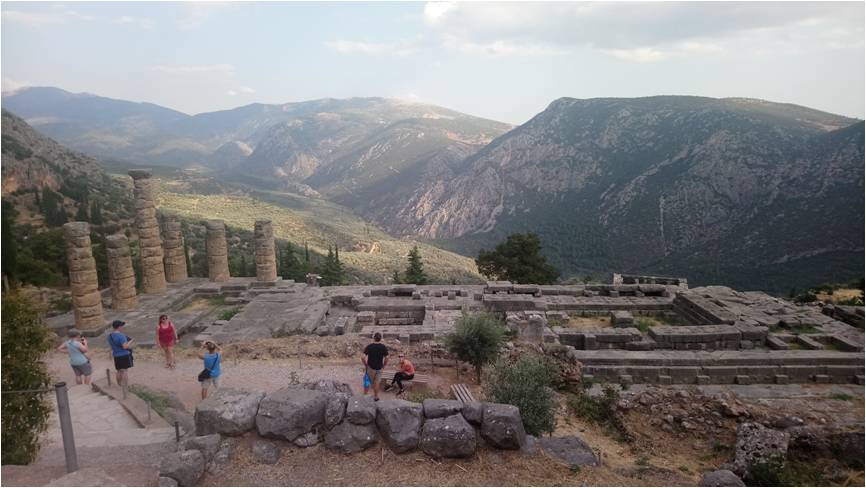
Remains of the temple of Apollo at Delphi (August 2019)
https://linguae.weebly.com/res-graecae.html
The person who raised the nationality issue is attempting to let his daughter, who already has German and Mandarin as well as English become as bilingual as possible. He wondered whether it would be a good idea to have her start ancient Greek in addition to Latin. John thought that it was best to wait till someone had mastered the basics of Latin before starting to tackle a quite similar but morphologically more complex language. At John’s grammar school in the UK in the 1960s, when (unlike now) Greek was still taught in quite a few publicly funded schools, Latin was begun in the first year but Greek not until the third. If, however, anybody simply wants an idea of what the language sounded like, then the videos embedded at https://linguae.weebly.com/res-graecae.html may be of interest,
The parent has spent a lot of time in South Asia, where he was first a legal advisor to a large company in Bangladesh and then appointed its Chief Executive by the head of the Hong Kong-based parent company. In conversation with senior civil servants across the border in India, he found that many of them knew both Latin and Greek and even sometimes corresponded with each other in the latter. He had also been told by some people in India that learning India’s own classical language, Sanskrit, was a good foundation for going on to study the vernaculars, such as Hindi, Bengali etc. John was unsure about this recommendation since, although Sanskrit is ancestral to many of the modern languages of South Asia in the same way as Latin to the Romance languages, learning to read it poses a particular difficult because of the extensive use of compounds and of sandhi, the modification of the endings and beginnings of words in contact. The latter is a feature of languages in general (for example, `London Bridge’ is actually pronounced `Londom Bridge’) but in Sanskrit the modified sounds are represented in writing and the words involved usually written without word division.
https://linguae.weebly.com/res-graecae.html
The person who raised the nationality issue is attempting to let his daughter, who already has German and Mandarin as well as English become as bilingual as possible. He wondered whether it would be a good idea to have her start ancient Greek in addition to Latin. John thought that it was best to wait till someone had mastered the basics of Latin before starting to tackle a quite similar but morphologically more complex language. At John’s grammar school in the UK in the 1960s, when (unlike now) Greek was still taught in quite a few publicly funded schools, Latin was begun in the first year but Greek not until the third. If, however, anybody simply wants an idea of what the language sounded like, then the videos embedded at https://linguae.weebly.com/res-graecae.html may be of interest,
The parent has spent a lot of time in South Asia, where he was first a legal advisor to a large company in Bangladesh and then appointed its Chief Executive by the head of the Hong Kong-based parent company. In conversation with senior civil servants across the border in India, he found that many of them knew both Latin and Greek and even sometimes corresponded with each other in the latter. He had also been told by some people in India that learning India’s own classical language, Sanskrit, was a good foundation for going on to study the vernaculars, such as Hindi, Bengali etc. John was unsure about this recommendation since, although Sanskrit is ancestral to many of the modern languages of South Asia in the same way as Latin to the Romance languages, learning to read it poses a particular difficult because of the extensive use of compounds and of sandhi, the modification of the endings and beginnings of words in contact. The latter is a feature of languages in general (for example, `London Bridge’ is actually pronounced `Londom Bridge’) but in Sanskrit the modified sounds are represented in writing and the words involved usually written without word division.
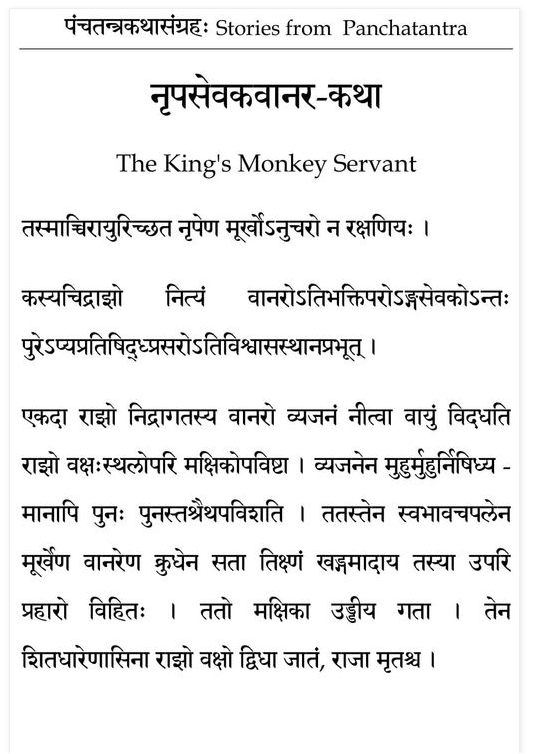
In the text above (at https://vdocuments.mx/panchatantra-sanskrit-english.html ), from a relatively simple book which is often the first authentic Sanskrit students are expected to tackle, the first three words of the title, नृपसेवकवानर, are a compound of नृप (nripa, king), सेवक (sevaka, servant) and वानर (vanara, monkey), whilst in the second line of the main text, कस्यचिद्राज्ञो (kasyacidrajño, of a certain king) fuses the two words कस्यचित राज्ञ: (kasyacit rājñaḥ), with the final sullable modified because of the voiced consonant beginning the following word. The problem confronting learners could be reduced by taking a strongly oral approach but all the difficulties of inflexion remain and it is probably best for the newcomer to South Asian languages to begin with either Hindi or Nepali which are written in the same Devanagari script as Sanskrit and which, in their literary form, use many Sanskrit words only minimally modified.
There was also discussion of the best course book for young learners. With teenage students, John himself uses the Cambridge Latin Course, which is now the overwhelmingly popular choice in Britain, used by up to 95% of the schools now teaching the language. Chris C. has generally used the Oxford Latin Course, which he believes presents grammar more systematically and also, because its theme story centred on the life of the poet Horace, seques more smoothly than Cambridge into the study of authentic literature. John felt, however, that the more jocular tone of Cambridge and the very extensive web support, which is also (outside North America) free of charge are winning advantages
There was also discussion of the best course book for young learners. With teenage students, John himself uses the Cambridge Latin Course, which is now the overwhelmingly popular choice in Britain, used by up to 95% of the schools now teaching the language. Chris C. has generally used the Oxford Latin Course, which he believes presents grammar more systematically and also, because its theme story centred on the life of the poet Horace, seques more smoothly than Cambridge into the study of authentic literature. John felt, however, that the more jocular tone of Cambridge and the very extensive web support, which is also (outside North America) free of charge are winning advantages
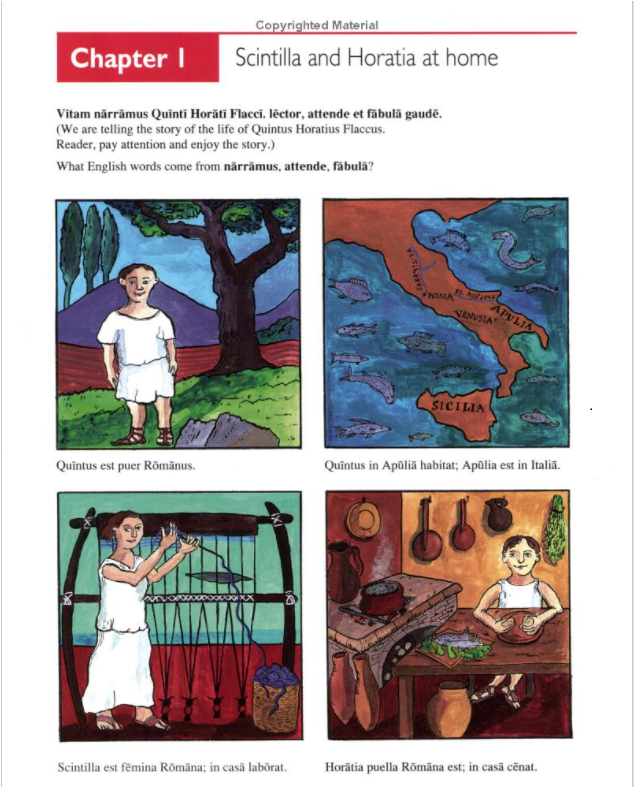
The Oxford Latin Course
https://www.amazon.co.uk/Oxford-Latin-Course-Part-Students/dp/0199122261/
Tanya and Eugene have been using Örberg’s direct method course. Lingua Latina per Se Illustrata, with younger members of the Circulus and John himself is currently using it with one of his private students. This does indeed have advantages for students who like a lot of oral work and for those who have problems with the highly analytical approach most Latin teachers probably still use. On the other hand, it has been criticised for placing exercises that do in fact focus on grammarical points (Pensa A and B in each chapter) before the comprehension questions in Pensum C. (see Nancy Llewellyn’s presentation `In and Out of Örberg at https://www.youtube.com/watch?v=adv_lbelCJk)
John himself prefers to ask his own comprehension questionson each paragraph as students move through the text. He also likes to use Luke Ranieri’s recordings of the chapters, freely available on YouTube.
https://www.amazon.co.uk/Oxford-Latin-Course-Part-Students/dp/0199122261/
Tanya and Eugene have been using Örberg’s direct method course. Lingua Latina per Se Illustrata, with younger members of the Circulus and John himself is currently using it with one of his private students. This does indeed have advantages for students who like a lot of oral work and for those who have problems with the highly analytical approach most Latin teachers probably still use. On the other hand, it has been criticised for placing exercises that do in fact focus on grammarical points (Pensa A and B in each chapter) before the comprehension questions in Pensum C. (see Nancy Llewellyn’s presentation `In and Out of Örberg at https://www.youtube.com/watch?v=adv_lbelCJk)
John himself prefers to ask his own comprehension questionson each paragraph as students move through the text. He also likes to use Luke Ranieri’s recordings of the chapters, freely available on YouTube.
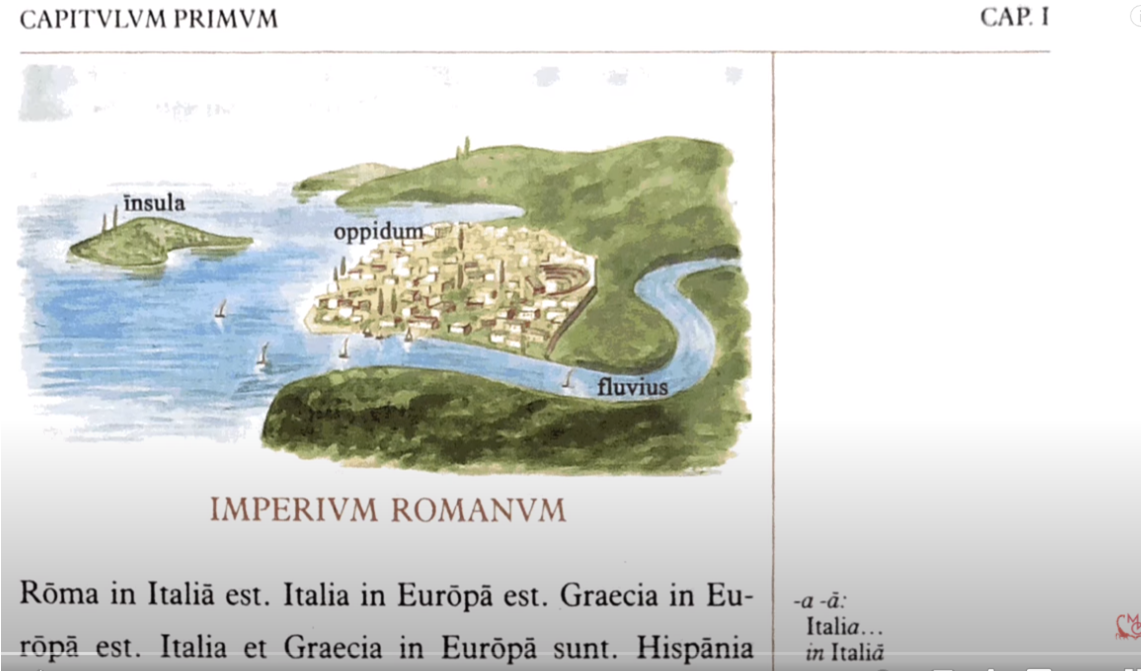
The opening chapter of Lingua Latina Per Se Illustrata – Familia Romana
https://www.youtube.com/watch?v=_Zt19wzsW-c
There still remains the problem that Pensa A and B do need quite an analytical approach so explicit grammar is not totally avoided. To achieve the latter you would really need the kind of immersion in Latin which is not practical for most people, though some parents have made interesting experiments; see in particular the final chapter in Communicative Approaches for Ancient Languages
(https://www.amazon.co.uk/Communicative-Approaches-Ancient-Languages-Lloyd/dp/1350157333/), where, as noted in the May meeting this year, Mallory Ann Hayes and Patrick Owen provide an interesting study of a mother using only Latin when she was alone with her two children. John tries to combine a traditional approach with communicative elements, the kind of via media John Kuhner discusses at https://www.youtube.com/watch?v=Gl5Wtd7qD4A
We read the remainder of chapter 38 of Ad Alpēs and up to line 95 in chapter 39 (..aprī in plagās incurrunt) – see the text below. . Chris C. contributed a careful reading of lines 45-52 from Horace Odes III.11, in which the one daughter of Danaus bids farewell to her husband after disobeying her father’s instructions to kill him. Horace’s words dum favet nox et Venus probably means that the goddess of love would aid the husband’s escape in addition to the cover provided by darkness but Lily thought it might refer instead (or also) to the evening star as a symbol of night.
The legend of Danaus and his fifty daughters migrating from Africa to Greece is one of the pieces of evidence Martin Bernal used in Black Athena to argue for a large Egyptian component in the peopling of Greece and the development of its language and culture but this view is regarded by most scholars as a gross exaggeration. However, influence from the East on Greek thinking and on Greek literature was certainly extensive. John recalls as an undergraduate attending lectures in which Martin West, perhaps the leading British classicist of his generation, cited quotation after quotation from Middle Eastern literature to show the sources of many of the ideas of the early Greek philosophers. Strangely enough, Bernal actuallyaccused West, who went on to write The East Face of Helicon: West Asiatic Elements in Greek Poetry and Myth of minimisng the non-European influences on Greece. This suggests that Bernal, though rightly seeing racist elements in many 19th century accounts of Greece, was not very careful in reading the work of later scholars he attacked.
Chris C. also spoke about the skill of Caesar as a writer, including his use of irony. He also suggested that in the account of the destruction of a Roman force by the Eburones in Book V of De Bello Gallico, Caesar’s putting direct speech only into the mouth of Sabinus, the commander who successfully argued for quitting the camp, was a way of getting the reader to focus on this subordinate’s responsibility for the consequent disaster and and minimising Caesar’s own as overall commander,
The Ad Alpes extract contained an account of the famous `Judgement of Solomon’, in which the king, faced with two women both claiming to be mothers of the same baby, ordered an attendant to cut the baby in two and let each woman have half. The false mother eagerly accepted the arrangement but the real one showed her motherly concern by begging that the baby be given to the other woman rather than killed. This story is highly implausible – why would any woman want half a dead baby? In addition, many historians are also sceptical about the whole picture of Solomon as a fabulously wealthy ruler over a vast realm. For a survey of conflicting opinions, see https://en.wikipedia.org/wiki/Solomon#Historicity
https://www.youtube.com/watch?v=_Zt19wzsW-c
There still remains the problem that Pensa A and B do need quite an analytical approach so explicit grammar is not totally avoided. To achieve the latter you would really need the kind of immersion in Latin which is not practical for most people, though some parents have made interesting experiments; see in particular the final chapter in Communicative Approaches for Ancient Languages
(https://www.amazon.co.uk/Communicative-Approaches-Ancient-Languages-Lloyd/dp/1350157333/), where, as noted in the May meeting this year, Mallory Ann Hayes and Patrick Owen provide an interesting study of a mother using only Latin when she was alone with her two children. John tries to combine a traditional approach with communicative elements, the kind of via media John Kuhner discusses at https://www.youtube.com/watch?v=Gl5Wtd7qD4A
We read the remainder of chapter 38 of Ad Alpēs and up to line 95 in chapter 39 (..aprī in plagās incurrunt) – see the text below. . Chris C. contributed a careful reading of lines 45-52 from Horace Odes III.11, in which the one daughter of Danaus bids farewell to her husband after disobeying her father’s instructions to kill him. Horace’s words dum favet nox et Venus probably means that the goddess of love would aid the husband’s escape in addition to the cover provided by darkness but Lily thought it might refer instead (or also) to the evening star as a symbol of night.
The legend of Danaus and his fifty daughters migrating from Africa to Greece is one of the pieces of evidence Martin Bernal used in Black Athena to argue for a large Egyptian component in the peopling of Greece and the development of its language and culture but this view is regarded by most scholars as a gross exaggeration. However, influence from the East on Greek thinking and on Greek literature was certainly extensive. John recalls as an undergraduate attending lectures in which Martin West, perhaps the leading British classicist of his generation, cited quotation after quotation from Middle Eastern literature to show the sources of many of the ideas of the early Greek philosophers. Strangely enough, Bernal actuallyaccused West, who went on to write The East Face of Helicon: West Asiatic Elements in Greek Poetry and Myth of minimisng the non-European influences on Greece. This suggests that Bernal, though rightly seeing racist elements in many 19th century accounts of Greece, was not very careful in reading the work of later scholars he attacked.
Chris C. also spoke about the skill of Caesar as a writer, including his use of irony. He also suggested that in the account of the destruction of a Roman force by the Eburones in Book V of De Bello Gallico, Caesar’s putting direct speech only into the mouth of Sabinus, the commander who successfully argued for quitting the camp, was a way of getting the reader to focus on this subordinate’s responsibility for the consequent disaster and and minimising Caesar’s own as overall commander,
The Ad Alpes extract contained an account of the famous `Judgement of Solomon’, in which the king, faced with two women both claiming to be mothers of the same baby, ordered an attendant to cut the baby in two and let each woman have half. The false mother eagerly accepted the arrangement but the real one showed her motherly concern by begging that the baby be given to the other woman rather than killed. This story is highly implausible – why would any woman want half a dead baby? In addition, many historians are also sceptical about the whole picture of Solomon as a fabulously wealthy ruler over a vast realm. For a survey of conflicting opinions, see https://en.wikipedia.org/wiki/Solomon#Historicity
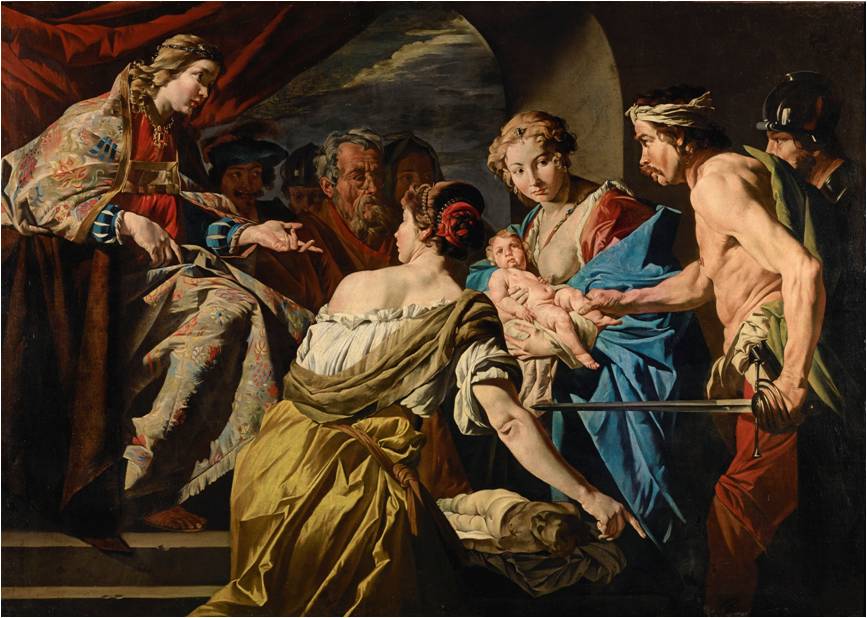
Matthias Stomer - The Judgment of Solomon (17th cent.)
https://commons.wikimedia.org/wiki/File:Matthias_Stomer_-_The_Judgment_of_Solomon.jpg
Chris C. saw the story of Solomon’s glory as a product of what Nietsche termed the inversion under Judaism of the glorification of violence. He also saw it as a good example of the construction of a `useful past’.
There was a discussion of the Roman practice of deification – the ascribing of divine status to important individuals. The word `deification’ is, of course, derived from Latin but Tacitus (c.56 – c. 120 A.D.) and Suetonius (c.69 – after 122 A.D.) both use the tern cōnsecrātiō. The practice is most clearly seen in the Senate’s posthumous voting of divine honours to Julius Caesar and to many of the emperors from Augustus onwards. The decision to deify depended principally on the political circumstances art the time of an emperor’s death: if power passed to his chosen successor, divine status normally followed as a means of bolstering the new ruler’s own legitimacy. There could be a certain amount of cynicism about the whole process, the best-known example being the appearance after the death and deification of Claudius of a skit entitled Apocolynctosis Claudii (`The Pumkinification of Claudius’). In this text, generally believed to have been the work of Seneca the Yonger, Nero’s tutor, , Claudius appeals to the gods to be allowed a place in heaven but, following Augustus’s trenchant criticism of him, is sent down to Hades.
There was a question about Cicero’s attitude towards deification and John, who thought that the practice only began after the death of Caesar, argued that the question would not really have arisen for Cicero. Later investigation, however, revealed that this was untrue. Although the proclamation of Caesar’s divinity in January 42 B.C., a month after Cicero’s death, was indeed the first time the state had honoured an individual in this way, the boundary between god and human had not previously been a clear-cut one. It was a traditional belief that Rome’s founder, Romulus, had been taken up into heaven, and that the spirits of the departed (Mānēs) were in a way divine. The Republican period had seen the unofficial quasi-deification of a number of individuals; for example, after Marius’ defeat of the Teutones at the end of the 2nd. century B.C., many people had made offereings to him alongside those to their household gods (see https://en.wikipedia.org/wiki/Roman_imperial_cult#Roman)
Most crucially, someone pointed out tht Cicero had wanted to declare his own beloved daughter, Tullia,. a goddess after her death in February 45. Despite lengthy study of the Roman Republic as an undergraduate, John had no recollection of reading about this, but Cicero in fact discussed the idea both in his Consolatio, which was written to assuage his grief and which has survived only in part, and also in his correspondence with his close friend Atticus. Cicero’s views and the effect they mah have had on evolving Roman attitudes are analysed in detail in Spencer Cole’s Cicero and the Rise of Deification in Rome https://www.amazon.com/Cicero-Rise-Deification-at-Rome/dp/1107032504
https://commons.wikimedia.org/wiki/File:Matthias_Stomer_-_The_Judgment_of_Solomon.jpg
Chris C. saw the story of Solomon’s glory as a product of what Nietsche termed the inversion under Judaism of the glorification of violence. He also saw it as a good example of the construction of a `useful past’.
There was a discussion of the Roman practice of deification – the ascribing of divine status to important individuals. The word `deification’ is, of course, derived from Latin but Tacitus (c.56 – c. 120 A.D.) and Suetonius (c.69 – after 122 A.D.) both use the tern cōnsecrātiō. The practice is most clearly seen in the Senate’s posthumous voting of divine honours to Julius Caesar and to many of the emperors from Augustus onwards. The decision to deify depended principally on the political circumstances art the time of an emperor’s death: if power passed to his chosen successor, divine status normally followed as a means of bolstering the new ruler’s own legitimacy. There could be a certain amount of cynicism about the whole process, the best-known example being the appearance after the death and deification of Claudius of a skit entitled Apocolynctosis Claudii (`The Pumkinification of Claudius’). In this text, generally believed to have been the work of Seneca the Yonger, Nero’s tutor, , Claudius appeals to the gods to be allowed a place in heaven but, following Augustus’s trenchant criticism of him, is sent down to Hades.
There was a question about Cicero’s attitude towards deification and John, who thought that the practice only began after the death of Caesar, argued that the question would not really have arisen for Cicero. Later investigation, however, revealed that this was untrue. Although the proclamation of Caesar’s divinity in January 42 B.C., a month after Cicero’s death, was indeed the first time the state had honoured an individual in this way, the boundary between god and human had not previously been a clear-cut one. It was a traditional belief that Rome’s founder, Romulus, had been taken up into heaven, and that the spirits of the departed (Mānēs) were in a way divine. The Republican period had seen the unofficial quasi-deification of a number of individuals; for example, after Marius’ defeat of the Teutones at the end of the 2nd. century B.C., many people had made offereings to him alongside those to their household gods (see https://en.wikipedia.org/wiki/Roman_imperial_cult#Roman)
Most crucially, someone pointed out tht Cicero had wanted to declare his own beloved daughter, Tullia,. a goddess after her death in February 45. Despite lengthy study of the Roman Republic as an undergraduate, John had no recollection of reading about this, but Cicero in fact discussed the idea both in his Consolatio, which was written to assuage his grief and which has survived only in part, and also in his correspondence with his close friend Atticus. Cicero’s views and the effect they mah have had on evolving Roman attitudes are analysed in detail in Spencer Cole’s Cicero and the Rise of Deification in Rome https://www.amazon.com/Cicero-Rise-Deification-at-Rome/dp/1107032504
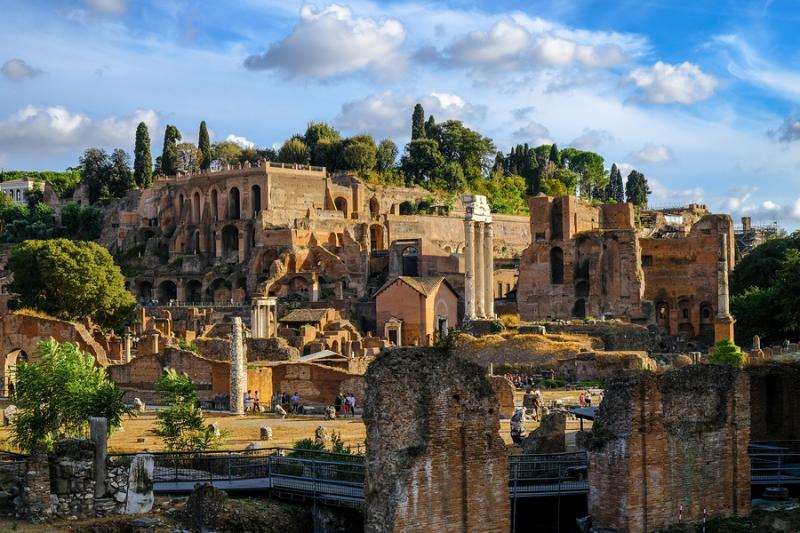
Chris C. felt that Cicero would have been wary of sacralisation because of his own difficulties retrieving ownership of his house on the Palatine, part of which, during his period in exile, had been conscrated by his enemy Clodius as a temple to the goddess of Liberty! Cicero regained full possession by successfully arguing before the College of Pontiffs that the consecration had been ritually invalid. His speech, which has survived under the title De domo sua, is a difficult read but an important source for students of Roman religion – see, for example, Anders Lisdorf, `The Conflict over Cicero's House: An Analysis of the Ritual Element in "De Domo Sua"’, Numen, Vol. 52, No. 4 (2005), pp. 445-464 (available at https://www.jstor.org/stable/27643184 after registration with theJSTOR site). Although Cicero was naturally hostile to the use made of religion by his enemy, the speech shows that Clodius had earlier accused Cicero of equating himself with Jupiter, an aspect of the affair which is discussed at
https://classicalstudies.org/annual-meeting/147/abstract/divine-cicero-and-pious-clodius-invective-de-domo-sua by Jaclyn Neel.
On the purely linguistic front, Luisa pointed out that the derogatory connotation of the demonstrative pronoun/adjective iste (`that…of yours’) is found also in the somewhat archaic Italian pronoun codesto. The survey at https://www.thoughtco.com/italian-demonstrative-adjectives-2011433 says that this word `is still used in the Tuscan dialect and in commercial and bureaucratic language’ but otherwise normally replaced by quello. Both iste and codesto were originally used to refer to objects remote from the speaker but not from the listener.
John wrongly suggested that English clam (referring to the shelfish) couldbe a borrowing of Latin clam (secretly, privately). In fact the word is of Germanic origin and, as explained by Etymonline, `originally Scottish, apparently a particular use of Middle English clam "pincers, vice, clamp" (late 14c.), from Old English clamm "bond, fetter, grip, grasp," from Proto-Germanic *klam- "to press or squeeze together" ‘
Following on Chris C’s expert reading of Horace, there was a brief discussion on how Latin poetry in general should be read aloud. There has long been controversy over whether the Romans themselves stressed the first syllable of every metrical unit or employed the normal stress on each word producing a kind of counterpoint rhythm to that of the vowel quantities. Most scholars now believe that the latter method was the one the ancients preferred, though stressing the start of each foot may perhaps be allowed as a pedagogical device in the modern classroom. In comparison, Lily pointed out that the sung rhythms of Cantonese opera generally follow the contours of normal speech.
https://classicalstudies.org/annual-meeting/147/abstract/divine-cicero-and-pious-clodius-invective-de-domo-sua by Jaclyn Neel.
On the purely linguistic front, Luisa pointed out that the derogatory connotation of the demonstrative pronoun/adjective iste (`that…of yours’) is found also in the somewhat archaic Italian pronoun codesto. The survey at https://www.thoughtco.com/italian-demonstrative-adjectives-2011433 says that this word `is still used in the Tuscan dialect and in commercial and bureaucratic language’ but otherwise normally replaced by quello. Both iste and codesto were originally used to refer to objects remote from the speaker but not from the listener.
John wrongly suggested that English clam (referring to the shelfish) couldbe a borrowing of Latin clam (secretly, privately). In fact the word is of Germanic origin and, as explained by Etymonline, `originally Scottish, apparently a particular use of Middle English clam "pincers, vice, clamp" (late 14c.), from Old English clamm "bond, fetter, grip, grasp," from Proto-Germanic *klam- "to press or squeeze together" ‘
Following on Chris C’s expert reading of Horace, there was a brief discussion on how Latin poetry in general should be read aloud. There has long been controversy over whether the Romans themselves stressed the first syllable of every metrical unit or employed the normal stress on each word producing a kind of counterpoint rhythm to that of the vowel quantities. Most scholars now believe that the latter method was the one the ancients preferred, though stressing the start of each foot may perhaps be allowed as a pedagogical device in the modern classroom. In comparison, Lily pointed out that the sung rhythms of Cantonese opera generally follow the contours of normal speech.
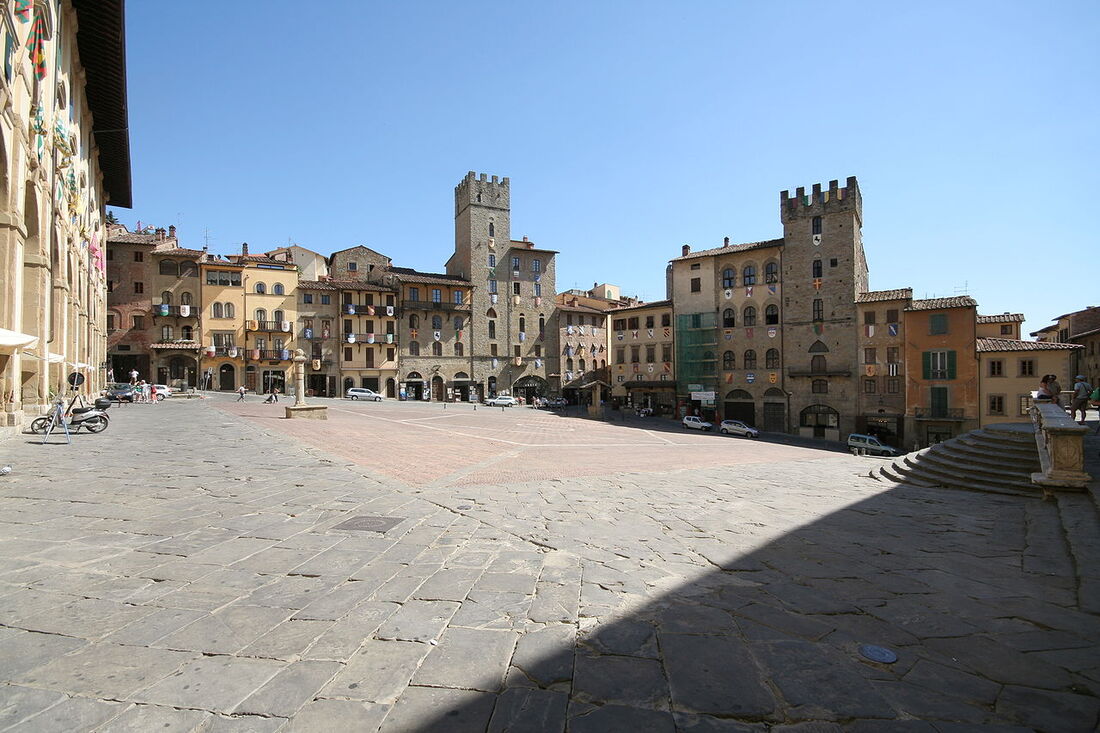
The Piazza Grande at Arezzo (ancient Arretium) in Tuscany
https://en.wikipedia.org/wiki/Arezzo#/media/File:Arezzo_Piazza_Grande.jpg
On the musical front, Eugene asked for assistance from Chris, who is a highly accomplished musician, on interpreting the writing of Guido of Arezzo, an 11th century Tuscan monk who was a key figure in the development of Western music and particularly of musical notation.(see https://www.researchgate.net/publication/254571168_Guido_of_Arezzo_and_His_Influence_on_Music_Learning).Eugene is particularly interested in the two paragraphs from “Si quam ergo” to “sibi particula incipit.” on pp. 18 - 22 of the 1904 edition of Guido’s letter De Ignoto Cantu available at https://archive.org/details/epistolaguidoni00hermgoog and also in chapter 2 of his Micrologus, at
https://s9.imslp.org/files/imglnks/usimg/a/ae/IMSLP270547-PMLP438314-39087009494248text.pdf
Chris will hopefully enlighten us all on this later on.
Finally, on a much more trivial note, John drew attention to the film Tombstone, where Wyatt Earp’s sidekick Dr. Holliday and the outlaw Johnny Ringo trade quotations in the saloon. The clip, with transcript and explanations, is available on https://linguae.weebly.com/latin--greek.html under the title `A Latin `duel’ in the Old West.’
AD ALPES, c.38 (contd.)
Tum Anna: "Rēx noster Solomōn,[1] hominum omnium sapiēntissimus 110, maximā
Then Anna king our Solomon of-men all wisest with-greatest
sollertiā contrōversiās dīiūdicābat. Velut ōlim ad eum vēnērunt duae mulierēs, quae sēcum
cleverness disputes used-to-settle for-example once to him came two women who with-selves
ūnum īnfantem adferēbant, quem utraque suum esse adfirmāvit.
one infanht were-bringing whom both own to-be claimed
"Ē quibus altera: 'Nūper, ō rēx,' inquit, 'ex mē et ex istā muliere flliī nātī sunt. Sed ista,
Of-whom one recently o king said from me and from that woman sons born were but that- one
suō puerō mortuō, cum 115 meum fīlium abstulisset, in gremiō meō īnfantem mortuum
with-own boy dead when my son she-had-stolen in bosom my infant dead
dēposuit. Quārē ego, ubi experrēcta sum, alterīus fīlium in gremiō invēnī.'
placed for-which-reason I when I woke up another’s son in bosom found
"Tum altera: 'Nōlī, ō rēx, eī crēdere,' inquit. 'Hoc tōtum fictum est. Ego huius puerī
Then the-other do-not o king her believe said this all made-up is I of-this boy
vērā sum māter.'
real am mother
120 "Rēx, cum haec audīvisset, ministrō imperāvit ut gladium statim adferret. Quō
King when these-things he-had-heard to-servant gave-order that sword at-once brought with-which
adlātō, iussit īnfantem vīvum in partēs duās discindī, ut mulier utraque aequam partem
brought he-ordered child living into parts two to-be-divided so-that mother each equal part
habēret.
could-have
"Tum illa, quae vērē māter erat, in lacrimās effūsa: 'Istī mulierī improbae,' ōrat,
Then she who truly mother was into tears having-burst to-that woman dishonest begs
'parvulum miserum trāde incolumem, 125 ō rēx. Nōlī, obsecrō, eum trucīdāre.' Sed altera:
Little-one poor hand-over safe o king do-not I-beg him slaughter but the-other
'Statim discindātur, ut utraque nostrum aequam partem habeat.'
At-once let-him-be-split so-that each of-us equal part can-have
"Quō audītō, rēx ministrum iussit gladium recondere, puerum autem eī trādidit, quae
With-which heard king servant ordered sword to-put-away boy however to-her he-handed who
amōre suō comprobāverat sē esse mātrem vēram."
by-love her had-proved self to-be mother real
130 "Haec est fābula adprīmē lepida," inquit Cornēlia; "et gaudeō mē ūnam
This is story exceedingly nice said cornelia and I=m-glad me one
dēmum rem audīvisse, cuius ēventus pulcherrimus erat."
Finally thing to-have-heard whose ending very-beautiful is
Līberī tum alacrēs discessērunt; ac brevī cēterī quoque consecūtī sunt.
Children then cheerfully left and soon the-rest also followed
NOTES
[1] King Solomon (Hebrew שְׁלֹמֹה, Shlomoh) is traditionally thought to have succeeded his father David and ruled from Jerusalem over a united Jewish state from 970 to 931 B.C. however, the Biblical account of the splendours of his reign is questioned by most scholars and he may only have controlled a small city state rather than a great empire. For the controversy, see https://en.wikipedia.org/wiki/Solomon
CHAPTER 39 (contd.)
Posterō diē, priusquam reliquī gustāvērunt, Stasimus forās ēgressus in viā cum obviīs
Next day before others had-food Stasimus outside having-gone-out on road with people-met
loquēbātur; cum enim hās regiōnēs numquam anteā vīsisset, summō studiō exquīrēbat
was-talking since for these regions never before he-had-visited with-greatest enthusiasm he-was-asking-about
omnia
everything
Postrēmō occurrit homō habitū peregrīnō, quī ōlim cāsū aliquō manum āmīserat; prō
Finally there-came-along man within-dress foreign who once by-misfortune some hand had-lost in-place-of
quā uncō ferreō ūtēbātur. 5 Ad quem Stasimus propius accessit ac dē rēbus variīs loquī coepit.
which hook iron he-was-using to whom Stasimus nearer approached and about things various to-speak began
Cumque uncum ferreum aliquamdiū attentius observāsset: "Dīc, hospes," inquit; "quō
And-when hook iron for—some-time quite-attentively he-had-observed say stranger said by-what
cāsū miserō manum tuam āmīsistī?"
accident wretched hand your you-lost
Ille autem nihil respondit, ac statim aliā dē rē loquī contendit. Sed Stasimus,
He however nothing replied and at-once other about thing to-speak hurried but Stasimus
cognoscendī cupiditāte incēnsus,[1] īnstābat ācrius 10 et negābat sē umquam hominem
of-finding-out with-longing burning pressed more-insistently and denied self ever man
dīmissūrum, nisi id sibi respondisset.
going-to-let-go unless this for-him he-had-replied-to
Tum alter: "Hoc tibi respondēbō," inquit, "sī prius iūrāveris tē posteā dē hāc rē
Then the-other this for-you I-will-reply-to said if-first you-will-have-sworn you afterwards about this thing
nihil amplius rogātūrum."
nothing more going-to-ask
"Optimē," inquit Stasimus. "Per deōs deāsque omnēs iūrō 15 mē nihil dē hāc rē
Excellent said Stasimus by gods and-goddesses all I-swear me nothing about this thing
posteā rogātūrum, sī modo hoc ūnum mihi responderis[2]."
afterwards going-to-ask if only this one-thing to-me you-will-have-replied
NOTES
[1] Literally `burned’ (passive perfect participle from incendō)
[2] As this sī clause is inside an indirect statement (dependent on iūrō) the verb should theoretically be perfect subjunctive rather than the future perfect indicative required in a direct statement. However the second person singular responderis is common to both these tenses.
"Manus mea," inquit alter, "bēluae immānis morsū dērepta est."
Hand my said the-other of-beast giant bite torn-off was
Tum omnēs, quī circumstābant, cachinnōs maximōs sustulērunt;[1] 20 nam Stasimus,
Then all who were-standing-around chuckles very-loud produced for Stasimus
cognoscendī studiō etiam vehementius incēnsus, iūre iūrandō tamen impediēbātur quōminus
of-finding-out with-eagerness even more-strongly burning by swearing oath however was-prevented from
plūra quaereret.[2] Sed opportūnē hōra profectiōnis iam aderat; quārē ille haud invītus sē
more asking but fortunately hour of-setting-off now was-here so he not unwilling self
recēpit ad raedās, quae ante ōstium stābant.
took-back to wagons which before entrance were-standing
Brevī omnēs forās ēgressī ēscendērunt et laetī profectī sunt; 25 nam hōc diē ad fīnem
Soon all outside having-gone-out got-on-board and happy set off for on-that day to end
itineris longī sē perventūrōs spērābant. Nec vērō prius cōnstitērunt, ut cibus dēprōmerētur,
of-journey long themselves going-to-arrive they-hoped nor indeed earlier they-halted so-that food could-be-unloaded
quam dīmidium viae iam cōnfectum est.
than[when] half of-way already finished was
Lībērī, cum paulisper in umbrā lūsissent mātrem rogāvērunt 30 numquid memoriā
Children when a-little-while in shade they-had-played mother asked whether-anything of-recollection
dignum recordārī posset.
worthy to-remember she-could
Illa autem: "Brevī proficīscendum est," inquit; "sed fortasse pauca dīcere possum dē
She however soon necessary-to-set-off it-is said bit perhaps a-few-things say I-can about
facinore atrōcī fīliārum Danaī, sī haec numquam audīvistis."
crime atrocious of-daughters of-Danaus if these-things never you-have
"Ego quidem numquam audīvī," inquit Cornēlia. "Perge 35 porrō dīcere, sī vīs, māter."
I indeed never have-heard said Cornelia go-on further to-say if you-will mother
"Danaō, quī fuit Libyae rēx, quīnquāgintā erant fīliae," inquit Drūsilla; "frāter autem
For-Danaus who was Libya’s king fifty were daughters said Drusilla brother moreover
Aegyptus, rēx Arabiae, fīlīōs totidem habēbat. Sed inter Danaum et fllīōs Aegyptī dissēnsiō
Aegyptus king of-Arabia sons same-number had but between Danaus and sons of-Aegyptus quarrel
orta est, atque ille, īnsidiās veritus, Libyā relictā sēdēs novās 45 in Graeciā quaesīvit.[3]
arose and he trap fearing with-Libya left home new in Greece sought
NOTES
[1] Literally `raised’ (from tollō, tollere, sustulī, sublātum)
[2] Literally `whereby less he might ask’
[3] Danaus (three syllables) was the founder (or re-founder) of Argos in the NE Peloponnese and Danaī was a name for the Greeks in general. For further details see https://en.wikipedia.org/wiki/Danaus. Martin Bernal, in his controversial book Black Athena uses this legend and other evidence to argue for Egyptian settlement in Greece and for Greek language and civilization as the result of a fusion of Egyptian and Indo-European elements rather than as derived almost entirely from the latter. There is no doubt that influence from the Eastern Mediterranean and Mesopotamia was very important in Greece’s development, as shown in Martin West’s The East Face of Helicon: West Asiatic Elements in Greek Poetry and Myth (summarised in Barry Powell’s review), but most scholars think Bernal exaggerates the Egyptian role and in particular is wrong in claiming Egyptian origins for a large part of the classical Greek vocabulary.
"Paucīs autem post annīs fīliī Aegyptī, mare transvectī, patruum suum adiērunt rogātum
a-few however later years sons of-Aegyptius sea having-crossed uncle their went-to to-ask
ut eius fīliae sibi in mātrimōnium darentur.
that his daughters to-them in marriage might-be-given
"Danaus, quī iniūriārum sibi inlātārum nōndum oblītus erat, sē fīliās datūrum pollicitus
Danaus who injuries to-himself done not-yet forgotten had self daughters going-to-give promised
est. Sed clam virginibus praecēpit ut in thalamōs sēcum adferrent gladiōs, ut noctū iuvenēs
but secretly maidens instructed that into marriage-chambers with-them they-bring swords so-that at-night youths
cōnsōpītōs singulae singulōs aggressae occīderent.
sound-asleep individual-females individual-males having-attacked kill
"Nūptiīs factīs, cum novī marītī somnō sepultī essent,[1] tum mulierēs ē lectīs surgentēs
With-marriages done when new husbands asleep deep were then women from beds rising
suum quaeque trucīdāvērunt. Et 50 fāma est propter hoc scelus eās apud īnferōs ad aquam
own-man each slaughtered and story is because-of this crime them in underworld to water
semper ferendam damnātās esse. Nam iussae sunt dōlium complēre, cuius per fundum
always being-carried condemned to-have-been for ordered they-were cask to-fill whose through bottom
rīmōsum statim effluit aqua, quam illae urnīs īnfundēre numquam dēsinunt."
full-of-cracks at-once flows-out water which they from-urns to-pour-in never cease
"Fābulam quam trīstem!" inquit Cornēlia: "etsī 55 illae scelestae certē poenā maximā
story how sad said Cornelia although those criminal-women certainly penalty greatest
dignae erant, quae imperiō patris tam impiō pāruissent."
deserving were who order of-father so wicked had-obeyed
"Ūna tamen erat," inquit Drūsilla, "quam marītī adulēscentis tantopere miseruit, ut
One however was said Drusilla whom for-husband young so-greatly pity-affected that
foribus patefactīs eum dīmitteret, ut patrem et patriam repeteret incolumis."
with-doors thrown-open him she-sent-away so-that father and fatherland he-could seek-again unharmed
"Eam summīs laudibus extulit poēta Horātius," inquit Pūblius. 60 "Nam ab eō 'splendidē
Her with-greatest praises extolled poet Horatius said Publius for by him splendidly
mendāx' vocātur, et 'in omne virgō nōbilis aevum.' Nec quidquam eīs verbīs generōsius est,
decitful is-called and unto every maiden noble era and-not anything than-those words more-generous is
quibus illa marītum dīmittit:
with-whicg she husband sends-off
" 'Mē pater saevīs oneret catēnīs,
Me father with-savage let-load chains
NOTE
[1] Literally `had been buried by sleep’
Quod virō clēmēns miserō pepercī;
Because man mercifully wretched I-spared 65
Mē vel extrēmōs Numidārum in agrōs
Me or further of-Numidians into fields
Classe relēget:
By-fleet let-him-exile
Ī pedēs quō tē rapiunt et aurae,
Go feet where you take and winds
Dum favet nox et Venus; ī secundō
While favours night and Venus go with-favourable
Ōmine, et nostrī memorem sepulchrō 70
Omen and of-us reminding on-tomb
Scalpe querellam.' "[1]
carve lament
"Quid vērō puellā factum est, māter?" inquit Cornēlia.
What indeed with-girl done was mother asked Cornelia
"Prīmō in vincula coniecta est," inquit Drūsilla. "Sed posteā resēdit īra patris, et marītus
First into chains thrown she-was said Drusilla but afterwards subsided anger of-father and husband
revocātus spōnsam ad sē recēpit." 75
recalled wife to himself took-back
Iam autem tempus abeundī erat. Quārē omnēs, cum surrēxissent, ad raedās rediērunt,
Now however time of-departure was so all when they-had-got-up to wagons returned
brevīque rūrsus Cōmum versūs prōgrediēbantur.
and-soon again Comum towards they-were-proceeding
"Quam vellem," inquit Cornēlia, "pater quoque nunc adesset! Ego quidem nōn intellegō
How I-wish sad Corneliia father also now was-present I indeed not understand
quō modō hōs mēnsēs eō 80 carēre possīmus."
In-what way these months him be-without we-can
"Bonō es animō," inquit māter, "et scītō patrem, quam prīmum potuerit, ad nōs
Of-good be heart said mother and know father as-soon as he-will-have-been-able to us
reditūrum esse."
going-to-return to-be
Tum Pūblius, ut ad rēs aliās mentēs līberōrum āverteret: "Vōbīsne nōtum est," inquit,
Then Publius so-that to things other minds of-children he-might-divert to-you-? Known is asks
NOTE
[1] Odes III.11.45-52: ` Though father may cruelly load me with chains because I mercifully spared a wretched man, though he may exile my by sea to the most distant Numidian territory, go where your feet and the breezes take you, whilst the night and Venus are on your side go with favourable omen and carve on a tomb a lament in memory of me’ The poem is in Sapphic stanzas, consisting of three Sapphic hendecasyllables (- ᵕ - ᵒ - ᵕ ᵕ - ᵕ - -) and one Adonic (- ᵕ ᵕ - -). The final long syllables can, as usual, be replaced by a short syllable `long by position’
"urbem, ad quam properāmus, 85 patriam esse illīus Plīnī, quī litterās dē monte Vesuviō
city to which we-are-hurrying native-place to-be of-that Pliny who letters about Mt. vesuvius
scrīpserit?"[1]
wrote
"Id numquam audīvī," inquit Sextus. "Dē eius factīs amplius, sīs."
That never I-heard said Sextus about his deeds more please
"Plīnius erat vir urbānus," inquit Pūblius, "humānitātī ac 90 litterīs dēditus. Ōlim amīcō
Pliny was man of-city said Publius to-culture and literature devoted once to-friend
suō Tacitō scrīpsit sē nūper īssē vēnātum aprōsque trēs cēpisse. Quōque mīrābilior rēs
his Tacitus wrote self recently to-have-gone hunting and-boars three to-have-caught and-so-that more-remarkable thing
esse videātur, commemorat sē nec vēnābulum nec lanceam portāsse, sed manū tenuisse stilum
to-be may seem he-records self neither hunting-spear nor lance to-have-carried but in-hand to-have-held stylus
et pugillārēs. Dum autem ad rētia sedet, ecce trēs aprī in plāgās incurrunt!" 95
and writing-tablets while however at nets he-sits see! three boars into trap run
"Hahahae!" inquit Cornēlia. "Vēnātiōnem sānē facilem!"
Ha-ha-ha said Cornelia hunting to-be-sure easy
"Ipse, ut suspicor," inquit Pūblius, "litterīs magis quam vēnātiōnī studēbat. Dīcit saltem
He-himself as I-suspect said Publius literature more than hunting was-keen-on he-says at-least
sē prō lanceā stilum attulisse, ut, sī manūs vacuās, plēnōs tamen pugillārēs domum
self in-lace-of lance stylus to-have-brought so-that if hands empty full however tablets home
reportāret. Addit quoque animum mīrābiliter mōtū corporis excitārī, ac 100 silvās et
he-would-bring-back he-adds also mind remarkably by-movment of-body to-be-aroused and woods and
sōlitūdinem vēnātiōnī datam magna cōgitātiōnis incitāmenta esse. Quārē adfirmat nōn
isolation to-hunting incidental great of-thought encouragements to-be so he-claims not
Diānam magis in montibus quam Minervam errāre."
Diana more in mountains than Minerva to-wander
"Hoc haud intellegō," inquit Cornēlia. "Cēnsēbatne hodiē deās ipsās in montibus
This not I-understand said Cornelia did-he-think today goddesses themselves in mountains
vagārī?" 105
to-roam
"Nūllō modō," inquit māter. "Diāna vēnātiōnī studet, Minerva autem artium
In-no way said mother Diana on-hunting is-keen Minerva however of-arts
litterārumque est cultrīx. Plīnius igitur vult dīcere nōn modo vēnātōrēs sed etiam scrīptōrēs in
and-literature is cultivator Pliny therefore means to-say not only hunters but also writers in
montibus loca ad operam suam ēdendam apta invenīre posse." 110
hills places for work there carrying-out suitable to-find to-be-able
"Ego quidem metuō," inquit Pūblius, "nē ille interdum ostentātiōnis causā nōnnūlla
I indeed fear said Publius that he sometimes of-showing-off for-sake-of some-things
NOTE
[1] scrīpserit: perfect subjunctive in a relative clause within an indirect question
fēcerit. Nam fortasse meministis eum, cum adulēscēns Mīsēnī cum mātre relictus esset,
did for perhaps you-remember him when youngster at-Misenum with mother left had-been
librum Titī Līvī in āreā lēgisse, cum cēterī, ignibus ē Vesuviō relūcentibus perterritī, ex
book of-Titus Livius [Livy] in yard to-have-read while others by-fires from Vesuvius shining terrified from
oppidō undique fugerent.[1] 115
town on-all-sides were-fleeing
"Quaedam autem perūtilia certē ab illō excōgitāta sunt. Velut eō auctōre Cōmēnsēs
Certain-things however very-useful certainly by-him thought=up were For-example on-his initiative Comians
lūdum aperuērunt. Nam ōlim Comī, cum ad eum salūtātum vēnisset cuiusdam vīcīnī fīlius
school opened for once at-Comum when to him for-greeting had-come of-a-certain neighbour son
praetextātus,[2] puerum rogāvit ubi studēret. Ille autem respondit: 'Mediolānī.' 120
wearing-toga-of-childhood boy he-asked where he-studied he then answered in-Mediolanum [Milan]
" 'Cūr nōn hīc?' inquit Plīnius.
Why not here asked Pliny
"Tum pater puerī, quī forte aderat: 'Quod nūllōs hīc praeceptōrēs habēmus.'
Then father of-boy who by-chance was-there because no here teachers we-have
"Opportūnē accidit ut complūrēs patrēs audīrent, et Plīnius: 'Quārē nūllōs?' inquit.
Luckily it-happened that several fathers were-listening and Pliny why none asked
'Quantō melius sit līberōs vestrōs hīc 125 potissimum discere! Quid sī ad praeceptōrēs
How-much better it-would-be children your here of-all-places to-learn what if for teachers
condūcendōs pecūniam cōnferātis omnem, quam nunc in habitātiōnēs, in viātica, in ea quae
being-hired money you-put-together all which now on lodgings on-travel-expenses on things which
peregrē emuntur, impenditis?'
out-of-town are-bought you-spend
"Nē longum sit,[3] Plīnius pollicitus est sē ipsum datūrum tertiam partem eius, quod
Lest long it-be Pliny promised himself going-to-give third part of-that which
cēterīs placēret. Tōtum enim ipse 130 dare nōluit, quod exīstimābat parentēs, sī partem
to-the-others pleased whole for himself to-give he-did-not-want because he-reckoned parents if part
mūneris sustinērent, maiōre cūrā praeceptōrēs ēlēctūrōs esse."[4]
of-burden bore with-greater care teachers going-to-choose to-be
Viātōrēs, cum haec et tālia inter sē loquerentur, celeriter prōgrediēbantur; ac sub
Traveller while these and such-things among-themselves were-discussing quickly were-making-progress and towards
vesperum Cōmum tandem perventum est, ubi Cornēlī frāter grātissimō hospitiō eōs accēpit.
evening to Comum at-last reached it-was where Cornelius’s brother with-most-pleasing hospitality them receive
NOTES
[1] See chapter 19.
[2] See chapter 25.
[3] `to cut a long story short’.
[4] Pliny describes this incident in Letters IV.13. William Harris, in his Ancient Literacy ( pg.42 ) cites the story as showing how sporadic the provision of education was at this time. Harris’ s estimate that only 5-10% of the population were literate is regarded by many scholars as too low.
https://en.wikipedia.org/wiki/Arezzo#/media/File:Arezzo_Piazza_Grande.jpg
On the musical front, Eugene asked for assistance from Chris, who is a highly accomplished musician, on interpreting the writing of Guido of Arezzo, an 11th century Tuscan monk who was a key figure in the development of Western music and particularly of musical notation.(see https://www.researchgate.net/publication/254571168_Guido_of_Arezzo_and_His_Influence_on_Music_Learning).Eugene is particularly interested in the two paragraphs from “Si quam ergo” to “sibi particula incipit.” on pp. 18 - 22 of the 1904 edition of Guido’s letter De Ignoto Cantu available at https://archive.org/details/epistolaguidoni00hermgoog and also in chapter 2 of his Micrologus, at
https://s9.imslp.org/files/imglnks/usimg/a/ae/IMSLP270547-PMLP438314-39087009494248text.pdf
Chris will hopefully enlighten us all on this later on.
Finally, on a much more trivial note, John drew attention to the film Tombstone, where Wyatt Earp’s sidekick Dr. Holliday and the outlaw Johnny Ringo trade quotations in the saloon. The clip, with transcript and explanations, is available on https://linguae.weebly.com/latin--greek.html under the title `A Latin `duel’ in the Old West.’
AD ALPES, c.38 (contd.)
Tum Anna: "Rēx noster Solomōn,[1] hominum omnium sapiēntissimus 110, maximā
Then Anna king our Solomon of-men all wisest with-greatest
sollertiā contrōversiās dīiūdicābat. Velut ōlim ad eum vēnērunt duae mulierēs, quae sēcum
cleverness disputes used-to-settle for-example once to him came two women who with-selves
ūnum īnfantem adferēbant, quem utraque suum esse adfirmāvit.
one infanht were-bringing whom both own to-be claimed
"Ē quibus altera: 'Nūper, ō rēx,' inquit, 'ex mē et ex istā muliere flliī nātī sunt. Sed ista,
Of-whom one recently o king said from me and from that woman sons born were but that- one
suō puerō mortuō, cum 115 meum fīlium abstulisset, in gremiō meō īnfantem mortuum
with-own boy dead when my son she-had-stolen in bosom my infant dead
dēposuit. Quārē ego, ubi experrēcta sum, alterīus fīlium in gremiō invēnī.'
placed for-which-reason I when I woke up another’s son in bosom found
"Tum altera: 'Nōlī, ō rēx, eī crēdere,' inquit. 'Hoc tōtum fictum est. Ego huius puerī
Then the-other do-not o king her believe said this all made-up is I of-this boy
vērā sum māter.'
real am mother
120 "Rēx, cum haec audīvisset, ministrō imperāvit ut gladium statim adferret. Quō
King when these-things he-had-heard to-servant gave-order that sword at-once brought with-which
adlātō, iussit īnfantem vīvum in partēs duās discindī, ut mulier utraque aequam partem
brought he-ordered child living into parts two to-be-divided so-that mother each equal part
habēret.
could-have
"Tum illa, quae vērē māter erat, in lacrimās effūsa: 'Istī mulierī improbae,' ōrat,
Then she who truly mother was into tears having-burst to-that woman dishonest begs
'parvulum miserum trāde incolumem, 125 ō rēx. Nōlī, obsecrō, eum trucīdāre.' Sed altera:
Little-one poor hand-over safe o king do-not I-beg him slaughter but the-other
'Statim discindātur, ut utraque nostrum aequam partem habeat.'
At-once let-him-be-split so-that each of-us equal part can-have
"Quō audītō, rēx ministrum iussit gladium recondere, puerum autem eī trādidit, quae
With-which heard king servant ordered sword to-put-away boy however to-her he-handed who
amōre suō comprobāverat sē esse mātrem vēram."
by-love her had-proved self to-be mother real
130 "Haec est fābula adprīmē lepida," inquit Cornēlia; "et gaudeō mē ūnam
This is story exceedingly nice said cornelia and I=m-glad me one
dēmum rem audīvisse, cuius ēventus pulcherrimus erat."
Finally thing to-have-heard whose ending very-beautiful is
Līberī tum alacrēs discessērunt; ac brevī cēterī quoque consecūtī sunt.
Children then cheerfully left and soon the-rest also followed
NOTES
[1] King Solomon (Hebrew שְׁלֹמֹה, Shlomoh) is traditionally thought to have succeeded his father David and ruled from Jerusalem over a united Jewish state from 970 to 931 B.C. however, the Biblical account of the splendours of his reign is questioned by most scholars and he may only have controlled a small city state rather than a great empire. For the controversy, see https://en.wikipedia.org/wiki/Solomon
CHAPTER 39 (contd.)
Posterō diē, priusquam reliquī gustāvērunt, Stasimus forās ēgressus in viā cum obviīs
Next day before others had-food Stasimus outside having-gone-out on road with people-met
loquēbātur; cum enim hās regiōnēs numquam anteā vīsisset, summō studiō exquīrēbat
was-talking since for these regions never before he-had-visited with-greatest enthusiasm he-was-asking-about
omnia
everything
Postrēmō occurrit homō habitū peregrīnō, quī ōlim cāsū aliquō manum āmīserat; prō
Finally there-came-along man within-dress foreign who once by-misfortune some hand had-lost in-place-of
quā uncō ferreō ūtēbātur. 5 Ad quem Stasimus propius accessit ac dē rēbus variīs loquī coepit.
which hook iron he-was-using to whom Stasimus nearer approached and about things various to-speak began
Cumque uncum ferreum aliquamdiū attentius observāsset: "Dīc, hospes," inquit; "quō
And-when hook iron for—some-time quite-attentively he-had-observed say stranger said by-what
cāsū miserō manum tuam āmīsistī?"
accident wretched hand your you-lost
Ille autem nihil respondit, ac statim aliā dē rē loquī contendit. Sed Stasimus,
He however nothing replied and at-once other about thing to-speak hurried but Stasimus
cognoscendī cupiditāte incēnsus,[1] īnstābat ācrius 10 et negābat sē umquam hominem
of-finding-out with-longing burning pressed more-insistently and denied self ever man
dīmissūrum, nisi id sibi respondisset.
going-to-let-go unless this for-him he-had-replied-to
Tum alter: "Hoc tibi respondēbō," inquit, "sī prius iūrāveris tē posteā dē hāc rē
Then the-other this for-you I-will-reply-to said if-first you-will-have-sworn you afterwards about this thing
nihil amplius rogātūrum."
nothing more going-to-ask
"Optimē," inquit Stasimus. "Per deōs deāsque omnēs iūrō 15 mē nihil dē hāc rē
Excellent said Stasimus by gods and-goddesses all I-swear me nothing about this thing
posteā rogātūrum, sī modo hoc ūnum mihi responderis[2]."
afterwards going-to-ask if only this one-thing to-me you-will-have-replied
NOTES
[1] Literally `burned’ (passive perfect participle from incendō)
[2] As this sī clause is inside an indirect statement (dependent on iūrō) the verb should theoretically be perfect subjunctive rather than the future perfect indicative required in a direct statement. However the second person singular responderis is common to both these tenses.
"Manus mea," inquit alter, "bēluae immānis morsū dērepta est."
Hand my said the-other of-beast giant bite torn-off was
Tum omnēs, quī circumstābant, cachinnōs maximōs sustulērunt;[1] 20 nam Stasimus,
Then all who were-standing-around chuckles very-loud produced for Stasimus
cognoscendī studiō etiam vehementius incēnsus, iūre iūrandō tamen impediēbātur quōminus
of-finding-out with-eagerness even more-strongly burning by swearing oath however was-prevented from
plūra quaereret.[2] Sed opportūnē hōra profectiōnis iam aderat; quārē ille haud invītus sē
more asking but fortunately hour of-setting-off now was-here so he not unwilling self
recēpit ad raedās, quae ante ōstium stābant.
took-back to wagons which before entrance were-standing
Brevī omnēs forās ēgressī ēscendērunt et laetī profectī sunt; 25 nam hōc diē ad fīnem
Soon all outside having-gone-out got-on-board and happy set off for on-that day to end
itineris longī sē perventūrōs spērābant. Nec vērō prius cōnstitērunt, ut cibus dēprōmerētur,
of-journey long themselves going-to-arrive they-hoped nor indeed earlier they-halted so-that food could-be-unloaded
quam dīmidium viae iam cōnfectum est.
than[when] half of-way already finished was
Lībērī, cum paulisper in umbrā lūsissent mātrem rogāvērunt 30 numquid memoriā
Children when a-little-while in shade they-had-played mother asked whether-anything of-recollection
dignum recordārī posset.
worthy to-remember she-could
Illa autem: "Brevī proficīscendum est," inquit; "sed fortasse pauca dīcere possum dē
She however soon necessary-to-set-off it-is said bit perhaps a-few-things say I-can about
facinore atrōcī fīliārum Danaī, sī haec numquam audīvistis."
crime atrocious of-daughters of-Danaus if these-things never you-have
"Ego quidem numquam audīvī," inquit Cornēlia. "Perge 35 porrō dīcere, sī vīs, māter."
I indeed never have-heard said Cornelia go-on further to-say if you-will mother
"Danaō, quī fuit Libyae rēx, quīnquāgintā erant fīliae," inquit Drūsilla; "frāter autem
For-Danaus who was Libya’s king fifty were daughters said Drusilla brother moreover
Aegyptus, rēx Arabiae, fīlīōs totidem habēbat. Sed inter Danaum et fllīōs Aegyptī dissēnsiō
Aegyptus king of-Arabia sons same-number had but between Danaus and sons of-Aegyptus quarrel
orta est, atque ille, īnsidiās veritus, Libyā relictā sēdēs novās 45 in Graeciā quaesīvit.[3]
arose and he trap fearing with-Libya left home new in Greece sought
NOTES
[1] Literally `raised’ (from tollō, tollere, sustulī, sublātum)
[2] Literally `whereby less he might ask’
[3] Danaus (three syllables) was the founder (or re-founder) of Argos in the NE Peloponnese and Danaī was a name for the Greeks in general. For further details see https://en.wikipedia.org/wiki/Danaus. Martin Bernal, in his controversial book Black Athena uses this legend and other evidence to argue for Egyptian settlement in Greece and for Greek language and civilization as the result of a fusion of Egyptian and Indo-European elements rather than as derived almost entirely from the latter. There is no doubt that influence from the Eastern Mediterranean and Mesopotamia was very important in Greece’s development, as shown in Martin West’s The East Face of Helicon: West Asiatic Elements in Greek Poetry and Myth (summarised in Barry Powell’s review), but most scholars think Bernal exaggerates the Egyptian role and in particular is wrong in claiming Egyptian origins for a large part of the classical Greek vocabulary.
"Paucīs autem post annīs fīliī Aegyptī, mare transvectī, patruum suum adiērunt rogātum
a-few however later years sons of-Aegyptius sea having-crossed uncle their went-to to-ask
ut eius fīliae sibi in mātrimōnium darentur.
that his daughters to-them in marriage might-be-given
"Danaus, quī iniūriārum sibi inlātārum nōndum oblītus erat, sē fīliās datūrum pollicitus
Danaus who injuries to-himself done not-yet forgotten had self daughters going-to-give promised
est. Sed clam virginibus praecēpit ut in thalamōs sēcum adferrent gladiōs, ut noctū iuvenēs
but secretly maidens instructed that into marriage-chambers with-them they-bring swords so-that at-night youths
cōnsōpītōs singulae singulōs aggressae occīderent.
sound-asleep individual-females individual-males having-attacked kill
"Nūptiīs factīs, cum novī marītī somnō sepultī essent,[1] tum mulierēs ē lectīs surgentēs
With-marriages done when new husbands asleep deep were then women from beds rising
suum quaeque trucīdāvērunt. Et 50 fāma est propter hoc scelus eās apud īnferōs ad aquam
own-man each slaughtered and story is because-of this crime them in underworld to water
semper ferendam damnātās esse. Nam iussae sunt dōlium complēre, cuius per fundum
always being-carried condemned to-have-been for ordered they-were cask to-fill whose through bottom
rīmōsum statim effluit aqua, quam illae urnīs īnfundēre numquam dēsinunt."
full-of-cracks at-once flows-out water which they from-urns to-pour-in never cease
"Fābulam quam trīstem!" inquit Cornēlia: "etsī 55 illae scelestae certē poenā maximā
story how sad said Cornelia although those criminal-women certainly penalty greatest
dignae erant, quae imperiō patris tam impiō pāruissent."
deserving were who order of-father so wicked had-obeyed
"Ūna tamen erat," inquit Drūsilla, "quam marītī adulēscentis tantopere miseruit, ut
One however was said Drusilla whom for-husband young so-greatly pity-affected that
foribus patefactīs eum dīmitteret, ut patrem et patriam repeteret incolumis."
with-doors thrown-open him she-sent-away so-that father and fatherland he-could seek-again unharmed
"Eam summīs laudibus extulit poēta Horātius," inquit Pūblius. 60 "Nam ab eō 'splendidē
Her with-greatest praises extolled poet Horatius said Publius for by him splendidly
mendāx' vocātur, et 'in omne virgō nōbilis aevum.' Nec quidquam eīs verbīs generōsius est,
decitful is-called and unto every maiden noble era and-not anything than-those words more-generous is
quibus illa marītum dīmittit:
with-whicg she husband sends-off
" 'Mē pater saevīs oneret catēnīs,
Me father with-savage let-load chains
NOTE
[1] Literally `had been buried by sleep’
Quod virō clēmēns miserō pepercī;
Because man mercifully wretched I-spared 65
Mē vel extrēmōs Numidārum in agrōs
Me or further of-Numidians into fields
Classe relēget:
By-fleet let-him-exile
Ī pedēs quō tē rapiunt et aurae,
Go feet where you take and winds
Dum favet nox et Venus; ī secundō
While favours night and Venus go with-favourable
Ōmine, et nostrī memorem sepulchrō 70
Omen and of-us reminding on-tomb
Scalpe querellam.' "[1]
carve lament
"Quid vērō puellā factum est, māter?" inquit Cornēlia.
What indeed with-girl done was mother asked Cornelia
"Prīmō in vincula coniecta est," inquit Drūsilla. "Sed posteā resēdit īra patris, et marītus
First into chains thrown she-was said Drusilla but afterwards subsided anger of-father and husband
revocātus spōnsam ad sē recēpit." 75
recalled wife to himself took-back
Iam autem tempus abeundī erat. Quārē omnēs, cum surrēxissent, ad raedās rediērunt,
Now however time of-departure was so all when they-had-got-up to wagons returned
brevīque rūrsus Cōmum versūs prōgrediēbantur.
and-soon again Comum towards they-were-proceeding
"Quam vellem," inquit Cornēlia, "pater quoque nunc adesset! Ego quidem nōn intellegō
How I-wish sad Corneliia father also now was-present I indeed not understand
quō modō hōs mēnsēs eō 80 carēre possīmus."
In-what way these months him be-without we-can
"Bonō es animō," inquit māter, "et scītō patrem, quam prīmum potuerit, ad nōs
Of-good be heart said mother and know father as-soon as he-will-have-been-able to us
reditūrum esse."
going-to-return to-be
Tum Pūblius, ut ad rēs aliās mentēs līberōrum āverteret: "Vōbīsne nōtum est," inquit,
Then Publius so-that to things other minds of-children he-might-divert to-you-? Known is asks
NOTE
[1] Odes III.11.45-52: ` Though father may cruelly load me with chains because I mercifully spared a wretched man, though he may exile my by sea to the most distant Numidian territory, go where your feet and the breezes take you, whilst the night and Venus are on your side go with favourable omen and carve on a tomb a lament in memory of me’ The poem is in Sapphic stanzas, consisting of three Sapphic hendecasyllables (- ᵕ - ᵒ - ᵕ ᵕ - ᵕ - -) and one Adonic (- ᵕ ᵕ - -). The final long syllables can, as usual, be replaced by a short syllable `long by position’
"urbem, ad quam properāmus, 85 patriam esse illīus Plīnī, quī litterās dē monte Vesuviō
city to which we-are-hurrying native-place to-be of-that Pliny who letters about Mt. vesuvius
scrīpserit?"[1]
wrote
"Id numquam audīvī," inquit Sextus. "Dē eius factīs amplius, sīs."
That never I-heard said Sextus about his deeds more please
"Plīnius erat vir urbānus," inquit Pūblius, "humānitātī ac 90 litterīs dēditus. Ōlim amīcō
Pliny was man of-city said Publius to-culture and literature devoted once to-friend
suō Tacitō scrīpsit sē nūper īssē vēnātum aprōsque trēs cēpisse. Quōque mīrābilior rēs
his Tacitus wrote self recently to-have-gone hunting and-boars three to-have-caught and-so-that more-remarkable thing
esse videātur, commemorat sē nec vēnābulum nec lanceam portāsse, sed manū tenuisse stilum
to-be may seem he-records self neither hunting-spear nor lance to-have-carried but in-hand to-have-held stylus
et pugillārēs. Dum autem ad rētia sedet, ecce trēs aprī in plāgās incurrunt!" 95
and writing-tablets while however at nets he-sits see! three boars into trap run
"Hahahae!" inquit Cornēlia. "Vēnātiōnem sānē facilem!"
Ha-ha-ha said Cornelia hunting to-be-sure easy
"Ipse, ut suspicor," inquit Pūblius, "litterīs magis quam vēnātiōnī studēbat. Dīcit saltem
He-himself as I-suspect said Publius literature more than hunting was-keen-on he-says at-least
sē prō lanceā stilum attulisse, ut, sī manūs vacuās, plēnōs tamen pugillārēs domum
self in-lace-of lance stylus to-have-brought so-that if hands empty full however tablets home
reportāret. Addit quoque animum mīrābiliter mōtū corporis excitārī, ac 100 silvās et
he-would-bring-back he-adds also mind remarkably by-movment of-body to-be-aroused and woods and
sōlitūdinem vēnātiōnī datam magna cōgitātiōnis incitāmenta esse. Quārē adfirmat nōn
isolation to-hunting incidental great of-thought encouragements to-be so he-claims not
Diānam magis in montibus quam Minervam errāre."
Diana more in mountains than Minerva to-wander
"Hoc haud intellegō," inquit Cornēlia. "Cēnsēbatne hodiē deās ipsās in montibus
This not I-understand said Cornelia did-he-think today goddesses themselves in mountains
vagārī?" 105
to-roam
"Nūllō modō," inquit māter. "Diāna vēnātiōnī studet, Minerva autem artium
In-no way said mother Diana on-hunting is-keen Minerva however of-arts
litterārumque est cultrīx. Plīnius igitur vult dīcere nōn modo vēnātōrēs sed etiam scrīptōrēs in
and-literature is cultivator Pliny therefore means to-say not only hunters but also writers in
montibus loca ad operam suam ēdendam apta invenīre posse." 110
hills places for work there carrying-out suitable to-find to-be-able
"Ego quidem metuō," inquit Pūblius, "nē ille interdum ostentātiōnis causā nōnnūlla
I indeed fear said Publius that he sometimes of-showing-off for-sake-of some-things
NOTE
[1] scrīpserit: perfect subjunctive in a relative clause within an indirect question
fēcerit. Nam fortasse meministis eum, cum adulēscēns Mīsēnī cum mātre relictus esset,
did for perhaps you-remember him when youngster at-Misenum with mother left had-been
librum Titī Līvī in āreā lēgisse, cum cēterī, ignibus ē Vesuviō relūcentibus perterritī, ex
book of-Titus Livius [Livy] in yard to-have-read while others by-fires from Vesuvius shining terrified from
oppidō undique fugerent.[1] 115
town on-all-sides were-fleeing
"Quaedam autem perūtilia certē ab illō excōgitāta sunt. Velut eō auctōre Cōmēnsēs
Certain-things however very-useful certainly by-him thought=up were For-example on-his initiative Comians
lūdum aperuērunt. Nam ōlim Comī, cum ad eum salūtātum vēnisset cuiusdam vīcīnī fīlius
school opened for once at-Comum when to him for-greeting had-come of-a-certain neighbour son
praetextātus,[2] puerum rogāvit ubi studēret. Ille autem respondit: 'Mediolānī.' 120
wearing-toga-of-childhood boy he-asked where he-studied he then answered in-Mediolanum [Milan]
" 'Cūr nōn hīc?' inquit Plīnius.
Why not here asked Pliny
"Tum pater puerī, quī forte aderat: 'Quod nūllōs hīc praeceptōrēs habēmus.'
Then father of-boy who by-chance was-there because no here teachers we-have
"Opportūnē accidit ut complūrēs patrēs audīrent, et Plīnius: 'Quārē nūllōs?' inquit.
Luckily it-happened that several fathers were-listening and Pliny why none asked
'Quantō melius sit līberōs vestrōs hīc 125 potissimum discere! Quid sī ad praeceptōrēs
How-much better it-would-be children your here of-all-places to-learn what if for teachers
condūcendōs pecūniam cōnferātis omnem, quam nunc in habitātiōnēs, in viātica, in ea quae
being-hired money you-put-together all which now on lodgings on-travel-expenses on things which
peregrē emuntur, impenditis?'
out-of-town are-bought you-spend
"Nē longum sit,[3] Plīnius pollicitus est sē ipsum datūrum tertiam partem eius, quod
Lest long it-be Pliny promised himself going-to-give third part of-that which
cēterīs placēret. Tōtum enim ipse 130 dare nōluit, quod exīstimābat parentēs, sī partem
to-the-others pleased whole for himself to-give he-did-not-want because he-reckoned parents if part
mūneris sustinērent, maiōre cūrā praeceptōrēs ēlēctūrōs esse."[4]
of-burden bore with-greater care teachers going-to-choose to-be
Viātōrēs, cum haec et tālia inter sē loquerentur, celeriter prōgrediēbantur; ac sub
Traveller while these and such-things among-themselves were-discussing quickly were-making-progress and towards
vesperum Cōmum tandem perventum est, ubi Cornēlī frāter grātissimō hospitiō eōs accēpit.
evening to Comum at-last reached it-was where Cornelius’s brother with-most-pleasing hospitality them receive
NOTES
[1] See chapter 19.
[2] See chapter 25.
[3] `to cut a long story short’.
[4] Pliny describes this incident in Letters IV.13. William Harris, in his Ancient Literacy ( pg.42 ) cites the story as showing how sporadic the provision of education was at this time. Harris’ s estimate that only 5-10% of the population were literate is regarded by many scholars as too low.


