| linguae |
|
QUESTIONS ARISING FROM 146th. MEETING – 26/5/23
(the record of earlier meetings can be downloaded from the main Circulus page as can the version of Ciceronis Filius with illustrations added. The illustrated text of Genesis is available on the Genesis page, of Kepler's Somnium on the Somnium page, of Eutropius' Breviarium on the Eutropius page, of Suetonius' Vita Neronis on the Suetonius page and of Nutting's Ad Alpes on the Ad Alpes page)
Food ordercd included caseus fervēns (sizzling paneer),, spinācia cum caseō (sag paneer), cicera arōmatica (chana masala), turundae Tibetānae (momos), carō rubra ( rogan josh, Kashmiri-style lamb curry), gallīnācea assa (roast chicken),pānis Persicus (nan) and orӯza (rice), supplemented by the usual vīnum rubrum and other drinks.

Singapore - skyline of central business district
By Basile Morin - Own work, CC BY-SA 4.0, https://commons.wikimedia.org/w/index.php?curid=73630544
As we were joined by Thilo, a friend of Sam’s whose family had moved to Singapore, we briefly discussed some of the city state’s features and how it differs from Hong Kong, Thilo partially agreed with John, who has never been outside the airport there, that the place can seem a bit boring, with no hills to speak of and a very muted political scene. Sam’s quick check on the demographic profile showed 75% Chinese, 13% Malay and 9% Indian, more or less in line with Wikipedia’s breakdown of citizens and permanent residents: 76% Chinese, 15% Malay and 7.5% Indian. If migrant labourers on temporary stays are added in, the South Asian component would be a larger. Famiies like Thilo’s enjoy expat status, which depends on salary and job level. The rights of temporary labourere are particularly restricted, but rules are strict for all foreigners; for example, if an underage child is found drinking alcohol, the whole family will be expelled.
As Hong Kong and Singapore are rivals as international business centres in SE Asia, John sometimes jokingly calls Singaporeans `the enemy’ and recalled using the term to two Singaporean medical students when he was in hospital in London last year. On reflection, the use of dry British humour, which confuses even Americans, was probably a mistake, considering the students were about to perform a delicate operation on him. Luckily, the discomfort level during the procedure was no higher than usual!
Another key difference between Singapore and Hong Kong is that no one regional Chinese `dialect’ has been predominant in the way that Cantonese still is in Hong Kong, Hokkien used to be spoken by a around 40% of the population in the 1970s but, since then, the situation has been radically transformed due to the government’s promotion of Englisn plus `mother tongue’. In official Singaporean parlance, the latter term does not refer to the language you learned at your mother’s know but rather to the language the government thinks ought to be spoken by your ethnic group: so all Chinese have to learn Putonghua/Mandarin, all Malays Malay and all Indians Tamil, Currently the main language used at home by residents over 5-years-old is English for 375% and Mandarin for 35%. For more on the dialect situation, see https://hypesingapore.com/index.php/2021/09/06/singaporean-youths-and-their-chinese-dialects-and-cultures/
Returning to the alcohol front, Chris C. gave us the Afrikaans equivalent of `Cheers!’ this is
`Laat hy fal waar hy wil’ (`Let him fall where he will!’),
By Basile Morin - Own work, CC BY-SA 4.0, https://commons.wikimedia.org/w/index.php?curid=73630544
As we were joined by Thilo, a friend of Sam’s whose family had moved to Singapore, we briefly discussed some of the city state’s features and how it differs from Hong Kong, Thilo partially agreed with John, who has never been outside the airport there, that the place can seem a bit boring, with no hills to speak of and a very muted political scene. Sam’s quick check on the demographic profile showed 75% Chinese, 13% Malay and 9% Indian, more or less in line with Wikipedia’s breakdown of citizens and permanent residents: 76% Chinese, 15% Malay and 7.5% Indian. If migrant labourers on temporary stays are added in, the South Asian component would be a larger. Famiies like Thilo’s enjoy expat status, which depends on salary and job level. The rights of temporary labourere are particularly restricted, but rules are strict for all foreigners; for example, if an underage child is found drinking alcohol, the whole family will be expelled.
As Hong Kong and Singapore are rivals as international business centres in SE Asia, John sometimes jokingly calls Singaporeans `the enemy’ and recalled using the term to two Singaporean medical students when he was in hospital in London last year. On reflection, the use of dry British humour, which confuses even Americans, was probably a mistake, considering the students were about to perform a delicate operation on him. Luckily, the discomfort level during the procedure was no higher than usual!
Another key difference between Singapore and Hong Kong is that no one regional Chinese `dialect’ has been predominant in the way that Cantonese still is in Hong Kong, Hokkien used to be spoken by a around 40% of the population in the 1970s but, since then, the situation has been radically transformed due to the government’s promotion of Englisn plus `mother tongue’. In official Singaporean parlance, the latter term does not refer to the language you learned at your mother’s know but rather to the language the government thinks ought to be spoken by your ethnic group: so all Chinese have to learn Putonghua/Mandarin, all Malays Malay and all Indians Tamil, Currently the main language used at home by residents over 5-years-old is English for 375% and Mandarin for 35%. For more on the dialect situation, see https://hypesingapore.com/index.php/2021/09/06/singaporean-youths-and-their-chinese-dialects-and-cultures/
Returning to the alcohol front, Chris C. gave us the Afrikaans equivalent of `Cheers!’ this is
`Laat hy fal waar hy wil’ (`Let him fall where he will!’),
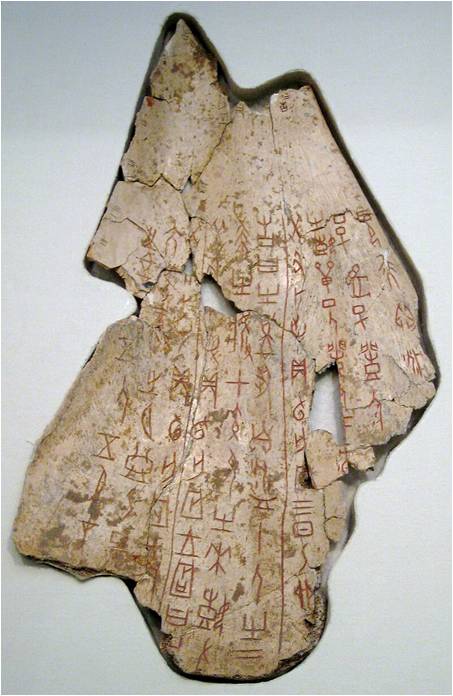
Oracle bone dating from the rigin of King Wu Ding (c.1250 to 1192 BC?)
https://en.wikipedia.org/wiki/Oracle_bone
We touched briefly on the origins of of Chinese characters. These are usually traced back to the engravings on tortoise shells and ox scapula from around 1200-1100 BC in the Shang period, The scratching on the bones were first recognised as writing in modern times by the late 19th century Chinese scholar, Wang Yirong (王懿榮). The discovery was facilitated by Wang’s familiarity with inscriptions on early bronze vessels. For more details on the oracles see https://en.wikipedia.org/wiki/Oracle_bone and, for the development of Chinese writing in general, https://en.wikipedia.org/wiki/Written_Chinese The latter article refers to the disputed claim that forerunners of later Chinese characters are found on shells dating from 6600 BC, as reported in 2003 at http://news.bbc.co.uk/2/hi/science/nature/2956925.stm
A new member, Monica G., who is on the staff of the Philippines consulate, is an enthusiast for the Latin Mass and listens to this regularly on the Internet. We pointed out that the Mary Help of Christians church as To Kwa Wan has a regular sung Latin Mass at 12.30 on Sundays, which Eugene sometimes attends, . The address is 16, Tin Kwong Rd, Ma Tau Wai, Kowloon. The church website is https://catholic.org.hk/en/3114-2/).
Joe led a discussion on the origins of grammatical gender. One theory is that there was originally only an animate v. inanimate distinction. The inanimate division was the forerunner of the neuter category but the feminine gender then emerged through re-interpretation of the inanimate/neuter plural in –a as a singular ending.
Joe also wondered whether the Latin iter (journey) and the Sanskrit equivalent yātrā were etymologically connected. The Latin word is in fact derived from PIE *ei- (go) whilst yātrā is from another PIE root with similar meaning, *ya-.
W read Chapters VI-X of Life of Nero (see below). It was agreed that Suetonius provided racy material but that the complexity of his language made it difficult to produce straightforward questions in Latin for those who preferred answering these rather than translating into English. John felt that, as a result, some of his questions had been badly formed. Joe suggested that medieval Latin provided both interesting material and simpler syntax. Tanya had in fact recommended one definitely racy medieval document with details of a cross-dressing prostitute and their ecclesiastical clients. A link to a translation and Latin text is available at https://sourcebooks.fordham.edu/source/1395rykener.asp John said that he would preparte the usual interlinear translation for the June meeting but shortage of time meant he had stil not managed to do this at the time of writing this account (mid-August!). Attendees were subsequently asked by mail whether they preferred to continue with Suetonius or to revert to the sinpler Eutropius taxt we had been using until February. Of the three who replied, two preferred Suetonius whilst one proposed a mix of the two authors, which is actually being provided for the 22 August meeting.
https://en.wikipedia.org/wiki/Oracle_bone
We touched briefly on the origins of of Chinese characters. These are usually traced back to the engravings on tortoise shells and ox scapula from around 1200-1100 BC in the Shang period, The scratching on the bones were first recognised as writing in modern times by the late 19th century Chinese scholar, Wang Yirong (王懿榮). The discovery was facilitated by Wang’s familiarity with inscriptions on early bronze vessels. For more details on the oracles see https://en.wikipedia.org/wiki/Oracle_bone and, for the development of Chinese writing in general, https://en.wikipedia.org/wiki/Written_Chinese The latter article refers to the disputed claim that forerunners of later Chinese characters are found on shells dating from 6600 BC, as reported in 2003 at http://news.bbc.co.uk/2/hi/science/nature/2956925.stm
A new member, Monica G., who is on the staff of the Philippines consulate, is an enthusiast for the Latin Mass and listens to this regularly on the Internet. We pointed out that the Mary Help of Christians church as To Kwa Wan has a regular sung Latin Mass at 12.30 on Sundays, which Eugene sometimes attends, . The address is 16, Tin Kwong Rd, Ma Tau Wai, Kowloon. The church website is https://catholic.org.hk/en/3114-2/).
Joe led a discussion on the origins of grammatical gender. One theory is that there was originally only an animate v. inanimate distinction. The inanimate division was the forerunner of the neuter category but the feminine gender then emerged through re-interpretation of the inanimate/neuter plural in –a as a singular ending.
Joe also wondered whether the Latin iter (journey) and the Sanskrit equivalent yātrā were etymologically connected. The Latin word is in fact derived from PIE *ei- (go) whilst yātrā is from another PIE root with similar meaning, *ya-.
W read Chapters VI-X of Life of Nero (see below). It was agreed that Suetonius provided racy material but that the complexity of his language made it difficult to produce straightforward questions in Latin for those who preferred answering these rather than translating into English. John felt that, as a result, some of his questions had been badly formed. Joe suggested that medieval Latin provided both interesting material and simpler syntax. Tanya had in fact recommended one definitely racy medieval document with details of a cross-dressing prostitute and their ecclesiastical clients. A link to a translation and Latin text is available at https://sourcebooks.fordham.edu/source/1395rykener.asp John said that he would preparte the usual interlinear translation for the June meeting but shortage of time meant he had stil not managed to do this at the time of writing this account (mid-August!). Attendees were subsequently asked by mail whether they preferred to continue with Suetonius or to revert to the sinpler Eutropius taxt we had been using until February. Of the three who replied, two preferred Suetonius whilst one proposed a mix of the two authors, which is actually being provided for the 22 August meeting.
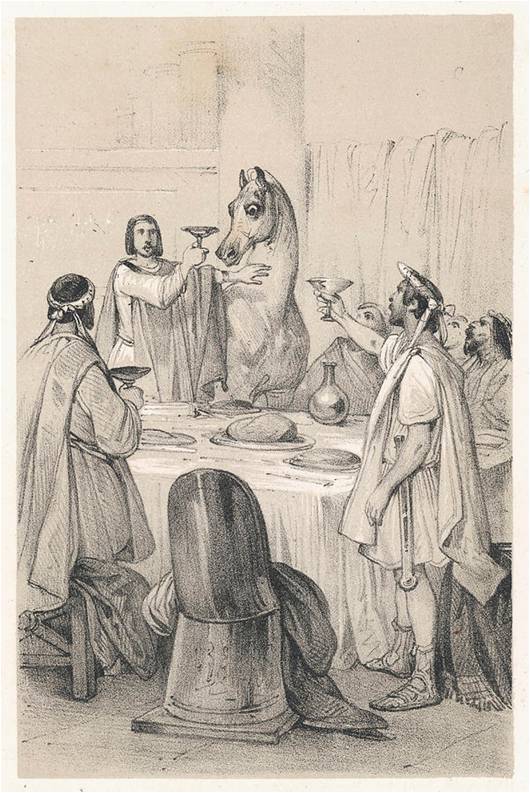
Caligula and his horse Incitatus by Jean Victor Adam (1801-67)
https://en.wikipedia.org/wiki/Incitatus#/media/File:Cal%C3%ADgula_e_Incitato.jpg
Mention was made of the story of Caligula proposing to make his his favourite horse consul. The appointment was never actually made but Suetonius claims that Caligula kept the hors in a marble stable with attached dining room for entertaining tha animal’s `guests’. Modern scholars have speculated that the stories might have originated from words spoken by Caligula in jest (see https://en.wikipedia.org/wiki/Incitatus). The story is `improved’ . in the Blackadder TV series by the claim put into the mouth of a Roman general that Hadrian had actually married his horse! The Latin speech can be heard and an English translation read at https://www.youtube.com/watch?v=gMh_Eh1GDEQ and the original Latin is transcribed at https://linguae.weebly.com/latin--greek.html
Sam thought that there was a similar story about a Chinese emperor but a subsequent internet search did not turn anything up.
We referred briefly to Seneca, the tutor and finally victom of Nero, and to his Epistulae Morales, letters meant ostensibly for the edification of his friend Lucilius Iunius. The 56th letter tells how he once hired a room over the public baths to test his ability, as a good Stoic, to concentrate despite the external noise. This includes a graphic description of the characters encountered in the baths, notably the hair-plucker, whose cries advertising his services were stilled only when he found a customer, whose turn it then was to cry out in pain. The letter is one of the texts in the anthology.Two Centuries of Roman Prose andwas included in the set texts for the IGCSE Latin exam some years ago. Relevant materials, including a PopwerPoint on Seneca’s life and literary output are still available at https://linguae.weebly.com/igcse-latin.html
.
Another anecdote concerning public baths is included in the Historia Augusta’s biography of Hadrian. The emperor habitually visited the baths and on one occasion found a man he had once known in the army rubbing his back against the wall. Asked the reason why, the man explained he had no slave to rub him dow and was immediately presented with several slaves and money to feed them. When, however, on his next visit, Hadrian met a whole group of veterans hoping for similar generosity, he simply ordered them to come forward and rub each other’s backs! For the full context see https://penelope.uchicago.edu/Thayer/e/roman/texts/historia_augusta/hadrian/2*.html
Sadly, this was the last meeting to be attended by Chris C, who is taking up a job in Saudi Arabia and whose wit and wisdom wil be greatly missed. Graven images being frowned up on in his new environment, he very generously presented Monica C with a wooden mask worn by a funeral mourner representing an ancestor and John with a wooden statuette
https://en.wikipedia.org/wiki/Incitatus#/media/File:Cal%C3%ADgula_e_Incitato.jpg
Mention was made of the story of Caligula proposing to make his his favourite horse consul. The appointment was never actually made but Suetonius claims that Caligula kept the hors in a marble stable with attached dining room for entertaining tha animal’s `guests’. Modern scholars have speculated that the stories might have originated from words spoken by Caligula in jest (see https://en.wikipedia.org/wiki/Incitatus). The story is `improved’ . in the Blackadder TV series by the claim put into the mouth of a Roman general that Hadrian had actually married his horse! The Latin speech can be heard and an English translation read at https://www.youtube.com/watch?v=gMh_Eh1GDEQ and the original Latin is transcribed at https://linguae.weebly.com/latin--greek.html
Sam thought that there was a similar story about a Chinese emperor but a subsequent internet search did not turn anything up.
We referred briefly to Seneca, the tutor and finally victom of Nero, and to his Epistulae Morales, letters meant ostensibly for the edification of his friend Lucilius Iunius. The 56th letter tells how he once hired a room over the public baths to test his ability, as a good Stoic, to concentrate despite the external noise. This includes a graphic description of the characters encountered in the baths, notably the hair-plucker, whose cries advertising his services were stilled only when he found a customer, whose turn it then was to cry out in pain. The letter is one of the texts in the anthology.Two Centuries of Roman Prose andwas included in the set texts for the IGCSE Latin exam some years ago. Relevant materials, including a PopwerPoint on Seneca’s life and literary output are still available at https://linguae.weebly.com/igcse-latin.html
.
Another anecdote concerning public baths is included in the Historia Augusta’s biography of Hadrian. The emperor habitually visited the baths and on one occasion found a man he had once known in the army rubbing his back against the wall. Asked the reason why, the man explained he had no slave to rub him dow and was immediately presented with several slaves and money to feed them. When, however, on his next visit, Hadrian met a whole group of veterans hoping for similar generosity, he simply ordered them to come forward and rub each other’s backs! For the full context see https://penelope.uchicago.edu/Thayer/e/roman/texts/historia_augusta/hadrian/2*.html
Sadly, this was the last meeting to be attended by Chris C, who is taking up a job in Saudi Arabia and whose wit and wisdom wil be greatly missed. Graven images being frowned up on in his new environment, he very generously presented Monica C with a wooden mask worn by a funeral mourner representing an ancestor and John with a wooden statuette
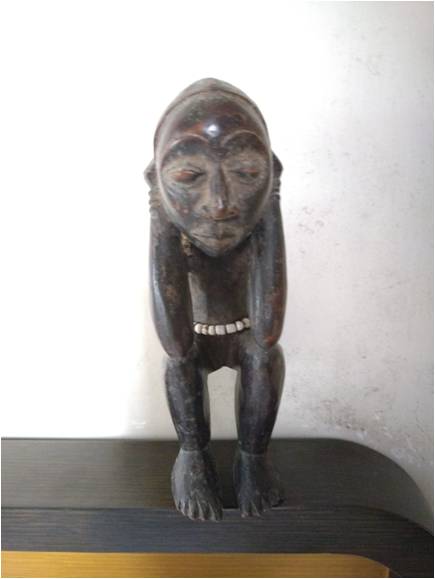
Farewell gift from Chris
LIFE OF NERO VI-X
VI. Nerō nātus est Antī[1] post VIIII. mēnsem quam Tiberius excessit, XVIII. Kal. Iān.[2]
Nero born was at-Antium after 9th month than Tiberiu died 18th[day-before] Kalends of-January
tantum quod[3] exoriente sōle, paene ut radiīs prius quam terra contingerētur. Dē genitūrā eius
just as with-rising sun almost so-that by-rays earlier than earth he-was-touched about birth his
statim multa et formīdulōsa multīs coniectantibus[4] praesāgiō fuit etiam Domitī patris[5] vōx,
at-once many and fearful-things with-many forecasting as-an-omen was also also of-Domitius father utterance
inter grātulātiōnēs amīcōrum negantis quicquam ex sē et Agrippīnā[6] nisi dētestābile et malō
amidst congratulations of-friends denying anything from sef and Agripiina if-not detestable and for-ill
pūblicō nāscī potuisse. Eiusdem futūrae īnfēlīcitātis signum ēvidēns diē lūstricō[7]exstitit; nam
public to-be-born to-have-been-able of-his future ill-fortune sign clear on-day of-purification occurred for
C. Caesar,[8] rogante sorōre ut īnfantī quod vellet nōmen daret, intuēns Claudium patruum
Gaius Caesar with-asking sister that to-infant which he-wanted name he- should-give looking-at Claudius paternal-uncle
suum, ā quō mox prīncipe Nerō adoptātus est, eius sē dīxit dare, neque ipse sēriō sed per
his by whom soon as-emperors Nero adopted was his-one himself he-said to-give and-not he seriously but as
iocum et aspernante Agrippīnā, quod tum Claudius inter lūdibria aulae erat.Trīmulus patrem
joke and rejecting with-Agrippina because then Claudius among laughing-stocks of-court was at-age-of-three father
āmīsit; cuius ex parte tertia hērēs, nē hanc quidem integram cēpit correptīs per cohērēdem
he-lost whose from part third heir not this even whole he-took having-been-seized by co-heir
Gāium[9] ūniversīs bonīs. Et subinde mātre etiam relēgātā paene inops atque egēns apud
Gaius all the-property and then with-mother also banished almost without-resources and in-need at-house-of
amitam Lepidam[10] nūtrītus est sub duōbus paedagōgīs saltātōre atque tōnsōre. Vērum[11]
paternal-aunt Lepida brought-up was under two instructors a-dancer and a-barber but
NOTES
[1] Antium, a town on the coast of Latium, was popular as a country retreat for members of the Roman elite. Nero later built a palace and a major port there, remains of which can still be seen. There are further details at https://en.wikipedia.org/wiki/Antium
[2] Tiberius died on 16 March 37 A.D. and Nero was born on 15 December
[3] tantum quod (literally `only that which’) is commonly used as an equaivalent to `just as’ or `just when’.
[4] Referring to predictions based on the boy’s horoscope. Bill Thayer’s Suetonius pages include Nero’s horoscope drawn according to a commonly used ancient system. Apparently it is not so alrming as it would have been if the birth had occurred 17 minutes later! See https://penelope.uchicago.edu/Thayer/E/Roman/Texts/Suetonius/12Caesars/Nero*.html#note:Neros_horoscope
[5] Gnaeus Domitius Ahenobarbus.(c. 2 B.C. to 41 A.D.), son of Antonia Major, the daughter of Mark Antony and Augustus’ sister Octavia.
[6] Agripinna the Younger was the daughter of Claudius’s brother Germanicus and Agrippina the Elder. She was exiled in 39 A.D. on suspicion of plotting against her brother, the emperor Caligua.
[7] The lustrātio was a purification and naming ceremony held on the 9th day after birth for a boy and the 8th for a girl.
[8] Gaius Caesar was the official name of Caligula, Agrippina the Younger’s brother and Tiberius’s successor as emperor.
[9] Caligula.
[10] Domitia Lepida (Minor), the sister of Nero’s father, was the mother of Messalina, third wife of the Emperor Claudius. After Messalina’s death and Claudius’ marriage to Agrippina the Younger, the latter saw Lepida as a threat and had her tried on charges including using magic to try to kill her. See https://en.wikipedia.org/wiki/Domitia_Lepida but note it is uncertain if she was actually executed.
[11] vērum, literally `truly’, can also mean `but’.
Claudiō imperium adeptō nōn sōlum paternās opēs reciperāvit, sed et Crīspī Passiēnī[1] vitricī
Claudius empire having-obtained not only paternal wealth he-recovered but also of-Crispus Passienus step-father
suī hērēditātē dītātus est. Grātia quidem et potentia revocātae restitūtaeque mātris usque eō
his by-bequest enriched was influence indeed and power of-recalled and-restored mother right to-point
flōruit, ut ēmānāret in vulgus missōs ā Messālīnā uxōre Claudī, quī eum merīdiantem, quasi
blossomed that rumous-spreads among masses sent by Messalina wife of-Claudius who him taking-siesta as-if
Britannicī[2] aemulum, strangulārent. Additum fābulae eōsdem dracōne ē pulvīnō sē
of-Britannicus rival might-strangle added[it-was] to-story] same-persons with-snake from cushion self
prōferente conterritōs refūgisse. Quae fābula exorta est dēprēnsīs in lectō eius circum
bringing-out terrified to-have-fled this story arose having-been-found in bed his around cervīcālia serpentis exuviīs[3]; quās tamen aureae armillae ex voluntāte mātris inclūsās dextrō
pillow of-serpent shed-skin which however in-golden bracelet from wish of-mother enclosed on-right
brāchiō gestāvit aliquamdiū ac taediō tandem māternae memoriae abiēcit rūrsusque extrēmīs
arm he-wore for-some-time and from-weariness at-last of-mother’s memory threw-away and-again in-extreme
suīs rēbus[4] frūstrā requīsiit.
his situation in-vain he-sought
VII. Tener adhūc necdum mātūrā pueritiā circēnsibus lūdīs Troiam cōnstantissimē
Of-tender-age still and-not-yet with-mature childhood circus in-games [game-of] Troy with-greatest-steadfastness
favōrābiliterque lūsit. Ūndecimō aetātis annō ā Claudiō adoptātus est[5] Annaēōque Senecae[6]
and-with-applause he-played in-eleventh of-age year by Claudius adopted was and-to-Annaeus Seneca already
iam tunc senātōrī in disciplīnam trāditus. Ferunt Senecam proximā nocte vīsum sibi per
then seanator for education handed-over they-report Seneca on-next bight seed to-self while asleep
quiētem C. Caesarī praecipere, et fidem somniō Nerō brevī fēcit prōditā immānitāte
Gaius Caesar[7] to-be-instructing and confirmation for-dream]Nero soon produced having-been-revealed cruelty if-nature
nātūrae quibus prīmum potuit experīmentīs. Namque Britannicum frātrem, quod sē post
{by-those]in-which first he-was-able attempts for Britannicus brother because himself after
adoptiōnem Ahēnobarbum ex cōnsuētūdine salūtāsset, ut subditīvum apud patrem arguere[8]
adoption Ahenobarbus by force-of-habit had-greeted as changeling with father to-show
NOTES
[1] Gaius Sallustius Crispus Passienus (? – 47 A.D.) was originally the husband of Domitia, sister of Nero’s father and of Lepida Domitia. He divorced Domitia on Claudius’s orders to marry Agrippina, by whom he was allegedly later poisoned.
[2] Britannicus, so named in from his father’s invasion of Brtiain in 43 A.D. was Claudius’ son by Messalina. She rightly suspected Agrippina would try to supplant him in favour of ther own son.
[3] exuviae, -ārum f refers to anything stripped off or shed, including a snake’s old skin or the arms and armour of a slain enemy.
[4] Referring presumably to Nero’s final days when he found himself without support as Galba’s forces marched towards Rome.
[5] In 49 A.D., shortly after Agrippina’s marriage to Claudius.
[6] Lucius Anaeus Seneca (c. 4 B.C. – 65 A.D.), philosopher and statesman.
[7] Caligula
[8] i.e. to convince Claudius, his adoptive father, that Britannicus was someone else’s son.
cōnātus est. Amitam autem Lepidam[1] ream testimōniō cōram afflīxit grātificāns mātrī, ā quā
tried aunt moreover Lepida on-trial in-tesrtimony in-public denounced gratifying mother by whom
rea premēbātur. Dēductus in Forum tīrō populō congiārium, mīlitī dōnātīvum prōposuit
defendant was-being-prosecuted brought-to Forum as-novice to-the-people hand-out to-army gift-of-money he-announced
indictāque dēcursiōne praetōriānīs scūtum suā manū praetulit; exin patrī grātiās in senātū ēgit.
And-having-been-ordered drill for-praetorians shield in-own hand he-held then to-father thanks in senate he-gave
Apud eundem cōnsulem prō Bonōniēnsibus Latīnē, prō Rhodiīs atque Iliēnsibus Graecē verba
Before him as-consul for people-of-Bologna in-Latin for Rhodians and people-of-Ilium in-Greek speech
fēcit. Auspicātus est et iūris dictiōnem praefectus urbī sacrō Latīnārum, celeberrimīs patrōnīs
he-made inaugurated also legal pronouncements [as] prefect of-city at festival of-Latins with-most-celebrated pleaders
nōn trālātīciās, ut assolet, et brevīs, sed maximās plūrimāsque postulātiōnēs certātim
not traditional as is-customary and brief but very-important and-vert-numerous cases vying-with-one-another
ingerentibus, quamvīs interdictum ā Claudiō esset.[2] Nec multō post dūxit uxōrem Octāviam
bringing although forbidden by Claudius it-had-beeen amd-not much later he-married wife Ocrtavia
ēdiditque prō Claudī salūte circēnsēs et vēnātiōnem.
and-staged for Caludius’ health ciircus-shows and beast-hunt
VIII. Septemdecim nātūs annōs, ut dē Claudiō palam factum est,[3] inter hōram sextam
seventeen born years when about Claudius openly done it-was between hour sixth
septimamque[4] prōcessit ad excubitōrēs, cum ob tōtīus diēī dīritātem nōn aliud auspicandī
and-seventh proceeded to guards since because-of whole day’s ill-fortune not another of-inauguration
tempus accommodātius vidērētur;[5] prōque Palātī gradibus imperātor cōnsalūtātus lectīcā
time more-appropriate seemed and-in-front-of Palace’s steps as-emperor having-been-hailed in-litter
in castra et inde raptim appellātīs mīlitibus in cūriam dēlātus est discessitque iam vesperī, ex
into camp and then swiftly having-been-addressed soldiers into senate-house brought-was and-left now in-evening out-of
immēnsīs, quibus cumulābātur, honōribus tantum patris patriae[6]nōmine recūsātō
immense with-which he-was being-showered honours only of-father of-fatherland title having-been-refused
propter aetātem.
because-of age
NOTES
[1] On Domitia Lepida and the enmity between her and Agrippina see n.37 above.
[2] Claudius had wanted the first cases heard by Nero to be trivial ones, as was usual when the imperial heir first acted as a judge. The persons eager to argue their case before him are described as patrōnī because they were acting on behalf of their own followere or clients..
[3] That is, when Claudius’ death was publicly announced. The emperor died on 24 October 54 and, although Tacitus, Dio Cassius and Suetonius (in his Life of Claudius) state as a fact that he was poisoned, Josephus refers to this allegation only as a rumour and modern scholars leave the question open: Agrippina might have decided to remover her husband before he could change his mind about the nomination of Nero rather than his own son Britannicus as his heir, but Claudius was an old man in poor health and so might simply have died of natural causes.
[4] Around midday. The guards he approached were the cohort on duty at the imperial palace as opposed to the rest of the praetorians, who remained in their camp on the edge of the city.
[5] This probably refers to omens earlier in the day being unfavourable rather than to the fact of Claudius’ death.
[6] The title of Pater Patriae (abbreviated to P.P.) was regularly bestowed on the emperors.
IX. Orsus hinc ā pietātis ostentātiōne Claudium apparātissimō fūnere ēlātum[1] laudāvit et
Beginning then with of[filial]piety display Claudius with-most-elaborate funeral brought-out he-praised and
cōnsecrāvit. Memoriae Domitī patris honōrēs maximōs habuit. Mātrī summam omnium rērum
deified to-memory of-Domitius father homours greatest he-paid to-mother full-control of-all things
prīvātārum pūblicārumque permīsit. Prīmō etiam imperiī diē signum excubantī tribūnō dedit
private and-public he-permitted on-first also of-reign day watch-word to-on-guard tribune he-gave
"optimam mātrem" ac deinceps eiusdem saepe lectīcā per pūblicum simul vectus est. Antium
best mother and afterwards of-her often inlitter through streets at-same-time he-travelled at-Antium
colōniam dēdūxit ascriptīs veterānīs ē praetōriō additīsque per domiciliī trānslātiōnem
colony he-established having-been-enrolled veterans from praetorian-guard and-added through of-residence transfer
dītissimīs prīmipīlārium[2]; ubi et portum operis sūmptuōsissimī fēcit.[3]
richest of-senior-centurions there also port of-construction most-lavish he-made
X. Atque ut certiōrem adhūc indolem ostenderet, ex Augustī praescrīptō imperātūrum sē
And so-that more-certain still [his]nature he-might-show from Augustus’ prescription going-to-rule self
professus, neque līberālitātis neque clēmentiae, nē cōmitātis quidem exhibendae ūllam
having-proclaimed neither of-generosity nor of-mercy no-of-politeness indeed being-exhibited any
occāsiōnem omīsit. Graviōra vectīgālia aut abolēvit aut minuit. Praemia dēlātōrum Pāpiae
opportunity he-lost heavier taxes either he-abolished or reduiced rewards of-informers of-Papian
lēgis[4] ad quārtās redēgit. Dīvīsīs populō virītim quadringēnīs nummīs senātōrum
law to one-quarter he-reduced having-been-divided among-the-people individually four-hundred sesterces of-senators
nōbilissimō cuique, sed ā rē familiārī dēstitūtō annua salāria et quibusdam quīngēna
most-disinguished each-one but of property family in-want annual salaries and to-certain-ones 500,000-each
cōnstituit[5] item praetōriānīs cohortibus frūmentum mēnstruum grātuītum. Et cum dē
he-allocated also to-praetorian cohorts corn monthly free-of-charge and when for
NOTES
[1] The verb efferō (efferre, extulī, ēlātum) regularly means `give a funeral to’ as the body was carried out from the family home. Nero `asked the senate to declare Claudius a god, a process mocked in Apocolocyntosis Claudii (`The Pumpkinification of Claudius’), probably by Nero’s own tutor, Seneca
[2] An allocation of land at Antium, Nero’s birthplace, served as a pension and would have been welcomed by ordinary veterans. However, the senior centurion (prīmipīlus) of a legion enjoyed much higher pay and status and was also enrolled in the equestrian order after his year in office. Such individuals might have preferred to choose their own place of retirement and Nero possibly insisted on their moving to Antium so they could use their resources to adorn the colony.
[3] Nero also constructed – or rebuilt – an imperial residence at Antium.
[4] He reduced payments to those who denounced offenders against the Lex Papia Popaea of 9 A.D. Named after the consuls of that year, the law was part of Augustus’ programme to strengthen marriage and the family. It penalised those who remained unmarried beyond a certain age and alse rewarded those with larger families. See https://en.wikipedia.org/wiki/Lex_Papia_Poppaea
[5] A sestertius was equal to four asses, slightly more than the cost of dinner at a tavern in a famous inscription of the 2nd. century A.D.(see notes to Ad Alpes, c.XV). The plural of the noun sestertium (100, 000 sesterces) is understood with distributive adjective quīngena (literally `five each).
suppliciō cuiusdam capite damnātī ut ex mōre subscrīberet admonērētur: "quam
punishment of-a-certain-person to-death condemned that according-to custom he-sign he-was-being-advised how
vellem, " inquit, "nescīre litterās".[1] Omnēs ōrdinēs subinde ac memoriter salūtāvit. Agentī
I-wish he-said not-to-know letters all classes immediately and from-memory he-greeted to-paying
senātuī grātiās respondit: "Cum meruerō". Ad campestrēs[2] exercitātiōnēs suās admīsit
senate thanks he-responded when I-shall-have-deserved-them to on-Campus exercises his he-admitted
et plēbem dēclāmāvitque saepius pūblicē; recitāvit et carmina, nōn modo domī sed et in
also common-people and-declaimed quite-often in-public he-recited also poems not only at-home but also in
theātrō, tantā ūniversōrum laetitiā, ut ob recitātiōnem supplicātiō[3] dēcrēta sit eaque pars
theatre with-such-great of-everybody joy that for recitation formal-thanksgiving decreed was and-that part
carminum aureīs litterīs Iovī Capitōlīnō dicāta.
of-poems in-golden-letters to Jupiter Capitoline was-dedicated
NOTES
[1] i.e. `How I wish I did not know how to write.’
[2] This probably refers to exercises on the Campus Martius, north-west of the city centre.
[3] A supplicatio involved public prayers at different sites across Rome and was normally decreed in thanksgiving for a military victory or as a request for divine aid.
LIFE OF NERO VI-X
VI. Nerō nātus est Antī[1] post VIIII. mēnsem quam Tiberius excessit, XVIII. Kal. Iān.[2]
Nero born was at-Antium after 9th month than Tiberiu died 18th[day-before] Kalends of-January
tantum quod[3] exoriente sōle, paene ut radiīs prius quam terra contingerētur. Dē genitūrā eius
just as with-rising sun almost so-that by-rays earlier than earth he-was-touched about birth his
statim multa et formīdulōsa multīs coniectantibus[4] praesāgiō fuit etiam Domitī patris[5] vōx,
at-once many and fearful-things with-many forecasting as-an-omen was also also of-Domitius father utterance
inter grātulātiōnēs amīcōrum negantis quicquam ex sē et Agrippīnā[6] nisi dētestābile et malō
amidst congratulations of-friends denying anything from sef and Agripiina if-not detestable and for-ill
pūblicō nāscī potuisse. Eiusdem futūrae īnfēlīcitātis signum ēvidēns diē lūstricō[7]exstitit; nam
public to-be-born to-have-been-able of-his future ill-fortune sign clear on-day of-purification occurred for
C. Caesar,[8] rogante sorōre ut īnfantī quod vellet nōmen daret, intuēns Claudium patruum
Gaius Caesar with-asking sister that to-infant which he-wanted name he- should-give looking-at Claudius paternal-uncle
suum, ā quō mox prīncipe Nerō adoptātus est, eius sē dīxit dare, neque ipse sēriō sed per
his by whom soon as-emperors Nero adopted was his-one himself he-said to-give and-not he seriously but as
iocum et aspernante Agrippīnā, quod tum Claudius inter lūdibria aulae erat.Trīmulus patrem
joke and rejecting with-Agrippina because then Claudius among laughing-stocks of-court was at-age-of-three father
āmīsit; cuius ex parte tertia hērēs, nē hanc quidem integram cēpit correptīs per cohērēdem
he-lost whose from part third heir not this even whole he-took having-been-seized by co-heir
Gāium[9] ūniversīs bonīs. Et subinde mātre etiam relēgātā paene inops atque egēns apud
Gaius all the-property and then with-mother also banished almost without-resources and in-need at-house-of
amitam Lepidam[10] nūtrītus est sub duōbus paedagōgīs saltātōre atque tōnsōre. Vērum[11]
paternal-aunt Lepida brought-up was under two instructors a-dancer and a-barber but
NOTES
[1] Antium, a town on the coast of Latium, was popular as a country retreat for members of the Roman elite. Nero later built a palace and a major port there, remains of which can still be seen. There are further details at https://en.wikipedia.org/wiki/Antium
[2] Tiberius died on 16 March 37 A.D. and Nero was born on 15 December
[3] tantum quod (literally `only that which’) is commonly used as an equaivalent to `just as’ or `just when’.
[4] Referring to predictions based on the boy’s horoscope. Bill Thayer’s Suetonius pages include Nero’s horoscope drawn according to a commonly used ancient system. Apparently it is not so alrming as it would have been if the birth had occurred 17 minutes later! See https://penelope.uchicago.edu/Thayer/E/Roman/Texts/Suetonius/12Caesars/Nero*.html#note:Neros_horoscope
[5] Gnaeus Domitius Ahenobarbus.(c. 2 B.C. to 41 A.D.), son of Antonia Major, the daughter of Mark Antony and Augustus’ sister Octavia.
[6] Agripinna the Younger was the daughter of Claudius’s brother Germanicus and Agrippina the Elder. She was exiled in 39 A.D. on suspicion of plotting against her brother, the emperor Caligua.
[7] The lustrātio was a purification and naming ceremony held on the 9th day after birth for a boy and the 8th for a girl.
[8] Gaius Caesar was the official name of Caligula, Agrippina the Younger’s brother and Tiberius’s successor as emperor.
[9] Caligula.
[10] Domitia Lepida (Minor), the sister of Nero’s father, was the mother of Messalina, third wife of the Emperor Claudius. After Messalina’s death and Claudius’ marriage to Agrippina the Younger, the latter saw Lepida as a threat and had her tried on charges including using magic to try to kill her. See https://en.wikipedia.org/wiki/Domitia_Lepida but note it is uncertain if she was actually executed.
[11] vērum, literally `truly’, can also mean `but’.
Claudiō imperium adeptō nōn sōlum paternās opēs reciperāvit, sed et Crīspī Passiēnī[1] vitricī
Claudius empire having-obtained not only paternal wealth he-recovered but also of-Crispus Passienus step-father
suī hērēditātē dītātus est. Grātia quidem et potentia revocātae restitūtaeque mātris usque eō
his by-bequest enriched was influence indeed and power of-recalled and-restored mother right to-point
flōruit, ut ēmānāret in vulgus missōs ā Messālīnā uxōre Claudī, quī eum merīdiantem, quasi
blossomed that rumous-spreads among masses sent by Messalina wife of-Claudius who him taking-siesta as-if
Britannicī[2] aemulum, strangulārent. Additum fābulae eōsdem dracōne ē pulvīnō sē
of-Britannicus rival might-strangle added[it-was] to-story] same-persons with-snake from cushion self
prōferente conterritōs refūgisse. Quae fābula exorta est dēprēnsīs in lectō eius circum
bringing-out terrified to-have-fled this story arose having-been-found in bed his around cervīcālia serpentis exuviīs[3]; quās tamen aureae armillae ex voluntāte mātris inclūsās dextrō
pillow of-serpent shed-skin which however in-golden bracelet from wish of-mother enclosed on-right
brāchiō gestāvit aliquamdiū ac taediō tandem māternae memoriae abiēcit rūrsusque extrēmīs
arm he-wore for-some-time and from-weariness at-last of-mother’s memory threw-away and-again in-extreme
suīs rēbus[4] frūstrā requīsiit.
his situation in-vain he-sought
VII. Tener adhūc necdum mātūrā pueritiā circēnsibus lūdīs Troiam cōnstantissimē
Of-tender-age still and-not-yet with-mature childhood circus in-games [game-of] Troy with-greatest-steadfastness
favōrābiliterque lūsit. Ūndecimō aetātis annō ā Claudiō adoptātus est[5] Annaēōque Senecae[6]
and-with-applause he-played in-eleventh of-age year by Claudius adopted was and-to-Annaeus Seneca already
iam tunc senātōrī in disciplīnam trāditus. Ferunt Senecam proximā nocte vīsum sibi per
then seanator for education handed-over they-report Seneca on-next bight seed to-self while asleep
quiētem C. Caesarī praecipere, et fidem somniō Nerō brevī fēcit prōditā immānitāte
Gaius Caesar[7] to-be-instructing and confirmation for-dream]Nero soon produced having-been-revealed cruelty if-nature
nātūrae quibus prīmum potuit experīmentīs. Namque Britannicum frātrem, quod sē post
{by-those]in-which first he-was-able attempts for Britannicus brother because himself after
adoptiōnem Ahēnobarbum ex cōnsuētūdine salūtāsset, ut subditīvum apud patrem arguere[8]
adoption Ahenobarbus by force-of-habit had-greeted as changeling with father to-show
NOTES
[1] Gaius Sallustius Crispus Passienus (? – 47 A.D.) was originally the husband of Domitia, sister of Nero’s father and of Lepida Domitia. He divorced Domitia on Claudius’s orders to marry Agrippina, by whom he was allegedly later poisoned.
[2] Britannicus, so named in from his father’s invasion of Brtiain in 43 A.D. was Claudius’ son by Messalina. She rightly suspected Agrippina would try to supplant him in favour of ther own son.
[3] exuviae, -ārum f refers to anything stripped off or shed, including a snake’s old skin or the arms and armour of a slain enemy.
[4] Referring presumably to Nero’s final days when he found himself without support as Galba’s forces marched towards Rome.
[5] In 49 A.D., shortly after Agrippina’s marriage to Claudius.
[6] Lucius Anaeus Seneca (c. 4 B.C. – 65 A.D.), philosopher and statesman.
[7] Caligula
[8] i.e. to convince Claudius, his adoptive father, that Britannicus was someone else’s son.
cōnātus est. Amitam autem Lepidam[1] ream testimōniō cōram afflīxit grātificāns mātrī, ā quā
tried aunt moreover Lepida on-trial in-tesrtimony in-public denounced gratifying mother by whom
rea premēbātur. Dēductus in Forum tīrō populō congiārium, mīlitī dōnātīvum prōposuit
defendant was-being-prosecuted brought-to Forum as-novice to-the-people hand-out to-army gift-of-money he-announced
indictāque dēcursiōne praetōriānīs scūtum suā manū praetulit; exin patrī grātiās in senātū ēgit.
And-having-been-ordered drill for-praetorians shield in-own hand he-held then to-father thanks in senate he-gave
Apud eundem cōnsulem prō Bonōniēnsibus Latīnē, prō Rhodiīs atque Iliēnsibus Graecē verba
Before him as-consul for people-of-Bologna in-Latin for Rhodians and people-of-Ilium in-Greek speech
fēcit. Auspicātus est et iūris dictiōnem praefectus urbī sacrō Latīnārum, celeberrimīs patrōnīs
he-made inaugurated also legal pronouncements [as] prefect of-city at festival of-Latins with-most-celebrated pleaders
nōn trālātīciās, ut assolet, et brevīs, sed maximās plūrimāsque postulātiōnēs certātim
not traditional as is-customary and brief but very-important and-vert-numerous cases vying-with-one-another
ingerentibus, quamvīs interdictum ā Claudiō esset.[2] Nec multō post dūxit uxōrem Octāviam
bringing although forbidden by Claudius it-had-beeen amd-not much later he-married wife Ocrtavia
ēdiditque prō Claudī salūte circēnsēs et vēnātiōnem.
and-staged for Caludius’ health ciircus-shows and beast-hunt
VIII. Septemdecim nātūs annōs, ut dē Claudiō palam factum est,[3] inter hōram sextam
seventeen born years when about Claudius openly done it-was between hour sixth
septimamque[4] prōcessit ad excubitōrēs, cum ob tōtīus diēī dīritātem nōn aliud auspicandī
and-seventh proceeded to guards since because-of whole day’s ill-fortune not another of-inauguration
tempus accommodātius vidērētur;[5] prōque Palātī gradibus imperātor cōnsalūtātus lectīcā
time more-appropriate seemed and-in-front-of Palace’s steps as-emperor having-been-hailed in-litter
in castra et inde raptim appellātīs mīlitibus in cūriam dēlātus est discessitque iam vesperī, ex
into camp and then swiftly having-been-addressed soldiers into senate-house brought-was and-left now in-evening out-of
immēnsīs, quibus cumulābātur, honōribus tantum patris patriae[6]nōmine recūsātō
immense with-which he-was being-showered honours only of-father of-fatherland title having-been-refused
propter aetātem.
because-of age
NOTES
[1] On Domitia Lepida and the enmity between her and Agrippina see n.37 above.
[2] Claudius had wanted the first cases heard by Nero to be trivial ones, as was usual when the imperial heir first acted as a judge. The persons eager to argue their case before him are described as patrōnī because they were acting on behalf of their own followere or clients..
[3] That is, when Claudius’ death was publicly announced. The emperor died on 24 October 54 and, although Tacitus, Dio Cassius and Suetonius (in his Life of Claudius) state as a fact that he was poisoned, Josephus refers to this allegation only as a rumour and modern scholars leave the question open: Agrippina might have decided to remover her husband before he could change his mind about the nomination of Nero rather than his own son Britannicus as his heir, but Claudius was an old man in poor health and so might simply have died of natural causes.
[4] Around midday. The guards he approached were the cohort on duty at the imperial palace as opposed to the rest of the praetorians, who remained in their camp on the edge of the city.
[5] This probably refers to omens earlier in the day being unfavourable rather than to the fact of Claudius’ death.
[6] The title of Pater Patriae (abbreviated to P.P.) was regularly bestowed on the emperors.
IX. Orsus hinc ā pietātis ostentātiōne Claudium apparātissimō fūnere ēlātum[1] laudāvit et
Beginning then with of[filial]piety display Claudius with-most-elaborate funeral brought-out he-praised and
cōnsecrāvit. Memoriae Domitī patris honōrēs maximōs habuit. Mātrī summam omnium rērum
deified to-memory of-Domitius father homours greatest he-paid to-mother full-control of-all things
prīvātārum pūblicārumque permīsit. Prīmō etiam imperiī diē signum excubantī tribūnō dedit
private and-public he-permitted on-first also of-reign day watch-word to-on-guard tribune he-gave
"optimam mātrem" ac deinceps eiusdem saepe lectīcā per pūblicum simul vectus est. Antium
best mother and afterwards of-her often inlitter through streets at-same-time he-travelled at-Antium
colōniam dēdūxit ascriptīs veterānīs ē praetōriō additīsque per domiciliī trānslātiōnem
colony he-established having-been-enrolled veterans from praetorian-guard and-added through of-residence transfer
dītissimīs prīmipīlārium[2]; ubi et portum operis sūmptuōsissimī fēcit.[3]
richest of-senior-centurions there also port of-construction most-lavish he-made
X. Atque ut certiōrem adhūc indolem ostenderet, ex Augustī praescrīptō imperātūrum sē
And so-that more-certain still [his]nature he-might-show from Augustus’ prescription going-to-rule self
professus, neque līberālitātis neque clēmentiae, nē cōmitātis quidem exhibendae ūllam
having-proclaimed neither of-generosity nor of-mercy no-of-politeness indeed being-exhibited any
occāsiōnem omīsit. Graviōra vectīgālia aut abolēvit aut minuit. Praemia dēlātōrum Pāpiae
opportunity he-lost heavier taxes either he-abolished or reduiced rewards of-informers of-Papian
lēgis[4] ad quārtās redēgit. Dīvīsīs populō virītim quadringēnīs nummīs senātōrum
law to one-quarter he-reduced having-been-divided among-the-people individually four-hundred sesterces of-senators
nōbilissimō cuique, sed ā rē familiārī dēstitūtō annua salāria et quibusdam quīngēna
most-disinguished each-one but of property family in-want annual salaries and to-certain-ones 500,000-each
cōnstituit[5] item praetōriānīs cohortibus frūmentum mēnstruum grātuītum. Et cum dē
he-allocated also to-praetorian cohorts corn monthly free-of-charge and when for
NOTES
[1] The verb efferō (efferre, extulī, ēlātum) regularly means `give a funeral to’ as the body was carried out from the family home. Nero `asked the senate to declare Claudius a god, a process mocked in Apocolocyntosis Claudii (`The Pumpkinification of Claudius’), probably by Nero’s own tutor, Seneca
[2] An allocation of land at Antium, Nero’s birthplace, served as a pension and would have been welcomed by ordinary veterans. However, the senior centurion (prīmipīlus) of a legion enjoyed much higher pay and status and was also enrolled in the equestrian order after his year in office. Such individuals might have preferred to choose their own place of retirement and Nero possibly insisted on their moving to Antium so they could use their resources to adorn the colony.
[3] Nero also constructed – or rebuilt – an imperial residence at Antium.
[4] He reduced payments to those who denounced offenders against the Lex Papia Popaea of 9 A.D. Named after the consuls of that year, the law was part of Augustus’ programme to strengthen marriage and the family. It penalised those who remained unmarried beyond a certain age and alse rewarded those with larger families. See https://en.wikipedia.org/wiki/Lex_Papia_Poppaea
[5] A sestertius was equal to four asses, slightly more than the cost of dinner at a tavern in a famous inscription of the 2nd. century A.D.(see notes to Ad Alpes, c.XV). The plural of the noun sestertium (100, 000 sesterces) is understood with distributive adjective quīngena (literally `five each).
suppliciō cuiusdam capite damnātī ut ex mōre subscrīberet admonērētur: "quam
punishment of-a-certain-person to-death condemned that according-to custom he-sign he-was-being-advised how
vellem, " inquit, "nescīre litterās".[1] Omnēs ōrdinēs subinde ac memoriter salūtāvit. Agentī
I-wish he-said not-to-know letters all classes immediately and from-memory he-greeted to-paying
senātuī grātiās respondit: "Cum meruerō". Ad campestrēs[2] exercitātiōnēs suās admīsit
senate thanks he-responded when I-shall-have-deserved-them to on-Campus exercises his he-admitted
et plēbem dēclāmāvitque saepius pūblicē; recitāvit et carmina, nōn modo domī sed et in
also common-people and-declaimed quite-often in-public he-recited also poems not only at-home but also in
theātrō, tantā ūniversōrum laetitiā, ut ob recitātiōnem supplicātiō[3] dēcrēta sit eaque pars
theatre with-such-great of-everybody joy that for recitation formal-thanksgiving decreed was and-that part
carminum aureīs litterīs Iovī Capitōlīnō dicāta.
of-poems in-golden-letters to Jupiter Capitoline was-dedicated
NOTES
[1] i.e. `How I wish I did not know how to write.’
[2] This probably refers to exercises on the Campus Martius, north-west of the city centre.
[3] A supplicatio involved public prayers at different sites across Rome and was normally decreed in thanksgiving for a military victory or as a request for divine aid.

