| linguae |
|
Carmina Nativitatis
Adeste Fideles
The words of this famous carol shown in black are those actually sung by Andrea Bocelli on YouTube and the additional verses in green, added by Etienne Jean Francois Borderies are included in the Catholic Church's manual of Gregorian chant, Liber Usualis. The full lyrics, with variants, are given on the Gaudium Mundo site. The tune, and probably also the original version of the first stanza and chorus, were the work of John Wade, an 18th century English Catholic living in France (see Wikipedia, and the essay by John Stefan). YouTube (TūTubulum) also has performances by Luciano Pavarotti and by the Three Tenors together.
Adeste, fideles, laeti triumphantes; Be present, faithful-ones, joyful triumphant
Venite, venite in Bethlehem; Come, come, into Bethlehem
Natum videte Regem angelorum. Born see King of angels
Venite adoremus. Come, let-us-adore
Venite adoremus. Come let-us-adore
Venite adoremus Dominum. Come let-us-adore the-Lord
En grege relicto, humiles ad cunas See with-flock abandoned humble to cradle
vocati pastores adproperant: called shepherds hasten
et nos ovanti gradu festinemus. and we with-rejoicing step let-us-make-haste
Venite adoremus.
Venite adoremus.
Venite adoremus Dominum.
Adeste, fideles, laeti triumphantes;
Venite, venite in Bethlehem;
Natum videte Regem angelorum.
Venite adoremus.
Venite adoremus.
Venite adoremus Dominum.
Aeterni Parentis splendorem aeternum Eternal Parent's splendour eternal
velatum sub carne videbimus: veiled under flesh we-will-see
Deum infantem, pannis involutum. God infant in-rags wrapped
Pro nobis egenum et faeno cubantem For us needy and in-hay lying
piis foveamus amplexibus: with pious let-us-cherish embraces
sic nos amantem quis non redamaret? thus us loving who not would love-in-return
Veni Veni Emmanuel
A womens' choir's performance of this medieval Advent hymn can be heard here. They sing the text below, which omits the two last stanzas. The translation is literal and, as far as possible, keeps to the order of words in the original Latin. This cannot be done in the lines marked with an asterisk as without the clues given by the case endings of the Latin words, the order has to be changed to show which words go together. For more detail on the history of the hymn, see Laura Gibb's Gaudium Mundo page
Veni, veni Emmanuel! Come, come Emanuel
Captivum solve Israel, Captive set-free Israel
qui gemit in exsilio, who groans in exile
privatus Dei Filio. deprived-of God’s Son
CHORUS
Gaude, gaude; Emmanuel Rejoice, rejoice, Emmanuel
nascetur pro te, Israel. will-be-born for you, Israel
Veni, O Jesse virgula! Come, O Jesse's branch
Ex hostis tuos ungula, out-of enemy’s claw your-people *
de specu tuos tartari from cave of-hell your-people *
educ et antro barathri. lead-out and from-cavern of-abyss
CHORUS
Veni, veni O Oriens! Come, come O Rising-one
Solare nos adveniens, Comfort us arriving
noctis depelle nebulas night’s clouds drive-off *
dirasque noctis tenebras. and-terrible of-night darkness
CHORUS
Veni, Clavis Davidica! Come, Key of David
Regna reclude caelica! Kingdoms unlock heavenly
Fac iter tutum superum Make journey safe to-heaven
et claude vias inferum. And close ways to-hell
CHORUS
Veni, veni Adonai! Come, come Adonaus
Qui populo in Sinai Who to-people in Sinai
legem dedisti vertice, law gave from-on-high
in Maiestate gloriae. in majesty of-glory
CHORUS
Adeste, fideles, laeti triumphantes; Be present, faithful-ones, joyful triumphant
Venite, venite in Bethlehem; Come, come, into Bethlehem
Natum videte Regem angelorum. Born see King of angels
Venite adoremus. Come, let-us-adore
Venite adoremus. Come let-us-adore
Venite adoremus Dominum. Come let-us-adore the-Lord
En grege relicto, humiles ad cunas See with-flock abandoned humble to cradle
vocati pastores adproperant: called shepherds hasten
et nos ovanti gradu festinemus. and we with-rejoicing step let-us-make-haste
Venite adoremus.
Venite adoremus.
Venite adoremus Dominum.
Adeste, fideles, laeti triumphantes;
Venite, venite in Bethlehem;
Natum videte Regem angelorum.
Venite adoremus.
Venite adoremus.
Venite adoremus Dominum.
Aeterni Parentis splendorem aeternum Eternal Parent's splendour eternal
velatum sub carne videbimus: veiled under flesh we-will-see
Deum infantem, pannis involutum. God infant in-rags wrapped
Pro nobis egenum et faeno cubantem For us needy and in-hay lying
piis foveamus amplexibus: with pious let-us-cherish embraces
sic nos amantem quis non redamaret? thus us loving who not would love-in-return
Veni Veni Emmanuel
A womens' choir's performance of this medieval Advent hymn can be heard here. They sing the text below, which omits the two last stanzas. The translation is literal and, as far as possible, keeps to the order of words in the original Latin. This cannot be done in the lines marked with an asterisk as without the clues given by the case endings of the Latin words, the order has to be changed to show which words go together. For more detail on the history of the hymn, see Laura Gibb's Gaudium Mundo page
Veni, veni Emmanuel! Come, come Emanuel
Captivum solve Israel, Captive set-free Israel
qui gemit in exsilio, who groans in exile
privatus Dei Filio. deprived-of God’s Son
CHORUS
Gaude, gaude; Emmanuel Rejoice, rejoice, Emmanuel
nascetur pro te, Israel. will-be-born for you, Israel
Veni, O Jesse virgula! Come, O Jesse's branch
Ex hostis tuos ungula, out-of enemy’s claw your-people *
de specu tuos tartari from cave of-hell your-people *
educ et antro barathri. lead-out and from-cavern of-abyss
CHORUS
Veni, veni O Oriens! Come, come O Rising-one
Solare nos adveniens, Comfort us arriving
noctis depelle nebulas night’s clouds drive-off *
dirasque noctis tenebras. and-terrible of-night darkness
CHORUS
Veni, Clavis Davidica! Come, Key of David
Regna reclude caelica! Kingdoms unlock heavenly
Fac iter tutum superum Make journey safe to-heaven
et claude vias inferum. And close ways to-hell
CHORUS
Veni, veni Adonai! Come, come Adonaus
Qui populo in Sinai Who to-people in Sinai
legem dedisti vertice, law gave from-on-high
in Maiestate gloriae. in majesty of-glory
CHORUS
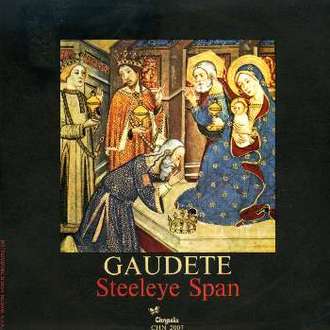
Gaudete
This carol was traditionally sung on `Gaudete Sunday', the third Sunday in Advent. There are several interpretations available on the Internet including those by Steeleye Span by the Mediaeval Baebes by the choir of Clare College, Cambridge (with medieval drum accompaniment) and by Libera with a boys' choir as well as one by dwsChorale in which the words are hear particularly clearly and which can be heard on the Wikipedia page for the song. The carol was included in the 16th century Finnish/Swedish collection, Piae Cantiones, but may have originated in Bohemia in central Europe. For more details, see the Wikipedia article and also Gaudium mundo, which explains the reference in the third stanza to the gate mentioned in the Old Testament (Ezechiel 44). This was closed after the God of Israel passed through it and would be opened again only for the Prince. The Latin is translated below word-for-word.
Tempus adest gratiae, Time is-here of-grace
hoc quod optabamus; this which we-were-wishing-for
carmina laetitiae songs of-joy
devote reddamus. devoutly let-us-return
CHORUS
Gaudete! gaudete! Rejoice! rejoice!
Christus est natus ex Maria virgine, Christ is born of Mary virgin
gaudete! rejoice!
Deus homo factus est, God man made has-been
natura mirante; with-nature in-astonishment
mundus renovatus est the-world renewed has-been
a Christo regnante. by Christ reigning
CHORUS
Ezechielis porta Ezechiel's gate
clausa pertransitur; that-was-closed is-passed-through
unde lux est orta, from-where light has arisen
salus invenitur. salvation is-found
CHORUS
Ergo nostra contio Therefore our gathering
psallat iam in lustro, let-it-sing now in offering
benedicat Domino: let-it-bless the Lord:
salus Regi nostro. greeting to our King
CHORUS
Tempus adest gratiae, Time is-here of-grace
hoc quod optabamus; this which we-were-wishing-for
carmina laetitiae songs of-joy
devote reddamus. devoutly let-us-return
CHORUS
Gaudete! gaudete! Rejoice! rejoice!
Christus est natus ex Maria virgine, Christ is born of Mary virgin
gaudete! rejoice!
Deus homo factus est, God man made has-been
natura mirante; with-nature in-astonishment
mundus renovatus est the-world renewed has-been
a Christo regnante. by Christ reigning
CHORUS
Ezechielis porta Ezechiel's gate
clausa pertransitur; that-was-closed is-passed-through
unde lux est orta, from-where light has arisen
salus invenitur. salvation is-found
CHORUS
Ergo nostra contio Therefore our gathering
psallat iam in lustro, let-it-sing now in offering
benedicat Domino: let-it-bless the Lord:
salus Regi nostro. greeting to our King
CHORUS
Quem Pastores
The words of this carol, particularly popular in Germany, date from the 14th century and the tune it is normally sung to probably dates from the 16th (see the account on the Hymns and Carols of Christmas site). There are seveal performances available on Youtube, including one by King's College choir, arranged by John Rutter, Michael Praetorius's setting, with additional words in German between the stanzas, an a capella version by the Christopher Wren Singers, and a recording made by `Bella Desconocida' in Breslau/Wroclaw, where the tune was first published.
QUEM PASTORES LAUDAVERE
1. Quem pastores laudavere, Whom shepherds praised
quibus angeli dixere, to whom angels said
absit vobis iam timere, `let-it-be-absent for you now to-fear'
natus est rex gloriæ. born is king of-glory
2. Ad quem reges ambulabant, To whom kings were-walking
aurum, thus, myrrham portabant, gold, frankinsense, myrrh were-carrying
immolabant hæc sincere were-offering-in-sacrifice these-things sincerely
Leoni victoriæ. to Lion of-victory
3. Exultemus cum Maria Let-us.exult with Mary
in caelesti heirarchia in heavenly hierarchy
natum promat voce pia one-who-is-born let-make-known with voice pious
laus honor et gloria. praise, honour, glory*
4. Christo regi, Deo nato, To-Christ king, God born
per Mariam nobis dato, through Mary to-us given
merito resonet vere deservedly let-it-resound indeed
dulci cum melodia. sweet with melody
* I.e.`Let praise, honour, glory proclaim with pious voice the new-born child. ' The verb is singular, although the three nouns in the last line of the stanza form the subject of the sentence together.
QUEM PASTORES LAUDAVERE
1. Quem pastores laudavere, Whom shepherds praised
quibus angeli dixere, to whom angels said
absit vobis iam timere, `let-it-be-absent for you now to-fear'
natus est rex gloriæ. born is king of-glory
2. Ad quem reges ambulabant, To whom kings were-walking
aurum, thus, myrrham portabant, gold, frankinsense, myrrh were-carrying
immolabant hæc sincere were-offering-in-sacrifice these-things sincerely
Leoni victoriæ. to Lion of-victory
3. Exultemus cum Maria Let-us.exult with Mary
in caelesti heirarchia in heavenly hierarchy
natum promat voce pia one-who-is-born let-make-known with voice pious
laus honor et gloria. praise, honour, glory*
4. Christo regi, Deo nato, To-Christ king, God born
per Mariam nobis dato, through Mary to-us given
merito resonet vere deservedly let-it-resound indeed
dulci cum melodia. sweet with melody
* I.e.`Let praise, honour, glory proclaim with pious voice the new-born child. ' The verb is singular, although the three nouns in the last line of the stanza form the subject of the sentence together.
SAINT-SAËNS - ORATORIO DE NOËL
_Text and translation were uploaded by Ginny Sigia to http://www.choralnet.org/view/211346 and are from a CD on the Calig-Verlag label http://www.choralnet.org/view/211346 with Bible references added. A performance by Deutsche Radio Philharmonie is available on YouTube.
2. Recitativ and chorus
Et pastores erant, in regione eadem vigilantes, et custodientes
vigilias noctis super gregem suum. Et ecce Angelus Domini stetit
juxta illos, et claritas Dei circumfulsit illos, et timuerunt timore
magno. Et dixit illis angelus: Nolite timere! Ecce enim evangelio
vobis gaudium magnum, quod erit omni populo: quia natus est vobis
hodie Christus Dominus in civitate David. Et hoc vobis signum:
Invenietis infantem pannis involutum, et positum in praesepio. Et
subito facta est cum Angelo multitudo militiae coelestis, laudantium
Deum, et dicentium: Gloria in altissimis Deo, et in terra pax
hominibus bonae voluntatis.
And in the same region there were shepherds keeping vigil and
watching their flocks by night. And behold, an angel of the Lord
stood beside them, and the glory of God shone around them, and they
were filled with great fear. And the angel said to them: Be not
afraid! For behold, I bring you glad tidings of great joy which will
be for all people; for to you is born today Christ the Lord in ithe
City of David. And this shall be a sign for you: you will find a
babe wrapped in swaddling clothes and lying in a manger. And
suddenly there was with the angel a multitude of the heavenly host,
praising God and saying: Glory to God in the highest, and on earth
peace to men of goodwill. (Luke 2: 8-14)
3. Aria
Expectans expectavi Dominum; et intendit mihi.
I waited with longing for the Lord, and he turned to me (Psalms 130:5, 69:16)
4. Aria & chorus
Domine, ego credidi, quia tu es Christus, filius Dei vivi. Qui in
nunc mundum venisti.
Lord, I have believed that you are the Christ, the Son of the living
God, who has come into this world. (John 6:69, 5:20)
5. Duo
Benedictus qui venit in nomine Domini! Deus Dominus, et illuxit
nobis. Deus meus es tu, et confitebor tibi. Deus meus es tu, et
exaltabo te.
Blessed is he who comes in the name of the Lord. God is the Lord and
has given us light. You are my God, and I shall trust in you. You
are my God, and I will exalt you. (Matthew 21:9, Psalms 118:27, 99:9)
6. Chorus
Quare fremuerunt gentes? Et populi meditati sunt inania? Gloria
Patri, gloria Filio, gloria Spiritui Sancto! Sicut erat in principio
et nunc et semper et in saecula saeculorum. Amen.
Why do the heathens rage? and the people think vain thoughts? Glory
to the Father, glory to the Son, glory to the Holy Spirit! As it was
in th ebeginning, is now, and ever shall be, world without end.
Amen. (Psalms 2:1; old church hymn.)
7. Trio
Tecum principium in die virtutis tuae. Tecum principium in
splendoribus Sanctorum.
With you the beginning on the day of your strength, with you the
beginning in the splendors of the saints. (Daniel 7:27)
8. Quartet
Alleluja. Laudate, coeli, et exulta, terra, quia consolatus est
Dominus populum suum; et pauperum suorum miserebitur.
Hallelujah, praise you heavens, and exult, you earth, for theLord
has comforted his people and iwll have mercy on his poor.
9. Quintet & chorus
Consurge, Filia Sion. Alleluja. Lauda in nocte, in principio
vigiliarum. alleluja. Egregiatur ut splendor justus Sion, et
Salvator ejus ut lampas accendatur. Alleluja.
Rise, you daughter of Zion. Hallelujah. Praise at night, at the
beginning of the night watch. Hallelujah. May the Righteous One go
out from Zion in splendor, may its Savior shine like a lamp.
Hallelujah. (Psalms 119:148, 37:6)
10. Chorus
Tollite hostias, et adorate Dominum in atrio sancto ejus. Laetentur
coeli, et exultet terra a facie Domini, quoniam venit. Alleluja.
Bring offerings and worship the Lord in his holy habitation. Let the
heavens rejoice and the earth exult in the presence of the Lord, for
he has come. Hallelujah. (Psalms 5:7, 69:34, 100:2)
2. Recitativ and chorus
Et pastores erant, in regione eadem vigilantes, et custodientes
vigilias noctis super gregem suum. Et ecce Angelus Domini stetit
juxta illos, et claritas Dei circumfulsit illos, et timuerunt timore
magno. Et dixit illis angelus: Nolite timere! Ecce enim evangelio
vobis gaudium magnum, quod erit omni populo: quia natus est vobis
hodie Christus Dominus in civitate David. Et hoc vobis signum:
Invenietis infantem pannis involutum, et positum in praesepio. Et
subito facta est cum Angelo multitudo militiae coelestis, laudantium
Deum, et dicentium: Gloria in altissimis Deo, et in terra pax
hominibus bonae voluntatis.
And in the same region there were shepherds keeping vigil and
watching their flocks by night. And behold, an angel of the Lord
stood beside them, and the glory of God shone around them, and they
were filled with great fear. And the angel said to them: Be not
afraid! For behold, I bring you glad tidings of great joy which will
be for all people; for to you is born today Christ the Lord in ithe
City of David. And this shall be a sign for you: you will find a
babe wrapped in swaddling clothes and lying in a manger. And
suddenly there was with the angel a multitude of the heavenly host,
praising God and saying: Glory to God in the highest, and on earth
peace to men of goodwill. (Luke 2: 8-14)
3. Aria
Expectans expectavi Dominum; et intendit mihi.
I waited with longing for the Lord, and he turned to me (Psalms 130:5, 69:16)
4. Aria & chorus
Domine, ego credidi, quia tu es Christus, filius Dei vivi. Qui in
nunc mundum venisti.
Lord, I have believed that you are the Christ, the Son of the living
God, who has come into this world. (John 6:69, 5:20)
5. Duo
Benedictus qui venit in nomine Domini! Deus Dominus, et illuxit
nobis. Deus meus es tu, et confitebor tibi. Deus meus es tu, et
exaltabo te.
Blessed is he who comes in the name of the Lord. God is the Lord and
has given us light. You are my God, and I shall trust in you. You
are my God, and I will exalt you. (Matthew 21:9, Psalms 118:27, 99:9)
6. Chorus
Quare fremuerunt gentes? Et populi meditati sunt inania? Gloria
Patri, gloria Filio, gloria Spiritui Sancto! Sicut erat in principio
et nunc et semper et in saecula saeculorum. Amen.
Why do the heathens rage? and the people think vain thoughts? Glory
to the Father, glory to the Son, glory to the Holy Spirit! As it was
in th ebeginning, is now, and ever shall be, world without end.
Amen. (Psalms 2:1; old church hymn.)
7. Trio
Tecum principium in die virtutis tuae. Tecum principium in
splendoribus Sanctorum.
With you the beginning on the day of your strength, with you the
beginning in the splendors of the saints. (Daniel 7:27)
8. Quartet
Alleluja. Laudate, coeli, et exulta, terra, quia consolatus est
Dominus populum suum; et pauperum suorum miserebitur.
Hallelujah, praise you heavens, and exult, you earth, for theLord
has comforted his people and iwll have mercy on his poor.
9. Quintet & chorus
Consurge, Filia Sion. Alleluja. Lauda in nocte, in principio
vigiliarum. alleluja. Egregiatur ut splendor justus Sion, et
Salvator ejus ut lampas accendatur. Alleluja.
Rise, you daughter of Zion. Hallelujah. Praise at night, at the
beginning of the night watch. Hallelujah. May the Righteous One go
out from Zion in splendor, may its Savior shine like a lamp.
Hallelujah. (Psalms 119:148, 37:6)
10. Chorus
Tollite hostias, et adorate Dominum in atrio sancto ejus. Laetentur
coeli, et exultet terra a facie Domini, quoniam venit. Alleluja.
Bring offerings and worship the Lord in his holy habitation. Let the
heavens rejoice and the earth exult in the presence of the Lord, for
he has come. Hallelujah. (Psalms 5:7, 69:34, 100:2)
Christmas in the Middle Ages
Album by Musica Medievale, uploaded to YouTube in December 2020. Lyrics for the songs are being slowly added below
LAETABUNDUS EXSULTET FIDELIS CHORUS
LAETABUNDUS EXSULTET FIDELIS CHORUS
|
Lætabundus
Exsultet fidelis chorus, Alleluja, Regem regum Intacte profudit thorus; Res miranda. Angelus consilii Natus est de virgine, Sol de stella; Sol occasum nesciens, Stella semper rutilans, Semper clara. Sicut sidus radium Profert virgo filium Pari forma; Neque sidus radio Neque mater filio Fit corrupta. Cedrus alta Libani Conformatur hysopo Valle nostra, Verbum, mens altissimi, Corporari passum est Carne sumpta. Isaias cecinit, Synagoga meminit Numquam tamen desinit Esse cæca. Si non suis vatibus Credat vel gentilibus, Sybillinis versibus Hæc prædicta. Infelix propera Crede vel vetera; Cur damnaberis Gens misera? Quem docet litera Natum considera, Ipsum genuit Puerpera |
Happy
Let the faithful chorus rejoice |
VETUS EXIT LITERA
|
Vetus abit litera
Ritus abit veterum Dat virgo puerpera Novum nobis puerum Munus salutiferum Regem et presbyterum Qui complanans aspera Firmat pacis foedera Purgatorem scelerum |
Medieval Carols - a Holy Night
Uploaded to YouTube in January 2018
Other songs
HODIE CHRISTUS NATUS EST
|
Hodie Christus natus est:
Hodie Salvator apparuit: Hodie in terra canunt Angeli, laetantur Archangeli Hodie exsultant justi, dicentes: Gloria in excelsis Deo. Alleluia |
Today Christ is born:
Today the Savior has appeared: Today the angels sing on earth, and the Archangels rejoice. Today the just exult, saying: Glory in the highest to God Alleluia. |
