| linguae |
|
QUESTIONS ARISING FROM 78th. MEETING – 26/5/17
(the record of earlier meetings can be downloaded from the main Circulus page as can the version of Ciceronis Filius with illustrations added. The illustrated text of Genesis is available on the Genesis page)
Food consumed included urtica marīna (海蜇, jelly fish) with carō assa (roast meat), viz . gallinācea (chicken), porcīna (pork), and anatīna (duck) and daufum anūs maculātae (mapodaufu or `pock-marked old woman’s daufu’; see the record for the March meeting for other possible terms for this dish ). This was accompanied as usual by orӯza (rice – this English word derives from the Latin which in turn probably comes from Sanskrit vrīhi and perhaps ultimately from a Dravidian term for the grain). Because the City Chinese Restaurant’s management have still not applied for an alcohol licence, we again supplied our own vīnum rubrum (or sanguineum, literally bloody). Also on the menu was melanogēna (eggplant) and lōligo (lōligonis f. cuttle-fish – the Romans used the same word for squid) in farīnā lacte ōvīsque commixtā (flour mixed with milk and eggs, i.e. batter).
Still on the topic of food, it was mentioned that fungi were, genetically speaking, more similar to humans than they were to vegetables (holera). Whilst fungus refers to fungus or mushrooms generally, and is also slang for `idiot’, the term bōlētus denotes a top-quality mushroom, such as those allegedly used by Agrippina to despatch her husband Claudius.
Zhang Wei reported that Swarthmore College was again providing an on-line medieval Latin reading summer course, this time using Peter Abelard’s autobiography, Historia Calamitatum. Abelard (1079-1142), originally from Britanny in NE France, was a philosopher and theologian and one of the pioneers of scholasticism, a movement which sought to give a rational foundation to Christian doctrine hitherto accepted of faith alone. Abelard was a controversial figure in his time, both because of his famous relationship with Heloise and also because of his teachings which almost resulted in his excommunication for heresy (see https://en.wikipedia.org/wiki/Peter_Abelard) To follow the summer course, which will be held on Tuesdaysg from 6 June, people need to join the Google+ community "Medieval Latin (Summer 2017): Abelard". Those wanting to participate in translating will need to download the Zoom conferencing system. See https://sites.google.com/a/swarthmore.edu/medieval-latin-summer-2013-the-gesta-francorum/ for instructions. The text of Historia Calamitatum is already available for download from this site though not yet the recordings.
Still on the topic of food, it was mentioned that fungi were, genetically speaking, more similar to humans than they were to vegetables (holera). Whilst fungus refers to fungus or mushrooms generally, and is also slang for `idiot’, the term bōlētus denotes a top-quality mushroom, such as those allegedly used by Agrippina to despatch her husband Claudius.
Zhang Wei reported that Swarthmore College was again providing an on-line medieval Latin reading summer course, this time using Peter Abelard’s autobiography, Historia Calamitatum. Abelard (1079-1142), originally from Britanny in NE France, was a philosopher and theologian and one of the pioneers of scholasticism, a movement which sought to give a rational foundation to Christian doctrine hitherto accepted of faith alone. Abelard was a controversial figure in his time, both because of his famous relationship with Heloise and also because of his teachings which almost resulted in his excommunication for heresy (see https://en.wikipedia.org/wiki/Peter_Abelard) To follow the summer course, which will be held on Tuesdaysg from 6 June, people need to join the Google+ community "Medieval Latin (Summer 2017): Abelard". Those wanting to participate in translating will need to download the Zoom conferencing system. See https://sites.google.com/a/swarthmore.edu/medieval-latin-summer-2013-the-gesta-francorum/ for instructions. The text of Historia Calamitatum is already available for download from this site though not yet the recordings.
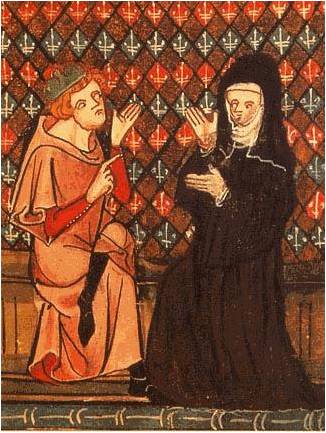
Abelard and Heloise depicted in a 14th century manuscript of the French poem Roman de la Rose
Eugene also mentioned St Albertus Magnus (1200-1280), another major figure in rthe development of scholasticism and, like the best-known scholastic of all, St Thomas Aquinas, a member of the Dominican Order. Details of his life and work are at https://en.wikipedia.org/wiki/Albertus_Magnus
We read and translated chapters 2 and 3 of Genesis in the Clementine Vulgate (see the text below), noting the usual mistakes in John’s macroned version.
We noted the use of the verb pōtāre (drink), used in pre-classical and post-Augustan literature as a synonym for the fully classical bibere,but sometimes also having the sense of drink to excess or become intoxicated . Its perfect participle could be used both with passive and active sense, the latter illustrated by Cicero’s phrase domum bene pōtus redīre (`to come home well-oiled’). The verb is the source of English potable and itself comes from the Indo-European root *po(i)-. It is etymologically linked with poculum (drinking-vessel) though not with Greek potamos (`river’; cf. `hippopotamus’, `Mesopotamia’), which probably derives from the PIE root *pet ( `rush, fly’) and thus meant originally `rushing water’.
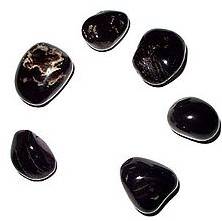
Tanya explained that onyx, one of the products of the region of `Hevilath’ (in Saudi Arabia), which Genesis links with the `Phison’, one of the rivers watering the Garden of Eden, was in origin a resin though now generally classified as a gem stone. However, a check with Wikipedia does not mention this, just deacribing the banded srone (which comes in red and black varieties) as a crystalline form of silicon dioxide (see https://en.wikipedia.org/wiki/Onyx)

|
|
Red onyx Black onyx
We also commented on the plural form diī (gods), an alternative to deī and dī which were more common in classical Latin, where (especially in poetry) dīs instead of deīs (dative/ablative plural) and deum for deōrum (genitive plural) were also frequent. Yet another peculiarity was the phraae morte moriēris (`you will die by death’) used by Jerome to translate a Hebrew phrase which seems to have combined two different verbs meaning `die’. Tanya suggested parallel in children’s language which could include things like `I’ll kill you to death’. She went on to mention two
whimsical works by Mark Twain, The Diary of Adam and Eve, and the longer Diary of Eve available on the web at
http://www.kelleytown.com/shared%20files/adam%20and%20eve.pdf
and https://www.gutenberg.org/files/8525/8525-h/8525-h.htm
We noticed also how God seems to be portrayed at one point as a jealous, insecure creature, worried that Adam quasi ūnus ex nōbīs factus est, sciēns bonum et malum (`has become like one of us, knowing good nd evil’) and therefore determined to deny him access to the `Tree of Life’ which would let him live for ever.
Although we are using the Clementine (16th century) edition of Jerome’s 4th century Vulgate translation, the Catholic Church under Pope Paul VI commissioned a revised version which was finally completed under John-Paul II in 1999 and is available on-line at http://www.vatican.va/archive/bible/nova_vulgata/documents/nova-vulgata_index_lt.html
On a quick glance, there are few differences between the two versions in the chapters we read today but one change is from the feminine ipsa to neuter ipsum in 3.15 so that it is sēmen (a neuter noun including descendants of both sexes) rather than `the woman’ (mulierem) who is to crush the serpent’s head. In the Hebrew text, the pronoun could refer to either noun but most translators use a neuter or masculine pronoun, making the reference either to humanity in general or to Christ. The Catholics appear to have come into line, abandoning their traditional belief that God was here prophesising the future role of the Virgin Mary in the final defeat of the Devil.
GENESIS, c.2-3
Chapter 2
1 Igitur perfectī sunt cælī et terra, et omnis ornātus[1] eōrum.
Therefore finished were heavens and earth and all adornment of-them
2 Complēvitque Deus diē septimō opus suum quod fēcerat: et requiēvit diē septimō ab
And-completed God on-day seventh work his which he-had-made and he-rested on-day seventh from
ūniversō opere quod patrārat.[2]
all work which he-had-accomplished
3 Et benedīxit diēī septimō, et sanctificāvit illum, quia in ipsō cessāverat ab omnī opere
and he-gave-blessing to-day seventh and sanctified it because on it he-had-ceased from all work
suō quod creāvit Deus ut faceret.[3]
his which created God that he-might-make (it)
4 Istæ sunt generātiōnes cælī et terræ, quandō creāta sunt, in diē quō fēcit Dominus
Those are the-origins of-heaven and of-earth when created they-were in day on-which made the-Lord
Deus cælum et terram,
God heaven and earth
5 et omne virgultum[4] agrī antequam oriētur in terrā, omnemque herbam regiōnis[5]
and every shrub of-field before it-will-rise in the-earth and-all grass of-field
priusquam germināret:[6] nōn enim[7] pluerat Dominus Deus super terram, et homō nōn
before it-might-germinate not for had-rained Lord God upon earth and man not
erat quī operārētur terram:
was who might-work the-earth
6 sed fōns[8] ascendēbat ē terrā, irrigāns ūniversam superficiem terræ.
but spring began-to-ascend out-of earth irrigating whole surface of -earth
7 Fōrmāvit igitur Dominus Deus hominem dē līmō terræ, et īnspīrāvit in faciem ejus
Formed therefore Lord God man from mud of-earth and breathed into face his
spīrāculum vītæ, et factus est homō in animam vīventem.
breath of-life and mad e was man into breath living
8 Plantāverat autem Dominus Deus paradīsum voluptātis ā prīncipiō,[9] in quō posuit
had-planted moreover Lord God garden of-delight from beginning in which he-placed
hominem quem fōrmāverat.
man whom he-had-formed
9 Prōdūxitque Dominus Deus dē humō omne lignum pulchrum vīsū, et ad vescendum
And-produced Lord God from ground every tree beautiful to-see and for feeding-on
suāve, lignum etiam vītæ in mediō paradīsī, lignumque scientiæ bonī et malī.
sweet tree also of-life in middle of-garden and-tree of-knowledge of-good and of-evil
10 Et flūvius ēgrediēbātur dē locō voluptātis ad irrigandum paradīsum,[10] quī inde
And river went-out from place of-delight for irrigating garden which from-there
dīviditur in quattuor capita.[11]
is-divided into four streams
11 Nōmen ūnī Phison: ipse est quī circuit omnem terram Hevilath,[12] ubi nascitur
name to-one Phison it is one-which encircles all land of-Hevilath where originates
aurum:
gold
NOTES
[1] The Hebrew sense (mass, host of persons or things) is conveyed more accurately by KJV.
[2] patrārat: contraction of patrāverat, pluperfect from patrō, -āre, -āvī, -ātum.
[3] creāvit ut faceret: a rather strange construction with a subjunctive purpose clause. The Greek Septuagint has the equivalent of `began to make’ and the King James version `created and made’.
[4] virgultum means shrub, bush or thicket in classical Latin but the Greek chlōron (`green thing’) and KJV `plant’ make better sense. The original Hebrew had both meanings.
[5] regiō developed the sense of `field’ in late Latin.
[6] The syntax of this verse is a little odd as oriētur is future indicative and gemināret imperfect subjunctive. If the intention is to emphasizes that God deliberately brought them into existence before they had the conditions to grow naturally then imperfect subjunctive might be expected for both verbs.
[7] enim cannon stand first in its clause
[8] Both Latin fōns and Greek pēgē normally mean a spring or source but `mist’ in KJV is closer to the original Hebrew.
[9] Translating Hebrew quedem, which meant originally `front part’ but, by extension `ancient time’ and (as the beginning point of the day) the east. The Greek and KJV both correctly adopt the last meaning.
[10] irrigandum paradīsum: the first word could be taken as either a gerund (`for irrigating the garden’) or a gerundive (`for a garden being irrigated’)
[11] Literally `heads’
[12] Spelled in different editions of the text as Havilah, Evilas, or Evilath. There has been one attempt to locate this region in Zimbabwe in southern Africa but it is was probably thought to have been somewhere in the Arabian Peninsula and the name Phison may be a river which dried up around 2,500 B.C., having previously flowed for around 500 years north-east to the Persian Gulf on the coast of Kuwait from a possible source in the Hiraj Mountains of Saudi Arabia. See https://en.wikipedia.org/wiki/Havilah and https://en.wikipedia.org/wiki/Hijaz_Mountains
12 et aurum terræ illīus optimum est; ibi invenītur bdellium,[1] et lapis onychinus.[2]
and gold of-land that best is there is-found bdellium and stone onyx
13 Et nōmen flūviī secundī Gehon; ipse est quī circumit omnem terram Æthiopiæ.[3]
and name of-river second Gehon it is one-which encircles all land of-Ethiopia
14 Nōmen vērō flūminis tertiī, Tīgris: ipse vādit contrā [4]Assyriōs. Flūvius autem
Name indeed of-river third Tigris it goes towards Assyrians river moreover
quārtus, ipse est Euphrātēs.
fourth it is Euphrates
15 Tulit ergo Dominus Deus hominem, et posuit eum in paradīsō voluptātis, ut
Took therefore Lord God man and placed him in garden of-delight so-that
operārētur, et custōdīret illum:
he-might-work and guard it
16 præcēpitque eī, dīcēns: Ex omnī lignō paradīsī comede;
And-gave instruction to him saying from every tree of-garden eat
17 dē lignō autem scientiæ bonī et malī nē comedās: in quōcumque enim diē
from tree however of-knowledge of-good and of-evil not may-you-eat on whatever for day
comēderis ex eō, morte moriēris.
you-will-have-eaten from-it by-death you-will-die
18 Dīxit quoque Dominus Deus: Nōn est bonum esse hominem sōlum: faciāmus eī
said also Lord God not is good to-be man alone let-us-make for-him
adjūtōrium simile[5] sibi.
help similar to-himself
19 Fōrmātīs igitur Dominus Deus dē humō cūnctīs animantibus terræ, et ūniversīs
having-been- formed therefore Lord God from ground with-all animals of-earth and all
volātilibus cælī, addūxit[6] ea ad Adam,[7] ut vidēret quid vocāret ea: omne enim quod
flying-thing of-sky brought them to Adam that he-might-see what he-might-call them everything for which
vocāvit Adam animæ vīventis,[8] ipsum est nōmen ejus.
named Adam of-soul living very-same is name of-it
20 Appellāvitque Adam nōminibus suīs cūncta animantia, et ūniversa volātilia cælī, et
and-called Adam by-names their-own all animals and all flying-things of-sky and
omnēs bēstiās terræ: Adæ vērō nōn inveniēbātur adjūtor similis ejus.
all beasts of-earth for-Adam indeed not was-being-found helper similar of-him
21 Immīsit ergō Dominus Deus sopōrem in Adam: cumque obdormīsset, tulit ūnam dē
Sent-on therefore Lord God drowsiness into Adam and-when he-had-gone-to-sleep he-took one from
costīs ejus, et replēvit carnem prō eā.
ribs his and refilled flesh for it
22 Et ædificāvit Dominus Deus costam, quam tulerat dē Adam, in mulierem: et addūxit
and made Lord God rib which he-had-taken from Adam into a-woman and brought
eam ad Adam.
her to Adam
NOTES
[1] In most ancient authors bdellium refers to a resin obtained from certain kinds of trees in Ethiopia and sub-Saharan Africa but the Septuagint translators may have regarded it as a kind of precious stone. See https://en.wikipedia.org/wiki/Bdellium
[2] lapis onychinus refers to the banded gemstone onyx.
[3] The Hebrew Cush usually refers in the Bible to Ethiopia but different scholars have located it in the Hindu Kush or Kish in Mesopotasmia. The Gehon (or Gihon) has been variously identified with a branch of the Nile, the Oxus (Amu Darya) in Central Asia or a river no longer existing. See https://en.wikipedia.org/wiki/Gihon
[4] contrā: against, towards; `towards the East of’ (KJV) translates the Hebrew more accurately
[5] The meaning of the Hebrew, properly conveyed by KJV, is closer to `suitable for’ than `similar to’
[6] The subject of this verb is, Dominus Deus,which is placed inside the ablative absolute phrase fōrmātīs dē humō cūnctīs animantibus terrae, et ūniversīs caelī
[7] Adam is usually treated as an indeclinable noun so the accusative case is not marked here. However, the form Adae is sometimes used, generally as a genitive although it could be interpreted as dative in the next verse as in the following verse, the Greek version of which certainly does use the dative..
[8] animae viventis is here a partitive genitive dependent on omne
23 Dīxitque Adam: Hoc nunc os ex ossibus meīs, et carō dē carne meā: hæc vocābitur
and-said Adam this now bone out-of bones my and flesh from flesh my this will-be-called
Virāgō,[1] quoniam dē virō sūmpta est.
heroine since from man taken she-has-been
24 Quam ob rem relinquet homō patrem suum, et mātrem, et adhærēbit uxōrī suæ: et
Which because-of thing shall-leave a-man father his and mother and shall-stick to-wife his and
erunt duo in carne ūnā.
they-shall-be two in flesh one
25 Erat autem uterque nūdus, Adam scīlicet et uxor ejus: et non ērubēscēbant.
was moreover each-of-them naked Adam indeed and wife of-him and not were-ashamed
Chapter 3
1 Sed et serpēns[2] erat callidior cūnctīs animantibus terræ quæ[3] fēcerat Dominus
but also serpent was cleverer than-all animals of-earth which had-made Lord
Deus. Quī dīxit ad[4] mulierem: Cūr præcēpit vōbīs Deus ut nōn comederētis dē omnī
God who said to the-woman why gave-instruction to-you God that not you-should-eat from every
lignō paradīsī?
tree of-the-garden
2 Cui respondit mulier: Dē frūctū lignōrum, quæ sunt in paradīsō, vescimur:
to-whom replied the-woman from fruit of-trees which are in garden we-feed
3 dē frūctū vērō lignī quod est in mediō paradīsī, præcēpit nōbīs Deus nē comederēmus,
from fruit indeed of-tree which is in middle of-garden gave-instructions to-us God that-not we-should-eat
et nē tangerēmus illud, nē forte moriāmur.[5]
and not we-should-touch it lest by-chance we-should-die
4 Dīxit autem serpēns ad mulierem: Nēquāquam morte moriēminī.
said however serpent to woman by-no-means by-death you-will-die
5 Scit enim Deus quod in quōcumque diē comēderitis ex eō, aperientur oculī vestrī, et
knows for God that on whatever day you-will-have-eaten from it will-be-opened eyes your and
eritis sīcut diī, scientēs bonum et malum.
you-will-be as gods knowing good and evil
6 Vīdit igitur mulier quod bonum esset lignum ad vescendum, et pulchrum oculīs,
saw therefore the-woman that good was the-tree for feeding-upon and beautiful to-eyes
aspectūque dēlectābile: et tulit dē frūctū illīus, et comēdit: deditque virō suō, quī
and-in-appearance delightful and she-took from fruit of-it and ate and-gave to-man her who
comēdit.
ate
7 Et apertī sunt oculī ambōrum; cumque[6] cognōvissent sē esse nūdōs,
and opened were eyes of-both and-since they-had-realized themselves to-be naked
cōnsuērunt folia fīcūs, et fēcērunt sibi perizōmata.
they-sewed-together leaves of-fig-tree and made for-themselves loin-cloths
8 Et cum audīssent[7] vōcem Dominī Deī dēambulantis in paradīsō ad auram post
And when they-had-hear voice of-Lord God walking in garden in breeze after
merīdiem, abscondit sē Adam et uxor ejus ā faciē Dominī Deī in mediō lignī paradīsī.
mid-day hid himself Adam and wife his from face of-Lord God in middle of-wood of-paradise
NOTES
[1] The choice of the word virāgō seems to have been determined by its similarity to vir, not by the wish to emphasise Eve’s heroic qualities. The Hebrew simply means `woman’. The Greek also uses the usual word gunē
[2] serpēns (literally `crawler’) is the present participle of serpō (-ere, serpsī, crawl) used as a feminine noun. The other common word for snake is dracō (dracōnis, m)
[3] quae is neuter plural, referring to animantibus rather than terrae,
[4] ad mulierem: this alternative for the dative mulierī was permissible in Jerome’s time but not in the literary language of Cicero’s time.
[5] moriāmur: imperfect (morerēmur) rather than present subjunctive would be more normal here as the preceding subjunctives comederēmus and tangerēmus are imperfects. The switch from secondary sequence (use of imperfect or pluperfect subjunctive after a past tense main verb) to primary is presumably to make the possibility of death more vivid.
[6] cum, as usual when used as a conjunction, could be translated as both `since’ and `when’.
[7] audīssent: contraction of pluperfect subjunctive audīvissent.
9 Vocāvitque Dominus Deus Adam, et dīxit eī: Ubi es?
and-called Lord God Adam and said to-him where are-you
10 Quī[1] ait: Vōcem tuam audīvī in paradīsō, et timuī, eō quod[2] nūdus essem, et
He said voice your I-heard in garden and I-feared for-this that naked I-was
abscondī mē.
I-hid myself
11 Cui dīxit: Quis enim indīcāvit tibi quod nūdus essēs, nisi quod[3] ex lignō dē quō
to-whom he-said who then pointed-out to-you that naked you-were unless because from tree from which
præcēperam tibi nē comederēs, comēdistī?
I-had-given-instruction to-you that-not you-should-eat you-have-eaten
12 Dīxitque Adam: Mulier, quam dedistī mihi sociam, dedit mihi dē lignō, et comēdī.
and-said Adam the-woman whom you-gave to-me (as-)companion gave to-me from the-tree and I-ate
13 Et dīxit Dominus Deus ad mulierem: Quārē hoc fēcistī? Quæ respondit: Serpēns
and-said Lord God to the-woman why this you-have-done she replied the-serpent
dēcēpit mē, et comēdī.
deceived-me and I-ate
14 Et ait Dominus Deus ad serpentem: Quia fēcistī hoc, maledictus es inter omnia
and said Lord God to serpent because you-did this cursed you-are among all
animantia, et bēstiās terræ: super pectus tuum gradiēris , et terram comedēs cūnctīs
animals and beasts of-earth on breast your you-will-move and earth you-will-eat for-all
diēbus vītæ tuæ.
days of-life your
15 Inimīcitiās pōnam inter tē et mulierem, et sēmen tuum et sēmen illīus: ipsa[4]
enmity I-will-place between you and the-woman and seed your and seed her she-herself
conteret caput tuum, et tū īnsidiāberis calcāneō ejus.
will-bruise your head and you will-lie-in-wait for-heel her/its
16 Mulierī quoque dīxit: Multiplicābō ærumnās tuās, et conceptūs tuōs: in dolōre
To-woman also he-said I-will-multiply troubles your and conceptions your in pain
pariēs fīliōs, et sub virī potestāte eris, et ipse dominābitur tuī.[5]
you-will-bear children and under of-husband power you-will-be and he will-rule over-you
17 Adæ verō dīxit: Quia audīstī[6] vōcem uxōris tuæ, et comēdistī dē lignō, ex quō
to-Adam indeed he-said because you-listened-to voice of-wife your and you-ate from tree from which
præcēperam tibi nē comederēs, maledicta terra in opere tuō:[7] in labōribus
I-had-given-instruction to-you that-not you-should-eat cursed earth in work your in toilings
comedēs ex eā cūnctis diēbus vītæ tuæ.
you-will-eat from it for-all days of-life your
18 Spīnās et tribulōs germinābit tibi, et comedēs herbam terræ.
Thorns and thistles it-will-grow for-you and you-will-eat plant of-earth
19 In sūdōre vultūs tuī vescēris pāne, dōnec revertāris[8] in terram de quā sūmptus es:
in sweat of-face your you-will-feed on-bread until you- return into earth from which taken you-were
quia pulvis es et in pulverem revertēris.
because dust you-are and into dust you-will-return
20 Et vocāvit Adam nōmen uxōris suæ, Heva:[9] eō quod māter esset cūnctōrum
and called Adam name of-wife his Heva for-this that mother she-was of-all
vīventium.
those-living
NOTES
[1] Quī: `who’, referring to Adam in the previous verse.
[2] eō quod: `for the reason that’
[3] Understand a phrase like hoc cognōvistī (`you have realised this’) before quod.
[4] ipsa: the Clementine text uses a feminine pronoun (`she herself’) referring to woman rather than to the neuter noun sēmen (referring to descendants of both sexes) and traditional Catholic belief took this as referring specifically to the future role of the Virgin Mary in the final defeat of the Devil. However, in the Hebrew text the relative pronouns could refer to either noun and other Latin and English versions (including the revised text now approved by the Catholic Church itself) use either a neuter or masculine pronoun, the latter being interpreted as a reference to Christ. See the discussion at http://www.ewtn.com/v/experts/showmessage.asp?number=563958
[5] The genitive is used as object of dominor, -ārī, -ātus sum
[6] audīstī: abbreviated form of audīvistī
[7] in opere tuō: the Hebrew phrase is better translated as `for your sake’ (as in KJV).
[8] revertāris: present subjunctive from the deponent verb revertor, revertī, reversus sum. The subjunctive is egularly used of an anticipated event in an `until’ clause with dōnec or dum.
[9] Heva: used in the Clementine version for the Hebrew khevah (`life-giver’). The KJV has `Eve’, the 1969 Stuttgart edition of the Vulgate `Hava’ and the Vatican-approved 1979 Nova Vulgata `Eva’
21 Fēcit quoque Dominus Deus Adæ et uxōrī ejus tunicās pelliceās, et induit eōs:
made also Lord God for-Adam and wife his tunics of-skins and clothed them
22 et ait: Ecce Adam quasi ūnus ex nōbīs factus est, sciēns bonum et malum: nunc ergō
And he-said behold Adam as-if one of us become has knowing good and evil now therefore
nē forte mittat manum suam, et sūmat etiam dē lignō vītæ, et comedat, et vīvat
not by-chance let-him-put(out) hand his and take also from tree of-life and eat and live
in æternum.[1]
for ever
23 Et ēmīsit eum Dominus Deus dē paradīsō voluptātis, ut operārētur terram dē quā
and sent-out him Lord God from garden of-delight that he-might-work the-earth from which
sūmptus est.
taken he-was
24 Ējēcitque Adam: et collocāvit ante paradīsum voluptātis cherubim,[2] et flammeum
and-he-expelled Adam and placed before the-garden of-delight the-cherubim and flaming
gladium, atque versātilem,[3] ad custōdiendam viam[4] lignī vītæ.
sword and turning-every-way for being-guarded way of-tree of-life
NOTES
[1] nē…aeternum:. `let it not chance to happen that…. he takes also from the tree of life and eats {its fruit} and lives for ever.’
[2] cherubim: plural of cherub with the original Hebrew termination. The present-day image of a cherub as a cute little boy with wings results from a confusion with the Graeco-Roman Cupīdō/Erōs. The cherub of the Old Testament was a powerful figure, generally thought of as having one face and four feet, but in the Book of Ezechiel possessing four faces (of a man, ox, lion and eagle). See https://en.wikipedia.org/wiki/Cherub
[3] versātilem: this adjective is also qualifying gladium: `a sword which flamed and turned every way.’
[4] ad custōdiendam viam: gerundive phrase (`for the purpose of the way being guarded’, i.e `to guard the way’)
We also commented on the plural form diī (gods), an alternative to deī and dī which were more common in classical Latin, where (especially in poetry) dīs instead of deīs (dative/ablative plural) and deum for deōrum (genitive plural) were also frequent. Yet another peculiarity was the phraae morte moriēris (`you will die by death’) used by Jerome to translate a Hebrew phrase which seems to have combined two different verbs meaning `die’. Tanya suggested parallel in children’s language which could include things like `I’ll kill you to death’. She went on to mention two
whimsical works by Mark Twain, The Diary of Adam and Eve, and the longer Diary of Eve available on the web at
http://www.kelleytown.com/shared%20files/adam%20and%20eve.pdf
and https://www.gutenberg.org/files/8525/8525-h/8525-h.htm
We noticed also how God seems to be portrayed at one point as a jealous, insecure creature, worried that Adam quasi ūnus ex nōbīs factus est, sciēns bonum et malum (`has become like one of us, knowing good nd evil’) and therefore determined to deny him access to the `Tree of Life’ which would let him live for ever.
Although we are using the Clementine (16th century) edition of Jerome’s 4th century Vulgate translation, the Catholic Church under Pope Paul VI commissioned a revised version which was finally completed under John-Paul II in 1999 and is available on-line at http://www.vatican.va/archive/bible/nova_vulgata/documents/nova-vulgata_index_lt.html
On a quick glance, there are few differences between the two versions in the chapters we read today but one change is from the feminine ipsa to neuter ipsum in 3.15 so that it is sēmen (a neuter noun including descendants of both sexes) rather than `the woman’ (mulierem) who is to crush the serpent’s head. In the Hebrew text, the pronoun could refer to either noun but most translators use a neuter or masculine pronoun, making the reference either to humanity in general or to Christ. The Catholics appear to have come into line, abandoning their traditional belief that God was here prophesising the future role of the Virgin Mary in the final defeat of the Devil.
GENESIS, c.2-3
Chapter 2
1 Igitur perfectī sunt cælī et terra, et omnis ornātus[1] eōrum.
Therefore finished were heavens and earth and all adornment of-them
2 Complēvitque Deus diē septimō opus suum quod fēcerat: et requiēvit diē septimō ab
And-completed God on-day seventh work his which he-had-made and he-rested on-day seventh from
ūniversō opere quod patrārat.[2]
all work which he-had-accomplished
3 Et benedīxit diēī septimō, et sanctificāvit illum, quia in ipsō cessāverat ab omnī opere
and he-gave-blessing to-day seventh and sanctified it because on it he-had-ceased from all work
suō quod creāvit Deus ut faceret.[3]
his which created God that he-might-make (it)
4 Istæ sunt generātiōnes cælī et terræ, quandō creāta sunt, in diē quō fēcit Dominus
Those are the-origins of-heaven and of-earth when created they-were in day on-which made the-Lord
Deus cælum et terram,
God heaven and earth
5 et omne virgultum[4] agrī antequam oriētur in terrā, omnemque herbam regiōnis[5]
and every shrub of-field before it-will-rise in the-earth and-all grass of-field
priusquam germināret:[6] nōn enim[7] pluerat Dominus Deus super terram, et homō nōn
before it-might-germinate not for had-rained Lord God upon earth and man not
erat quī operārētur terram:
was who might-work the-earth
6 sed fōns[8] ascendēbat ē terrā, irrigāns ūniversam superficiem terræ.
but spring began-to-ascend out-of earth irrigating whole surface of -earth
7 Fōrmāvit igitur Dominus Deus hominem dē līmō terræ, et īnspīrāvit in faciem ejus
Formed therefore Lord God man from mud of-earth and breathed into face his
spīrāculum vītæ, et factus est homō in animam vīventem.
breath of-life and mad e was man into breath living
8 Plantāverat autem Dominus Deus paradīsum voluptātis ā prīncipiō,[9] in quō posuit
had-planted moreover Lord God garden of-delight from beginning in which he-placed
hominem quem fōrmāverat.
man whom he-had-formed
9 Prōdūxitque Dominus Deus dē humō omne lignum pulchrum vīsū, et ad vescendum
And-produced Lord God from ground every tree beautiful to-see and for feeding-on
suāve, lignum etiam vītæ in mediō paradīsī, lignumque scientiæ bonī et malī.
sweet tree also of-life in middle of-garden and-tree of-knowledge of-good and of-evil
10 Et flūvius ēgrediēbātur dē locō voluptātis ad irrigandum paradīsum,[10] quī inde
And river went-out from place of-delight for irrigating garden which from-there
dīviditur in quattuor capita.[11]
is-divided into four streams
11 Nōmen ūnī Phison: ipse est quī circuit omnem terram Hevilath,[12] ubi nascitur
name to-one Phison it is one-which encircles all land of-Hevilath where originates
aurum:
gold
NOTES
[1] The Hebrew sense (mass, host of persons or things) is conveyed more accurately by KJV.
[2] patrārat: contraction of patrāverat, pluperfect from patrō, -āre, -āvī, -ātum.
[3] creāvit ut faceret: a rather strange construction with a subjunctive purpose clause. The Greek Septuagint has the equivalent of `began to make’ and the King James version `created and made’.
[4] virgultum means shrub, bush or thicket in classical Latin but the Greek chlōron (`green thing’) and KJV `plant’ make better sense. The original Hebrew had both meanings.
[5] regiō developed the sense of `field’ in late Latin.
[6] The syntax of this verse is a little odd as oriētur is future indicative and gemināret imperfect subjunctive. If the intention is to emphasizes that God deliberately brought them into existence before they had the conditions to grow naturally then imperfect subjunctive might be expected for both verbs.
[7] enim cannon stand first in its clause
[8] Both Latin fōns and Greek pēgē normally mean a spring or source but `mist’ in KJV is closer to the original Hebrew.
[9] Translating Hebrew quedem, which meant originally `front part’ but, by extension `ancient time’ and (as the beginning point of the day) the east. The Greek and KJV both correctly adopt the last meaning.
[10] irrigandum paradīsum: the first word could be taken as either a gerund (`for irrigating the garden’) or a gerundive (`for a garden being irrigated’)
[11] Literally `heads’
[12] Spelled in different editions of the text as Havilah, Evilas, or Evilath. There has been one attempt to locate this region in Zimbabwe in southern Africa but it is was probably thought to have been somewhere in the Arabian Peninsula and the name Phison may be a river which dried up around 2,500 B.C., having previously flowed for around 500 years north-east to the Persian Gulf on the coast of Kuwait from a possible source in the Hiraj Mountains of Saudi Arabia. See https://en.wikipedia.org/wiki/Havilah and https://en.wikipedia.org/wiki/Hijaz_Mountains
12 et aurum terræ illīus optimum est; ibi invenītur bdellium,[1] et lapis onychinus.[2]
and gold of-land that best is there is-found bdellium and stone onyx
13 Et nōmen flūviī secundī Gehon; ipse est quī circumit omnem terram Æthiopiæ.[3]
and name of-river second Gehon it is one-which encircles all land of-Ethiopia
14 Nōmen vērō flūminis tertiī, Tīgris: ipse vādit contrā [4]Assyriōs. Flūvius autem
Name indeed of-river third Tigris it goes towards Assyrians river moreover
quārtus, ipse est Euphrātēs.
fourth it is Euphrates
15 Tulit ergo Dominus Deus hominem, et posuit eum in paradīsō voluptātis, ut
Took therefore Lord God man and placed him in garden of-delight so-that
operārētur, et custōdīret illum:
he-might-work and guard it
16 præcēpitque eī, dīcēns: Ex omnī lignō paradīsī comede;
And-gave instruction to him saying from every tree of-garden eat
17 dē lignō autem scientiæ bonī et malī nē comedās: in quōcumque enim diē
from tree however of-knowledge of-good and of-evil not may-you-eat on whatever for day
comēderis ex eō, morte moriēris.
you-will-have-eaten from-it by-death you-will-die
18 Dīxit quoque Dominus Deus: Nōn est bonum esse hominem sōlum: faciāmus eī
said also Lord God not is good to-be man alone let-us-make for-him
adjūtōrium simile[5] sibi.
help similar to-himself
19 Fōrmātīs igitur Dominus Deus dē humō cūnctīs animantibus terræ, et ūniversīs
having-been- formed therefore Lord God from ground with-all animals of-earth and all
volātilibus cælī, addūxit[6] ea ad Adam,[7] ut vidēret quid vocāret ea: omne enim quod
flying-thing of-sky brought them to Adam that he-might-see what he-might-call them everything for which
vocāvit Adam animæ vīventis,[8] ipsum est nōmen ejus.
named Adam of-soul living very-same is name of-it
20 Appellāvitque Adam nōminibus suīs cūncta animantia, et ūniversa volātilia cælī, et
and-called Adam by-names their-own all animals and all flying-things of-sky and
omnēs bēstiās terræ: Adæ vērō nōn inveniēbātur adjūtor similis ejus.
all beasts of-earth for-Adam indeed not was-being-found helper similar of-him
21 Immīsit ergō Dominus Deus sopōrem in Adam: cumque obdormīsset, tulit ūnam dē
Sent-on therefore Lord God drowsiness into Adam and-when he-had-gone-to-sleep he-took one from
costīs ejus, et replēvit carnem prō eā.
ribs his and refilled flesh for it
22 Et ædificāvit Dominus Deus costam, quam tulerat dē Adam, in mulierem: et addūxit
and made Lord God rib which he-had-taken from Adam into a-woman and brought
eam ad Adam.
her to Adam
NOTES
[1] In most ancient authors bdellium refers to a resin obtained from certain kinds of trees in Ethiopia and sub-Saharan Africa but the Septuagint translators may have regarded it as a kind of precious stone. See https://en.wikipedia.org/wiki/Bdellium
[2] lapis onychinus refers to the banded gemstone onyx.
[3] The Hebrew Cush usually refers in the Bible to Ethiopia but different scholars have located it in the Hindu Kush or Kish in Mesopotasmia. The Gehon (or Gihon) has been variously identified with a branch of the Nile, the Oxus (Amu Darya) in Central Asia or a river no longer existing. See https://en.wikipedia.org/wiki/Gihon
[4] contrā: against, towards; `towards the East of’ (KJV) translates the Hebrew more accurately
[5] The meaning of the Hebrew, properly conveyed by KJV, is closer to `suitable for’ than `similar to’
[6] The subject of this verb is, Dominus Deus,which is placed inside the ablative absolute phrase fōrmātīs dē humō cūnctīs animantibus terrae, et ūniversīs caelī
[7] Adam is usually treated as an indeclinable noun so the accusative case is not marked here. However, the form Adae is sometimes used, generally as a genitive although it could be interpreted as dative in the next verse as in the following verse, the Greek version of which certainly does use the dative..
[8] animae viventis is here a partitive genitive dependent on omne
23 Dīxitque Adam: Hoc nunc os ex ossibus meīs, et carō dē carne meā: hæc vocābitur
and-said Adam this now bone out-of bones my and flesh from flesh my this will-be-called
Virāgō,[1] quoniam dē virō sūmpta est.
heroine since from man taken she-has-been
24 Quam ob rem relinquet homō patrem suum, et mātrem, et adhærēbit uxōrī suæ: et
Which because-of thing shall-leave a-man father his and mother and shall-stick to-wife his and
erunt duo in carne ūnā.
they-shall-be two in flesh one
25 Erat autem uterque nūdus, Adam scīlicet et uxor ejus: et non ērubēscēbant.
was moreover each-of-them naked Adam indeed and wife of-him and not were-ashamed
Chapter 3
1 Sed et serpēns[2] erat callidior cūnctīs animantibus terræ quæ[3] fēcerat Dominus
but also serpent was cleverer than-all animals of-earth which had-made Lord
Deus. Quī dīxit ad[4] mulierem: Cūr præcēpit vōbīs Deus ut nōn comederētis dē omnī
God who said to the-woman why gave-instruction to-you God that not you-should-eat from every
lignō paradīsī?
tree of-the-garden
2 Cui respondit mulier: Dē frūctū lignōrum, quæ sunt in paradīsō, vescimur:
to-whom replied the-woman from fruit of-trees which are in garden we-feed
3 dē frūctū vērō lignī quod est in mediō paradīsī, præcēpit nōbīs Deus nē comederēmus,
from fruit indeed of-tree which is in middle of-garden gave-instructions to-us God that-not we-should-eat
et nē tangerēmus illud, nē forte moriāmur.[5]
and not we-should-touch it lest by-chance we-should-die
4 Dīxit autem serpēns ad mulierem: Nēquāquam morte moriēminī.
said however serpent to woman by-no-means by-death you-will-die
5 Scit enim Deus quod in quōcumque diē comēderitis ex eō, aperientur oculī vestrī, et
knows for God that on whatever day you-will-have-eaten from it will-be-opened eyes your and
eritis sīcut diī, scientēs bonum et malum.
you-will-be as gods knowing good and evil
6 Vīdit igitur mulier quod bonum esset lignum ad vescendum, et pulchrum oculīs,
saw therefore the-woman that good was the-tree for feeding-upon and beautiful to-eyes
aspectūque dēlectābile: et tulit dē frūctū illīus, et comēdit: deditque virō suō, quī
and-in-appearance delightful and she-took from fruit of-it and ate and-gave to-man her who
comēdit.
ate
7 Et apertī sunt oculī ambōrum; cumque[6] cognōvissent sē esse nūdōs,
and opened were eyes of-both and-since they-had-realized themselves to-be naked
cōnsuērunt folia fīcūs, et fēcērunt sibi perizōmata.
they-sewed-together leaves of-fig-tree and made for-themselves loin-cloths
8 Et cum audīssent[7] vōcem Dominī Deī dēambulantis in paradīsō ad auram post
And when they-had-hear voice of-Lord God walking in garden in breeze after
merīdiem, abscondit sē Adam et uxor ejus ā faciē Dominī Deī in mediō lignī paradīsī.
mid-day hid himself Adam and wife his from face of-Lord God in middle of-wood of-paradise
NOTES
[1] The choice of the word virāgō seems to have been determined by its similarity to vir, not by the wish to emphasise Eve’s heroic qualities. The Hebrew simply means `woman’. The Greek also uses the usual word gunē
[2] serpēns (literally `crawler’) is the present participle of serpō (-ere, serpsī, crawl) used as a feminine noun. The other common word for snake is dracō (dracōnis, m)
[3] quae is neuter plural, referring to animantibus rather than terrae,
[4] ad mulierem: this alternative for the dative mulierī was permissible in Jerome’s time but not in the literary language of Cicero’s time.
[5] moriāmur: imperfect (morerēmur) rather than present subjunctive would be more normal here as the preceding subjunctives comederēmus and tangerēmus are imperfects. The switch from secondary sequence (use of imperfect or pluperfect subjunctive after a past tense main verb) to primary is presumably to make the possibility of death more vivid.
[6] cum, as usual when used as a conjunction, could be translated as both `since’ and `when’.
[7] audīssent: contraction of pluperfect subjunctive audīvissent.
9 Vocāvitque Dominus Deus Adam, et dīxit eī: Ubi es?
and-called Lord God Adam and said to-him where are-you
10 Quī[1] ait: Vōcem tuam audīvī in paradīsō, et timuī, eō quod[2] nūdus essem, et
He said voice your I-heard in garden and I-feared for-this that naked I-was
abscondī mē.
I-hid myself
11 Cui dīxit: Quis enim indīcāvit tibi quod nūdus essēs, nisi quod[3] ex lignō dē quō
to-whom he-said who then pointed-out to-you that naked you-were unless because from tree from which
præcēperam tibi nē comederēs, comēdistī?
I-had-given-instruction to-you that-not you-should-eat you-have-eaten
12 Dīxitque Adam: Mulier, quam dedistī mihi sociam, dedit mihi dē lignō, et comēdī.
and-said Adam the-woman whom you-gave to-me (as-)companion gave to-me from the-tree and I-ate
13 Et dīxit Dominus Deus ad mulierem: Quārē hoc fēcistī? Quæ respondit: Serpēns
and-said Lord God to the-woman why this you-have-done she replied the-serpent
dēcēpit mē, et comēdī.
deceived-me and I-ate
14 Et ait Dominus Deus ad serpentem: Quia fēcistī hoc, maledictus es inter omnia
and said Lord God to serpent because you-did this cursed you-are among all
animantia, et bēstiās terræ: super pectus tuum gradiēris , et terram comedēs cūnctīs
animals and beasts of-earth on breast your you-will-move and earth you-will-eat for-all
diēbus vītæ tuæ.
days of-life your
15 Inimīcitiās pōnam inter tē et mulierem, et sēmen tuum et sēmen illīus: ipsa[4]
enmity I-will-place between you and the-woman and seed your and seed her she-herself
conteret caput tuum, et tū īnsidiāberis calcāneō ejus.
will-bruise your head and you will-lie-in-wait for-heel her/its
16 Mulierī quoque dīxit: Multiplicābō ærumnās tuās, et conceptūs tuōs: in dolōre
To-woman also he-said I-will-multiply troubles your and conceptions your in pain
pariēs fīliōs, et sub virī potestāte eris, et ipse dominābitur tuī.[5]
you-will-bear children and under of-husband power you-will-be and he will-rule over-you
17 Adæ verō dīxit: Quia audīstī[6] vōcem uxōris tuæ, et comēdistī dē lignō, ex quō
to-Adam indeed he-said because you-listened-to voice of-wife your and you-ate from tree from which
præcēperam tibi nē comederēs, maledicta terra in opere tuō:[7] in labōribus
I-had-given-instruction to-you that-not you-should-eat cursed earth in work your in toilings
comedēs ex eā cūnctis diēbus vītæ tuæ.
you-will-eat from it for-all days of-life your
18 Spīnās et tribulōs germinābit tibi, et comedēs herbam terræ.
Thorns and thistles it-will-grow for-you and you-will-eat plant of-earth
19 In sūdōre vultūs tuī vescēris pāne, dōnec revertāris[8] in terram de quā sūmptus es:
in sweat of-face your you-will-feed on-bread until you- return into earth from which taken you-were
quia pulvis es et in pulverem revertēris.
because dust you-are and into dust you-will-return
20 Et vocāvit Adam nōmen uxōris suæ, Heva:[9] eō quod māter esset cūnctōrum
and called Adam name of-wife his Heva for-this that mother she-was of-all
vīventium.
those-living
NOTES
[1] Quī: `who’, referring to Adam in the previous verse.
[2] eō quod: `for the reason that’
[3] Understand a phrase like hoc cognōvistī (`you have realised this’) before quod.
[4] ipsa: the Clementine text uses a feminine pronoun (`she herself’) referring to woman rather than to the neuter noun sēmen (referring to descendants of both sexes) and traditional Catholic belief took this as referring specifically to the future role of the Virgin Mary in the final defeat of the Devil. However, in the Hebrew text the relative pronouns could refer to either noun and other Latin and English versions (including the revised text now approved by the Catholic Church itself) use either a neuter or masculine pronoun, the latter being interpreted as a reference to Christ. See the discussion at http://www.ewtn.com/v/experts/showmessage.asp?number=563958
[5] The genitive is used as object of dominor, -ārī, -ātus sum
[6] audīstī: abbreviated form of audīvistī
[7] in opere tuō: the Hebrew phrase is better translated as `for your sake’ (as in KJV).
[8] revertāris: present subjunctive from the deponent verb revertor, revertī, reversus sum. The subjunctive is egularly used of an anticipated event in an `until’ clause with dōnec or dum.
[9] Heva: used in the Clementine version for the Hebrew khevah (`life-giver’). The KJV has `Eve’, the 1969 Stuttgart edition of the Vulgate `Hava’ and the Vatican-approved 1979 Nova Vulgata `Eva’
21 Fēcit quoque Dominus Deus Adæ et uxōrī ejus tunicās pelliceās, et induit eōs:
made also Lord God for-Adam and wife his tunics of-skins and clothed them
22 et ait: Ecce Adam quasi ūnus ex nōbīs factus est, sciēns bonum et malum: nunc ergō
And he-said behold Adam as-if one of us become has knowing good and evil now therefore
nē forte mittat manum suam, et sūmat etiam dē lignō vītæ, et comedat, et vīvat
not by-chance let-him-put(out) hand his and take also from tree of-life and eat and live
in æternum.[1]
for ever
23 Et ēmīsit eum Dominus Deus dē paradīsō voluptātis, ut operārētur terram dē quā
and sent-out him Lord God from garden of-delight that he-might-work the-earth from which
sūmptus est.
taken he-was
24 Ējēcitque Adam: et collocāvit ante paradīsum voluptātis cherubim,[2] et flammeum
and-he-expelled Adam and placed before the-garden of-delight the-cherubim and flaming
gladium, atque versātilem,[3] ad custōdiendam viam[4] lignī vītæ.
sword and turning-every-way for being-guarded way of-tree of-life
NOTES
[1] nē…aeternum:. `let it not chance to happen that…. he takes also from the tree of life and eats {its fruit} and lives for ever.’
[2] cherubim: plural of cherub with the original Hebrew termination. The present-day image of a cherub as a cute little boy with wings results from a confusion with the Graeco-Roman Cupīdō/Erōs. The cherub of the Old Testament was a powerful figure, generally thought of as having one face and four feet, but in the Book of Ezechiel possessing four faces (of a man, ox, lion and eagle). See https://en.wikipedia.org/wiki/Cherub
[3] versātilem: this adjective is also qualifying gladium: `a sword which flamed and turned every way.’
[4] ad custōdiendam viam: gerundive phrase (`for the purpose of the way being guarded’, i.e `to guard the way’)
