| linguae |
|
QUESTIONS ARISING FROM 104th. MEETING – 18/10/19
(the record of earlier meetings can be downloaded from the main Circulus page as can the version of Ciceronis Filius with illustrations added. The illustrated text of Genesis is available on the Genesis page, of Kepler's Somnium on the Somnium page and of Nutting's Ad Alpes on the Ad Alpes page).
The meeting had to finish a little earlier than usual because of the on-going protests and the closure of MTR stations at 10 o’clock. This reminded us of Cinderella who had to flee the ball before her carriage reverted to vegetable form. The Fairy Godmother’s Latin warning would have been Discēde antequam raeda in cucurbitam mūtētur! (`Leave before your wagon changes into a pumpkin!) . This also brings to mind the catchphrase raeda est in fossa (`The wagon is in the ditch!’) used in the Quomododicitur podcasts (http://quomododicitur.com) when the need is felt to abandon a particular topic or halt discussion completely. These podcasts, uploaded at least once a month, involve unscripted Latin discussion and the format is described in English by Latin teacher and polymath Luke Ranieri in his video at https://www.youtube.com/watch?v=eGDrlpaImCk

Picture offered for discussion with Episode 150 of Quomododicitur (October 2019)
http://quomododicitur.com/2019/10/21/qdp-ep-150-de-imagine-satis-ridicula/#comments
At the start of the evening, food ordered included gallīnācea cum iūre lentium (chicken daal), spināchia cum cāseō (saag paneer), okrum (okra, `ladies’ fingers), piscis Madrasiānus (fish Madras), carō concīsa cum pīsīs (keema muttor, mincemeat with peas), pisā cum brassicā Pompēiāna (muttor gobi, peas with cauliflower), acētāria (salad), iūs lentium butyrātum (daal makhani) and, of course, orӯza (plain rice) and vīnum rubrum/sanguineum. The problems in translating `mincemeat’ into Latin and the origin of the term brassica Pompēiāna were discussed at length in our meetings in December 2018 (https://linguae.weebly.com/conventus-dec-2018.html) and October 2018 (https://linguae.weebly.com/conventus-oct-2018.html ) respectively.
Eugene brought along his Loeb edition of Marcus Terentius Varro’s Dē Linguā Latīnā , a work which he bought 20 years ago in the hope of finding a Latin grammar written in Latin. Varro’s work is not actually a grammar in the conventional sense but a compilation of observations on etymology, morphology and syntax. Latin words and their history, rather similar, in Eugene’s opinion, to a guidebook highlighting interesting sights in a city. Varro, who lived from 116 – to 27 B.C, was a prolific writer, and, as Pat pointed out, a forerunner of the better-known polymath, Pliny the Elder, but most of his work has not survved other than in fragments quoted by later writers. We do however have the complete text of his treatise on agriculture, and also much of six books out of the twenty-five which originally made up his treatise on his native language.
Among the issuesVarro discusses is the existence of an alternative, rustic pronunciation of words like the name Caecilius, which could be represented by spelling them with `e’ rather than `ae’. This phenomenon, observable from the 2nd. century BC onwards, is taken by most scholars as evidence for a shift in the pronunciation of `ae’ from a diphthong similar to English `I’ to a simple vowel, which by medieval times was written as `e’ – hence spellings like English `edifice’ from Classical Latin aedificium etc.
The passage in question, which concludes with a quote from the 2nd. cent. A,D. satirist, Lucilius, reads: In pluribus verbis A ante E alii ponunt, alii non, ut quod partim dicunt scaeptrum, partim sceptrum, alii Plauti Faeneratricem, alii Feneratricem; sic faenisicia ac fenisicia, ac rustici pappum Mesium, non Maesium, a quo Lucilius scribit: “Cecilius pretor ne rusticus fiat.” (Varro VII.V)
According to Wolfgang de Melo, Oxford’s Professor of Classical Philology, who John was in touch with on this issue a couple of years ago, the monothongisation of `ae’ was completed in Rome itself by the end of the 1st century A.D. Tacitus and Pliny, therefore, would have pronounced `ae’ as `e’, in line with Pat, Eugene, the Catholic Church and many classicists in northern Europe as well as in Italy. However, Professor de Melo argues that it is more practical for scholars to adopt one pronunciation for Latin in general rather than different ones for different authors, and so John, like most Latinists in Britain and the USA (and Fr Ha at Chinese University), will continue to use the diphthongal pronunciation of Cicero’s time, whatever author he is reading.
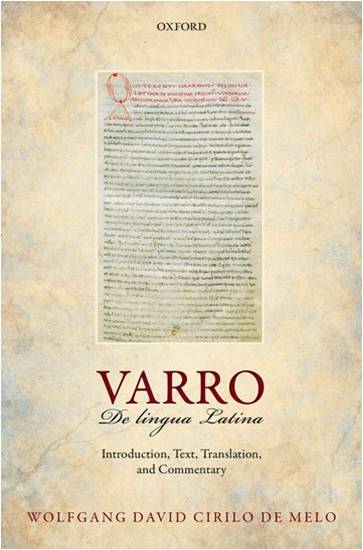
De Mello’s own edition of De Lingua Latina, with Latin text, English translation and extensive commentary, was published earlier this year and details are available at https://global.oup.com/academic/product/varro-de-lingua-latina-9780199659739. As it sells for ₤250, most of us will wait till it is available in a local library. Meanwhile, more on Varro’s career and a list of his lost works is available free of charge at https://en.wikipedia.org/wiki/Marcus_Terentius_Varro.
http://quomododicitur.com/2019/10/21/qdp-ep-150-de-imagine-satis-ridicula/#comments
At the start of the evening, food ordered included gallīnācea cum iūre lentium (chicken daal), spināchia cum cāseō (saag paneer), okrum (okra, `ladies’ fingers), piscis Madrasiānus (fish Madras), carō concīsa cum pīsīs (keema muttor, mincemeat with peas), pisā cum brassicā Pompēiāna (muttor gobi, peas with cauliflower), acētāria (salad), iūs lentium butyrātum (daal makhani) and, of course, orӯza (plain rice) and vīnum rubrum/sanguineum. The problems in translating `mincemeat’ into Latin and the origin of the term brassica Pompēiāna were discussed at length in our meetings in December 2018 (https://linguae.weebly.com/conventus-dec-2018.html) and October 2018 (https://linguae.weebly.com/conventus-oct-2018.html ) respectively.
Eugene brought along his Loeb edition of Marcus Terentius Varro’s Dē Linguā Latīnā , a work which he bought 20 years ago in the hope of finding a Latin grammar written in Latin. Varro’s work is not actually a grammar in the conventional sense but a compilation of observations on etymology, morphology and syntax. Latin words and their history, rather similar, in Eugene’s opinion, to a guidebook highlighting interesting sights in a city. Varro, who lived from 116 – to 27 B.C, was a prolific writer, and, as Pat pointed out, a forerunner of the better-known polymath, Pliny the Elder, but most of his work has not survved other than in fragments quoted by later writers. We do however have the complete text of his treatise on agriculture, and also much of six books out of the twenty-five which originally made up his treatise on his native language.
Among the issuesVarro discusses is the existence of an alternative, rustic pronunciation of words like the name Caecilius, which could be represented by spelling them with `e’ rather than `ae’. This phenomenon, observable from the 2nd. century BC onwards, is taken by most scholars as evidence for a shift in the pronunciation of `ae’ from a diphthong similar to English `I’ to a simple vowel, which by medieval times was written as `e’ – hence spellings like English `edifice’ from Classical Latin aedificium etc.
The passage in question, which concludes with a quote from the 2nd. cent. A,D. satirist, Lucilius, reads: In pluribus verbis A ante E alii ponunt, alii non, ut quod partim dicunt scaeptrum, partim sceptrum, alii Plauti Faeneratricem, alii Feneratricem; sic faenisicia ac fenisicia, ac rustici pappum Mesium, non Maesium, a quo Lucilius scribit: “Cecilius pretor ne rusticus fiat.” (Varro VII.V)
According to Wolfgang de Melo, Oxford’s Professor of Classical Philology, who John was in touch with on this issue a couple of years ago, the monothongisation of `ae’ was completed in Rome itself by the end of the 1st century A.D. Tacitus and Pliny, therefore, would have pronounced `ae’ as `e’, in line with Pat, Eugene, the Catholic Church and many classicists in northern Europe as well as in Italy. However, Professor de Melo argues that it is more practical for scholars to adopt one pronunciation for Latin in general rather than different ones for different authors, and so John, like most Latinists in Britain and the USA (and Fr Ha at Chinese University), will continue to use the diphthongal pronunciation of Cicero’s time, whatever author he is reading.
De Mello’s own edition of De Lingua Latina, with Latin text, English translation and extensive commentary, was published earlier this year and details are available at https://global.oup.com/academic/product/varro-de-lingua-latina-9780199659739. As it sells for ₤250, most of us will wait till it is available in a local library. Meanwhile, more on Varro’s career and a list of his lost works is available free of charge at https://en.wikipedia.org/wiki/Marcus_Terentius_Varro.
For anyone interested in the way in which Latin varied in different regions and between different classes, the standard texts are by James Adams: The regional diversification of Latin, 600 B.C. – A.D.200 (https://www.amazon.com/Regional-Diversification-Latin-200-BC/dp/1107684587) and
Social variation and the Latin language (https://www.amazon.co.uk/Social-Variation-Latin-Language-Adams/dp/131662949X). Adams is also author of The Latin Sexual Vocabulary, which has been mentioned in Circulus meetings before and which is available at https://monoskop.org/images/7/79/Adams_JN_The_Latin_Sexual_Vocabulary.pdf
The Romans’ own approach to teaching their language is explored in Eleanor Dicey’s Learning Latin the Ancient Way ( https://www.amazon.com/Learning-Latin-Ancient-Way-Textbooks/dp/1107474574), of which John has a copy he can lend on request. The core of their method was the use of bilingual dialogues and narratives and Dicey gives a large number of these, with the Greek translation normally found in the originals replaced by English. More recently, the author has also brought out an introductory textbook of her own incorporating some of the ancient and medieval didactic material: Learn Latin from the Romans: A Complete Introductory Course Using Textbooks from the Roman Empire (https://www.amazon.com/Learn-Latin-Romans-Introductory-Textbooks/dp/1316506193/)
Social variation and the Latin language (https://www.amazon.co.uk/Social-Variation-Latin-Language-Adams/dp/131662949X). Adams is also author of The Latin Sexual Vocabulary, which has been mentioned in Circulus meetings before and which is available at https://monoskop.org/images/7/79/Adams_JN_The_Latin_Sexual_Vocabulary.pdf
The Romans’ own approach to teaching their language is explored in Eleanor Dicey’s Learning Latin the Ancient Way ( https://www.amazon.com/Learning-Latin-Ancient-Way-Textbooks/dp/1107474574), of which John has a copy he can lend on request. The core of their method was the use of bilingual dialogues and narratives and Dicey gives a large number of these, with the Greek translation normally found in the originals replaced by English. More recently, the author has also brought out an introductory textbook of her own incorporating some of the ancient and medieval didactic material: Learn Latin from the Romans: A Complete Introductory Course Using Textbooks from the Roman Empire (https://www.amazon.com/Learn-Latin-Romans-Introductory-Textbooks/dp/1316506193/)
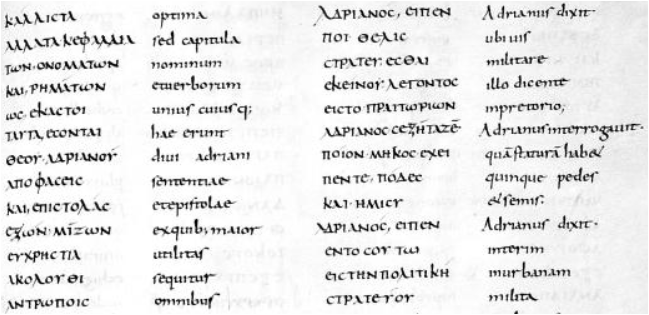
From `The Judgements of Hadrian’ in a 9th century manuscript in Leiden University library
In the above extract (discussed on pages 64-69 in Dicey), the emperor Hadrian is interrogating a man who wants to join the army. The first sentence in the right-hand columns, with modern punctuation added, reads: Ἀδριανòς εῖπεν, «ποι θέλις στρατεύεσθαι;» - Adriānus dīxit “Ubi vis mīlitāre?”
(Hadrian said, “Where do you want to serve?”). Note the spellingt pretorio for classical praetorio in the fourth column but the retention of the older spelling in epistolae in the second.
Confusion in spelling conventions is in facrt a major source of our knowledge of sound changes and another type of error is hypercorrection – in republican time, for example, the Greek loan word σκηνή (skēnē) was regularly spelled scaena, even though there was no diphthong in the original. People were evidently aware that the new, `mistaken’ `e’ pronunciation was reflected in mis-spellings and wrongly assumed that scena should be corrected to scaena. In the 2017 correspondence, de Μello noted this phenomenon perating in English also. He had himself heard kitchen pronounced as kitching’, presumably because people were aware the pronunciation runnin was a mistake for running and some speakers assumed a similar error here.
There was also mention again of the equivalents for `play’ a musical instrument, and after the meeting both Eugene and John looked up various examples. It appears that pulsāre (`strike’) plus the accusative was sometimes also used of stringed instruments, and that ūtī `(use’), personāre (`to sound through and through’, ``to fill with sound’) and resonāre (to resound, echo), used with the ablative, were also found. The verb psallere (`play upon a stringed instrument’), either on its own or with an ablative, is particularly common in the Bible but also occurs in classical authors like Sallust or Aulus Gellius. Particularly as there is in any case a dispute over whether piano should be classed as a string or percussion instrument, we could therefore in neo-Latin say clāvichordium pulsāre (similar to the medival Latin orgānum pulsāre). Though John will probably stick with clāvichordiō cantāre.
We read chapter 19 of Ad Alpēs (see the text below), much of which was about elephants, including Hannibal’s supposed use of rafts to get his across the Rhone during his advance to the Alps. Pat pointed out that there had been a distinct North African elephant species, smaller than the present-day African elephant. According to one article on the web, the last North African elephant was shot by a hunter in 1920 (https://www.smithsonianmag.com/science-nature/the-truth-about-lions-11558237/)
We also looked at the correspondence between John and Jesse (`Magister’) Craft about a small error in one of the latters excellent Minecraft Latin videos: `Odyssea Magistri Craft – 3 (Mare Nostrum)’. This is available at https://www.youtube.com/watch?v=TJ1MF7XR2c4 and past of a large collection in which viewers can choose either Latin or English subtitle. The mistake was the use of accusative mē instead of the correct dative mihi in the sentences Mēne dās pānem and Mēne dās aquam? Jesse promptly corrected mene in the subtitles to mīne (a contraction of mihine). This is not too dissimilar to mēne, which has for the moment to remain in the soundtrack as correction there would entail a complete re-recording.
In the above extract (discussed on pages 64-69 in Dicey), the emperor Hadrian is interrogating a man who wants to join the army. The first sentence in the right-hand columns, with modern punctuation added, reads: Ἀδριανòς εῖπεν, «ποι θέλις στρατεύεσθαι;» - Adriānus dīxit “Ubi vis mīlitāre?”
(Hadrian said, “Where do you want to serve?”). Note the spellingt pretorio for classical praetorio in the fourth column but the retention of the older spelling in epistolae in the second.
Confusion in spelling conventions is in facrt a major source of our knowledge of sound changes and another type of error is hypercorrection – in republican time, for example, the Greek loan word σκηνή (skēnē) was regularly spelled scaena, even though there was no diphthong in the original. People were evidently aware that the new, `mistaken’ `e’ pronunciation was reflected in mis-spellings and wrongly assumed that scena should be corrected to scaena. In the 2017 correspondence, de Μello noted this phenomenon perating in English also. He had himself heard kitchen pronounced as kitching’, presumably because people were aware the pronunciation runnin was a mistake for running and some speakers assumed a similar error here.
There was also mention again of the equivalents for `play’ a musical instrument, and after the meeting both Eugene and John looked up various examples. It appears that pulsāre (`strike’) plus the accusative was sometimes also used of stringed instruments, and that ūtī `(use’), personāre (`to sound through and through’, ``to fill with sound’) and resonāre (to resound, echo), used with the ablative, were also found. The verb psallere (`play upon a stringed instrument’), either on its own or with an ablative, is particularly common in the Bible but also occurs in classical authors like Sallust or Aulus Gellius. Particularly as there is in any case a dispute over whether piano should be classed as a string or percussion instrument, we could therefore in neo-Latin say clāvichordium pulsāre (similar to the medival Latin orgānum pulsāre). Though John will probably stick with clāvichordiō cantāre.
We read chapter 19 of Ad Alpēs (see the text below), much of which was about elephants, including Hannibal’s supposed use of rafts to get his across the Rhone during his advance to the Alps. Pat pointed out that there had been a distinct North African elephant species, smaller than the present-day African elephant. According to one article on the web, the last North African elephant was shot by a hunter in 1920 (https://www.smithsonianmag.com/science-nature/the-truth-about-lions-11558237/)
We also looked at the correspondence between John and Jesse (`Magister’) Craft about a small error in one of the latters excellent Minecraft Latin videos: `Odyssea Magistri Craft – 3 (Mare Nostrum)’. This is available at https://www.youtube.com/watch?v=TJ1MF7XR2c4 and past of a large collection in which viewers can choose either Latin or English subtitle. The mistake was the use of accusative mē instead of the correct dative mihi in the sentences Mēne dās pānem and Mēne dās aquam? Jesse promptly corrected mene in the subtitles to mīne (a contraction of mihine). This is not too dissimilar to mēne, which has for the moment to remain in the soundtrack as correction there would entail a complete re-recording.
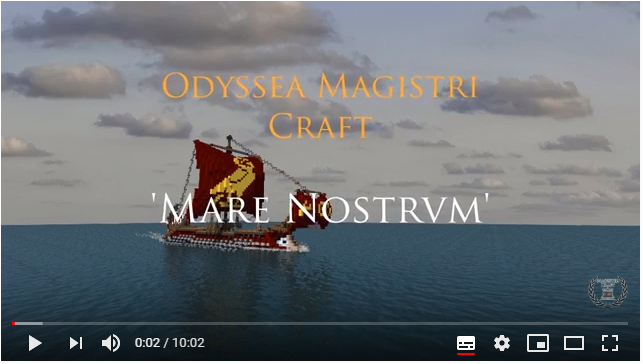
As luck would have it, John later realized that in the email pointing out Jesse’s error he had made several slips of his own and members were invited to identify these as well as explaining the original mistake (see the test of the emails below).
We also discussed the treatment of non-Latin names and the alternative methods of Latinizing them or treating them as indeclinable nouns. Following Biblical precedent, Sam could remain Samuel in every case, or don full Roman dress as Samuel, Samuēlis. Yet another suggestion was that he might cal himself Eduardus (`Teddy’) in memory of the Latvian Order of the Bearslayer, an honour which was bestowed on various Latvians and foreigners between 1919 and 1928. This was more properly known as the Order of Lāčplēsis, the hero of the Latvian national epic (see for further details)
https://en.wikipedia.org/wiki/Order_of_L%C4%81%C4%8Dpl%C4%93sis)
Still on the topic of names, we referred again to the sexist custom under which Roman women were normally called simply by their clan name, in contrast to the praenōmen, nōmen and cognōmen borne by upper-class Roman males – this `Gaius Julius Caesar’, in contrast to his daughter’s plain `Julia’. There is a good account at https://alison-morton.com/2014/08/18/whats-in-a-roman-name/, where author Alison Morton explains that in early times women did in fact have more complex names but by the end of the republic were using just the clan ones. If there was more than one daughter in a household, an ordinal number or an adjective from the family cognomen could be used (e.g. Iūlia Tertia), whilst a wife retained her natal name so would be readily distinguishable from everyone else in the marital home.
We noted the use of in Ad Alpes of Appia via for the trunk road linking Rome and Brundisium. Normal usage would be via Appia in Latin, in line with the tendency for adjectives of quality (as against size or quantity) to follow thir nouns. However, this rule was not invariable so Nutting did not actually make a mistake. In English, of course, the name has to be `Appian Way’.
We also discussed the treatment of non-Latin names and the alternative methods of Latinizing them or treating them as indeclinable nouns. Following Biblical precedent, Sam could remain Samuel in every case, or don full Roman dress as Samuel, Samuēlis. Yet another suggestion was that he might cal himself Eduardus (`Teddy’) in memory of the Latvian Order of the Bearslayer, an honour which was bestowed on various Latvians and foreigners between 1919 and 1928. This was more properly known as the Order of Lāčplēsis, the hero of the Latvian national epic (see for further details)
https://en.wikipedia.org/wiki/Order_of_L%C4%81%C4%8Dpl%C4%93sis)
Still on the topic of names, we referred again to the sexist custom under which Roman women were normally called simply by their clan name, in contrast to the praenōmen, nōmen and cognōmen borne by upper-class Roman males – this `Gaius Julius Caesar’, in contrast to his daughter’s plain `Julia’. There is a good account at https://alison-morton.com/2014/08/18/whats-in-a-roman-name/, where author Alison Morton explains that in early times women did in fact have more complex names but by the end of the republic were using just the clan ones. If there was more than one daughter in a household, an ordinal number or an adjective from the family cognomen could be used (e.g. Iūlia Tertia), whilst a wife retained her natal name so would be readily distinguishable from everyone else in the marital home.
We noted the use of in Ad Alpes of Appia via for the trunk road linking Rome and Brundisium. Normal usage would be via Appia in Latin, in line with the tendency for adjectives of quality (as against size or quantity) to follow thir nouns. However, this rule was not invariable so Nutting did not actually make a mistake. In English, of course, the name has to be `Appian Way’.
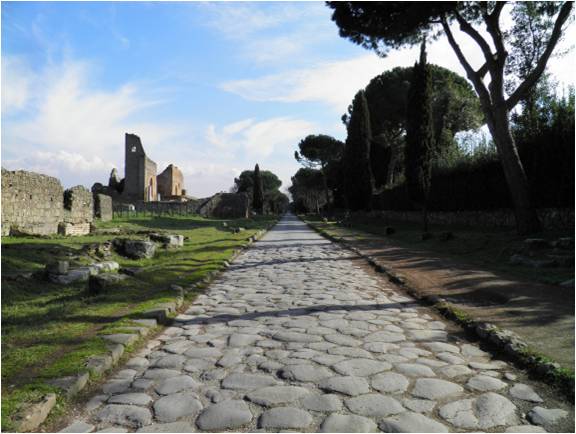
The Appian Way near the Villa di Quintili just south of Rome
https://followinghadrian.com/2013/06/21/wandering-along-the-appian-way-images-from-milestone-i-to-vi/
Finally, Zhang Wei told us about the exhibition of Leonardo Da Vinci manuscripts at City U which will be on until 15 December. Details at https://www.cityu.edu.hk/ceg/exhibitions/daVinci
AD ALPES - CHAPTER XVIII
Māne aliquantum morae factum est, quod ūnus ex equīs claudus esse vidēbātur, aliusque
In-the-morning something of-delay made was because one out-of horses lame to-be seemed and-another
quaerendus erat. Interim Cornēlius cum fīliīs per oppidum vagābātur, ac pater puerīs multa
needing-to-be-sought was meanwhile Cornelius with sons through town was-wandering and father to-boys many-things
nārrāvit dē proeliō ibi commissō, quō Pyrrhus rēx ā Māniō Curiō superātus est.[1]
told about battle there fought in-which Pyrrhus king by Manius Curius defeated was
Cum postrēmō Appiā viā veherentur, Sextō Cornēlia: “Quid, obsecrō, vīdistī,” inquit,
When finally on-Appian Way they-were-travelling to-Sextus Cornelia what please did-you-see said
“dum per oppidum ambulābās?”
while through town you-were-walking
“Nihil mīrandum[2] vīdimus,” inquit Sextus. “Sed quaedam audīvī dē rēge Pyrrhō et
Nothing out-of-the-ordinary we-saw said Sextus but certain-things I-heard about king Pyrrhus and
elephantīs, quōs ille prīmus in Ītaliam trādūxit, quīque vulgō 'bovēs Lūcae' appellābantur,
elephants which he first into Italy brought-across and-which commonly cattle Lucanian were-called
quod eōrum genus ignōtum erat ac bēstiae prīmum in Lūcāniā vīsae sunt.''
Because their species unknown was and the-beasts first in Lucania seen were
At Cornēlia: “Vellem ego quoque tum adfuissem. Nam dē omnis generis ferīs
But Cornelia wish I also then I-had-been-present for about of-every kind wild-animals
libentissimē audiō.”
most-gladly I-hear
“Dē elephantīs,” inquit, Pūblius, “nōn omnia tum commemorāta sunt. Ōlim fābulam
About elephants said Publius not all-things then related were once story
lēgī, quae fortasse vōbīs iūcunda vidēbitur: “In proeliō, quod ad Thapsum[3] commissum est,
I-read which perhaps to-you pleasant will-seem in battle which at Thapsus fought was
virtūs cuiusdam mīlitis legiōnis quīntae maximē ēnituit. Nam cum in sinistrō cornū elephantus
courage of—a-certain soldier of-legion 5th very-greatly was-conspicuous for when on left wing elephant
vulnerātus et dolōre incitātus in lixam inermem impetum fēcisset hominemque sub pede
wounded and by-pain goaded on camp-follower unarmed attack had-made and-man under foot
NOTES
[1] King Pyrrhus of Epirus in western Greece intervened in Italy in 280 B.C. at the request of the Greek city of Tarentum. He defeated the Romans in two major battles but lost so many men that he had to withdraw to Sicily. After his position there also became untenable he sailed back to Italy. The Battle of Beneventum in 275 B.C against Manius Curius Denatus may have been a tactical draw rather than a defeat but lack of resources forced his return home. See https://en.wikipedia.org/wiki/Pyrrhic_War
[2] Literally `to-be-wondered-at’ (gerundive from mīror, mīrārī, mīrātus sum). The gerundive is the one part of a deponent verb which is passive in meaning as well as form.
[3] Thapsus (modern Ras Dimas) is situated on the Tunisian coast SE of Carthage and was the site of Caeasr’s defeat of Republican forces in 46 B.C. after which, Cato the Younger, best-known of his remaining opponents, committed suicide. See https://en.wikipedia.org/wiki/Battle_of_Thapsus and the map in the Digital Atlas of the Roman Empire ( http://dare.ht.lu.se/places/21595.html). The 5th Legion distinguished itself by withstanding an elephant charge at the start of the battle and afterwards wore an elephant badge in commemoration.
prēmeret et necāret, mīles ille sustinēre nōn potuit, quīn sē armātum bēstiae offerret.[1]
Was-pressing and killing soldier that to-refrain not was-able from himself armed to-beast presenting
“Quem postquam elephantus ad sē tēlō īnfēstō venīre ānimadvertit, lixā relictō,
him after elephant towards self with-weapon hostile to-come noticed with-campfollower released
mīlitem circumdedit proboscide, atque altē sustulit. Ille interim cōnstanter sē gessit, ac
soldier surrounded with-trunk and high lifted-up he meanwhile unwaveringly self conducted and
proboscidem, quantum vīribus poterat, gladiō caedébat; nec fīnis fuit, priusquam elephantus,
trunk as-much-as with-strength he-could with-sword continued-cutting nor end was before elephant
dolōre adductus, abiectō mīlite, maximō cum strīdōre ad reliquās bēstiās sē recēpit.”
by-pain driven thrown-aside soldier loudest with shriek to other beasts self took-back
“Mīles ille,” inquit Sextus, “profectō fortissimus erat, quī tantō perīculō sē committeret.
Soldier that said Sextus undoubtedly very-brave was who to-such-great danger self exposed
Nam vīrēs multitūdinis hominum vix cum rōbore ūnīus elephantī sunt[2] comparandae.''
For strength of-crowd of-men scarcely with power of-one elephant is comparable
“Rēs ita sē habet,[3]” inquit, Cornēlius; “atquī interdum elephantī â mīlitibus singulīs
Thing thus itself has said Cornelius and-yet sometimes elephants by soldiers individual
occīsī sunt. Velut dīcitur Hannibal, cum captīvōs Rōmānōs quondam inter sē dīmicāre
killed have-been for-example is-said Hannibal when captives Roman once among selves to-fight
coēgisset, ūnum, quī supererat, elephantō obiēcisse, lībertātem hominī pollicitus, sī bēstiam
he-had-forced one who had-survived to-elephant to-have-exposed freedom to-man having-promised if beast
occīdisset.[4]
he-killed
“Rōmānus sōlus in harēnam prōgressus, magnō Poenōrum dolōre elephantum cōnfēcit,
Roman alone into arena having-advanced to-great of-Carthaginians sorrow elephant finished-off
ac līberātus est. Sed Hannibal, ut apud Plīnium est,[5] bēstiās fāmā huius dīmicātiōnis in
and freed was but Hannibal as in Pliny it-is beasts by-report of-this fight into
cōntemptum Rōmānīs ventūrās esse ratus, equitēs mīsit, quī victōrem abeuntem
contempt among-Romans going-to-come to-be having-thought cavalry sent who victor departing
sequerentur atque occīderent.”
could-follow and kill
“Mihi vix crēdibile vidētur,” inquit, Pūblius, “Hannibalem ita fidem fallere[6] voluisse;
To-me scarcely believable it-seems said Publius Hannibal thus promise to-break to-have-wanted
NOTES
[1] sustinēre nōn potuit, quīn..offeret: literally `was unable to endure that he should not offer himself..
[2] Plural verb in agreement with vīrēs, -ium
[3] Standard idiom for `that is the case’.
[4] Pluperfect subjunctive (literaly `had killed’) is used here representing the future perfect in direct speech.
[5] Pliny the Elder, Naturalis Historia, VIII:18
[6] fidem fallere is literally `to deceive trust’
nam ego eum, etsī Poenus erat, hostem generōsum fuisse semper putāvī.”
for I him although Carthaginian he-was enemy generous to-have-been always have-thought
At Cornēlius: “Fortasse id, quod modo dīxī, falsō trāditum est.” Tum ad Sextum et
But Cornelius perhaps that which just-now I-said falsely handed-down has-been then to Sextus and
Cornêliam conversus: “Vōsnē līberī scītis, quō modō Hannibal elephantōs suōs flūmen
Cornelia having-turned do-you children know in-what way Hannibal elephants his river
Rhodanum trādūxerit?”
Rhône got-across
“Nescīmus,” inquit Cornēlia. “Nōnne vīs hoc quoque nōbīs nārrāre?”
We-don’t-know said Cornelia Don’t you-wish this also to-us to-tell
Tum pater: “Sunt quī trādant elephantōs nandō ad alteram rīpam trānsīsse; sed magis
Then father there-are those-who pass-on elephants by-swimming to other bank to-have-crossed but more
cōnstat ratibus eōs trānsvectōs esse.
is-consensus on-rafts them brought-over to-have-been
“Mīlitēs ratem pedēs ducentōs longam in flūmen porrēctam terrā iniectā ita
Soldiers raft feet two-hundred long into river stretched-out with-earth thrown-on in-such-way
cōnstrāvērunt, ut pontis speciem habēret; tum altera ratis centum pedum, ad trānseundum
covered that of-bridge appearance it-had t hen another raft hundred of-feet for going-across apta, huic coniūncta est. Elephantī prīmī, per stabilem ratem quasi per pontem āctī, in
fit to-this joined was elephants the-first across stable raft as-if over bridge driven into
minōrem sine timōre prōgressī sunt.
smaller-one without fear advanced
“Tum subitō vincula sunt solūta, ac ratis minor aliquot nāvibus āctuāriīs celeriter ad
Then suddenly cables were untied and raft smaller some by-boats swift quickly to
rīpam alteram rapiēbātur. Ibi prīmīs expositīs, elephantī aliī deinde repetītī sunt et
bank other began-to-be-whisked-away there with-first-ones unloaded elephants other then gone-back-for were and
trāductī.
taken-across
“Nihil sānē timēbant bēstiae, dum velut per continentem pontem agēbantur. Cum ratis
of-nothing indeed were-afraid beasts while as-if over a-solid bridge they-were-drivan when raft
minor ab alterā solverētur, tum prīmus erat terror; atque, extrēmīs ab aquā cēdentibus,
smaller from other was-untied then first was fear and with-those-on-edge from water drawing-back
trepidātiōnis tantum ēdēbant, ut in flūmen exciderent quīdam. Hī autem, pondere suō stabilēs,
of-panic so-much they-produced that into river fell-off some these however by-weight own stabilised
vada pedibus quaerēbant, ac postrēmō incolumês in rīpam ulteriōrem ēvāsērunt.”[1]
shallows on-foot began-seeking and finally safely onto bank further they-emerged
NOTE
[1] Although Livy believed this account of the use of rafts, which he found in the Greek historian Polybius, he also mentioned an alternative version according to which an elephant driver goaded one of the animals into following him into the river and the rest then followed by herd instinct, all then swimming across, aided by a favourable current.. Both stories are plausible because elephants are in fact naturally good swimmers but do also become uneasy if they realise they are on a floating platform. The story of simply swimming across is, however, more likely because, with reports of a Roman army advancing up the Rhône towards him, Hannibal is unlikely to have had time for elaborate raft construction. In addition, if elephants did have to be transported in this way foliage had to be put around the edges to prevent them realising they are surrounded by water. Tthough the Carthaginians, with ample experience of elephants, would have known this, Polybius and Livy represent them as only covering the rafts with earth. It is possible, therefore, that Polybius transferred the raft story fron another setting because he accepted Aristotle’s erroneous belief that elephants could not swim well; Polybius supposed accordingly that the animals which fell overboard walked along the bed of the rive using their trunks as snorkels. See S. O'Bryhim, `Hannibal's Elephants and the Crossing of the Rhône’ Classical Quarterly 41 (1):121-125 (1991), available at https://www.jstor.org/stable/639029
“Vērumnē est,” inquit, Pūblius, “elephantōs mūrēs[1] aut ōdisse aut timēre?”
True-? is-it said Publius elephants mice either to-hate or fear
“Ita vērō,” inquit Cornēlius. “In Indiā autem et Āfricā sunt mōnstra, quae nōn sine causā
Thus indeed said Corneliu s in India moreover and Africa are monsters which not without cause
ab eīs metuuntur; nam ibi nāscuntur serpentēs tantae magnitūdinis, ut facile elephantōs
by them are-feared for there are-born serpents of-such-great size that easily elephants
orbibus suīs obligent. Interdum et elephantus et serpēns simul pereunt, cum elephantus
in-coils their they-bind sometimes both elephant and serpent at-same-time perish since elephant
corruēns pondere suō serpentem ēlīdat.'
collpasing with-weight its-own serpent crushes
“Vāh!” inquit Cornēlia. “Rem audītū quam foedam!”
Waah said Cornelia thing to-hear how disgusting
At Pūblius: “Ego quidem mihi videor recordārī ā quibusdam prō certō scrīptum esse
But Publius I indeed to-myself seem to-recall by certain—people as certain written to-have-been
serpentēs in Indiā tantam ad magnitūdinem pervenīre, ut solidōs hauriant cervōs taurōsque.
serpents in India such-great to size to- reach that whole they-swallow deer and-bulls
Atque omnibus nōtum est, bellō prīmō Pūnicō ad flūmen Bagradam ā Rēgulō imperātōre
And to-all known it-is in-war first Punic at river Bagradas by Regulus general
serpentem centum vīgintī pedēs longam ballistīs expugnātam esse.”[2]
serpent hundred twenty feet long with-siege-engines overcome to-have-been
NOTES
[1] The nouns elephantōs and mūrēs are both accusative but word order makes it clear that elephantōs is subject of the accusative-and-infinitive clause.
[2] During the First Punic War (264-241 B.C.), which ended with Rome wresting control of Sicily from Carthage, Marcus Attilius Regulus invaded Africa, capturing many towns and defeating the Carthaginians at Adys in 256 B.C.. They sued for peace but Regulus’s proposed terms were so harsh that they decided to fight on. The Carthaginians then defeated and captured Regulus at the Bagradas River (see map on page 45). The giant snake incident took place just before the battle and is described in many ancient sources, which include the claim that the animal’s skin was shipped back to Rome and kept in a temple until it was lost in 133 B.C. The most detailed account by a historian is probably the one in Orosius’s Historia contra Paganos, composed in the early 5th century A.D. He may have relied on the lost 18th book of Livy and the considerable details provided of the snake’s anatomy suggests that, though exaggerated, the story is based on a real encounter with a python. These are not now found north of the Sahara but may have had a wider range in antiquity. See the discussions by Joshua Hall (`Regulus and the Bagradas dragon’, Ancient History Magazine, June 2018, https://www.ancientworldmagazine.com/articles/regulus-bagradas-dragon/) and Richard B. Stothers
( `Ancient Scientific Basis of the “Great Serpent” from Historical Evidence`’ Isis Vol. 95, No. 2 (June 2004), pp. 220-238 https://www.jstor.org/stable/10.1086/426195 )
“Dēsine, obsecrō,” inquit, Cornēlia. “Sī tālia nārrātūrus es, ego hāc in raedā nōn diūtius
Stop I-beg said Cornelia if such-things going-to-tell you-are I this in wagon not longer
morābor.”
will-stay
“Quiētō es animó,” inquit frāter; “nam fīnem iam fēcī.” Tum Cornēliō: “Quod ad
With-quiet be mind said brother for end already I-have-made then to-Cornelius which to
oppidum, pater, iam tendimus?”
town father now we-are-heading
Ac Cornēlius: “Caudium brevī adībimus; et spērō hodiē nōs etiam Capuam usque iter
And Cornelius Caudium soon we-will-reach and I-hope today us also Capua as-far-as journey
facere posse.”
to-make to-be-able
“Nōnne Samnītēs,” inquit, Pūblius, “clādem maximam in hīs regiōnibus populō
Didn’t Samnites said Publius disaster very-grea t in these regions on-people
Rōmānō, ōlim intulērunt?” “Rēctē quaeris,” inquit Cornēlius; “nam haud longē absunt
Roman once inflict rightly you-ask said Corneliu s for not far are-away
Furculae Caudīnae, ubi exercitus Rōmānus sub iugum īre coāctus est.''
Forks Caudine where army Roman under yoke to-go forced was
“Quid est, quod ā tē audiō?” inquit Sextus. “An[1] nostrī militēs umquam tantā
What is-it that from you I-hear said Sextus [Qu] our soldiers ever by-so-great
ignōminiā adfectī sunt?”
humiliation affected were
“Vellem id vērē negārī posse,” inquit, pater. “Sed cōnfitendum est nōn tum sōlum tāle
I-would-like it truly to-be-denied to-be-able said father but necessary-to-confess it-is not then only such
dēdecus admissum esse. Velut apud Horātium Flaccum, ille Rēgulus, dē quō modo audīvistis,
disgrace suffered to-have-been for-example in Horace Flaccus that Regulus about whom just-now you-heard
cum ex Āfricā Rōmam revertisset:
when from Africa to-Rome he-had-returned
NOTES
[1] An is sometimes used as a marker at the start of a question though more often used with the meaning `or’ between two alternatives (e.g. Esne Graecus an Rōmānus?).
“’Signa ego Pūnicīs
Standards I to-Punic
Adfixa dēlūbrīs et arma,
Fixed temples and weapons
Mīlitibus sine caede,' dīxit,
From-soldiers without slaughter said
‘Ēreptā vīdī; vīdī ego cīvium
Snatched-away I-have-seen I-have-seen of-citizens
Retorta tergō bracchia līberō.'” [1]
Tied-behind back arms for-one-free [born]
“Haec certē foedissima sunt,” inquit Sextus; “sed, sī tibi nōn est molestum, dē proeliō
These-things certainly very-digraceful are said Sextus but if to-you not is troublesome about battle
audiāmus, quod in hīs locīs commissum est.”
let-us-hear which in these places fought was
At Cornēlius: “Quādam in convalle undique angustiīs et collibus clausā, Rōmānī, in
But Cornelius a-certain in valley on-all-sides by-defiles and hills enclosed Romans in
īnsidiās dēlātī, omnibus ex partibus ab hostibus circumventī sunt. Quārē, cum nē in virtūte
ambush brought all from sides by enemies surrounded were thus since not in courage
quidem spēs ūlla salūtis esset, nostrī summam ad dēspērātiōnem pervênêrunt. Tum hostēs sē
even hope any of-safety was our-men gretest to desperation reached then enemy themselves
Rōmānōs, sub iugum missōs, cum singulīs vestīmentīs incolumēs abīre passūrōs pollicitī sunt.
Romans under yoke sent with one-each garment safe to-leave going-to-allow promised
“Condiciōne acceptā, prīmī prōgrediēbantur cōnsulēs sēminūdī, deinde cēterī, cum
With-condition accepted first began-moving-forward consuls half-naked then the-rest while
interim circumstābant hostēs exprōbrantēs atque ēlūdentés. Quīn etiam gladiī sunt dēstrictī, ac
meanwhile were-standing-round enemy mocking and jeering indeed also swords were drawn and
Rōmānī aut vulnerātī aut occīsī sunt, quōrum vultūs victōrēs offenderant.[2]
Romans either wounded or killed were whose expressions victors had-offended
“Nostrī, cum omnēs sub iugum missī essent, etsī ante noctem Capuam pervenīre
Our -men when all uder yoke sent had-beeen although before night Capua to-reach
NOTES
[1] From Odes III.5 in which Horace praises Regulus for preferring a painful death to dishonour, The quotation combines the last two and a half lines of one Alcaic stanza with the first two of the next, so the pattern is – u u – u – / – – u – – – u – – /– u u – u u – u – –/ – – u – – : – u u – u – / – – u – – : – u u – u –/ The translation at https://www.poetryintranslation.com/PITBR/Latin/HoraceOdesBkIII.php
attempts to reproduce the meter and a musical performance of the whole poem can be heard at https://www.youtube.com/watch?v=aawIx7nTtiU Roman legend maintained that Regulus was sent back to Rome by the Carthaginians after promising to try to negotiate a peace agreement and to come back if he failed. Instead he supposedly urged his countrymen to continue the war, then returned to Carthage and death under torture to avoid Rome’s being punished by the gods for violating a solemn promise. In fact Regulus probably died shortly after his capture at Bagradas, either from natural causes or more likely by crucifixion. See Gaius Stern’s discussion at https://www.academia.edu/25815545/The_Tortured_Tale_of_Marcus_Atilius_Regulus_the_Roman_Hero_that_Never_Was
[2] See page 49 for this style of ritual humiliation of a defeated enemy as imagined by a 19th century painter.
poterant, dē fidē sociōrum incertī, oppidum adīre nōn ausī sunt, ac prope viam passim humī
were-able about loyalty of-allies uncertain town to-approavh not dared and near road everywhere on-ground
corpora prōstrāvērunt. Quod ubi Capuam dēlātum est, oppidānī, commeātū benignē missō,
bodies had-laid-down which-thing when to-Capua was-reported townsmen with-supplies kindly sent
summā cōmitātē Rōmānōs hospitiō recēpērunt.
with-greatest friendliness Romans with-hospitality received
“Interim Rōmae maestitia summa erat; quō cum cōnsulēs vīctī redīssent, senātū vocātō,
Meanwhile at-Rome sorrow greatest was there when consuls defeated had-returned with-senate called
dēcrētum est ut Samnītibus nūntiārētur irritam esse pācem ā cōnsulibus cōnfirmātam, quod
decreed it-was that to-Samnites it-be-announced void to-be peace by consuls confirmed because
iniussū populī facta esset. Nē quis autem dīcere posset Rōmānōs fidem fefellisse, senātus
without-order of-people made had-been lest anyone however say could Romans promise broke senate
praetereā dēcrēvit ut cōnsulēs, quī suō arbitriō pācem fēcerant, vīnctī hostibus trāderentur.”
besides decreed that sonsuls who by-own decision peace had-made bound to-enemy should-be-handed
“Nōnne cōnsulēs id recūsāvērunt?” inquit Sextus. “Nam tālēs captīvōs omnī cruciātū
Didn’t consuls that refuse said Sextus for such prisoners with-every torture
necāre putō hostibus licuisse.”
to-kill I-think to-enemy to-have-been-permitted
At pater: “Immō alter ex cōnsulibus id ipse vehementer suāsit, rem pūblicam ita omnī
But father on-the-contrary one out-of consuls this himself forcefully urged state thus from-all
religiōne līberātam ratus, sī eī, quī pācem illam fēcerant, hostibus dēditi essent.
religious-obligation freed having-thought if those who peace that had-made to-enemy surrendered had-been
“Itaque cōnsulēs sine morā magistrātū sē abdicāvērunt, ac Caudium sunt dēductī;
And-so consuls without delay from-magistracy themselves removed and to-Caudium were taken
cumque ad portam urbis perventum esset, veste dētractā manūs eīs post tergum retortae sunt.
and-when to gate of-city reached had-been with-clothing pulled-off hands for-them behind back tied were
“Ubi ad tribūnal imperātōris hostium vēnērunt Rōmānī, atque ante eum stābant
When to tribunal of-commander of-enemy came Romans and before him were-standing
cōnsulēs vīnctī, ille īrā incēnsus negāvit rem ita compōnī posse, omnēsque Rōmam dīmīsit.
consuls tied-up he with-anger inflamed denied matter thus to-be-settled to-be-able and-all to-Rome sent-off
Iūris haud perītus, scīlicet sēcum male āctum esse exīstimāvit; et paulō post bellum ācriter
in-law not expert to-be-sure with-himself badly done to-have-been he-reckoned and a-little later war fiercely
renovātum est.”
renewed was
Ut haec dicta sunt, Stasimus in oppidum Caudium praemissus est, ut quaereret
When these-things said were Stasimus into town Caudium sent-ahead was so he-could-seek
dēversōrium, ubi viātōrēs edendō vīrēs reficerent, priusquam Capuam inciperent iter tendere
inn where travellers by-eating strength could-replenish before to-Capua they-started journey to-make
CORRESPONDENCE WITH MAGISTER CRAFT
To Jesse Craft 7/9/19 (errors for correction shown in red)
Salve, Jesse
Mense Iunio de quibusdam erroribus minimi moment in pelliculis tuis optimis inter nos communicabamus. Heri cum discipulo tertiam partem operis tui c.t, `Odyssea 3’ spectans, animadverti duas sententias quas puto esse corrigendas. Nonne pro `Mene aquam/panem das’ dicendum est `Mihine aquam/panem das?’ Vel `Mihi aquam/panem da, quaeso’?
Textus epistulae quam astate misi iam amissus est, itaque non sum certus me horum sententiarum mentionem non fecisse. Si me memoria senilis revere fefalilt, veniam posco.
Optime vale
From Jesse 7/9/19
Eheu! Est dedecori mihi. Gratias plurimas tibi ago quod hoc, vel, haec invenisti. Nescio quomodo possibile sit quia ego et Lucius Ranieri hanc partem et perlegimus et recitavimus sed nullum corrigendum vidimus! Bene se habet quia nunc statim muto librum et postea subtitulos pelliculae. Gratias iterum tibi ago!
Response: Libenter! Ego quoque valde miror tot errores in scriptis meis inveniri,
___ nōmen / prōnōmen cāsū nominātīvō / accūsātīvō / genitīvō / datīvō .ablātīvō esse dēbet
The noun / pronoun_______ should be in the nominative / accusative …
Prō X scrībendum erat Y
Instead of X, Y should have been written
Answers:
1.`mē’ prōnōmen cāsū datīvō esse dēbet
2.. Prō `moment’ scribendum erat `momenti’
3. Prō `asatate’ scribendum erat `aestate’
4. Prō `revere fefalilt’ scribendum erat `revera fefallit’
https://followinghadrian.com/2013/06/21/wandering-along-the-appian-way-images-from-milestone-i-to-vi/
Finally, Zhang Wei told us about the exhibition of Leonardo Da Vinci manuscripts at City U which will be on until 15 December. Details at https://www.cityu.edu.hk/ceg/exhibitions/daVinci
AD ALPES - CHAPTER XVIII
Māne aliquantum morae factum est, quod ūnus ex equīs claudus esse vidēbātur, aliusque
In-the-morning something of-delay made was because one out-of horses lame to-be seemed and-another
quaerendus erat. Interim Cornēlius cum fīliīs per oppidum vagābātur, ac pater puerīs multa
needing-to-be-sought was meanwhile Cornelius with sons through town was-wandering and father to-boys many-things
nārrāvit dē proeliō ibi commissō, quō Pyrrhus rēx ā Māniō Curiō superātus est.[1]
told about battle there fought in-which Pyrrhus king by Manius Curius defeated was
Cum postrēmō Appiā viā veherentur, Sextō Cornēlia: “Quid, obsecrō, vīdistī,” inquit,
When finally on-Appian Way they-were-travelling to-Sextus Cornelia what please did-you-see said
“dum per oppidum ambulābās?”
while through town you-were-walking
“Nihil mīrandum[2] vīdimus,” inquit Sextus. “Sed quaedam audīvī dē rēge Pyrrhō et
Nothing out-of-the-ordinary we-saw said Sextus but certain-things I-heard about king Pyrrhus and
elephantīs, quōs ille prīmus in Ītaliam trādūxit, quīque vulgō 'bovēs Lūcae' appellābantur,
elephants which he first into Italy brought-across and-which commonly cattle Lucanian were-called
quod eōrum genus ignōtum erat ac bēstiae prīmum in Lūcāniā vīsae sunt.''
Because their species unknown was and the-beasts first in Lucania seen were
At Cornēlia: “Vellem ego quoque tum adfuissem. Nam dē omnis generis ferīs
But Cornelia wish I also then I-had-been-present for about of-every kind wild-animals
libentissimē audiō.”
most-gladly I-hear
“Dē elephantīs,” inquit, Pūblius, “nōn omnia tum commemorāta sunt. Ōlim fābulam
About elephants said Publius not all-things then related were once story
lēgī, quae fortasse vōbīs iūcunda vidēbitur: “In proeliō, quod ad Thapsum[3] commissum est,
I-read which perhaps to-you pleasant will-seem in battle which at Thapsus fought was
virtūs cuiusdam mīlitis legiōnis quīntae maximē ēnituit. Nam cum in sinistrō cornū elephantus
courage of—a-certain soldier of-legion 5th very-greatly was-conspicuous for when on left wing elephant
vulnerātus et dolōre incitātus in lixam inermem impetum fēcisset hominemque sub pede
wounded and by-pain goaded on camp-follower unarmed attack had-made and-man under foot
NOTES
[1] King Pyrrhus of Epirus in western Greece intervened in Italy in 280 B.C. at the request of the Greek city of Tarentum. He defeated the Romans in two major battles but lost so many men that he had to withdraw to Sicily. After his position there also became untenable he sailed back to Italy. The Battle of Beneventum in 275 B.C against Manius Curius Denatus may have been a tactical draw rather than a defeat but lack of resources forced his return home. See https://en.wikipedia.org/wiki/Pyrrhic_War
[2] Literally `to-be-wondered-at’ (gerundive from mīror, mīrārī, mīrātus sum). The gerundive is the one part of a deponent verb which is passive in meaning as well as form.
[3] Thapsus (modern Ras Dimas) is situated on the Tunisian coast SE of Carthage and was the site of Caeasr’s defeat of Republican forces in 46 B.C. after which, Cato the Younger, best-known of his remaining opponents, committed suicide. See https://en.wikipedia.org/wiki/Battle_of_Thapsus and the map in the Digital Atlas of the Roman Empire ( http://dare.ht.lu.se/places/21595.html). The 5th Legion distinguished itself by withstanding an elephant charge at the start of the battle and afterwards wore an elephant badge in commemoration.
prēmeret et necāret, mīles ille sustinēre nōn potuit, quīn sē armātum bēstiae offerret.[1]
Was-pressing and killing soldier that to-refrain not was-able from himself armed to-beast presenting
“Quem postquam elephantus ad sē tēlō īnfēstō venīre ānimadvertit, lixā relictō,
him after elephant towards self with-weapon hostile to-come noticed with-campfollower released
mīlitem circumdedit proboscide, atque altē sustulit. Ille interim cōnstanter sē gessit, ac
soldier surrounded with-trunk and high lifted-up he meanwhile unwaveringly self conducted and
proboscidem, quantum vīribus poterat, gladiō caedébat; nec fīnis fuit, priusquam elephantus,
trunk as-much-as with-strength he-could with-sword continued-cutting nor end was before elephant
dolōre adductus, abiectō mīlite, maximō cum strīdōre ad reliquās bēstiās sē recēpit.”
by-pain driven thrown-aside soldier loudest with shriek to other beasts self took-back
“Mīles ille,” inquit Sextus, “profectō fortissimus erat, quī tantō perīculō sē committeret.
Soldier that said Sextus undoubtedly very-brave was who to-such-great danger self exposed
Nam vīrēs multitūdinis hominum vix cum rōbore ūnīus elephantī sunt[2] comparandae.''
For strength of-crowd of-men scarcely with power of-one elephant is comparable
“Rēs ita sē habet,[3]” inquit, Cornēlius; “atquī interdum elephantī â mīlitibus singulīs
Thing thus itself has said Cornelius and-yet sometimes elephants by soldiers individual
occīsī sunt. Velut dīcitur Hannibal, cum captīvōs Rōmānōs quondam inter sē dīmicāre
killed have-been for-example is-said Hannibal when captives Roman once among selves to-fight
coēgisset, ūnum, quī supererat, elephantō obiēcisse, lībertātem hominī pollicitus, sī bēstiam
he-had-forced one who had-survived to-elephant to-have-exposed freedom to-man having-promised if beast
occīdisset.[4]
he-killed
“Rōmānus sōlus in harēnam prōgressus, magnō Poenōrum dolōre elephantum cōnfēcit,
Roman alone into arena having-advanced to-great of-Carthaginians sorrow elephant finished-off
ac līberātus est. Sed Hannibal, ut apud Plīnium est,[5] bēstiās fāmā huius dīmicātiōnis in
and freed was but Hannibal as in Pliny it-is beasts by-report of-this fight into
cōntemptum Rōmānīs ventūrās esse ratus, equitēs mīsit, quī victōrem abeuntem
contempt among-Romans going-to-come to-be having-thought cavalry sent who victor departing
sequerentur atque occīderent.”
could-follow and kill
“Mihi vix crēdibile vidētur,” inquit, Pūblius, “Hannibalem ita fidem fallere[6] voluisse;
To-me scarcely believable it-seems said Publius Hannibal thus promise to-break to-have-wanted
NOTES
[1] sustinēre nōn potuit, quīn..offeret: literally `was unable to endure that he should not offer himself..
[2] Plural verb in agreement with vīrēs, -ium
[3] Standard idiom for `that is the case’.
[4] Pluperfect subjunctive (literaly `had killed’) is used here representing the future perfect in direct speech.
[5] Pliny the Elder, Naturalis Historia, VIII:18
[6] fidem fallere is literally `to deceive trust’
nam ego eum, etsī Poenus erat, hostem generōsum fuisse semper putāvī.”
for I him although Carthaginian he-was enemy generous to-have-been always have-thought
At Cornēlius: “Fortasse id, quod modo dīxī, falsō trāditum est.” Tum ad Sextum et
But Cornelius perhaps that which just-now I-said falsely handed-down has-been then to Sextus and
Cornêliam conversus: “Vōsnē līberī scītis, quō modō Hannibal elephantōs suōs flūmen
Cornelia having-turned do-you children know in-what way Hannibal elephants his river
Rhodanum trādūxerit?”
Rhône got-across
“Nescīmus,” inquit Cornēlia. “Nōnne vīs hoc quoque nōbīs nārrāre?”
We-don’t-know said Cornelia Don’t you-wish this also to-us to-tell
Tum pater: “Sunt quī trādant elephantōs nandō ad alteram rīpam trānsīsse; sed magis
Then father there-are those-who pass-on elephants by-swimming to other bank to-have-crossed but more
cōnstat ratibus eōs trānsvectōs esse.
is-consensus on-rafts them brought-over to-have-been
“Mīlitēs ratem pedēs ducentōs longam in flūmen porrēctam terrā iniectā ita
Soldiers raft feet two-hundred long into river stretched-out with-earth thrown-on in-such-way
cōnstrāvērunt, ut pontis speciem habēret; tum altera ratis centum pedum, ad trānseundum
covered that of-bridge appearance it-had t hen another raft hundred of-feet for going-across apta, huic coniūncta est. Elephantī prīmī, per stabilem ratem quasi per pontem āctī, in
fit to-this joined was elephants the-first across stable raft as-if over bridge driven into
minōrem sine timōre prōgressī sunt.
smaller-one without fear advanced
“Tum subitō vincula sunt solūta, ac ratis minor aliquot nāvibus āctuāriīs celeriter ad
Then suddenly cables were untied and raft smaller some by-boats swift quickly to
rīpam alteram rapiēbātur. Ibi prīmīs expositīs, elephantī aliī deinde repetītī sunt et
bank other began-to-be-whisked-away there with-first-ones unloaded elephants other then gone-back-for were and
trāductī.
taken-across
“Nihil sānē timēbant bēstiae, dum velut per continentem pontem agēbantur. Cum ratis
of-nothing indeed were-afraid beasts while as-if over a-solid bridge they-were-drivan when raft
minor ab alterā solverētur, tum prīmus erat terror; atque, extrēmīs ab aquā cēdentibus,
smaller from other was-untied then first was fear and with-those-on-edge from water drawing-back
trepidātiōnis tantum ēdēbant, ut in flūmen exciderent quīdam. Hī autem, pondere suō stabilēs,
of-panic so-much they-produced that into river fell-off some these however by-weight own stabilised
vada pedibus quaerēbant, ac postrēmō incolumês in rīpam ulteriōrem ēvāsērunt.”[1]
shallows on-foot began-seeking and finally safely onto bank further they-emerged
NOTE
[1] Although Livy believed this account of the use of rafts, which he found in the Greek historian Polybius, he also mentioned an alternative version according to which an elephant driver goaded one of the animals into following him into the river and the rest then followed by herd instinct, all then swimming across, aided by a favourable current.. Both stories are plausible because elephants are in fact naturally good swimmers but do also become uneasy if they realise they are on a floating platform. The story of simply swimming across is, however, more likely because, with reports of a Roman army advancing up the Rhône towards him, Hannibal is unlikely to have had time for elaborate raft construction. In addition, if elephants did have to be transported in this way foliage had to be put around the edges to prevent them realising they are surrounded by water. Tthough the Carthaginians, with ample experience of elephants, would have known this, Polybius and Livy represent them as only covering the rafts with earth. It is possible, therefore, that Polybius transferred the raft story fron another setting because he accepted Aristotle’s erroneous belief that elephants could not swim well; Polybius supposed accordingly that the animals which fell overboard walked along the bed of the rive using their trunks as snorkels. See S. O'Bryhim, `Hannibal's Elephants and the Crossing of the Rhône’ Classical Quarterly 41 (1):121-125 (1991), available at https://www.jstor.org/stable/639029
“Vērumnē est,” inquit, Pūblius, “elephantōs mūrēs[1] aut ōdisse aut timēre?”
True-? is-it said Publius elephants mice either to-hate or fear
“Ita vērō,” inquit Cornēlius. “In Indiā autem et Āfricā sunt mōnstra, quae nōn sine causā
Thus indeed said Corneliu s in India moreover and Africa are monsters which not without cause
ab eīs metuuntur; nam ibi nāscuntur serpentēs tantae magnitūdinis, ut facile elephantōs
by them are-feared for there are-born serpents of-such-great size that easily elephants
orbibus suīs obligent. Interdum et elephantus et serpēns simul pereunt, cum elephantus
in-coils their they-bind sometimes both elephant and serpent at-same-time perish since elephant
corruēns pondere suō serpentem ēlīdat.'
collpasing with-weight its-own serpent crushes
“Vāh!” inquit Cornēlia. “Rem audītū quam foedam!”
Waah said Cornelia thing to-hear how disgusting
At Pūblius: “Ego quidem mihi videor recordārī ā quibusdam prō certō scrīptum esse
But Publius I indeed to-myself seem to-recall by certain—people as certain written to-have-been
serpentēs in Indiā tantam ad magnitūdinem pervenīre, ut solidōs hauriant cervōs taurōsque.
serpents in India such-great to size to- reach that whole they-swallow deer and-bulls
Atque omnibus nōtum est, bellō prīmō Pūnicō ad flūmen Bagradam ā Rēgulō imperātōre
And to-all known it-is in-war first Punic at river Bagradas by Regulus general
serpentem centum vīgintī pedēs longam ballistīs expugnātam esse.”[2]
serpent hundred twenty feet long with-siege-engines overcome to-have-been
NOTES
[1] The nouns elephantōs and mūrēs are both accusative but word order makes it clear that elephantōs is subject of the accusative-and-infinitive clause.
[2] During the First Punic War (264-241 B.C.), which ended with Rome wresting control of Sicily from Carthage, Marcus Attilius Regulus invaded Africa, capturing many towns and defeating the Carthaginians at Adys in 256 B.C.. They sued for peace but Regulus’s proposed terms were so harsh that they decided to fight on. The Carthaginians then defeated and captured Regulus at the Bagradas River (see map on page 45). The giant snake incident took place just before the battle and is described in many ancient sources, which include the claim that the animal’s skin was shipped back to Rome and kept in a temple until it was lost in 133 B.C. The most detailed account by a historian is probably the one in Orosius’s Historia contra Paganos, composed in the early 5th century A.D. He may have relied on the lost 18th book of Livy and the considerable details provided of the snake’s anatomy suggests that, though exaggerated, the story is based on a real encounter with a python. These are not now found north of the Sahara but may have had a wider range in antiquity. See the discussions by Joshua Hall (`Regulus and the Bagradas dragon’, Ancient History Magazine, June 2018, https://www.ancientworldmagazine.com/articles/regulus-bagradas-dragon/) and Richard B. Stothers
( `Ancient Scientific Basis of the “Great Serpent” from Historical Evidence`’ Isis Vol. 95, No. 2 (June 2004), pp. 220-238 https://www.jstor.org/stable/10.1086/426195 )
“Dēsine, obsecrō,” inquit, Cornēlia. “Sī tālia nārrātūrus es, ego hāc in raedā nōn diūtius
Stop I-beg said Cornelia if such-things going-to-tell you-are I this in wagon not longer
morābor.”
will-stay
“Quiētō es animó,” inquit frāter; “nam fīnem iam fēcī.” Tum Cornēliō: “Quod ad
With-quiet be mind said brother for end already I-have-made then to-Cornelius which to
oppidum, pater, iam tendimus?”
town father now we-are-heading
Ac Cornēlius: “Caudium brevī adībimus; et spērō hodiē nōs etiam Capuam usque iter
And Cornelius Caudium soon we-will-reach and I-hope today us also Capua as-far-as journey
facere posse.”
to-make to-be-able
“Nōnne Samnītēs,” inquit, Pūblius, “clādem maximam in hīs regiōnibus populō
Didn’t Samnites said Publius disaster very-grea t in these regions on-people
Rōmānō, ōlim intulērunt?” “Rēctē quaeris,” inquit Cornēlius; “nam haud longē absunt
Roman once inflict rightly you-ask said Corneliu s for not far are-away
Furculae Caudīnae, ubi exercitus Rōmānus sub iugum īre coāctus est.''
Forks Caudine where army Roman under yoke to-go forced was
“Quid est, quod ā tē audiō?” inquit Sextus. “An[1] nostrī militēs umquam tantā
What is-it that from you I-hear said Sextus [Qu] our soldiers ever by-so-great
ignōminiā adfectī sunt?”
humiliation affected were
“Vellem id vērē negārī posse,” inquit, pater. “Sed cōnfitendum est nōn tum sōlum tāle
I-would-like it truly to-be-denied to-be-able said father but necessary-to-confess it-is not then only such
dēdecus admissum esse. Velut apud Horātium Flaccum, ille Rēgulus, dē quō modo audīvistis,
disgrace suffered to-have-been for-example in Horace Flaccus that Regulus about whom just-now you-heard
cum ex Āfricā Rōmam revertisset:
when from Africa to-Rome he-had-returned
NOTES
[1] An is sometimes used as a marker at the start of a question though more often used with the meaning `or’ between two alternatives (e.g. Esne Graecus an Rōmānus?).
“’Signa ego Pūnicīs
Standards I to-Punic
Adfixa dēlūbrīs et arma,
Fixed temples and weapons
Mīlitibus sine caede,' dīxit,
From-soldiers without slaughter said
‘Ēreptā vīdī; vīdī ego cīvium
Snatched-away I-have-seen I-have-seen of-citizens
Retorta tergō bracchia līberō.'” [1]
Tied-behind back arms for-one-free [born]
“Haec certē foedissima sunt,” inquit Sextus; “sed, sī tibi nōn est molestum, dē proeliō
These-things certainly very-digraceful are said Sextus but if to-you not is troublesome about battle
audiāmus, quod in hīs locīs commissum est.”
let-us-hear which in these places fought was
At Cornēlius: “Quādam in convalle undique angustiīs et collibus clausā, Rōmānī, in
But Cornelius a-certain in valley on-all-sides by-defiles and hills enclosed Romans in
īnsidiās dēlātī, omnibus ex partibus ab hostibus circumventī sunt. Quārē, cum nē in virtūte
ambush brought all from sides by enemies surrounded were thus since not in courage
quidem spēs ūlla salūtis esset, nostrī summam ad dēspērātiōnem pervênêrunt. Tum hostēs sē
even hope any of-safety was our-men gretest to desperation reached then enemy themselves
Rōmānōs, sub iugum missōs, cum singulīs vestīmentīs incolumēs abīre passūrōs pollicitī sunt.
Romans under yoke sent with one-each garment safe to-leave going-to-allow promised
“Condiciōne acceptā, prīmī prōgrediēbantur cōnsulēs sēminūdī, deinde cēterī, cum
With-condition accepted first began-moving-forward consuls half-naked then the-rest while
interim circumstābant hostēs exprōbrantēs atque ēlūdentés. Quīn etiam gladiī sunt dēstrictī, ac
meanwhile were-standing-round enemy mocking and jeering indeed also swords were drawn and
Rōmānī aut vulnerātī aut occīsī sunt, quōrum vultūs victōrēs offenderant.[2]
Romans either wounded or killed were whose expressions victors had-offended
“Nostrī, cum omnēs sub iugum missī essent, etsī ante noctem Capuam pervenīre
Our -men when all uder yoke sent had-beeen although before night Capua to-reach
NOTES
[1] From Odes III.5 in which Horace praises Regulus for preferring a painful death to dishonour, The quotation combines the last two and a half lines of one Alcaic stanza with the first two of the next, so the pattern is – u u – u – / – – u – – – u – – /– u u – u u – u – –/ – – u – – : – u u – u – / – – u – – : – u u – u –/ The translation at https://www.poetryintranslation.com/PITBR/Latin/HoraceOdesBkIII.php
attempts to reproduce the meter and a musical performance of the whole poem can be heard at https://www.youtube.com/watch?v=aawIx7nTtiU Roman legend maintained that Regulus was sent back to Rome by the Carthaginians after promising to try to negotiate a peace agreement and to come back if he failed. Instead he supposedly urged his countrymen to continue the war, then returned to Carthage and death under torture to avoid Rome’s being punished by the gods for violating a solemn promise. In fact Regulus probably died shortly after his capture at Bagradas, either from natural causes or more likely by crucifixion. See Gaius Stern’s discussion at https://www.academia.edu/25815545/The_Tortured_Tale_of_Marcus_Atilius_Regulus_the_Roman_Hero_that_Never_Was
[2] See page 49 for this style of ritual humiliation of a defeated enemy as imagined by a 19th century painter.
poterant, dē fidē sociōrum incertī, oppidum adīre nōn ausī sunt, ac prope viam passim humī
were-able about loyalty of-allies uncertain town to-approavh not dared and near road everywhere on-ground
corpora prōstrāvērunt. Quod ubi Capuam dēlātum est, oppidānī, commeātū benignē missō,
bodies had-laid-down which-thing when to-Capua was-reported townsmen with-supplies kindly sent
summā cōmitātē Rōmānōs hospitiō recēpērunt.
with-greatest friendliness Romans with-hospitality received
“Interim Rōmae maestitia summa erat; quō cum cōnsulēs vīctī redīssent, senātū vocātō,
Meanwhile at-Rome sorrow greatest was there when consuls defeated had-returned with-senate called
dēcrētum est ut Samnītibus nūntiārētur irritam esse pācem ā cōnsulibus cōnfirmātam, quod
decreed it-was that to-Samnites it-be-announced void to-be peace by consuls confirmed because
iniussū populī facta esset. Nē quis autem dīcere posset Rōmānōs fidem fefellisse, senātus
without-order of-people made had-been lest anyone however say could Romans promise broke senate
praetereā dēcrēvit ut cōnsulēs, quī suō arbitriō pācem fēcerant, vīnctī hostibus trāderentur.”
besides decreed that sonsuls who by-own decision peace had-made bound to-enemy should-be-handed
“Nōnne cōnsulēs id recūsāvērunt?” inquit Sextus. “Nam tālēs captīvōs omnī cruciātū
Didn’t consuls that refuse said Sextus for such prisoners with-every torture
necāre putō hostibus licuisse.”
to-kill I-think to-enemy to-have-been-permitted
At pater: “Immō alter ex cōnsulibus id ipse vehementer suāsit, rem pūblicam ita omnī
But father on-the-contrary one out-of consuls this himself forcefully urged state thus from-all
religiōne līberātam ratus, sī eī, quī pācem illam fēcerant, hostibus dēditi essent.
religious-obligation freed having-thought if those who peace that had-made to-enemy surrendered had-been
“Itaque cōnsulēs sine morā magistrātū sē abdicāvērunt, ac Caudium sunt dēductī;
And-so consuls without delay from-magistracy themselves removed and to-Caudium were taken
cumque ad portam urbis perventum esset, veste dētractā manūs eīs post tergum retortae sunt.
and-when to gate of-city reached had-been with-clothing pulled-off hands for-them behind back tied were
“Ubi ad tribūnal imperātōris hostium vēnērunt Rōmānī, atque ante eum stābant
When to tribunal of-commander of-enemy came Romans and before him were-standing
cōnsulēs vīnctī, ille īrā incēnsus negāvit rem ita compōnī posse, omnēsque Rōmam dīmīsit.
consuls tied-up he with-anger inflamed denied matter thus to-be-settled to-be-able and-all to-Rome sent-off
Iūris haud perītus, scīlicet sēcum male āctum esse exīstimāvit; et paulō post bellum ācriter
in-law not expert to-be-sure with-himself badly done to-have-been he-reckoned and a-little later war fiercely
renovātum est.”
renewed was
Ut haec dicta sunt, Stasimus in oppidum Caudium praemissus est, ut quaereret
When these-things said were Stasimus into town Caudium sent-ahead was so he-could-seek
dēversōrium, ubi viātōrēs edendō vīrēs reficerent, priusquam Capuam inciperent iter tendere
inn where travellers by-eating strength could-replenish before to-Capua they-started journey to-make
CORRESPONDENCE WITH MAGISTER CRAFT
To Jesse Craft 7/9/19 (errors for correction shown in red)
Salve, Jesse
Mense Iunio de quibusdam erroribus minimi moment in pelliculis tuis optimis inter nos communicabamus. Heri cum discipulo tertiam partem operis tui c.t, `Odyssea 3’ spectans, animadverti duas sententias quas puto esse corrigendas. Nonne pro `Mene aquam/panem das’ dicendum est `Mihine aquam/panem das?’ Vel `Mihi aquam/panem da, quaeso’?
Textus epistulae quam astate misi iam amissus est, itaque non sum certus me horum sententiarum mentionem non fecisse. Si me memoria senilis revere fefalilt, veniam posco.
Optime vale
From Jesse 7/9/19
Eheu! Est dedecori mihi. Gratias plurimas tibi ago quod hoc, vel, haec invenisti. Nescio quomodo possibile sit quia ego et Lucius Ranieri hanc partem et perlegimus et recitavimus sed nullum corrigendum vidimus! Bene se habet quia nunc statim muto librum et postea subtitulos pelliculae. Gratias iterum tibi ago!
Response: Libenter! Ego quoque valde miror tot errores in scriptis meis inveniri,
___ nōmen / prōnōmen cāsū nominātīvō / accūsātīvō / genitīvō / datīvō .ablātīvō esse dēbet
The noun / pronoun_______ should be in the nominative / accusative …
Prō X scrībendum erat Y
Instead of X, Y should have been written
Answers:
1.`mē’ prōnōmen cāsū datīvō esse dēbet
2.. Prō `moment’ scribendum erat `momenti’
3. Prō `asatate’ scribendum erat `aestate’
4. Prō `revere fefalilt’ scribendum erat `revera fefallit’
