| linguae |
|
QUESTIONS ARISING FROM 143rd. MEETING – 17/2/23
(the record of earlier meetings can be downloaded from the main Circulus page as can the version of Ciceronis Filius with illustrations added. The illustrated text of Genesis is available on the Genesis page, of Kepler's Somnium on the Somnium page, of Eutropius' Breviarium on the Eutropius page and of Nutting's Ad Alpes on the Ad Alpes page)
Dishes ordered at the Basmati included gallinācea tandūria (tandoori chicken), iūs lentium butyrātum (daal makhani), turundae Tibetānae (momos), melanogēna contūsa (baingan bharta, mashed aubergine), carō ruber (rogan josh, Kashmiri-style lamb curry), cicera arōmatica (chana massala, spiced chickpeas), carō concīsa cum pīsīs (keema matar, mincemeat with peas), panis tenuis (papadom), pānis Persicus (nan)and (rice), supplemented by the usual vīnum rubrum and other drinks.
Someone jokingly suggested Tanya lived in (mainland) China as Kam Tin is so far north. This led to discussion of the pro-Beijing stance taken by many in the New Territories and John recalled how, in the run up to 1997, some villages, opposed to gender equality legislation that gave women equal inheritance rights as men, put up banners declaring that they now chose to be governed by the laws of `the Great Ching’. Stuart pointed out that what this really meant was adhering to local custom rather than any formalised written code issued under the Ching dynasty. There is a discussion of the issue by anthropologists Sally Merry amnd Rachel Stern, `The Female Inheritance Movement in Hong Kong’ at https://www.jstor.org/stable/10.1086/428800
Someone jokingly suggested Tanya lived in (mainland) China as Kam Tin is so far north. This led to discussion of the pro-Beijing stance taken by many in the New Territories and John recalled how, in the run up to 1997, some villages, opposed to gender equality legislation that gave women equal inheritance rights as men, put up banners declaring that they now chose to be governed by the laws of `the Great Ching’. Stuart pointed out that what this really meant was adhering to local custom rather than any formalised written code issued under the Ching dynasty. There is a discussion of the issue by anthropologists Sally Merry amnd Rachel Stern, `The Female Inheritance Movement in Hong Kong’ at https://www.jstor.org/stable/10.1086/428800
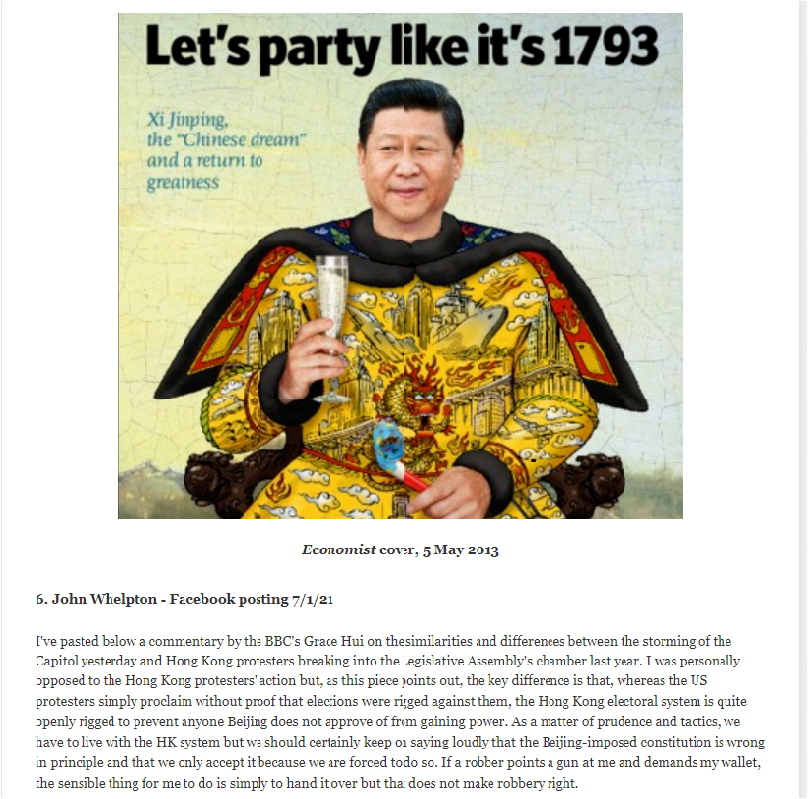
`Emperor Xi’ on Linguae
https://linguae.weebly.com/hong-kong-crisis-2019-22.html
There was discussion of the state of Internet freedom in Hong Kong in the wake of the National Security Law. John, who had done his first job, teaching English in Nepal, under an authoritarian regime, felt confident that his own frequent critical comments on his Facebook page and on the `Hong Kong Crisis page of his own web site did not put him at risk. The mainland government and its servants in Hong Kong are mostly concerned only with what they perceive as direct challenges to their own power.
We touched also on the etymology of Latin tenuis (thin, feeble), tener and its English derivative tender and Nepali तन्काउनु (tankaunu, `to stretch’), all of which go back to the PIE root *ten- (`stretch’)
There was brief reference to the `Happy Tree Friends’ animation series, which features cartoon characters with a murderous bent. Chris C. said South African students had been keen on this at one point in the past and John, who had shamefully never heard of the series before, thought it sounded like a meet-up between Winnie the Poo and Hannibal Lector
https://linguae.weebly.com/hong-kong-crisis-2019-22.html
There was discussion of the state of Internet freedom in Hong Kong in the wake of the National Security Law. John, who had done his first job, teaching English in Nepal, under an authoritarian regime, felt confident that his own frequent critical comments on his Facebook page and on the `Hong Kong Crisis page of his own web site did not put him at risk. The mainland government and its servants in Hong Kong are mostly concerned only with what they perceive as direct challenges to their own power.
We touched also on the etymology of Latin tenuis (thin, feeble), tener and its English derivative tender and Nepali तन्काउनु (tankaunu, `to stretch’), all of which go back to the PIE root *ten- (`stretch’)
There was brief reference to the `Happy Tree Friends’ animation series, which features cartoon characters with a murderous bent. Chris C. said South African students had been keen on this at one point in the past and John, who had shamefully never heard of the series before, thought it sounded like a meet-up between Winnie the Poo and Hannibal Lector
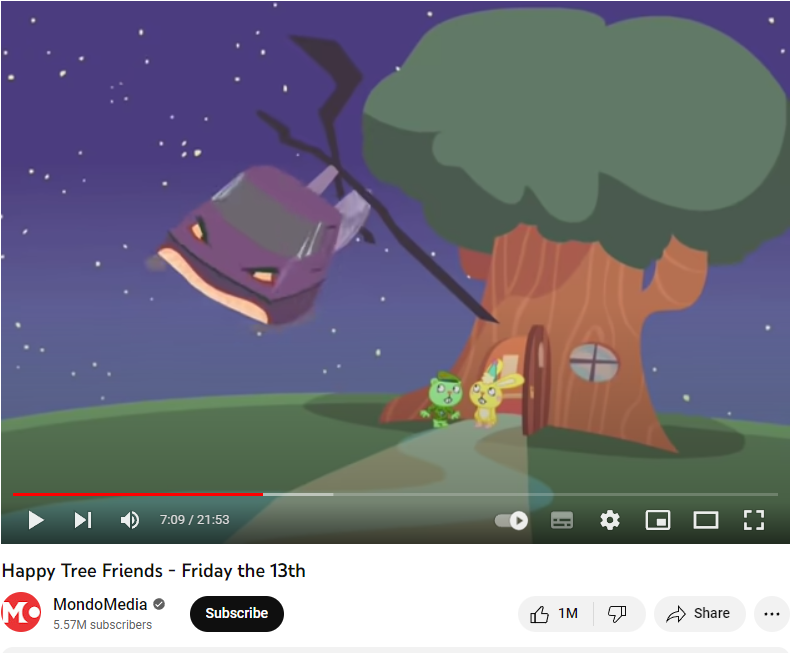
Not so cuddly playmates
Lilly, a prospective lawyer, asked if there was a special form of address for people with an MBE and also for a lady judge. An MBE as such would not be addressed differently than anybody else but for judges in general under the UK system the following guidelines are suggested by Tony Bartlett on Quora
It depends on their standing:
A High Court Judge (the ones that wear red robes) would be referred to “My Lord” normally pronounced “M’lud” or “My Lady” or “M’Lady”
A Crown Court judge or similar in the civil courts black robes and purple sash) would be referred to as “Your Honour”
A recorder (black robes) would be referred to as “Sir”although they don’t say anything if you call them Your Honour
A magistrate is “Your Worship”
We also touched on Cantonese greetings when it’s too late in the day to use jou san (早晨), `good morning’. There doesn’t seem to be anything universally employed although some schools do require students to say ng on (午安 ). In Cantonese, Nepali and probably many other languages the functional equivalent of the English phrases can often be apparent questions, like sihkjo faan meih? (食咗飯未呀? Have you eaten yet?) or, early in the morning, mukh dhunubhayo?(मुख धुनुभयो? Have you washed your face?)
Chris C., who has been in HK since 2003 and is due to leave in May, mused on his various experiences, He compared the inward-facing design of traditional Hong Kong buildings, like those in ancient Rome and in the Midle east, with outward-facing modern buildings. He also lamented the demise of Aberdeen’s floating Jumbo restaurant, which was the only place in Hong Kong offering Peking duck which approached Beijing standards. Turning to India, he recalled particularly enjoying a visit to a Bombay bar which, though not particularly noteworthy for either the beer or ther ambience, was a marvelous overall experience.
This led on to discuss of the official changing of colonial English placenames in India. In the case of Bombay itself, which is now Mumbai, or of Calcutta, now Kolkata, the change can be justified as the `new’ names are simply the ones which local have always used in their own languages. This is probably also the case with Madras-Chennai, though it is a little more complicated because `Madras’ may also be a name of Indian origin. The more recent change from Allahabad to Prayag is rather different because `Ilahadad/Allahabad’ , though less ancient than `Prayag’, had been in widespread use among the general population and the renaming is part of the crusade by Yogi Adityanath, the current Chief Minister of Uttar Pradesh, to minimize reminders of the part Islam has played in Indian historyt
In Hong Kong, in contrast, we remain content to use the old colonial names in English, even when they are completely different from the Chinese ones, as with Aberdeen-香港仔 or Admiralty -金鐘. And, contrary to what many people expected before 1997, we have also so far retained Chinese names which are themselves clear reminders of colonial rule, most conspiculously 后大道- Queen’s Road. .
Lilly, a prospective lawyer, asked if there was a special form of address for people with an MBE and also for a lady judge. An MBE as such would not be addressed differently than anybody else but for judges in general under the UK system the following guidelines are suggested by Tony Bartlett on Quora
It depends on their standing:
A High Court Judge (the ones that wear red robes) would be referred to “My Lord” normally pronounced “M’lud” or “My Lady” or “M’Lady”
A Crown Court judge or similar in the civil courts black robes and purple sash) would be referred to as “Your Honour”
A recorder (black robes) would be referred to as “Sir”although they don’t say anything if you call them Your Honour
A magistrate is “Your Worship”
We also touched on Cantonese greetings when it’s too late in the day to use jou san (早晨), `good morning’. There doesn’t seem to be anything universally employed although some schools do require students to say ng on (午安 ). In Cantonese, Nepali and probably many other languages the functional equivalent of the English phrases can often be apparent questions, like sihkjo faan meih? (食咗飯未呀? Have you eaten yet?) or, early in the morning, mukh dhunubhayo?(मुख धुनुभयो? Have you washed your face?)
Chris C., who has been in HK since 2003 and is due to leave in May, mused on his various experiences, He compared the inward-facing design of traditional Hong Kong buildings, like those in ancient Rome and in the Midle east, with outward-facing modern buildings. He also lamented the demise of Aberdeen’s floating Jumbo restaurant, which was the only place in Hong Kong offering Peking duck which approached Beijing standards. Turning to India, he recalled particularly enjoying a visit to a Bombay bar which, though not particularly noteworthy for either the beer or ther ambience, was a marvelous overall experience.
This led on to discuss of the official changing of colonial English placenames in India. In the case of Bombay itself, which is now Mumbai, or of Calcutta, now Kolkata, the change can be justified as the `new’ names are simply the ones which local have always used in their own languages. This is probably also the case with Madras-Chennai, though it is a little more complicated because `Madras’ may also be a name of Indian origin. The more recent change from Allahabad to Prayag is rather different because `Ilahadad/Allahabad’ , though less ancient than `Prayag’, had been in widespread use among the general population and the renaming is part of the crusade by Yogi Adityanath, the current Chief Minister of Uttar Pradesh, to minimize reminders of the part Islam has played in Indian historyt
In Hong Kong, in contrast, we remain content to use the old colonial names in English, even when they are completely different from the Chinese ones, as with Aberdeen-香港仔 or Admiralty -金鐘. And, contrary to what many people expected before 1997, we have also so far retained Chinese names which are themselves clear reminders of colonial rule, most conspiculously 后大道- Queen’s Road. .
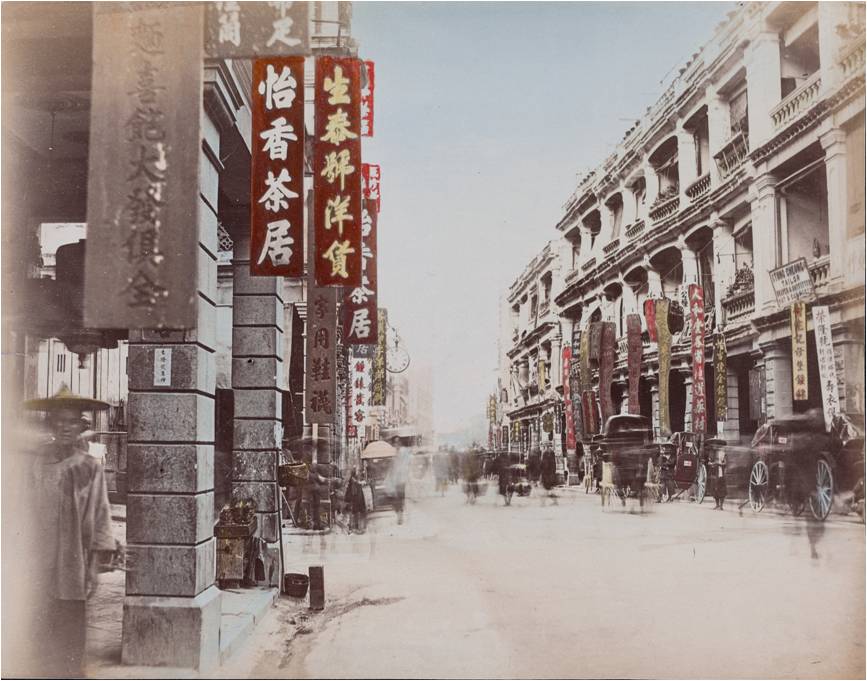
Queen’s Road in the late 19th century
https://en.wikipedia.org/wiki/Queen%27s_Road,_Hong_Kong#/media/File:Queen's_Road,_Hong_Kong.jpg
We read the remainder of chapter6 and then chapters 7 to 16 in Book IV of Eutropius. The question was raised of what happened to Perseus of Macedon and to Gentius of Illyria after they had graced the triumphs of Aemilius Paulus and Anicius respectively. With Perseus, there is a clash between our main sources, Livy, who claims he was allowed to live in comfort for the rest of his life, and Plutarch, who says the Romans killed him (see https://en.wikipedia.org/wiki/Perseus_of_Macedon). It seems clear, however, that his son Alexander learned Latin and then pusued a career as a public notary. Gentius was apparently kept in some kind of lose confinement (see https://en.wikipedia.org/wiki/Gentius ). It was also guessed correctly that the cognomen Censorinus originated with a family member who held the office of censor. Gaius Marcius Rufilus, who in the 4th century became the first plebeian ever to hold the post, adopted the name, which was then retained by his branch of the Marcian gens.
We read the remainder of chapter6 and then chapters 7 to 16 in Book IV of Eutropius. The question was raised of what happened to Perseus of Macedon and to Gentius of Illyria after they had graced the triumphs of Aemilius Paulus and Anicius respectively. With Perseus, there is a clash between our main sources, Livy, who claims he was allowed to live in comfort for the rest of his life, and Plutarch, who says the Romans killed him (see https://en.wikipedia.org/wiki/Perseus_of_Macedon). It seems clear, however, that his son Alexander learned Latin and then pusued a career as a public notary. Gentius was apparently kept in some kind of lose confinement (see https://en.wikipedia.org/wiki/Gentius ). It was also guessed correctly that the cognomen Censorinus originated with a family member who held the office of censor. Gaius Marcius Rufilus, who in the 4th century became the first plebeian ever to hold the post, adopted the name, which was then retained by his branch of the Marcian gens.
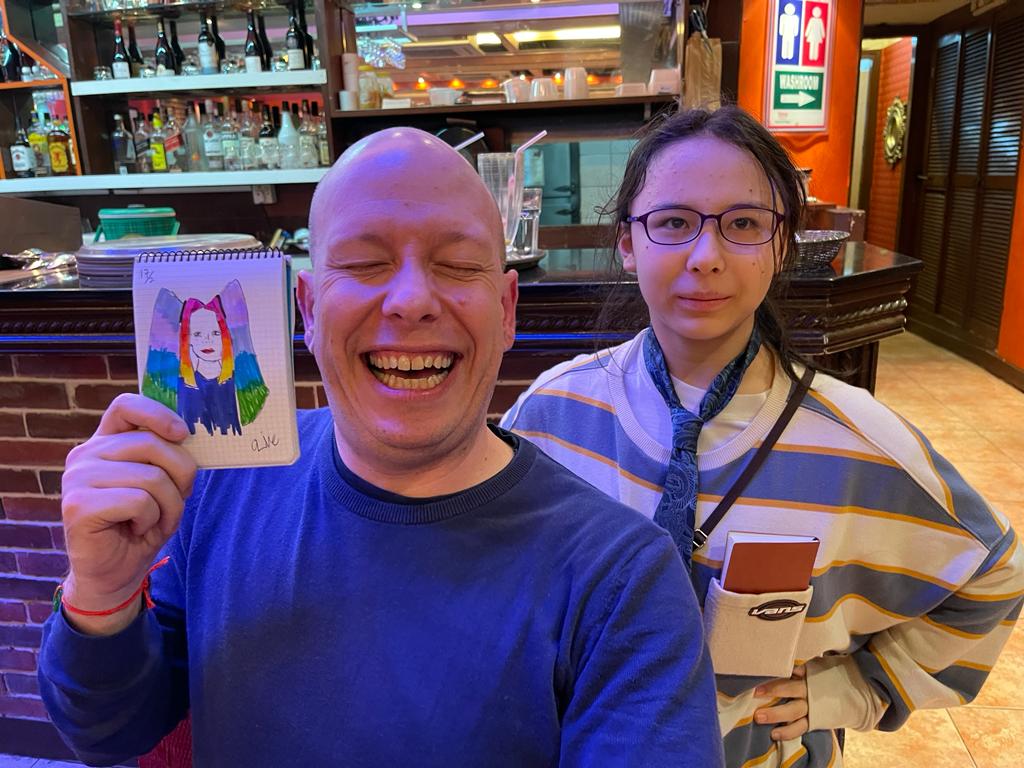
Chris `haired’ by Ollie
Ollie produced a rapid portrait of how Chris might look if he still had his hair and the two of them then posed with the artwork.
For reasons best known to herself, Hillary required a Latin verse translation of `Evil flamingos and vultures must be destroyed with spears and with swords, they must be killed and obliterated,’ but none of us was able during dinner to come up with anything that scanned. Afterwards, John at one point thought that phoenīcopterus contained a short syllable between two longs and thus would not fit into a hexameter or pentameter, the only metres he could keep in his head. Finally, however, he discovered that the `i’ was long and managed to produce two decidedly uninspired hexameters but only by playing fast and lose with singular and plural:
Phoenīcopterus et vultur mala plūrima gignunt
Dēlēr(ī) atque necār(ī) aut ēns(e) aut hastibus dēbent
[The flamingo and the vulture produce very many evils
They must be destroyed and killed either with a sword or with spears]
Someone asked whether there is still a Portuguese language requirement for entrants to the Macao civil service. A brief Internet search did not reveal any definitive statement, but ChatGPT’s answer that the requirement differs from post to post is probably correct. Portuguese remains an official language alongside Chinese and many documents are still issued in both languages so some employees must know the language. However, according to one 2020 article, despite the continuing importance of Portuguese as a marker of Macao’s identity, only 7% of the population claimed fluency in it (see
https://theculturetrip.com/asia/china/articles/what-remains-of-portuguese-influence-still-exist-in-macau)There is a contuing debate in the territory on how much Portuguese should be retained, with some people arguing that its use gives an unfair advantage to a small minority (see Leong Sok Man’s article, `On the Official Languages of the Macao SAR: from the SFG Discourse Analysis Perspective’
https://www.mpu.edu.mo/cntfiles/upload/docs/research/common/1country_2systems/academic_eng/issue3/13.pdf )
Ollie produced a rapid portrait of how Chris might look if he still had his hair and the two of them then posed with the artwork.
For reasons best known to herself, Hillary required a Latin verse translation of `Evil flamingos and vultures must be destroyed with spears and with swords, they must be killed and obliterated,’ but none of us was able during dinner to come up with anything that scanned. Afterwards, John at one point thought that phoenīcopterus contained a short syllable between two longs and thus would not fit into a hexameter or pentameter, the only metres he could keep in his head. Finally, however, he discovered that the `i’ was long and managed to produce two decidedly uninspired hexameters but only by playing fast and lose with singular and plural:
Phoenīcopterus et vultur mala plūrima gignunt
Dēlēr(ī) atque necār(ī) aut ēns(e) aut hastibus dēbent
[The flamingo and the vulture produce very many evils
They must be destroyed and killed either with a sword or with spears]
Someone asked whether there is still a Portuguese language requirement for entrants to the Macao civil service. A brief Internet search did not reveal any definitive statement, but ChatGPT’s answer that the requirement differs from post to post is probably correct. Portuguese remains an official language alongside Chinese and many documents are still issued in both languages so some employees must know the language. However, according to one 2020 article, despite the continuing importance of Portuguese as a marker of Macao’s identity, only 7% of the population claimed fluency in it (see
https://theculturetrip.com/asia/china/articles/what-remains-of-portuguese-influence-still-exist-in-macau)There is a contuing debate in the territory on how much Portuguese should be retained, with some people arguing that its use gives an unfair advantage to a small minority (see Leong Sok Man’s article, `On the Official Languages of the Macao SAR: from the SFG Discourse Analysis Perspective’
https://www.mpu.edu.mo/cntfiles/upload/docs/research/common/1country_2systems/academic_eng/issue3/13.pdf )
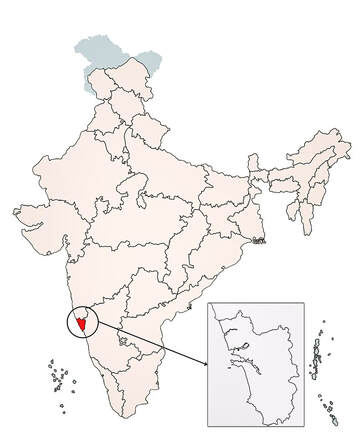
Position of Goa within India
https://en.wikipedia.org/wiki/Goa#/media/File:Goa-IN.jpg
In another former Portuguese enclave, Goa on the west coast of India, the official use of the language was phased out after the Indian conquest of the territory in 1961with the local vernacular, Konkani, and English replacing it. However, some social prestige still attaches to Portuguese and the numbers learning it as a second language have increased slightly in recent years,
Another topic raised was the confusion sometimes created by the very small stock of Chinese surnames in common use. This is particularly an issue on the mainland, where many people have 2- rather than 3-character names, and there have apparently been cases in hospital where operations were performed on the wrong patient because two people with identical names were being treated simultaneously.
The Korean system inolves particular personal names being rotated on a generational basis. Sam’s original name had had to be changed because his grandfather found he had got the rule wrong! An additional complication apparently now applies in North Korea as reportedly that parents are to be banned from giving their child the same name as Kim Jong-un’s daughter!
In marked contrast to `Kim’, John’s surname is relatively rare and John was told many years ago that a Swedish immigrant family who wanted to adopt an uncommon English surname were recommended to use `Whelpton.’ The origin of the name is uncertain but it may go back to the village of Whelpington in Northumberland. The placename means `settlement of Whelp’s people’ and it is uncertain whether the first Whelp was so named because he kept dogs or looked like one!
Finally, Lily generously offered to host a toga party at her family’s flat in Aberdeen on or near the Ides of March. In subsequent correspondence, this was fixed for 24 March.
EUTROPIUS' BREVARIUM IV: 6-16
Dux
leader
Rōmānōrum P. Licinius cōnsul contrā eum missus est et ā rēge gravī proeliō victus.[1] Neque
of-Romans Publius Licinius consul against him sent was and by king in—major battle defeated and-not
tamen Rōmānī, quamquam superātī, rēgī petentī pācem praestāre voluērunt, nisi hīs
however Romans although defeated to-king seeking peace to-provide were-willing unless on-these
condiciōnibus: ut sē et suōs senātuī et populō Rōmānō dēderet. Mox missus contrā eum L.
conditions that self and his-people to-senate and people Roman he- surrender soon sent against him Lucius
Aemilius Paulus cōnsul et in Illyricum C. Anicius praetor contrā Gentium. Sed Gentius facile
Aemilius Paulus consul and into Illyria Gaius Anicius praetor against Gentius But Gentius easily
ūnō proeliō victus mox sē dēdidit. Māter eius et uxor et duo fīliī, frāter quoque simul in
in-one battle defeated soon self surrendered mother his and wife and two sons brother also at-same-time into
potestātem Rōmānōrum vēnērunt. Ita bellō intrā XXX diēs perfectō ante cognitum est
power of-Romans came thus with-war within 30 days completed early learned it-was
Gentium victum, quam coeptum bellum nūntiārētur.[2]
Gentius conquered than begun was it-was-announced
[7] Cum Perseō autem Aemilius Paulus cōnsul IĪĪ Nōnās Septembrēs[3]dīmicāvit vīcitque eum
With Perseus on-other-hand Aemilius Paulus consul on 3 September fought and-defeated him
vīgintī mīlibus peditum eius occīsīs. Equitātus cum rēge integer fūgit. Rōmānōrum centum
with-twenty thousands of-infantry his killed cavalry with king intact fled of-Romans hundred
mīlitēs āmissī sunt. Urbēs Macedoniae omnēs, quās rēx tenuerat, Rōmānīs sē dēdidērunt; ipse
soldiers lost were cities of-Macedonia all which king had-held to-Romans selves surrendered himself
rēx, cum dēsererētur ab amīcīs, vēnit in Paulī potestātem. Sed honōrem eī Aemilius Paulus
king since he-was-deserted by friends came into Paulus’s power but honour to-him Aemilius Paulus
cōnsul nōn quasi victō habuit. Nam et volentem ad pedēs sibi cadere nōn permīsit et iuxtā sē
consul not as to--defeated-man gave for both him willing at feet for-him to-fall not allowed and next-to self
in sellā conlocāvit. Macedonibus et Illyriīs hae lēgēs ā Rōmānīs datae: ut līberī essent et
on chair placed to-Macedonians and Illyrians these conditions by Romans given that free they-should-be and
dīmidium eōrum tribūtōrum praestārent, quae rēgibus praestitissent, ut appārēret, populum
half of-those taxes should-pay which to-kings they-had-paid so-that it-might-appear people
Rōmānum prō aequitāte magis quam avāritiā dīmicāre.[4] Itaque in conventū īnfīnītōrum
Roman for fairness more than greed to-fight and-so in assembly of-countless
populōrum Paulus hoc prōnūntiāvit et lēgātiōnēs multārum gentium, quae ad eum vēnerant,
peoples Paulus this announced and delegations of-many nations which to him had-come
magnificentissimē convīviō pāvit, dīcēns eiusdem hominis esse[5] dēbēre et bellō vincere et
most-magnificently with-banquet fed saying of-same person be it-should both in-war to-conquer and
in convīviī apparātū ēlegantem esse.
in of-banquet provision elegant to-be
[8] Mox septuāgintā cīvitātēs Ēpīrī,[6] quae rebellābant, cēpit, praedam mīlitibus distribuit.
Soon seventy states of-Epirus which were-rebelling he-captured loot to-soldiers distributed
NOTES
[1] Publius Licinius Crassus, consul in 171, was defeated at the Battle of Callinicus in Thessaly.
[2] Aemilus and Anicius were in office in 168,
[3] The Battle of Pydna, a town on the eastern coast of Macedon, was generally supposed in antiquity to have been fought on 4 September (II Nōnās ) but the lunar eclipse said to have occurred that day was actually on 21 June. The inadequate system of intecalations meant that the Roman calendar was frequently out of line with the true date,
[4] Although Perseus was treated honourably at the start he was later taken as a prisoner to Rome and eventually killed after taking part in Aemilius Paulus’s triumph. Macedonia was initially organised into four separate republics but, after the rebellion of Andriscus (see c.13 below), made into a Roman province in 146 B.C. See https://en.wikipedia.org/wiki/Perseus_of_Macedon
[5] i.e. to be a characteristic
[6] The inhabitants of Epirus in NW Greece, south of Illyria, had not always been accepted as fully Greek but the region had some cultural prestige as it contained the oracle of Dodona, which ranked second only to the one at Deplhi. Epirus emerged as a united kingdom in 370 B.C. and King Alexander of Epirus, invaded Italy in 334 or 333, anticipating Pyrrhus’s better-known campaigns 50 years later, but was defeated by the southern Italian tribes. The end of the Aeacid dynasty in 232 weakened Epirus, and facilitated the regional ascendancy of the Illyrian queen, Teuta (see page 2 above), but Epirus retained a looser unity as the Epirot League. After Aemilius’s victory in 167 secured Roman control over the core area of Molossia, which had sided with Perseus, 150.000 inhabitants were enslaved (see https://en.wikipedia.org/wiki/Epirus)
Rōmam ingentī pompā rediit in nāvī Perseī, quae inūsitātae magnitūdinis fuisse trāditur,
To-Rome with-great splendour he-returned in ship of-Perseus which of-unusual size to-have-been is-reported
adeō ut sēdecim ōrdinēs dīcātur habuisse rēmōrum.[1]Triumphāvit autem magnificentissimē
so-much-so that sixteen rows it-is-said to-have-had of-oars he-celebrated-triumph moreover most-magnificently
in currū aureō cum duōbus fīliīs utrōque latere adstantibus.[2]Ductī sunt ante currum duo rēgis
in chariot golden with two sons on-each side standing led were before chariot two of-king
fīliī et ipse Perseus, XLV annōs nātus. Post eum etiam Anicius dē Illyriīs triumphāvit. Gentius
sons and himself Perseus 45 years old after him also Anicius over Illyrians celebrated-triumph Gentius
cum frātre et fīliīs ante currum ductus est. Ad hoc spectāculum rēgēs multārum gentium
with father and sons before chariot led was to this spectacle kings of-many nations
Rōmam vēnērunt, inter aliōs vēnit etiam Attalus atque Eumenēs, Asiae rēgēs, et Prūsiās
to-Rome came among others came also Attalus and Eumenes of-Asia ,kings and Prusias
Bīthȳniae. Magnō honōre exceptī sunt et permittente senātū dōna, quae attulerant, in Capitōliō
of-Bithynia with-great honour received they-were and permitting senate gifts which they-had-brought on Capitoline
posuērunt. Prūsiās etiam fīlium suum Nīcomēdēn senātuī commendāvit.
they-placed Prusias also son his Nicomedes to-senate commended
[9] Īnsequentī annō L. Memmius in Lūsitāniā[3] bene pugnāvit. Mārcellus posteā cōnsul rēs
In-the-following year Lucius Memmius in Lusitania well fought Marcellus afterwards consul affairs
ibīdem prōsperās gessit.[4]
in-same-place successful did
[10] Tertium deinde bellum contrā Carthāginem suscipitur, sexcentēsimō et alterō ab urbe
Third then war against Carthage is-undertaken in-six-hundredth and second from city
conditā annō, L. Mānliō Cēnsōrīnō et M. Mānīliō cōnsulibus, annō quīnquāgēsimō prīmō
founded year with-Lucius Manlius Censorinus and Marcus Manilius consuls in-year fiftieth first
postquam secundum Pūnicum trānsāctum erat.[5] Hī profectī Carthāginem oppugnāvērunt.
after second Punic[war] completed had-been they having-set-out Carthage attacked
Contrā eōs Hasdrubal, dux Carthāginiēnsium, dīmicābat. Famea, dux alius, equitātuī
Against them Hasdrubal leader of-Carthaginians was-fighting Famea leader other for-cavalry
Carthāginiēnsium praeerat. Scīpiō tunc, Scīpiōnis Āfricānī nepōs, tribūnus ibi mīlitābat.[6]
Of-carthaginians was-in-charge Scipio then of-Scipio Africanus grandson as-tribune there was-serving
NOTES
[1] As Bird explains, the ship would not have had sixteen banks of oars but either two or three banks on with a total of sixteen men pulling them.
[2] Aemilius’s triumph, celebrated over three days, was the most splendid seen up to his time. The sons accompanying him were Q.Fabius Maximus and P.Cornelius Scipio Aemilianus (later also Africanus) who had both been adopted into other families. Aemilius. known after his victory at Pydna as Macedonicus, was himself the son of the consul who was killed at Cannae in 216.
[3] The name Lusitania was later used for the state of Portugal although the boundaries of the territory occupied by the ancient Lusitani did not coincide with those of the modern state
[4] Memmius’s victories in Spain and North Africa came in 153, more than ten years after the triumphs of Aemilius Paullus and Anicius and a year after a Roman defeat in western Spain by the Lusitanians, a non-Celtic but Indo-European-speaking tribe. Fulvius Nobilior, consul for 153, was defeated by the Celtiberians, a Celtic people, at Numantia in northern Spain either that year or in 152 but M.Claudius Marcellus, consul for the third time in 152 and probably the grandson of the Marcellus who fought in the 2nd. Punic War, negotiated a peace settlement after capturing the Celtiberian town of Occilis.
[5] Eutropius correctly gives the names of the consuls for 149 B.C. when the war began. On the Varronian system 602 A.U.C, would be 152 but Bird points out that Livy’s chronology, which Eutropius is probably following, puts Rome’s foundation of the city in 751 or 750 rather than 753 B.C.. By inclusive reckoning, 149 is 53 ather than 51 years after the end of the Second Punic War in 201.
[6] Publius Cornelius Scipio Aemilianus was the youngest son of Aemilius Macedonicus but had been adopted by the son of the Scipio who defeated Hannnibal at Zama. He had literary interests and was a friend of the historian Polybius, who was brought to Rome as a Greek hostage in 167.
Huius apud omnēs ingēns metus et reverentia erat. Nam et parātissimus ad dīmicandum et
Of-him amongst all great awe and respect there-was for both most-prepared for fighting and
cōnsultissimus habēbātur. Itaque per eum multa ā cōnsulibus prōsperē gesta sunt, neque
most-experienced was-considered and-so through him many-things by consuls successfully done were and-not
quicquam magis vel Hasdrubal vel Famea vītābant, quam contrā eam Rōmānōrum partem
anything more either Hasdrubal or Fames used-to-avoid than against that of-Romans part
committere, ubi Scīpiō dīmicāret.[1]
to-join-battle where Scipio was-fighting
[11] Per idem tempus Masinissa, rēx Numidārum, per annōs sexāgintā ferē amīcus populī
At same time Masinissa king of-Numjidians for years sixty almost friend of-people
Rōmānī, annō vītae nōnāgēsimō septimō mortuus quadrāgintā quattuor fīliīs relictīs
Roman in-year of-life ninetieth seventh dead with-forty four sone left
Scīpiōnem dīvīsōrem rēgnī inter fīliōs suōs esse iussit.[2]
Scipio divider of-kingdom among sons his to-be told
[12] Cum igitur clārum Scīpiōnis nōmen esset, iuvenis adhūc cōnsul est factus et contrā
Since therefore famous of-Scipio name was young-man still consul was made and against
Carthāginem missus. Is eam cēpit ac dīruit. Spolia ibi inventa, quae variārum cīvitātum
Carthage sent he it captured and destroyed spoils there found which of-various cities
excidiīs Carthāgō collēgerat, et ōrnāmenta urbium[3] cīvitātibus Siciliae, Ītaliae, Āfricae
by-destruction Carthage had-collected and the-ornaments civic to-cities of-Sicily of-Italy of-Africa
reddidit, quae sua recognōscēbant. Ita Carthāgō septingentēsimō annō, quam condita erat,
he-restored which as-own they-recognised thus Carthage in-seven-hundredth year after founded it-had-been
dēlēta est.[4] Scīpiō nōmen, quod avus eius accēperat, meruit, scīlicet ut propter virtūtem
destroyed was Scipio name which grandfather his had-received deserved i.e that on-account-of prowess
etiam ipse Āfricānus iūnior vocārētur.
also he Africanus junior be-called
[13] Interim in Macedoniā quīdam Pseudo-Philippus arma mōvit et Rōmānum praetōrem P.
Meanwhile in Macedonia a-certain Pseudo-Philip arms took-up and Roman praetor Publius
Iuventium contrā sē missum ad interniciōnem vīcit. Post eum Q. Caecilius Metellus dux ā
Iuventius against him sent to utter-ruin defeated after him Quintus Caecilius Metelles general by
Rōmānīs contrā Pseudophilippum missus est et XXV mīlibus eius occīsīs Macedoniam
Romans against Pesudo-Philip sent was and with-25 thousands of-him killed Macedonia
recēpit, ipsum etiam Pseudophilippum in potestātem suam redēgit.[5]
recovered himself also the-Pesudo-Philip into control own brought
NOTES
[1] The subjunctive dīmicāret is presumably used as this clause is given as a consideration in the Carthaginians’ minds. Hazzard states that the consuls themselves were grossly incompetent and only saved from disaster by Scipio’s sound advice.
[2] Masinissa, who died in 148, had been encouraged by the Romans to encroach on Carthaginian territory and they themselves then declared war on the city when the Carthaginians tried to resist.
[3] Literally `of cities’. Urbs and cīvitās were by Eutropius’ time essentially synonyms, though cīvitās also has the wider meaning of `state’.
[4] Carthage was destroyed in 146 so Eutropius implies a foundation date of 846 (or 845 on inclusive reckoning). The traditional date for its founding is 814 but the earliest dated archaeological remains are from c.760 (see Miles Carthage Must Be Destroyed, p.61.) The city’s destruction had long been the demand of a faction headed by Cato the Elder, though he probably did not actually use the famous phrase Delenda est Carthāgo, which is only attested since the Renaissance. The Carthaginians realised that they had minimal chance of successful resistance but held out for three years because the Romans had demanded that they abandon their city and build a new one ten miles inland. When the Romans finally broke through the walls and began systematic destruction, most of its inhabitants surrendered and 50,000 were enslaved. The family of Hasdrubal held out the longest but Hasdrubal himself finally went out to fall at Scipio’s feet his wife cursed him from the rooftop and then hurled both her children and herself into the burning building. A detailed description of the events is given by the Greek historian Appian, probably relying on Polybius who witnessed the siege alongside Scipio. Appian explicitly attributes to Polybius the claim that Scipio wept as Carthage was destroyed, fearing that the same fate would one day befall Rome itself,
[5] The man who claimed to be Philip, son of Perseus was actually a Cretan soldier from the Syrian army who invaded Macedonia with help from the rulers of Thrace. After his victory over P.Iuventius Thana in 148 B.C. he was defeated by Q.Caecilius Metellus and executed after the latter’s triumph in Rome. See Bird, pp.91-2 for further details.
[14] Corinthiīs quoque bellum indictum est, nōbilissimae Graeciae cīvitātī, propter iniūriam
On-Corinthians also war declared was most-noble of-Greece city for unjust-treatment
lēgātōrum Rōmānōrum. Hanc Mummius cōnsul cēpit et dīruit.[1] Trēs igitur Rōmae simul
of-envoys Roman this Mummius consul captured and destroyed three therefore at-Rome at-same-time
celeberrimī triumphī fuērunt: Āfricānī ex Āfricā, ante cuius currum ductus est Hasdrubal,
most-illustrious triumphs there-were of-Africanus from Africa before whose chariot led was Hasdrubal
Metellī ex Macedoniā, cuius currum praecessit Andriscus, idem quī et Pseudophilippus,
of-Metellus from Macedonia whose chariot preceded Andriscus same-man who also Pseudo-Philip [was-called]
Mummiī ex Corinthō, ante quem signa aēnea et pictae tabulae et alia urbis clārissimae
of-Mummius from Corinth before whom statues bronze and painted boards and other of-city most-famous
ōrnāmenta praelāta sunt.
ornaments carried were
[15] Iterum in Macedoniā Pseudopersēs, quī sē Perseī fīlium esse dīcēbat, collēctīs servitiīs
Again in Macedonia a-Pseudo-Perses who himself of-Perseus son to-be way-saying being-collected slaves
rebellāvit et, cum sēdecim mīlia armātōrum habēret, ā Tremellīō quaestōre superātus est.[2]
rebelled and when sixteen thousands of-armed-men he-had by Tremellius quaestor defeated was
[16] Eōdem tempore Metellus[3] in Celtibēriā apud Hispānōs rēs ēgregiās gessit. Successit eī
At-the-same time Metellus in Celtiberia among Spanish things amazing did succeded him
Q. Pompēius. Nec multō post Q. quoque Caepiō ad idem bellum[4] missus est, quod quīdam
Quintus Pompeius and-not much later Quintus also Caepio to same war sent was which a-certain
Viriāthus contrā Rōmānōs in Lūsitāniā gerēbat. Quō metū[5] Viriāthus ā suīs interfectus est,
Viriathus against Romans in Lusitania was-waging from-which fear Viriathus by own-men killed was
cum quattuordecim annīs Hispāniās adversus Rōmānōs mōvisset. Pāstor prīmō fuit, mox
when fourteen years the-Spains against Romans he-had-mobilised shepherd at-first he-was soon
latrōnum dux, postrēmō tantōs ad bellum populōs concitāvit, ut adsertor contrā Rōmānōs
of-bandits leader finally such-great to war peoples he-roused that restorer against Romans
Hispāniae putārētur. Et cum interfectōrēs eius praemium ā Caepiōne cōnsule peterent,
of-Spain he-was-thought and when killers of-him reward from Caepio consul sought
respōnsum est numquam Rōmānīs placuisse imperātōrēs ā suīs mīlitibus interficī.[6]
answer was never to-Romans to-have-pleased generals by own soldiers to-be-killed
[17] Q. Pompēius deinde cōnsul, ā Numantīnīs, quae Hispāniae cīvitās fuit opulentissima,
Quintus Pompeius then consul by people-of-Numantia which of-Spain city was wealthiest
superātus, pācem ignōbilem fēcit.[7] Post eum C. Hostīlius Mancīnus cōnsul iterum cum
defeated peace ignoble made after him Gaius Hostilius Mancinus consul again with
Numantīnīs pācem fēcit īnfāmem, quam populus et senātus iussit īnfringī atque ipsum
Numantinians peace made disgraceful which people and senate ordered to-be-broken and himself
Mancīnum hostibus trādī, ut in illō, quem auctōrem foederis habēbant, iniūriam solūtī
Mancinus to-enely to-be-handed-over so-that on-him whom aither of-treaty they-considered injury of-abrogated
foederis vindicārent.[8] Post tantam igitur ignōminiam, quā ā Numantīnīs bis Rōmānī
treaty they-could-avenge after so-great therefore disgrace in-which by Numantinians twice Roman
exercitūs fuerant subiugātī, P. Scīpiō Āfricānus secundō cōnsul factus et ad Numantiam
armies had-been beaten Publius Scipio Africanus second-time consul made and to Numantia
missus est. Is prīmum mīlitem vitiōsum et ignāvum exercendō magis quam pūniendō sine
sent was he first soldiery dissolute and cowardly by-training more than by-punishing without
aliquā acerbitāte corrēxit, tum multās Hispāniae cīvitātēs partim cēpit, partim in dēditiōnem
any harshness rehabilitated then many of-spain cities in-some-cases he-captured in-others into surrender
accēpit, postrēmō ipsam Numantiam diū obsessam famē cōnfēcit et ā solō ēvertit,[9]
he-received finally itself Numania long-time besieged by-starvation he-finished-off and from ground overturned
reliquam prōvinciam in fidem accēpit.[10]
rest-of province into allegiance he-received
NOTES
[1] Corinth was destroyed in 146 at the end of Rome’s war against the Achaean League, of which the city was a part. The League, whose territory had at one time included the whole Peloponnese, had in 148 attacked Laconia after the Romans had allowed Sparta and some other cities to secede. Told by a Roman envoy in Corinth in 147 that it was to be dissolved, the League in 146 invaded central Greece but was defeated by Metellus and then by Memmius, consul for that year.
[2] Persēs was an alternative spelling of Perseus and the `fales Perses’ revolted in 142. For the significance of the successive Macedonian revolts see R. Kallet-Marx’s Hegemony to Empire.
[3] In 143-2, Quintus Caecilius Metellus Macedonicus, who had fought against Andriscus and then the Achaeans, was generally successful against the Celtiberians but did not attack the key stronghold of Numantia. See map on page 13 for tribal territories and, for an account of the whole conflict. https://penelope.uchicago.edu/~grout/encyclopaedia_romana/hispania/celtiberianwar.html
[4] Idem bellum is slightly misleading because the rest of the chapter focuses on the campaign in the far west of the Iberian peninsula, which was largely separate from the struggle further east in Celtiberia
[5] quō metū is equivalent to cuius metū (`from fear of whom’)
[6] Caepio, as consul in 140 got the senate to repudiate a compromise agreement reached with Viriathus in 141 after his defeat of several Roman commanders. He then actually himself arranged the assassination, which led to the Lusitanians’ capitulation in 139,
[7] Pompeius, consul in 141, agreed peace terms in 140 when his own camp was under siege but then denied he had done so. Another Roman commander, Marcus Popillius Laenas, was defeated by the Numantians shortly afterwards.
[8] Mancinus, who was defeated in 137, was delivered bound and naked to the Numantians but, according to Appian, our major source for the wars in Spain, they refused to accept him. Tiberius Gracchus, who had negotiated the agreement on Mancinus’s behalf and who is best-known for his later land reform proposals, escaped punishment thanks to the intervention of Scipio Aemilianus.
[9] Ā solō ēvertit is the functional equivalent of `razed to the ground’.
[10] Aemilianus was consul for 134. His measures to restore discipline included the expulsion from the camp of 2,000 prostitutes. There is a detailed account of the siege, which ended in 133, at https://www.academia.edu/987374/The_siege_of_Numantia_how_Scipio_Aemilianus_conquered_the_bravest_of_all_cities Many inhabitants committed suicide rather than face enslavement and their resistance is still a matter of national pride in Spain today.
https://en.wikipedia.org/wiki/Goa#/media/File:Goa-IN.jpg
In another former Portuguese enclave, Goa on the west coast of India, the official use of the language was phased out after the Indian conquest of the territory in 1961with the local vernacular, Konkani, and English replacing it. However, some social prestige still attaches to Portuguese and the numbers learning it as a second language have increased slightly in recent years,
Another topic raised was the confusion sometimes created by the very small stock of Chinese surnames in common use. This is particularly an issue on the mainland, where many people have 2- rather than 3-character names, and there have apparently been cases in hospital where operations were performed on the wrong patient because two people with identical names were being treated simultaneously.
The Korean system inolves particular personal names being rotated on a generational basis. Sam’s original name had had to be changed because his grandfather found he had got the rule wrong! An additional complication apparently now applies in North Korea as reportedly that parents are to be banned from giving their child the same name as Kim Jong-un’s daughter!
In marked contrast to `Kim’, John’s surname is relatively rare and John was told many years ago that a Swedish immigrant family who wanted to adopt an uncommon English surname were recommended to use `Whelpton.’ The origin of the name is uncertain but it may go back to the village of Whelpington in Northumberland. The placename means `settlement of Whelp’s people’ and it is uncertain whether the first Whelp was so named because he kept dogs or looked like one!
Finally, Lily generously offered to host a toga party at her family’s flat in Aberdeen on or near the Ides of March. In subsequent correspondence, this was fixed for 24 March.
EUTROPIUS' BREVARIUM IV: 6-16
Dux
leader
Rōmānōrum P. Licinius cōnsul contrā eum missus est et ā rēge gravī proeliō victus.[1] Neque
of-Romans Publius Licinius consul against him sent was and by king in—major battle defeated and-not
tamen Rōmānī, quamquam superātī, rēgī petentī pācem praestāre voluērunt, nisi hīs
however Romans although defeated to-king seeking peace to-provide were-willing unless on-these
condiciōnibus: ut sē et suōs senātuī et populō Rōmānō dēderet. Mox missus contrā eum L.
conditions that self and his-people to-senate and people Roman he- surrender soon sent against him Lucius
Aemilius Paulus cōnsul et in Illyricum C. Anicius praetor contrā Gentium. Sed Gentius facile
Aemilius Paulus consul and into Illyria Gaius Anicius praetor against Gentius But Gentius easily
ūnō proeliō victus mox sē dēdidit. Māter eius et uxor et duo fīliī, frāter quoque simul in
in-one battle defeated soon self surrendered mother his and wife and two sons brother also at-same-time into
potestātem Rōmānōrum vēnērunt. Ita bellō intrā XXX diēs perfectō ante cognitum est
power of-Romans came thus with-war within 30 days completed early learned it-was
Gentium victum, quam coeptum bellum nūntiārētur.[2]
Gentius conquered than begun was it-was-announced
[7] Cum Perseō autem Aemilius Paulus cōnsul IĪĪ Nōnās Septembrēs[3]dīmicāvit vīcitque eum
With Perseus on-other-hand Aemilius Paulus consul on 3 September fought and-defeated him
vīgintī mīlibus peditum eius occīsīs. Equitātus cum rēge integer fūgit. Rōmānōrum centum
with-twenty thousands of-infantry his killed cavalry with king intact fled of-Romans hundred
mīlitēs āmissī sunt. Urbēs Macedoniae omnēs, quās rēx tenuerat, Rōmānīs sē dēdidērunt; ipse
soldiers lost were cities of-Macedonia all which king had-held to-Romans selves surrendered himself
rēx, cum dēsererētur ab amīcīs, vēnit in Paulī potestātem. Sed honōrem eī Aemilius Paulus
king since he-was-deserted by friends came into Paulus’s power but honour to-him Aemilius Paulus
cōnsul nōn quasi victō habuit. Nam et volentem ad pedēs sibi cadere nōn permīsit et iuxtā sē
consul not as to--defeated-man gave for both him willing at feet for-him to-fall not allowed and next-to self
in sellā conlocāvit. Macedonibus et Illyriīs hae lēgēs ā Rōmānīs datae: ut līberī essent et
on chair placed to-Macedonians and Illyrians these conditions by Romans given that free they-should-be and
dīmidium eōrum tribūtōrum praestārent, quae rēgibus praestitissent, ut appārēret, populum
half of-those taxes should-pay which to-kings they-had-paid so-that it-might-appear people
Rōmānum prō aequitāte magis quam avāritiā dīmicāre.[4] Itaque in conventū īnfīnītōrum
Roman for fairness more than greed to-fight and-so in assembly of-countless
populōrum Paulus hoc prōnūntiāvit et lēgātiōnēs multārum gentium, quae ad eum vēnerant,
peoples Paulus this announced and delegations of-many nations which to him had-come
magnificentissimē convīviō pāvit, dīcēns eiusdem hominis esse[5] dēbēre et bellō vincere et
most-magnificently with-banquet fed saying of-same person be it-should both in-war to-conquer and
in convīviī apparātū ēlegantem esse.
in of-banquet provision elegant to-be
[8] Mox septuāgintā cīvitātēs Ēpīrī,[6] quae rebellābant, cēpit, praedam mīlitibus distribuit.
Soon seventy states of-Epirus which were-rebelling he-captured loot to-soldiers distributed
NOTES
[1] Publius Licinius Crassus, consul in 171, was defeated at the Battle of Callinicus in Thessaly.
[2] Aemilus and Anicius were in office in 168,
[3] The Battle of Pydna, a town on the eastern coast of Macedon, was generally supposed in antiquity to have been fought on 4 September (II Nōnās ) but the lunar eclipse said to have occurred that day was actually on 21 June. The inadequate system of intecalations meant that the Roman calendar was frequently out of line with the true date,
[4] Although Perseus was treated honourably at the start he was later taken as a prisoner to Rome and eventually killed after taking part in Aemilius Paulus’s triumph. Macedonia was initially organised into four separate republics but, after the rebellion of Andriscus (see c.13 below), made into a Roman province in 146 B.C. See https://en.wikipedia.org/wiki/Perseus_of_Macedon
[5] i.e. to be a characteristic
[6] The inhabitants of Epirus in NW Greece, south of Illyria, had not always been accepted as fully Greek but the region had some cultural prestige as it contained the oracle of Dodona, which ranked second only to the one at Deplhi. Epirus emerged as a united kingdom in 370 B.C. and King Alexander of Epirus, invaded Italy in 334 or 333, anticipating Pyrrhus’s better-known campaigns 50 years later, but was defeated by the southern Italian tribes. The end of the Aeacid dynasty in 232 weakened Epirus, and facilitated the regional ascendancy of the Illyrian queen, Teuta (see page 2 above), but Epirus retained a looser unity as the Epirot League. After Aemilius’s victory in 167 secured Roman control over the core area of Molossia, which had sided with Perseus, 150.000 inhabitants were enslaved (see https://en.wikipedia.org/wiki/Epirus)
Rōmam ingentī pompā rediit in nāvī Perseī, quae inūsitātae magnitūdinis fuisse trāditur,
To-Rome with-great splendour he-returned in ship of-Perseus which of-unusual size to-have-been is-reported
adeō ut sēdecim ōrdinēs dīcātur habuisse rēmōrum.[1]Triumphāvit autem magnificentissimē
so-much-so that sixteen rows it-is-said to-have-had of-oars he-celebrated-triumph moreover most-magnificently
in currū aureō cum duōbus fīliīs utrōque latere adstantibus.[2]Ductī sunt ante currum duo rēgis
in chariot golden with two sons on-each side standing led were before chariot two of-king
fīliī et ipse Perseus, XLV annōs nātus. Post eum etiam Anicius dē Illyriīs triumphāvit. Gentius
sons and himself Perseus 45 years old after him also Anicius over Illyrians celebrated-triumph Gentius
cum frātre et fīliīs ante currum ductus est. Ad hoc spectāculum rēgēs multārum gentium
with father and sons before chariot led was to this spectacle kings of-many nations
Rōmam vēnērunt, inter aliōs vēnit etiam Attalus atque Eumenēs, Asiae rēgēs, et Prūsiās
to-Rome came among others came also Attalus and Eumenes of-Asia ,kings and Prusias
Bīthȳniae. Magnō honōre exceptī sunt et permittente senātū dōna, quae attulerant, in Capitōliō
of-Bithynia with-great honour received they-were and permitting senate gifts which they-had-brought on Capitoline
posuērunt. Prūsiās etiam fīlium suum Nīcomēdēn senātuī commendāvit.
they-placed Prusias also son his Nicomedes to-senate commended
[9] Īnsequentī annō L. Memmius in Lūsitāniā[3] bene pugnāvit. Mārcellus posteā cōnsul rēs
In-the-following year Lucius Memmius in Lusitania well fought Marcellus afterwards consul affairs
ibīdem prōsperās gessit.[4]
in-same-place successful did
[10] Tertium deinde bellum contrā Carthāginem suscipitur, sexcentēsimō et alterō ab urbe
Third then war against Carthage is-undertaken in-six-hundredth and second from city
conditā annō, L. Mānliō Cēnsōrīnō et M. Mānīliō cōnsulibus, annō quīnquāgēsimō prīmō
founded year with-Lucius Manlius Censorinus and Marcus Manilius consuls in-year fiftieth first
postquam secundum Pūnicum trānsāctum erat.[5] Hī profectī Carthāginem oppugnāvērunt.
after second Punic[war] completed had-been they having-set-out Carthage attacked
Contrā eōs Hasdrubal, dux Carthāginiēnsium, dīmicābat. Famea, dux alius, equitātuī
Against them Hasdrubal leader of-Carthaginians was-fighting Famea leader other for-cavalry
Carthāginiēnsium praeerat. Scīpiō tunc, Scīpiōnis Āfricānī nepōs, tribūnus ibi mīlitābat.[6]
Of-carthaginians was-in-charge Scipio then of-Scipio Africanus grandson as-tribune there was-serving
NOTES
[1] As Bird explains, the ship would not have had sixteen banks of oars but either two or three banks on with a total of sixteen men pulling them.
[2] Aemilius’s triumph, celebrated over three days, was the most splendid seen up to his time. The sons accompanying him were Q.Fabius Maximus and P.Cornelius Scipio Aemilianus (later also Africanus) who had both been adopted into other families. Aemilius. known after his victory at Pydna as Macedonicus, was himself the son of the consul who was killed at Cannae in 216.
[3] The name Lusitania was later used for the state of Portugal although the boundaries of the territory occupied by the ancient Lusitani did not coincide with those of the modern state
[4] Memmius’s victories in Spain and North Africa came in 153, more than ten years after the triumphs of Aemilius Paullus and Anicius and a year after a Roman defeat in western Spain by the Lusitanians, a non-Celtic but Indo-European-speaking tribe. Fulvius Nobilior, consul for 153, was defeated by the Celtiberians, a Celtic people, at Numantia in northern Spain either that year or in 152 but M.Claudius Marcellus, consul for the third time in 152 and probably the grandson of the Marcellus who fought in the 2nd. Punic War, negotiated a peace settlement after capturing the Celtiberian town of Occilis.
[5] Eutropius correctly gives the names of the consuls for 149 B.C. when the war began. On the Varronian system 602 A.U.C, would be 152 but Bird points out that Livy’s chronology, which Eutropius is probably following, puts Rome’s foundation of the city in 751 or 750 rather than 753 B.C.. By inclusive reckoning, 149 is 53 ather than 51 years after the end of the Second Punic War in 201.
[6] Publius Cornelius Scipio Aemilianus was the youngest son of Aemilius Macedonicus but had been adopted by the son of the Scipio who defeated Hannnibal at Zama. He had literary interests and was a friend of the historian Polybius, who was brought to Rome as a Greek hostage in 167.
Huius apud omnēs ingēns metus et reverentia erat. Nam et parātissimus ad dīmicandum et
Of-him amongst all great awe and respect there-was for both most-prepared for fighting and
cōnsultissimus habēbātur. Itaque per eum multa ā cōnsulibus prōsperē gesta sunt, neque
most-experienced was-considered and-so through him many-things by consuls successfully done were and-not
quicquam magis vel Hasdrubal vel Famea vītābant, quam contrā eam Rōmānōrum partem
anything more either Hasdrubal or Fames used-to-avoid than against that of-Romans part
committere, ubi Scīpiō dīmicāret.[1]
to-join-battle where Scipio was-fighting
[11] Per idem tempus Masinissa, rēx Numidārum, per annōs sexāgintā ferē amīcus populī
At same time Masinissa king of-Numjidians for years sixty almost friend of-people
Rōmānī, annō vītae nōnāgēsimō septimō mortuus quadrāgintā quattuor fīliīs relictīs
Roman in-year of-life ninetieth seventh dead with-forty four sone left
Scīpiōnem dīvīsōrem rēgnī inter fīliōs suōs esse iussit.[2]
Scipio divider of-kingdom among sons his to-be told
[12] Cum igitur clārum Scīpiōnis nōmen esset, iuvenis adhūc cōnsul est factus et contrā
Since therefore famous of-Scipio name was young-man still consul was made and against
Carthāginem missus. Is eam cēpit ac dīruit. Spolia ibi inventa, quae variārum cīvitātum
Carthage sent he it captured and destroyed spoils there found which of-various cities
excidiīs Carthāgō collēgerat, et ōrnāmenta urbium[3] cīvitātibus Siciliae, Ītaliae, Āfricae
by-destruction Carthage had-collected and the-ornaments civic to-cities of-Sicily of-Italy of-Africa
reddidit, quae sua recognōscēbant. Ita Carthāgō septingentēsimō annō, quam condita erat,
he-restored which as-own they-recognised thus Carthage in-seven-hundredth year after founded it-had-been
dēlēta est.[4] Scīpiō nōmen, quod avus eius accēperat, meruit, scīlicet ut propter virtūtem
destroyed was Scipio name which grandfather his had-received deserved i.e that on-account-of prowess
etiam ipse Āfricānus iūnior vocārētur.
also he Africanus junior be-called
[13] Interim in Macedoniā quīdam Pseudo-Philippus arma mōvit et Rōmānum praetōrem P.
Meanwhile in Macedonia a-certain Pseudo-Philip arms took-up and Roman praetor Publius
Iuventium contrā sē missum ad interniciōnem vīcit. Post eum Q. Caecilius Metellus dux ā
Iuventius against him sent to utter-ruin defeated after him Quintus Caecilius Metelles general by
Rōmānīs contrā Pseudophilippum missus est et XXV mīlibus eius occīsīs Macedoniam
Romans against Pesudo-Philip sent was and with-25 thousands of-him killed Macedonia
recēpit, ipsum etiam Pseudophilippum in potestātem suam redēgit.[5]
recovered himself also the-Pesudo-Philip into control own brought
NOTES
[1] The subjunctive dīmicāret is presumably used as this clause is given as a consideration in the Carthaginians’ minds. Hazzard states that the consuls themselves were grossly incompetent and only saved from disaster by Scipio’s sound advice.
[2] Masinissa, who died in 148, had been encouraged by the Romans to encroach on Carthaginian territory and they themselves then declared war on the city when the Carthaginians tried to resist.
[3] Literally `of cities’. Urbs and cīvitās were by Eutropius’ time essentially synonyms, though cīvitās also has the wider meaning of `state’.
[4] Carthage was destroyed in 146 so Eutropius implies a foundation date of 846 (or 845 on inclusive reckoning). The traditional date for its founding is 814 but the earliest dated archaeological remains are from c.760 (see Miles Carthage Must Be Destroyed, p.61.) The city’s destruction had long been the demand of a faction headed by Cato the Elder, though he probably did not actually use the famous phrase Delenda est Carthāgo, which is only attested since the Renaissance. The Carthaginians realised that they had minimal chance of successful resistance but held out for three years because the Romans had demanded that they abandon their city and build a new one ten miles inland. When the Romans finally broke through the walls and began systematic destruction, most of its inhabitants surrendered and 50,000 were enslaved. The family of Hasdrubal held out the longest but Hasdrubal himself finally went out to fall at Scipio’s feet his wife cursed him from the rooftop and then hurled both her children and herself into the burning building. A detailed description of the events is given by the Greek historian Appian, probably relying on Polybius who witnessed the siege alongside Scipio. Appian explicitly attributes to Polybius the claim that Scipio wept as Carthage was destroyed, fearing that the same fate would one day befall Rome itself,
[5] The man who claimed to be Philip, son of Perseus was actually a Cretan soldier from the Syrian army who invaded Macedonia with help from the rulers of Thrace. After his victory over P.Iuventius Thana in 148 B.C. he was defeated by Q.Caecilius Metellus and executed after the latter’s triumph in Rome. See Bird, pp.91-2 for further details.
[14] Corinthiīs quoque bellum indictum est, nōbilissimae Graeciae cīvitātī, propter iniūriam
On-Corinthians also war declared was most-noble of-Greece city for unjust-treatment
lēgātōrum Rōmānōrum. Hanc Mummius cōnsul cēpit et dīruit.[1] Trēs igitur Rōmae simul
of-envoys Roman this Mummius consul captured and destroyed three therefore at-Rome at-same-time
celeberrimī triumphī fuērunt: Āfricānī ex Āfricā, ante cuius currum ductus est Hasdrubal,
most-illustrious triumphs there-were of-Africanus from Africa before whose chariot led was Hasdrubal
Metellī ex Macedoniā, cuius currum praecessit Andriscus, idem quī et Pseudophilippus,
of-Metellus from Macedonia whose chariot preceded Andriscus same-man who also Pseudo-Philip [was-called]
Mummiī ex Corinthō, ante quem signa aēnea et pictae tabulae et alia urbis clārissimae
of-Mummius from Corinth before whom statues bronze and painted boards and other of-city most-famous
ōrnāmenta praelāta sunt.
ornaments carried were
[15] Iterum in Macedoniā Pseudopersēs, quī sē Perseī fīlium esse dīcēbat, collēctīs servitiīs
Again in Macedonia a-Pseudo-Perses who himself of-Perseus son to-be way-saying being-collected slaves
rebellāvit et, cum sēdecim mīlia armātōrum habēret, ā Tremellīō quaestōre superātus est.[2]
rebelled and when sixteen thousands of-armed-men he-had by Tremellius quaestor defeated was
[16] Eōdem tempore Metellus[3] in Celtibēriā apud Hispānōs rēs ēgregiās gessit. Successit eī
At-the-same time Metellus in Celtiberia among Spanish things amazing did succeded him
Q. Pompēius. Nec multō post Q. quoque Caepiō ad idem bellum[4] missus est, quod quīdam
Quintus Pompeius and-not much later Quintus also Caepio to same war sent was which a-certain
Viriāthus contrā Rōmānōs in Lūsitāniā gerēbat. Quō metū[5] Viriāthus ā suīs interfectus est,
Viriathus against Romans in Lusitania was-waging from-which fear Viriathus by own-men killed was
cum quattuordecim annīs Hispāniās adversus Rōmānōs mōvisset. Pāstor prīmō fuit, mox
when fourteen years the-Spains against Romans he-had-mobilised shepherd at-first he-was soon
latrōnum dux, postrēmō tantōs ad bellum populōs concitāvit, ut adsertor contrā Rōmānōs
of-bandits leader finally such-great to war peoples he-roused that restorer against Romans
Hispāniae putārētur. Et cum interfectōrēs eius praemium ā Caepiōne cōnsule peterent,
of-Spain he-was-thought and when killers of-him reward from Caepio consul sought
respōnsum est numquam Rōmānīs placuisse imperātōrēs ā suīs mīlitibus interficī.[6]
answer was never to-Romans to-have-pleased generals by own soldiers to-be-killed
[17] Q. Pompēius deinde cōnsul, ā Numantīnīs, quae Hispāniae cīvitās fuit opulentissima,
Quintus Pompeius then consul by people-of-Numantia which of-Spain city was wealthiest
superātus, pācem ignōbilem fēcit.[7] Post eum C. Hostīlius Mancīnus cōnsul iterum cum
defeated peace ignoble made after him Gaius Hostilius Mancinus consul again with
Numantīnīs pācem fēcit īnfāmem, quam populus et senātus iussit īnfringī atque ipsum
Numantinians peace made disgraceful which people and senate ordered to-be-broken and himself
Mancīnum hostibus trādī, ut in illō, quem auctōrem foederis habēbant, iniūriam solūtī
Mancinus to-enely to-be-handed-over so-that on-him whom aither of-treaty they-considered injury of-abrogated
foederis vindicārent.[8] Post tantam igitur ignōminiam, quā ā Numantīnīs bis Rōmānī
treaty they-could-avenge after so-great therefore disgrace in-which by Numantinians twice Roman
exercitūs fuerant subiugātī, P. Scīpiō Āfricānus secundō cōnsul factus et ad Numantiam
armies had-been beaten Publius Scipio Africanus second-time consul made and to Numantia
missus est. Is prīmum mīlitem vitiōsum et ignāvum exercendō magis quam pūniendō sine
sent was he first soldiery dissolute and cowardly by-training more than by-punishing without
aliquā acerbitāte corrēxit, tum multās Hispāniae cīvitātēs partim cēpit, partim in dēditiōnem
any harshness rehabilitated then many of-spain cities in-some-cases he-captured in-others into surrender
accēpit, postrēmō ipsam Numantiam diū obsessam famē cōnfēcit et ā solō ēvertit,[9]
he-received finally itself Numania long-time besieged by-starvation he-finished-off and from ground overturned
reliquam prōvinciam in fidem accēpit.[10]
rest-of province into allegiance he-received
NOTES
[1] Corinth was destroyed in 146 at the end of Rome’s war against the Achaean League, of which the city was a part. The League, whose territory had at one time included the whole Peloponnese, had in 148 attacked Laconia after the Romans had allowed Sparta and some other cities to secede. Told by a Roman envoy in Corinth in 147 that it was to be dissolved, the League in 146 invaded central Greece but was defeated by Metellus and then by Memmius, consul for that year.
[2] Persēs was an alternative spelling of Perseus and the `fales Perses’ revolted in 142. For the significance of the successive Macedonian revolts see R. Kallet-Marx’s Hegemony to Empire.
[3] In 143-2, Quintus Caecilius Metellus Macedonicus, who had fought against Andriscus and then the Achaeans, was generally successful against the Celtiberians but did not attack the key stronghold of Numantia. See map on page 13 for tribal territories and, for an account of the whole conflict. https://penelope.uchicago.edu/~grout/encyclopaedia_romana/hispania/celtiberianwar.html
[4] Idem bellum is slightly misleading because the rest of the chapter focuses on the campaign in the far west of the Iberian peninsula, which was largely separate from the struggle further east in Celtiberia
[5] quō metū is equivalent to cuius metū (`from fear of whom’)
[6] Caepio, as consul in 140 got the senate to repudiate a compromise agreement reached with Viriathus in 141 after his defeat of several Roman commanders. He then actually himself arranged the assassination, which led to the Lusitanians’ capitulation in 139,
[7] Pompeius, consul in 141, agreed peace terms in 140 when his own camp was under siege but then denied he had done so. Another Roman commander, Marcus Popillius Laenas, was defeated by the Numantians shortly afterwards.
[8] Mancinus, who was defeated in 137, was delivered bound and naked to the Numantians but, according to Appian, our major source for the wars in Spain, they refused to accept him. Tiberius Gracchus, who had negotiated the agreement on Mancinus’s behalf and who is best-known for his later land reform proposals, escaped punishment thanks to the intervention of Scipio Aemilianus.
[9] Ā solō ēvertit is the functional equivalent of `razed to the ground’.
[10] Aemilianus was consul for 134. His measures to restore discipline included the expulsion from the camp of 2,000 prostitutes. There is a detailed account of the siege, which ended in 133, at https://www.academia.edu/987374/The_siege_of_Numantia_how_Scipio_Aemilianus_conquered_the_bravest_of_all_cities Many inhabitants committed suicide rather than face enslavement and their resistance is still a matter of national pride in Spain today.

