| linguae |
|
QUESTIONS ARISING FROM 102nd MEETING – 12/7/19
Food ordered included cicera arōmatica (chana masala, chickpeas with spices), melongēna contūsa (baigan bharta, mashed aubergine/eggplant), carnēs assae mixtae (mixed grill), iogurtum cum holeribus contūsīs (raita, yohurt with chopped vegetables), batātae cum brassicā Pompēiānā (alu gobi, potatoes with cauliflower), squillae arōmaticae (prawns with spices), caseus fervēns (sizzling paneer (cheese)),pānis Persicus (nan), orӯza (plain rice), and vīnum rubrum/sanguineum
We read chapter 15 of Henry Nutting’s Ad Alpēs: a Tale of Roman Life, originally published in 1923 and recently re-issued recently by Daniel Pettersson (see his Latinitium site to order a copy). The text of the 1927 edition, with interlinear translation and illustrations, is being added progressively to
https://linguae.weebly.com/ad-alpes.html and has now reached chapter 17. The plain text and translation of chapter 15 have also been placed below. Within a frame narrative of a family travelling from Ephesus in Asia Minor to the Alps, via Brundisium and Rome, the book includes a plethora of stories from Roman history, Greek mythology and the Old Testament,
Food ordered included cicera arōmatica (chana masala, chickpeas with spices), melongēna contūsa (baigan bharta, mashed aubergine/eggplant), carnēs assae mixtae (mixed grill), iogurtum cum holeribus contūsīs (raita, yohurt with chopped vegetables), batātae cum brassicā Pompēiānā (alu gobi, potatoes with cauliflower), squillae arōmaticae (prawns with spices), caseus fervēns (sizzling paneer (cheese)),pānis Persicus (nan), orӯza (plain rice), and vīnum rubrum/sanguineum
We read chapter 15 of Henry Nutting’s Ad Alpēs: a Tale of Roman Life, originally published in 1923 and recently re-issued recently by Daniel Pettersson (see his Latinitium site to order a copy). The text of the 1927 edition, with interlinear translation and illustrations, is being added progressively to
https://linguae.weebly.com/ad-alpes.html and has now reached chapter 17. The plain text and translation of chapter 15 have also been placed below. Within a frame narrative of a family travelling from Ephesus in Asia Minor to the Alps, via Brundisium and Rome, the book includes a plethora of stories from Roman history, Greek mythology and the Old Testament,
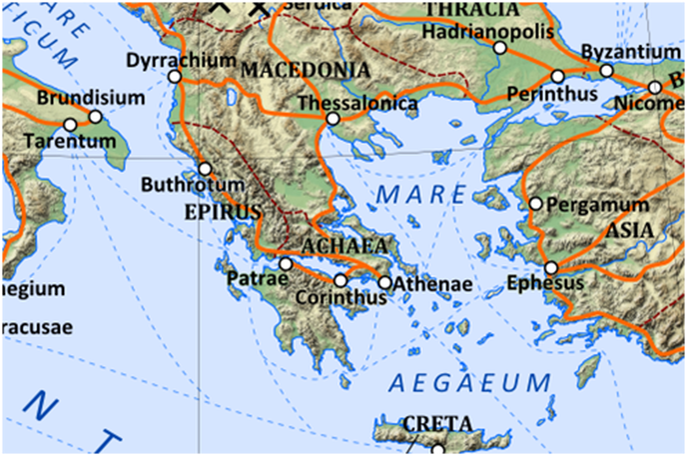
The first stage of the family’s journey in Ad Alpēs
As the chapter is set in an Italian inn, we also looked at the tombstone inscription which a real innkeeper designed for himself and his partner and which has been discussed and translated by Mary Beard. The couple called themselves Lucius Calidius Eroticus and Fannia Voluptas, names which Dame Mary renders as `Mr Hot Sex’ and `Madame Gorgeous’
In the story itself, a peddlar and the family’s rascally slave Stasimus quarrel with each other and both use the term nūgātor,which derives from nūgae (jokes, trifles) and for which Lewis & Short offers a wide range of translations: jester, joker, babbler, trifler, silly person braggart, swaggerer. John suggested `bullshitter’ as a good equivalent in modern, colloquial English.This led us to a brief discussion of other Roman insults, many of which, were, of course, obscene. There is a selection of such terms at http://www.obscure.org/obscene-latin/vocabulary.html and John has a longer list which. The standard reference for this topic is, as noted in earlier meetings, James Adam’s comprehensive account, available for download at https://monoskop.org/images/7/79/Adams_JN_The_Latin_Sexual_Vocabulary.pdf We also noted Stasimus’s use of the words Discēde in maximam malam crucem (literally `Go off to a very big bad cross’), a slight variation on a phrase used by the playwright Plautus, In everyday speech, probably abī in malam rem or abī in malam crucem were more common. When discussing British politics, John generally employs Abeant Brexitōrēs in malam rem, idiomatically `To hell with the Brexiteers’. A recent pro-Europe demonstration featured Boris futue tē ipsum, directed at the UK’s esteemed prime minister.
As the chapter is set in an Italian inn, we also looked at the tombstone inscription which a real innkeeper designed for himself and his partner and which has been discussed and translated by Mary Beard. The couple called themselves Lucius Calidius Eroticus and Fannia Voluptas, names which Dame Mary renders as `Mr Hot Sex’ and `Madame Gorgeous’
In the story itself, a peddlar and the family’s rascally slave Stasimus quarrel with each other and both use the term nūgātor,which derives from nūgae (jokes, trifles) and for which Lewis & Short offers a wide range of translations: jester, joker, babbler, trifler, silly person braggart, swaggerer. John suggested `bullshitter’ as a good equivalent in modern, colloquial English.This led us to a brief discussion of other Roman insults, many of which, were, of course, obscene. There is a selection of such terms at http://www.obscure.org/obscene-latin/vocabulary.html and John has a longer list which. The standard reference for this topic is, as noted in earlier meetings, James Adam’s comprehensive account, available for download at https://monoskop.org/images/7/79/Adams_JN_The_Latin_Sexual_Vocabulary.pdf We also noted Stasimus’s use of the words Discēde in maximam malam crucem (literally `Go off to a very big bad cross’), a slight variation on a phrase used by the playwright Plautus, In everyday speech, probably abī in malam rem or abī in malam crucem were more common. When discussing British politics, John generally employs Abeant Brexitōrēs in malam rem, idiomatically `To hell with the Brexiteers’. A recent pro-Europe demonstration featured Boris futue tē ipsum, directed at the UK’s esteemed prime minister.
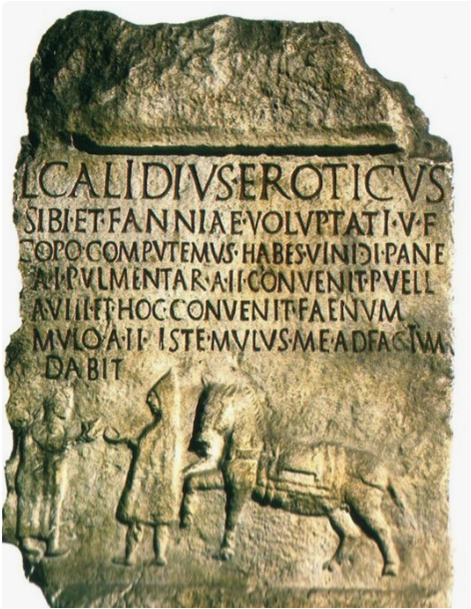
Mr Hot Sex’s’ inscription from Isernia in Southern Italy
(transcription and partial translation below)
Someone asked if there was any difference between the verbs properō and festīnō It transpires that Cato the Elder (234-149 B.C.) asserted that there was:: aliud est properāre, aliud festīnāre. Quī ūnum quid matūre trānsigit, is properat: qui multa simul incipit neque perficit, is festīnat (`Properāre is one thing, festīnāre another (` Properāre means to accomplish one thing in good time, festīnāre is to start many things at once and not finish them’). However, the 2nd. century A.D. writer Aulus Gellius, whose miscellany Noctēs Atticae (`Attic Nights) (16, 14, 2), preserves the saying, claims that they were in fact used interchangeably.
We also asked whether the verb gustō, which most of us learned as `taste’, can also mean `eat’, which is how it appeared to be used in the chapter. It turns out that gustō means basically `eat just a little’, so it covers both `taste’ in the English sense as well as `eat a light meal’, The Romans normally ate a large meal in the evening (cēna), whilst ientāculum (`breakfast’) and prandium were not at all substantial, so Nutting can correctly use gustō of the family having a bite to eat before setting off in the morning. Similarly the noun gustātio means literally `a tasting’ but it was also used of a light first dish as part of a larger meal.
Someone also asked whether ēheu and heu were synonyms. Both were in fact used as exclamations of pain or grief, the shorter word being apparently more common.
There was a brief discussion of the controversial ding right policy under which male indigenous villagers were entitled to build a `small house’ without paying the usual hefty fees involved. Although linked to supposed practice before Britian acquired the lease on the New Territories in 1898, the present system dates back to legislation passed in 1972. In may this year, a court decided that the practice was constitutional if applied to privately owned land but not for public land. Both supporters and opponents of the system are dissatisfied with the compromise and the situation is complicated because the organization representing the indigenous inhabitants of the New Territories, the Heung Yee Kok, has been assiduously cosying up to the authorities in Beijing since the 1980s. The details are explained in an article at https://www.scmp.com/news/hong-kong/law-and-crime/article/3008261/battle-over-hong-kongs-controversial-small-house
(transcription and partial translation below)
Someone asked if there was any difference between the verbs properō and festīnō It transpires that Cato the Elder (234-149 B.C.) asserted that there was:: aliud est properāre, aliud festīnāre. Quī ūnum quid matūre trānsigit, is properat: qui multa simul incipit neque perficit, is festīnat (`Properāre is one thing, festīnāre another (` Properāre means to accomplish one thing in good time, festīnāre is to start many things at once and not finish them’). However, the 2nd. century A.D. writer Aulus Gellius, whose miscellany Noctēs Atticae (`Attic Nights) (16, 14, 2), preserves the saying, claims that they were in fact used interchangeably.
We also asked whether the verb gustō, which most of us learned as `taste’, can also mean `eat’, which is how it appeared to be used in the chapter. It turns out that gustō means basically `eat just a little’, so it covers both `taste’ in the English sense as well as `eat a light meal’, The Romans normally ate a large meal in the evening (cēna), whilst ientāculum (`breakfast’) and prandium were not at all substantial, so Nutting can correctly use gustō of the family having a bite to eat before setting off in the morning. Similarly the noun gustātio means literally `a tasting’ but it was also used of a light first dish as part of a larger meal.
Someone also asked whether ēheu and heu were synonyms. Both were in fact used as exclamations of pain or grief, the shorter word being apparently more common.
There was a brief discussion of the controversial ding right policy under which male indigenous villagers were entitled to build a `small house’ without paying the usual hefty fees involved. Although linked to supposed practice before Britian acquired the lease on the New Territories in 1898, the present system dates back to legislation passed in 1972. In may this year, a court decided that the practice was constitutional if applied to privately owned land but not for public land. Both supporters and opponents of the system are dissatisfied with the compromise and the situation is complicated because the organization representing the indigenous inhabitants of the New Territories, the Heung Yee Kok, has been assiduously cosying up to the authorities in Beijing since the 1980s. The details are explained in an article at https://www.scmp.com/news/hong-kong/law-and-crime/article/3008261/battle-over-hong-kongs-controversial-small-house
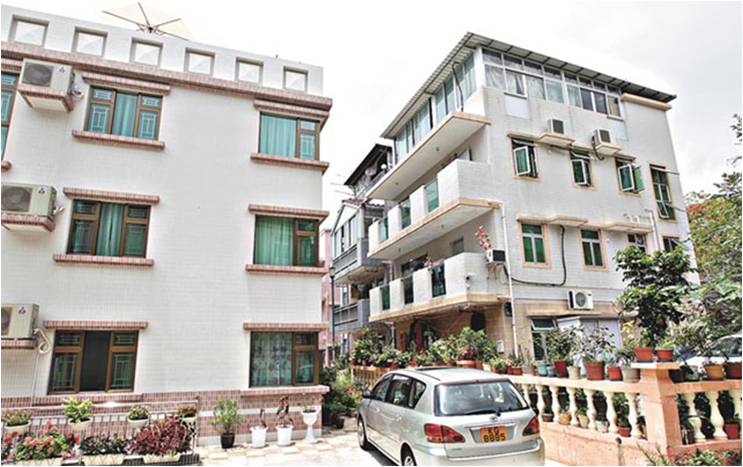
`Small houses’ in the New Territories
https://www.hongkongfp.com/2016/01/21/explainer-hong-kongs-divisive-small-house-policy/
There was also brief discussion of the notions of ethnicity and nationality in China. An article published in the economist in 2016 argues that most Chinese virtually equate Han ethnicity with Chinese nationality, creating possible problems both because of the exclusionary consequence for non-Han within China and because of the implicit claim that the Chinese diaspora remain Chinese in a political sense, see `Who is Chinese? The upper Han’ https://www.economist.com/briefing/2016/11/19/the-upper-han. The article may be behind a pay-wall but John can provide a copy on request.
Finally, Valerie confirmed thart the only British Latin GCSE equivalent that can be taken in Hong Kong is the Cambridge IGCSE. She also said that Eton and Winchester have now discontinued the policy of having their top sets take the more difficult IGCSE exam rather than OCR. The former’s syllabus covers a wider grammatical range and the extracts from original Latin literature to be studied are longer.
AD ALPĒS: CHAPTER XV
Māne abīre dēstināverant; cum autem gustāssent, Anna maesta nūntiāvit Lūcium tam adsiduē
In-morning to-leave -they-had-planned when however they-had-eaten Anna sadly announced Lucius so unceasingly
flēre, ut plānē morbō labōrāre vidērētur. Quō audītō, Drūsilla: "Heu," inquit; "semper
to-weep that plainly from-sickness to-suffer he-seemed with-this heard Drusilla Oh-no said always
metuēbam nē quid malī illī parvulō miserō accideret, cum tam raptim terrā marīque iter
I-feared lest anything of-bad to-that little-one poor might-happen since so rapidly by-land and-sea journey
facerēmus. Quid nunc faciendum est?"
we-were-making what now to-be-done is
Interim accesserat caupō avārus; quī, ubi haec audīvit, cum hospitēs tam locuplētēs
Meanwhile had-approached inn-keeper greedy who when these-things he-heard since guests so rich
quam diūtissimē apud sē retinēre vellet: "Etiam dī significāre videntur," inquit, "hodiē vōbīs
as long-as-possible with him to-keep he-wished even gods to-give-sign seem he-said today for-you
nōn abeundum esse. Nam modo in viā aliquem fīcōs vēndentem audīvī, quī identidem
not needing-to-go-away to-be for just-now in street someone figs selling I-heard who repeatedly
'cauneās'[1] clāmāret."
mind-you-don’t--go was shouting
"Quō modo istud ad rem pertinet?"[2] inquit Cornēlius.
In-what way that to thing is-connected asked Cornelius
"Ōmen manifēstum est," inquit caupō. "Nam etsī homō haud distinctē prōnūntiābat,
Omen obvious is said innkeeper for although man not clearly was-pronouncing
idem fit quasi 'cavē nē eās' dīxisset. Mēlius erit igitur, sī hinc hodiē nōn proficīscēminī."
same-thing becomes as-if beware lest you-go he-had-said better it-will-be therefore if from-here today not you-will-set-out
"Istīus modī rēs minimī faciō," inquit Cornēlius; "et properāmus."
Of-that kind things nor-at-all I-value said Cornelius and we-are-in-a-hurry
At Drūsilla: "Paulisper, obsecrō, hīc morēmur. Medicum saltem adhibērī volō,
But Drusilla a-little-while please here let-us-stay doctor at-least to-be-called-in I-want
priusquam abeāmus."
before we-leave
"Fīat," inquit Cornēlius. Tum caupōnī: "Medicus statim arcessātur ; et cūrā ut optimus
So-be-it said Cornelius then to-innkeeper doctor at-once let-be-summoned and make-sure that best
ille sit."
he is
NOTES
[1] The hawker was actually offering dried figs from Caunos in Asia Minor but the accusative cauneās (with noun fīcōs understood) sounded the same as the pronunciation in rapid speech of cavē nē eās. In his De Divinatione (2.84), Cicero records that Crassus, when about to embark on his ill-fated expedition against the Parthians (54 B.C.), had heard a hawker saying this word and that some people argued it was an omen he should have heeded.
[2] i.e. `How is that relevant?’
"Licet," inquit caupō; "nam haud procul habitat medicus, quō melior etiam Rōmae
That’s fine said innkeeper for not far-off lives doctor than-whom better-one even in-Rome
vix invenīrī potest."
scarcely be-found can
"Bene hercle nūntīās," inquit Cornēlius. "Perge modo."
Well by-heaven you-give-news said Cornelius carry-on just
Interim Anna ad Lūcium redierat, ac cēterī, morae impatientēs, in triclīniō sedēbant
Meanwhile Anna to Lucius had-returned and the-others of-delay impatient in dining-room were-sitting
medicum exspectantēs, quī brevī advēnit. Et Cornēlius: "Salvē, medice," inquit. "Fīlius meus
doctor eaiting-for who soon arrived and Cornelius Good-morning doctor said son my
parvulus minus bene sē habet.[1] Rōmam iter facimus. Celeriter eum sānārī volō."
Little less well himself has to-Rome journey we-are-making quickly him to-be-cured I-want
"Id quidem perfacile est," inquit medicus. "Omnia ego facere possum. Modo crūs
That indeed perfectly-easy is said doctor all-things I to-do am-able just-now leg
frāctum Aesculāpiō obligavī, et bracchium Apollinī. Quīn etiam mortuōs ex īnferīs excitāre
broken for-Aesculapius I-bound-up and arm for-Apollo Ineed even the-dead from inderworld to-rouse
soleō."
I-am-accustomed
At Cornēlius: "Crēdō. Sed nunc expōne quid nobīs faciendum sit."
But Cornelius [said’] I-believe[you] but now explain what by-us to-be-done is
Dum haec fīunt, Anna arcessīta adiit, in gremiō Lūcium fovēns. Quō vīsō, medicus:
While these-things are-happening Anna sent-for arrived in lap Lucius keeping-warm with-him seen doctor
"Fac ut eius pedēs appāreant," inquit. Quōs cum pertractāsset, "Aquā gelidā," inquit, "pedēs
Make [that] his feet appear said which when he-had thoroughly-handled with-water ice-cold he-said feet
lavātō."
wash
"Tē obsecrō, medice," inquit Drūsilla. "Febris modo in eum incidit. Male metuō nē
You I-beg doctor said Drusilla fever just-now on him has-come badly I-fear lest
gravēdō sequātur, sī aquā gelidā pedēs perfūsī erunt."
a-cold may-follow if in-water cold feet bathed will-have-been
"Sīc faciendum est," inquit medicus, "sī fīlium salvum optās. Ac interim fac ut hoc
Thus to-be-done is said doctor if so safe you-wish and meanwhile make that this
medicāmentum tertiā quāque hōrā abundē hauriat."
medicine third every hour in-large-quantity he drinks-up
Quae cum dīceret, ex amphorā medicāmentum ātrum, picī simile, in pateram effundēbat.
Which while he-was-saying from amphora drug black to-pitch similar into bowl he-was-pouring
"Haec omnia," inquit, "sī ad praescrīptum fīent, crās puer aut sānātus aut mortuus erit. Tum
These all he-said if as prescribed will-be-done tomorrow boy either cured or dead will-be then
NOTE
[1] i.e. `is not so well’
redībō. Iam valēte." Quō dictō, domum sē recēpit.
I-will-return now goodbye with-which said home himself he-took
Tum Cornēlius īrātus caupōnī: "Quid vīs, sceleste?" inquit. "Audēsne hominem tam
Then Cornelius angrily to-innkeeper what do-you-want rogue asked fo-you-dare man so
stultum et ineptum prō medicō arcessere? Crēdisne mē hōc venēnō meum fīlium
foolish and incompetent as-doctor to-send-for do-you-believe me with-this poison my son
interfectūrum esse?" Quae cum dīxisset, medicāmentum per fenestram apertam abiēcit,
oing-to-kill to-be which when he-had-said medicine through window open he-threw-away
Annamque iussit Lūcium abdūcere, sī forte quiētō somnō eī melius foret.
And-Anna he-orderd Lucius to-take-away in-case by-chance with-quiet sleep for-him better it-would-be
Caupō vultū maestō discessit, etsī vērō gaudēbat hospitēs abīre nōndum audēre. Cum illī
Innkeeper with-face sad went-off even-though indeed he-was-glad guests to-leave not-yet to-dare when they
intus sollicitī exspectārent, subitō per fenestrās apertās audīta est vōx Stasimī, quī in āreā
inside anxiously were-waiting suddenly through windows open heard is voice of-Stasimus who in yard
īnstitōrī vagō occurrerat.[1] Inter quōs altercātiō eius modī orta est:
hawker itinerant had-come-across between whom quarrel of-this sort arose
Stasimus. Quis[2] tū es homō, quī tam audācter hās aedēs adīs?
Who you are man who so boldly this house approach
Inst. Multās mercēs lepidās et mīrandās ego hīc in saccō ferō. Cīvem nōbilem hūc herī
Many wares charming and wonderful I here in bag am-carrying citizen noble here yesterday
advēnisse audiō. Esne tū eius servus?
To-have-arrived I-hear are you his slave
Stasimus. Ita vērō. Cuius tū servus es?
Yes indeed whose you slave are
Inst. Apage tē, nūgātor. Mēne prō servō habēre audēs? Quīn ego rēgibus antīquīs ortus sum
Away-with you bullshitter me for slave to-take you-dare in-fact I from-kings ancient descended am
Stasimus. Facile crēdō tē ortum rēge—fūrum.
Easily I-believe you [to-be] descended from-king of-thieves
Inst. Quid ais, furcifer[3]? Mēne fūrem esse īnsimulās?
What are-you-saying scoundrel me thief to-be are-you-insinuating
Stasimus. Haud īnsimulō, quod certō sciō.
Not I-insinuate what for-certain I-know
NOTES
[1] occurrro (-ere, occurrī, occursum), literally `run into’, is regularly used with the dative for accidentally meeting people
[2] As this is an interrogative adjuctive qualifying homō, quī rather than quis would be nore normal,
[3] furcifer is literally `gallows carrier’, a reference to the practice of making condemned criminals carry the instrument of their own execution.
Inst. Cave malum. Huius modī verba ā servīs ego nūllō modō audīre soleō.
Beware-of trouble of-this kind words from slaves I in-no way to-hear I-am-accustomed
Stasimus. At verbera sentīre solēs, cum dominus tē pendentem paene ad necem caedit.[1]
But blows to-feel you-are-accustomed when master you strung-up almost to death lashes
Inst. Aisne, carnifex[2]? Hōsne pugnōs vidēs? Tē in somnum longissimum collocābunt,
Do-you-say-so wretch these fists do-you-see you into sleep very-long they-will-put
nisi tibi cavēs.
unless for-yourself you-are-careful
Stasimus. Amīcē pollicēris; nam hās noctēs trēs pervigilāvī, atque aliquem quaerō,
In-friendly-way you-promise for these nights three I-have-been-awake and someone I’m-looking-for
quī faciat ut dormiam.
who can-make that I-sleep
Inst. Verbum adde ūnum, mastīgia, et tē ad terram colaphīs adflīgō.
Word add one villain and you to ground with-blows I-knock
Stasimus. Tange modo, cūstōs carceris. Oculōs tibi effodiam, sī propius accesseris.
Touch[me] just guard of-prison eyes for-you I’ll –gouge-out if closer you-will-have-come
Vīsne pugnāre?
Do-you-want to-fight
Inst. Caupōnem forās ēvocābō. Heus, caupō, exī et istum nūgātōrem hinc abige.
Innkeeper outside I-will-call Hey innkeeper come-out and that bullshitter from-here drive-away
Stasimus. Abī, dormītātor. Fue! alium olēs. Tē āmovē; discēde in maximam malam
Go-away idler Aiyaa of-garlic you-smell yourself move-away be-off to the-largest evil
crucem![3]
cross
Tum autem ex aedibus celeriter ēgressus Pūblius: "Quid fit, Stasime?" inquit.
Then however from house quickly having-emerged Publius what is-going-on Stasimus said
"Nōnne scīs Lūcium dormīre, et omnia hīc tranquilla esse oportēre? Cūr audēs tantās
Don’t you-know Lucius to-be-sleeping and all here quiet to-be to-need why do-you-dare such-great
turbās concitāre?"
disturbances to-stir-up
"Hoc omnīnō oblītus sum," inquit Stasimus, "propter hunc scelestum, quī modo parentēs
This altogether I-forgot said Stasimus because-of this rogue who just-now parents
suōs interfēcit domumque expīlāvit, atque hūc quoque fūrātum venīre ausus est. Abī, nūgātor,
own has-killed and-home looted and here also to-steal to-come dared has Go-away bull-shitter
discēde."
leave
NOTES
[1] Literally `cuts.’ The whip regularly broke the victim’s skin.
[2] carnifex, the regular word for `executioner’, is literally `meat-maker’.
[3] abī in malam crucem (`get yourself hung’, `go to hell’) was a common insult
At Pūblius: "Tacē, inquam. Sī hodiē clāmōrem iterum tollēs, maximō malō tuō
But Publius quiet I-say if today noise again you-make for-very-great trouble your
faciēs."
you-will-do [it]
Paying the bill at an inn in Isernia (Southern Italy) [1]
L. CALIDIUS EROTICUS
SIBI ET FANNIAE VOLUPTATI V.F.
COPO COMPUTEMUS HABES VINI)I PANE[M]
A.I PULMENTAR.A.II CONVENIT PUELL[A]
A.VIII ET HOC CONVENIT FAENUM
MULO A.II ISTE MULUS ME ADFACTUM
DABIT
Tum īnstitor Pūbliō: "Tē ōrō, adulēscēns," inquit, "ut mihi liceat mercēs meās mulieribus
Then peddlar to-Publius I beg-you young-man said that to-me it-be-permitted wares my to-the-women
ostendere. Certō sciō, sī semel aspexerint, eās multa emere parātās fore."
To-show for-certain I-know if once they-will have-seen them many-things to-buy prepared to-be-going-to-be
"Mater mea iam haud occupata est,"inquit Publius. "Quārē mē sequere, ac mercēs
Mother my now not busy is said Publius so me follow and wares
ostende. Tū interim, Stasime, intempēstīvās facētiās tuās alia in loca aufer." Quō dictō, aedēs
show you meanwhile Stasimus badly-timed jokes your other in places take with-which said house
intrāvit, ubi Drūsilla et Cornēlia libentissimē īnspexērunt rēs mīrandās, quās īnstitor ē saccō
he-entered where Drusilla and Cornelia very-willingly looked—at the-things marvellous which peddlar from bag
suō prōmēbat.
his was-pulling-out
Vix erat ille dīmissus, cum Anna nūntiāvit Lūcium placidē quiēvisse, ac eī iam
Scarcely had he been-dismissed when Anna announced Lucius peacefully to-have-rested and for-him now
multō melius esse. Quod cum cognitum esset, omnēs gaudēbant; ac Cornēlius Onēsimum
much better to-be which when learned had-been all were-rejoicing and Cornelius Onesimus
NOTE
[1] https://www.eagle-network.eu/story/roman-inns-are-not-for-free/ An innkeeper in the 2nd. century A.D. had this tongue-in-cheek gravestone made for himself and his wife. Dame Mary Beard playfully suggests `Mr Hot Sex’ and `Madame Gorgeous’ as English equivalents for the couple’s names (Lucius Calidius Eroticus and Fannia Voluptas). Her free translation of the dialogue: -
-- Innkeeper! Let’s work out the bill!
– You’ve had a sextarius [one pint] of wine, and bread: one as. Relish, two asses.
– Okay.
– The girl, eight asses.
– That’s okay too.
– Hay for the mule, two asses.
– That bloody mule will be the ruin of me.
statim mīsit, ut caupōnem vocāret.
At-once sent so-that innkeeper he-could-call
Iste scīlicet haud libenter audīvit Lūciō melius factum esse. Sed ratiōnem cōnficere
That-man obviously not happily heard for-Lucius better made to-have-been but bil l to-make
coāctus est ; ac paulō post, pecūniā solūta, viātōrēs iterum in raedīs sedēbant, atque equī
forced he-was and a-little later with-money paid travellers again in wagons were-sitting and horses
alacrēs viā strātā vehicula celeriter rapuērunt.
Eagerly on-way paved vehicles quickly whisked-away
https://www.hongkongfp.com/2016/01/21/explainer-hong-kongs-divisive-small-house-policy/
There was also brief discussion of the notions of ethnicity and nationality in China. An article published in the economist in 2016 argues that most Chinese virtually equate Han ethnicity with Chinese nationality, creating possible problems both because of the exclusionary consequence for non-Han within China and because of the implicit claim that the Chinese diaspora remain Chinese in a political sense, see `Who is Chinese? The upper Han’ https://www.economist.com/briefing/2016/11/19/the-upper-han. The article may be behind a pay-wall but John can provide a copy on request.
Finally, Valerie confirmed thart the only British Latin GCSE equivalent that can be taken in Hong Kong is the Cambridge IGCSE. She also said that Eton and Winchester have now discontinued the policy of having their top sets take the more difficult IGCSE exam rather than OCR. The former’s syllabus covers a wider grammatical range and the extracts from original Latin literature to be studied are longer.
AD ALPĒS: CHAPTER XV
Māne abīre dēstināverant; cum autem gustāssent, Anna maesta nūntiāvit Lūcium tam adsiduē
In-morning to-leave -they-had-planned when however they-had-eaten Anna sadly announced Lucius so unceasingly
flēre, ut plānē morbō labōrāre vidērētur. Quō audītō, Drūsilla: "Heu," inquit; "semper
to-weep that plainly from-sickness to-suffer he-seemed with-this heard Drusilla Oh-no said always
metuēbam nē quid malī illī parvulō miserō accideret, cum tam raptim terrā marīque iter
I-feared lest anything of-bad to-that little-one poor might-happen since so rapidly by-land and-sea journey
facerēmus. Quid nunc faciendum est?"
we-were-making what now to-be-done is
Interim accesserat caupō avārus; quī, ubi haec audīvit, cum hospitēs tam locuplētēs
Meanwhile had-approached inn-keeper greedy who when these-things he-heard since guests so rich
quam diūtissimē apud sē retinēre vellet: "Etiam dī significāre videntur," inquit, "hodiē vōbīs
as long-as-possible with him to-keep he-wished even gods to-give-sign seem he-said today for-you
nōn abeundum esse. Nam modo in viā aliquem fīcōs vēndentem audīvī, quī identidem
not needing-to-go-away to-be for just-now in street someone figs selling I-heard who repeatedly
'cauneās'[1] clāmāret."
mind-you-don’t--go was shouting
"Quō modo istud ad rem pertinet?"[2] inquit Cornēlius.
In-what way that to thing is-connected asked Cornelius
"Ōmen manifēstum est," inquit caupō. "Nam etsī homō haud distinctē prōnūntiābat,
Omen obvious is said innkeeper for although man not clearly was-pronouncing
idem fit quasi 'cavē nē eās' dīxisset. Mēlius erit igitur, sī hinc hodiē nōn proficīscēminī."
same-thing becomes as-if beware lest you-go he-had-said better it-will-be therefore if from-here today not you-will-set-out
"Istīus modī rēs minimī faciō," inquit Cornēlius; "et properāmus."
Of-that kind things nor-at-all I-value said Cornelius and we-are-in-a-hurry
At Drūsilla: "Paulisper, obsecrō, hīc morēmur. Medicum saltem adhibērī volō,
But Drusilla a-little-while please here let-us-stay doctor at-least to-be-called-in I-want
priusquam abeāmus."
before we-leave
"Fīat," inquit Cornēlius. Tum caupōnī: "Medicus statim arcessātur ; et cūrā ut optimus
So-be-it said Cornelius then to-innkeeper doctor at-once let-be-summoned and make-sure that best
ille sit."
he is
NOTES
[1] The hawker was actually offering dried figs from Caunos in Asia Minor but the accusative cauneās (with noun fīcōs understood) sounded the same as the pronunciation in rapid speech of cavē nē eās. In his De Divinatione (2.84), Cicero records that Crassus, when about to embark on his ill-fated expedition against the Parthians (54 B.C.), had heard a hawker saying this word and that some people argued it was an omen he should have heeded.
[2] i.e. `How is that relevant?’
"Licet," inquit caupō; "nam haud procul habitat medicus, quō melior etiam Rōmae
That’s fine said innkeeper for not far-off lives doctor than-whom better-one even in-Rome
vix invenīrī potest."
scarcely be-found can
"Bene hercle nūntīās," inquit Cornēlius. "Perge modo."
Well by-heaven you-give-news said Cornelius carry-on just
Interim Anna ad Lūcium redierat, ac cēterī, morae impatientēs, in triclīniō sedēbant
Meanwhile Anna to Lucius had-returned and the-others of-delay impatient in dining-room were-sitting
medicum exspectantēs, quī brevī advēnit. Et Cornēlius: "Salvē, medice," inquit. "Fīlius meus
doctor eaiting-for who soon arrived and Cornelius Good-morning doctor said son my
parvulus minus bene sē habet.[1] Rōmam iter facimus. Celeriter eum sānārī volō."
Little less well himself has to-Rome journey we-are-making quickly him to-be-cured I-want
"Id quidem perfacile est," inquit medicus. "Omnia ego facere possum. Modo crūs
That indeed perfectly-easy is said doctor all-things I to-do am-able just-now leg
frāctum Aesculāpiō obligavī, et bracchium Apollinī. Quīn etiam mortuōs ex īnferīs excitāre
broken for-Aesculapius I-bound-up and arm for-Apollo Ineed even the-dead from inderworld to-rouse
soleō."
I-am-accustomed
At Cornēlius: "Crēdō. Sed nunc expōne quid nobīs faciendum sit."
But Cornelius [said’] I-believe[you] but now explain what by-us to-be-done is
Dum haec fīunt, Anna arcessīta adiit, in gremiō Lūcium fovēns. Quō vīsō, medicus:
While these-things are-happening Anna sent-for arrived in lap Lucius keeping-warm with-him seen doctor
"Fac ut eius pedēs appāreant," inquit. Quōs cum pertractāsset, "Aquā gelidā," inquit, "pedēs
Make [that] his feet appear said which when he-had thoroughly-handled with-water ice-cold he-said feet
lavātō."
wash
"Tē obsecrō, medice," inquit Drūsilla. "Febris modo in eum incidit. Male metuō nē
You I-beg doctor said Drusilla fever just-now on him has-come badly I-fear lest
gravēdō sequātur, sī aquā gelidā pedēs perfūsī erunt."
a-cold may-follow if in-water cold feet bathed will-have-been
"Sīc faciendum est," inquit medicus, "sī fīlium salvum optās. Ac interim fac ut hoc
Thus to-be-done is said doctor if so safe you-wish and meanwhile make that this
medicāmentum tertiā quāque hōrā abundē hauriat."
medicine third every hour in-large-quantity he drinks-up
Quae cum dīceret, ex amphorā medicāmentum ātrum, picī simile, in pateram effundēbat.
Which while he-was-saying from amphora drug black to-pitch similar into bowl he-was-pouring
"Haec omnia," inquit, "sī ad praescrīptum fīent, crās puer aut sānātus aut mortuus erit. Tum
These all he-said if as prescribed will-be-done tomorrow boy either cured or dead will-be then
NOTE
[1] i.e. `is not so well’
redībō. Iam valēte." Quō dictō, domum sē recēpit.
I-will-return now goodbye with-which said home himself he-took
Tum Cornēlius īrātus caupōnī: "Quid vīs, sceleste?" inquit. "Audēsne hominem tam
Then Cornelius angrily to-innkeeper what do-you-want rogue asked fo-you-dare man so
stultum et ineptum prō medicō arcessere? Crēdisne mē hōc venēnō meum fīlium
foolish and incompetent as-doctor to-send-for do-you-believe me with-this poison my son
interfectūrum esse?" Quae cum dīxisset, medicāmentum per fenestram apertam abiēcit,
oing-to-kill to-be which when he-had-said medicine through window open he-threw-away
Annamque iussit Lūcium abdūcere, sī forte quiētō somnō eī melius foret.
And-Anna he-orderd Lucius to-take-away in-case by-chance with-quiet sleep for-him better it-would-be
Caupō vultū maestō discessit, etsī vērō gaudēbat hospitēs abīre nōndum audēre. Cum illī
Innkeeper with-face sad went-off even-though indeed he-was-glad guests to-leave not-yet to-dare when they
intus sollicitī exspectārent, subitō per fenestrās apertās audīta est vōx Stasimī, quī in āreā
inside anxiously were-waiting suddenly through windows open heard is voice of-Stasimus who in yard
īnstitōrī vagō occurrerat.[1] Inter quōs altercātiō eius modī orta est:
hawker itinerant had-come-across between whom quarrel of-this sort arose
Stasimus. Quis[2] tū es homō, quī tam audācter hās aedēs adīs?
Who you are man who so boldly this house approach
Inst. Multās mercēs lepidās et mīrandās ego hīc in saccō ferō. Cīvem nōbilem hūc herī
Many wares charming and wonderful I here in bag am-carrying citizen noble here yesterday
advēnisse audiō. Esne tū eius servus?
To-have-arrived I-hear are you his slave
Stasimus. Ita vērō. Cuius tū servus es?
Yes indeed whose you slave are
Inst. Apage tē, nūgātor. Mēne prō servō habēre audēs? Quīn ego rēgibus antīquīs ortus sum
Away-with you bullshitter me for slave to-take you-dare in-fact I from-kings ancient descended am
Stasimus. Facile crēdō tē ortum rēge—fūrum.
Easily I-believe you [to-be] descended from-king of-thieves
Inst. Quid ais, furcifer[3]? Mēne fūrem esse īnsimulās?
What are-you-saying scoundrel me thief to-be are-you-insinuating
Stasimus. Haud īnsimulō, quod certō sciō.
Not I-insinuate what for-certain I-know
NOTES
[1] occurrro (-ere, occurrī, occursum), literally `run into’, is regularly used with the dative for accidentally meeting people
[2] As this is an interrogative adjuctive qualifying homō, quī rather than quis would be nore normal,
[3] furcifer is literally `gallows carrier’, a reference to the practice of making condemned criminals carry the instrument of their own execution.
Inst. Cave malum. Huius modī verba ā servīs ego nūllō modō audīre soleō.
Beware-of trouble of-this kind words from slaves I in-no way to-hear I-am-accustomed
Stasimus. At verbera sentīre solēs, cum dominus tē pendentem paene ad necem caedit.[1]
But blows to-feel you-are-accustomed when master you strung-up almost to death lashes
Inst. Aisne, carnifex[2]? Hōsne pugnōs vidēs? Tē in somnum longissimum collocābunt,
Do-you-say-so wretch these fists do-you-see you into sleep very-long they-will-put
nisi tibi cavēs.
unless for-yourself you-are-careful
Stasimus. Amīcē pollicēris; nam hās noctēs trēs pervigilāvī, atque aliquem quaerō,
In-friendly-way you-promise for these nights three I-have-been-awake and someone I’m-looking-for
quī faciat ut dormiam.
who can-make that I-sleep
Inst. Verbum adde ūnum, mastīgia, et tē ad terram colaphīs adflīgō.
Word add one villain and you to ground with-blows I-knock
Stasimus. Tange modo, cūstōs carceris. Oculōs tibi effodiam, sī propius accesseris.
Touch[me] just guard of-prison eyes for-you I’ll –gouge-out if closer you-will-have-come
Vīsne pugnāre?
Do-you-want to-fight
Inst. Caupōnem forās ēvocābō. Heus, caupō, exī et istum nūgātōrem hinc abige.
Innkeeper outside I-will-call Hey innkeeper come-out and that bullshitter from-here drive-away
Stasimus. Abī, dormītātor. Fue! alium olēs. Tē āmovē; discēde in maximam malam
Go-away idler Aiyaa of-garlic you-smell yourself move-away be-off to the-largest evil
crucem![3]
cross
Tum autem ex aedibus celeriter ēgressus Pūblius: "Quid fit, Stasime?" inquit.
Then however from house quickly having-emerged Publius what is-going-on Stasimus said
"Nōnne scīs Lūcium dormīre, et omnia hīc tranquilla esse oportēre? Cūr audēs tantās
Don’t you-know Lucius to-be-sleeping and all here quiet to-be to-need why do-you-dare such-great
turbās concitāre?"
disturbances to-stir-up
"Hoc omnīnō oblītus sum," inquit Stasimus, "propter hunc scelestum, quī modo parentēs
This altogether I-forgot said Stasimus because-of this rogue who just-now parents
suōs interfēcit domumque expīlāvit, atque hūc quoque fūrātum venīre ausus est. Abī, nūgātor,
own has-killed and-home looted and here also to-steal to-come dared has Go-away bull-shitter
discēde."
leave
NOTES
[1] Literally `cuts.’ The whip regularly broke the victim’s skin.
[2] carnifex, the regular word for `executioner’, is literally `meat-maker’.
[3] abī in malam crucem (`get yourself hung’, `go to hell’) was a common insult
At Pūblius: "Tacē, inquam. Sī hodiē clāmōrem iterum tollēs, maximō malō tuō
But Publius quiet I-say if today noise again you-make for-very-great trouble your
faciēs."
you-will-do [it]
Paying the bill at an inn in Isernia (Southern Italy) [1]
L. CALIDIUS EROTICUS
SIBI ET FANNIAE VOLUPTATI V.F.
COPO COMPUTEMUS HABES VINI)I PANE[M]
A.I PULMENTAR.A.II CONVENIT PUELL[A]
A.VIII ET HOC CONVENIT FAENUM
MULO A.II ISTE MULUS ME ADFACTUM
DABIT
Tum īnstitor Pūbliō: "Tē ōrō, adulēscēns," inquit, "ut mihi liceat mercēs meās mulieribus
Then peddlar to-Publius I beg-you young-man said that to-me it-be-permitted wares my to-the-women
ostendere. Certō sciō, sī semel aspexerint, eās multa emere parātās fore."
To-show for-certain I-know if once they-will have-seen them many-things to-buy prepared to-be-going-to-be
"Mater mea iam haud occupata est,"inquit Publius. "Quārē mē sequere, ac mercēs
Mother my now not busy is said Publius so me follow and wares
ostende. Tū interim, Stasime, intempēstīvās facētiās tuās alia in loca aufer." Quō dictō, aedēs
show you meanwhile Stasimus badly-timed jokes your other in places take with-which said house
intrāvit, ubi Drūsilla et Cornēlia libentissimē īnspexērunt rēs mīrandās, quās īnstitor ē saccō
he-entered where Drusilla and Cornelia very-willingly looked—at the-things marvellous which peddlar from bag
suō prōmēbat.
his was-pulling-out
Vix erat ille dīmissus, cum Anna nūntiāvit Lūcium placidē quiēvisse, ac eī iam
Scarcely had he been-dismissed when Anna announced Lucius peacefully to-have-rested and for-him now
multō melius esse. Quod cum cognitum esset, omnēs gaudēbant; ac Cornēlius Onēsimum
much better to-be which when learned had-been all were-rejoicing and Cornelius Onesimus
NOTE
[1] https://www.eagle-network.eu/story/roman-inns-are-not-for-free/ An innkeeper in the 2nd. century A.D. had this tongue-in-cheek gravestone made for himself and his wife. Dame Mary Beard playfully suggests `Mr Hot Sex’ and `Madame Gorgeous’ as English equivalents for the couple’s names (Lucius Calidius Eroticus and Fannia Voluptas). Her free translation of the dialogue: -
-- Innkeeper! Let’s work out the bill!
– You’ve had a sextarius [one pint] of wine, and bread: one as. Relish, two asses.
– Okay.
– The girl, eight asses.
– That’s okay too.
– Hay for the mule, two asses.
– That bloody mule will be the ruin of me.
statim mīsit, ut caupōnem vocāret.
At-once sent so-that innkeeper he-could-call
Iste scīlicet haud libenter audīvit Lūciō melius factum esse. Sed ratiōnem cōnficere
That-man obviously not happily heard for-Lucius better made to-have-been but bil l to-make
coāctus est ; ac paulō post, pecūniā solūta, viātōrēs iterum in raedīs sedēbant, atque equī
forced he-was and a-little later with-money paid travellers again in wagons were-sitting and horses
alacrēs viā strātā vehicula celeriter rapuērunt.
Eagerly on-way paved vehicles quickly whisked-away
