| linguae |
|
QUESTIONS ARISING FROM 90th. MEETING – 25/5/18
(the record of earlier meetings can be downloaded from the main Circulus page as can the version of Ciceronis Filius with illustrations added. The illustrated text of Genesis is available on the Genesis page and of Kepler's Somnium on the Somnium page.)
Food consumed included cicera aromatica (chana masala), carnēs assae mixtae (mixed grill) carela or cucurbita amāra (bitter gourd), spīnācia cum caseō (saag paneer), sōlāna cum brassica Pompēiānā (alu gobi), fragmenta gallīnācea aromatica (cicken tika masala), iūs lentium (daal), pānis Persicus (nan) and orӯza (rice) along with three bottles (lagoena) of red wine (vīnum rubrum).
John discussed with Valerie the possibility of her recording Queen Elizabeth I’s 1597 Latin rebuke to a Polish ambassador who was rash enough to outline in open court, where custom demanded a simple exchange of courtesises, his country’s complaints about England stopping their ships to prevent their trading with Spain, with which England was then at wat.Text and translation are available at https://linguae.weebly.com/regina-et-legatus.html
John discussed with Valerie the possibility of her recording Queen Elizabeth I’s 1597 Latin rebuke to a Polish ambassador who was rash enough to outline in open court, where custom demanded a simple exchange of courtesises, his country’s complaints about England stopping their ships to prevent their trading with Spain, with which England was then at wat.Text and translation are available at https://linguae.weebly.com/regina-et-legatus.html

This led to a brief consideration of the standard of spoken Latin amongst aristocrats at this time. Elizabeth’s making an extempore speech of some complexity was evidence of her own proficiency in the language but the fact that this was regarded by contemporaries as a noteworthy achievement suggested the general standard was much lower. Malcolm thought that Latin might have been left largely to the clergy but John believed well-educated secular rulers did have some competence in the language and gave as an example the Latin correspondence between Prince Arthur, eldest son of Henry VII, and his future bride, Catherine of Aragon. He conceded, though, that they might have had the assistance of their turors in producing these letters. The latest known example of oral Latin being needed for conversation within Britain was in the 18th century, when King George I, who had been brought in from Germany to take the throne when Queen Anne died childless in 1714, used the language with his prime minister, Sir Robert Walpole. In later years Walpole used to joke about having run the kingdom in bad Latin. In 1733, six years after George’s death, English was made the only official language for the recording of births, marriages and deaths, in Britain, a task which in earlier centuries had been carried out in Latin.
Further east in Europe, even though French had replaced Latin as the main language of diplomacy in the mid-18th century, the older language for some time retained its importance as a medium of communication. Peter Burke, in his Languages and communities in Early Modern Europe, records the claim by a Flemish monk in 1633 that in Hungary `peasants and shepherds speak Latin more thoroughly than many priests do elsewhere’ and by another writer in 1668 that in the same country `coachmen, watermen and mean persons’ could make themselves understood in the language. In 1728, Daniel Defoe, best known as the author of Robinson Crusoe, wrote that `a man who can speak Latin may travel from one end of Poland to the other as familiarly as if he was born in the country.’ At the end of the century, when Poland disappeared as an independent state and the western section was annexed by Prussia, the new rulers were eager to introduce German as the language of administration but realized they would have to move slowly because of the attachment of the Polish aristocracy to Latin. Coming up to the last century, Pope Paul VI (reigned 1963-1978) is said once to have remarked that it was strange that he was the Bishop of Rome yet he did not speak Latin as well as the Hungarian cardinals he had just met. John also recalled Fr. Tuto, the Hungarian curate at his church in Nottingham who had arrived as a refugee after the suppression of the 1956 uprising and had had to try to communicate in Latin with the parishioner collecting him at Heathrow.
More details on the post-classical use of Latin can be found the Powerpoint John produced for a presentation at CUHK some years ago. This can be downloaded from near the start of the web page https://linguae.weebly.com/latin--greek.html, - search for the title life_after_death.ppt,
We briefly stated our favourite pastimes in Latin, using the phrases listed in the QUID IN ŌTIŌ FACERE SOLĒS? handout, reproduced below. Eugene had brought along some paragraphs from the 17th century composer and organist Georgius (Georg) Muffat, whose scores included valuable information on instruments and performance conventions of the Baroque era (https://en.wikipedia.org/wiki/Georg_Muffat). Muffat used the term violīnum (-ī n) rather than violīna, which was included in John’s list. It was later found that both words were included in the Morgan-Owens neo-Latin word list so we can take our pick. Subsequent research also revealed the use of viōloncellum or fidēs maiōrēs for cello.) contrābasssus, -ī m or fidēs(-is) statāria for double-bass. The noun fidēs was in classical Latin prose used only in the plural (with genitive fidium ) for any kind of stringed instrument but the singular fidēs, fidis was used in poetry with the same meaning. The word needs to be distinguished from the commoner 5th declension fidēs, fidēī f, faith.
Malcolm recommended two novels dealing with the Vietnam war: The Sympathizer, by Vietnamese American Viet Thanh Nguyen, which won the 2016 Pullitzer prize for fiction, and Bao Ninh’s The Sorrow of War, originally written in Vietnamese as a graduate dissertation at Hanoi University by Bao Ninh. More information can be found at
https://www.theguardian.com/books/2016/mar/12/the-sympathizer-viet-thanh-nguyen-review-debut
and https://en.wikipedia.org/wiki/The_Sorrow_of_War Malcolm has yet to begin his own book on the war, and remarked that the more you know, the more you know how little you know. We discussed the Latin for this idea and t should perhaps be quō plūs scīs eo plūs scīs quam paulum sciās
Further east in Europe, even though French had replaced Latin as the main language of diplomacy in the mid-18th century, the older language for some time retained its importance as a medium of communication. Peter Burke, in his Languages and communities in Early Modern Europe, records the claim by a Flemish monk in 1633 that in Hungary `peasants and shepherds speak Latin more thoroughly than many priests do elsewhere’ and by another writer in 1668 that in the same country `coachmen, watermen and mean persons’ could make themselves understood in the language. In 1728, Daniel Defoe, best known as the author of Robinson Crusoe, wrote that `a man who can speak Latin may travel from one end of Poland to the other as familiarly as if he was born in the country.’ At the end of the century, when Poland disappeared as an independent state and the western section was annexed by Prussia, the new rulers were eager to introduce German as the language of administration but realized they would have to move slowly because of the attachment of the Polish aristocracy to Latin. Coming up to the last century, Pope Paul VI (reigned 1963-1978) is said once to have remarked that it was strange that he was the Bishop of Rome yet he did not speak Latin as well as the Hungarian cardinals he had just met. John also recalled Fr. Tuto, the Hungarian curate at his church in Nottingham who had arrived as a refugee after the suppression of the 1956 uprising and had had to try to communicate in Latin with the parishioner collecting him at Heathrow.
More details on the post-classical use of Latin can be found the Powerpoint John produced for a presentation at CUHK some years ago. This can be downloaded from near the start of the web page https://linguae.weebly.com/latin--greek.html, - search for the title life_after_death.ppt,
We briefly stated our favourite pastimes in Latin, using the phrases listed in the QUID IN ŌTIŌ FACERE SOLĒS? handout, reproduced below. Eugene had brought along some paragraphs from the 17th century composer and organist Georgius (Georg) Muffat, whose scores included valuable information on instruments and performance conventions of the Baroque era (https://en.wikipedia.org/wiki/Georg_Muffat). Muffat used the term violīnum (-ī n) rather than violīna, which was included in John’s list. It was later found that both words were included in the Morgan-Owens neo-Latin word list so we can take our pick. Subsequent research also revealed the use of viōloncellum or fidēs maiōrēs for cello.) contrābasssus, -ī m or fidēs(-is) statāria for double-bass. The noun fidēs was in classical Latin prose used only in the plural (with genitive fidium ) for any kind of stringed instrument but the singular fidēs, fidis was used in poetry with the same meaning. The word needs to be distinguished from the commoner 5th declension fidēs, fidēī f, faith.
Malcolm recommended two novels dealing with the Vietnam war: The Sympathizer, by Vietnamese American Viet Thanh Nguyen, which won the 2016 Pullitzer prize for fiction, and Bao Ninh’s The Sorrow of War, originally written in Vietnamese as a graduate dissertation at Hanoi University by Bao Ninh. More information can be found at
https://www.theguardian.com/books/2016/mar/12/the-sympathizer-viet-thanh-nguyen-review-debut
and https://en.wikipedia.org/wiki/The_Sorrow_of_War Malcolm has yet to begin his own book on the war, and remarked that the more you know, the more you know how little you know. We discussed the Latin for this idea and t should perhaps be quō plūs scīs eo plūs scīs quam paulum sciās
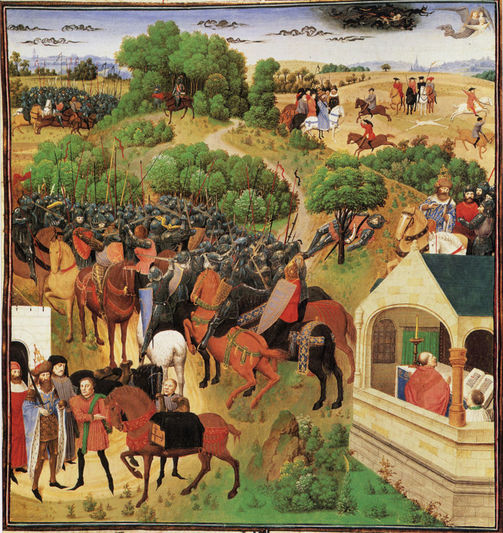
Scenes from La Chanson de Roland
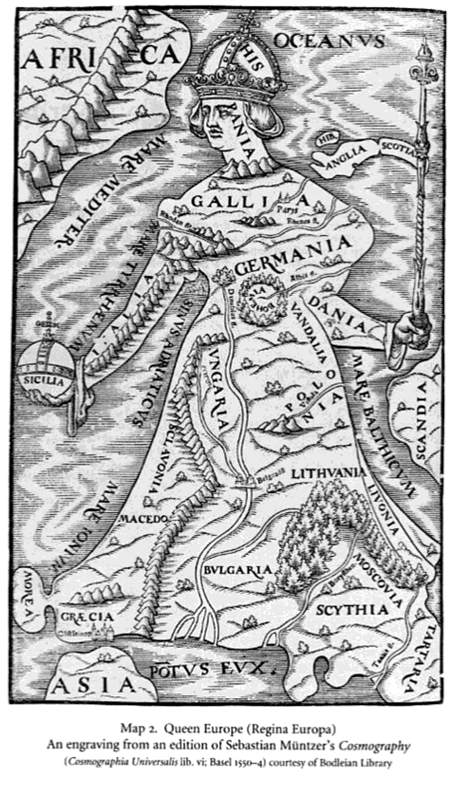
We also considered the old Christian concept of in partibus infidelium – in regions dominated by non-believers. Until the 19th century this phrase formed part of the titles of bishops a given purely nominal appointments to sees where there were no actual Christians. Malcolm also mentioned the concept of outremer (over seas), applied in the Middle Ages to the Crusader States in Jerusalem, Antioch etc. See https://en.wikipedia.org/wiki/Outremer, which also mentions `Outremer’ as the name of an imaginary Muslim kingdom in the early French epic, La Chanson de Roland, based on a battle in the 8th century A.D. between Charlemagne’s army and the Saracens in Spain. John recalled that one of the chapter headings in Norman Davies’ The Isles: a History, a general survey of British and Irish history, is `The Isles of Outremer’, chosen to suggest that for the Normans and Plantagenets, whose original home base was in France, Britain and Irleand were simply appendages to the European mainland. Davies is best-known for his magisterial Europe: a History which tries to redress the tendency to redress the marginality of Eastern Europe by orientating his maps to put Poland at the centre. Polish history was actually the field in which Davis first established his own reputation as a historian,
We also considered the old Christian concept of in partibus infidelium – in regions dominated by non-believers. Until the 19th century this phrase formed part of the titles of bishops a given purely nominal appointments to sees where there were no actual Christians. Malcolm also mentioned the concept of outremer (over seas), applied in the Middle Ages to the Crusader States in Jerusalem, Antioch etc. See https://en.wikipedia.org/wiki/Outremer, which also mentions `Outremer’ as the name of an imaginary Muslim kingdom in the early French epic, La Chanson de Roland, based on a battle in the 8th century A.D. between Charlemagne’s army and the Saracens in Spain. John recalled that one of the chapter headings in Norman Davies’ The Isles: a History, a general survey of British and Irish history, is `The Isles of Outremer’, chosen to suggest that for the Normans and Plantagenets, whose original home base was in France, Britain and Irleand were simply appendages to the European mainland. Davies is best-known for his magisterial Europe: a History which tries to redress the tendency to redress the marginality of Eastern Europe by orientating his maps to put Poland at the centre. Polish history was actually the field in which Davis first established his own reputation as a historian,
Malcolm is a friend of Gordon Redding, an academic specialising in the study of capitalism amongst the Chinese diaspora and married to a Vietnamese. His principal works, including the The Spirit of Chinese Capitalism are listed at https://en.wikipedia.org/wiki/Gordon_Redding John mentioned Gregor Benton, professor emeritus of Chinese history at Cardiff, who was an expert on the overseas Chinese and on migrants in general and author of, among other titles, Chinese migrants and internationalism: forgotten histories, 1917-1945.
We briefly referred to last month’s discussion on whether the Roman Empire reached its greatest extent under Traian in the early 2nd. century or Septimius Severus in the early third. John had written on the issue both to one of his own former university rteachers and also to Anthony Birlrey, whose Septimius Severus: the African Emperor is the standard work on its subject.
We also discussed corporal punishment, use of which for teaching the classics was approved of by both Samual Johnson and George Orwell (see the record of the 77th meeting, April 2017 and https://sententiaeantiquae.com/2017/01/11/classical-education-and-corporal-punishment/ ) This was abolished as early as 1783 in Poland but allowed in state-funded schools in the UK until 1986 or 1987, and finally banned also in independent schools a few years later (1996 for England and Wales, 2000 for Scotland and 2003 for Northern Ireland. Some of us were old enough to remember the old regime: Malcolm, who had opted for boarding school when offered a choice between that and being funded later for university, remembers a master telling his father that the cane was still employed and the latter replying `Well, it never did me any harm!’ He remembered one rather unfair instance of its use as a collective punishment for 23 boys in a dormitory when nobody would own up to being the one who had waved to a girl in the street below after curfew! John was caned just twice (within the space of a week) during seven years at a state-aided Catholic grammar school. Beatings were administered by a monk who disappeared suddenly after it transpired that he had been sexually abusing some of the students. Thereafter the cane was kept in the headmaster’s study but, as far as John could remember, never used again.
Despite the number of such cases that have been reported in recent years, and the Catholic Church’s lamentable failure to deal with the problem effectively, the great majority of students who went through the church system were not victims of abuse. In David Lodge’s novel How Far Can You Go, a novel following a cohort of Catholic undergraduates from university in the 1950s into adult life, the only sexual harassment is perpetrated by a non-Catholic academic, and, quite rightly in John’s opinion, the emphasis is instead on the problems created by traditional Catholicism’s labelling as sinful what most people would now regard as perfectly acceptable sexual activity. For details of the novel, which is humorously written despite the serious subject, see https://www.goodreads.com/book/show/267257.How_Far_Can_You_Go_
We also discussed the rather more drastic methods of punishment meted out to slaves in ancient Rome. Perhaps the best-known incident of this is Vedius Pollio attempt to punish a slave by immersion in a pool of flesh-eating lampreys. Both this case and the legal provision for all the slaves in a household to be esecuted if one of them killed a member of the master’s family were discussed in last month’s meeting.
There was brief discussion of the Latin for `See you tomorrow’, which is probably best rendered in crāstinum (as Cicero uses differāmus in crāstinum for `let’s put it off till tomorrow’), though John has often in the past used ad crāstinum. The word crastīnus is actually an adjective so the full phrase should really be in diem crāstinum but, as with porcīna for caro porcīna (`pig flesh’, `pork’), the noun was normally omitted. The simple form crās is an indeclinable adverb so could not be used with a preposition. Malcolm wondered about the origin of the Italian phrase with the same meaning, a domani. Subsequent investigation revealed that domani actually derives from late Latin dē māne (`of the morning’)
SOMNIUM EXTRACT
IV. Literīs trāditīs Braheus valdē exhilarātus coepit ex mē multa quaerere ^22, quae
With-letter handed-over Brahe greatly delighted began from me many-things to-enquire which
ego linguae imperītus nōn intellēxī, paucīs verbīs exceptīs ^23. Itaque negōtium suīs
I with-language unacquainted not understood with-few words excepted and-so task to-his
dedit studiōsīs, quōs magnō numerō alēbat ^24, utī mēcum crebrō loquerentur,
he-gave students whom in-great number he-supported that with-me frequently they-should-talk
factumque līberālitāte Brahei ^25, et paucārum septimānārum exercitiō, ut mediōcriter
and-brought-about by-generosity of-Brahe and of-a-few weeks by-training that fairly-well
Dānice loquerer. Nec minus ego promtus in nārrandō, quam illi erant in quaerendō.
in-Danish I-could-talk and-not less I was-ready in-telling than they were in questioning
Multa quippe īnsuēta mīrābar, multa mīrantibus ex meā patriā nova recēnsēbam.
Many-things for unfamiliar I-marveled-at many-things to-them-marvelling from-my country new I-recounted
Dēnique reversus nāvis magister mēque repetēns repulsam tulit,[1] valdē mē gaudente
Finally having-returned of-ship captain and-me asking-back rebuff he-bore greatly with-me rejoicing
^26. Mīrum in modum mihi arrīdēbant astronomica exercitia, quippe studiōsī et
Marvellous in manner me were-delighting astronomical exercises for the-students and
Braheus mīrābilibus māchinīs tōtīs noctibus[2] intendēbant Lūnae sīderibusque ^27,
Brahe with-marvellous machines for-whole nights were-focussed on-moon and-stars
quae mē rēs admonēbat mātris, quippe et ipsa assiduē cum Lūnā solita erat colloquī
which me thing reminded of-mother for also she assiduously with moon accustomed was to-speak
^28. Hāc igitur occāsiōne ego patriā semibarbarus, conditiōne egentissimus, in
By-this therefore chance I by-country half-barbarian by-condition very-poor into
dīvīnissimae scientiae cognitiōnem vēnī; quae mihi ad majōra viam parāvit.
of-most-divine science knowledge came which for-me to greater-things way prepared
V. Etenim exāctīs annīs aliquot in hāc īnsulā tandem mē cupiditās incessit
And-indeed spent years some in this island at-last me desire came-upon
revīsendae[3] patriae; rēbar enim nōn grave mihi futūrum ob acquīsītam scientiam,
of-being-revisited native-land I-was-thinking for not difficult to-me going-to-be because-of acquired knowledge
ēmergere ad aliquam in meā gente rudī[4] dignitātem. Salūtātō igitur patrōnō et
to-rise to some in my nation primitive dignity bade-farewell therefore with-patron and
veniā discessūs impetrātā vēnī Hafniam; nactusque sociōs itineris, quī mē ob
with-permission of-departure obtained I-came to-Copenhagen and-having-obtained companions of-journey who me because-of
linguae et regiōnis cognitiōnem libenter in suum patrōcinium suscēpērunt, rediī in
of-language and of-region knowledge willingly into their protection took I-returned into
patriam, quīntō postquam excesseram annō. Prīma meī reditūs fēlīcitās erat, quod
native-land in-fifth after I-had-left year first of-my return joy was that
mātrem invēnī adhūc spīrantem et eadem quae olim[5] factitantem, fīnemque eī
mother I-found still breathing and same which once keeping-on-doing and-end for-her
poenitūdinis diūturnae, ob āmissum temeritāte fīlium, vīvus et ōrnātus attulī. Vergēbat
of-punishment long-lasting because-of lost through-rashness son living and well-attired I-brought was-sinking
tunc annus in autumnum ^29, succēdēbantque deinceps noctēs illae nostrae longae,
then year into autumn and-were-coming-up in-a-series nights those of-us long
quippe Nātālitiō Christi mēnse Sōl in merīdiē vīx parum ēmergēns ē vestīgiō[6]
for of-birth of-Christ in-month sun at mid-day scarcely too-little coming-out instantly
rūrsum conditur ^30.
again is-hidden
Ita māter per hanc vacātiōnem a suīs operīs mihi adhaerēre,[7] ā mē nōn discēdere,
Thus mother through this break from her work to-me continued-to-stick from me not to-depart
quōcunque mē cum commendātitiīs literīs recēpissem,[8] percontārī iam dē terrīs, quās
wherever myself with of-recommendation letters I-had-taken to-ask-questions now about lands which
adiissem, iam dē coelō, quam scientiam mē didicisse vehementissimē gaudēbat,
I-had-visited now about heavens which knowledge me to-have-learned very-greatly she-was-rejoicing
comparāre quae ipsa habēbat comperta[9] cum meīs nārrātīs ^31, exclāmāre, iam sē
to-compare what herself had found with my things-told to—exclaim now herself
promtam[10] esse ad moriendum, ut quae scientiae suae, quam sōlam possīdēret, fīlium
ready to-be for dying as one-who to-knowledge her which alone she-possessed son
haerēdem sit[11] relictūra ^32.
(as) heir is going-to-leave
VI Ego nātūrā cupidissimus perdiscendī nova quaesīvī vicissim ex ipsā de suīs
I by-nature very-desirous of-thoroughly-learning new-things asked in-turn of her about her-own
artibus et quōs eārum habuisset[12] magistrōs in gente tantum a cēterīs dīremtā.[13] Tunc
skills and what of-them she-had-had teachers in nation so-much from the-rest cut-off then
illa quōdam diē, spatiō ad loquendum sumtō[14], rem omnem ā prīmīs initiīs repetiit in
she on-certin day with-time for talking set-aside matter all from first beginnings recalled in
hunc fere modum:
this roughly way
Prōspectum[15] est, Duracōte fīlī, nōn cēterīs sōlum prōvinciīs, in quās vēnistī, sed
Sight is Duracotus son not other only for-provinces into which you-came but
nostrae etiam patriae. Etsī enim nōs urgent frīgora et tenebrae aliaque incommoda,
for-our also country although for us oppress cold and darkness and-other disadvantages
quae nunc dēmum sentiō, postquam ex tē fēlīcitatem intellēxī regiōnum cēterārum, at
which now finally I-perceive after from you happiness I-have-understood of-regions other yet
nōs in geniīs abundāmus ^33, nōbīs praesto sunt sapientissimī spīritūs ^34, quī tantam
we in talents abound for-us at-hand are very-wise spirits who so-great
lūcem regiōnum cēterārum strepitumque hominum perōsi nostrās appetunt umbrās et
light of-regions other and-noise of-people hating our seek-out shadows and
nōbīscum familiāriter conversantur.[16]
with-us in-familiar-manner converse
Sunt ex iīs praecipuī novem ^35; ex quibus ūnus ^36, mihi pecūliāriter nōtus et
There-are of them foremost nine from whom one to-me exceptionally well-known and
vel maxime omnium mītis atque innoxius[17] ^37, vīgintī et ūnō charactēribus
altogether most of-all mild and harmless twenty and one with-characters
ēvocātur ^38, cujus ope nōn rārō mōmento tempōria in aliās ōrās ^39, quās ipsī
is-evoked whose by-help not on-rare occasion temporarily to other shores which to-him
dīxerō, trānsportor, aut sī ab aliquibus longinquitāte absterreor ^40, quaerendō de iīs
I-will-have-said I-am-transported or if from some by-remoteness I-am-frightned-off by-questioning about them
tantum prōficio, quantum sī praesēns ibi essem ^41, quī plēraque eōrum, quae tū vel
as-much I-profit as if present there I-was he most of-those-things which you either
oculīs nōtāsti, vel fandō[18] accēpistī, vel ex librīs hausistī, eōdem quō tu modō mihi
with-eyes have-noted or by-saying have-learned or from books have-taken by-same in-which you manner to-me
recēnsuit. Imprīmīs ejus, dē quā totiēs mihi dīxit, regiōnis tē velim spectātōrem fierī,
recounted especially if-that about which so-often to-me he-spoke of-región you I-would-like observer to-become
mē comite, valdē enim mīra sunt, quae de eā nārrat. Levāniam:[19] indigitāvit ^42.
with-me companion greatly for wonderful are things-which about it he-tells Levania she-spoke-the-name
VII Nec mora cōnsentiō, ut magistrum illa suum accersat et consideō,[20] parātus
And-not delay I-agree that teacher she her should-summon and I-sit-down ready
ad audiendam[21] tōtam et itineris ratiōnem, et regiōnis dēscrīptiōnem.
for being-heard whole both of-journey account and of-region description
Tempus iam erat vernum, Lūnā crēscente in cornua, quae ut prīmum Sōle sub
time now was of-spring with-moon growing into horns which as first with-sun under
horīzontem conditō[22] coepit ēnitēre jūncta planētae Saturnō in Taurī signō^43, māter
horizon hidden began to-shine-forth joined to-planet Saturn in of-Taurus sign mother
seorsim[23] ā mē sē recipiēns ^44 in proximum bivium ^45, et pauculīs verbīs clāmōre
apart from me herself taking to nearest crossroads and with-a-few words with-shout
sublātō ēnūnciātīs[24] ^46, quibus petitiōnem suam prōpōnēbat, cēremōniīsque peractīs
raised pronounced with-which request her she-was-putting-forward and-with-rituals carried-out
revertitur ^47, praetēnsā dextrae manūs palmā silentium imperāns, propterque mē
returns with-extended of-right hand palm silence commanding and-next-to me
assidet ^48. Vix capita vestibus (ut conventum erat) involverāmus ^49, cum ecce
sits-beside hardly heads with-clothing as had-been-agreed had-we-wrapped when behold
screātus exoritur[25] blaesae et obtūsae vōcis ^50 et statim in hunc modurn, sed idiomāte
screeching arises of-stammering and unclear voice ad immediately in this way but in-language
Islandicō, infit.[26]
Icelandic begins-to-speak
QUID IN ŌTIŌ FACERE SOLĒS?
Quid facere solēs in ōtiō? What do you normally do in your spare time?
Mē praecipuē dēlectat I particularly like
in chorō canere. singing in a choir
librōs legere/scrībere reading/writing books
ambulāre per montēs walking in the hills
acroāsēs dē histōriā/anthrōpologiā/ listening to lectures on history/anthropology/linguistics
scientiā linguisticā audīre
caraōcicē cantāre/terrōrista mūsicālis esse singing karake
leōnēs agitāre lion hunting
titulōs tabellāriōs colligere stamp collecting
cum amīcīs vīnum vel cervisiam bibere drinking wine or beer with friends
cantātricēs in oecīs deversōriōrum audīre listening to singers in hotel bars
muscās stilō trānsfīgere stabbing flies with a stylus.
clāvicordiō, violīnā, tubā, tībiā cantāre playing the piano/violin/trumpet/flute
tenīsiam/pedilūdiō/corbifollī lūdere playing tennis/football. basketball
Et quid aliud facis? And what else do you do?
NOTES
[1] repulsam tulit: i.e. Brahe refused to let the boy go.
[2] tōtīs noctibus: perhaps meaning `for the whole of each night
[3] revīsendae patriae is a gerundive phrase, literally `of fatherland being revisited’ but more idiomatically translated by an English gerund:`of revisiting my fatherland’, Latin can also use its gerund to express the same idea (revīsendī patriam) but this is considered less elegant
[4] Ablative singular of rudis, -e, so qualifying gente, not dignitātem
[5] quae olim is short for quae olim faciēbat
[6] The phrase ē vestigiō (`instantly;, `forthwith’) literally means `from its tracks’)
[7] adhaerēre, discēdere, percontārī, comparāre and exclāmāre in this sentence are `historical infinitives’ used as an alternative to the imperfect tense to describe a past situation. This construction is quite common in classical Latin though not used by all authors..
[8] The subjunctives recēpissem and adiissem are not really necessary here but Kepler may possibly have felt they were needed with historical infinitives as they would be when infinitives are used in reported speech.
[9] habēbat comperta: an alternative in very late Latin to the classical pluperfect compererat
[10] A contraction of the commoner classical form promptam
[11] sit is subjunctive, either because it is in a relative clause within reported speech or because the clause is felt to be one of characteristic (`who was the kind of person who could leave..’ Because the historic infinitive is an equivalent of the imperfect tense, the imperfect subjunctive (esset) might have been expected here in classical Latin.
[12] Subjunctive is the indirect question quōs….dīremt.
[13] Contracted form of dīrempta
[14] Contraction of classical sumptō
[15] prōspectum presumably refers to a vision of the truth or to insight, less likely to possibilities or opportunities, a sense in which English would use the plural `prospects’.
[16] conversor in earlier Latin means `associate with’ but Kepler may be using it here in the narrower English sense of `converse’.
[17] Kepler writes in his own notes 35 and 36 that he was definitely thinking of Urania, the Muse of astronomy, and that the number nine might have been suggested by the traditional list of nine Muses.
[18] fandō, literally `by saying’ (ablative of gerund from for, fārī, fātus sum), i.e. by word-of-mouth,
[19] Levānia was chosen as an approximation to livana , one of the Hebrew words for `moon’ Kepler felt that Hebrew, being more exotic than Greek, conveys a greater air of mystery.
[20] This 2nd. conjugation verb appears to be an elsewhere unattested alternative to cōnsīdō, -ere, -sēdī, -sessum and was presumable formed on the analogy of the base verb sedeō.
[21] ad audiendam..ratiōnem et..dēscriptiōnem: another gerundive phrase (see note 21 above).
[22] Ablative absolute (`with the sun having been buried,,’)
[23] Lewis & Short describe seorsim as an erroneous spelling of seorsum (separately, in seclusion)
[24] i.e ēnuūntiātīs (perfect participle of ēnūntiō (1))
[25] Although orior (orītī, ortus sum) and its compounds belong to the 4th conjugation, the vowel in the 3rd. person sing. of the present tense passive is regularly short.
[26] īnfit (`begins (to speak)) is a defective verb, normally only found in the 3rd. person singular of the present tense.
We briefly referred to last month’s discussion on whether the Roman Empire reached its greatest extent under Traian in the early 2nd. century or Septimius Severus in the early third. John had written on the issue both to one of his own former university rteachers and also to Anthony Birlrey, whose Septimius Severus: the African Emperor is the standard work on its subject.
We also discussed corporal punishment, use of which for teaching the classics was approved of by both Samual Johnson and George Orwell (see the record of the 77th meeting, April 2017 and https://sententiaeantiquae.com/2017/01/11/classical-education-and-corporal-punishment/ ) This was abolished as early as 1783 in Poland but allowed in state-funded schools in the UK until 1986 or 1987, and finally banned also in independent schools a few years later (1996 for England and Wales, 2000 for Scotland and 2003 for Northern Ireland. Some of us were old enough to remember the old regime: Malcolm, who had opted for boarding school when offered a choice between that and being funded later for university, remembers a master telling his father that the cane was still employed and the latter replying `Well, it never did me any harm!’ He remembered one rather unfair instance of its use as a collective punishment for 23 boys in a dormitory when nobody would own up to being the one who had waved to a girl in the street below after curfew! John was caned just twice (within the space of a week) during seven years at a state-aided Catholic grammar school. Beatings were administered by a monk who disappeared suddenly after it transpired that he had been sexually abusing some of the students. Thereafter the cane was kept in the headmaster’s study but, as far as John could remember, never used again.
Despite the number of such cases that have been reported in recent years, and the Catholic Church’s lamentable failure to deal with the problem effectively, the great majority of students who went through the church system were not victims of abuse. In David Lodge’s novel How Far Can You Go, a novel following a cohort of Catholic undergraduates from university in the 1950s into adult life, the only sexual harassment is perpetrated by a non-Catholic academic, and, quite rightly in John’s opinion, the emphasis is instead on the problems created by traditional Catholicism’s labelling as sinful what most people would now regard as perfectly acceptable sexual activity. For details of the novel, which is humorously written despite the serious subject, see https://www.goodreads.com/book/show/267257.How_Far_Can_You_Go_
We also discussed the rather more drastic methods of punishment meted out to slaves in ancient Rome. Perhaps the best-known incident of this is Vedius Pollio attempt to punish a slave by immersion in a pool of flesh-eating lampreys. Both this case and the legal provision for all the slaves in a household to be esecuted if one of them killed a member of the master’s family were discussed in last month’s meeting.
There was brief discussion of the Latin for `See you tomorrow’, which is probably best rendered in crāstinum (as Cicero uses differāmus in crāstinum for `let’s put it off till tomorrow’), though John has often in the past used ad crāstinum. The word crastīnus is actually an adjective so the full phrase should really be in diem crāstinum but, as with porcīna for caro porcīna (`pig flesh’, `pork’), the noun was normally omitted. The simple form crās is an indeclinable adverb so could not be used with a preposition. Malcolm wondered about the origin of the Italian phrase with the same meaning, a domani. Subsequent investigation revealed that domani actually derives from late Latin dē māne (`of the morning’)
SOMNIUM EXTRACT
IV. Literīs trāditīs Braheus valdē exhilarātus coepit ex mē multa quaerere ^22, quae
With-letter handed-over Brahe greatly delighted began from me many-things to-enquire which
ego linguae imperītus nōn intellēxī, paucīs verbīs exceptīs ^23. Itaque negōtium suīs
I with-language unacquainted not understood with-few words excepted and-so task to-his
dedit studiōsīs, quōs magnō numerō alēbat ^24, utī mēcum crebrō loquerentur,
he-gave students whom in-great number he-supported that with-me frequently they-should-talk
factumque līberālitāte Brahei ^25, et paucārum septimānārum exercitiō, ut mediōcriter
and-brought-about by-generosity of-Brahe and of-a-few weeks by-training that fairly-well
Dānice loquerer. Nec minus ego promtus in nārrandō, quam illi erant in quaerendō.
in-Danish I-could-talk and-not less I was-ready in-telling than they were in questioning
Multa quippe īnsuēta mīrābar, multa mīrantibus ex meā patriā nova recēnsēbam.
Many-things for unfamiliar I-marveled-at many-things to-them-marvelling from-my country new I-recounted
Dēnique reversus nāvis magister mēque repetēns repulsam tulit,[1] valdē mē gaudente
Finally having-returned of-ship captain and-me asking-back rebuff he-bore greatly with-me rejoicing
^26. Mīrum in modum mihi arrīdēbant astronomica exercitia, quippe studiōsī et
Marvellous in manner me were-delighting astronomical exercises for the-students and
Braheus mīrābilibus māchinīs tōtīs noctibus[2] intendēbant Lūnae sīderibusque ^27,
Brahe with-marvellous machines for-whole nights were-focussed on-moon and-stars
quae mē rēs admonēbat mātris, quippe et ipsa assiduē cum Lūnā solita erat colloquī
which me thing reminded of-mother for also she assiduously with moon accustomed was to-speak
^28. Hāc igitur occāsiōne ego patriā semibarbarus, conditiōne egentissimus, in
By-this therefore chance I by-country half-barbarian by-condition very-poor into
dīvīnissimae scientiae cognitiōnem vēnī; quae mihi ad majōra viam parāvit.
of-most-divine science knowledge came which for-me to greater-things way prepared
V. Etenim exāctīs annīs aliquot in hāc īnsulā tandem mē cupiditās incessit
And-indeed spent years some in this island at-last me desire came-upon
revīsendae[3] patriae; rēbar enim nōn grave mihi futūrum ob acquīsītam scientiam,
of-being-revisited native-land I-was-thinking for not difficult to-me going-to-be because-of acquired knowledge
ēmergere ad aliquam in meā gente rudī[4] dignitātem. Salūtātō igitur patrōnō et
to-rise to some in my nation primitive dignity bade-farewell therefore with-patron and
veniā discessūs impetrātā vēnī Hafniam; nactusque sociōs itineris, quī mē ob
with-permission of-departure obtained I-came to-Copenhagen and-having-obtained companions of-journey who me because-of
linguae et regiōnis cognitiōnem libenter in suum patrōcinium suscēpērunt, rediī in
of-language and of-region knowledge willingly into their protection took I-returned into
patriam, quīntō postquam excesseram annō. Prīma meī reditūs fēlīcitās erat, quod
native-land in-fifth after I-had-left year first of-my return joy was that
mātrem invēnī adhūc spīrantem et eadem quae olim[5] factitantem, fīnemque eī
mother I-found still breathing and same which once keeping-on-doing and-end for-her
poenitūdinis diūturnae, ob āmissum temeritāte fīlium, vīvus et ōrnātus attulī. Vergēbat
of-punishment long-lasting because-of lost through-rashness son living and well-attired I-brought was-sinking
tunc annus in autumnum ^29, succēdēbantque deinceps noctēs illae nostrae longae,
then year into autumn and-were-coming-up in-a-series nights those of-us long
quippe Nātālitiō Christi mēnse Sōl in merīdiē vīx parum ēmergēns ē vestīgiō[6]
for of-birth of-Christ in-month sun at mid-day scarcely too-little coming-out instantly
rūrsum conditur ^30.
again is-hidden
Ita māter per hanc vacātiōnem a suīs operīs mihi adhaerēre,[7] ā mē nōn discēdere,
Thus mother through this break from her work to-me continued-to-stick from me not to-depart
quōcunque mē cum commendātitiīs literīs recēpissem,[8] percontārī iam dē terrīs, quās
wherever myself with of-recommendation letters I-had-taken to-ask-questions now about lands which
adiissem, iam dē coelō, quam scientiam mē didicisse vehementissimē gaudēbat,
I-had-visited now about heavens which knowledge me to-have-learned very-greatly she-was-rejoicing
comparāre quae ipsa habēbat comperta[9] cum meīs nārrātīs ^31, exclāmāre, iam sē
to-compare what herself had found with my things-told to—exclaim now herself
promtam[10] esse ad moriendum, ut quae scientiae suae, quam sōlam possīdēret, fīlium
ready to-be for dying as one-who to-knowledge her which alone she-possessed son
haerēdem sit[11] relictūra ^32.
(as) heir is going-to-leave
VI Ego nātūrā cupidissimus perdiscendī nova quaesīvī vicissim ex ipsā de suīs
I by-nature very-desirous of-thoroughly-learning new-things asked in-turn of her about her-own
artibus et quōs eārum habuisset[12] magistrōs in gente tantum a cēterīs dīremtā.[13] Tunc
skills and what of-them she-had-had teachers in nation so-much from the-rest cut-off then
illa quōdam diē, spatiō ad loquendum sumtō[14], rem omnem ā prīmīs initiīs repetiit in
she on-certin day with-time for talking set-aside matter all from first beginnings recalled in
hunc fere modum:
this roughly way
Prōspectum[15] est, Duracōte fīlī, nōn cēterīs sōlum prōvinciīs, in quās vēnistī, sed
Sight is Duracotus son not other only for-provinces into which you-came but
nostrae etiam patriae. Etsī enim nōs urgent frīgora et tenebrae aliaque incommoda,
for-our also country although for us oppress cold and darkness and-other disadvantages
quae nunc dēmum sentiō, postquam ex tē fēlīcitatem intellēxī regiōnum cēterārum, at
which now finally I-perceive after from you happiness I-have-understood of-regions other yet
nōs in geniīs abundāmus ^33, nōbīs praesto sunt sapientissimī spīritūs ^34, quī tantam
we in talents abound for-us at-hand are very-wise spirits who so-great
lūcem regiōnum cēterārum strepitumque hominum perōsi nostrās appetunt umbrās et
light of-regions other and-noise of-people hating our seek-out shadows and
nōbīscum familiāriter conversantur.[16]
with-us in-familiar-manner converse
Sunt ex iīs praecipuī novem ^35; ex quibus ūnus ^36, mihi pecūliāriter nōtus et
There-are of them foremost nine from whom one to-me exceptionally well-known and
vel maxime omnium mītis atque innoxius[17] ^37, vīgintī et ūnō charactēribus
altogether most of-all mild and harmless twenty and one with-characters
ēvocātur ^38, cujus ope nōn rārō mōmento tempōria in aliās ōrās ^39, quās ipsī
is-evoked whose by-help not on-rare occasion temporarily to other shores which to-him
dīxerō, trānsportor, aut sī ab aliquibus longinquitāte absterreor ^40, quaerendō de iīs
I-will-have-said I-am-transported or if from some by-remoteness I-am-frightned-off by-questioning about them
tantum prōficio, quantum sī praesēns ibi essem ^41, quī plēraque eōrum, quae tū vel
as-much I-profit as if present there I-was he most of-those-things which you either
oculīs nōtāsti, vel fandō[18] accēpistī, vel ex librīs hausistī, eōdem quō tu modō mihi
with-eyes have-noted or by-saying have-learned or from books have-taken by-same in-which you manner to-me
recēnsuit. Imprīmīs ejus, dē quā totiēs mihi dīxit, regiōnis tē velim spectātōrem fierī,
recounted especially if-that about which so-often to-me he-spoke of-región you I-would-like observer to-become
mē comite, valdē enim mīra sunt, quae de eā nārrat. Levāniam:[19] indigitāvit ^42.
with-me companion greatly for wonderful are things-which about it he-tells Levania she-spoke-the-name
VII Nec mora cōnsentiō, ut magistrum illa suum accersat et consideō,[20] parātus
And-not delay I-agree that teacher she her should-summon and I-sit-down ready
ad audiendam[21] tōtam et itineris ratiōnem, et regiōnis dēscrīptiōnem.
for being-heard whole both of-journey account and of-region description
Tempus iam erat vernum, Lūnā crēscente in cornua, quae ut prīmum Sōle sub
time now was of-spring with-moon growing into horns which as first with-sun under
horīzontem conditō[22] coepit ēnitēre jūncta planētae Saturnō in Taurī signō^43, māter
horizon hidden began to-shine-forth joined to-planet Saturn in of-Taurus sign mother
seorsim[23] ā mē sē recipiēns ^44 in proximum bivium ^45, et pauculīs verbīs clāmōre
apart from me herself taking to nearest crossroads and with-a-few words with-shout
sublātō ēnūnciātīs[24] ^46, quibus petitiōnem suam prōpōnēbat, cēremōniīsque peractīs
raised pronounced with-which request her she-was-putting-forward and-with-rituals carried-out
revertitur ^47, praetēnsā dextrae manūs palmā silentium imperāns, propterque mē
returns with-extended of-right hand palm silence commanding and-next-to me
assidet ^48. Vix capita vestibus (ut conventum erat) involverāmus ^49, cum ecce
sits-beside hardly heads with-clothing as had-been-agreed had-we-wrapped when behold
screātus exoritur[25] blaesae et obtūsae vōcis ^50 et statim in hunc modurn, sed idiomāte
screeching arises of-stammering and unclear voice ad immediately in this way but in-language
Islandicō, infit.[26]
Icelandic begins-to-speak
QUID IN ŌTIŌ FACERE SOLĒS?
Quid facere solēs in ōtiō? What do you normally do in your spare time?
Mē praecipuē dēlectat I particularly like
in chorō canere. singing in a choir
librōs legere/scrībere reading/writing books
ambulāre per montēs walking in the hills
acroāsēs dē histōriā/anthrōpologiā/ listening to lectures on history/anthropology/linguistics
scientiā linguisticā audīre
caraōcicē cantāre/terrōrista mūsicālis esse singing karake
leōnēs agitāre lion hunting
titulōs tabellāriōs colligere stamp collecting
cum amīcīs vīnum vel cervisiam bibere drinking wine or beer with friends
cantātricēs in oecīs deversōriōrum audīre listening to singers in hotel bars
muscās stilō trānsfīgere stabbing flies with a stylus.
clāvicordiō, violīnā, tubā, tībiā cantāre playing the piano/violin/trumpet/flute
tenīsiam/pedilūdiō/corbifollī lūdere playing tennis/football. basketball
Et quid aliud facis? And what else do you do?
NOTES
[1] repulsam tulit: i.e. Brahe refused to let the boy go.
[2] tōtīs noctibus: perhaps meaning `for the whole of each night
[3] revīsendae patriae is a gerundive phrase, literally `of fatherland being revisited’ but more idiomatically translated by an English gerund:`of revisiting my fatherland’, Latin can also use its gerund to express the same idea (revīsendī patriam) but this is considered less elegant
[4] Ablative singular of rudis, -e, so qualifying gente, not dignitātem
[5] quae olim is short for quae olim faciēbat
[6] The phrase ē vestigiō (`instantly;, `forthwith’) literally means `from its tracks’)
[7] adhaerēre, discēdere, percontārī, comparāre and exclāmāre in this sentence are `historical infinitives’ used as an alternative to the imperfect tense to describe a past situation. This construction is quite common in classical Latin though not used by all authors..
[8] The subjunctives recēpissem and adiissem are not really necessary here but Kepler may possibly have felt they were needed with historical infinitives as they would be when infinitives are used in reported speech.
[9] habēbat comperta: an alternative in very late Latin to the classical pluperfect compererat
[10] A contraction of the commoner classical form promptam
[11] sit is subjunctive, either because it is in a relative clause within reported speech or because the clause is felt to be one of characteristic (`who was the kind of person who could leave..’ Because the historic infinitive is an equivalent of the imperfect tense, the imperfect subjunctive (esset) might have been expected here in classical Latin.
[12] Subjunctive is the indirect question quōs….dīremt.
[13] Contracted form of dīrempta
[14] Contraction of classical sumptō
[15] prōspectum presumably refers to a vision of the truth or to insight, less likely to possibilities or opportunities, a sense in which English would use the plural `prospects’.
[16] conversor in earlier Latin means `associate with’ but Kepler may be using it here in the narrower English sense of `converse’.
[17] Kepler writes in his own notes 35 and 36 that he was definitely thinking of Urania, the Muse of astronomy, and that the number nine might have been suggested by the traditional list of nine Muses.
[18] fandō, literally `by saying’ (ablative of gerund from for, fārī, fātus sum), i.e. by word-of-mouth,
[19] Levānia was chosen as an approximation to livana , one of the Hebrew words for `moon’ Kepler felt that Hebrew, being more exotic than Greek, conveys a greater air of mystery.
[20] This 2nd. conjugation verb appears to be an elsewhere unattested alternative to cōnsīdō, -ere, -sēdī, -sessum and was presumable formed on the analogy of the base verb sedeō.
[21] ad audiendam..ratiōnem et..dēscriptiōnem: another gerundive phrase (see note 21 above).
[22] Ablative absolute (`with the sun having been buried,,’)
[23] Lewis & Short describe seorsim as an erroneous spelling of seorsum (separately, in seclusion)
[24] i.e ēnuūntiātīs (perfect participle of ēnūntiō (1))
[25] Although orior (orītī, ortus sum) and its compounds belong to the 4th conjugation, the vowel in the 3rd. person sing. of the present tense passive is regularly short.
[26] īnfit (`begins (to speak)) is a defective verb, normally only found in the 3rd. person singular of the present tense.
